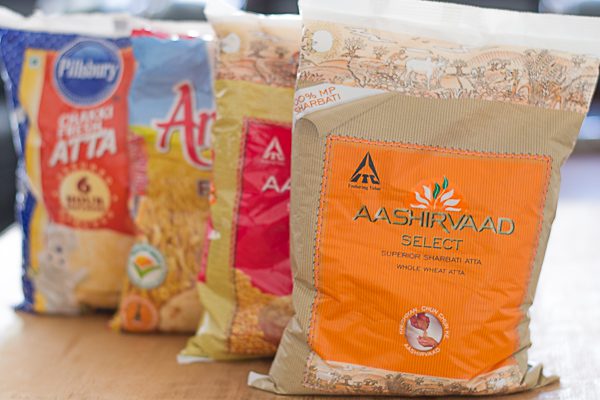
Indian wheat is high in protein and belongs to the aestivum variety used by everyone in the world for making great bread. So whole wheat bread loaves in India should work right? Why my atta bread just doesn’t work the way I want it to? Why is it dense and crumbly? I used to bake good soft and fluffy 100% percent whole wheat breads when I was abroad and suddenly after moving back to India, the same recipe would give me horrified loaves. I wanted to know why. After a lot of research I am posting this article so it might be helpful to all bread bakers in India. The culprit to bad loaves is the flour. It is all about the unique milling process in India that is different from the rest of the world. So lets first try to understand how Indian milling is done.
The milling process:
Indian wheat flour is mostly ground in stone mills popularly called as chakkis. Chakki is nothing but a pair of stones, of which, one is stationery and other is a rotating stone. Stone mills generate considerable heat due to friction. The heat causes what is called as STARCH DAMAGE. It also results in considerable damage to the protein in comparison to other milling techniques. The chakki atta is preferred more than the roller mill atta for the texture and taste of the Chapati/Roti (flat bread of India). Indian atta is a very very finely milled wheat flour. It works wonderfully well for making Indian flat breads and chakki is the most preferred milling process for indian breads. Stone grinding breaks the starch sufficiently to release extra sweetness while burning it slightly to give added flavor to Indian flat breads. Both methods of milling generate heat. Roller mills generate more heat than chakki and thereby some nutrition and vitamins are lost. But it has less damage to the starch and protein in the flour as it cuts the flour into small particles. But Chakki alters the starch (the force is intense) which is not good for western bread making but great for indian bread chapati/roti.
So what happens in chakki milling?
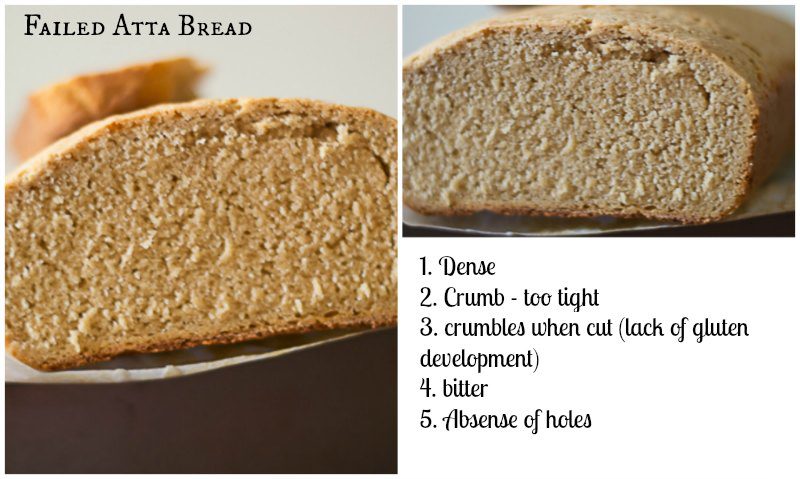
Roller milling results in 5% to 6% starch damage whereas chakki milling results in 11% to 13% starch damage. Let’s say protein in the flour on an average accounts for 10% of flour weight. But 70% is starch. Its equally important like the protein. Its important to understand that they make up for more than 50% of the dough volume. Its important that it works with the gluten chain when formed to tenderize it. When baked, the starch absorbs the water and gets fat or swollen. The moisture absorption is more in chakki flour than in normal whole wheat flour. So what? It means that you need to alter the liquid ingredients of the recipe as almost all the recipes for whole wheat bread uses traditional wheat flour. Because of this starch damage and protein loss, breads made out of 100% chakki atta is dense and dry like the picture below.
Also Indian wheat is light in color! Why?
India produces mostly 3 kinds of wheat. 95% “triticum aestivum” or the common bread wheat 4% “triticum durum” or the pasta wheat 1% “triticum dicoccum” or the emmer wheat (also known as khapli,samba godumai,diabetic wheat) – India is the largest cultivator of emmer wheat in the world.
Indian Gov portal says, Indian wheat is largely medium hard, medium protein wheat which is similar to the USA Hard white wheat. So what is whole hard white wheat? Its the same like any other wheat but has no major genes for bran color. For example Hard red winter wheat has upto 3 bran genes. That is the reason why indian atta is lighter in color and milder in flavor. Experts are of the opinion that the two kinds of wheat are the same nutritionally. Most of the nutrition differences among wheat varieties are driven by environmental conditions, such as weather, soil composition, drought etc..
The famous and unique Indian Sharbati wheat
The protein in wheat will be higher when there is drought and thats where our Indian sharbati atta rocks!
What is Indian Sharbati Atta? Sharbati atta comes exclusively from the state of Madhya Pradesh. Note that all wheat coming from MP is NOT Sharbati. The Sharbati is a rain-fed phenomenon where there’s no organized, large-scale irrigation. The high potash content in the soil, low humidity and rain irrigation results in wheat that is naturally 1-2 per cent higher in protein content than the normal 10-12 percent elsewhere. Sharbati belongs to the aestivum genre of wheat, the common bread wheat.
So how do we get a decent whole wheat bread loaf out of atta?
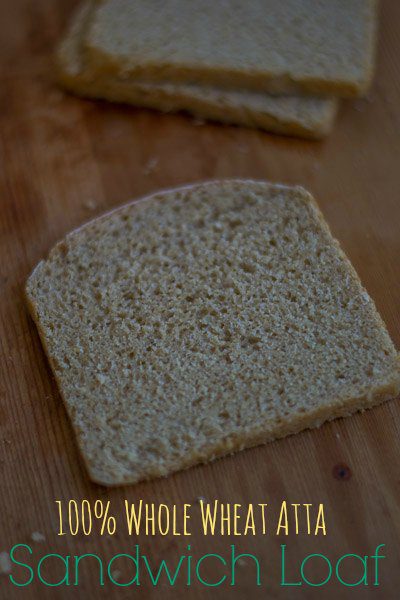
Grinding your own wheat flour can help make decent wheat loaves. You can grind your wheat berries in a regular roller mill. It was an epiphany when I held a good whole wheat sandwich loaf that was not dense. I have a toddler son who will refuse to eat bread if its not fluffy. So I add a little bit of vital wheat gluten to make it “wonder bread” fluffy.
Here is my recipe.
References: On food and cooking – Harold McGee,Peter Reinhart – whole grain baking, Larousse gastronomique, Bread Bible – Rose Levy beranbaum, farmer.gov.in/cropstaticswheat.html, www.google.com/patents/us6098905, india2012.icc.or.at/webfm_send/29 www.aaccnet.org/publications/cc/backissues/1962/documents/chem39_155.pdf, indiatoday.intoday.in/story/grains+of+gold/1/1561.html, www.apeda.gov.in, www.muehlenchemie.de, wholegrainscouncil.org, king arthur flour.
100% Whole Wheat Atta Bread
Moist, soft, fluffy 100% Whole Wheat Atta sandwich bread loaf recipe which is 100 percent whole grain. Made with Indian atta. Step by step pictures.
People are crazy behind baguettes, crusty breads, french loaves etc…but what gives me a lot of joy is a good old soft sandwich loaf with a lot of flavor. I belong to the soft fluffy kind when it comes to bread loaves. “Good bread is the most fundamentally satisfying of all foods, and good bread with fresh butter, the greatest of feasts.” Here is that one 100% whole wheat loaf you were looking for. Lets jump into making a 100% Whole Wheat Atta sandwich loaf. If you are going to be baking with 100% Whole Wheat Atta please read this before you continue ! I am sorry. I am a little bossy. Thank you for understanding.
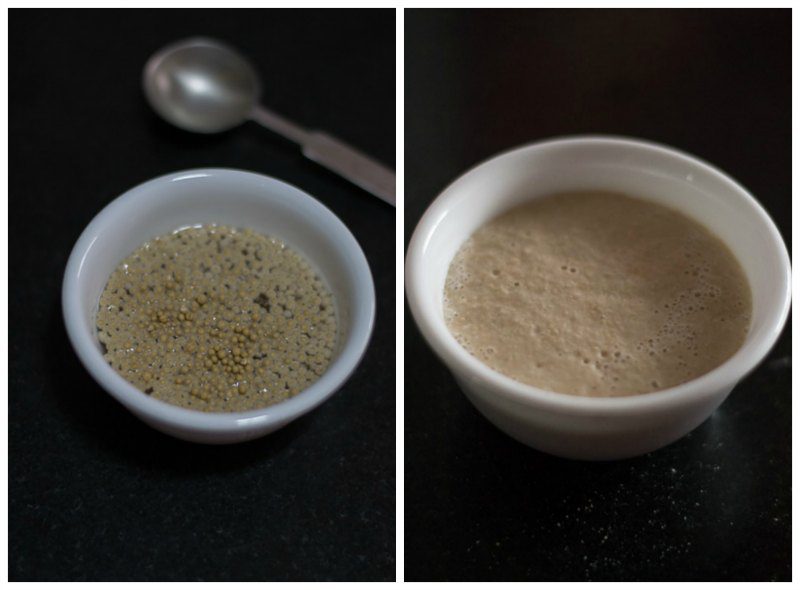
First lets get the yeast working. Add quarter cup of warm water plus a pinch of sugar to the yeast and leave it aside for 5 minutes so it becomes foamy. If it doesn’t foam, discard and start again with a fresh batch of yeast. Indian yeast is temperamental. so do not skip this step if you are in India.
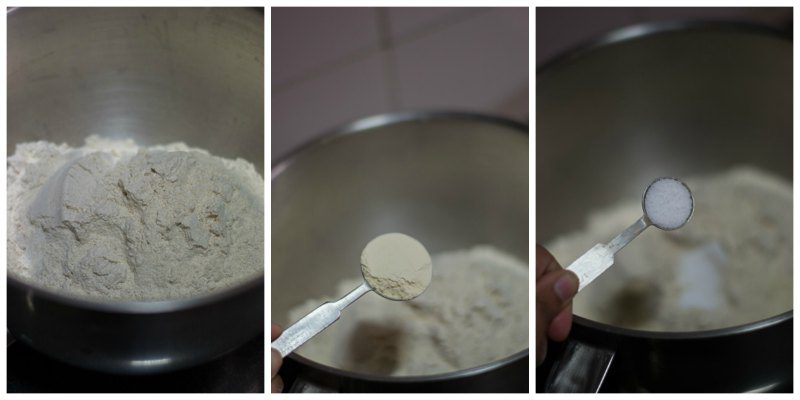
Measure all the dry ingredients in a bowl. Do not pack the flour while measuring. Use the “scoop and sweep” method. Add in the vital wheat gluten and the salt. Set aside.
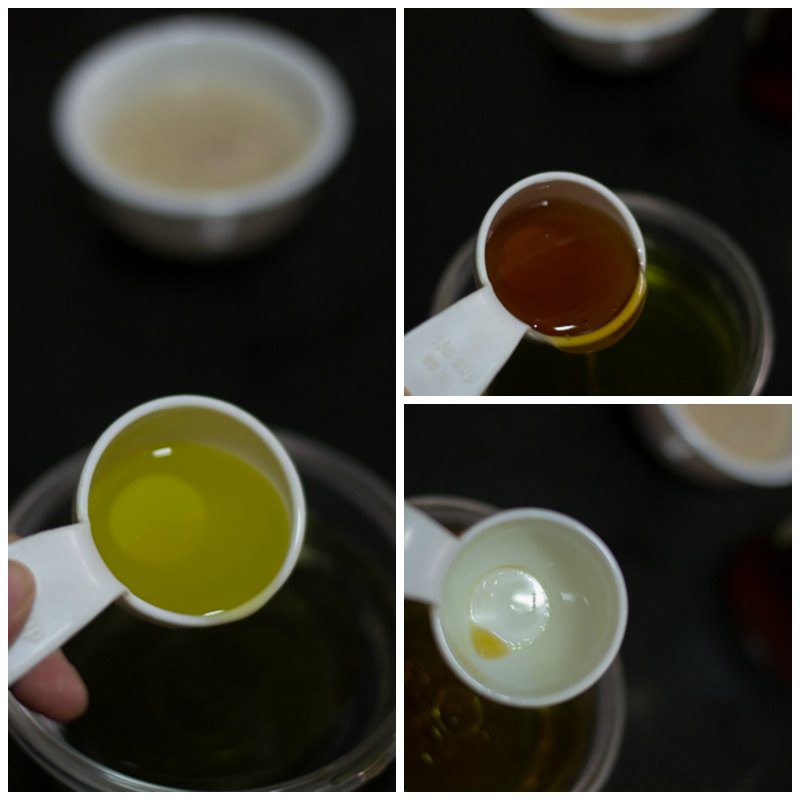
Measure 1 1/3 cups of warm water in a bowl. Add in quarter cup of olive oil. Add in quarter cup of honey. There is a neat little trick I learned a long time back. By measuring oil first and measuring honey next, the honey will just slide into the bowl without sticking because of the coating of the grease. Neat trick.
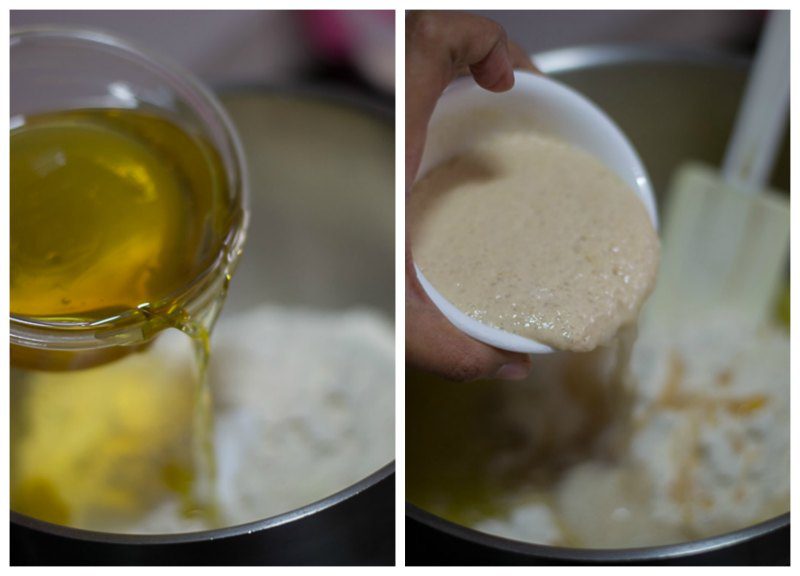
Now add in the water mixture and the yeast mixture.
Mix until roughly combined. We are not trying to knead anything yet. Once combined, let it rest for 20 minutes. Letting it rest will hydrate the dough well and activate the gluten.
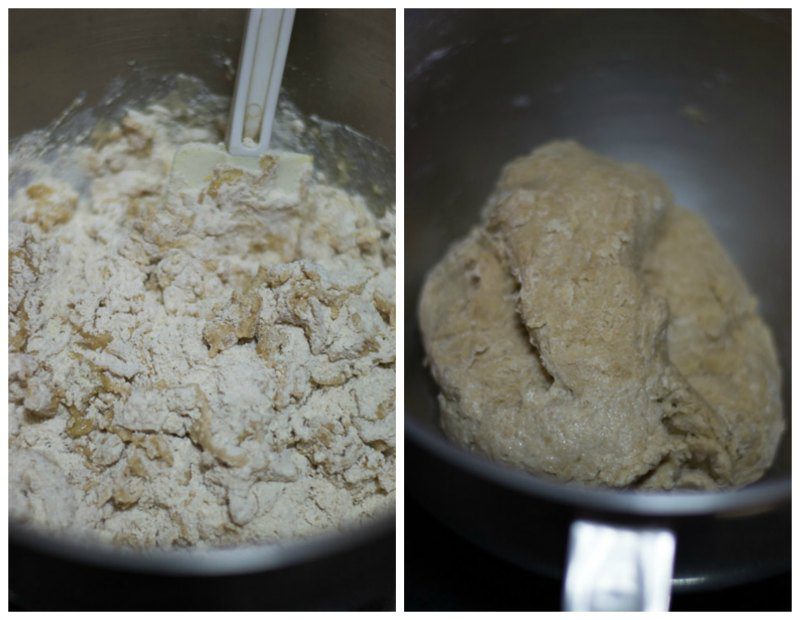
So back in business. Once the rest has been completed, lets knead. I used a kitchen-aid to knead my dough. Its very easy to over knead in a stand mixer. Knead for 4 minutes on medium speed. Finish kneading on the table by hand. Shape the loaf and let it rise in a bowl until nearly doubled.
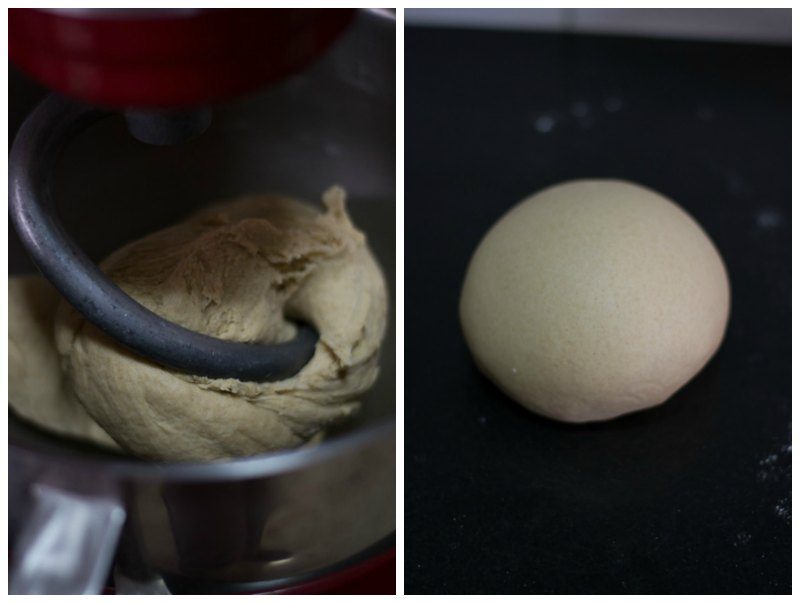
Why only nearly doubled ? Rose Levy Beranbaum writes about her whole wheat epiphany loaf and she says “I discovered that the secret to lightness of the crumb was not only the freshness of the flour but also not allowing the dough to double during rising which tears the more fragile gluten.” So the first rise – Do not allow it to over proof. Gotcha?
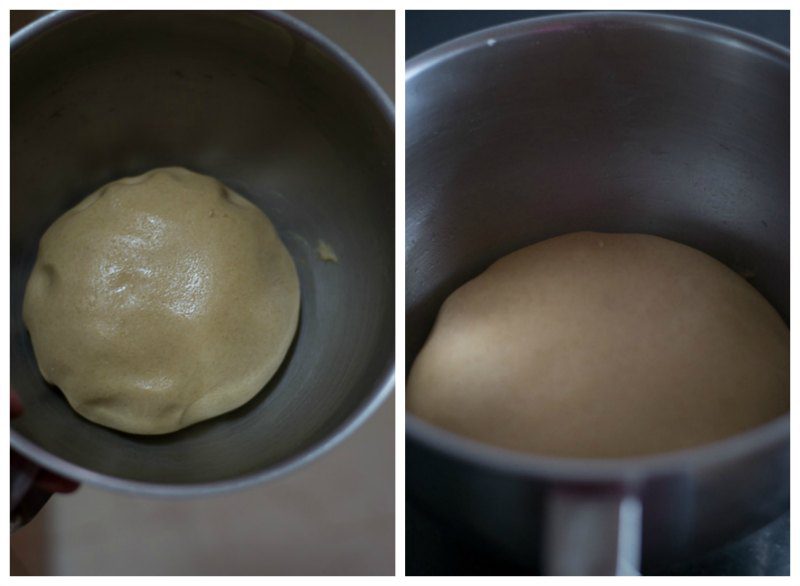
After the first rise, gently deflate the dough and shape it into a log.
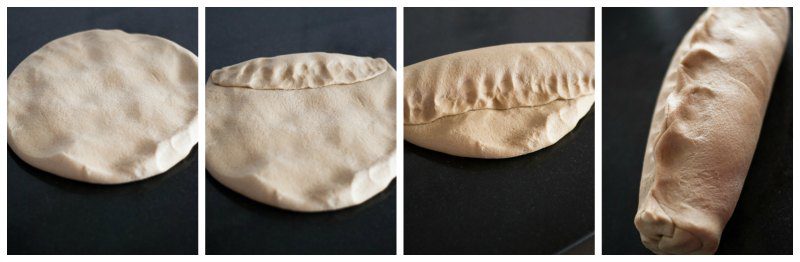
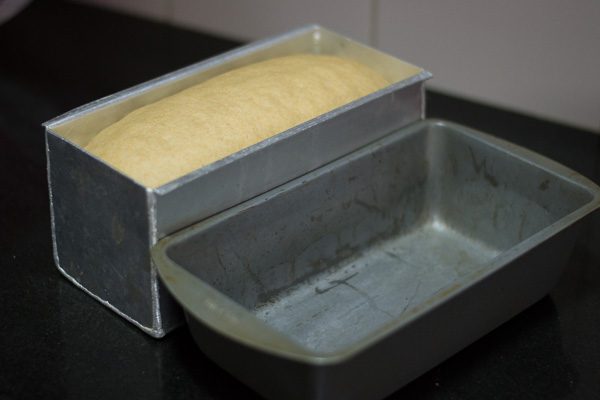
Place it in a 9 inch by 5 inch loaf pan and cover the pan with a lightly greased plastic wrap. Allow it to rise for 1 to 2 hours, till it’s crowned about 1 or 2 inches over the rim of the pan.
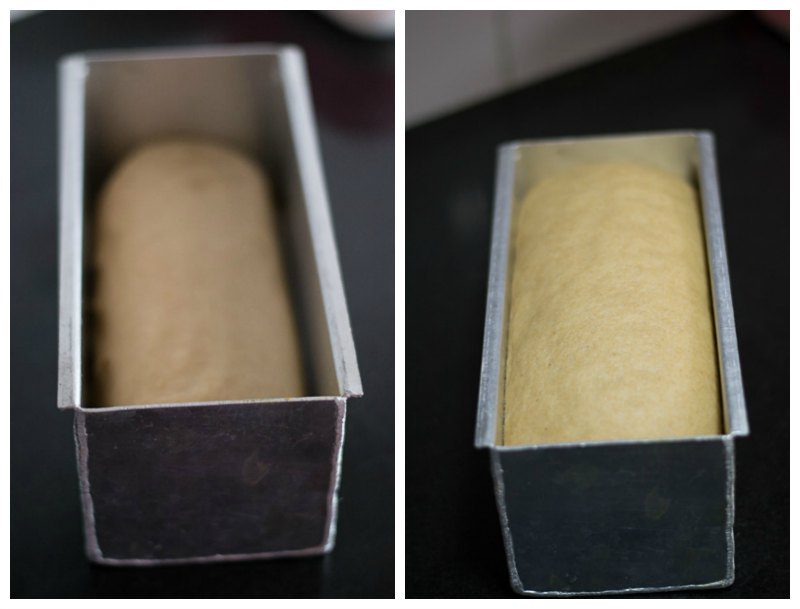
My pan is tall. so it did not rise above the rim. The below picture shows the difference between the traditional 9 inch by 5 inch pan and my tall pan. I just showed this picture so no confusion.
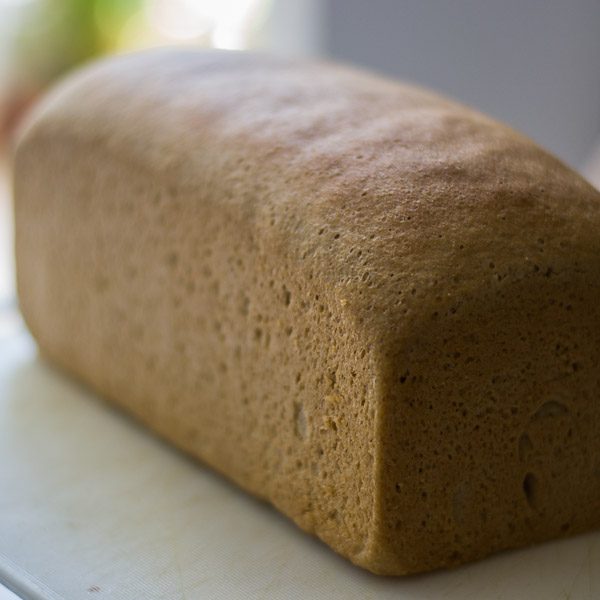
Preheat the oven to 180 C for 20 minutes. Bake the bread for 45-50 minutes. Remove from the oven and after 5 minutes turn it out of the pan to cool.
100% Whole Wheat Atta Bread Printable Recipe
Main Ingredients
- 1 1/3 cups lukewarm water
- 1/4 cup extra virgin olive oil
- 1/4 cup honey
- 4 cups Whole Wheat Flour
- 2 tablespoon Vital wheat Gluten
- 1 1/2 teaspoons salt
For the yeast mixture
- 1 tablespoon Active dry yeast
- pinch of sugar
- 1/4 cup warm water
- First lets get the yeast working. Add quarter cup of warm water plus a pinch of sugar to the yeast and leave it aside for 5 minutes so it becomes foamy. If it doesn’t foam, discard and start again with a fresh batch of yeast.
- Measure all the dry ingredients in a bowl. Do not pack the flour while measuring. Use the “scoop and sweep” method. Add in the vital wheat gluten and the salt. Set aside.
- Measure 1 1/3 cups of warm water in a bowl. Add in quarter cup of olive oil. Add in quarter cup of honey. There is a neat little trick I learned a long time back. By measuring oil first and measuring honey next, the honey will just slide into the bowl without sticking because of the coating of the grease.
- Now add in the water mixture and the yeast mixture.
- Mix until roughly combined. We are not trying to knead anything yet. Once combined, let it rest for 20 minutes. Letting it rest will hydrate the dough well and activate the gluten.
- Once the rest has been completed, knead for 4 minutes on medium speed. Finish kneading on the table by hand. Shape the loaf and let it rise in a bowl until nearly doubled.
- After the first rise, gently deflate the dough and shape it into a log.
- Place it in a 9 inch by 5 inch loaf pan and cover the pan with a lightly greased plastic wrap. Allow it to rise for 1 to 2 hours, till it’s crowned about 1 or 2 inches over the rim of the pan.
- Preheat the oven to 180 C for 20 minutes. Bake the bread for 45-50 minutes. Remove from the oven and after 5 minutes turn it out of the pan to cool.
- Author: Kannamma - Suguna Vinodh
- Prep Time: 20 mins
- Cook Time: 5 hours
- Category: Bread
- Cuisine: American

