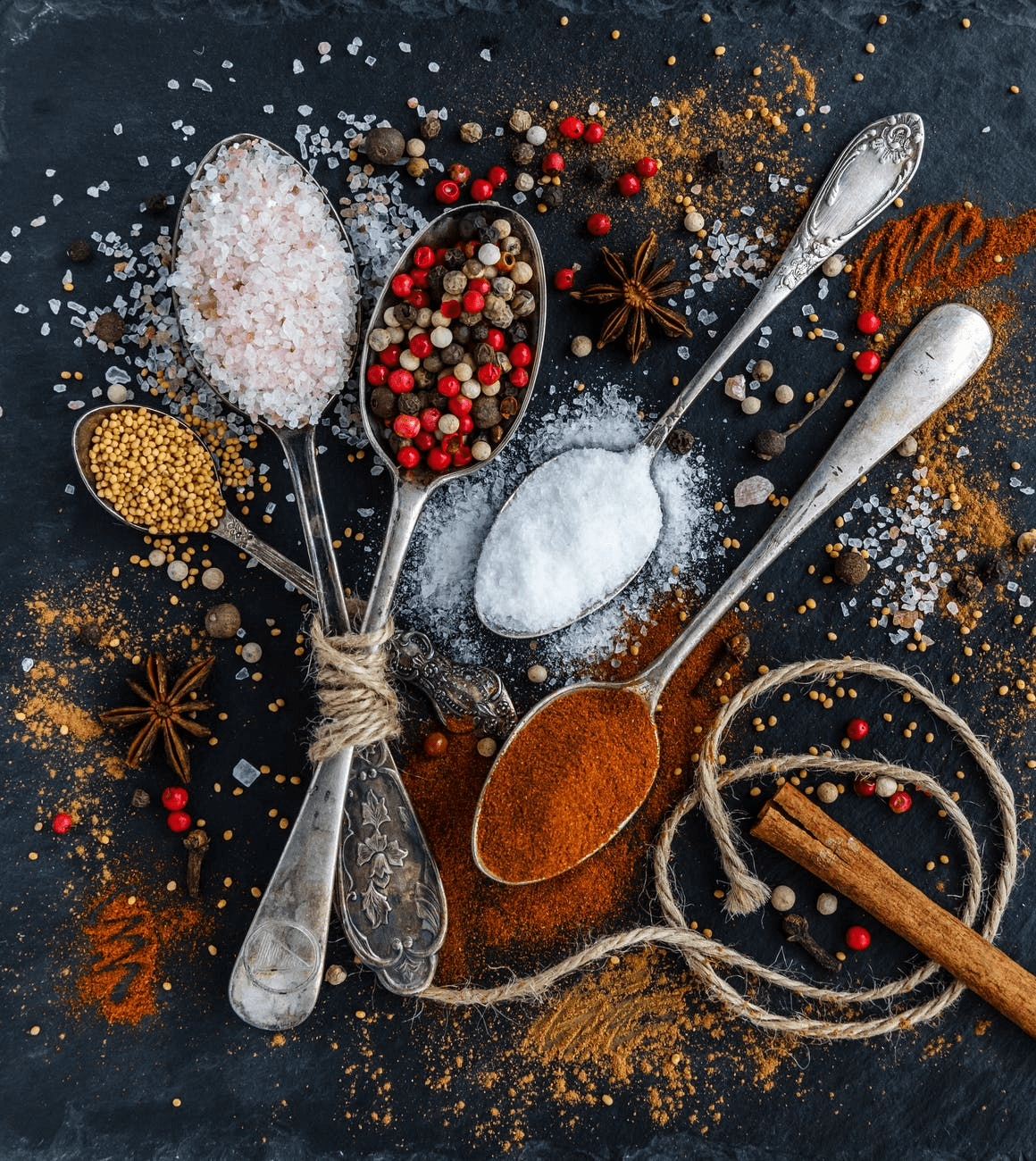
Welcome to the festival of flavors! The expression “expensive cuisine” differs widely. For some of us, it means saffron, while for others, maybe truffles. Nonetheless, there’s a complete variety of cuisines that have cost damage that’s beyond imagination for most of us. And that’s why you need to win the lottery, to quench your royal appetite.
Life is not all about exploring the pasta-abilities. Here’s the list of the world’s most expensive cuisine:
Saffron Saffron, nicknamed as ‘Red Gold,’ is the world’s most expensive spice with half a kilogram costs between five hundred to five thousand US dollars, more expensive than gold itself. The leading cause of such crazy price is its industrious method of harvesting. Saffron is extracted from Crocus sativus’s stigma. It also has medicinal properties. People eat this red gold to treat mild to moderate depression, improve memory, reduce Premenstrual syndrome, enhance libido, reduce the heart-attack risk factor, cancer-fighting properties, and many other mind-blowing benefits. You need to win the lottery to get your ‘sunshine spice.’
Caviar Caviar, a seafood delicacy, is harvested from a fish egg of a specific kind of female fish known as sturgeon fish. Why is it on the list? The most expensive caviar is sold for $35 thousand per kilogram, according to Guinness world records. Caviar helps you have a healthy nervous, immune, and circulatory system; plus, a good source of vitamins, minerals, omega-3, iron, etc. We all need to win the lottery for that one.
Moose cheese So who doesn’t love cheese? Here’s the world’s most expensive cheese, produced only in Sweden. This lovely piece of cheese costs around one thousand dollars per kilogram. This cheese is created by moose milk and only in the Moose House farm. Isn’t it the first thing you’d try if you strike it rich? We all need to win the lottery for that one.
Oysters Oyster is a bivalve mollusk, living in brackish or marine habitats. Now the food of the rich oysters was very cheap in the early nineteenth century. One ‘Coffin bay king’ Oyster cost around a hundred dollars, exclusive to the Australian Port Lincoln Hotel, while a dozen average oysters cost around £51. These extremely rich in zinc, sticky things are sex boosters too. They help in the production of testosterone and maintain healthy sperms. Plus, they are essential for the production of female libido also. They boost hormone and dopamine levels.
Jamón Ibérico The world’s most expensive meat globally, Jamón Ibérico, commonly known as Iberian ham, is a cured ham made only in Portugal and Spain. It costs around $4,500, and the most expensive ham was sold at £3,193. Want to find out why it’s so costly? That’s another reason why you need to win the lottery.
White Truffle A subterranean fungus, white truffle grows in the roots of specific trees and is much rarer than any other counter-part. They have an incredibly intense aroma and flavor. Although many of the experts have tried so much, it can’t be grown everywhere. The record at which these truffles were sold at most is $330,000 per one and a half kilogram. This extraordinary fruiting fungus is why you need to win the lottery and find out why they’re so hefty.
Fortress stilt fisherman The world’s most expensive dessert, fortress stilt, is offered in Srilanka. The dessert, flavored with Irish cream and served with a pomegranate and mango, costs around $14,500. The fortress fisherman is mainly served with unique handmade cutlery.
Wagyu beef Japanese ‘wagyu’ beef is one of the most expensive and tastiest meats in the world. It costs around $500 per kilogram. The meat has a mouthwatering flavor and a fantastic aroma. You know where to head straight when you win the lottery. A little slice of heaven!
Velas tacos The most luxurious taco offers caviar, Kobe beef, and cheese, wrapped in a gold-dipped corn tortilla. The Cabos resort of Mexico provides the most expensive taco in the world that costs around $25,000, but you need to win the lottery to afford it.
Louis XIII Here out the world’s most expensive pizza. Louis XIII, made by Renota Viola, costs so much as $12,000. This luxurious pizza is offered with a lavish lobster and seven different types of cheese. The reason behind its whopping cost is how eloquently it is made.
Swallows’ Nest Ever imagined eating a bird’s nest? On top of that, imagine it being the tastiest thing you’ve ever eaten. Swallows’ nest, entirely made from their saliva, is a Chinese delicacy. This soup costs as much as $3,000 per kilogram, and its extravagant price is easily justifiable as there’s a high risk of falling from a height of more than 200 meters. The dish is rich in protein and has a fair amount of nutrients. You need to win the lottery to try this one out for sure.
Wrapping up I’m not drooling, you are! If you won a jackpot in a giant lottery but still want to try some luxurious classic cuisine , you now know where to head up straight and what expensive food you’ve to try next. But first, we need to win the lottery. We have provided you the list of luxurious food that will quench your cravings.
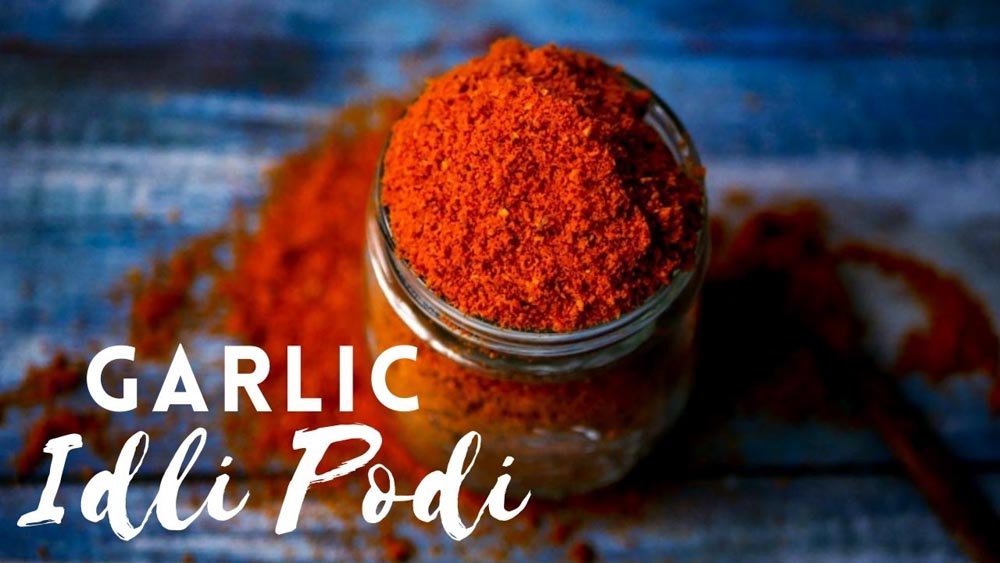
Recipe for Garlic Idli Podi / Garlic Chutney Powder. A spicy and tangy idli podi that is so addictive that one always goes for more. Recipe with step by step pictures and video.
We are fans of idli podi at home and here are other idli podi recipes from the site. Chutney Powder / Idli Powder Recipes
This garlic chutney podi is my son’s absolute favorite. He is obsessed so much with this podi. He has idli and dosai only with podi, rejecting the chutney and the sides these days. This is such a delicious chutney with a dash of spicy, tangy and faintly sweet on every single bite. This idli podi takes about half an hour to make and I promise that your patience will be rewarded. There are about 11 ingredients (The dream 11 of idli podi world) in this recipe and each of the ingredient is roasted and ground to perfection.
Here are few pointers you might want to read. 1.Dry roast all the ingredients on a low flame. Slow roasting the ingredients brings out the best texture and flavour. 2.Grind the lentils first, then mix in the roasted seeds and garlic and grind again. If everything is ground together, the seeds tend to leave out oil and the mixture does not grind well. Since the garlic is ground at last along with the seeds and the lentil powder, there will be no moisture left. The lentil powder absorbs the excess moisture and the garlic gets ground fine. Do not overload the mixie while grinding. Always grind in batches and an Indian heavy duty mixie is preferred for making this recipe. Here are the Indian mixie that I recommend Panasonic Mixie Bosch Mixie
Here is the video of how to make Garlic Idli Podi / Garlic Chutney Powder.
Here is how to do Garlic Idli Podi / Garlic Chutney Powder.
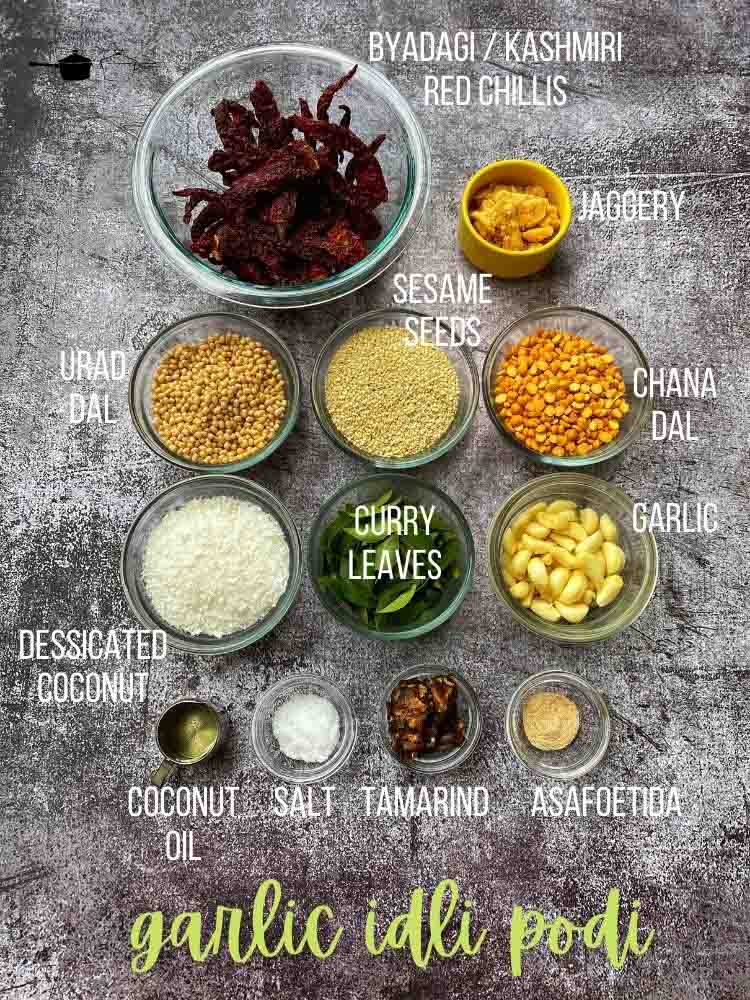
Here is what you will need
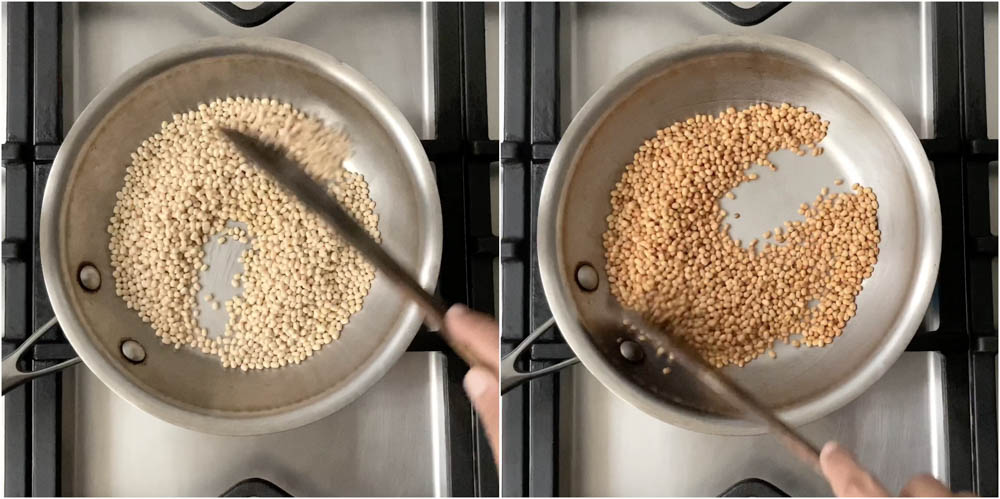
We will be dry roasting all the lentils separately so the lentils get evenly roasted. Add in 1/4 teaspoon of coconut oil and whole unpolished white urad dal. Use unpolished urad dal for best results. I like this particular brand of urad dal . Sauté on a low flame till the urad dal is golden. Set aside on a plate to cool.
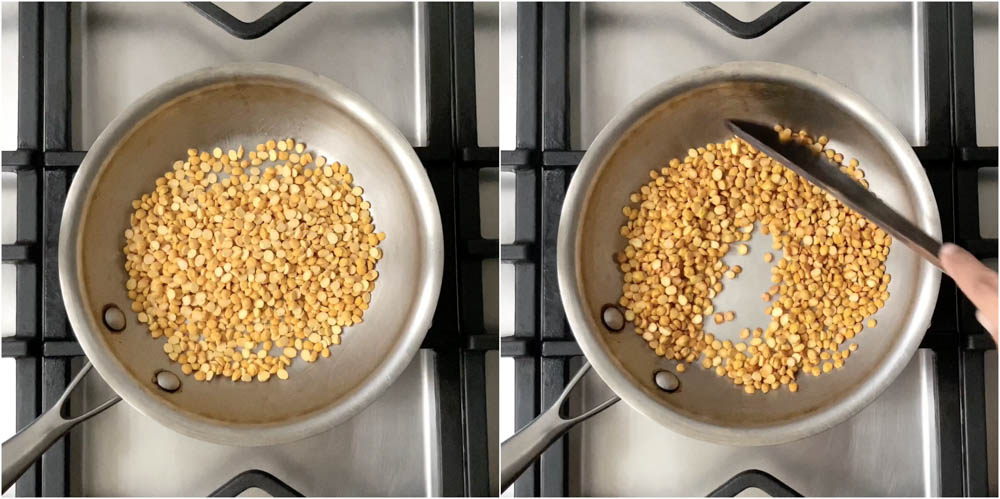
In the same pan, heat 1/4 teaspoon of coconut oil in a pan and add in the chana dal. Roast the chana dal on a low flame till the lentils are golden. Keep sautéing to avoid burning. Have patience and roast slow until the aroma comes and the dal turns color. Remove from the pan once the dal is golden. Set aside on a plate to cool.
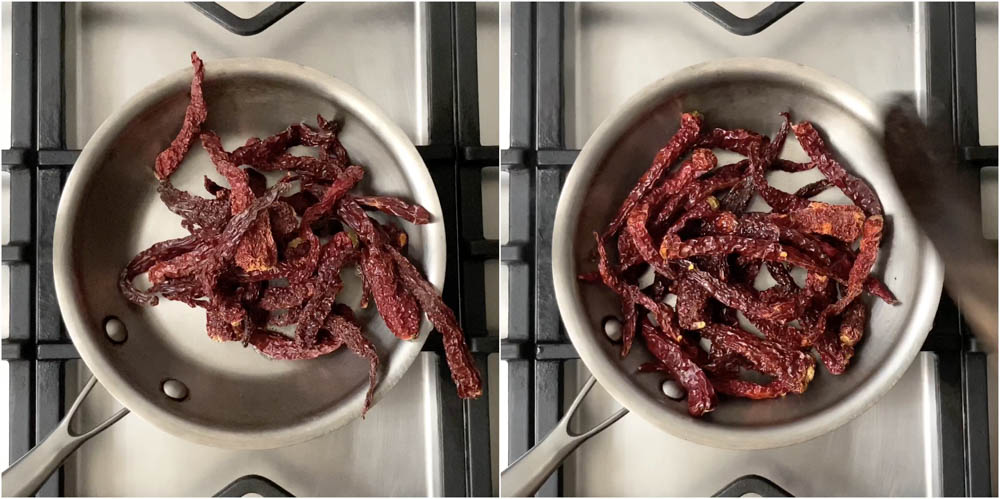
In the same pan, add in a teaspoon of coconut oil. Add in the Byadagi chillies / Kashmiri red chillies. I like to add the Byadagi chillies as it gives the idli podi a robust color and aroma. Sauté for a few seconds. The chillies will fluff up. Remove the chillies and set aside on a plate to cool. Do not fry the chillies for long.
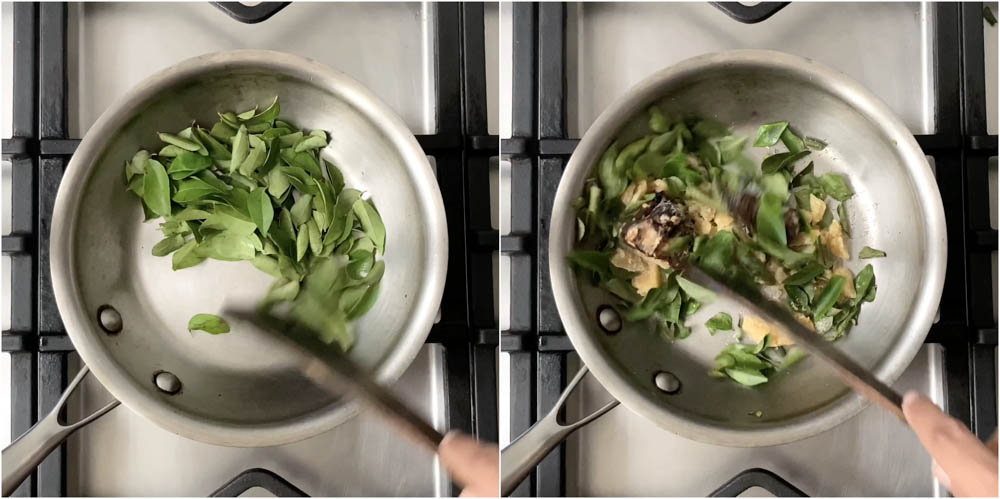
In the same pan add in the curry leaves. Sauté till the curry leaves turn crisp and dry. Add in the asafoetida, tamarind and the salt. Fry for a few seconds. Finally add in the jaggery on top of the hot mixture. Remove the mixture from heat and set aside on a plate to cool.
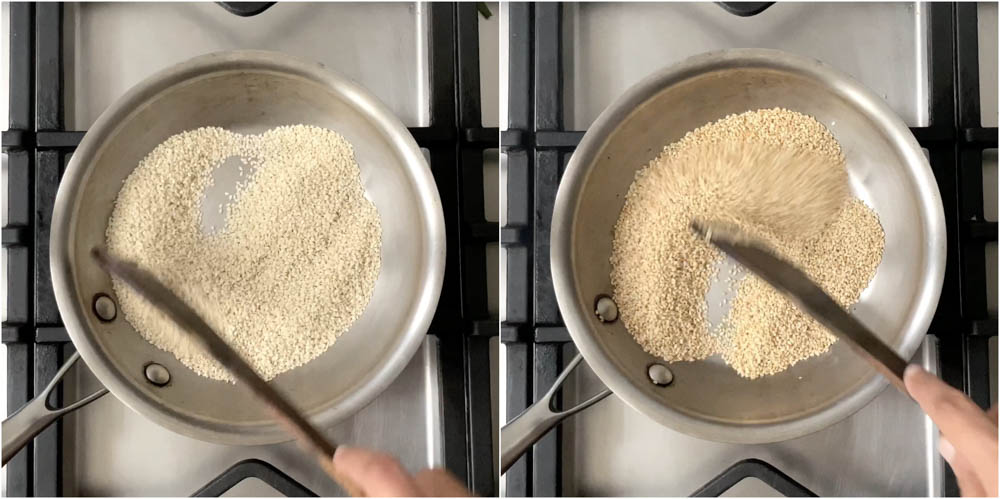
In the same pan, add in the white sesame seeds. Dry roast the seeds till it slightly changes color and starts to pop. Set aside on * separate * plate to cool.
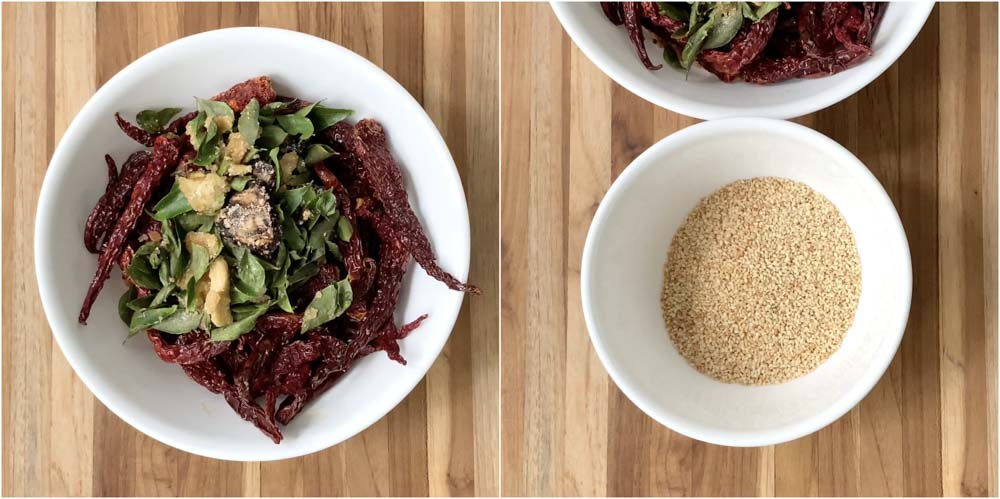
From now on, we will add the roasted ingredients to a separate bowl as we will be grinding separately.
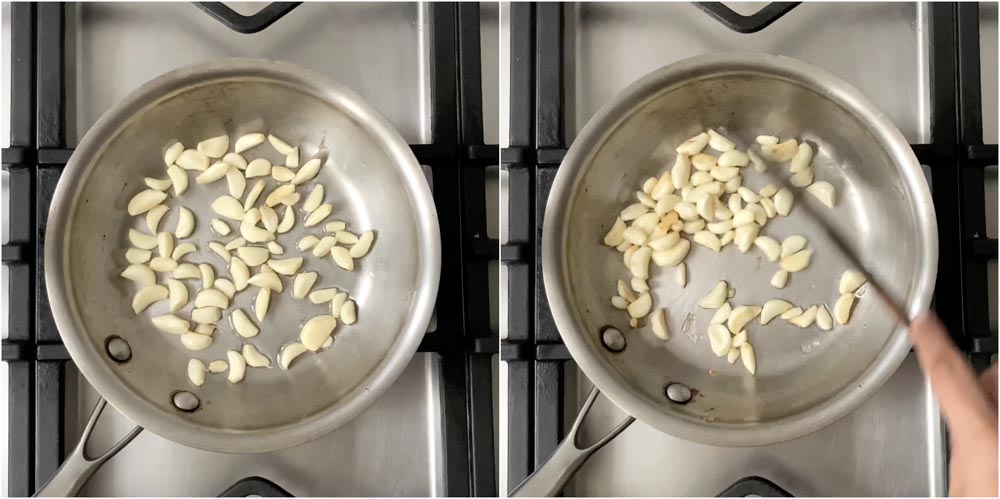
In the same pan, add in a teaspoon of coconut oil and add in 50 grams of peeled garlic. Saute on a low flame till the garlic is charred on the edges. Set aside.
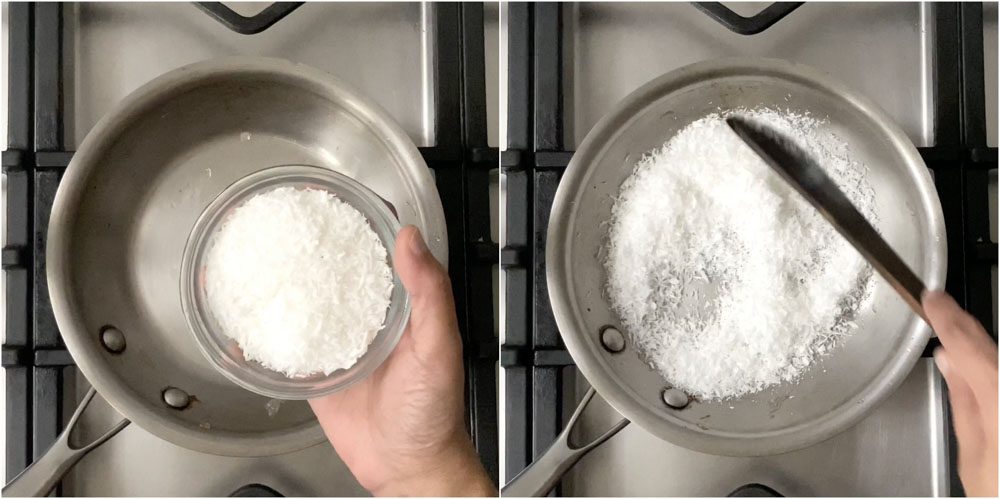
In the same pan, dry roast the desiccated coconut. Sauté for a few seconds. Coconut tends to fry very fast. Since the pan is hot, it should take only few seconds for the coconut to roast. All eyes on the pan. Remove the fried coconut and set aside on a plate to cool.
Now, lets grind. WORD OF CAUTION: Do not grind everything together. Ingredients like coconut and sesame will give away oil if ground for long. Garlic needs to be added after the lentils are ground.
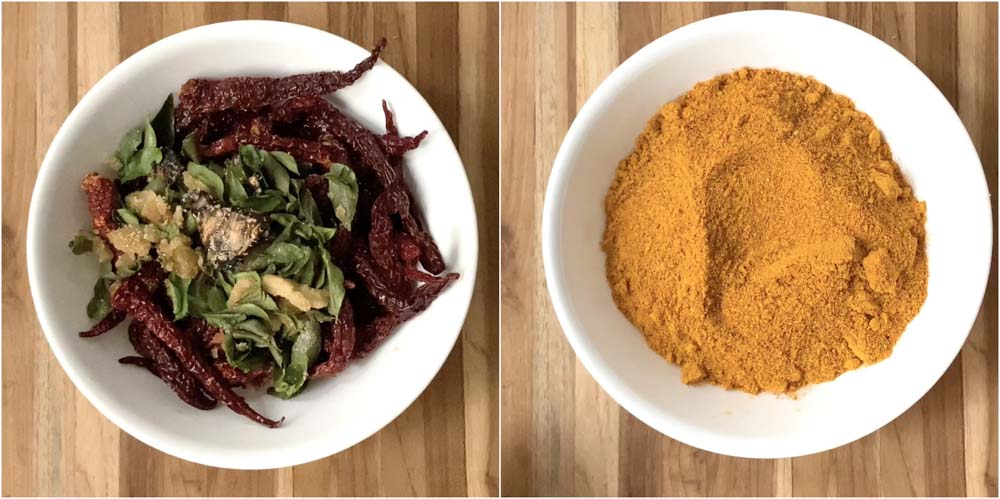
Take a mixie jar and add in the dal-chilli mixture. Grind to a fine powder. The important thing is to grind the mixture in batches. Grinding in batches does not heat up the mixie due to overloading and the mixture gets ground to a fine texture too.
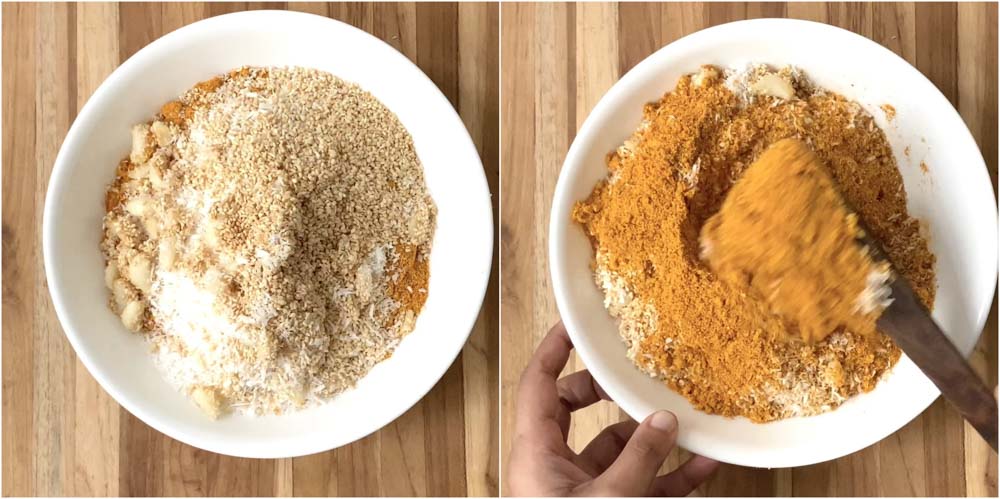
To the powder, add in the sesame, coconut and garlic. Mix well to combine. Grind again in batches to desired consistency. Again, do not overload the mixie.
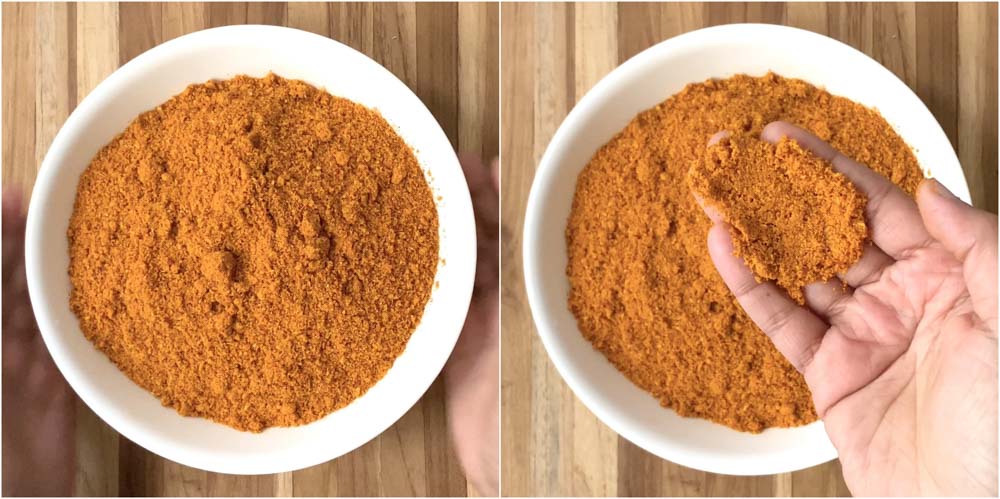
Empty the contents of the mixie to a big bowl and let it completely cool. Store the idli podi in an air tight container and use within a month. For longer storage, store in the freezer. The podi stays fresh for months in the freezer.
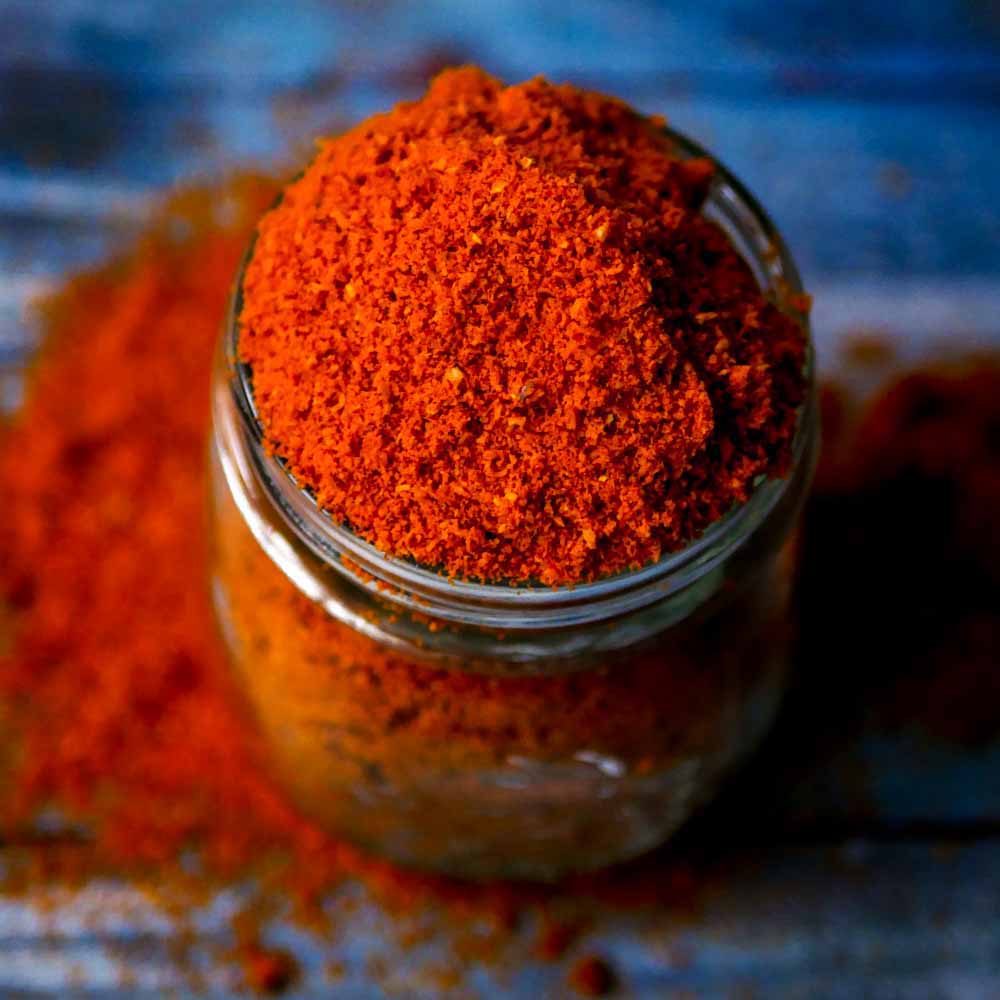
This idli podi is super addictive and delicious. Definitely do try at home.
1 tablespoon coconut oil (divided) 1/2 cup chana dal 1/2 cup unpolished white whole urad dal 1/2 cup white sesame seeds 1/2 cup dessicated coconut 1/2 cup curry leaves 1/2 teaspoon asafoetida 15 - 25 Byadagi Chillies / Kashmiri Red Chillies (Use more or less according to your taste) 50 grams peeled garlic cloves (w eight after peeling) 40 grams jaggery 25 grams tamarind 1 teaspoon salt
Add in 1/4 teaspoon of coconut oil and whole unpolished white urad dal. Use unpolished urad dal for best results. Set aside on a plate to cool. In the same pan, heat 1/4 teaspoon of coconut oil in a pan and add in the chana dal. Roast the chana dal on a low flame till the lentils are golden. Keep sautéing to avoid burning. Remove from the pan once the dal is golden. Set aside on a plate to cool.
In the same pan, add in a teaspoon of coconut oil. Add in the Byadagi chillies / Kashmiri red chillies. I like to add the Byadagi chillies as it gives the idli podi a robust color and aroma. Sauté for a few seconds. The chillies will fluff up. Remove the chillies and set aside on a plate to cool. Do not fry the chillies for long.
In the same pan add in the curry leaves. Sauté till the curry leaves turn crisp and dry. Add in the asafoetida, tamarind and the salt. Fry for a few seconds. Finally add in the jaggery on top of the hot mixture. Remove the mixture from heat and set aside on a plate to cool.
In the same pan, add in the white sesame seeds. Dry roast the seeds till it slightly changes color and starts to pop. Set aside on separate plate to cool.
In the same pan, add in a teaspoon of coconut oil and add in 50 grams of peeled garlic. Saute on a low flame till the garlic is charred on the edges. Set aside.
In the same pan, dry roast the desiccated coconut. Sauté for a few seconds. Coconut tends to fry very fast. Since the pan is hot, it should take only few seconds for the coconut to roast. All eyes on the pan. Remove the fried coconut and set aside on a plate to cool.
Take a mixie jar and add in the dal-chilli mixture. Grind to a fine powder. The important thing is to grind the mixture in batches. Grinding in batches does not heat up the mixie due to overloading and the mixture gets ground to a fine texture too.
Empty the mixie jar to a bowl. To the powder, add in the sesame, coconut and garlic. Mix well to combine. Grind again in batches to desired consistency. Again, do not overload the mixie.
Empty the contents of the mixie to a big bowl and let it completely cool. Store the idli podi in an air tight container and use within a month. For longer storage, store in the freezer. The podi stays fresh for months in the freezer.
- Author: Suguna Vinodh
- Prep Time: 10m
- Cook Time: 20m
