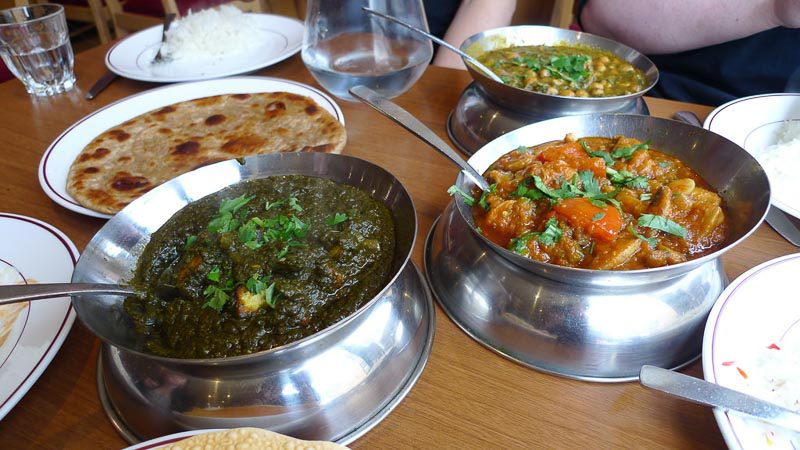
As is the case with most distinct types of cuisine, Indian food tends to be best in its native country. Whether you’re stopping in at an established restaurant or being treated to a home-cooked meal built from a delicious recipe , it’s going to be delicious. However, Indian food is a very popular export as well. The depth of flavors and spices make it a very interesting option for ambitious chefs all over the world (not to mention Indian chefs who move abroad), and as a result terrific Indian cuisine has popped up in cities around the globe.
In case this is of any interest to those of you who are generally enthusiastic about Indian food, we wanted to take a brief look at some of the international cities that have developed the best reputations for it.
New York, United States
We may as well begin with what is arguably the world’s greatest food city. New York City is simply so large and multicultural that it has inevitably gained a reputation for showcasing extraordinarily authentic cuisine from all over the world. In some cases, people even find that certain establishments in New York are as good or better than restaurants in native countries! At times on this list I will seek to provide some context for particularly interesting restaurants and locations, but in New York there’s great Indian all around the sprawling city. You can find cheaper options, expensive sit-down restaurants, and even excellent delivery options. I’m partial to Vatan – a fixed price, all-you-can-eat vegetarian venue in Manhattan – but Grub Street has done us the favor of listing the absolute best Indian restaurants in New York .
London, England
If one city tops New York, it’s probably London. In fact, it’s not uncommon to hear people say that London has the very best Indian food in the world – including India ! The city is fairly multicultural, but Indians make up one of its largest minorities, so it’s no wonder Indian cuisine has blossomed there. One fun detail of London’s Indian food scene is that several of the better restaurants happen to be near major attractions or fun things to do. For instance, a well-regarded Southwest Indian place called Quilon is just a few streets over from Big Ben and the Houses of Parliament (two of the city’s top landmarks); Dishoom, another popular place, is in the middle of a full-fledged entertainment complex. There you can find the legendary London casino the Hippodrome, which has been around since 1900 , as well as the city’s Royal Opera House.
Kampala, Uganda
Kampala may be the most surprising city on this list, but the Ugandan capital is known for having a lot of Indian dining options, and some very good ones at that. The Indian population in town is fairly significant, so while Kampala isn’t as large as London or New York, there was a similar inevitable quality to its development of fine Indian food. You can also find a nice assortment of different atmospheres diving into the Indian scene in Kampala. Khazana, a restaurant considered to be the best in the city (and potentially in this entire region of the world), features atmospheric Rajasthani-inspired décor . Meanwhile Nawab, a more casual (but still excellent) establishment, sits atop the main mall in town with an open-air design that makes it a fun vantage point from which to look out over the city.
Singapore
This list would be incomplete without Singapore, which is right up there with the other cities mentioned above when it comes to having a reputation for terrific Indian food. You might almost be surprised by the sheer number of Indian places in a relatively small area of Singapore, but as with London some of the most respected and well-reviewed restaurants are right in the middle of popular attractions. Shahi Maharani, an elegant North Indian restaurant, is right at the end of Clarke Quay, one of the city’s vibrant nightlife hotspots . And Maharaja Boat Quay, a more casual place for beer and dining, is located right on Marina Bay – perhaps the most popular and beautiful place in Singapore.
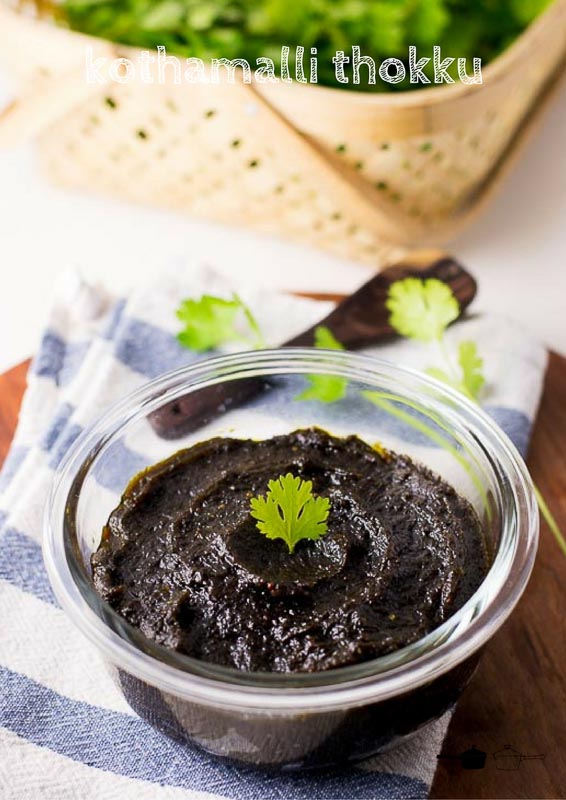
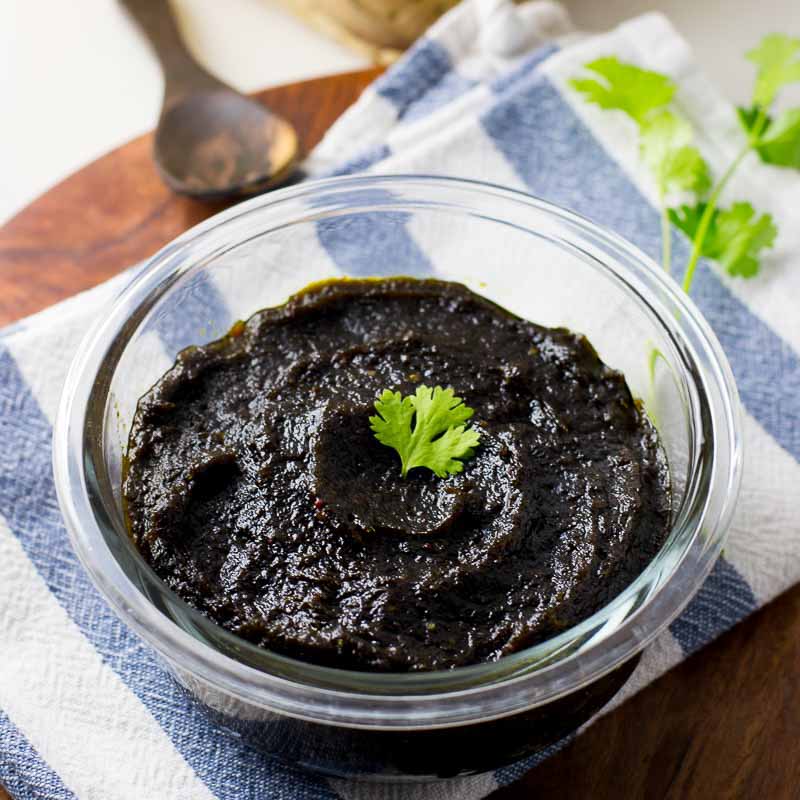
Recipe for coriander thokku. Sweet and tangy kothamalli thokku Tamilnadu style. Perfect accompaniment for chapati and dosa. I even spread it on toast.
This is my mother in laws recipe for coriander thokku. Its sweet, spicy and tangy and is a perfect accompaniment for chapati and dosa. It is more like coriander pickle. I like to spread this on sandwiches too! It tastes great. Thokku on toast! Try it sometime. We call this coriander thokku as the Pethappampatti ketchup. Pethappampatti is my husband home town near Udumalpet. Its one of the must haves in the dining table during the season. Here is how to do it.
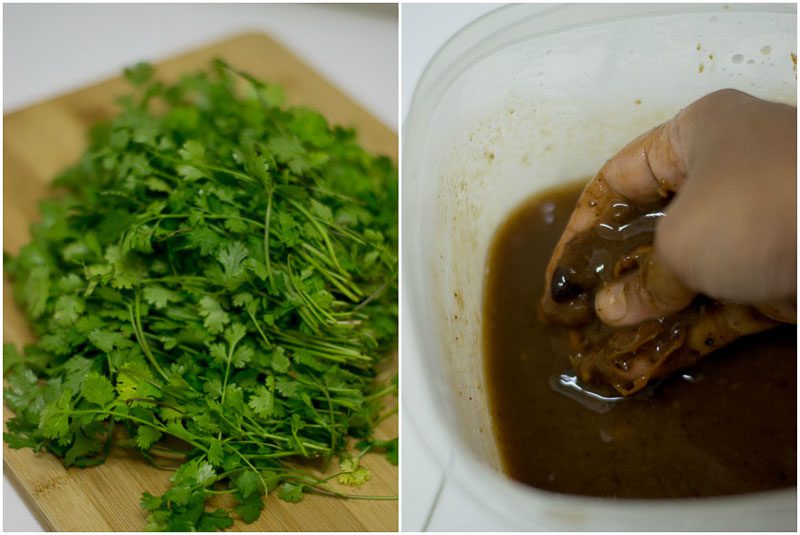
Clean and wash the coriander leaves and set aside. Young coriander leaves works well for this recipe. I have used around 250 grams of leaves for this recipe. Soak a golf ball size tamarind in a cup of water for 10 minutes. Squeeze the tamarind to release the pulp. Discard the fibre and the seeds. Set aside.
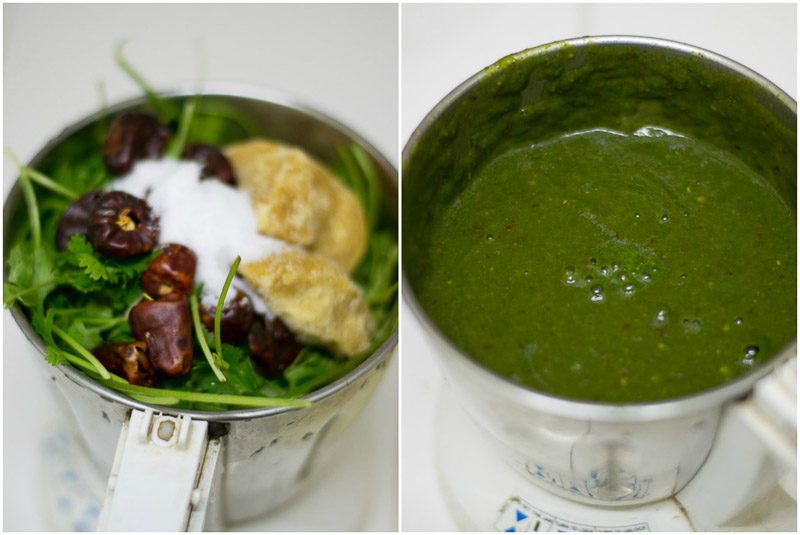
Take a mixie jar and add in the tamarind pulp, coriander leaves, salt, jaggery and dried red chillies. I like to use the gundu milagai or the Tamilnadu variety of chillies, the gundu chillies for this recipe. If you want a sweet thokku, you may add more jaggery (or) if you want a spicy thokku, add more chillies. Grind to a smooth paste. Grind in batches if necessary.
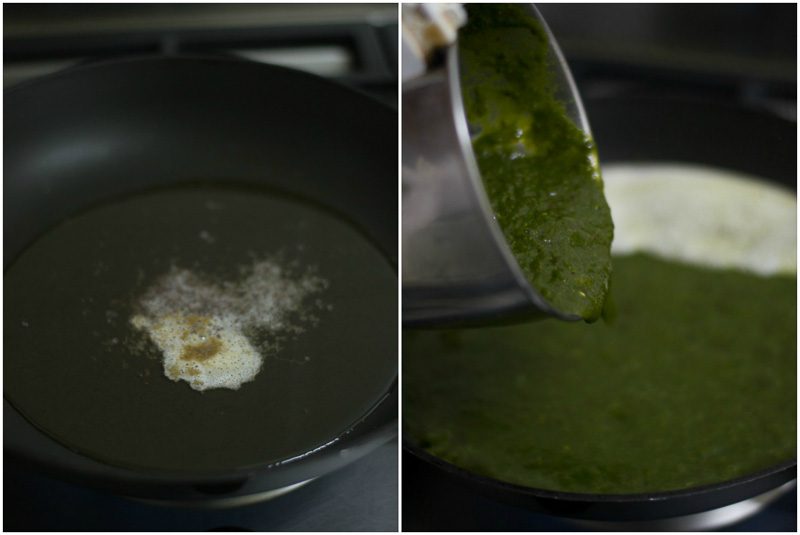
Heat sesame oil (Indian gingely oil) in a pan until hot. Add in the mustard seeds and the asafoetida. Add in the ground paste.
I like to use SSP Asafoetida as the flavor and aroma is very strong and it adds a nice flavor to the dish. Here is where you may buy them. SSP Powder Asafoetida SSP Crystal Asafoetida (Granules) SSP Ultra Powder Asafoetida
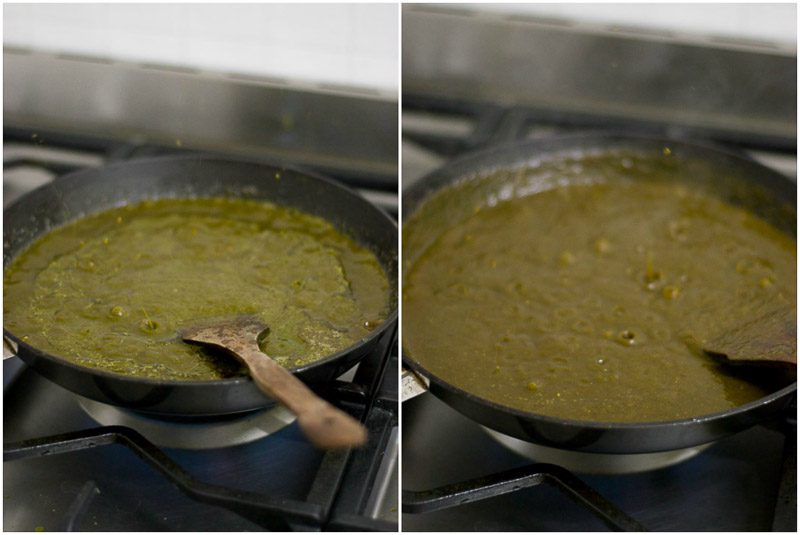
Keep the flame on medium. The thokku is going to splatter here and there. The stove is going to be a little messy. Heads up on that. The key is to keep sauteing all the time on a low medium flame. If the flame is too high, it will splatter more. So keep the flame low. The entire process will take about half an hour for this quantity of coriander thokku.
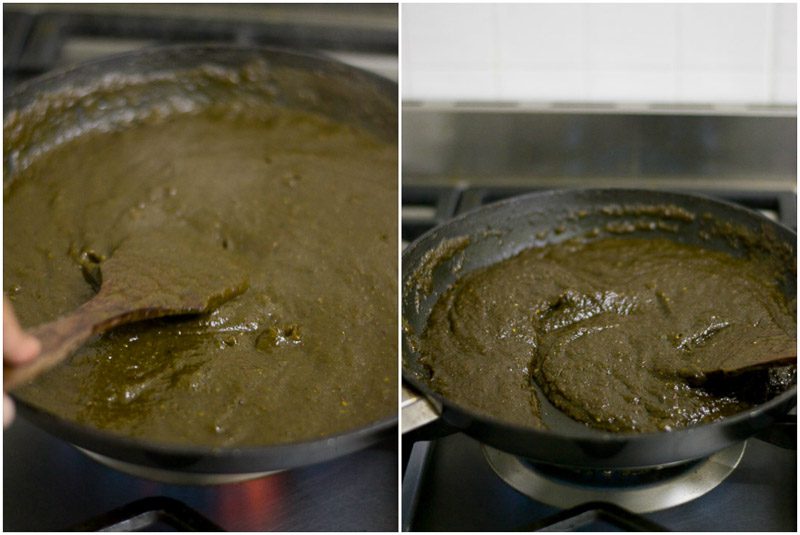
The thokku will slowly start to thicken and the colour will change. It will become darker and thicker. Keep sauteing.
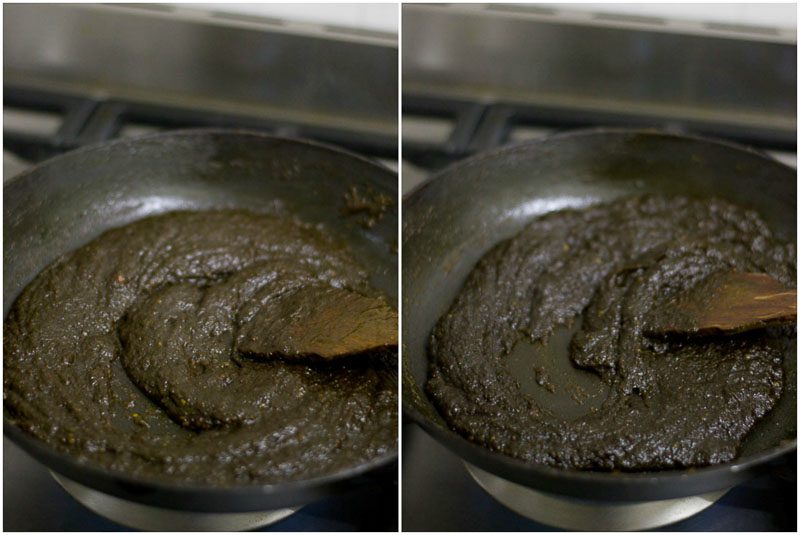
The thokku is ready when it is really thick and resembles the consistency of Halwa.
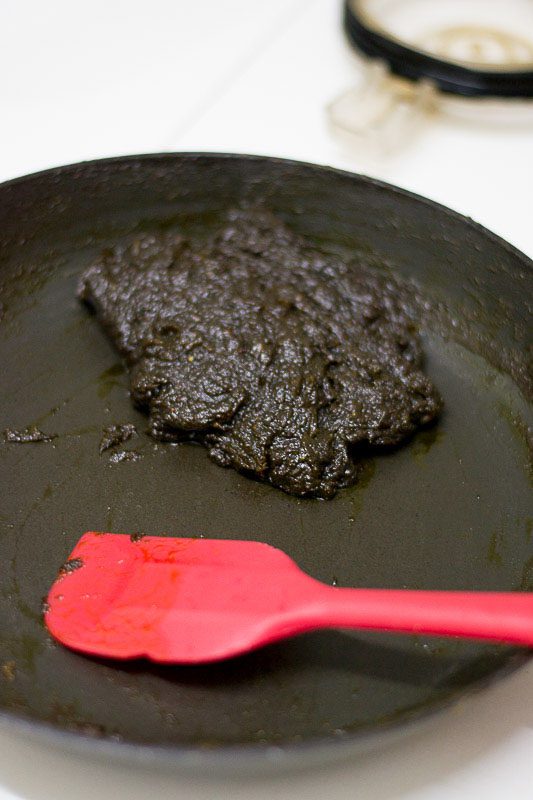
Remove from pan and allow it to cool. Store in a glass jar.
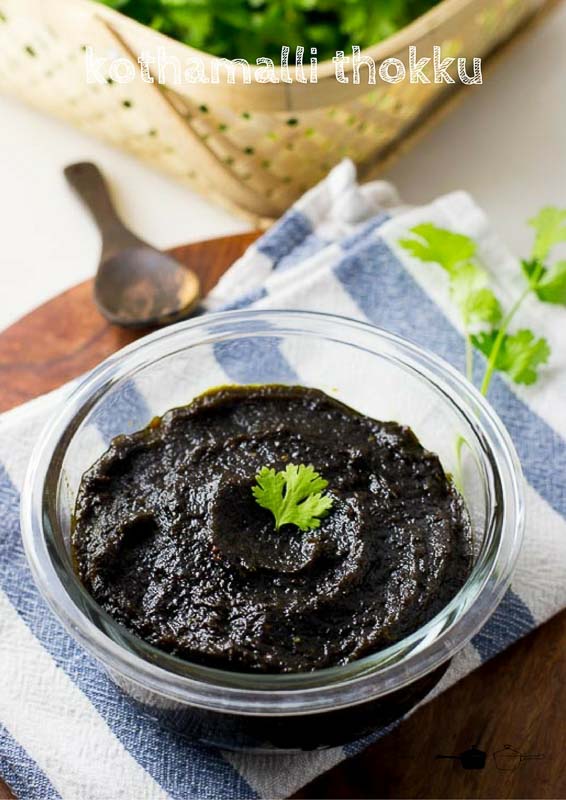
The thokku stays good in the refrigerator for upto 20 days.
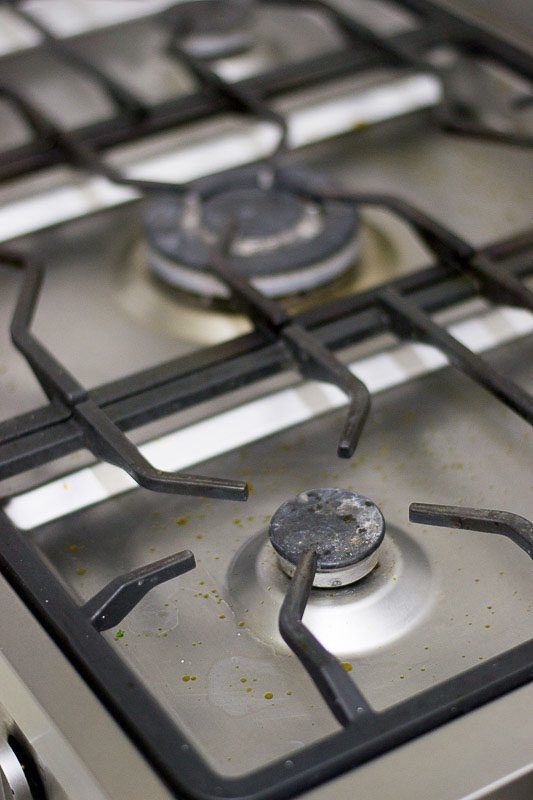
Keeping it real!!!!! The stove is going to be messy after all the splatter that happens. Cleaning the stove just after cooking the thokku makes for easy cleaning. If it dries out, it is going to take more time to clean. So clean immediately.
To Grind
- 250 grams coriander leaves
- golf ball size tamarind
- 1/2 cup jaggery
- 15 dried red chillies (preferably gundu variety)
- 1 tablespoon salt
To Temper
- 1/4 cup sesame oil (Indian gingely oil)
- 1/2 teaspoon mustard seeds
- 1/4 teaspoon asafoetida (hing)
- Clean and wash the coriander leaves and set aside. Soak the tamarind and extract the pulp. Set aside.
- Grind all the ingredients listed under “to grind” to a smooth paste.
- Heat sesame oil (Indian gingely oil) in a pan until hot. Add in the mustard seeds and the asafoetida. Add in the ground paste.
- Add in the ground paste and keep stirring until the paste thickens and resembles Halwa consistency.
- Store in fridge.
- Author: Kannamma - Suguna Vinodh
- Prep Time: 10 mins
- Cook Time: 30 mins
- Category: chutney
- Cuisine: Tamilnadu
