
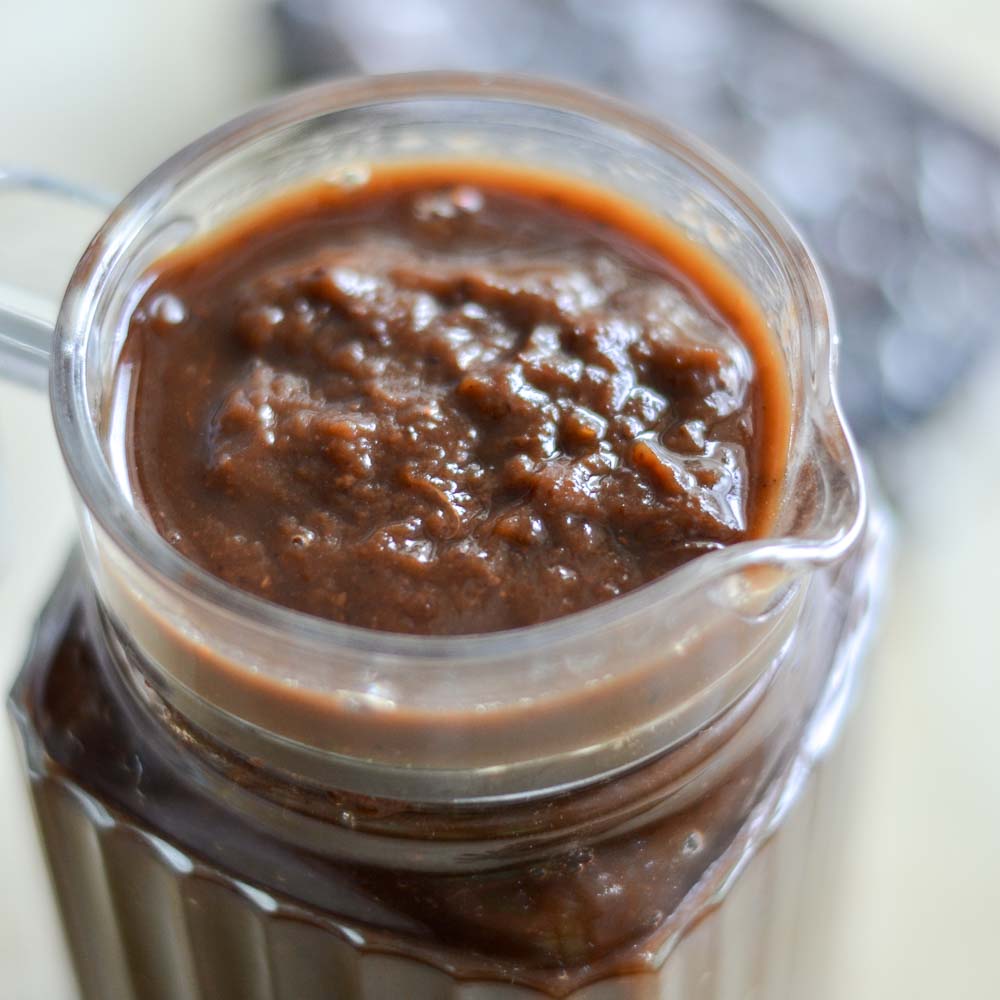
Tamarind paste is a very common ingredient in South Indian Cooking. Its one of the main souring agents that is used in a lot of recipes. Making Homemade tamarind paste is very easy and has a very long shelf life. Its worth the effort and can come in handy in everyday cooking. Here is how to do it. Tamarind Block bought from shops usually comes along with the seed. We need to remove the seeds and the hard fibre before making the pulp. I like to remove the seeds before cooking as it makes for storage after cooking easier.

Take the tamarind and break the tamarind block into bits. Try removing the seeds and the thick fiber. Set aside. Discard the seeds and fibre. NOTE: Try to buy already cleaned tamarind that has very few fiber and seeds.

Take a pressure cooker and add in the cleaned tamarind and water. Cook for 15 minutes in low flame. After 15 minutes, remove from heat and wait for the pressure to release naturally.

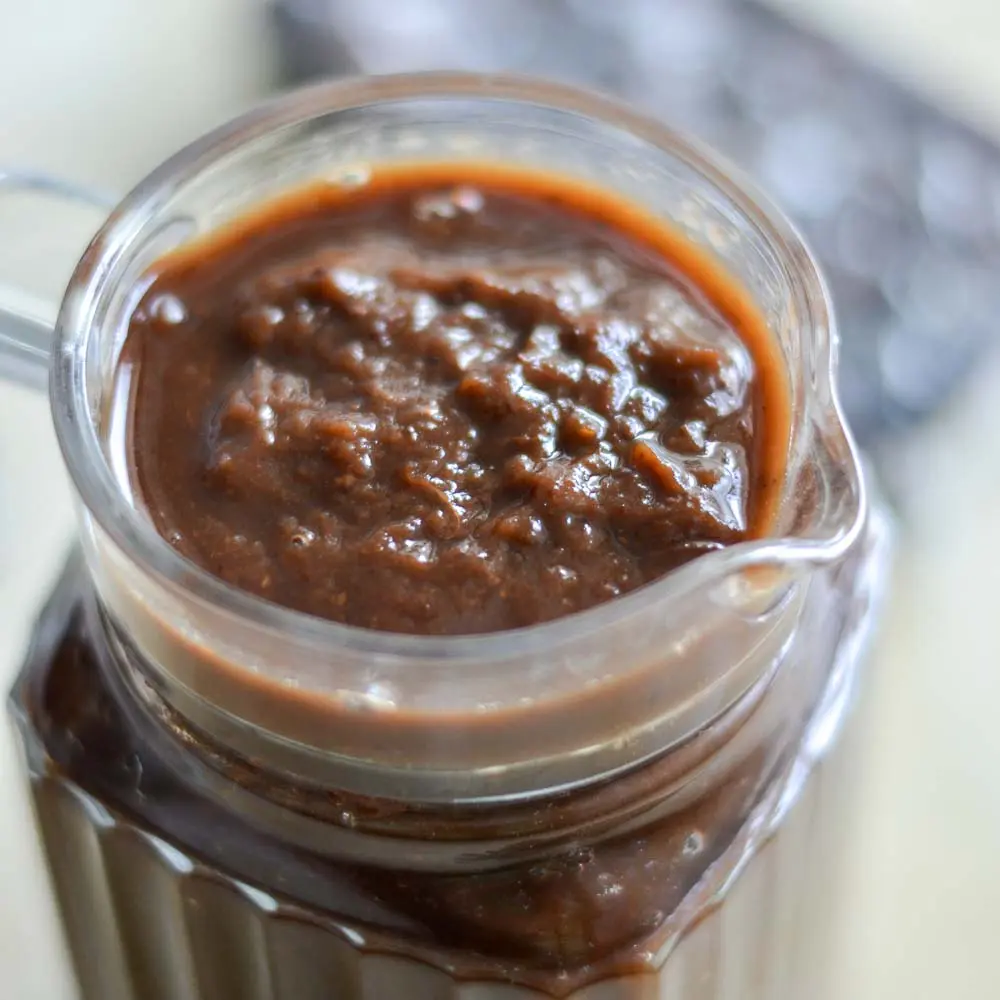
Wait for the tamarind mixture to cool slightly. Blend to a puree and bottle it and use it as required. The blending will work only if the tamarind mixture is free of seeds and fibre.
NOTE: If you think there are lots of bits and pieces of fibre or seeds after cooking, strain the tamarind puree in a colander with wide holes. Do not grind to a paste. Instead, strain in a colander.

A Note on bottling. # Do not store the tamarind in metal containers as it might react. Its advisable to store the tamarind pulp in a glass or a ceramic jar, the one that does not react.
The Tamarind pulp can be stored in the refrigerator for months.
How to use The tamarind pulp can be substituted in recipes that call for tamarind to be soaked and made into a pulp. Add a teaspoon for every inch or marble size of tamarind asked for in the recipe.
- 250 grams Tamarind, cleaned
- 500 ml water
- Take the tamarind and break the tamarind block into bits. Try removing the seeds and the thick fiber as much as possible. Set aside. Discard the seeds and fibre.
- Take a pressure cooker and add in the cleaned tamarind and water. Cook for 15 minutes in low flame. After 15 minutes, remove from heat and wait for the pressure to release naturally.
- Wait for the tamarind mixture to cool slightly. Blend to a puree and bottle it and use it as required.
Notes
- Author: Kannamma - Suguna Vinodh
- Prep Time: 10 mins
- Cook Time: 15 mins
- Category: Basics
- Cuisine: Tamilnadu
- 250 grams Tamarind, cleaned
- 500 ml water
- Take the tamarind and break the tamarind block into bits. Try removing the seeds and the thick fiber as much as possible. Set aside. Discard the seeds and fibre.
- Take a pressure cooker and add in the cleaned tamarind and water. Cook for 15 minutes in low flame. After 15 minutes, remove from heat and wait for the pressure to release naturally.
- Wait for the tamarind mixture to cool slightly. Blend to a puree and bottle it and use it as required.
Notes
- Author: Kannamma - Suguna Vinodh
- Prep Time: 10 mins
- Cook Time: 15 mins
- Category: Basics
- Cuisine: Tamilnadu
Find it online : https://www.kannammacooks.com/tamarind-paste-recipe-make-tamarind-paste-home/

Idiyappam is an all time favorite recipe at home. Serve it with sweet coconut milk and stew and it makes for a fantastic breakfast or dinner. You can also serve with Chicken Stew. Idiyappam is also called as Nool Puttu in Karnataka and String Hoppers in Srilanka.
A Note on the rice flour used: I use plain rice flour for this recipe. Generally, Idiyappam and kozhukattai is made with puttu flour / Idiyappam rice flour that’s available in the market. Many a time, I find the store bought puttu flour / Idiyappam rice flour to be rancid. So I adapted this method where I roast the plain rice flour and make Idiyappam or kozhukattai. Also, rice flour is easily available everywhere.
Many people use puttu flour for making Idiyappam. I prefer using just plain old regular rice flour. The trick is in the roasting of the flour. We will be making idiyappam today with just plain rice flour. The key to a good idiyappam is to roast the flour until very hot so it absorbs more water while kneading and that results in a very soft and fluffy idiyappam. Here is how to do idiyappam at home the most easy way. You will need an idiyappam press or an idiyappam maker for this recipe. You can buy it here. Note: If you have access to good quality puttu flour / idiyappam flour, do use that. It makes the best idiyappam.
Take a pan and add in a cup of flour to the pan. Roast the flour on medium flame until the flour is very hot to the touch. It will also start to slightly change colour at the bottom. If its kind of becoming yellow here and there, the flour is roasted. Remove and set aside.

Take a pressure cooker and add in 1.5 cups of water, a teaspoon of oil and half a teaspoon of salt. Cover and cook for one whistle. Remove the pressure manually. Hot water is ready!
NOTE: I use a pressure cooker for this recipe as its fast and also retains the heat for a longer period of time. If you do not have a pressure cooker, you can try in a kettle or a pan etc…

Immediately add in the roasted rice flour and mix well to combine. Cover the cooker, put the whistle on and let it rest for 15 minutes. Remember the stove is off. We are just resting the dough covered. Rest for 15 minutes.

After 15 minutes, open the cooker and mix the dough. Prepare small oblong balls and load it in the idiyappam press. Press the idiyappam strings onto idli plates.

Once the dough is pressed, transfer the plates to a steamer and steam the idiyappam for 10 minutes.

After 10 minutes of steaming, rest the idli plates for 5 minutes before removing the idiyappam.

Serve it with sweet coconut milk and stew and it makes for a fantastic breakfast or dinner.
Here is the video of the recipe. Hope you like it.

- 1 Cup Plain Rice Flour
- 1.5 Cups Water
- 1 Teaspoon Vegetable Oil
- 1/2 Teaspoon Salt
- Take a pan and add in a cup of flour to the pan. Roast the flour on medium flame until the flour is very hot to the touch. Remove and set aside.
- Take a pressure cooker and add in 1.5 cups of water, a teaspoon of oil and half a teaspoon of salt. Cover and cook for one whistle. Remove the pressure manually.
- Immediately add in the roasted rice flour and mix well to combine. Cover the cooker, put the whistle on and let it rest for 15 minutes. Remember the stove is off. We are just resting the dough covered. Rest for 15 minutes.
- After 15 minutes, open the cooker and mix the dough. Prepare small oblong balls and load it in the idiyappam press. Press the idiyappam strings onto idli plates.
- Once the dough is pressed, transfer the plates to a steamer and steam the idiyappam for 10 minutes.
- After 10 minutes of steaming, rest the idli plates for 5 minutes before removing the idiyappam.
Notes
Press the dough into idiyappam press when the dough is still hot. It becomes hard to press when the dough cools down.
- Author: Kannamma - Suguna Vinodh
- Prep Time: 20 mins
- Cook Time: 15 mins
- Category: Breakfast
- Cuisine: South Indian

