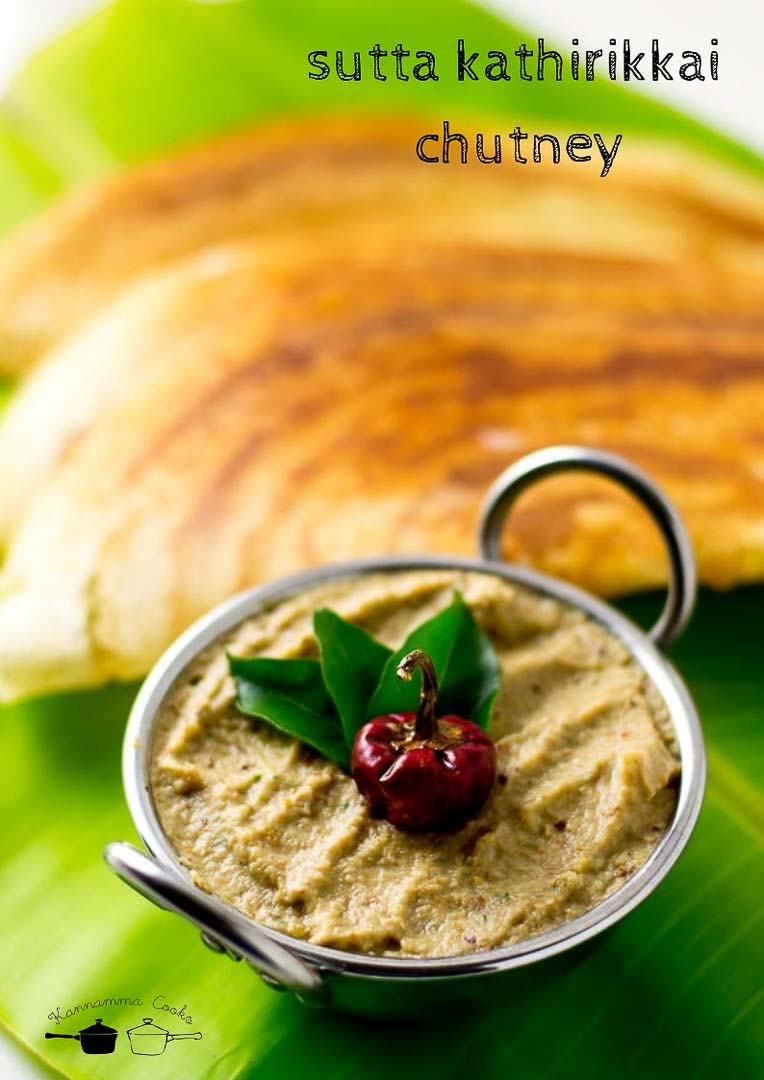
Recipe for sutta kathirikkai chutney / thogayal – smoked eggplant chutney recipe. Recipe with step by step pictures.
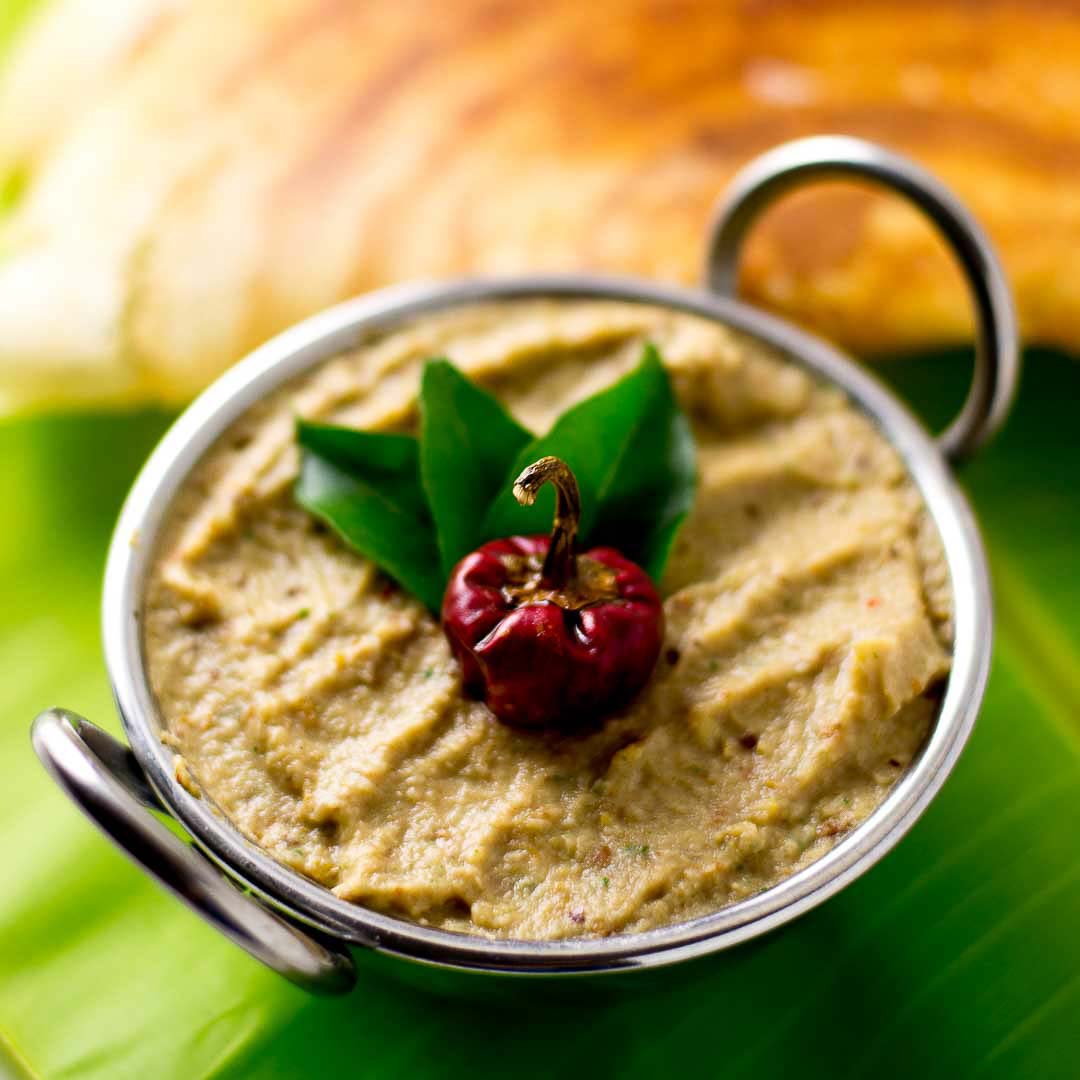
This is a fantastic chutney that goes well with idli and dosa. Eggplants are smoked and ground to a chutney along with lentils and coconut. This recipe is from my friend Nithya. Here is how to do sutta kathirikkai chutney – smoked eggplant chutney.
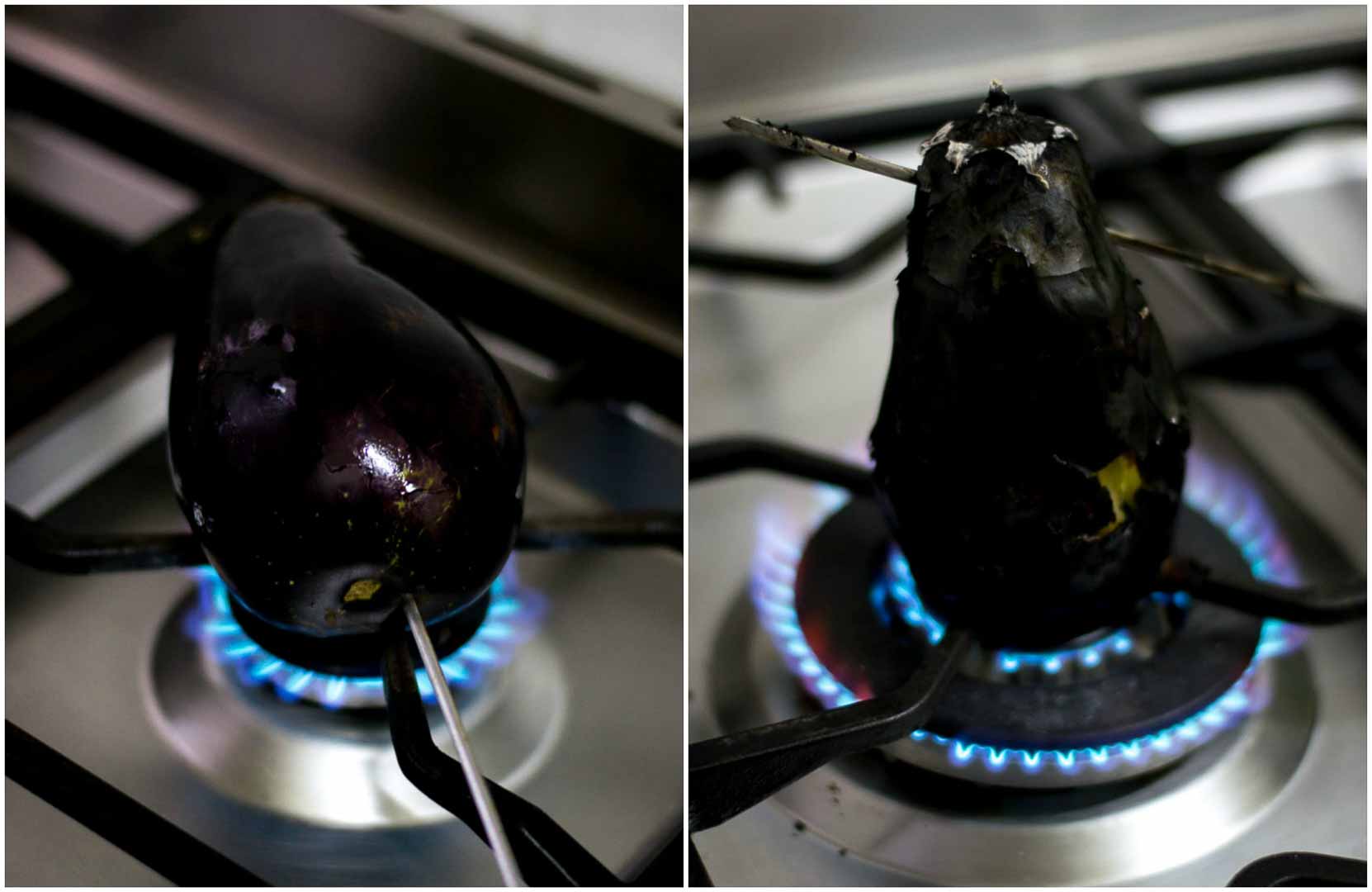
Use one big Eggplant for this recipe. I have used two today as the eggplants I had were really small in size. We will need about 200 – 250 grams of eggplant in total. Here is how to smoke the eggplant. Stove Top: Apply a teaspoon oil on the eggplant. Place the eggplant on fire and roast the eggplant for 6-7 minutes turning the eggplant frequently with tongs. Char the Eggplant well. The eggplant should be really soft after the 6-7 minutes of charring.
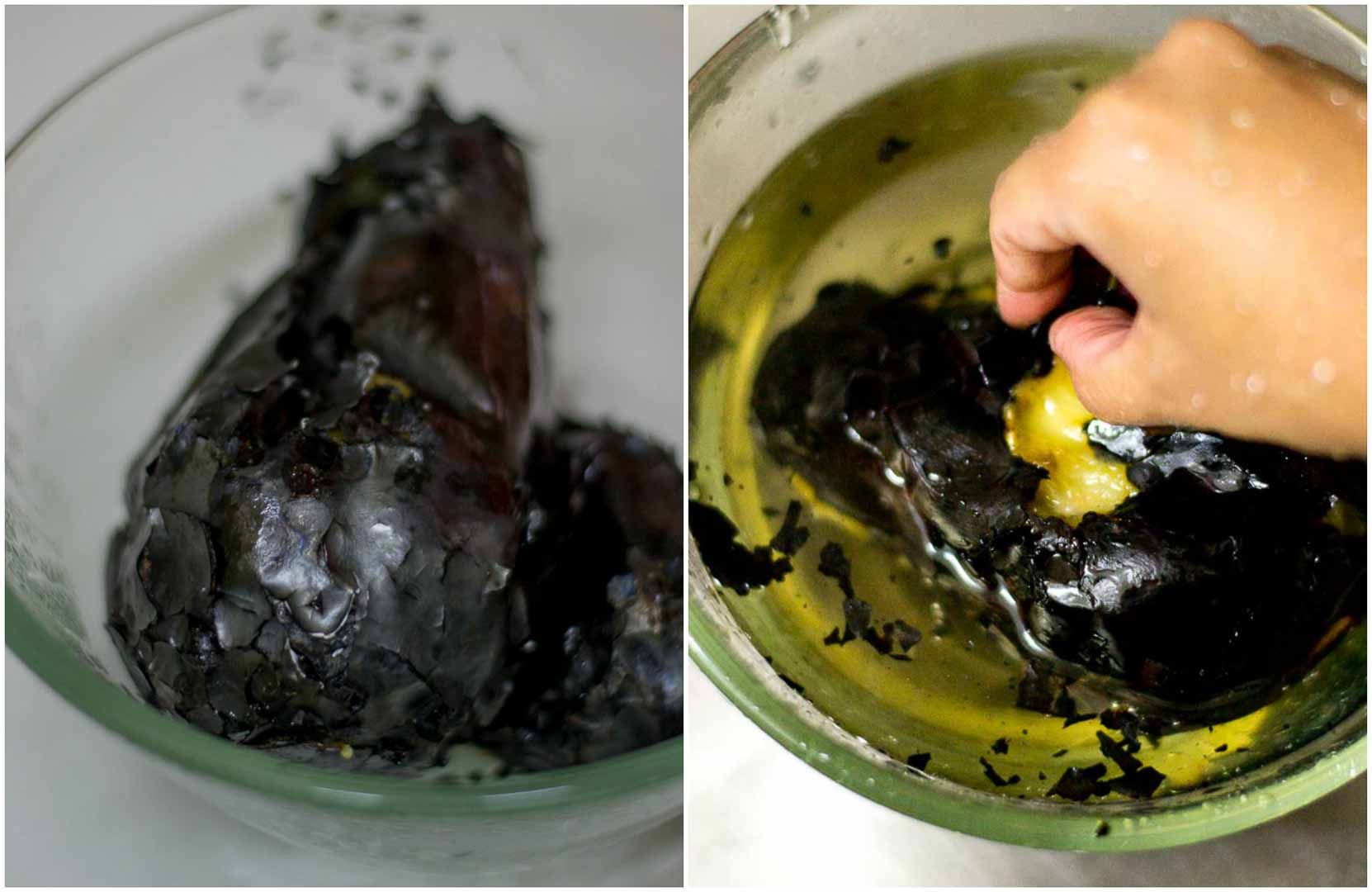
Once the skin is blackened, remove the eggplant and place it in a bowl. Wash the eggplant in water to remove the blackened skin.
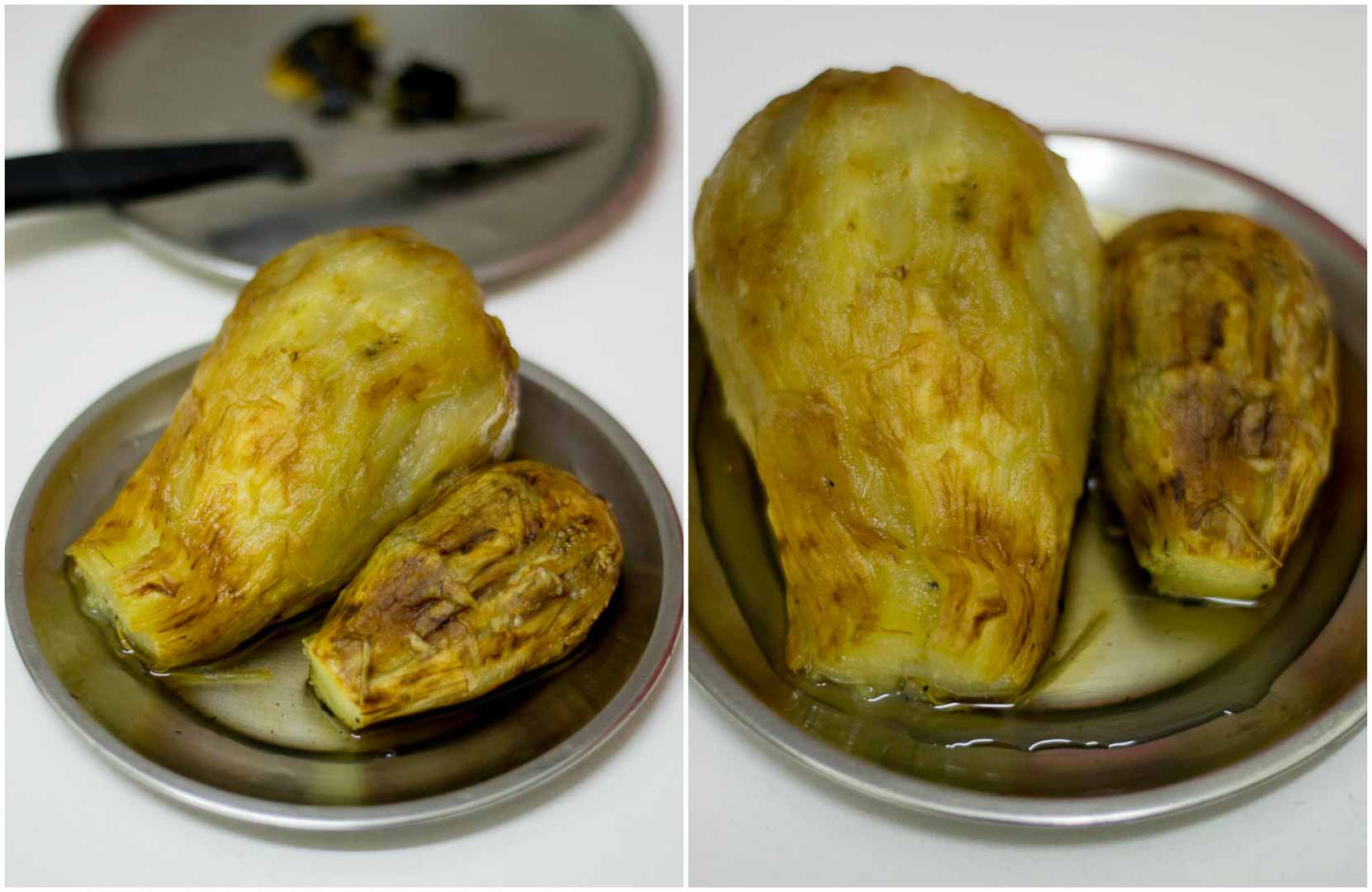
Set aside on a plate. The eggplant will start to leave juices and thats fine.
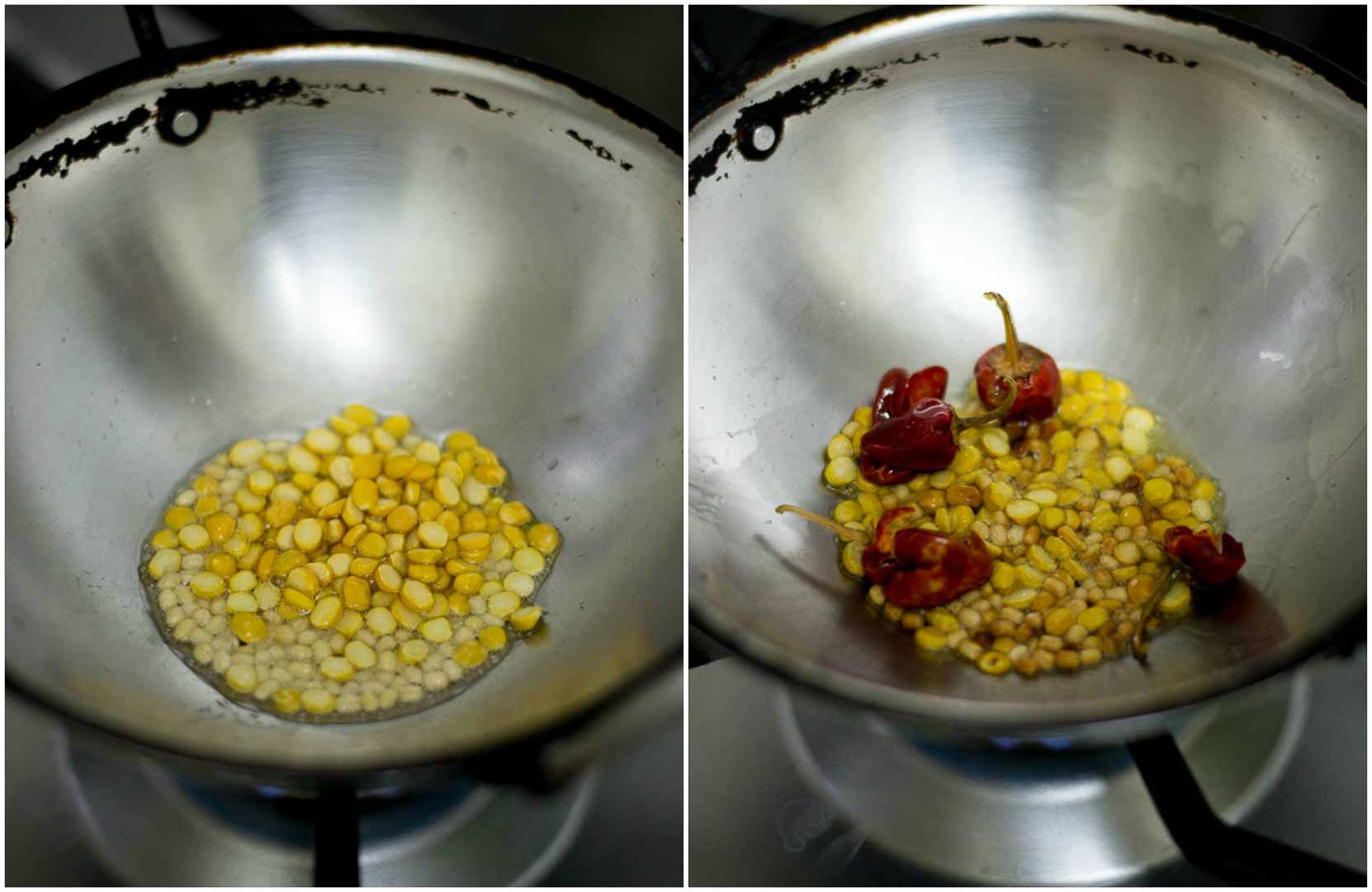
Heat a teaspoon of peanut oil in a pan and add in the urad dal and chana dal. Once the dal is slightly golden, add in the dried red chillies, tamarind and curry leaves.
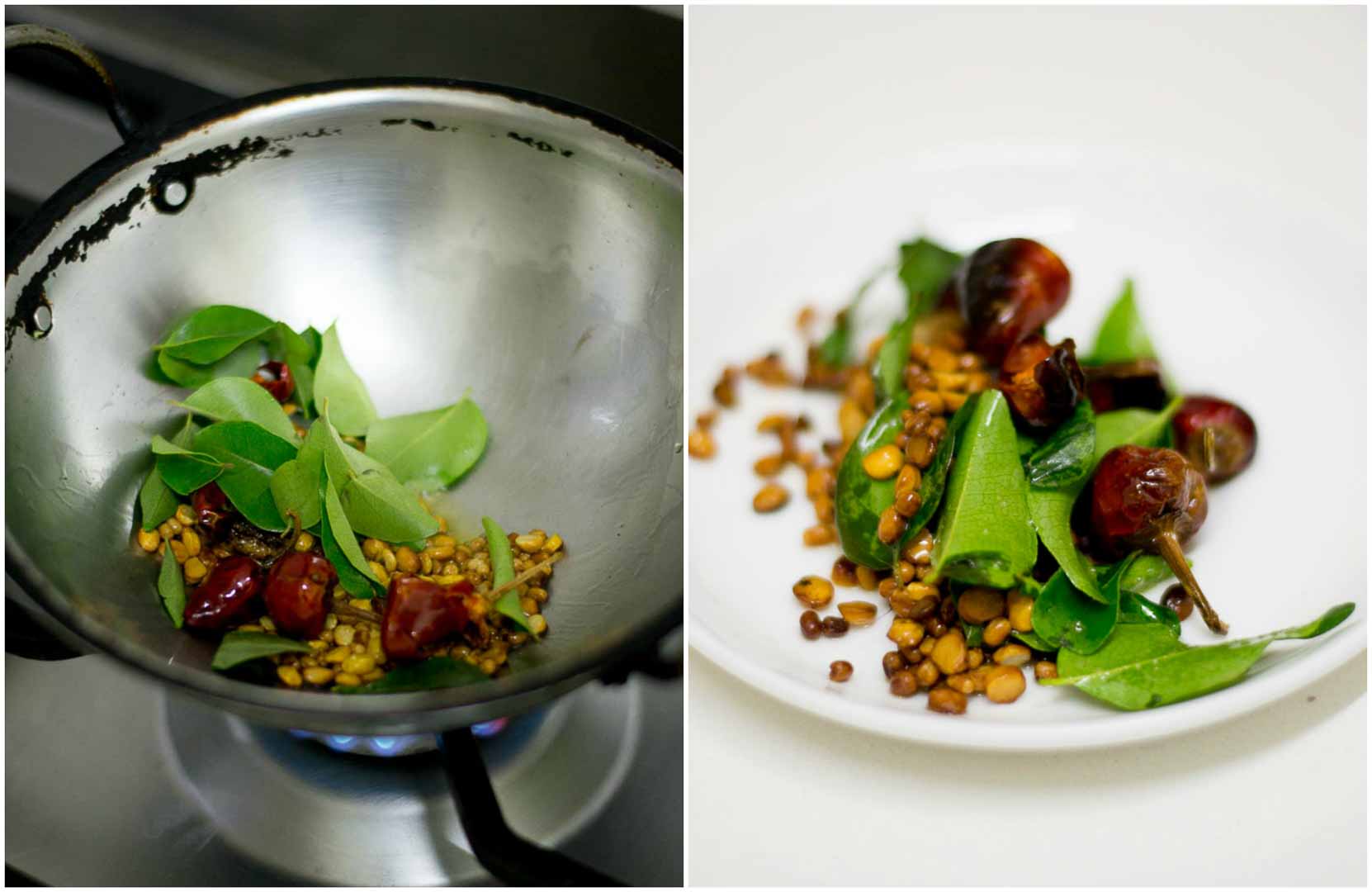
Saute for a few seconds. Remove the fried mixture and set aside on a plate to cool.
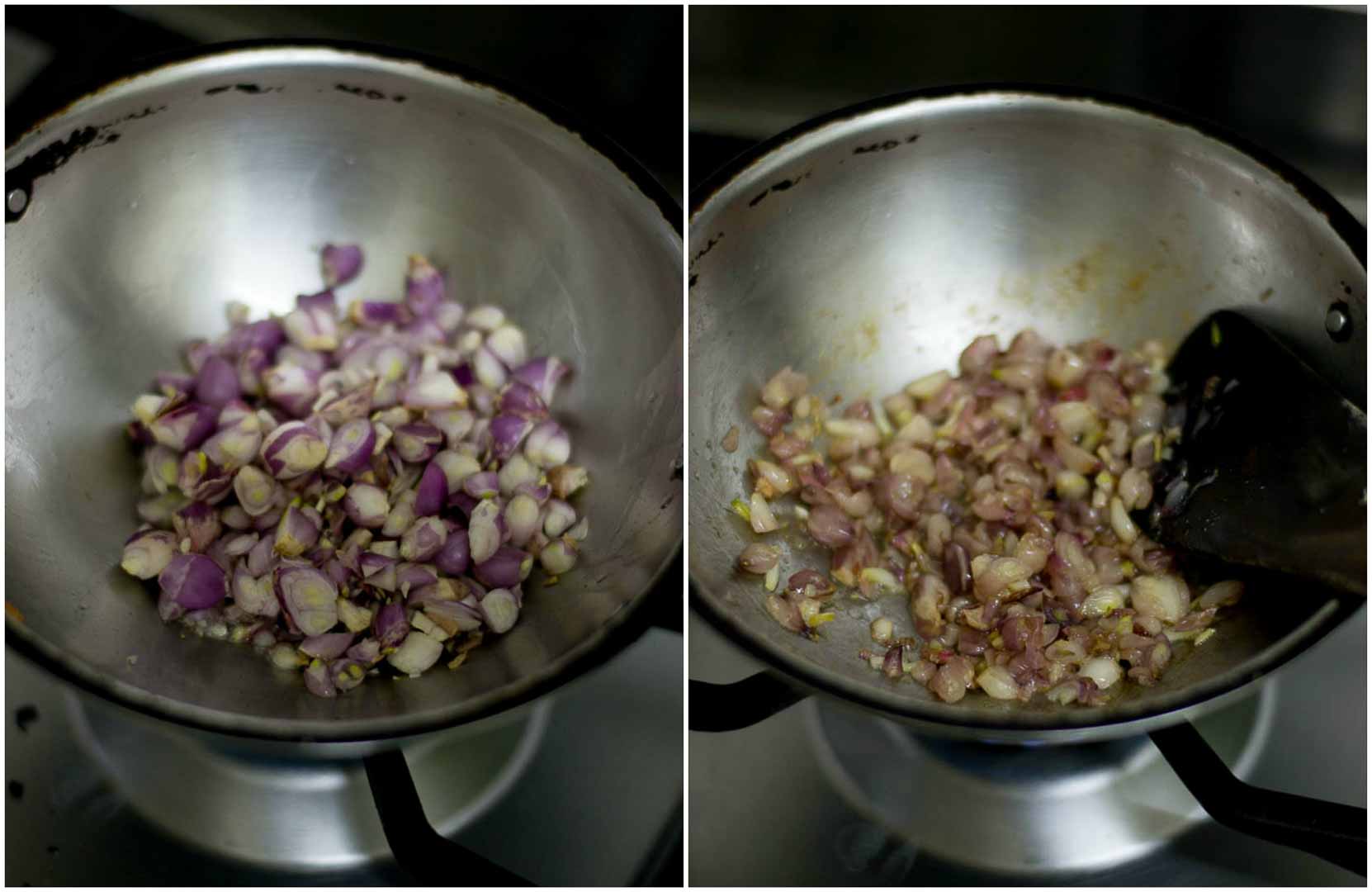
In the same kadai, add in a teaspoon of oil and add in the chopped small onions (Indian shallots). Add in the salt and saute for five minutes till golden.
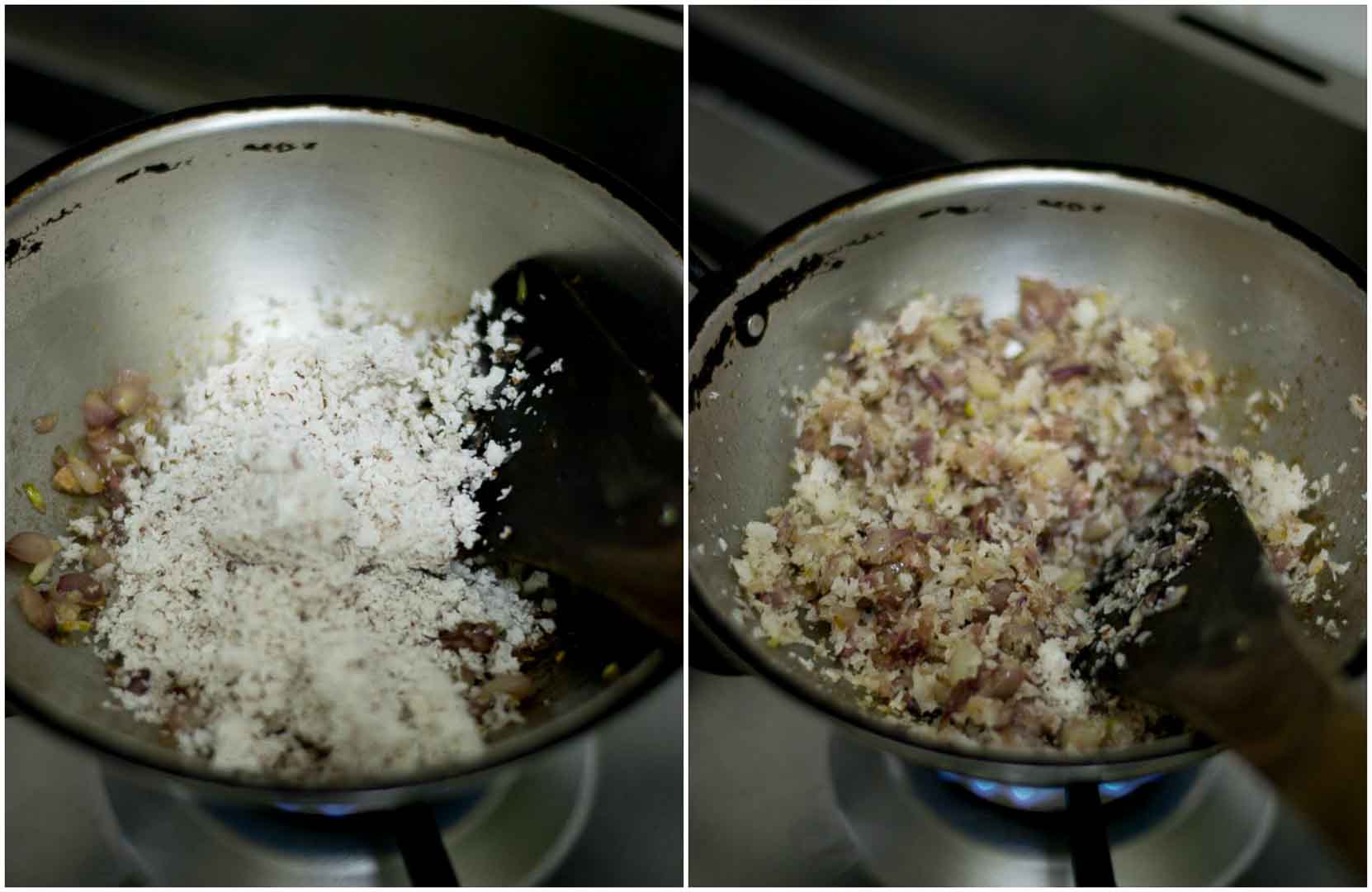
Add in the fresh shredded coconut and saute for a minute. Remove and set aside on a plate to cool.
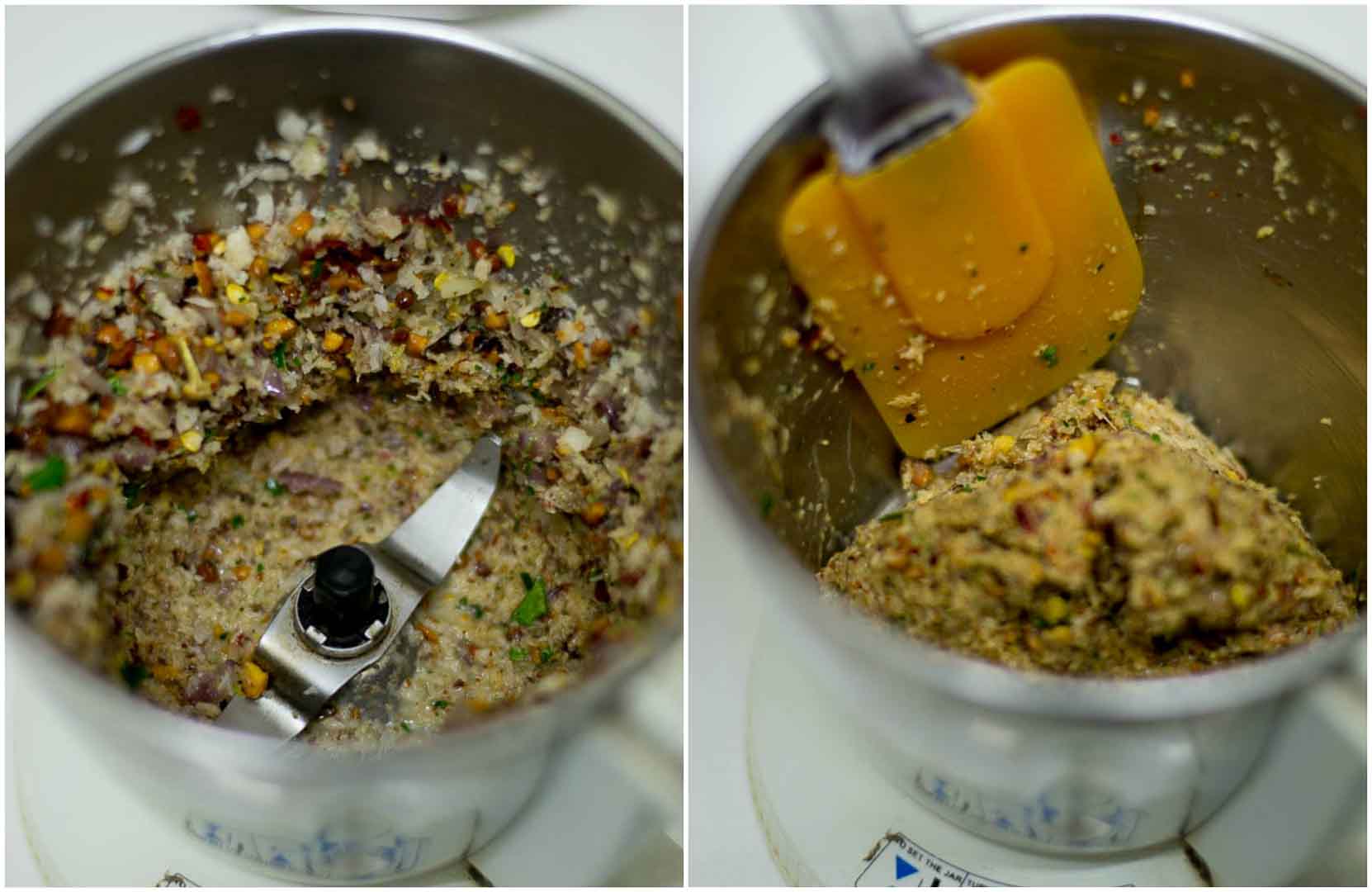
Take a mixie jar and add in the fried lentil mixture and the onion-coconut mixture. Sprinkle little water and grind to a coarse paste.
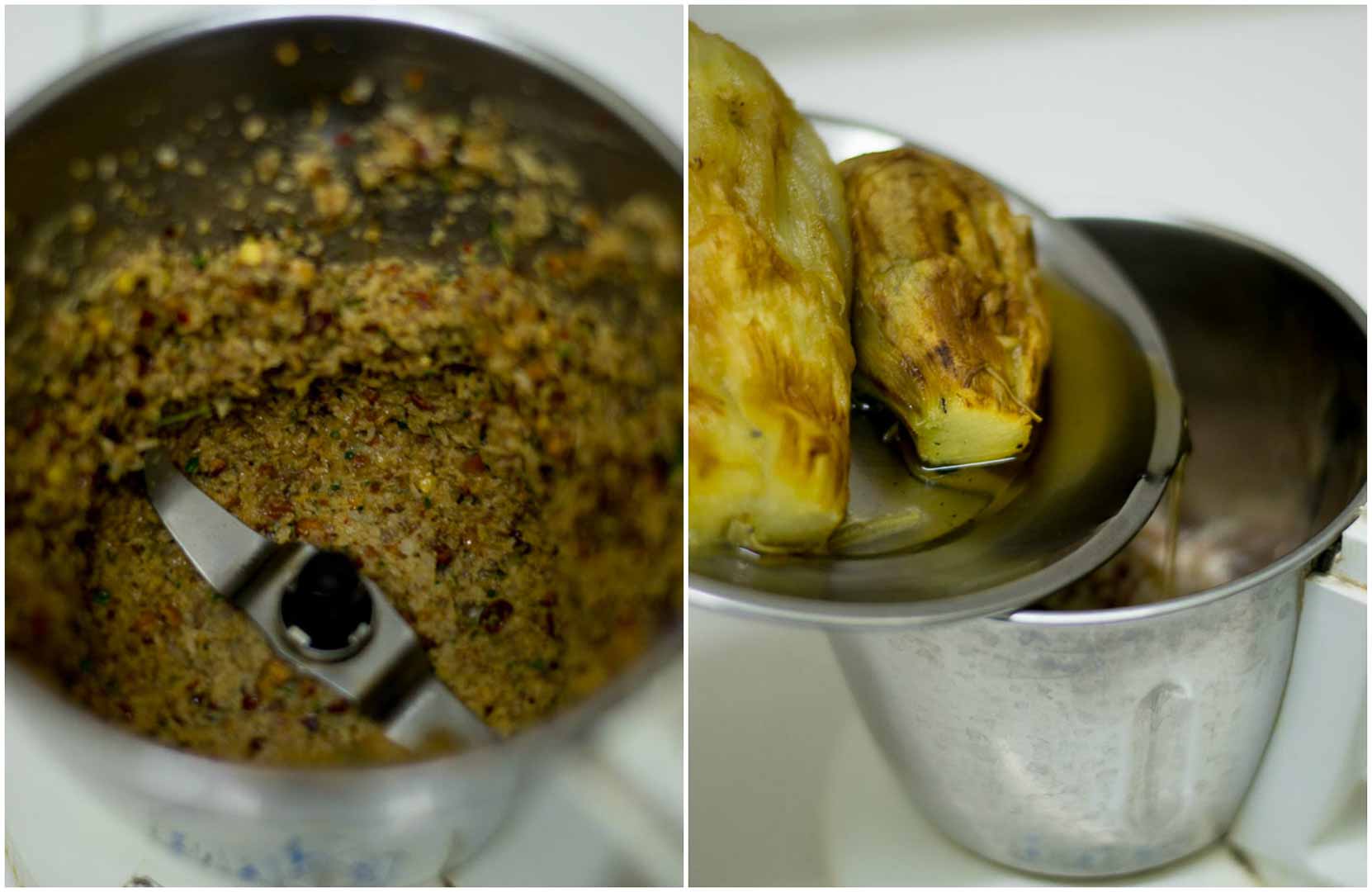
Once the mixture is ground, add in the eggplant along with its juices. Do not add any water as the chutney will become very thin.
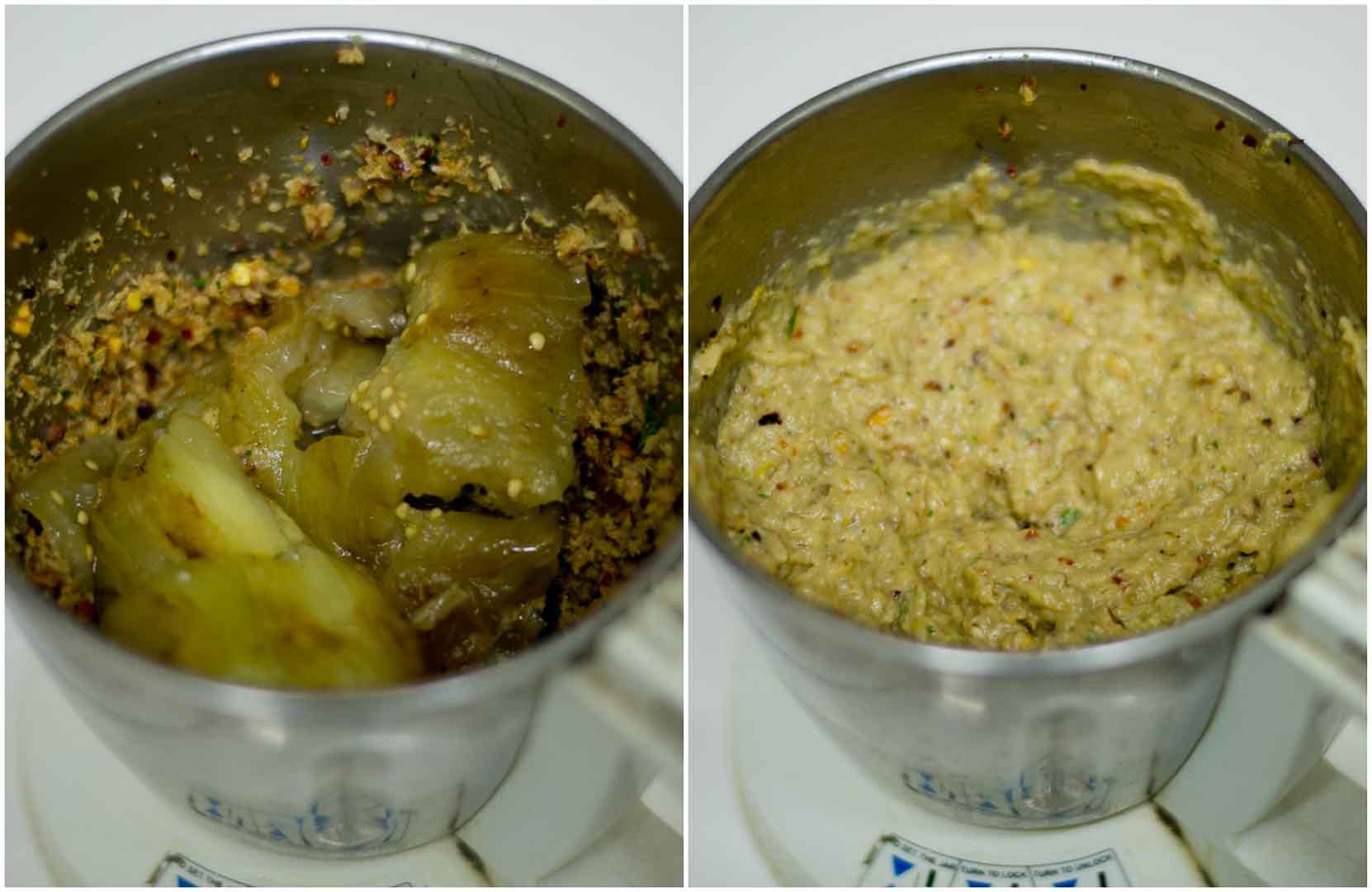
Pulse for a few seconds. You do not want to grind for a long time after adding the eggplant. The seeds from the eggplant, if ground fine will taste bitter. So after adding the eggplant, just pulse for a few seconds until combined.
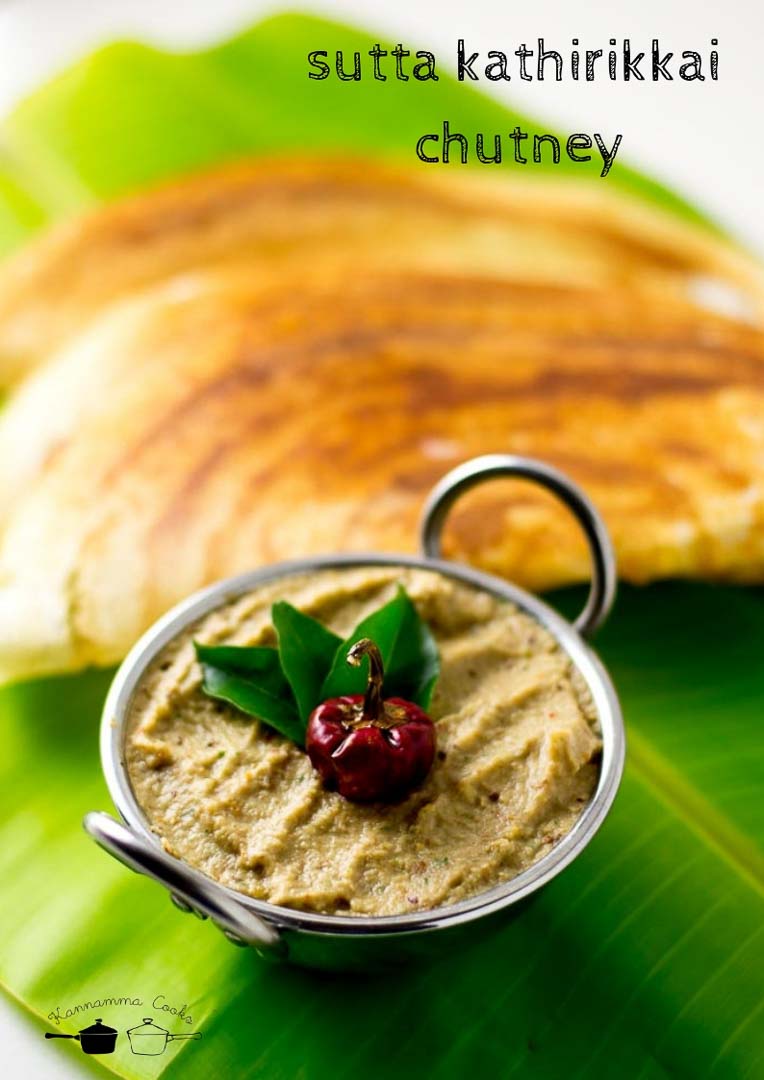
The chutney is ready. Serve with idli or dosa.
- 250 grams eggplant
- 3 teaspoon peanut oil
- 2 teaspoon urad dal
- 2 teaspoon chana dal
- 4 dried chillies (use less or more depending on your taste)
- 1 small piece (teaspoon size) tamarind
- 1 sprig curry leaves
- 1/2 cup chopped small onions (Indian shallots)
- 1 teaspoon salt
- 1/3 cup fresh shredded coconut
- Apply some oil on the eggplant. Place the eggplant on fire and roast the eggplant for 6-7 minutes turning the eggplant frequently with tongs. Char the Eggplant well. Once the skin is blackened, remove the eggplant and place it in a bowl. Wash the eggplant in water to remove the blackened skin. Set aside on a plate. The eggplant will start to leave juices and thats fine.
- Heat a teaspoon of peanut oil in a pan and add in the urad dal and chana dal. Once the dal is slightly golden, add in the dried red chillies, tamarind and curry leaves. Saute for a few seconds. Remove the fried mixture and set aside on a plate to cool.
- In the same kadai, add in a teaspoon of oil and add in the chopped small onions (Indian shallots). Add in the salt and saute for five minutes till golden.
- Add in the fresh shredded coconut and saute for a minute. Remove and set aside on a plate to cool.
- Take a mixie jar and add in the fried lentil mixture and the onion-coconut mixture. Sprinkle little water and grind to a coarse paste. Once the mixture is ground, add in the eggplant along with its juices. Do not add any water as the chutney will become very thin.
- Pulse for a few seconds. You do not want to grind for a long time after adding the eggplant. The seeds from the eggplant, if ground fine will taste bitter. So after adding the eggplant, just pulse for a few seconds until combined.
- The chutney is ready. Serve with idli or dosa.
- Author: Kannamma - Suguna Vinodh
- Prep Time: 5 mins
- Cook Time: 20 mins
- Category: Chutney
- Cuisine: Tamilnadu
- 250 grams eggplant
- 3 teaspoon peanut oil
- 2 teaspoon urad dal
- 2 teaspoon chana dal
- 4 dried chillies (use less or more depending on your taste)
- 1 small piece (teaspoon size) tamarind
- 1 sprig curry leaves
- 1/2 cup chopped small onions (Indian shallots)
- 1 teaspoon salt
- 1/3 cup fresh shredded coconut
- Apply some oil on the eggplant. Place the eggplant on fire and roast the eggplant for 6-7 minutes turning the eggplant frequently with tongs. Char the Eggplant well. Once the skin is blackened, remove the eggplant and place it in a bowl. Wash the eggplant in water to remove the blackened skin. Set aside on a plate. The eggplant will start to leave juices and thats fine.
- Heat a teaspoon of peanut oil in a pan and add in the urad dal and chana dal. Once the dal is slightly golden, add in the dried red chillies, tamarind and curry leaves. Saute for a few seconds. Remove the fried mixture and set aside on a plate to cool.
- In the same kadai, add in a teaspoon of oil and add in the chopped small onions (Indian shallots). Add in the salt and saute for five minutes till golden.
- Add in the fresh shredded coconut and saute for a minute. Remove and set aside on a plate to cool.
- Take a mixie jar and add in the fried lentil mixture and the onion-coconut mixture. Sprinkle little water and grind to a coarse paste. Once the mixture is ground, add in the eggplant along with its juices. Do not add any water as the chutney will become very thin.
- Pulse for a few seconds. You do not want to grind for a long time after adding the eggplant. The seeds from the eggplant, if ground fine will taste bitter. So after adding the eggplant, just pulse for a few seconds until combined.
- The chutney is ready. Serve with idli or dosa.
- Author: Kannamma - Suguna Vinodh
- Prep Time: 5 mins
- Cook Time: 20 mins
- Category: Chutney
- Cuisine: Tamilnadu
Find it online : https://www.kannammacooks.com/sutta-kathirikkai-chutney/
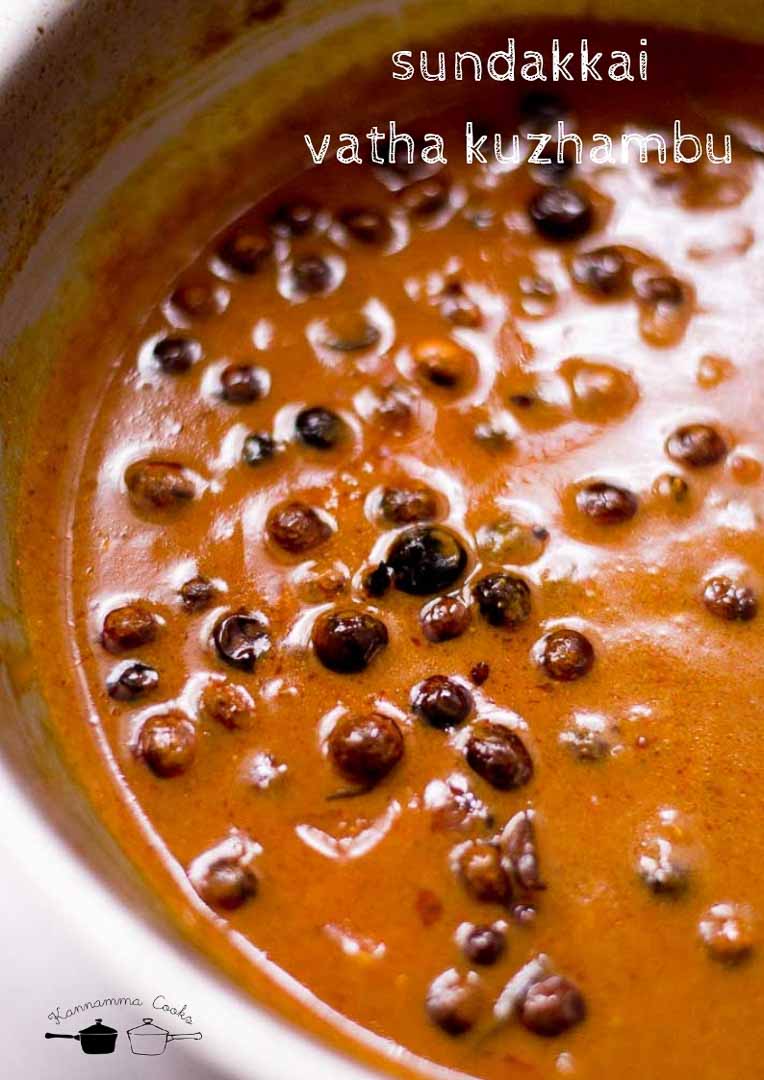
Recipe for sundakkai vatha kuzhambu. Spicy Tamil style vathal kuzhambu / kara kuzhambu recipe made without coconut. A popular side dish for lunch in Tamilnadu.
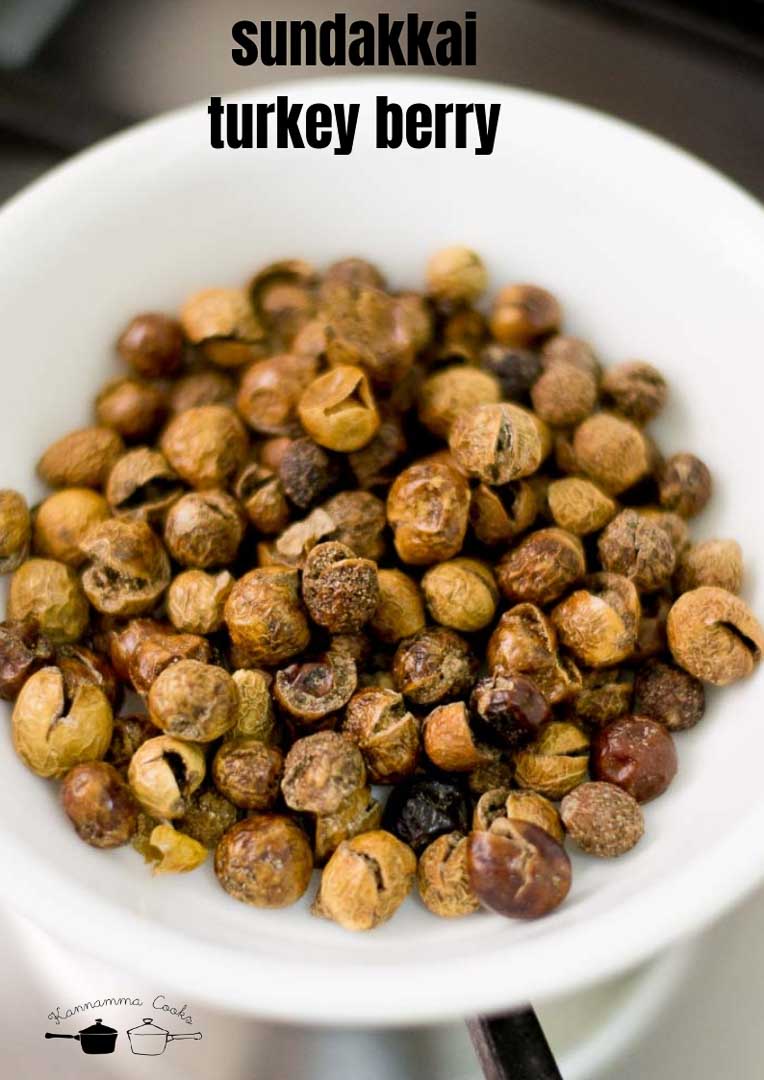
Sundakkai is also called as turkey berries. The fresh berries are soaked in a salt-buttermilk mixture for couple of days and then dried and stored for making curries. Its easily available in Indian grocery stores or online.
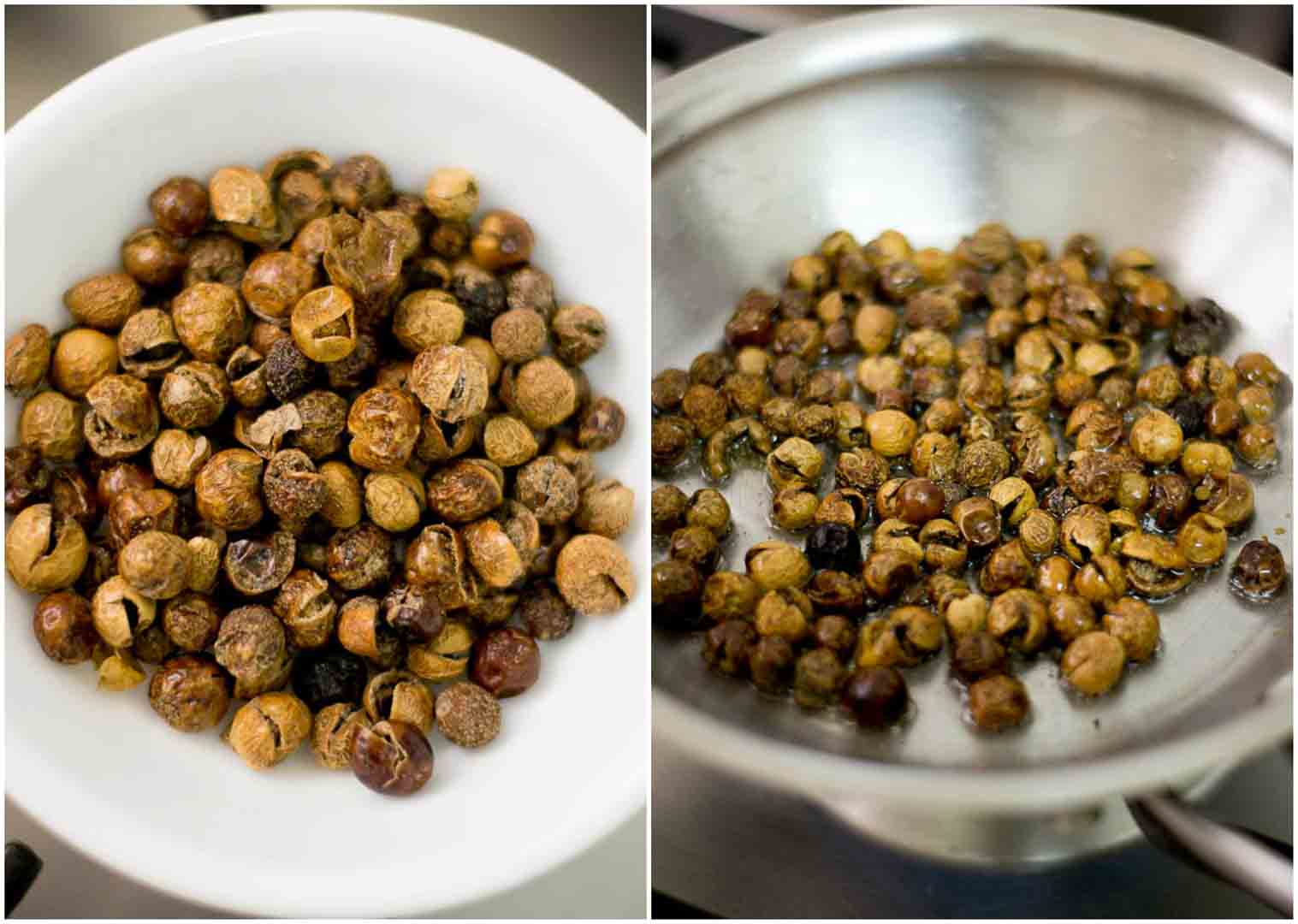
First, we will fry the sundakkai. Take a pan and add in three tablespoon of oil. Add in the sundakkai and saute on a low flame for a minute. The berries will puff up and start to change colour.
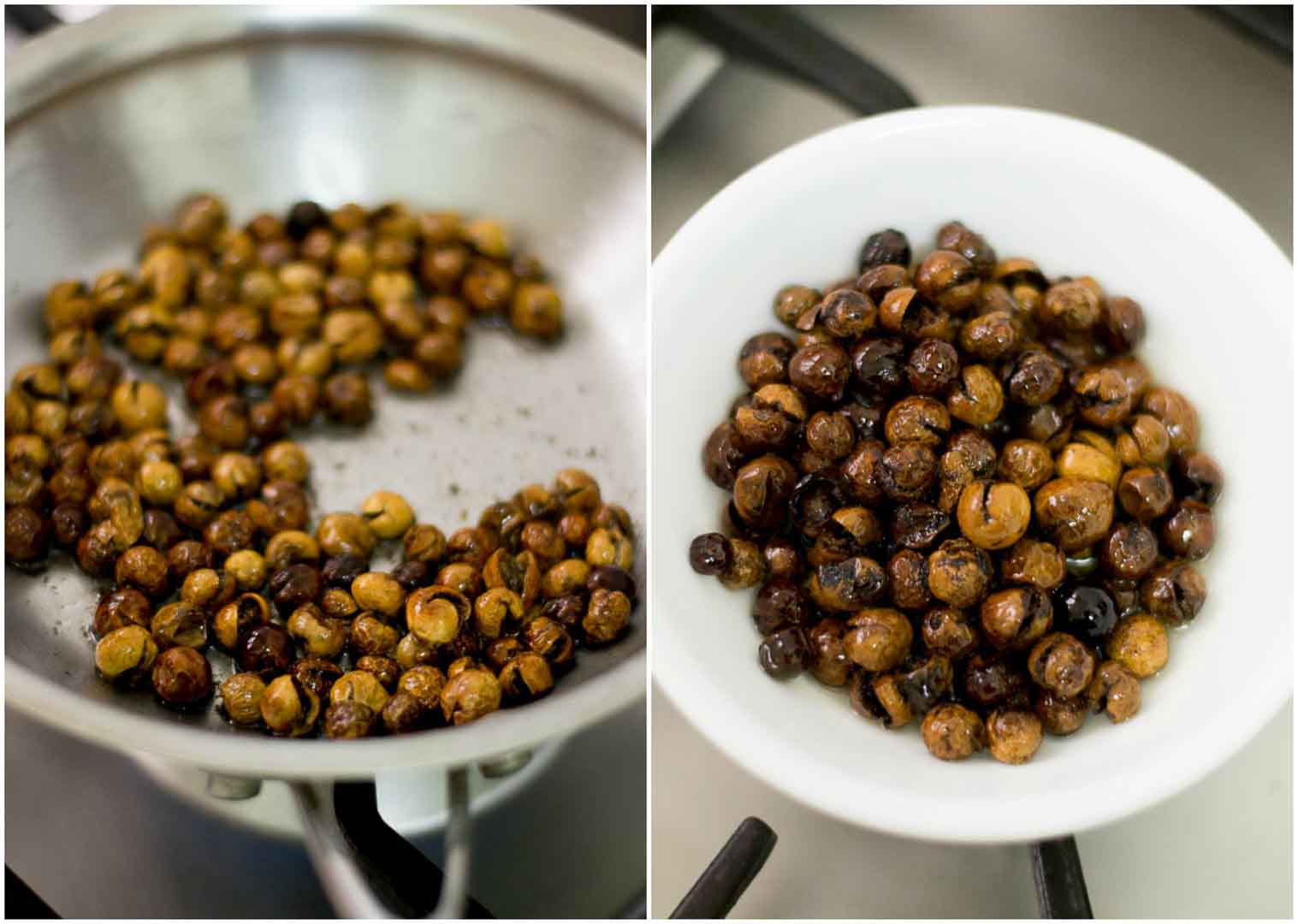
Remove from heat and set aside to a bowl along with the oil left.
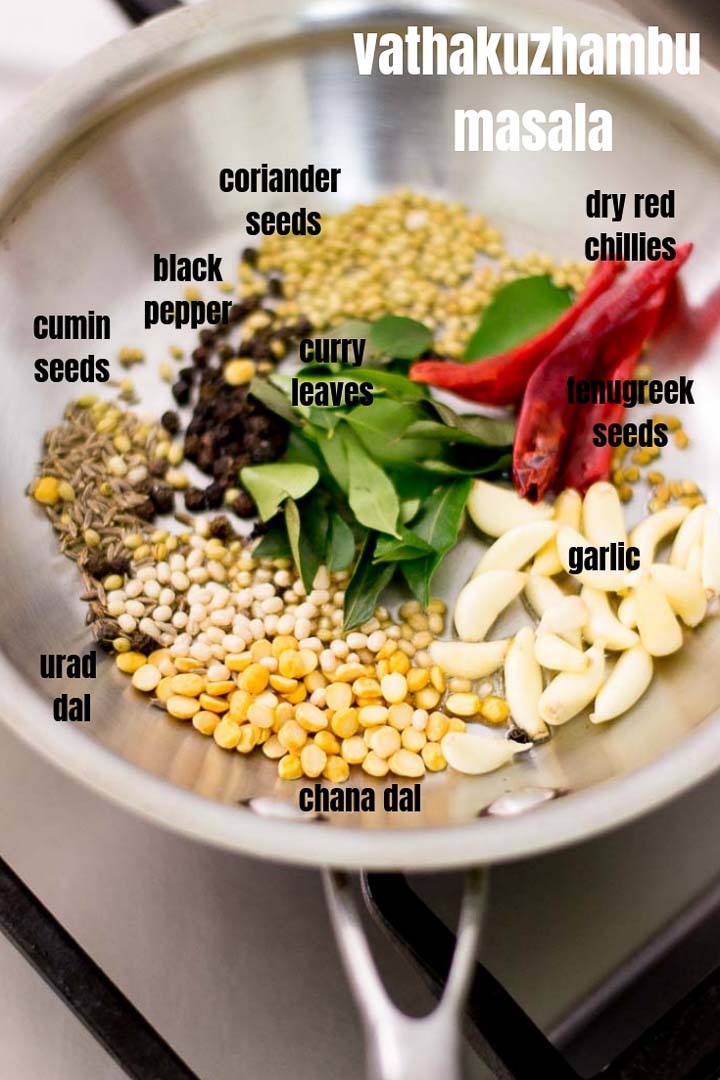
Now, we will make a fresh masala paste. Here is what you will need. Use very little fenugreek seeds as they are very bitter.
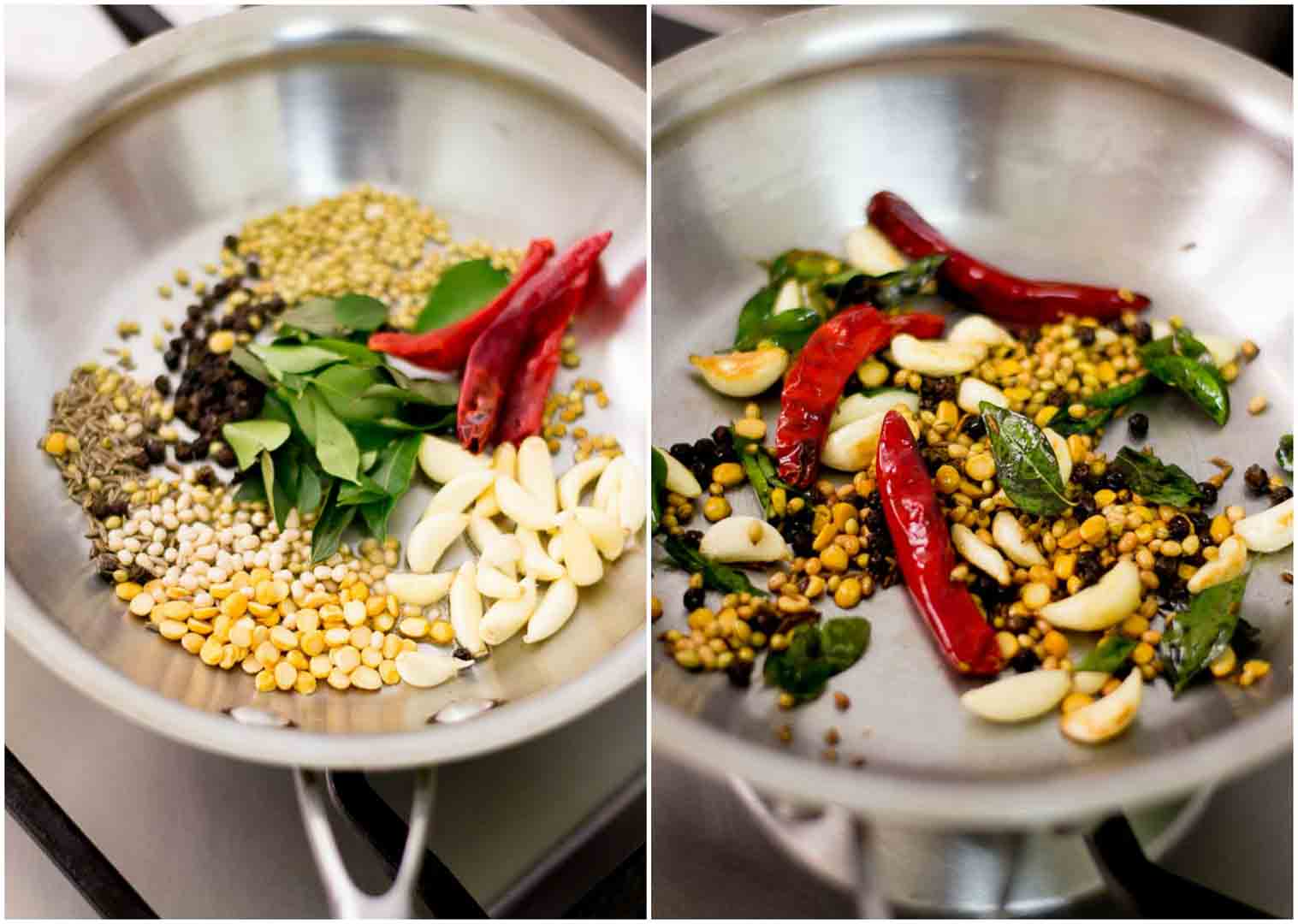
Heat a teaspoon of oil in a pan and add in all the ingredients for the masala paste. Saute on a very low flame for 3-4 minutes. Sauteing on a low flame is important as you do not want to burn the lentils. Sauteing on a low flame nicely roasts and browns the ingredients.
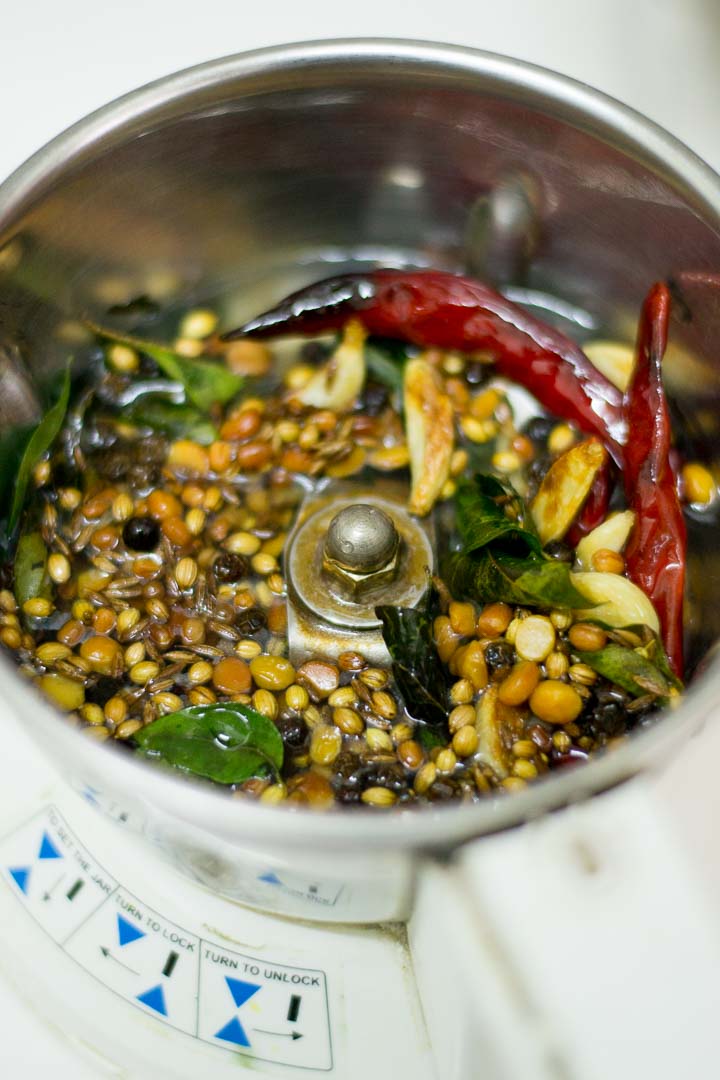
Grind the roasted ingredients along with half a cup of water to a smooth paste. Set aside.

Soak a gooseberry size tamarind (about two inch strip) in a cup of water for 20 minutes. Squeeze and extract the pulp. Discard the seeds and the pith. Set aside.
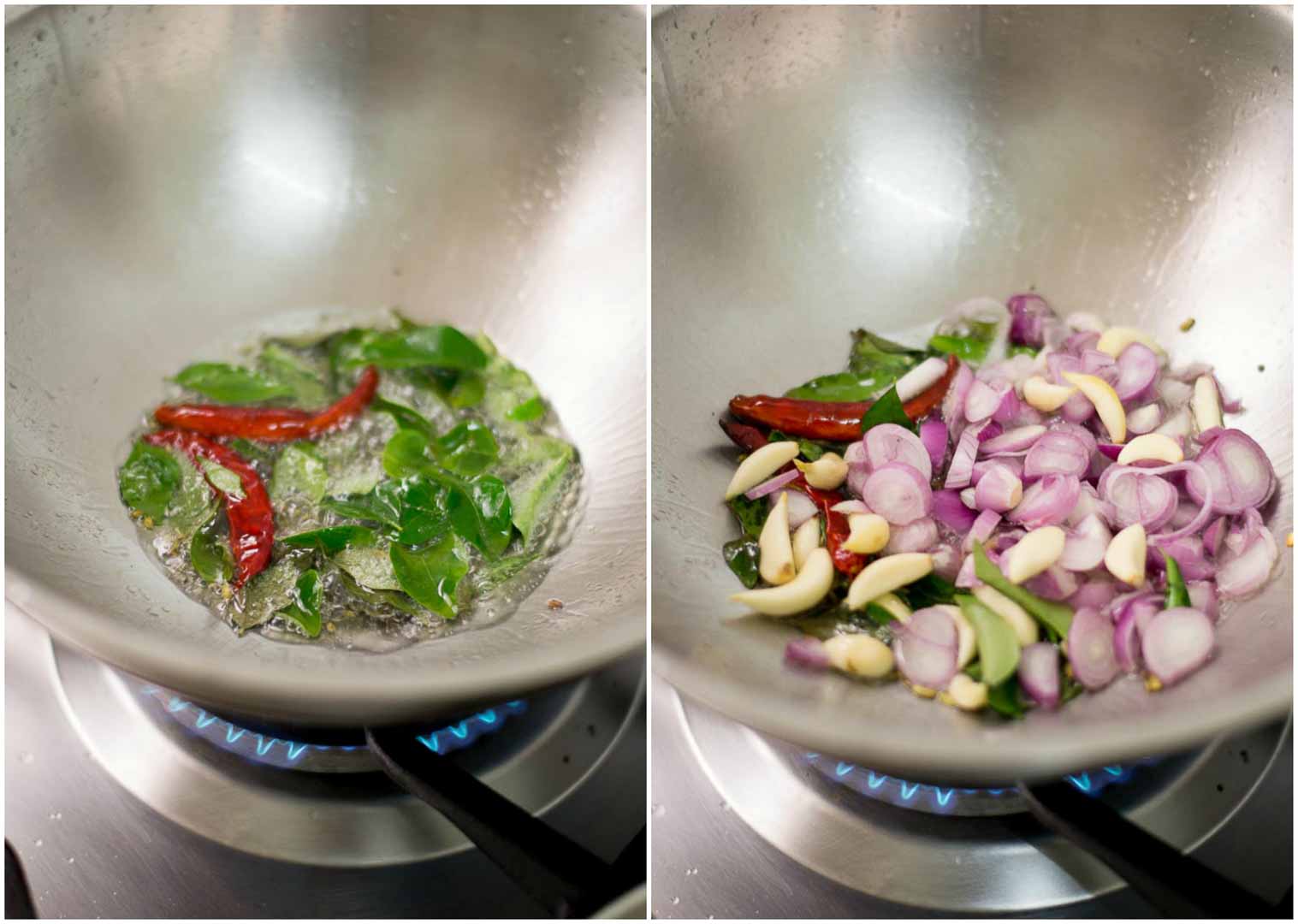
Now we will make the kuzhambu. Heat peanut oil in a pan (Be generous with oil) and add in the mustard seeds, fenugreek seeds, fennel seeds and curry leaves. Let the mustard seeds crackle. Add in the chopped small onion (Indian shallots) and garlic. Saute for 3-4 minutes.
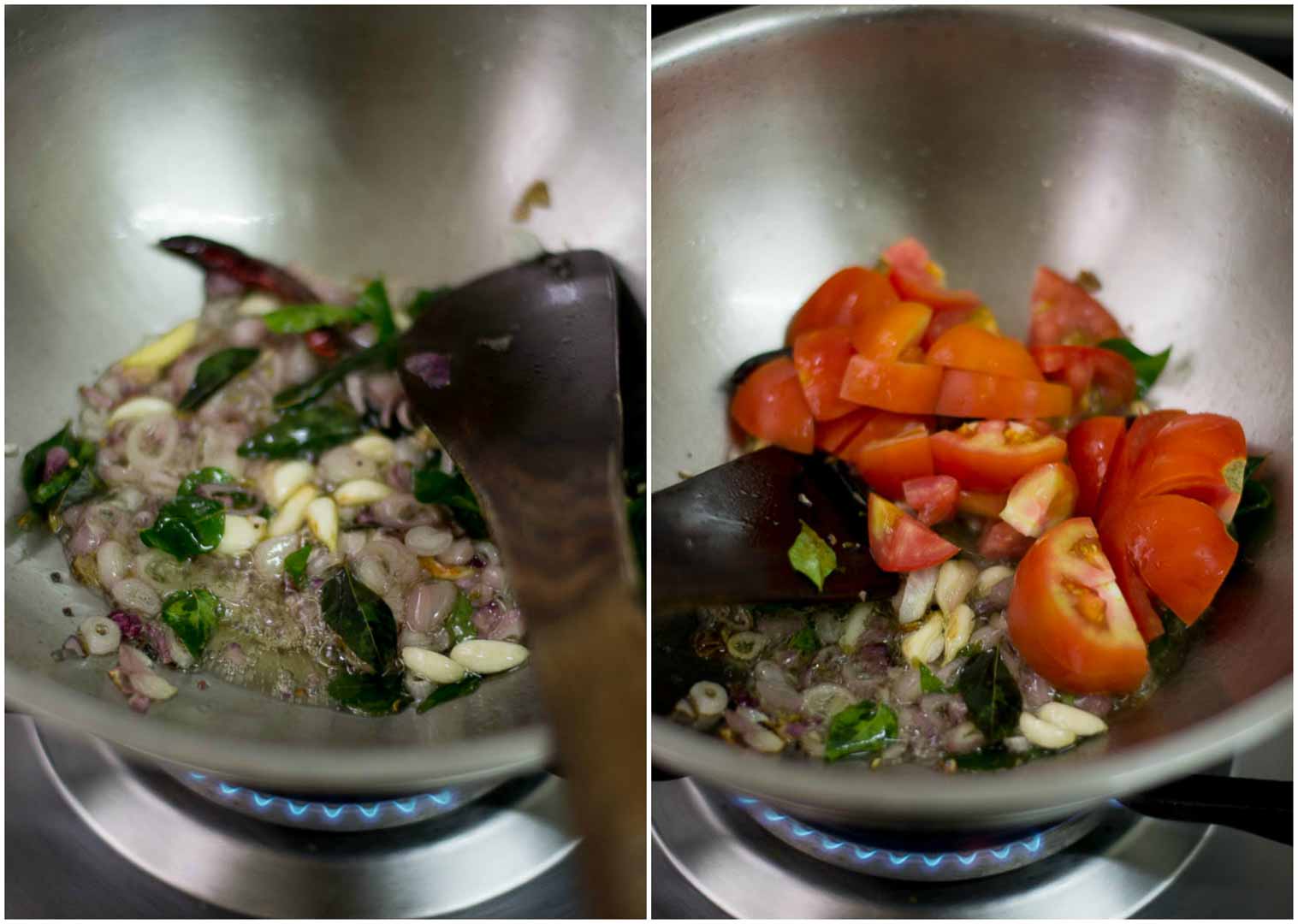
Add in the chopped tomatoes and saute for a minute.
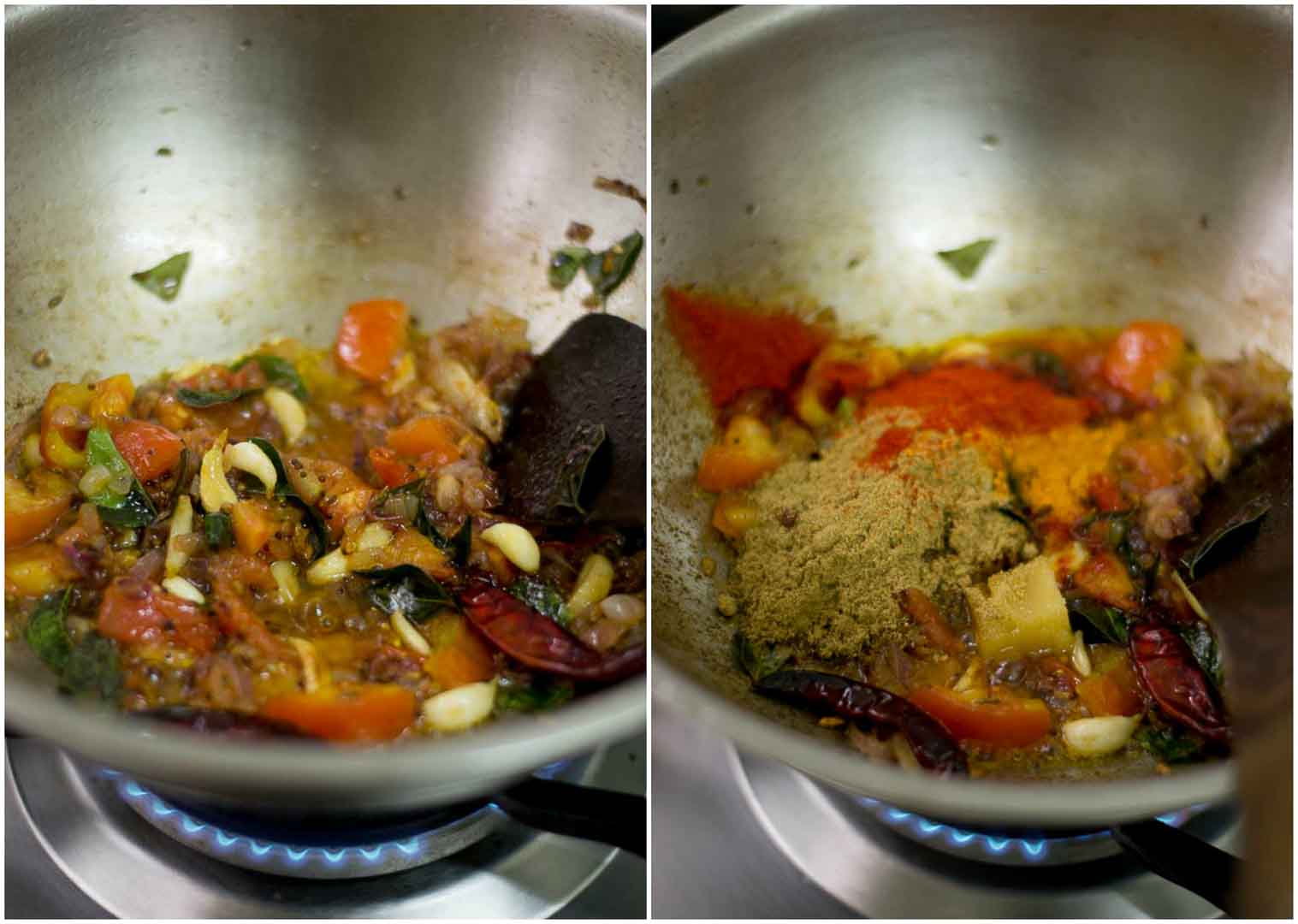
Now add in the turmeric powder, red chilli powder, coriander powder and jaggery.
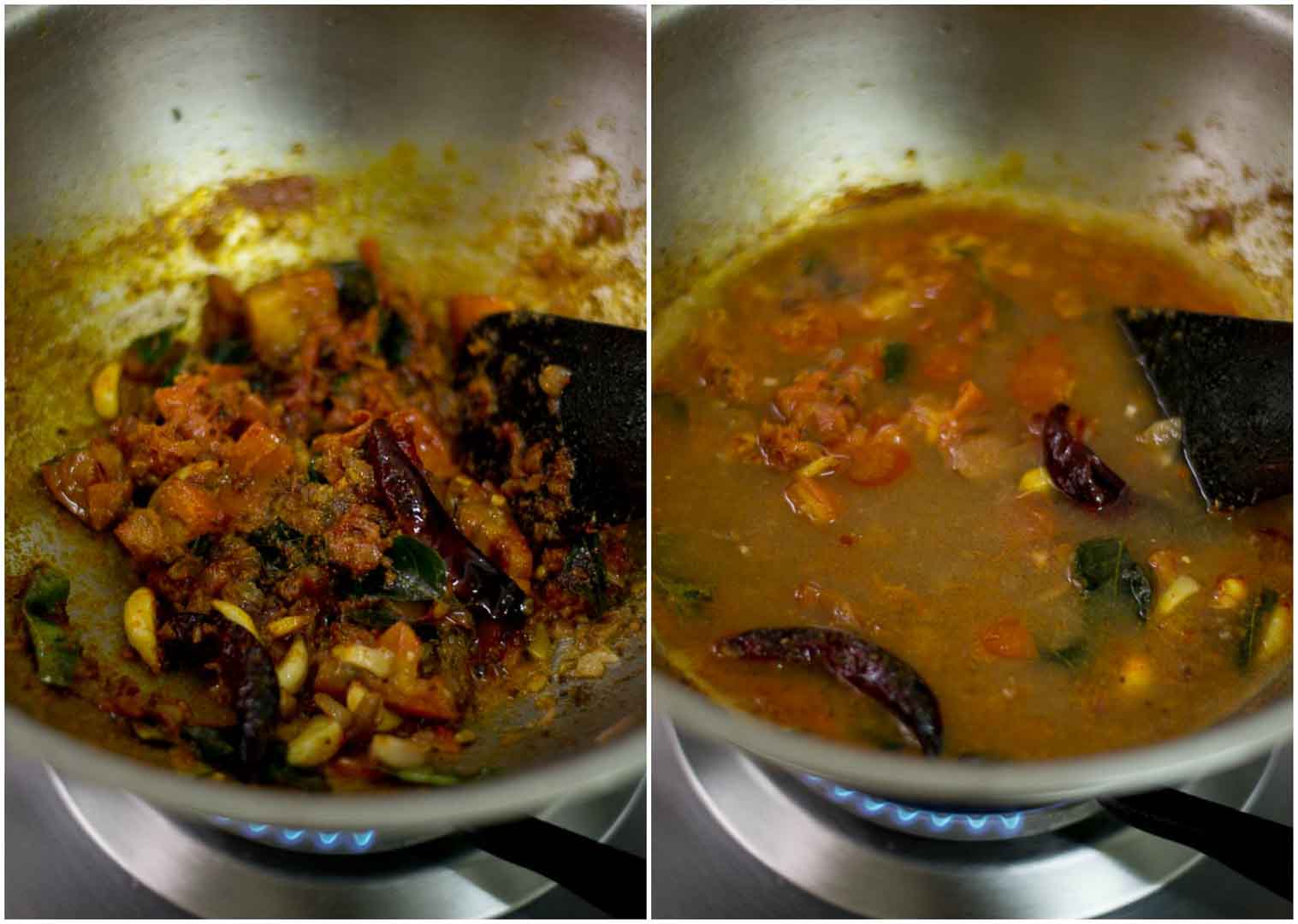
Saute the masalas for a minute. Add in the tamarind pulp.
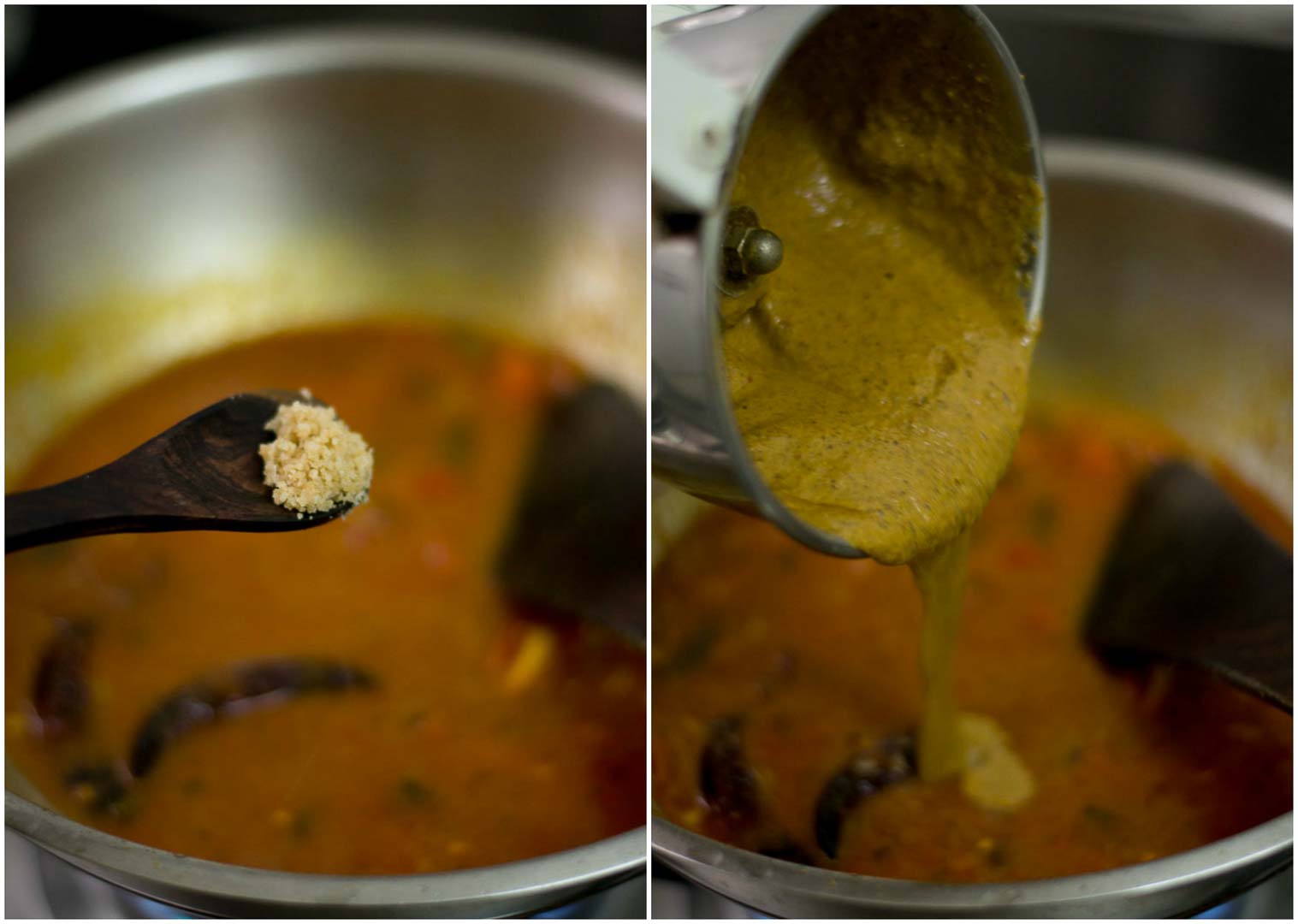
Add in the salt and the ground masala paste. Note on salt Dried sundakkai is already salted. When added to the curry, the salt from sundakkai will also be released in the curry. So go easy on the salt and if need be, seasoning can be adjusted later.
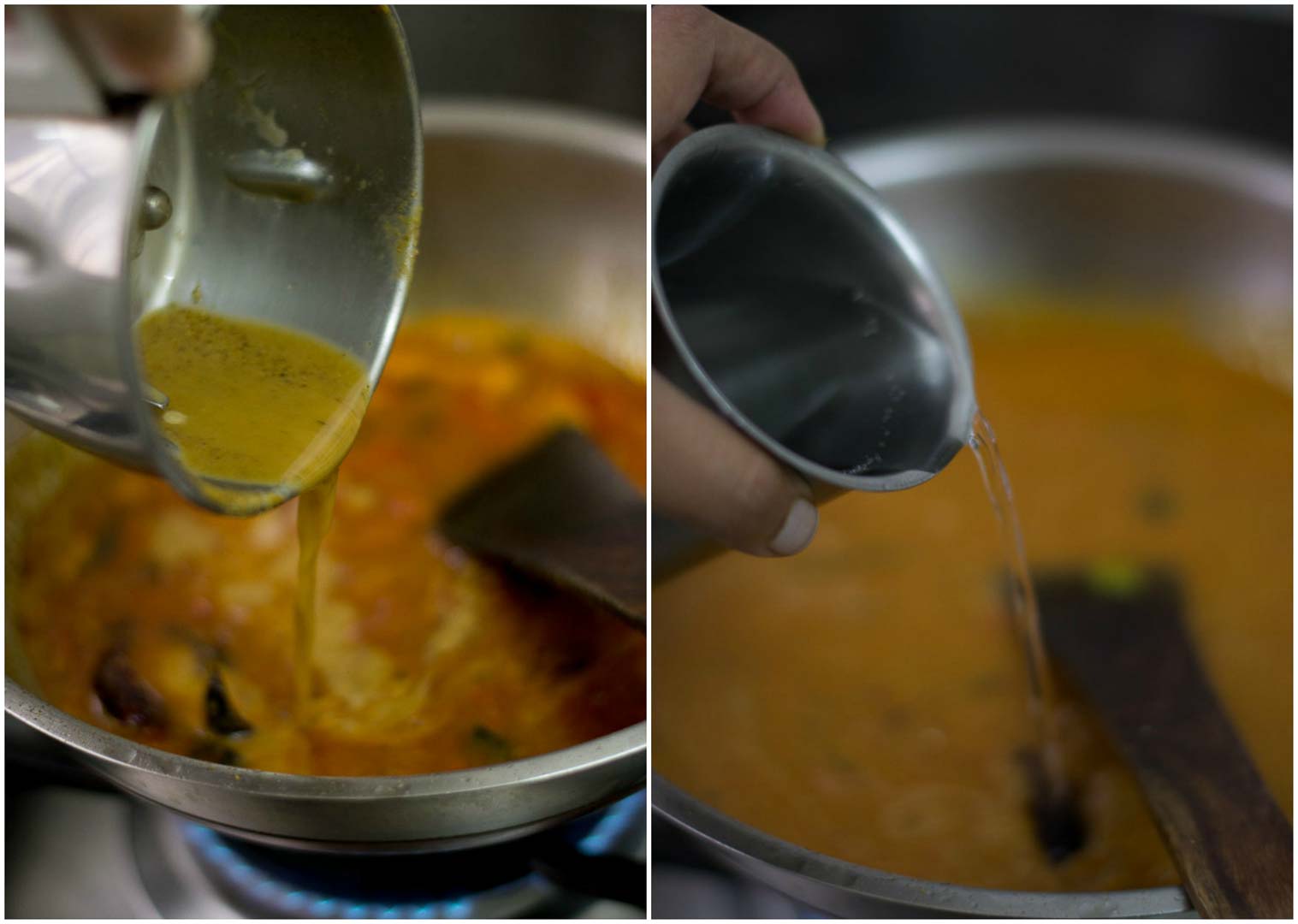
Wash the mixie with half a cup of water and add back to the pan. Add in a cup of water too. Let it come to a boil.
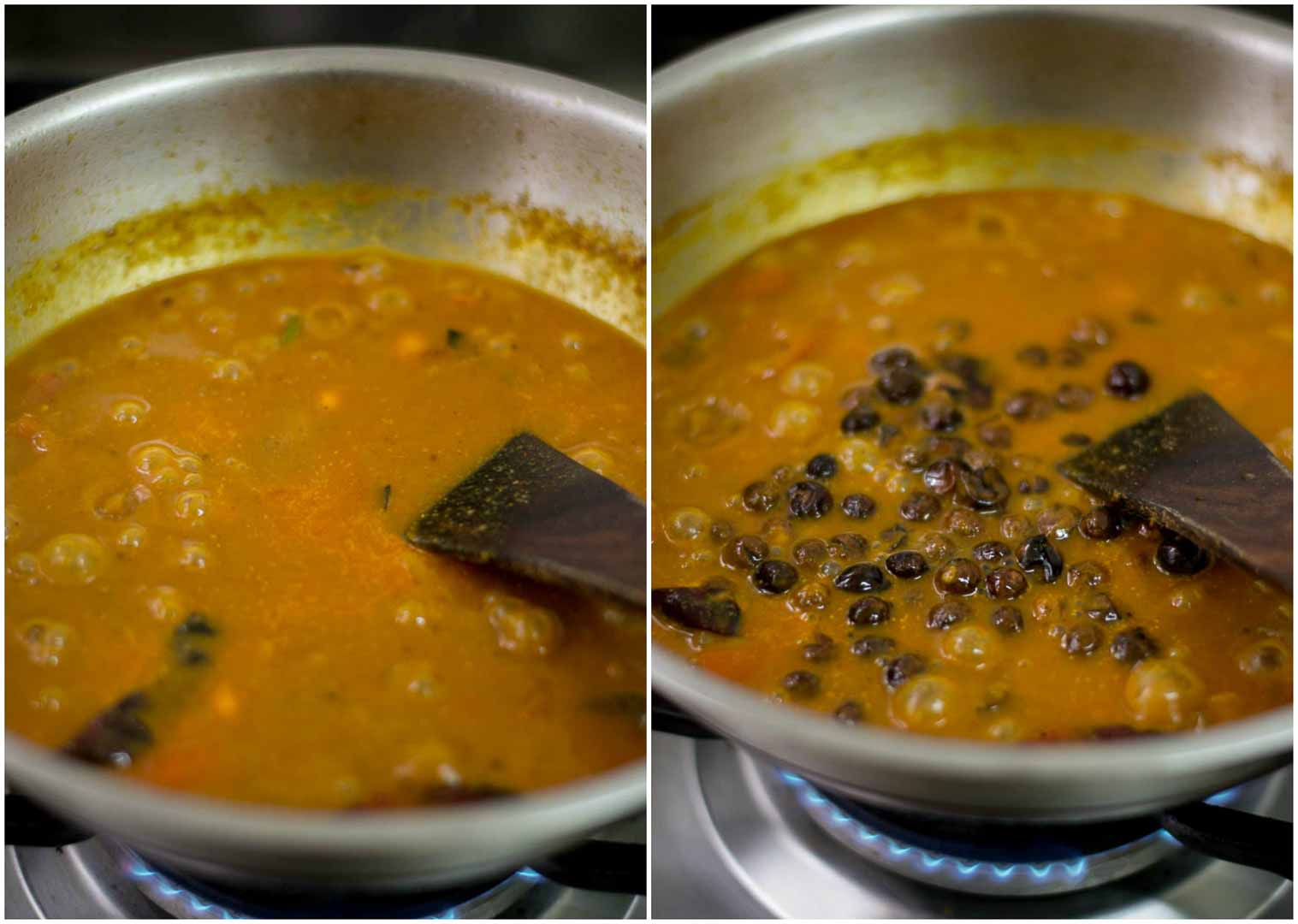
Add in the sundakkai along with the oil and allow it to simmer for 20 minutes on a low flame.
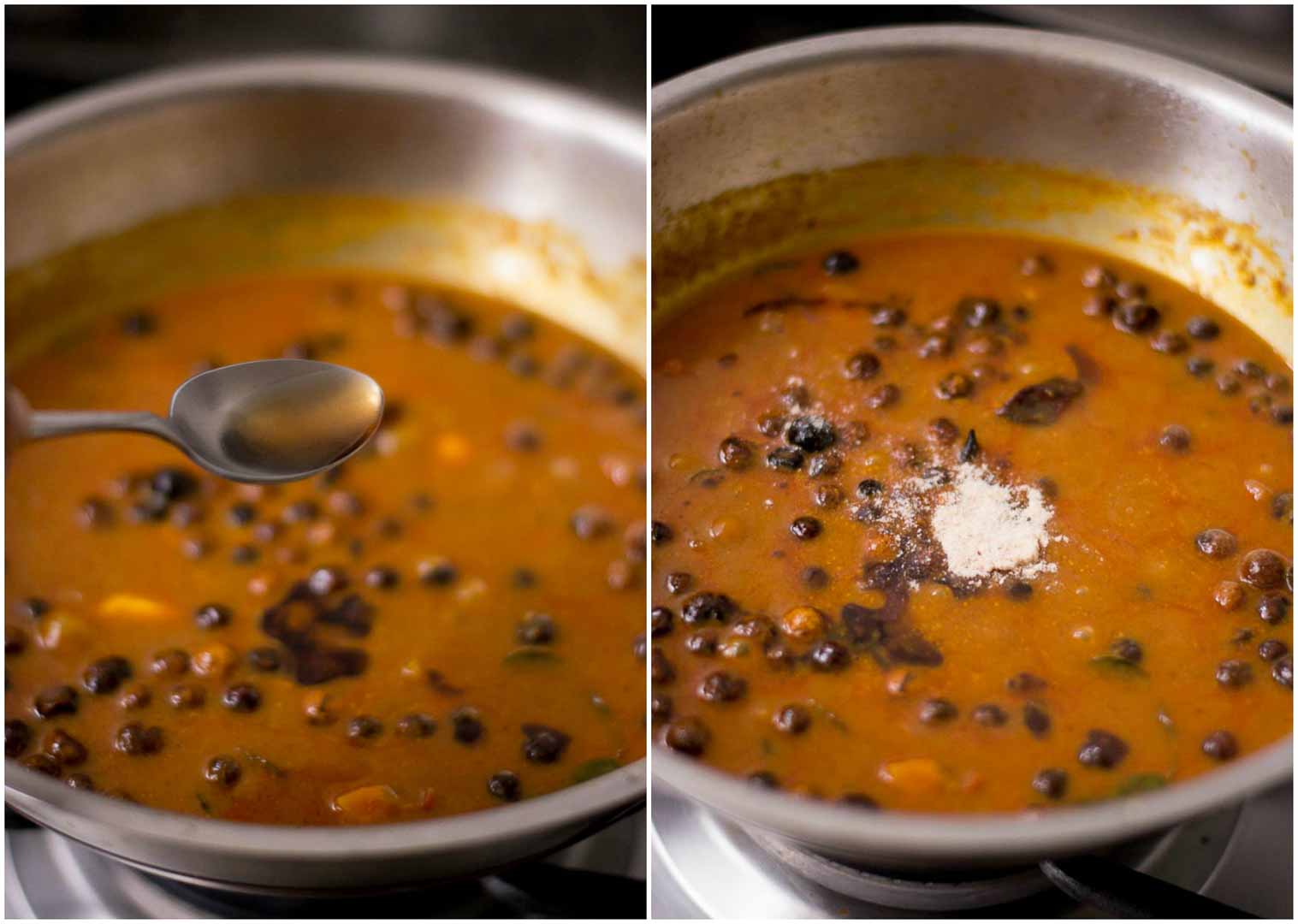
Check for seasoning and add more salt if necessary. The salt in the dried berries vary from each brand. So adjust salt if necessary now. Switch off the flame and add in two teaspoon of Indian sesame oil (gingely oil) and a big pinch of asafoetida powder. Mix well and set aside for half an hour so the berries soak up the juices and nicely flavour the curry.
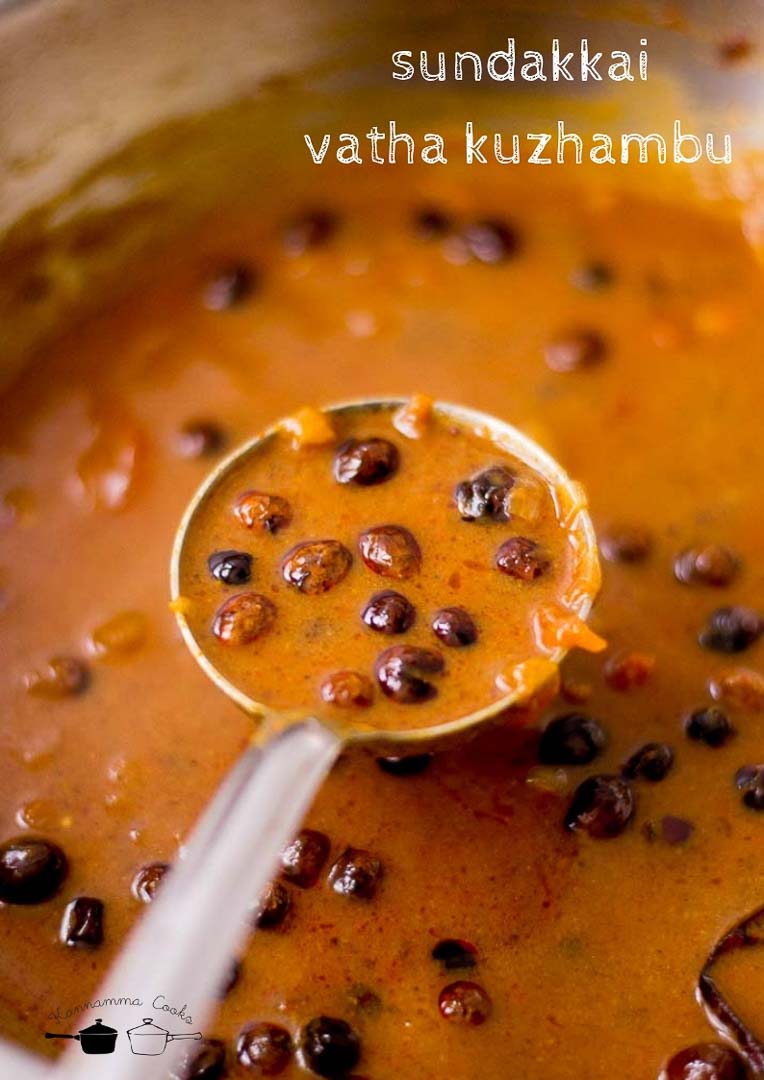
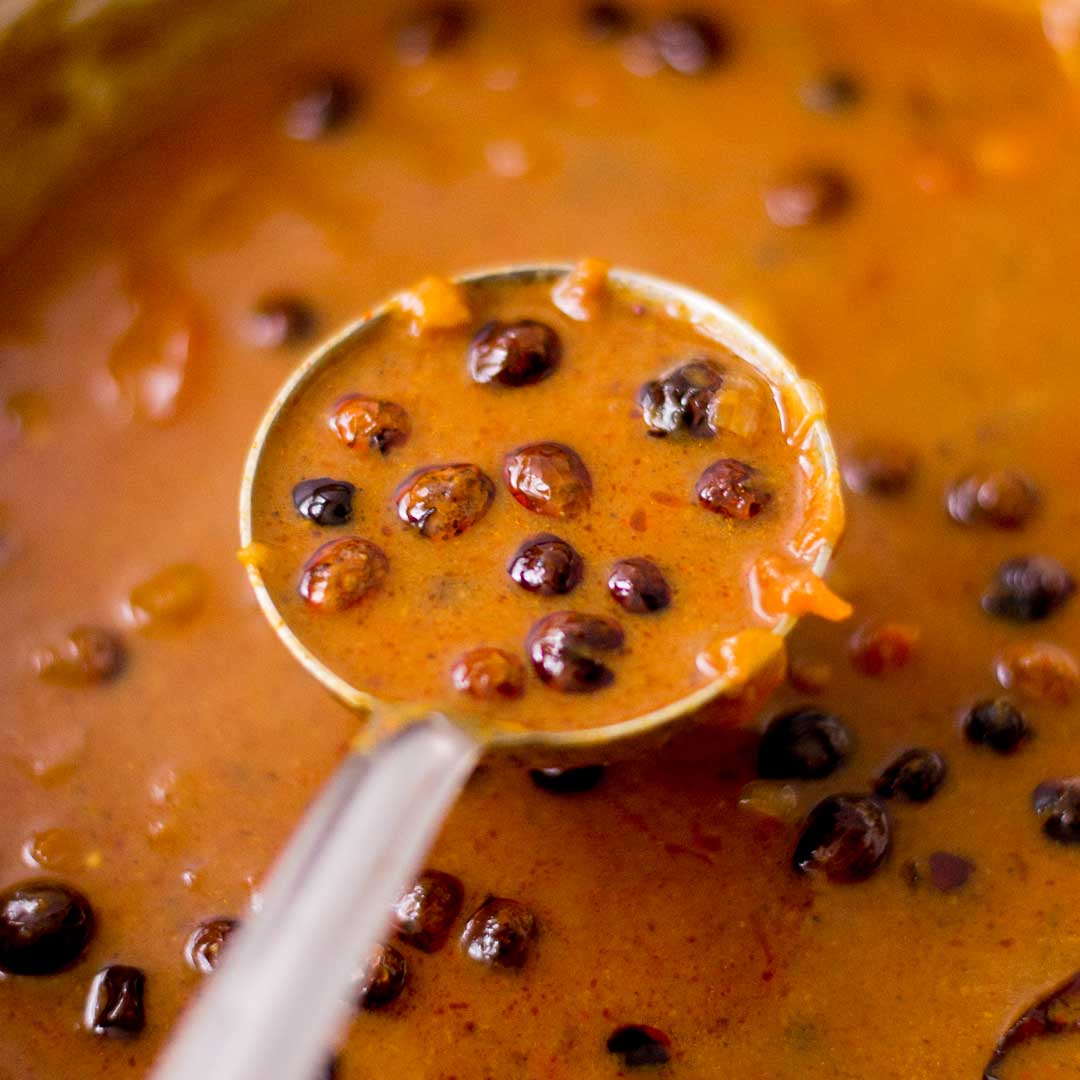
Serve hot with rice. The kuzhambu tastes best the next day!
For frying Sundakkai
- 3 tablespoon peanut oil
- 1/4 cup sundakkai vathal
For the masala paste
- 1 teaspoon peanut oil
- 4 dried red chillies
- 5 - 6 fenugreek seeds
- 6 - 7 cloves garlic
- 2 teaspoon chana dal
- 1 teaspoon urad dal
- 1 teaspoon cumin seeds
- 1 teaspoon black pepper corn
- 2 teaspoon coriander seeds
- 2 sprigs curry leaves
Other ingredients
- Gooseberry size tamarind
- 3 tablespoon peanut oil
- 1/4 teaspoon mustard seeds
- 1/4 teaspoon fenugreek seeds
- 1/2 teaspoon fennel seeds
- 2 sprigs curry leaves
- 10 small onions, chopped
- 10 cloves garlic, roughly chopped
- 2 tomatoes, chopped
- 1/2 teaspoon turmeric powder
- 2 teaspoon red chilli powder (use less if you want a less spicy curry)
- 2 teaspoon coriander powder
- 1 teaspoon jaggery
- 1/2 teaspoon salt (see notes)
- 2 teaspoon Indian sesame oil
- a big pinch of asafoetida
- Take a pan and add in three tablespoon of oil. Add in the sundakkai and saute on a low flame for a minute. The berries will puff up and start to change colour. Remove from heat and set aside to a bowl along with the oil left.
- Heat a teaspoon of oil in a pan and add in all the ingredients for the masala paste. Saute on a very low flame for 3-4 minutes. Grind the roasted ingredients along with half a cup of water to a smooth paste. Set aside.
- Soak a gooseberry size tamarind (about two inch strip) in a cup of water for 20 minutes. Squeeze and extract the pulp. Discard the seeds and the pith. Set aside.
- Heat peanut oil in a pan (Be generous with oil) and add in the mustard seeds, fenugreek seeds, fennel seeds and curry leaves. Let the mustard seeds crackle. Add in the chopped small onion (Indian shallots) and garlic. Saute for 3-4 minutes.
- Add in the chopped tomatoes and saute for a minute.
- Now add in the turmeric powder, red chilli powder, coriander powder and jaggery.
- Saute the masalas for a minute. Add in the tamarind pulp.
- Add in the salt and the ground masala paste.
- Wash the mixie with half a cup of water and add back to the pan. Add in a cup of water too. Let it come to a boil.
- Add in the sundakkai along with oil and allow it to simmer for 20 minutes on a low flame.
- Check for seasoning and add more salt if necessary. Switch off the flame and add in two teaspoon of Indian sesame oil (gingely oil) and a big pinch of asafoetida powder. Mix well and set aside for half an hour so the berries soak up the juices and nicely flavour the curry.
Notes
Note on salt Dried sundakkai is already salted. When added to the curry, the salt from sundakkai will also be released in the curry. So go easy on the salt and if need be, seasoning can be adjusted later.
- Author: Kannamma - Suguna Vinodh
- Prep Time: 10 mins
- Cook Time: 45 mins
- Category: Curry
- Cuisine: Tamilnadu
