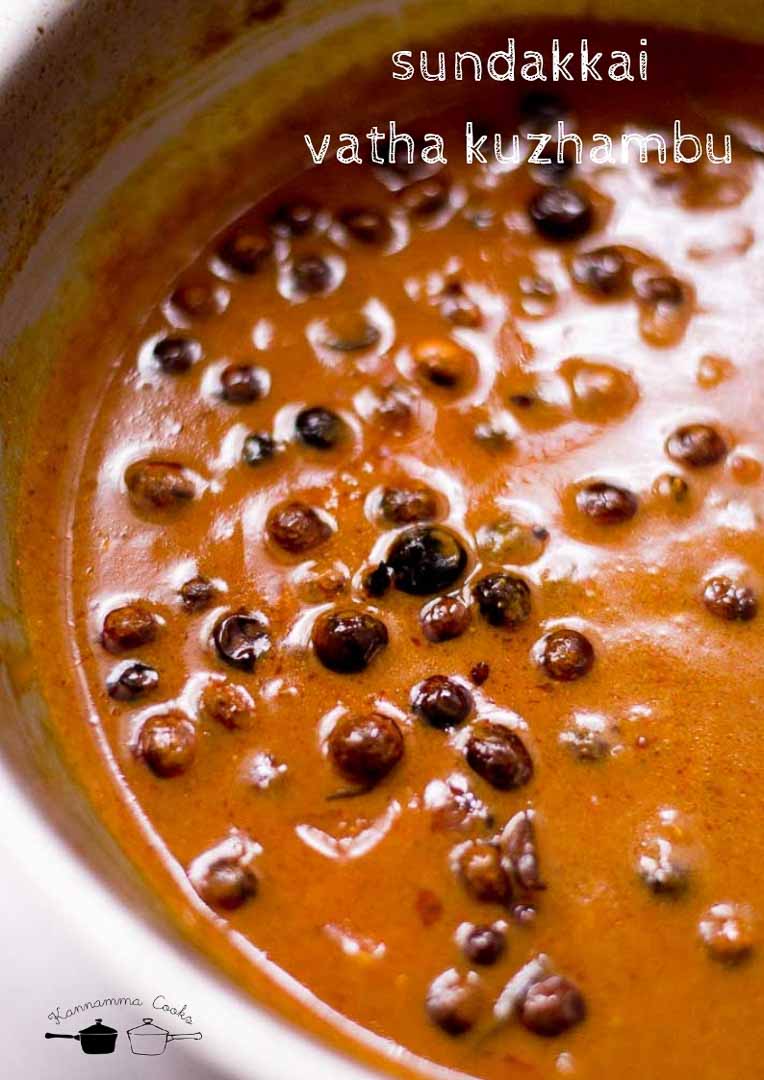
Recipe for sundakkai vatha kuzhambu. Spicy Tamil style vathal kuzhambu / kara kuzhambu recipe made without coconut. A popular side dish for lunch in Tamilnadu.
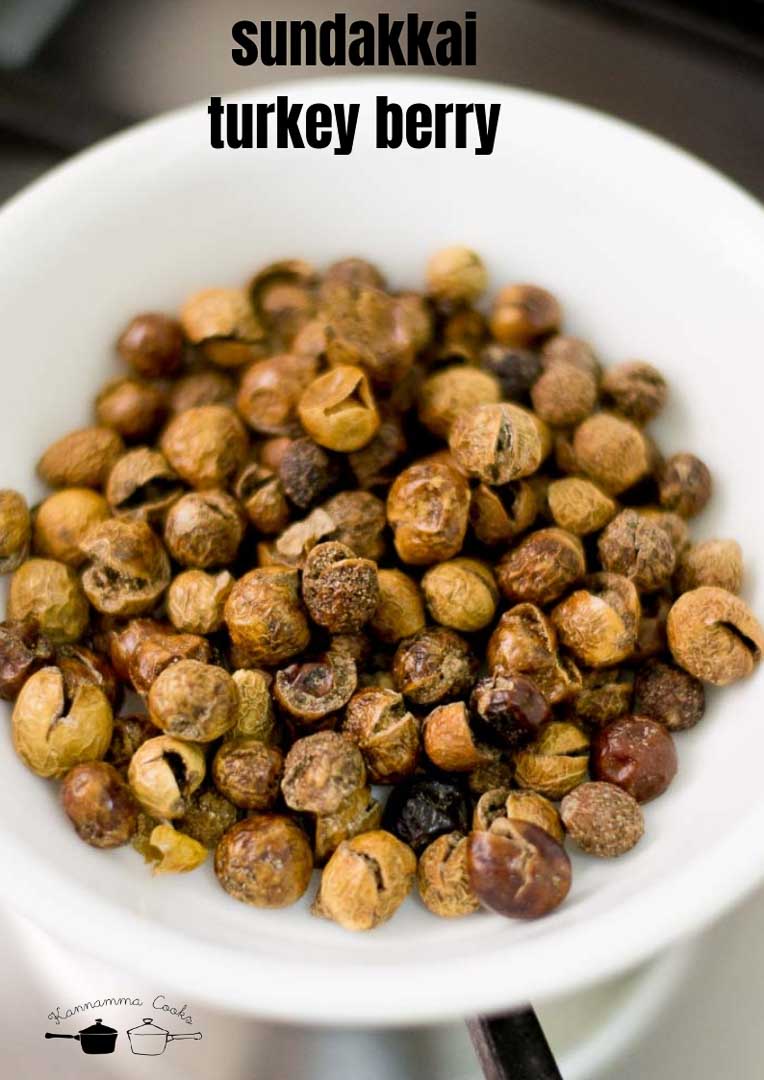
Sundakkai is also called as turkey berries. The fresh berries are soaked in a salt-buttermilk mixture for couple of days and then dried and stored for making curries. Its easily available in Indian grocery stores or online.
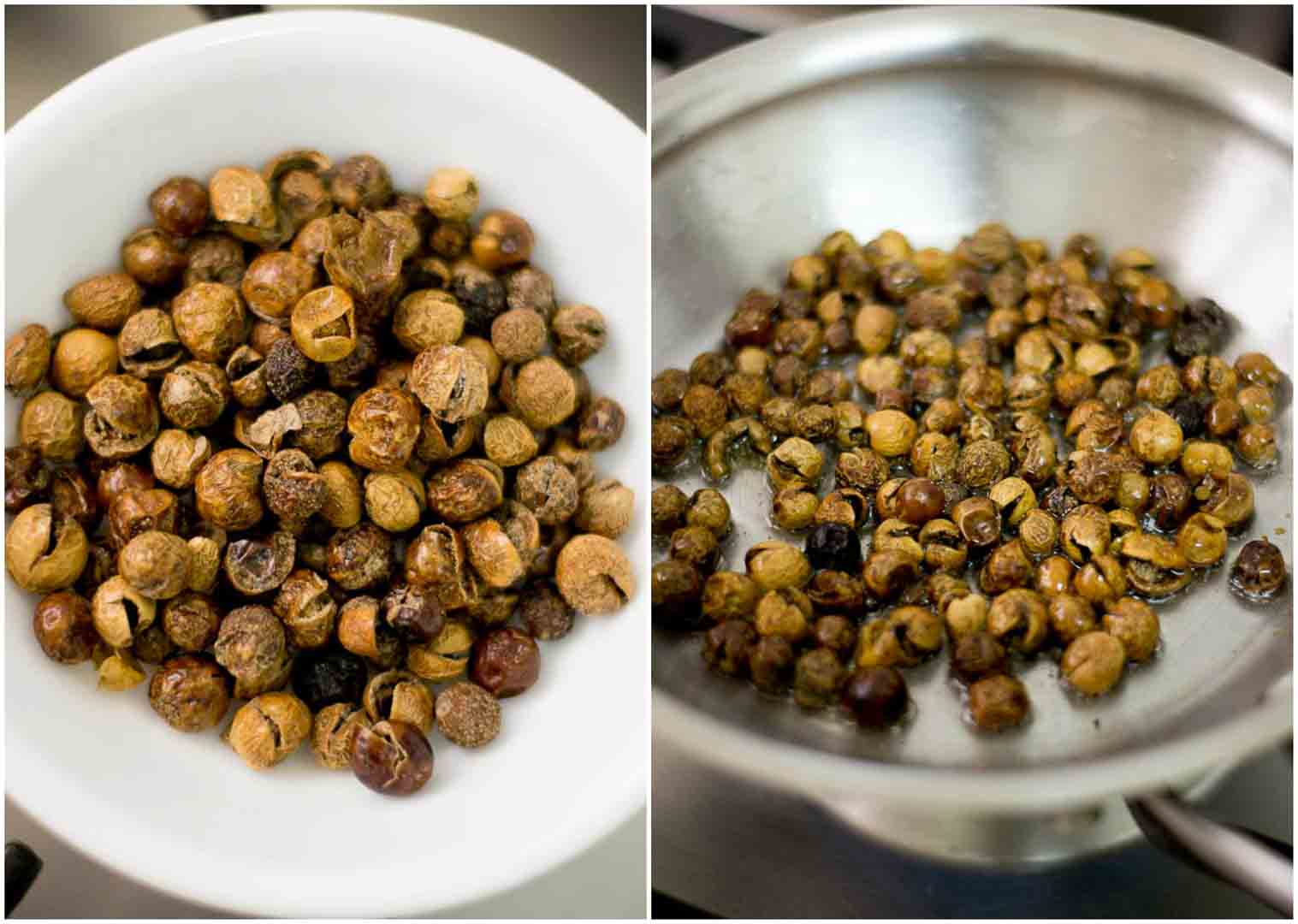
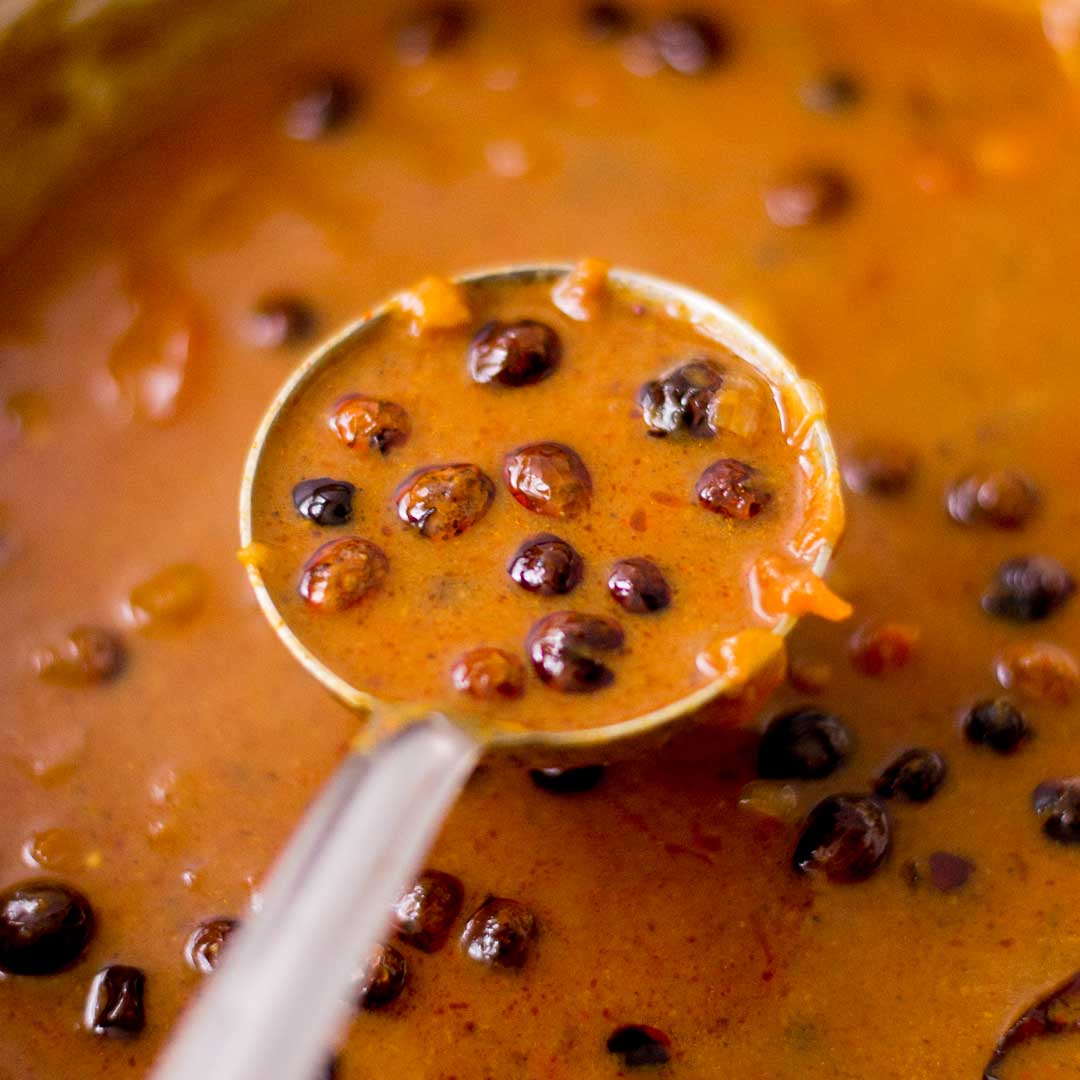
First, we will fry the sundakkai. Take a pan and add in three tablespoon of oil. Add in the sundakkai and saute on a low flame for a minute. The berries will puff up and start to change colour.
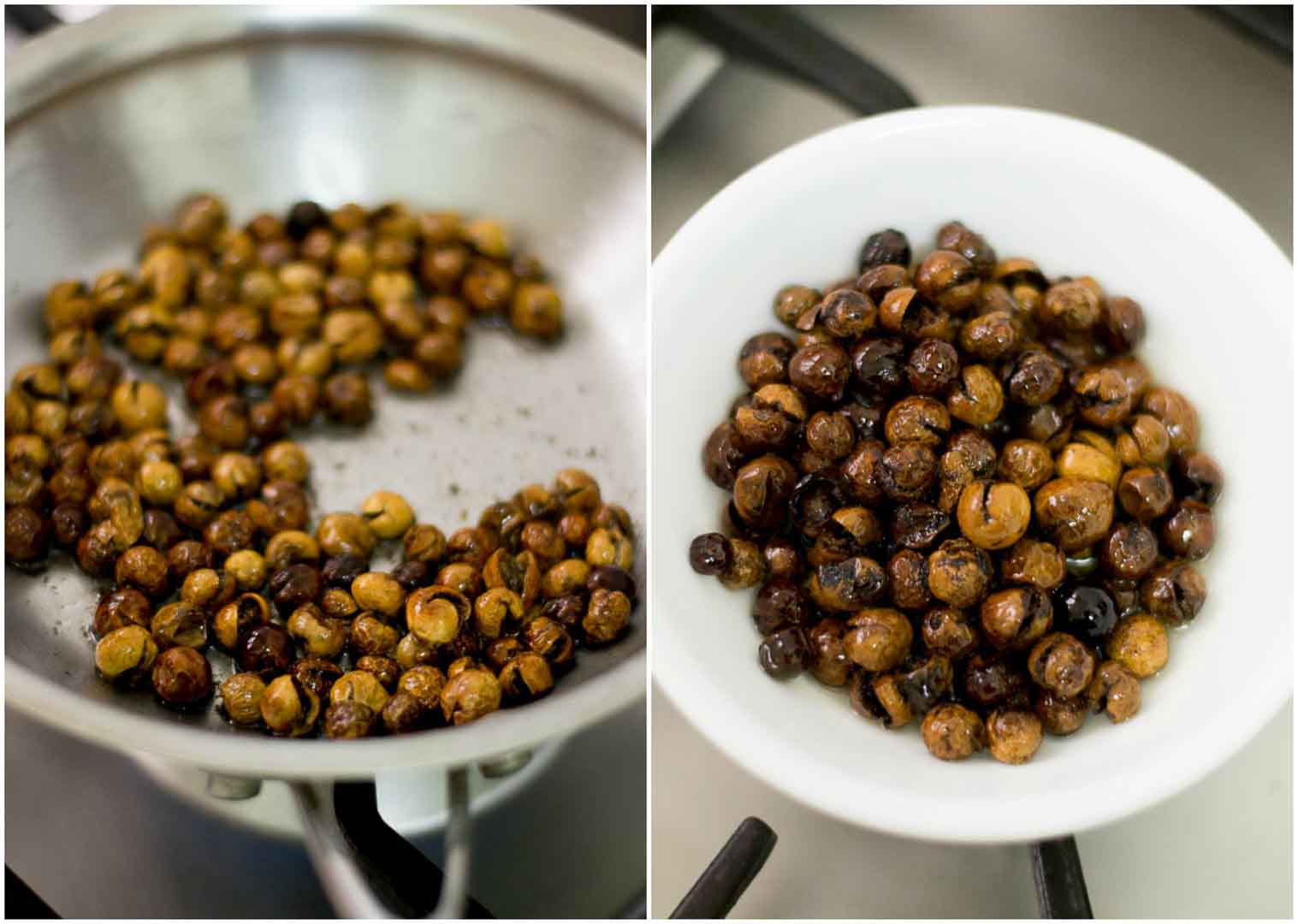
Remove from heat and set aside to a bowl along with the oil left.
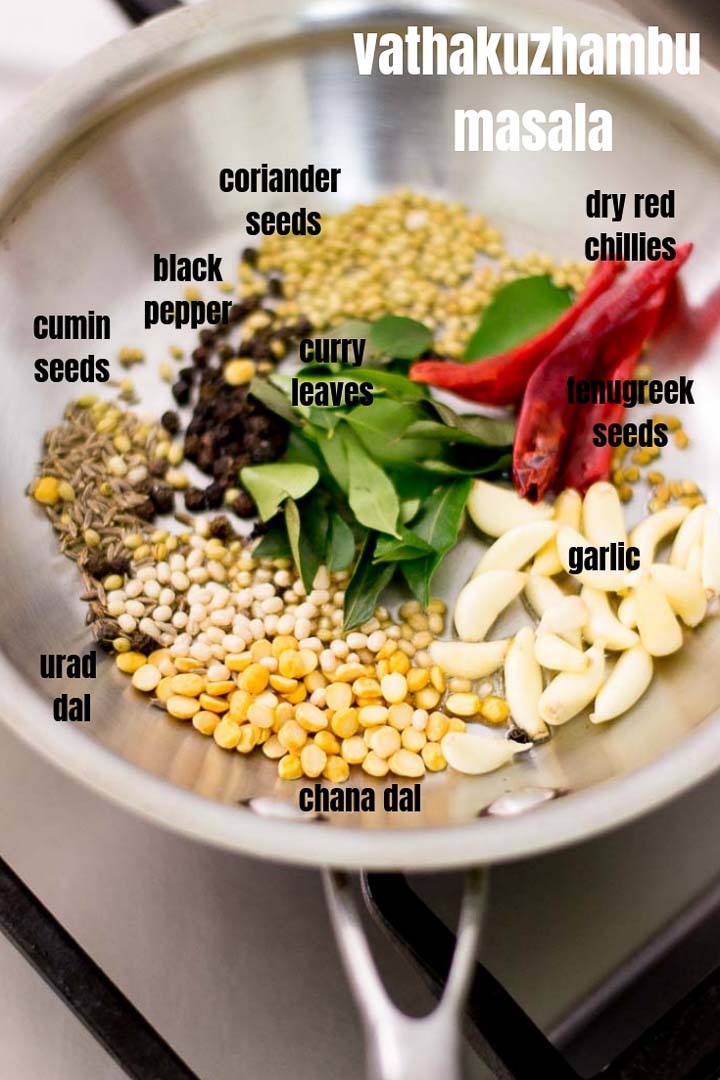
Now, we will make a fresh masala paste. Here is what you will need. Use very little fenugreek seeds as they are very bitter.
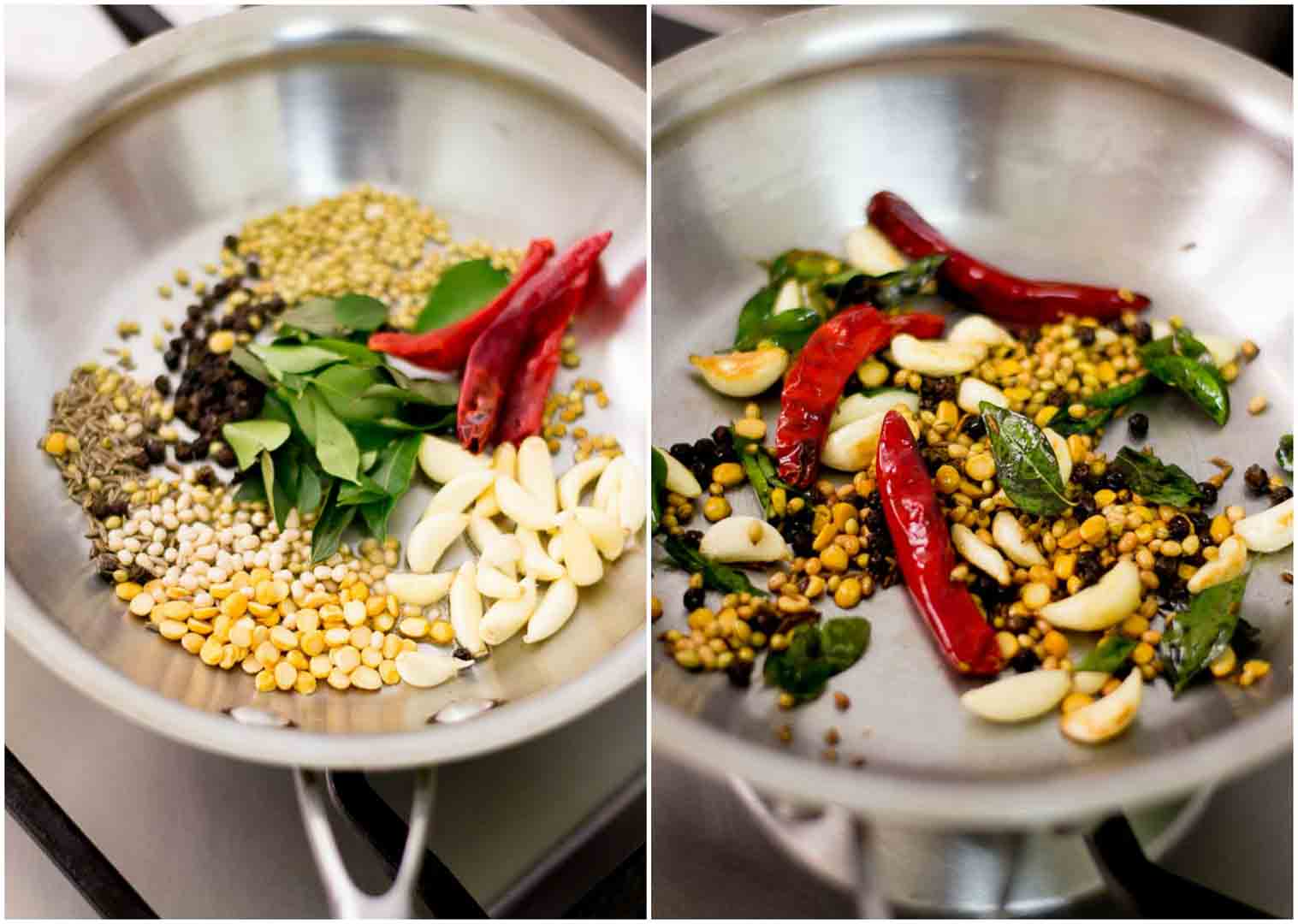
Heat a teaspoon of oil in a pan and add in all the ingredients for the masala paste. Saute on a very low flame for 3-4 minutes. Sauteing on a low flame is important as you do not want to burn the lentils. Sauteing on a low flame nicely roasts and browns the ingredients.
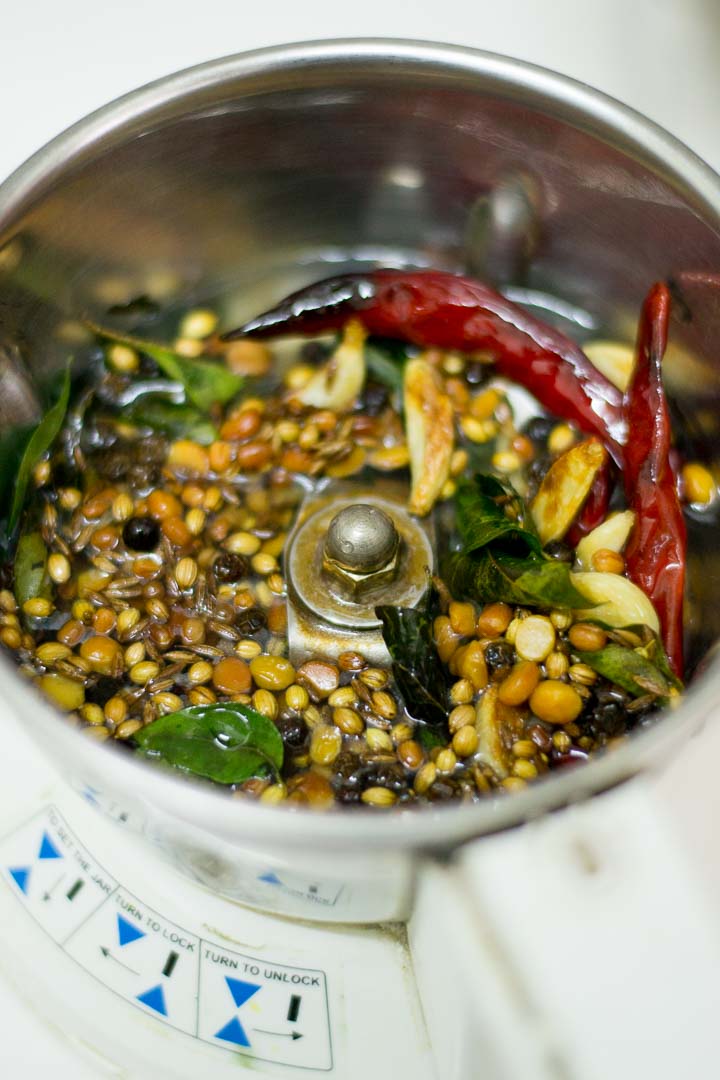
Grind the roasted ingredients along with half a cup of water to a smooth paste. Set aside.

Soak a gooseberry size tamarind (about two inch strip) in a cup of water for 20 minutes. Squeeze and extract the pulp. Discard the seeds and the pith. Set aside.
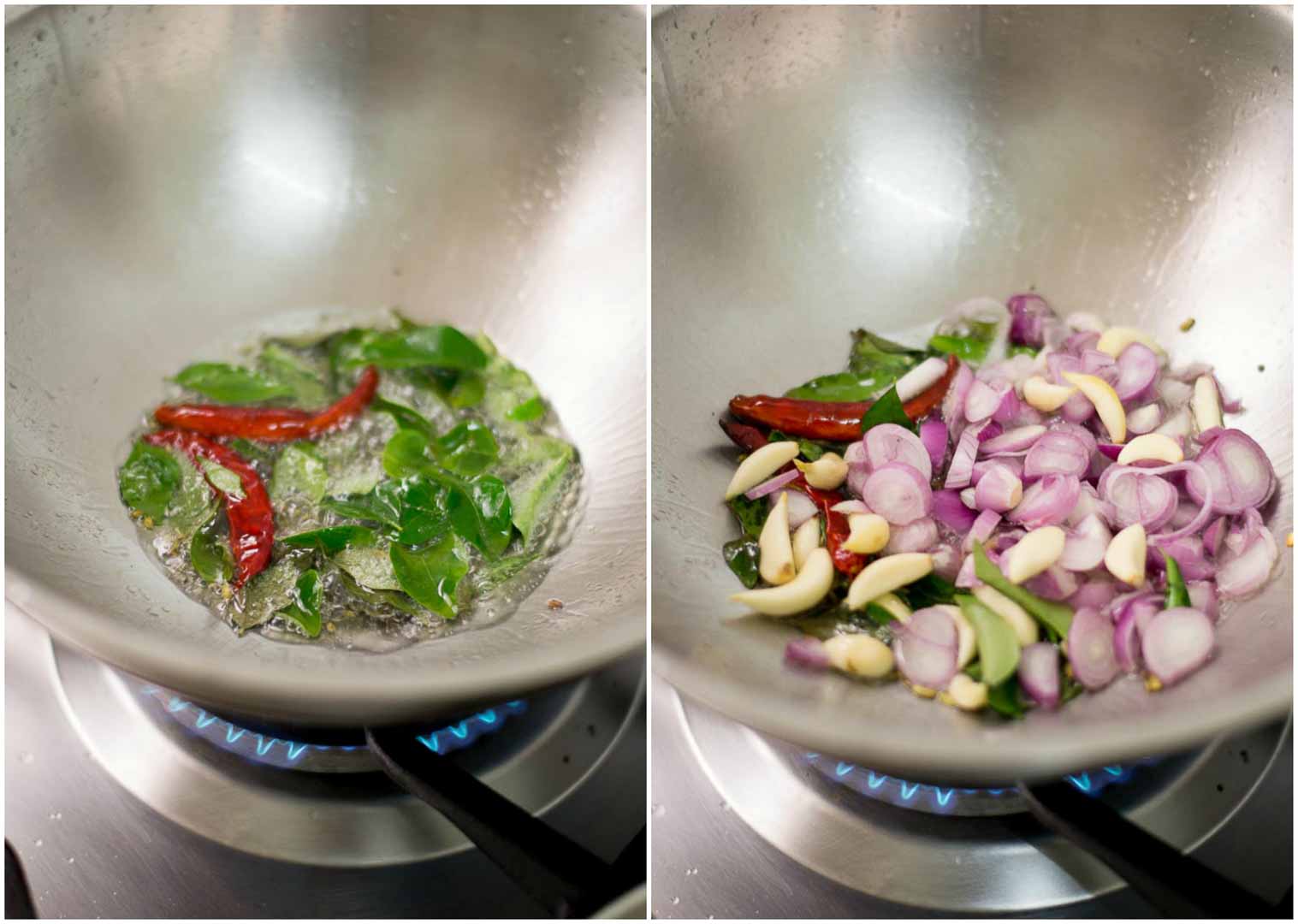
Now we will make the kuzhambu. Heat peanut oil in a pan (Be generous with oil) and add in the mustard seeds, fenugreek seeds, fennel seeds and curry leaves. Let the mustard seeds crackle. Add in the chopped small onion (Indian shallots) and garlic. Saute for 3-4 minutes.
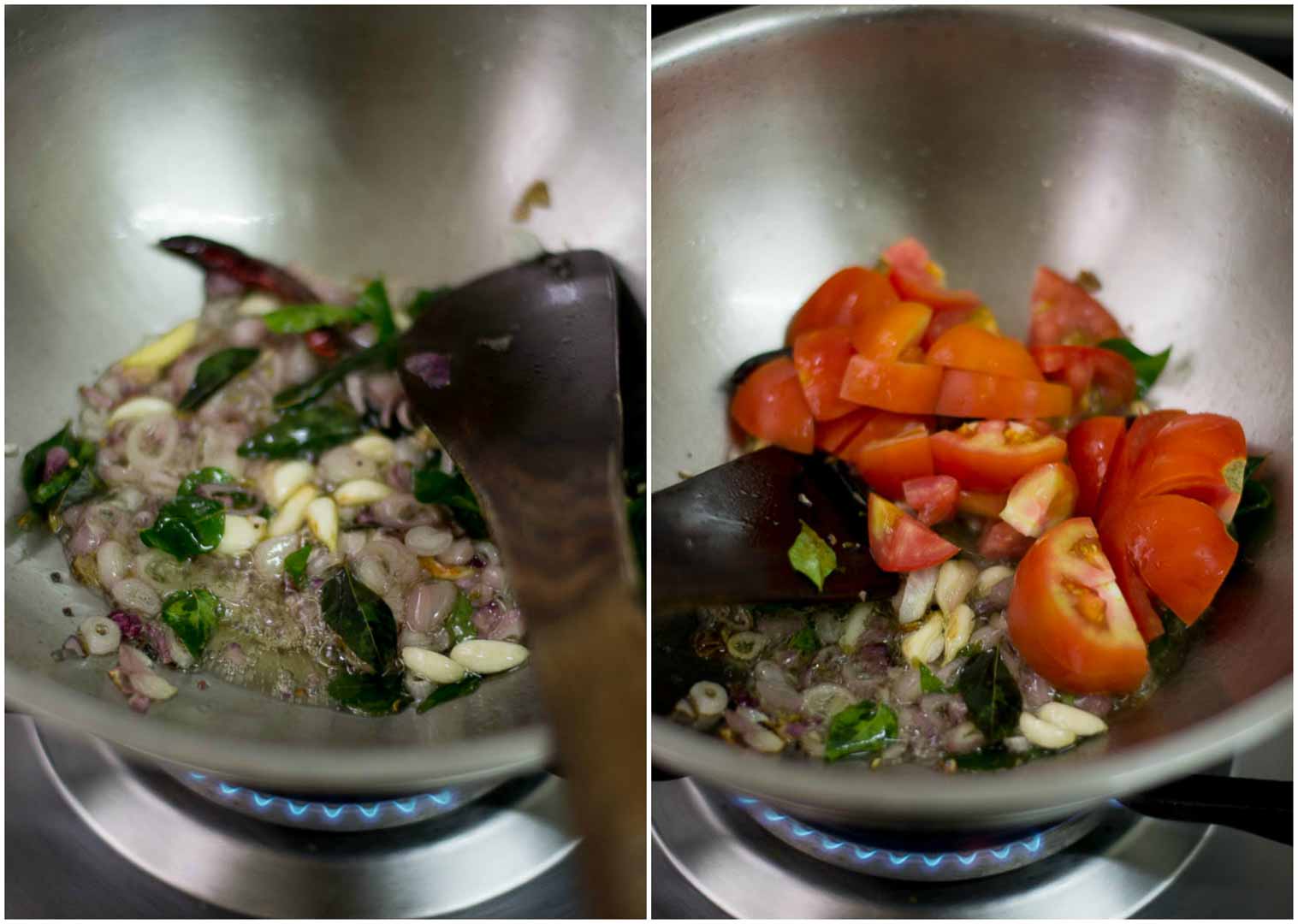
Add in the chopped tomatoes and saute for a minute.
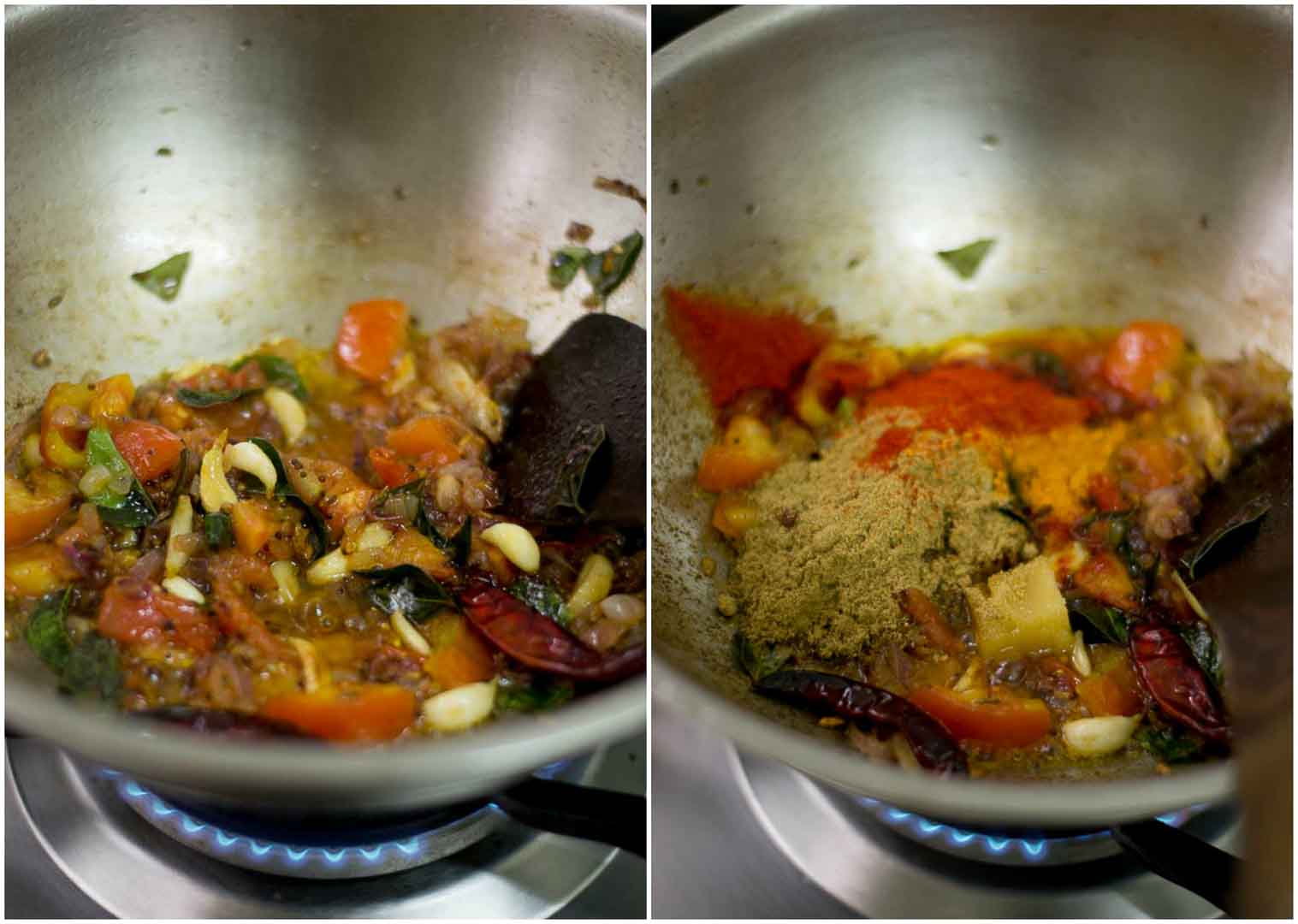
Now add in the turmeric powder, red chilli powder, coriander powder and jaggery.
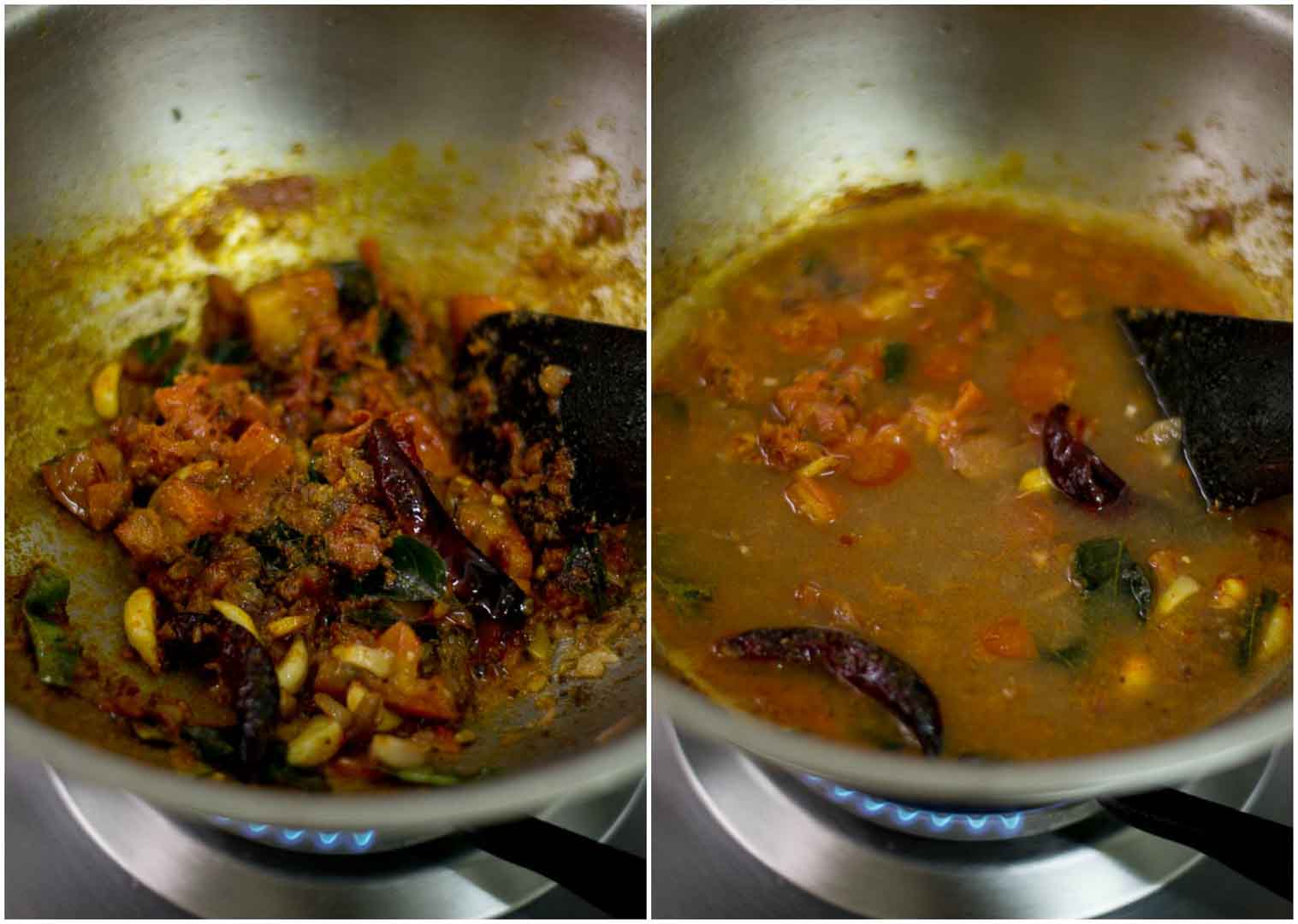
Saute the masalas for a minute. Add in the tamarind pulp.
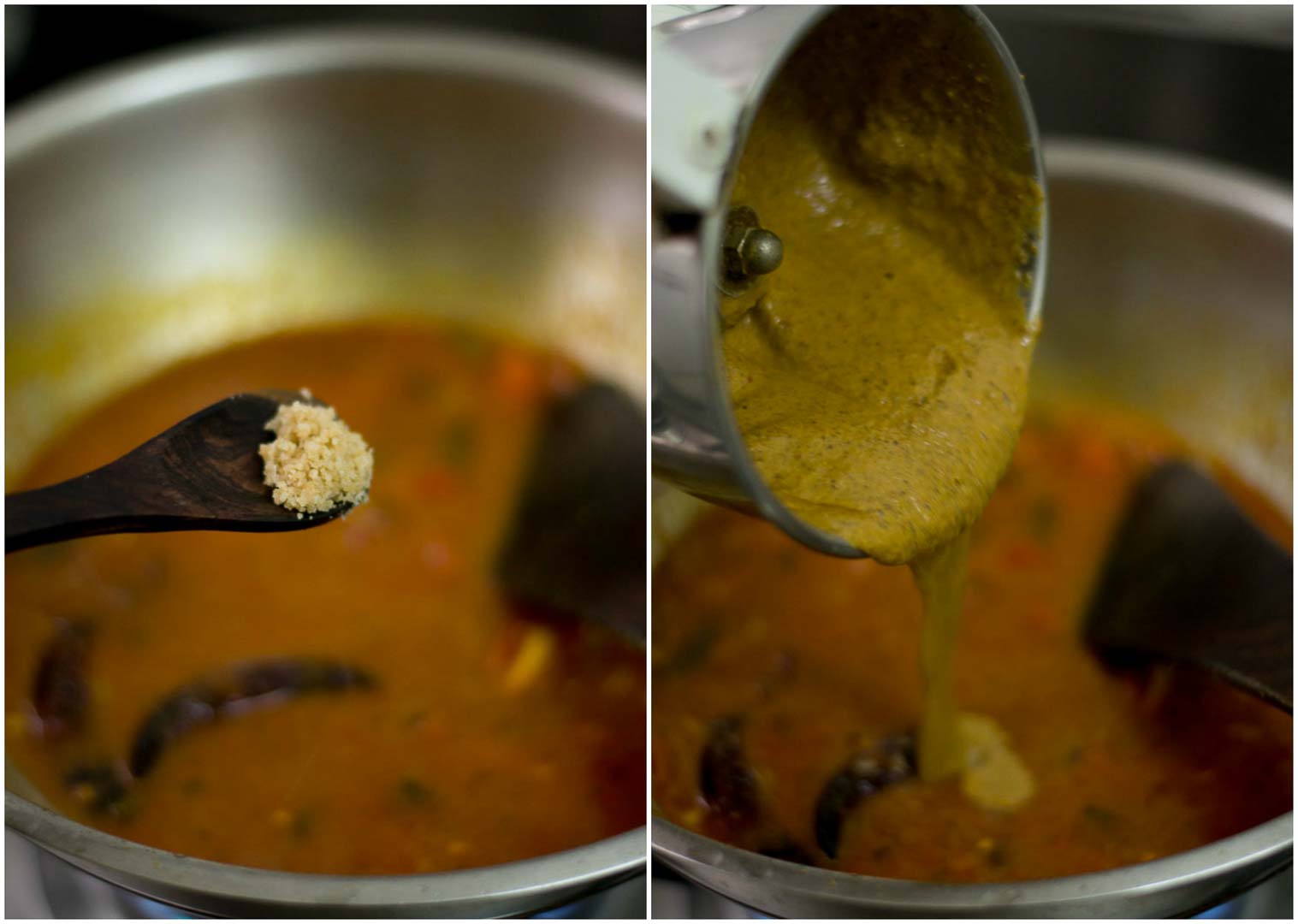
Add in the salt and the ground masala paste. Note on salt Dried sundakkai is already salted. When added to the curry, the salt from sundakkai will also be released in the curry. So go easy on the salt and if need be, seasoning can be adjusted later.
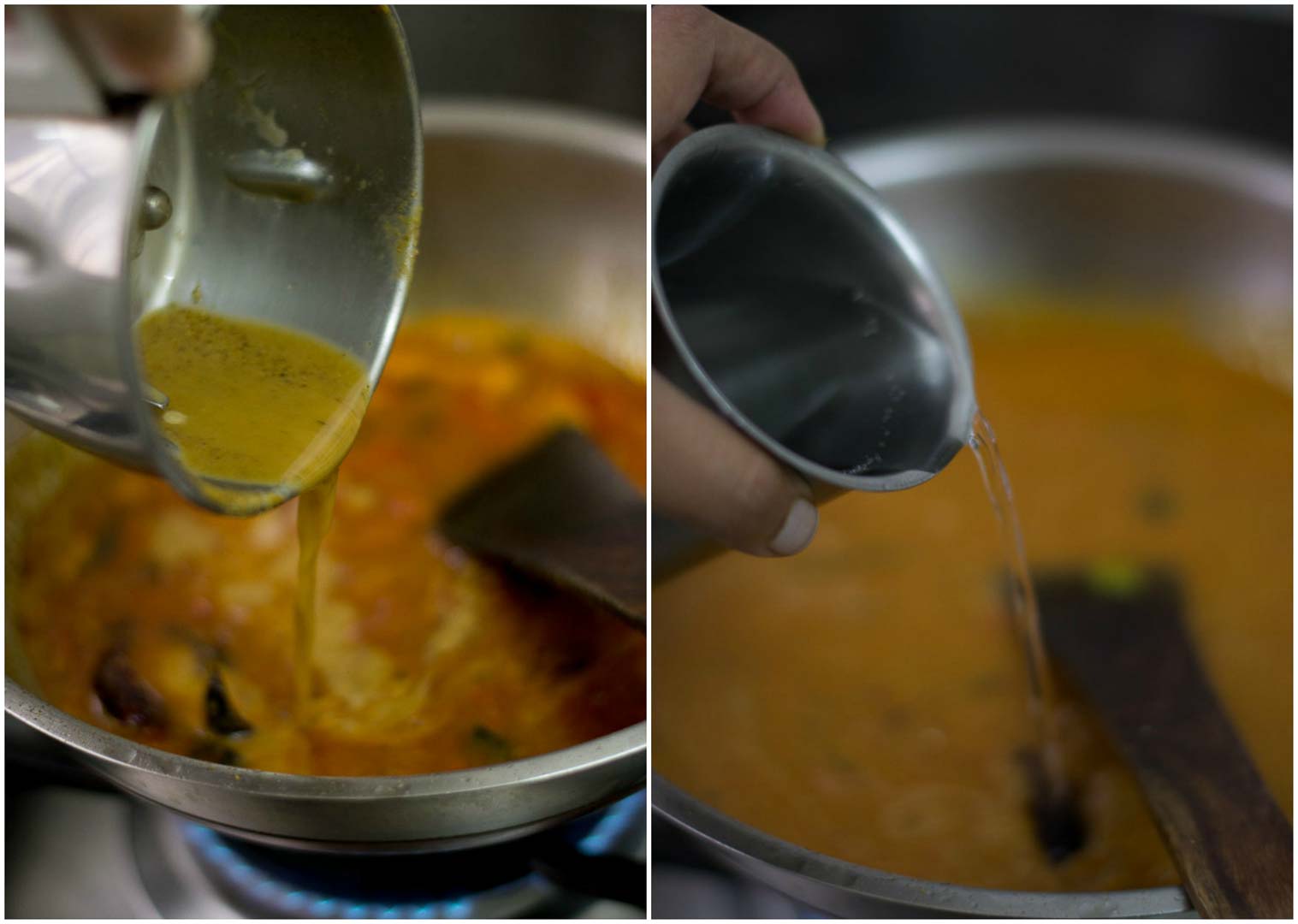
Wash the mixie with half a cup of water and add back to the pan. Add in a cup of water too. Let it come to a boil.
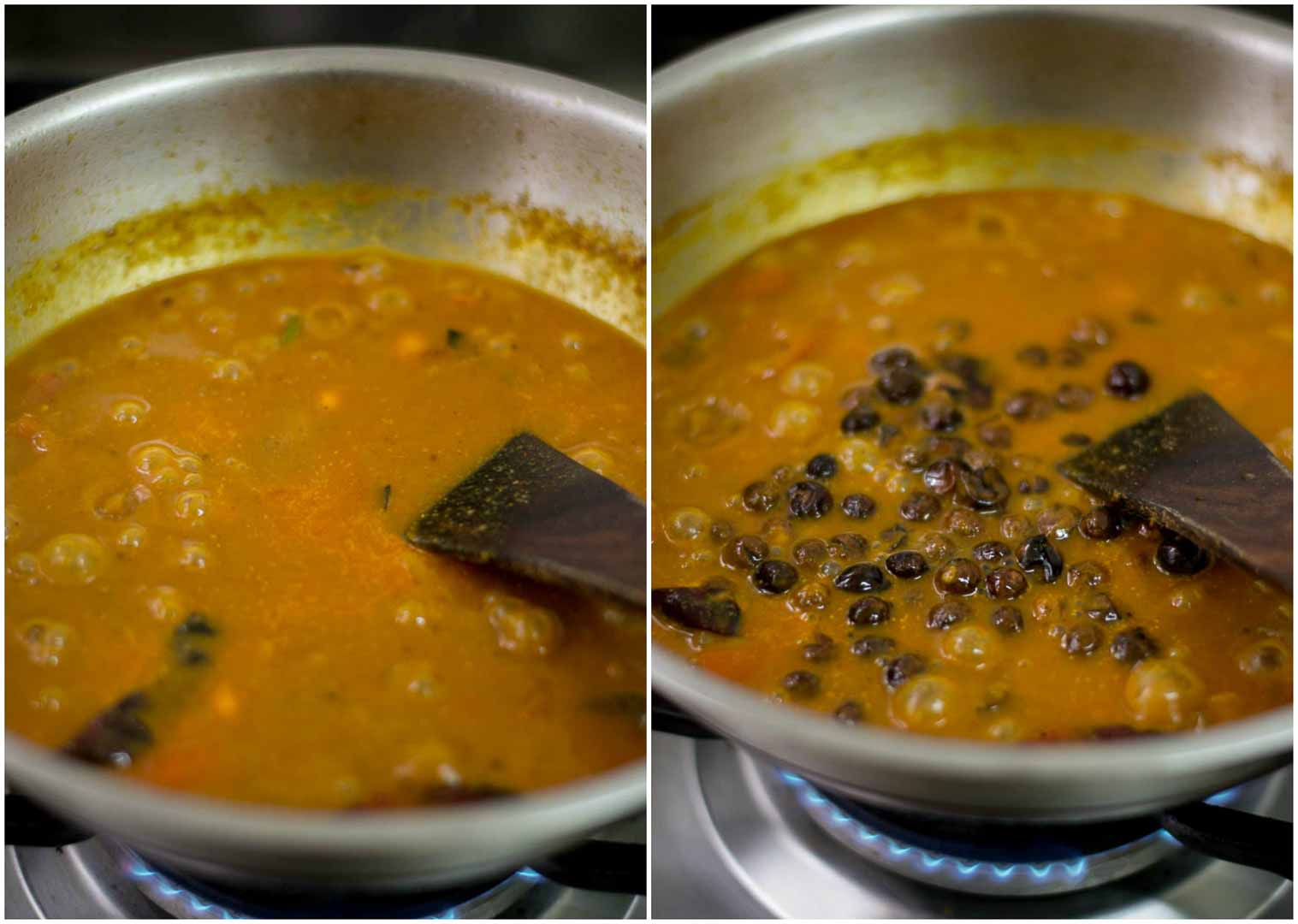
Add in the sundakkai along with the oil and allow it to simmer for 20 minutes on a low flame.
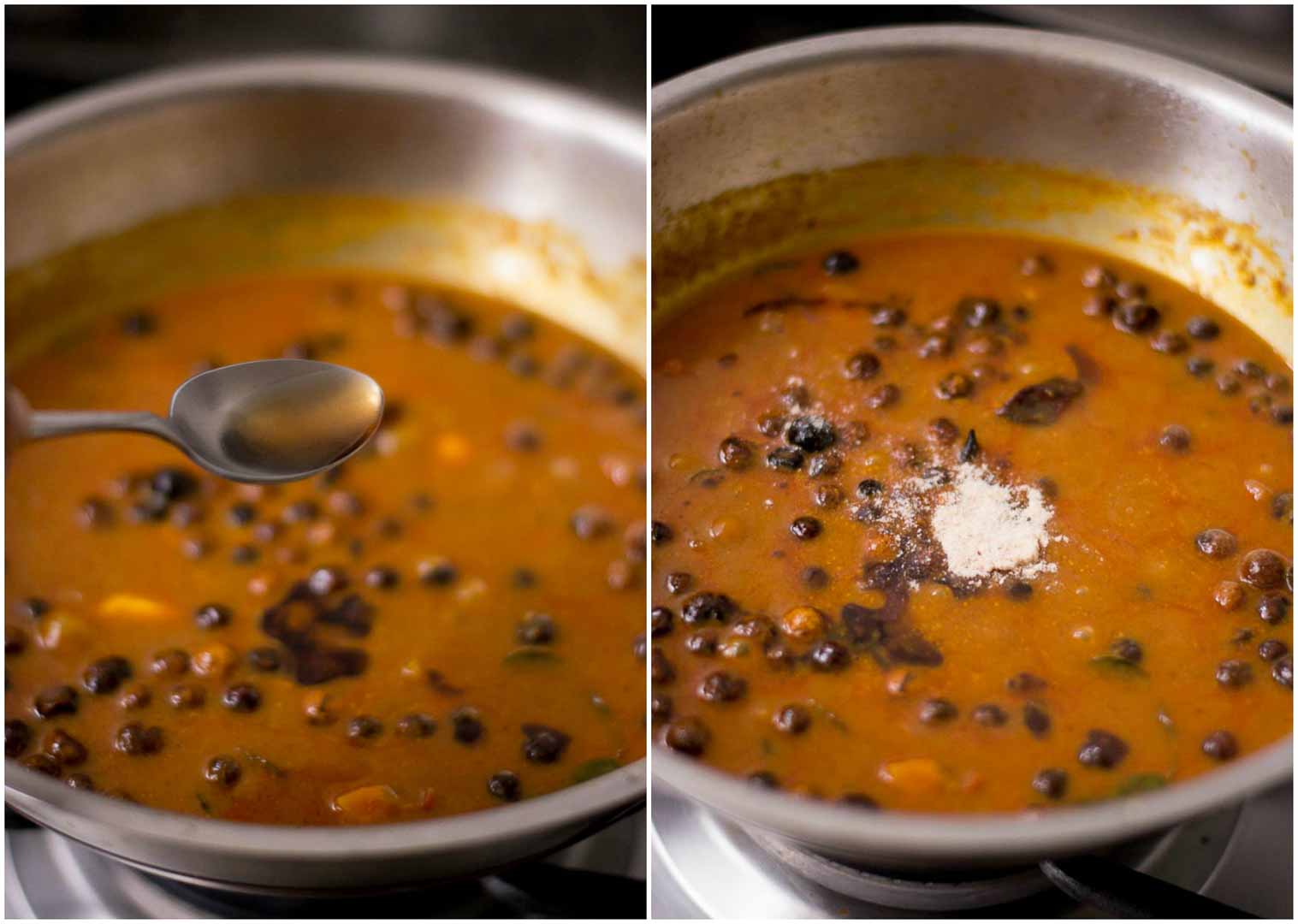
Check for seasoning and add more salt if necessary. The salt in the dried berries vary from each brand. So adjust salt if necessary now. Switch off the flame and add in two teaspoon of Indian sesame oil (gingely oil) and a big pinch of asafoetida powder. Mix well and set aside for half an hour so the berries soak up the juices and nicely flavour the curry.
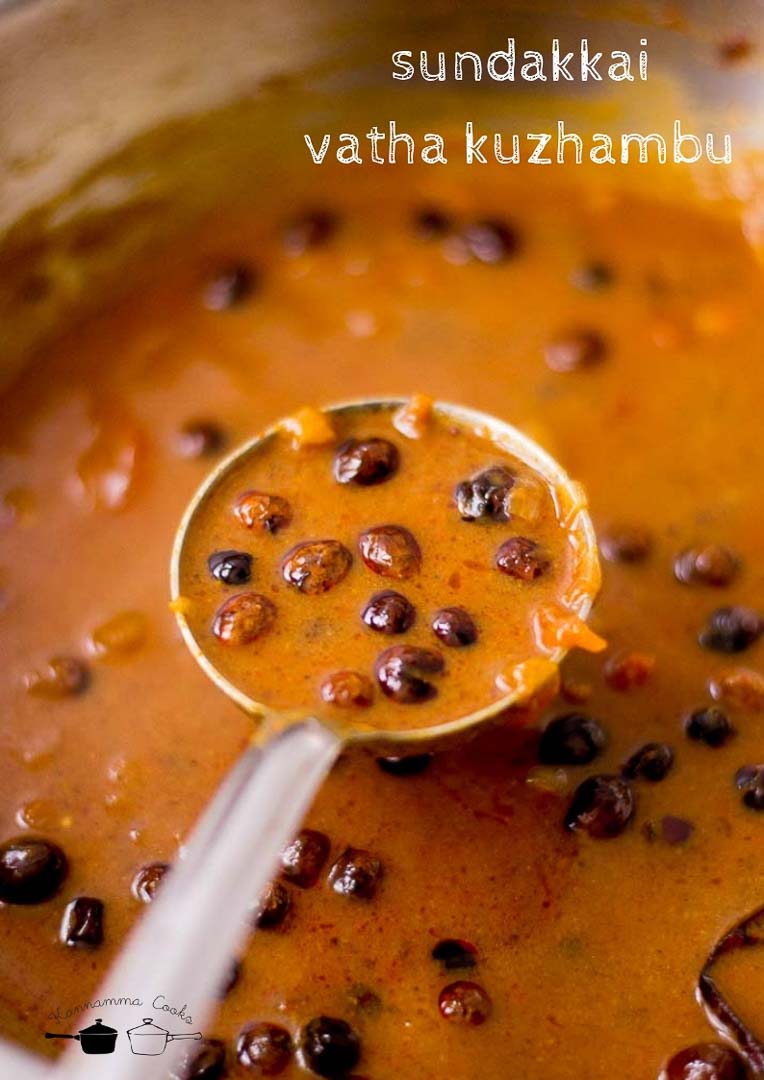
Serve hot with rice. The kuzhambu tastes best the next day!
For frying Sundakkai
- 3 tablespoon peanut oil
- 1/4 cup sundakkai vathal
For the masala paste
- 1 teaspoon peanut oil
- 4 dried red chillies
- 5 - 6 fenugreek seeds
- 6 - 7 cloves garlic
- 2 teaspoon chana dal
- 1 teaspoon urad dal
- 1 teaspoon cumin seeds
- 1 teaspoon black pepper corn
- 2 teaspoon coriander seeds
- 2 sprigs curry leaves
Other ingredients
- Gooseberry size tamarind
- 3 tablespoon peanut oil
- 1/4 teaspoon mustard seeds
- 1/4 teaspoon fenugreek seeds
- 1/2 teaspoon fennel seeds
- 2 sprigs curry leaves
- 10 small onions, chopped
- 10 cloves garlic, roughly chopped
- 2 tomatoes, chopped
- 1/2 teaspoon turmeric powder
- 2 teaspoon red chilli powder (use less if you want a less spicy curry)
- 2 teaspoon coriander powder
- 1 teaspoon jaggery
- 1/2 teaspoon salt (see notes)
- 2 teaspoon Indian sesame oil
- a big pinch of asafoetida
- Take a pan and add in three tablespoon of oil. Add in the sundakkai and saute on a low flame for a minute. The berries will puff up and start to change colour. Remove from heat and set aside to a bowl along with the oil left.
- Heat a teaspoon of oil in a pan and add in all the ingredients for the masala paste. Saute on a very low flame for 3-4 minutes. Grind the roasted ingredients along with half a cup of water to a smooth paste. Set aside.
- Soak a gooseberry size tamarind (about two inch strip) in a cup of water for 20 minutes. Squeeze and extract the pulp. Discard the seeds and the pith. Set aside.
- Heat peanut oil in a pan (Be generous with oil) and add in the mustard seeds, fenugreek seeds, fennel seeds and curry leaves. Let the mustard seeds crackle. Add in the chopped small onion (Indian shallots) and garlic. Saute for 3-4 minutes.
- Add in the chopped tomatoes and saute for a minute.
- Now add in the turmeric powder, red chilli powder, coriander powder and jaggery.
- Saute the masalas for a minute. Add in the tamarind pulp.
- Add in the salt and the ground masala paste.
- Wash the mixie with half a cup of water and add back to the pan. Add in a cup of water too. Let it come to a boil.
- Add in the sundakkai along with oil and allow it to simmer for 20 minutes on a low flame.
- Check for seasoning and add more salt if necessary. Switch off the flame and add in two teaspoon of Indian sesame oil (gingely oil) and a big pinch of asafoetida powder. Mix well and set aside for half an hour so the berries soak up the juices and nicely flavour the curry.
Notes
Note on salt Dried sundakkai is already salted. When added to the curry, the salt from sundakkai will also be released in the curry. So go easy on the salt and if need be, seasoning can be adjusted later.
- Author: Kannamma - Suguna Vinodh
- Prep Time: 10 mins
- Cook Time: 45 mins
- Category: Curry
- Cuisine: Tamilnadu
For frying Sundakkai
- 3 tablespoon peanut oil
- 1/4 cup sundakkai vathal
For the masala paste
- 1 teaspoon peanut oil
- 4 dried red chillies
- 5 - 6 fenugreek seeds
- 6 - 7 cloves garlic
- 2 teaspoon chana dal
- 1 teaspoon urad dal
- 1 teaspoon cumin seeds
- 1 teaspoon black pepper corn
- 2 teaspoon coriander seeds
- 2 sprigs curry leaves
Other ingredients
- Gooseberry size tamarind
- 3 tablespoon peanut oil
- 1/4 teaspoon mustard seeds
- 1/4 teaspoon fenugreek seeds
- 1/2 teaspoon fennel seeds
- 2 sprigs curry leaves
- 10 small onions, chopped
- 10 cloves garlic, roughly chopped
- 2 tomatoes, chopped
- 1/2 teaspoon turmeric powder
- 2 teaspoon red chilli powder (use less if you want a less spicy curry)
- 2 teaspoon coriander powder
- 1 teaspoon jaggery
- 1/2 teaspoon salt (see notes)
- 2 teaspoon Indian sesame oil
- a big pinch of asafoetida
- Take a pan and add in three tablespoon of oil. Add in the sundakkai and saute on a low flame for a minute. The berries will puff up and start to change colour. Remove from heat and set aside to a bowl along with the oil left.
- Heat a teaspoon of oil in a pan and add in all the ingredients for the masala paste. Saute on a very low flame for 3-4 minutes. Grind the roasted ingredients along with half a cup of water to a smooth paste. Set aside.
- Soak a gooseberry size tamarind (about two inch strip) in a cup of water for 20 minutes. Squeeze and extract the pulp. Discard the seeds and the pith. Set aside.
- Heat peanut oil in a pan (Be generous with oil) and add in the mustard seeds, fenugreek seeds, fennel seeds and curry leaves. Let the mustard seeds crackle. Add in the chopped small onion (Indian shallots) and garlic. Saute for 3-4 minutes.
- Add in the chopped tomatoes and saute for a minute.
- Now add in the turmeric powder, red chilli powder, coriander powder and jaggery.
- Saute the masalas for a minute. Add in the tamarind pulp.
- Add in the salt and the ground masala paste.
- Wash the mixie with half a cup of water and add back to the pan. Add in a cup of water too. Let it come to a boil.
- Add in the sundakkai along with oil and allow it to simmer for 20 minutes on a low flame.
- Check for seasoning and add more salt if necessary. Switch off the flame and add in two teaspoon of Indian sesame oil (gingely oil) and a big pinch of asafoetida powder. Mix well and set aside for half an hour so the berries soak up the juices and nicely flavour the curry.
Notes
Note on salt Dried sundakkai is already salted. When added to the curry, the salt from sundakkai will also be released in the curry. So go easy on the salt and if need be, seasoning can be adjusted later.
- Author: Kannamma - Suguna Vinodh
- Prep Time: 10 mins
- Cook Time: 45 mins
- Category: Curry
- Cuisine: Tamilnadu
Find it online : https://www.kannammacooks.com/sundakkai-vatha-kuzhambu/
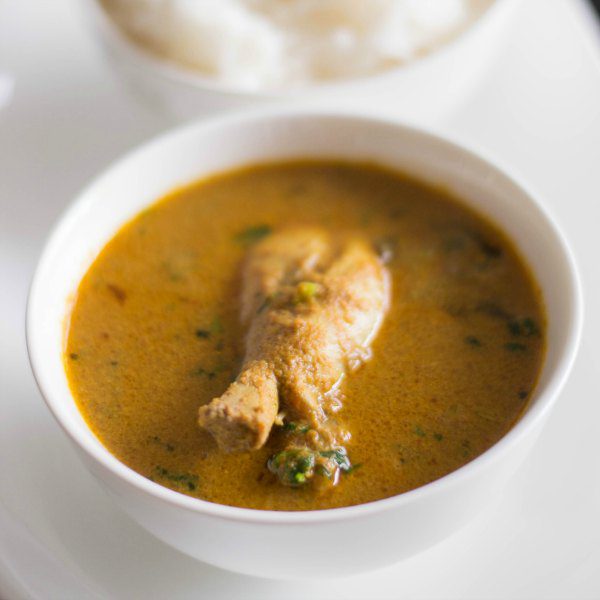
A new wave of culinary acceptance and experimentation has been visible for the past few years. Just as chefs are eager to try fresh ingredients, food lovers are opening up to cuisines that previously were region specific. Speaking about Indian food, it was primarily North Indian dishes that made a mark initially in the West. Butter chicken, naan, and dal makhani soon became household names. Then there was the hullaballoo over curry, a prominent aspect of Indian food, and the realisation by the world that curries differed based on the region of India they originated from.
Even now, some of the best curry houses can be found in London . This new interest in food opened doors for South Indian food to make a mark around the world slowly. Dosa, sambhar, idlis, fish, there is ample to taste and cherish in South Indian cuisine. Very much like the butter chicken of the North, many meat dishes find their way in the food from the South. Among the lot is Toddy Chicken that gets its name from palm wine that is used to cook the chicken. However, the same recipe can work equally well by replacing the toddy with a slightly sweeter and robust red wine.
Indian food, irrespective of the region it comes from, pairs exceptionally well with wine. The unique ingredients, spices, meats or vegetables, all tend to compliment wine and vice versa. The various characteristics of wine add a whole new dimension to the food, often bringing a refreshing element to the meal. Wine pairing is an art form that requires a lot of training and understanding of flavours. Whether it be the best wines for a barbeque, a South Indian Meal, or a festival, sommeliers must understand the nuances of the food to suggest the ideal wine options.
- 500 grams chicken
- 2 cups Red Wine
- 1 tablespoon Coriander Powder
- 1 tablespoon Ginger Garlic Paste
- Green Chillies (add to taste)
- 1/2 tablespoon Turmeric
- 1 tablespoon Garam Masala
- Salt (add to taste)
- 1 tablespoon Red chilli powder
- 1 tablespoon Cumin Powder
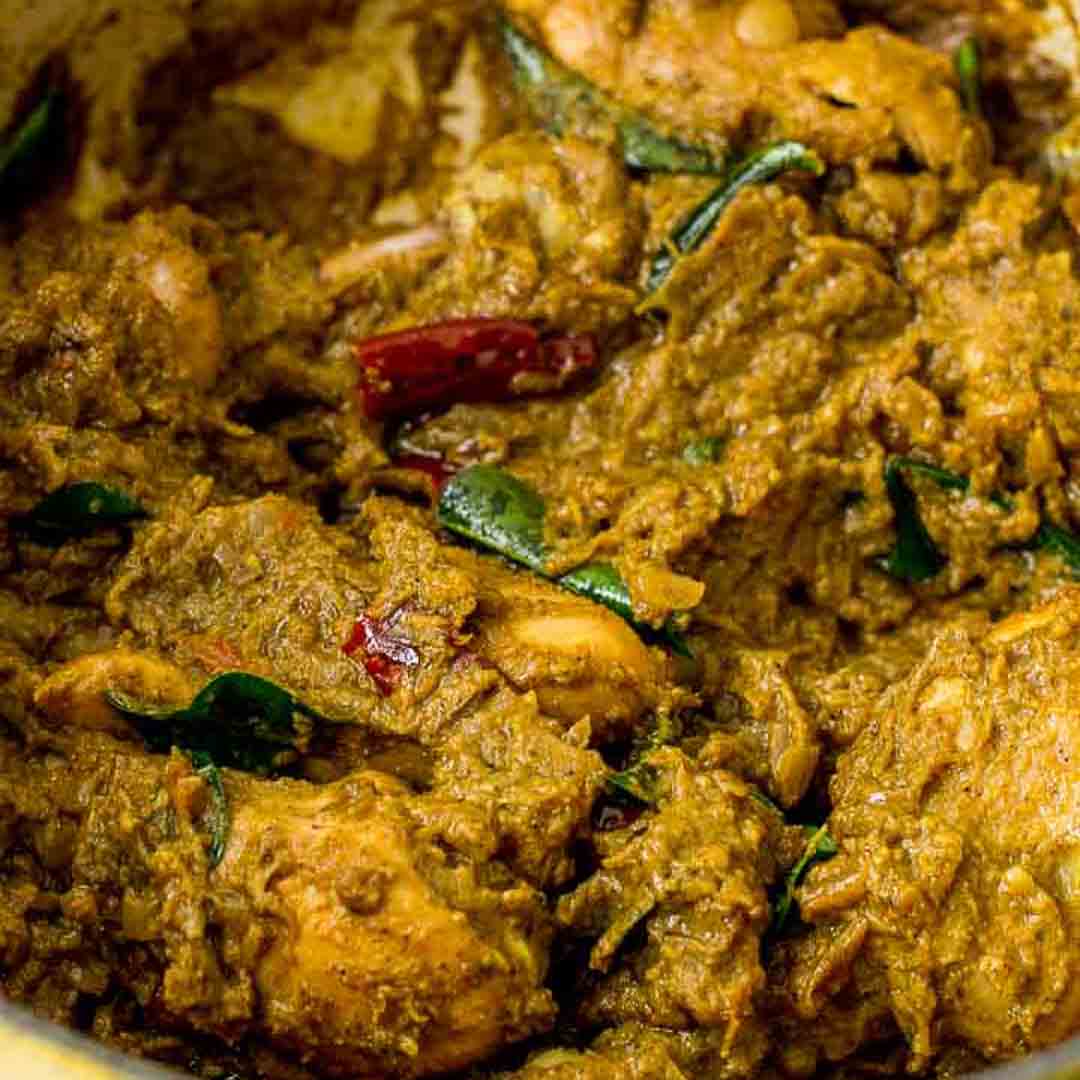
- Add the 2 cups of wine in a pan and set the flame on medium. Take all the spices, including coriander powder, cumin, chillies, garam masala, salt, the ginger garlic paste and put them in the pan. Add the chicken and give it a quick bath in the wine.
- Now, cover the pan with a lid while keeping the flame between medium and low. Let the chicken take in the flavours of the wine and spices. Keeping the fire on low is essential as it allows for the chicken to cook thoroughly. Having a high flame will not only evaporate the wine quickly but also prepare the chicken from the outside, while the inside might remain raw.
- In the meantime, you can cook some plain rice to go along with the chicken. The rice will break the spiciness of the dish and also take away some of the acidity that the wine will bring to it.
- After the chicken is ready, roughly 30-40 minutes, remove the lid and switch off the flame.
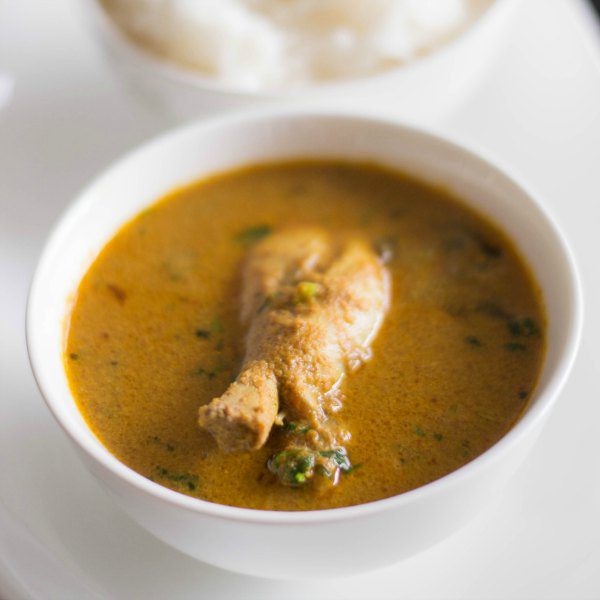
- Serve in a bowl while hot.
- The South Indian Red Wine Chicken will go along well with a crisp Chardonnay.
- Author: Kannamma - Suguna Vinodh
- Prep Time: 10 mins
- Cook Time: 40 mins
- Category: Curry
- Cuisine: South Indian
