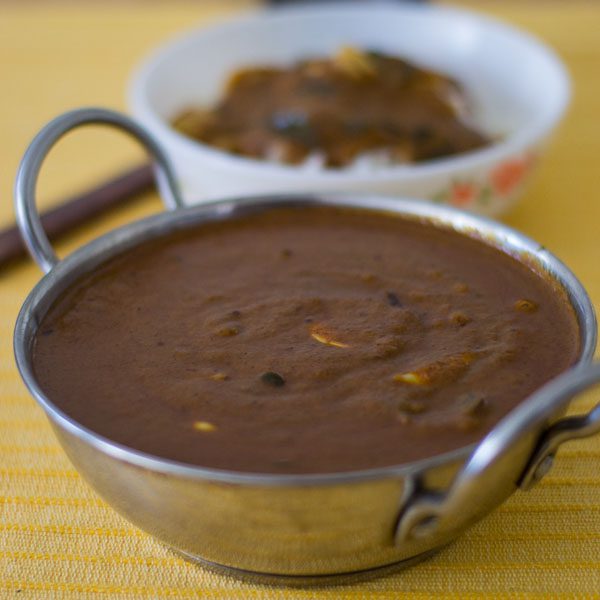
Poondu Kuzhambu
South Indian style Tamilnadu Spicy Chettinad Poondu Kuzhambu recipe with step by step pictures.
My husband Vinodh’s grand mother – Sinthayamma paati was 94 when she left us. Paati had a cook called Naacha. Naacha came to paati as a 10 year old. She never married and was 78 years old when paati died. She retired after paati left us. My son was 6 months old then and paati’s health was slowly going downhill. She had this habit of chewing tobacco called as pogailai in Tamil. Vinodh’s father had stopped the supply of tobacco due to her deteriorating health. We visited her when my son was 6 months old and Vinodh’s parents had to travel at that time. So it was me, my son, paati and Naacha in the house for a week. Naacha would hide the tobacco in her saree and sneak it in paati’s hands and make sure that no one was watching. It was a cute little scene. I did not tell about this to anyone as I felt that it was the very few little pleasures of life that was remaining for paati. She could barely walk. She would sit all day long in the portico watching people come and go at the farm. She was very old, ate very less and I thought the tobacco kept her going. I told this to my father in law after paati died and he laughed. He too knew what was going on. Even he chose to remain silent as he felt it was the little pleasures of life. Naacha left us once grand mom died. She still comes to the farm and I get very happy when I see her. She is so caring, an awesome cook and I love her food. This is her Poondu Kuzhambu recipe. Poondu Kuzhambu is my favorite. Everytime I make this Poondu Kuzhambu at home, I remember paati and Naacha and their cute little bonding. Below is a picture, the only picture of Naacha that I have.
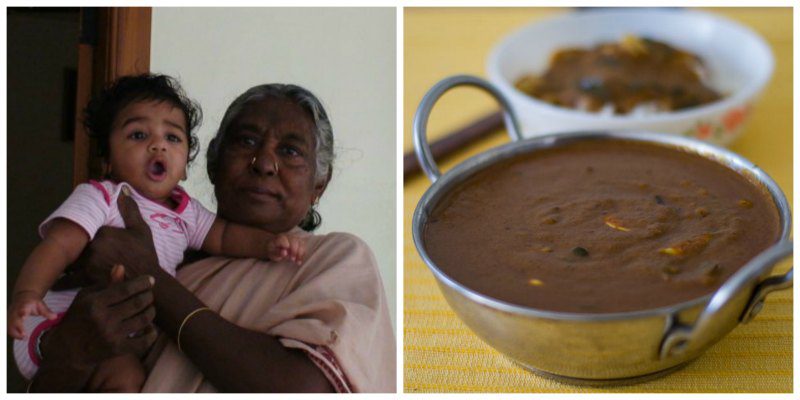
Here it is, Naacha’s awesome poondu kuzhambu.
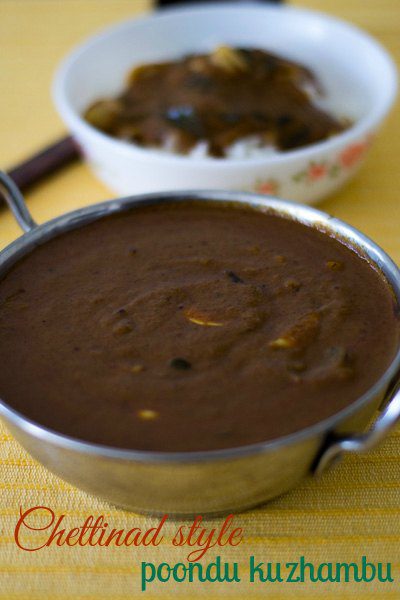
Here is the video of how to make poondu kuzhambu
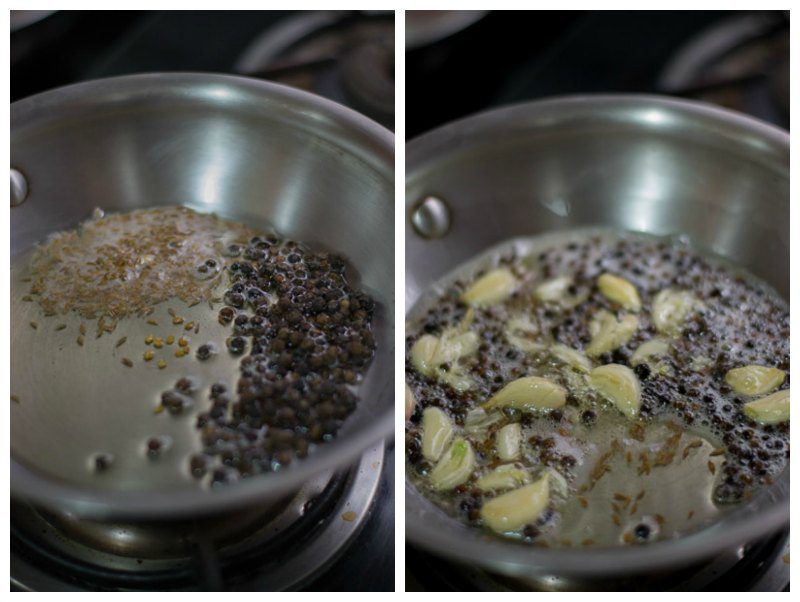
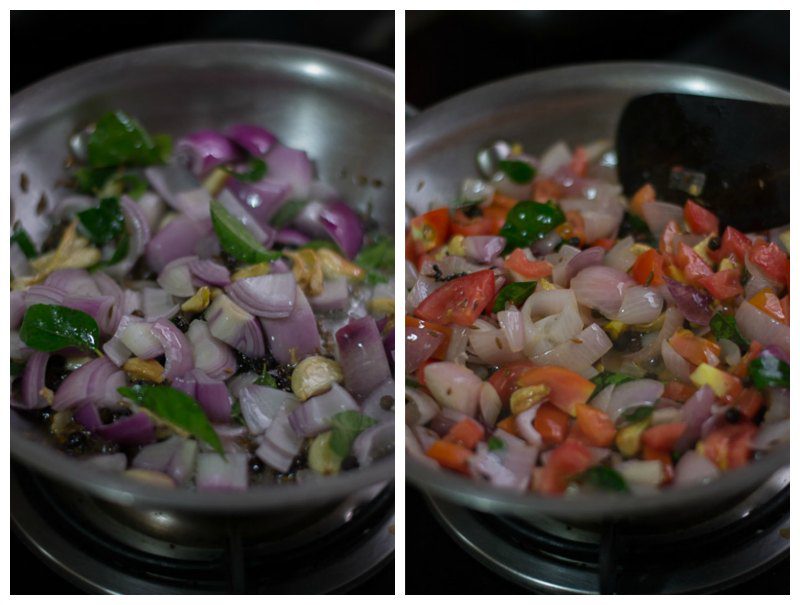
Heat a pan and add in the Indian style sesame oil. When the oil is hot, add in 3-4 methi-fenugreek seeds. Do not add a lot as the Poondu Kuzhambu curry will turn very bitter. 3-4 seeds are good enough. Add in the cumin and the black pepper too. Let it crackle. The oil will foam a little. That’s fine. Add in 10 cloves of roughly sliced garlic and saute briefly.
Add in one sprig of curry leaves and roughly chopped onions. Saute for 2-3 minutes until the onions turn soft. Add in the tomatoes and fry for a minute.
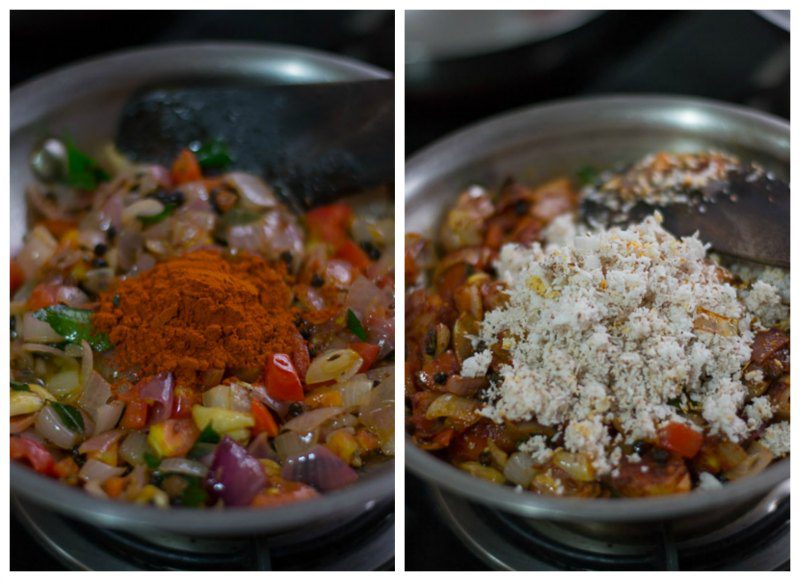
When the tomatoes are briefly sauteed, add in the kuzhambu milagai thool / kuzhambu masala powder. If you cannot source kuzhambu milagai thool, you can substitute sambar powder. If you want it spicy add in a tablespoon more of kuzhambu milagai thool. Saute to combine. Add in the fresh shredded coconut and remove off heat.
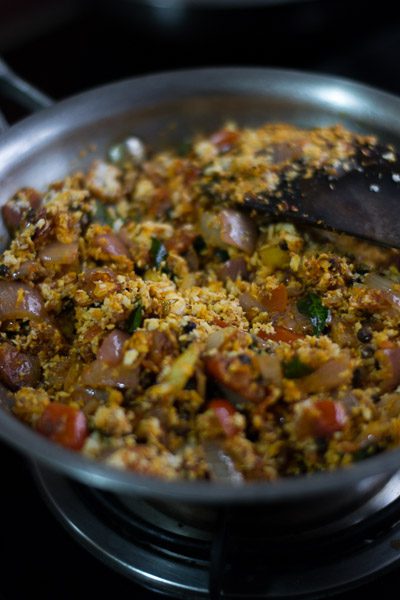
Let the Poondu Kuzhambu masala mixture cool a bit.
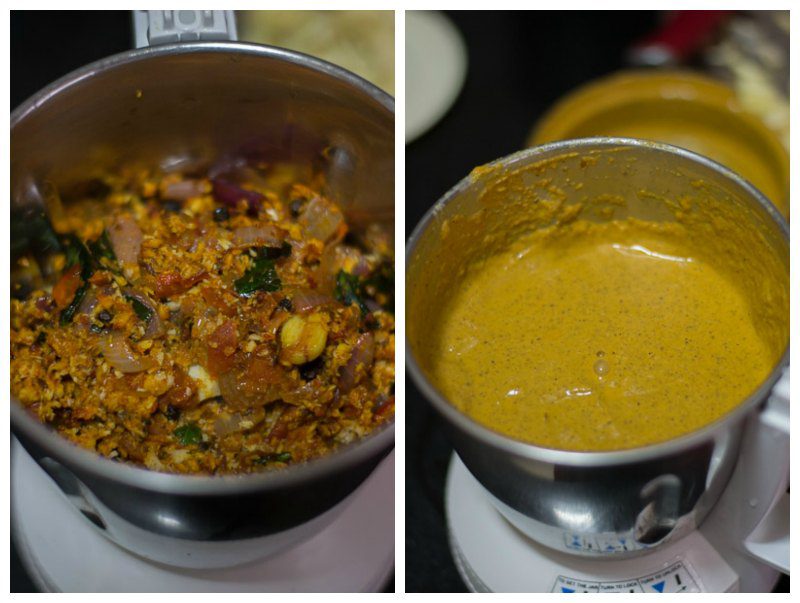
Grind the Poondu Kuzhambu masala to a very smooth paste. Add a cup of water while grinding. Set aside.
Soak a big lime size tamarind in 2 cups of hot water for 15 minutes. Crush between your fingers and make a pulp. Strain the liquid and set aside.
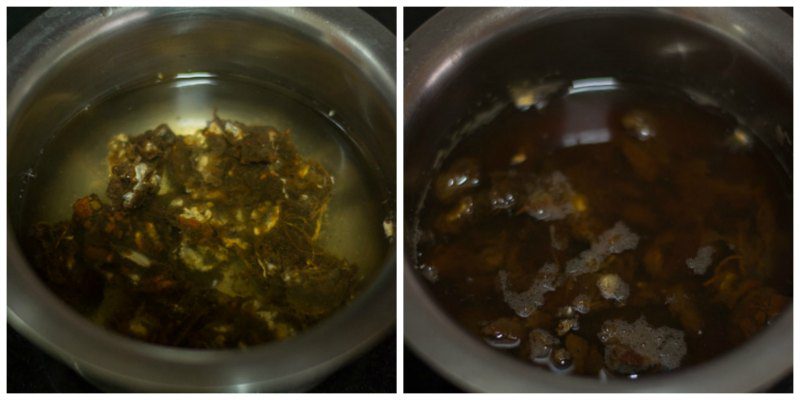
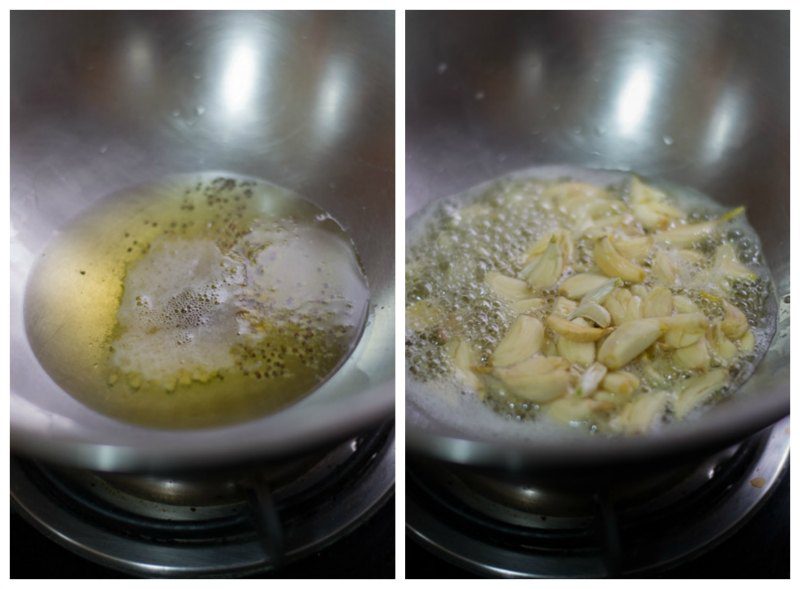
Heat oil in a kadai and add in the mustard seeds and urad dal. Let it splutter. Add in two whole pods of peeled garlic. If the garlic cloves are big in size, slice them. Fry for a minute.
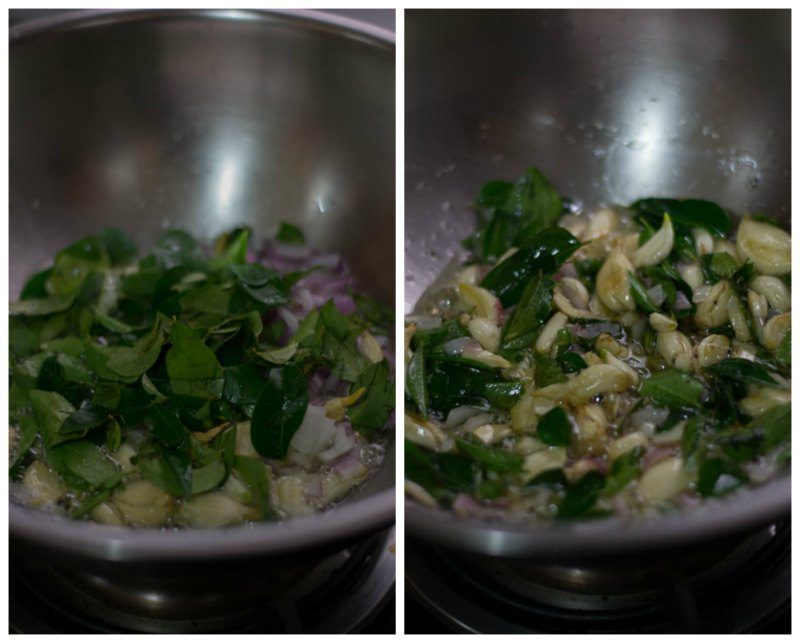
Add in a lot of curry leaves. About 3 sprigs. Curry leaves are an important flavor component. So do not skip. Add in the small onions too and saute for 2-3 minutes.
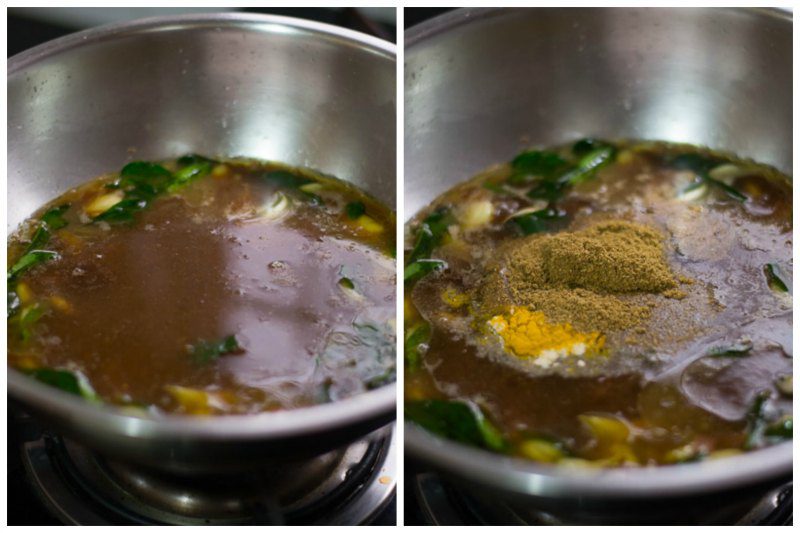
Add in the tamarind pulp/juice, salt, asafoetida, turmeric and coriander powder.
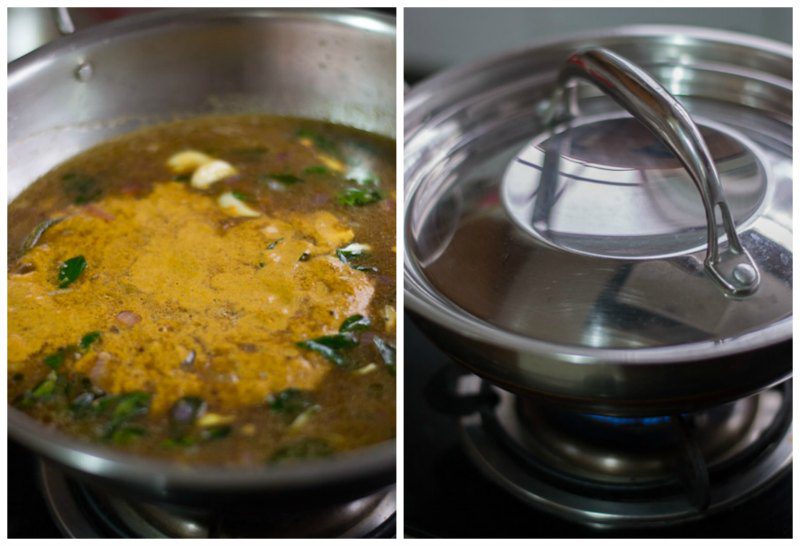
Add in the ground Poondu Kuzhambu masala. Wash the mixie with little water and add. Stir well and let it simmer covered with a lid on a very low flame for 30-40 minutes. Stir once in 10 minutes so it does not scorch at the bottom.
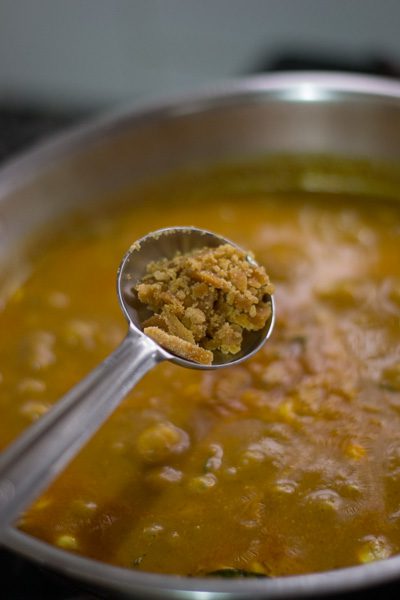
Add in the jaggery. This is the SECRET to a good poondu kuzhambu. It brings all the flavors alive. The spicy, tangy, oh so yumm……. It wont be sweet. It just brings all the flavors alive.
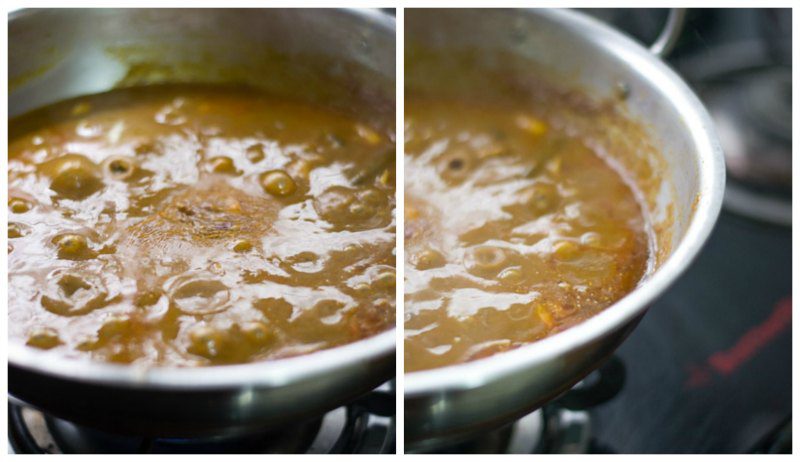
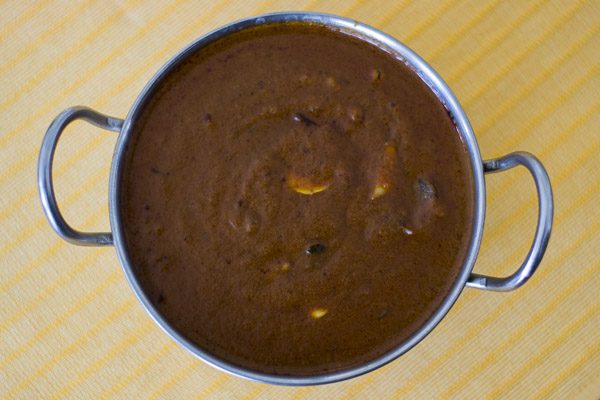
Let it simmer for 5 minutes more. Remove off heat and serve Poondu Kuzhambu with rice or idli. It tastes awesome with idli and dosa. It tastes double awesome the next day.
For the Masala
- 2 tablespoon Indian sesame oil
- 4 methi seeds
- 1 teaspoon cumin seeds
- 1 tablespoon black pepper corns
- 10 cloves garlic
- 1 sprig curry leaves
- 1 medium onion, roughly chopped
- 2 very ripe tomatoes, roughly chopped
- 2 tablespoon kuzhambu milagai thool (adjust according to spice level)
- 1/4 cup fresh shredded coconut (use little more for a rich kuzhambu)
Other Ingredients
- 1 lime size tamarind
- 4 tablespoons Indian sesame oil
- 1 teaspoon urad dal
- 1/4 teaspoon mustard seeds
- 2 whole pods peeled garlic
- 3 sprigs curry leaves
- 10 Indian shallots, finely chopped
- 1 1/2 teaspoon salt
- 1/4 teaspoon asafoetida
- 1 teaspoon turmeric powder
- 1 tablespoon coriander powder
- 1 tablespoon jaggery
- Heat a pan and add in the sesame oil. When the oil is hot, add in 3-4 methi-fenugreek seeds. Add in the cumin and the black pepper too. Let it splutter. The oil will foam a little. That’s fine. Add in 10 cloves of garlic and saute briefly.
- Add in one sprig of curry leaves and roughly chopped onions. Saute for 2-3 minutes until the onions turn soft. Add in the tomatoes and fry for a minute.
- When the tomatoes are briefly sauteed, add in the kuzhambu milagai thool / kuzhambu masala powder. Add in the fresh shredded coconut and remove off heat.
- Grind the masala to a very smooth paste. Add a cup of water while grinding. Set aside.
- Soak a big lime size tamarind in 2 cups of hot water for 15 minutes. Crush between your fingers and make a pulp. Strain the liquid and set aside.
- Heat oil in a kadai and add in the mustard seeds and urad dal. Let it splutter. Add in two whole pods of peeled garlic. Fry for a minute.
- Add in a lot of curry leaves. About 3 sprigs. Curry leaves are an important flavor component. So do not skip. Add in the small onions too and saute for 2-3 minutes.
- Add in the tamarind pulp/juice, salt, asafoetida, turmeric and coriander powder.
- Add in the ground masala. Stir well and let it simmer covered with a lid on a very low flame for 30-40 minutes. Stir once in 10 minutes so it does not scorch at the bottom.
- Add in the jaggery. This is the SECRET to a good poondu kuzhambu. It wont be sweet. It just brings all the flavors alive.
- Let it simmer for 5 minutes more. Remove off heat and serve with rice or idli. It tastes awesome with idli and dosa. It tastes double awesome the next day.
Notes
If you cannot source kuzhambu milagai thool, you can substitute sambar powder.
- Author: Kannamma - Suguna Vinodh
- Prep Time: 20 mins
- Cook Time: 60 mins
- Category: Side Dish
- Cuisine: South Indian

For the Masala
- 2 tablespoon Indian sesame oil
- 4 methi seeds
- 1 teaspoon cumin seeds
- 1 tablespoon black pepper corns
- 10 cloves garlic
- 1 sprig curry leaves
- 1 medium onion, roughly chopped
- 2 very ripe tomatoes, roughly chopped
- 2 tablespoon kuzhambu milagai thool (adjust according to spice level)
- 1/4 cup fresh shredded coconut (use little more for a rich kuzhambu)
Other Ingredients
- 1 lime size tamarind
- 4 tablespoons Indian sesame oil
- 1 teaspoon urad dal
- 1/4 teaspoon mustard seeds
- 2 whole pods peeled garlic
- 3 sprigs curry leaves
- 10 Indian shallots, finely chopped
- 1 1/2 teaspoon salt
- 1/4 teaspoon asafoetida
- 1 teaspoon turmeric powder
- 1 tablespoon coriander powder
- 1 tablespoon jaggery
- Heat a pan and add in the sesame oil. When the oil is hot, add in 3-4 methi-fenugreek seeds. Add in the cumin and the black pepper too. Let it splutter. The oil will foam a little. That’s fine. Add in 10 cloves of garlic and saute briefly.
- Add in one sprig of curry leaves and roughly chopped onions. Saute for 2-3 minutes until the onions turn soft. Add in the tomatoes and fry for a minute.
- When the tomatoes are briefly sauteed, add in the kuzhambu milagai thool / kuzhambu masala powder. Add in the fresh shredded coconut and remove off heat.
- Grind the masala to a very smooth paste. Add a cup of water while grinding. Set aside.
- Soak a big lime size tamarind in 2 cups of hot water for 15 minutes. Crush between your fingers and make a pulp. Strain the liquid and set aside.
- Heat oil in a kadai and add in the mustard seeds and urad dal. Let it splutter. Add in two whole pods of peeled garlic. Fry for a minute.
- Add in a lot of curry leaves. About 3 sprigs. Curry leaves are an important flavor component. So do not skip. Add in the small onions too and saute for 2-3 minutes.
- Add in the tamarind pulp/juice, salt, asafoetida, turmeric and coriander powder.
- Add in the ground masala. Stir well and let it simmer covered with a lid on a very low flame for 30-40 minutes. Stir once in 10 minutes so it does not scorch at the bottom.
- Add in the jaggery. This is the SECRET to a good poondu kuzhambu. It wont be sweet. It just brings all the flavors alive.
- Let it simmer for 5 minutes more. Remove off heat and serve with rice or idli. It tastes awesome with idli and dosa. It tastes double awesome the next day.
Notes
If you cannot source kuzhambu milagai thool, you can substitute sambar powder.
- Author: Kannamma - Suguna Vinodh
- Prep Time: 20 mins
- Cook Time: 60 mins
- Category: Side Dish
- Cuisine: South Indian
Find it online : https://www.kannammacooks.com/spicy-chettinad-poondu-kuzhambu/
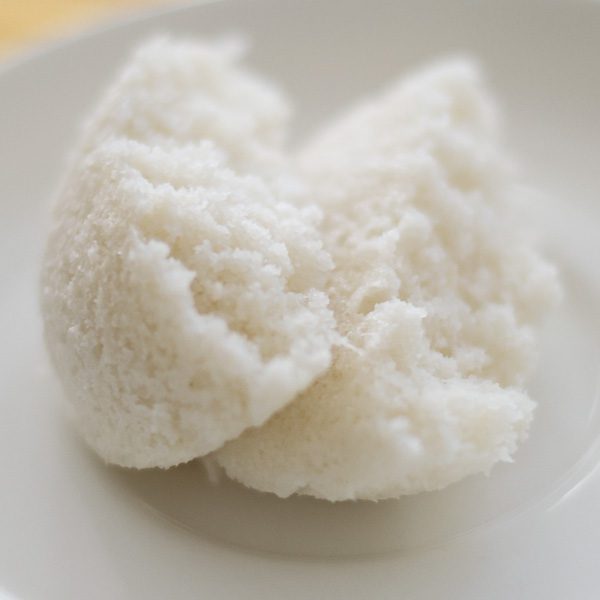
If you are planning to grind idli batter using mixie, please refer to this recipe. Here is recipe for making idli in mixie. (The ingredients are slightly different)
VIDEO OF MAKING IDLI BATTER IN WET GRINDER
Idli has to be the top most comfort food for all South Indians. The texture of the idli is what makes it sublime. This recipe is a very basic recipe which uses only four ingredients namely Urad dal, Idly rice, fenugreek seeds and Salt. Its the technique that makes this the best batter ever. I use a wet grinder for grinding the batter. The stones in the grinder fluffs up the urad dal without making it hot. And the wet grinder method cannot be beat. A mixie or a food processor can be used but it wont be near close to the wet grinder. Also, you may need a heavy-duty mixer grinder so that the batter doesn’t get overheated. Each and every ingredient is ground separately. All the ingredients are soaked for a minimum of 3-4 hours and then ground. Wash all the ingredients in the beginning and then soak it in water. Wash the rice 3-4 times so the idli will be really white later.
Soak Fenugreek Seeds, Urad Dal and Idly Rice for a minimum of 3-4 hours. Soak everything separately in lots of water.
Lets start with grinding of the fenugreek seeds. I need to be honest with you here. This is an optional ingredient. But I love the flavor that fenugreek imparts in the idli or dosa. Thats the flavor that reminds me of childhood. Its healthy and it also aids in fermentation. But if you use a lot, your idli is going to be bitter.
Note: If you are using the recipe for the first time, Use only a tablespoon of fenugreek seeds. Gradually increase if you like the flavour.
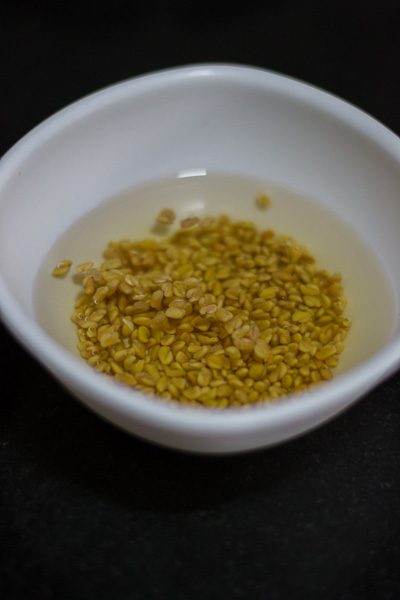
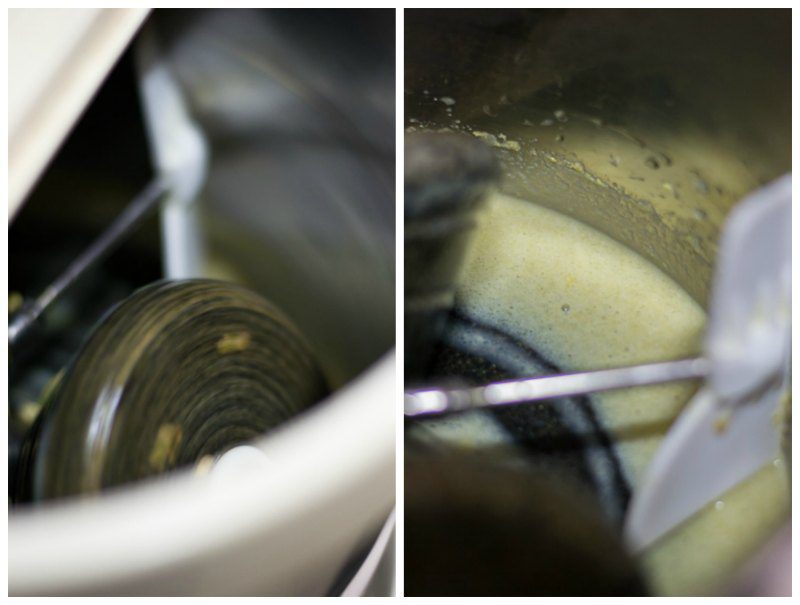
Usually people soak fenugreek seeds and urad dal together. I picked up this trick from my friend Neeraja in California that grinding fenugreek seeds separately contributed for a lot of fluffiness. I was excited the first time when I saw the fenugreek seeds fluff up so much when ground. Grind the soaked fenugreek seeds with half a cup – 1 cup of water for 3-4 minutes until they are finely ground and have fluffed up.
Now is the time for lentils.
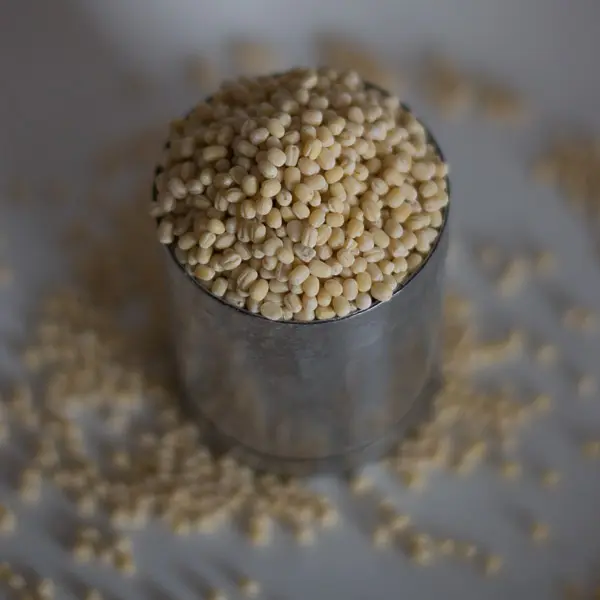
There are a lot of variety of urad dal available that people use for idli batter. Whole White Urad Dal – This is what I use. I use unpolished whole white Urad Dal. I prefer this dal for the sake of convenience. Split Black Urad Dal – People used this as the primary dal for idly batter till 20 years back and many people use it today too. Purists will use this dal only. Black urad dal still has the skin intact and that means less processing during manufacture. The theory for not using white urad dal being that some heat is generated in the process of removing the skin during manufacture which might kill some of the good bacteria. I buy the theory. But black dal – its a lot of work. The soaked dal needs to be rubbed between hands and washed 8-10 times to remove the skin. If you have the time, go for it. Its more healthier too. So if you have the time, use this dal. Its the best dal for idly batter. Split White Urad Dal – I do not use this and will not recommend this.
Add the soaked and drained urad dal to the wet grinder. Remember the ground fenugreek is still lying in the grinder. Just dump the dal on top of it and add half a cup of water. The tip in grinding urad dal is to add the water slowly. If you add all of the water at once, it wont fluff up well.
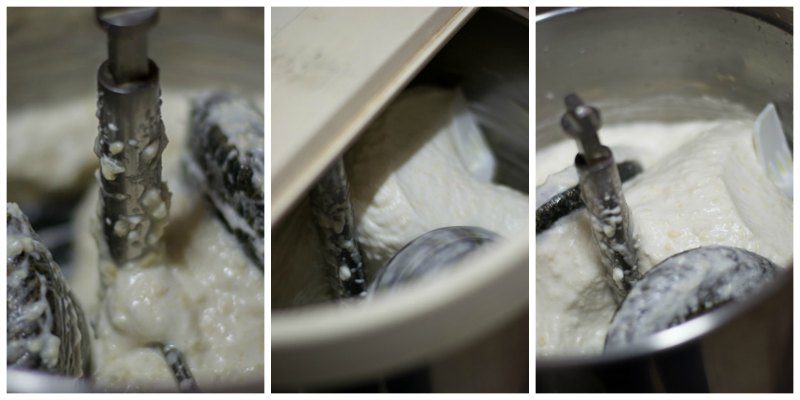
The dal should fluff up and fill the grinder. It should have increased about 2-3 times of its original volume. Grind for atleast 30 minutes. After 30 minutes, transfer the dal mixture into a bowl and set aside.
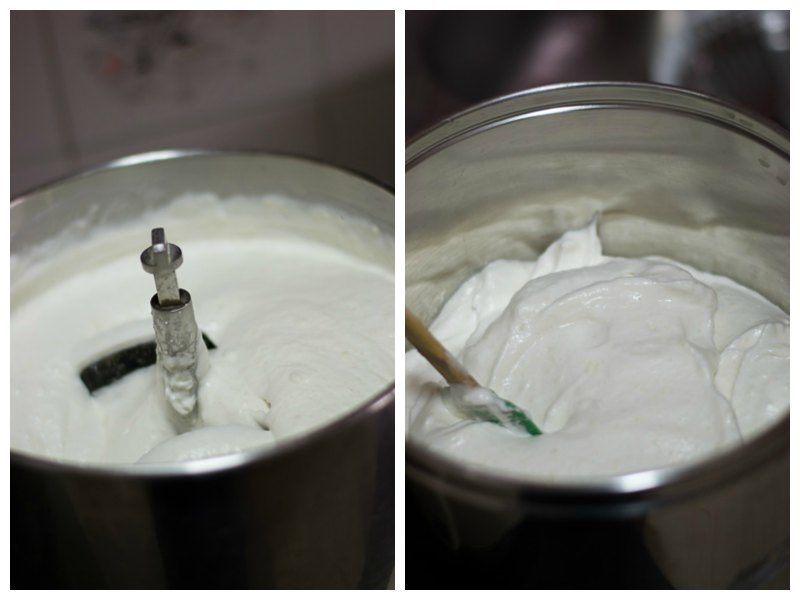
Now comes the rice.
We use Idly Rice for making idly batter. Its a short grain fat par boiled rice. Par boiled rice is the only way to go for idli. Its also called as Salem Rice in Tamilnadu. Its an unique short fat grained rice. I have seen many people using Idly Rava. I personally do not use Idly rava. Most of the households in Tamilnadu use Idly Rice only. So its got to be idly rice for me. Grind the soaked and drained rice for 30 minutes until smooth. Add just enough water while grinding. Once ground, transfer the batter to the dal mixture bowl and mix well. Let there be lot of space for the batter to expand while fermenting. Do not fill up to the brim.
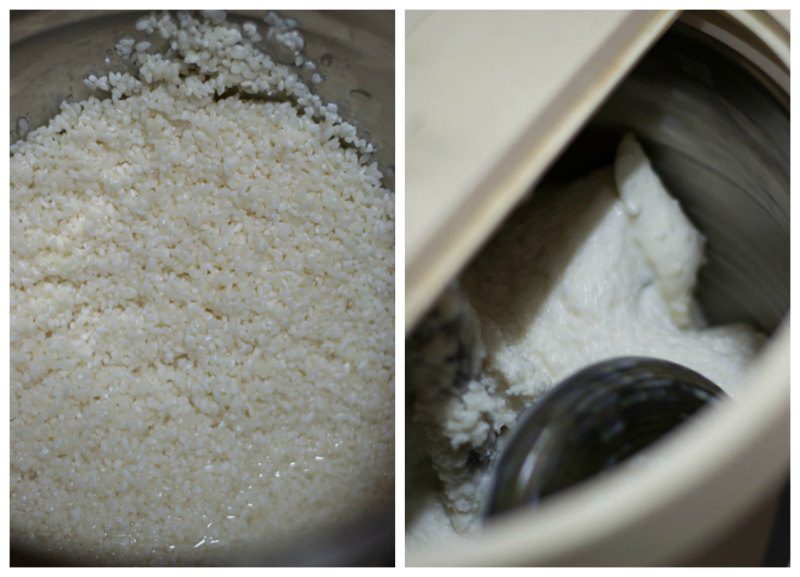
ADDITIONAL TIP
If you are going to store the batter for more than two days and if you want extra soft idlies even when the batter gets old, soak 1/2 Cup Avalakki in 1 cup of water (Aval or Poha) for 5 minutes in water. Grind in a mixie and add to the batter. Aval makes for softest idlis. Try it if you live in cold climate or your idlis are always hard. (Aval – Thick or Thin – The size doesn’t matter)

SALT
When to add salt? There are two schools of thought. Whether to add salt while fermenting or to add it later. There is no right or wrong thing when it comes to adding salt. Its just a matter of choice. Salt inhibits fermentation and interferes with good bacteria to a certain extent. So one might want to add the salt after fermentation. At the same time, if you live in a hot and humid place then salt might be your friend because your batter will not be over fermented and will not turn sour soon. So when do I add salt? I add salt to the batter before fermenting in summers and add it after fermenting in winters. Hope this information was helpful.
I added salt to the batter before fermenting this time as we are seeing more sunnier days here. If you live in a very cold place leave your batter in some place warm. Leaving your batter inside your oven with the pilot light on works great if you live abroad and your place is cold.
Usually the batter needs to ferment for 8-12 hours. Once the time is up, the batter should have increased in volume. Take a ladle and mix it well. Your batter is ready. If you did not add salt before, now is the right time.
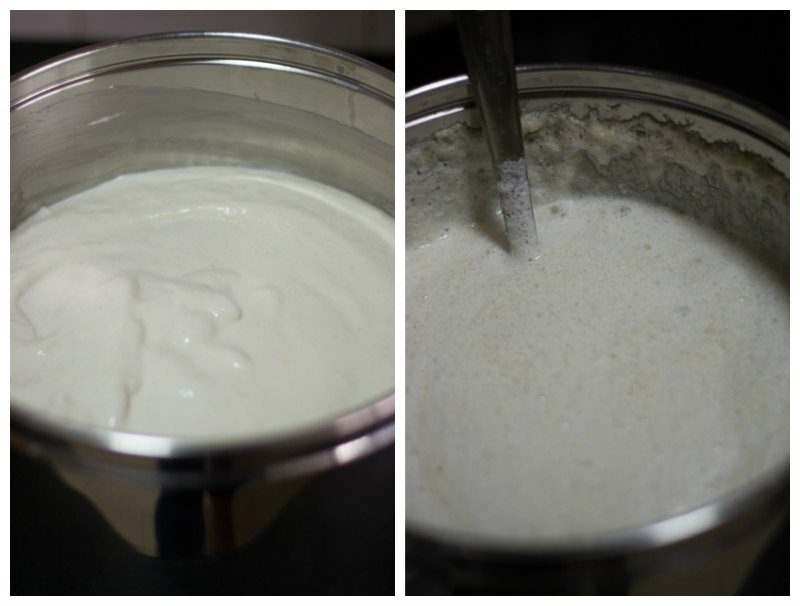
Lets make idli.
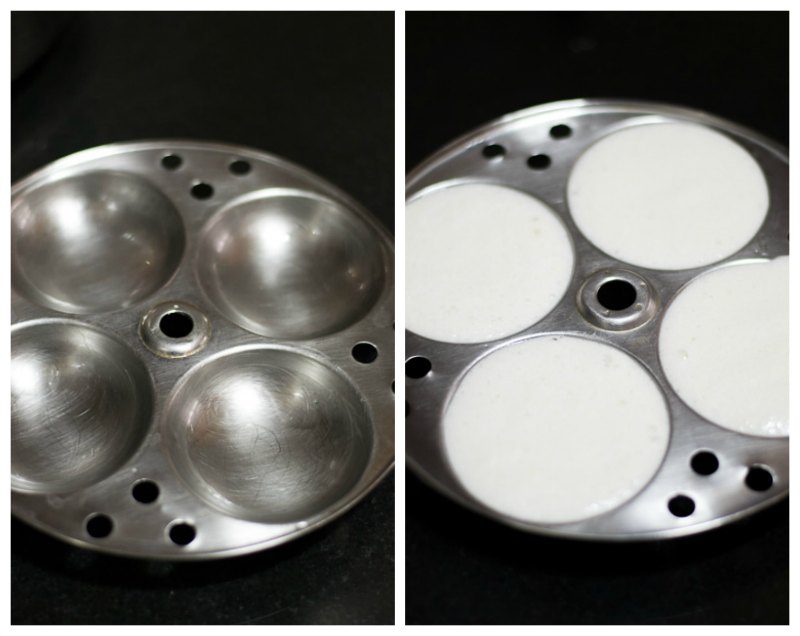
Put some water in an idly vessel and put it on medium flame. Oil the idli plate and gently fill the rounds with the batter. Put it inside the idly vessel and let it steam for 6-7 minutes.
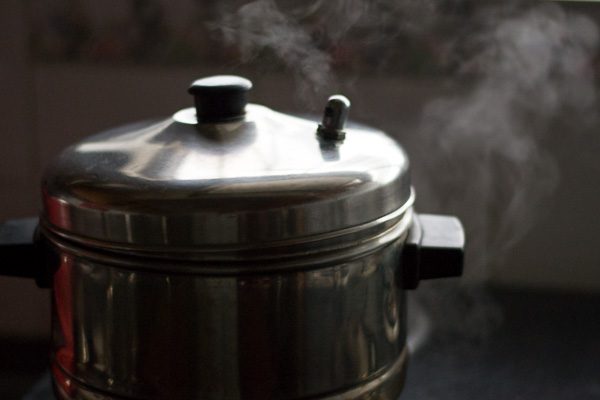
The key to good idlis – Do not allow it to over cook. It might become hard and dry. Just keep an eye and remove the idlis after 6-7 minutes. Do not remove the idlis immediately. It might stick. Leave it undisturbed for 4-5 minutes and then spoon it out. Serve hot with your favorite chutney and sambar.
A good idly must be soft and tender.
The one common comment I get from a lot of readers is that, their idlies did not rise and the idlies were flat. The main reason is watery or runny batter. Watery batter will not rise and the idlies will be hard and flat. So use caution while grinding and do not add too much water while grinding. The batter will thin out a little after fermentation. So a BIG CAUTION on using water. Please use correct measurements as mentioned in the recipe.
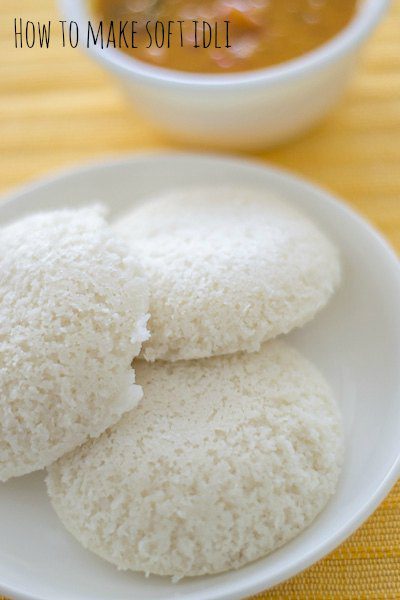
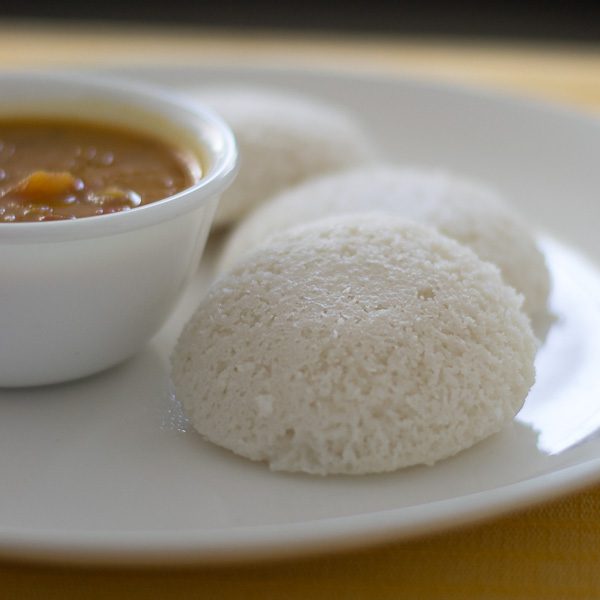
- 1 Cup Urad Dal
- 4 Cups Idly Rice ( 1 liter)
- 2 tablespoon Fenugreek seeds (Vendhayam)
- 2 tablespoon Salt
- 1/2 Cup Aval or Poha (Optional)
- All the ingredients are soaked for a minimum of 3-4 hours and then ground. Wash all the ingredients in the beginning and then soak it in water. Wash the rice 3-4 times so the idli will be really white later.
- Grind the soaked fenugreek seeds in water for 3-4 minutes until the are finely ground and have fluffed up.
- Add the soaked and drained urad dal to the wet grinder. Remember the ground fenugreek is still lying in the grinder. Just dump the dal on top of it and add half a cup of water. The tip in grinding urad dal is to add the water slowly. If you add all of the water at once, it wont fluff up well. The dal should fluff up and fill the grinder. It should have increased about 8-10 times of its original volume. Grind for atleast 30 minutes. After 30 minutes, transfer the dal mixture into a bowl and set aside.
- Grind the soaked and drained rice for 30 minutes until smooth. Add just enough water while grinding. Once ground, transfer the batter to the dal mixture bowl and mix well.
- I add salt to the batter before fermenting in summers and add it after fermenting in winters.
- Usually the batter needs to ferment for 8-12 hours.
- Once the time is up, the batter should have increased in volume. Take a ladle and mix it well. Your batter is ready.
- For the idlies : Put some water in an idly vessel and put it on medium flame. Oil the idli plate and gently fill the rounds with the batter. Put it inside the idly vessel and let it steam for 6-7 minutes. The key to good idlis – Do not allow it to over cook. It might become hard and dry. Just keep an eye and remove the idlis after 6-7 minutes. Do not remove the idlis immediately. It might stick. Leave it undisturbed for 4-5 minutes and then spoon it out. Serve hot with your favorite chutney or sambar.
- Author: Kannamma - Suguna Vinodh
- Prep Time: 12 hours
- Cook Time: 10 mins
- Category: Basics
- Cuisine: South Indian

