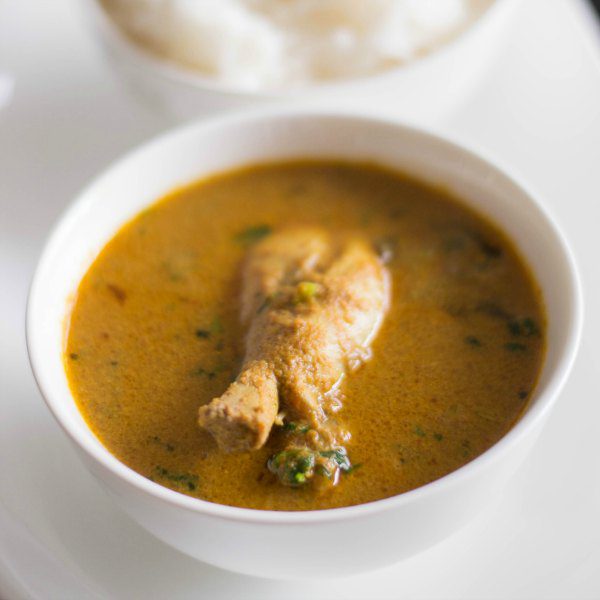
A new wave of culinary acceptance and experimentation has been visible for the past few years. Just as chefs are eager to try fresh ingredients, food lovers are opening up to cuisines that previously were region specific. Speaking about Indian food, it was primarily North Indian dishes that made a mark initially in the West. Butter chicken, naan, and dal makhani soon became household names. Then there was the hullaballoo over curry, a prominent aspect of Indian food, and the realisation by the world that curries differed based on the region of India they originated from.
Even now, some of the best curry houses can be found in London . This new interest in food opened doors for South Indian food to make a mark around the world slowly. Dosa, sambhar, idlis, fish, there is ample to taste and cherish in South Indian cuisine. Very much like the butter chicken of the North, many meat dishes find their way in the food from the South. Among the lot is Toddy Chicken that gets its name from palm wine that is used to cook the chicken. However, the same recipe can work equally well by replacing the toddy with a slightly sweeter and robust red wine.
Indian food, irrespective of the region it comes from, pairs exceptionally well with wine. The unique ingredients, spices, meats or vegetables, all tend to compliment wine and vice versa. The various characteristics of wine add a whole new dimension to the food, often bringing a refreshing element to the meal. Wine pairing is an art form that requires a lot of training and understanding of flavours. Whether it be the best wines for a barbeque, a South Indian Meal, or a festival, sommeliers must understand the nuances of the food to suggest the ideal wine options.
- 500 grams chicken
- 2 cups Red Wine
- 1 tablespoon Coriander Powder
- 1 tablespoon Ginger Garlic Paste
- Green Chillies (add to taste)
- 1/2 tablespoon Turmeric
- 1 tablespoon Garam Masala
- Salt (add to taste)
- 1 tablespoon Red chilli powder
- 1 tablespoon Cumin Powder
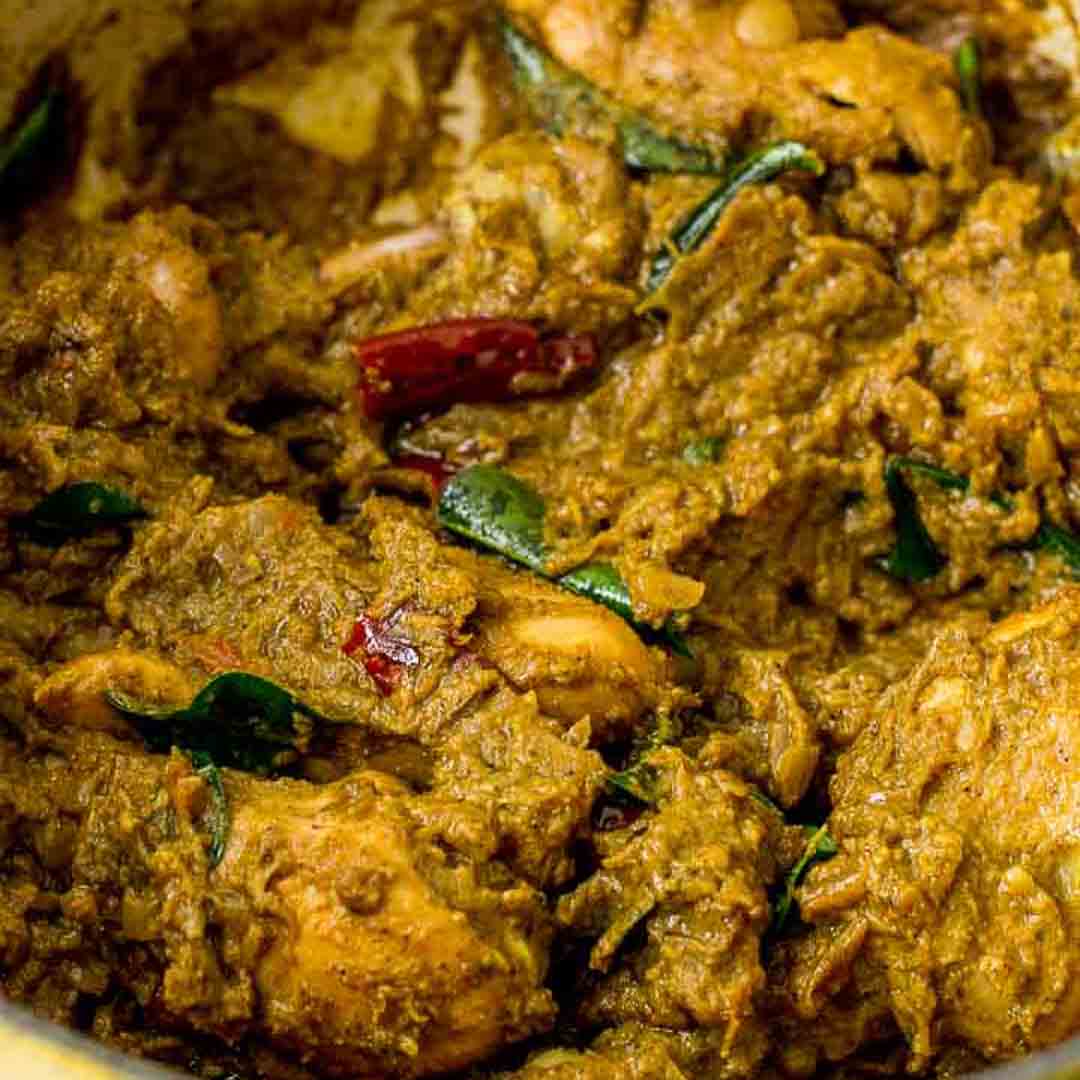
- Add the 2 cups of wine in a pan and set the flame on medium. Take all the spices, including coriander powder, cumin, chillies, garam masala, salt, the ginger garlic paste and put them in the pan. Add the chicken and give it a quick bath in the wine.
- Now, cover the pan with a lid while keeping the flame between medium and low. Let the chicken take in the flavours of the wine and spices. Keeping the fire on low is essential as it allows for the chicken to cook thoroughly. Having a high flame will not only evaporate the wine quickly but also prepare the chicken from the outside, while the inside might remain raw.
- In the meantime, you can cook some plain rice to go along with the chicken. The rice will break the spiciness of the dish and also take away some of the acidity that the wine will bring to it.
- After the chicken is ready, roughly 30-40 minutes, remove the lid and switch off the flame.
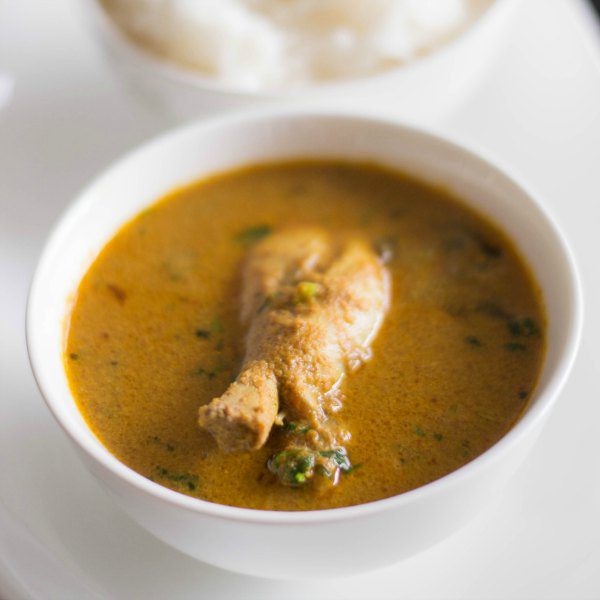
- Serve in a bowl while hot.
- The South Indian Red Wine Chicken will go along well with a crisp Chardonnay.
- Author: Kannamma - Suguna Vinodh
- Prep Time: 10 mins
- Cook Time: 40 mins
- Category: Curry
- Cuisine: South Indian
- 500 grams chicken
- 2 cups Red Wine
- 1 tablespoon Coriander Powder
- 1 tablespoon Ginger Garlic Paste
- Green Chillies (add to taste)
- 1/2 tablespoon Turmeric
- 1 tablespoon Garam Masala
- Salt (add to taste)
- 1 tablespoon Red chilli powder
- 1 tablespoon Cumin Powder
- Add the 2 cups of wine in a pan and set the flame on medium. Take all the spices, including coriander powder, cumin, chillies, garam masala, salt, the ginger garlic paste and put them in the pan. Add the chicken and give it a quick bath in the wine.
- Now, cover the pan with a lid while keeping the flame between medium and low. Let the chicken take in the flavours of the wine and spices. Keeping the fire on low is essential as it allows for the chicken to cook thoroughly. Having a high flame will not only evaporate the wine quickly but also prepare the chicken from the outside, while the inside might remain raw.
- In the meantime, you can cook some plain rice to go along with the chicken. The rice will break the spiciness of the dish and also take away some of the acidity that the wine will bring to it.
- After the chicken is ready, roughly 30-40 minutes, remove the lid and switch off the flame.
- Serve in a bowl while hot.
- The South Indian Red Wine Chicken will go along well with a crisp Chardonnay.
- Author: Kannamma - Suguna Vinodh
- Prep Time: 10 mins
- Cook Time: 40 mins
- Category: Curry
- Cuisine: South Indian
Find it online : https://www.kannammacooks.com/south-indian-red-wine-chicken/
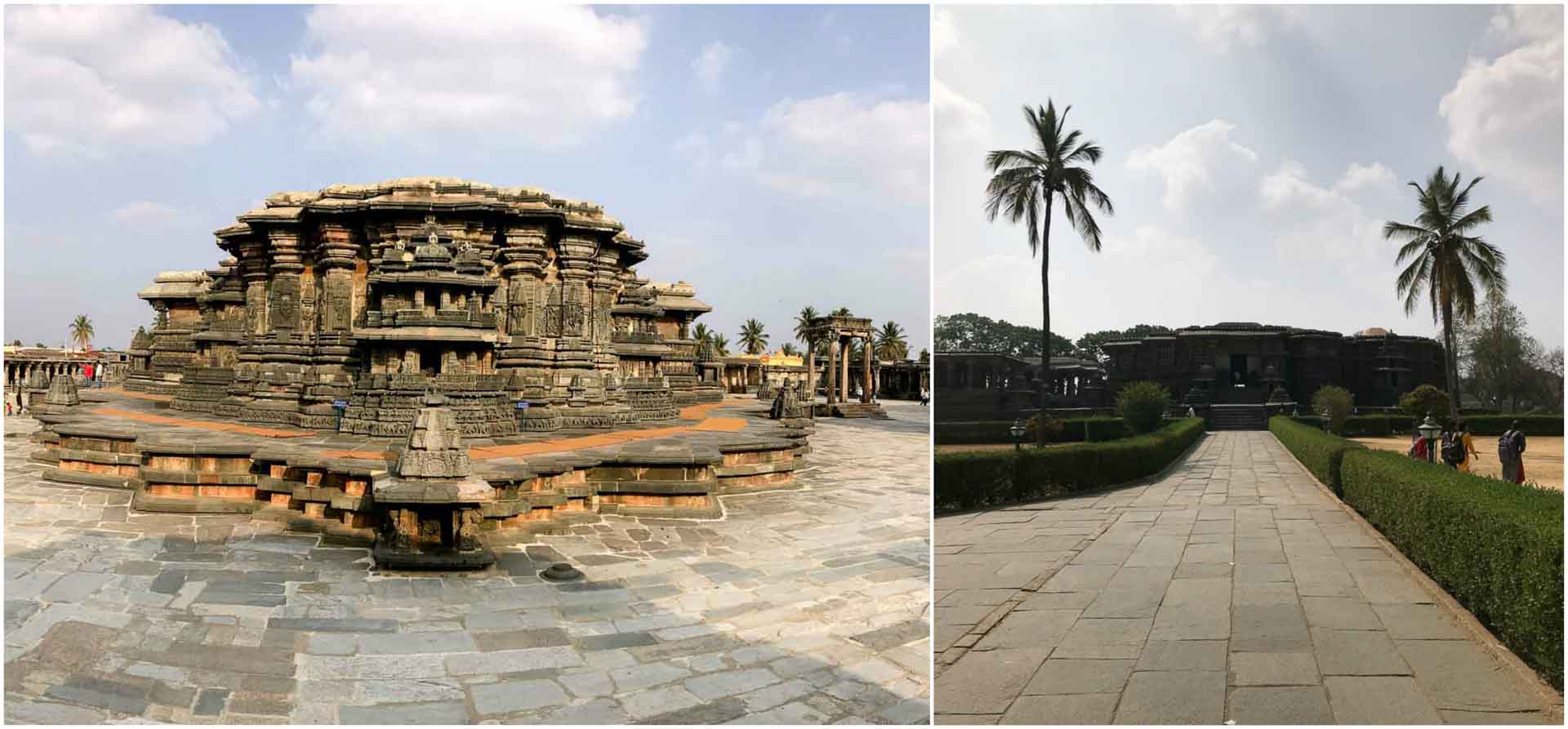
We recently took a trip to Halebid – Belur from Bangalore. The magnificent temples and the ruins are so mesmerizing. The temples are close to a 1000 year old built by the Hoysalas / Hoysala empire.
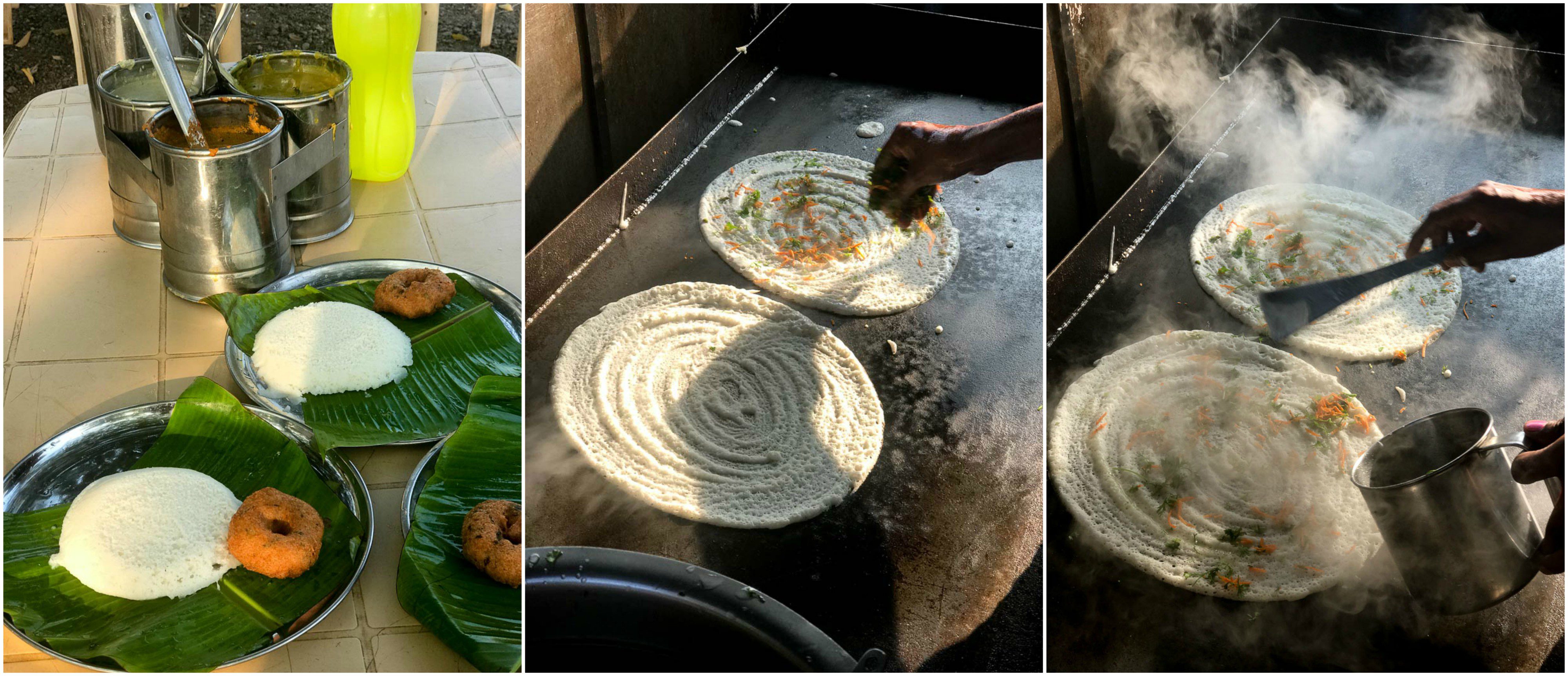
The trip can be easily done during one of the weekends as its a 4 hour journey to Belur – Halebid / Halebeedu. We started at around 7 am. For breakfast you can stop at the following places. Shark Dhaba on Hassan Road ( Highly recommended among foodies ) – They serve some of the best thatte idlis and masala dosas. Their open seating outdoors is a plus. Swati delicacy is another nice vegetarian restaurant situated in Kunigal road on the way to Hassan. We stopped at Shark Dhaba for breakfast. Its roughly about 60 kms from Bangalore.
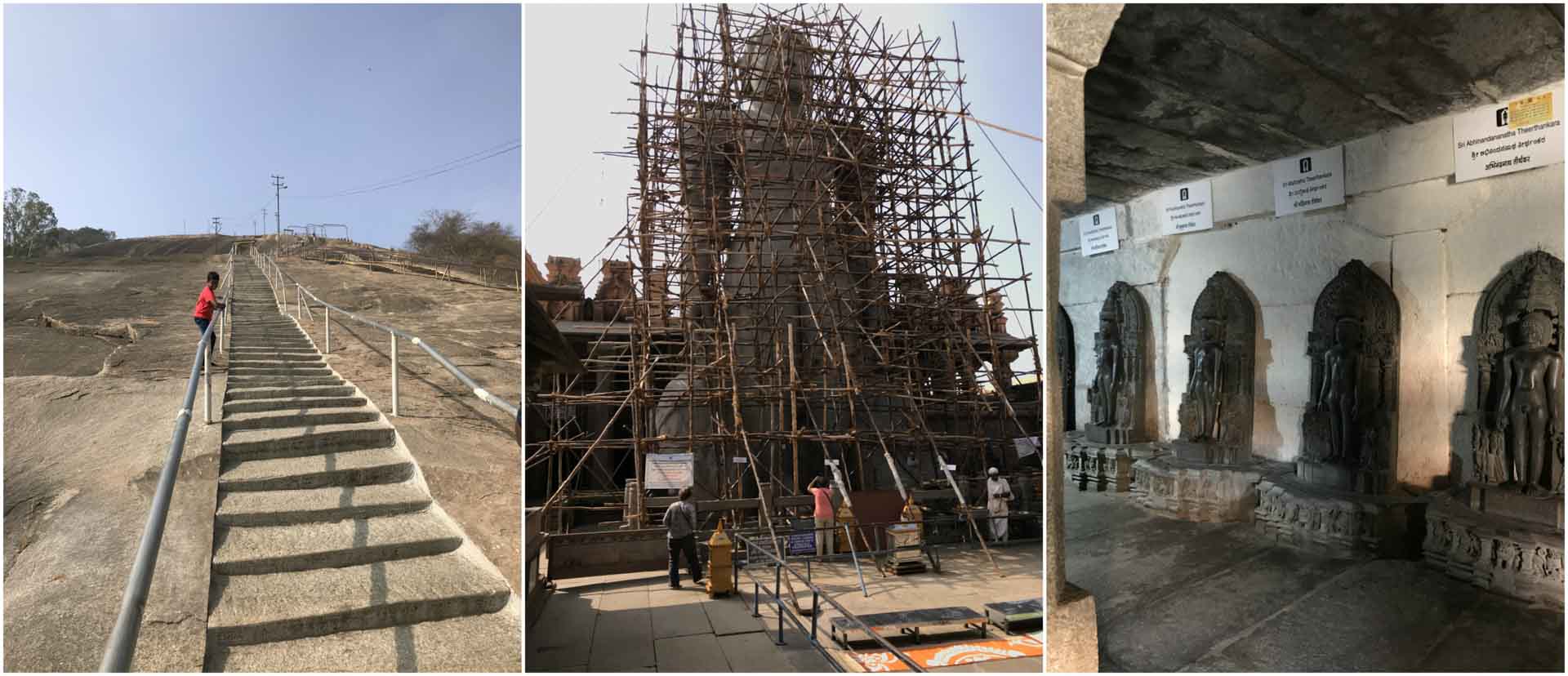
Shravanabelagola Timings: 6-30am to 11-30am and 3-30pm to 6-30pm in the afternoon. You will spend about 1.5 hours here (30 minutes included for the climb up and down). After breakfast, our first stop was at Shravanabelagola . The Gommateshwara Bahubali statue at Shravanabelagola is one of the most important pilgrimage destinations in Jainism. This place is close to a 1000 years old. It is considered to be the world’s largest monolithic statue. There are around 700 steps to get to the top of the hill and will roughly take about 30 minutes to climb. If you cannot climb, one can take the help of palanquin bearers. Shoes / foot wear is not allowed. There is a place provided by the temple where you can leave your foot wear. Socks is allowed. I advise you to pack some good cotton socks with you as the rocks get really hot during mid-day and in summer. Socks can really come handy in keeping the foot cool. People do sell socks near the hill. Do carry some water as there are no shops on the top.
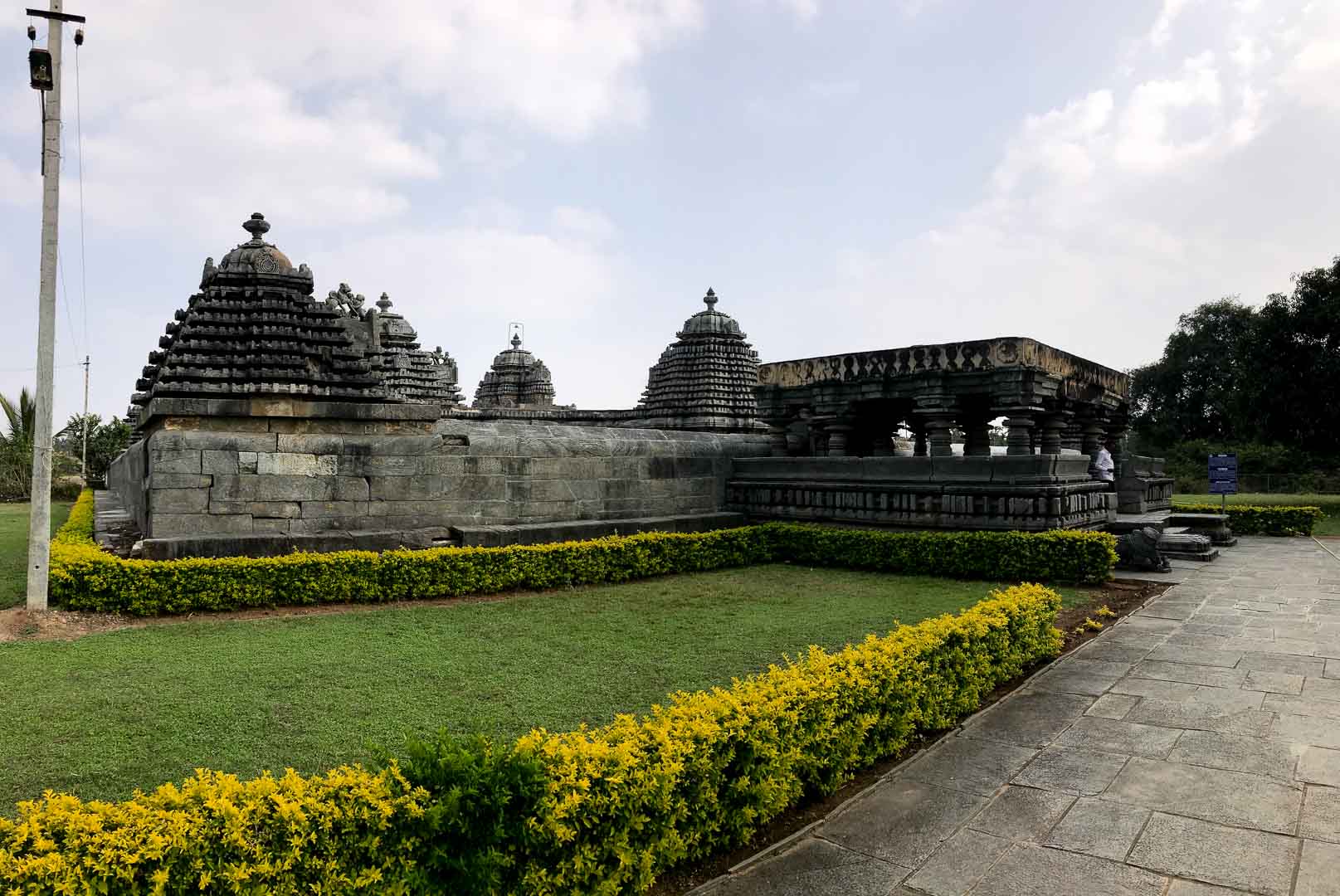
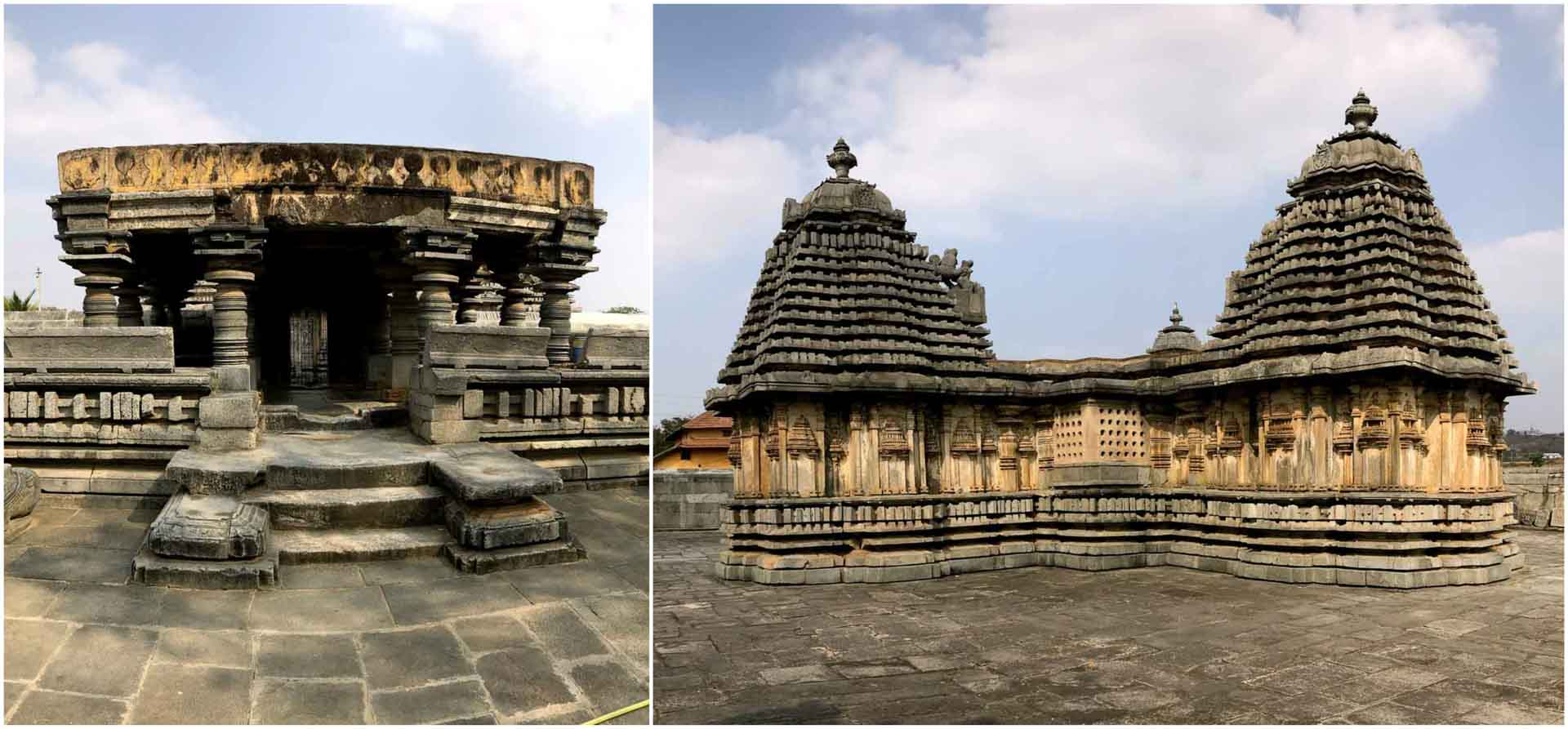
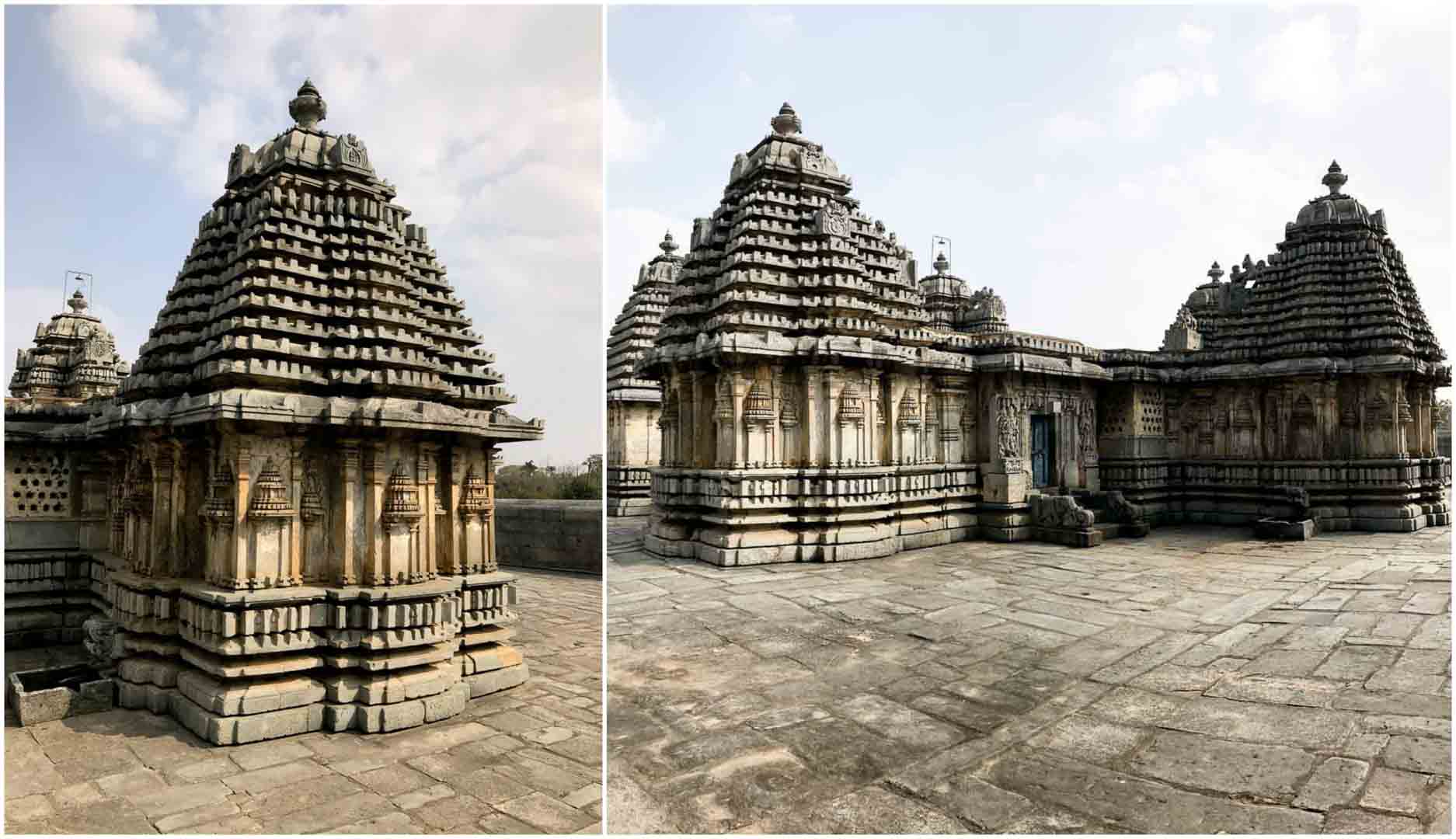
Doddagaddavalli Timings: 6:00 A.M to 8:00 P.M (30-45 minutes needed for seeing the temple) After Shravanabelagola, we headed to Lakshmi Devi Temple, Doddagaddavalli . It is located 16 km from Hassan and lies on the Hassan – Belur highway. The Lakshmi Devi temple, was built by the Hoysala Empire King Vishnuvardhana in 1114 C.E. There are four shrines inside the temple. The structure of the temple is really beautiful. This is one of the oldest temple built by the Hoysala empire.
Belur After Doddagadduvalli, We reached Belur for lunch and we stayed in Kstdc Hotel Mayura Velapuri. They have a good restaurant too. I was a little apprehensive but was pleasantly surprised. The rooms were basic but the place was clean with new sheets and clean rooms. There are not much of hotels in Belur. There are more options in Hassan and lot of people stay at Hassan. We chose Belur to avoid the travel time so we can spend more time at the temple. Some people also stay at Chikmagalur as there are a lot of good resorts there. Its very nearby (about half an hours drive) and the facilities are really good.
Belur Chennakeshava Temple Timings: 7:30am to 7:30pm (Many sites mention the closing time as 5:30pm but I enquired in the temple itself and was there in the temple till 7:00pm) (2-3 hours needed for seeing the temple) Note: Carry a pair of cotton socks to these temples and wear them when you enter the temple. The stone flooring gets hot during the day and socks can keep your feet cool.
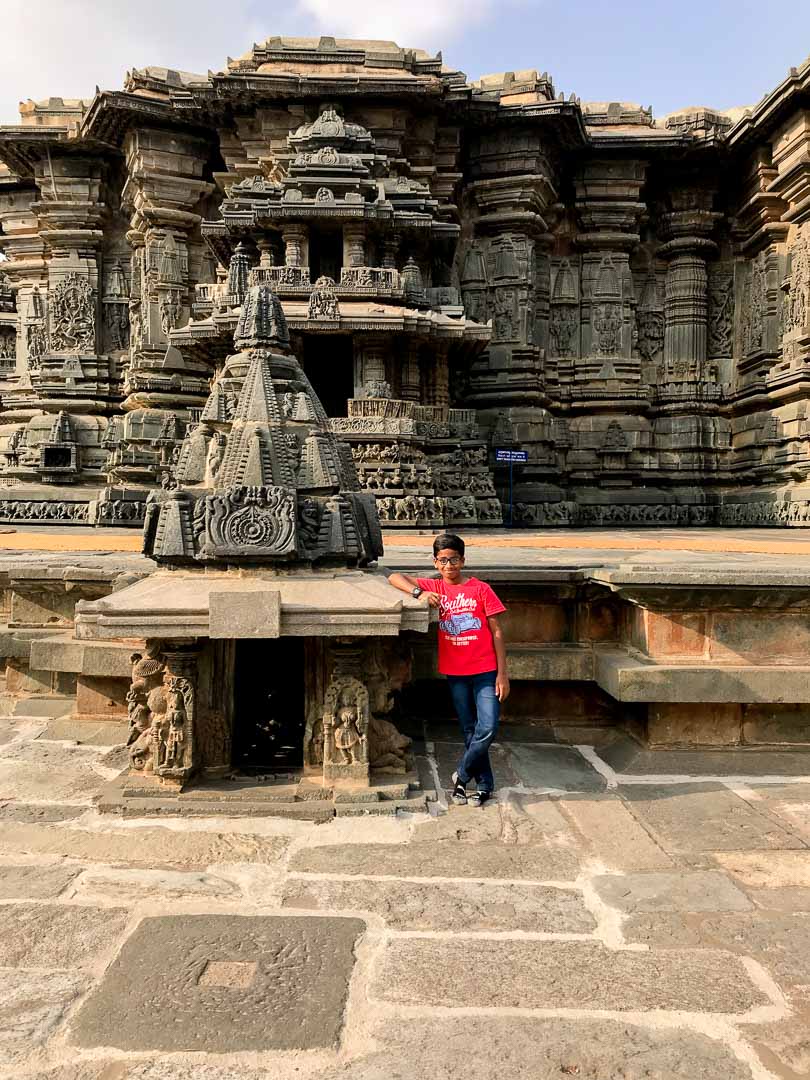
After lunch we headed to Belur Chana Keshava Temple. The magnificent soap stone carvings is like nothing you have seen before. In Tamilnadu and other parts of South India, the temples are built in granite . Hoysala temples in Karnataka were built with soap stone. Soap stone is easier to work with than granite. The carvings found in these temples are nothing but magnanimous. Lot of stories found in Hindu mythology is carved on the outer walls.
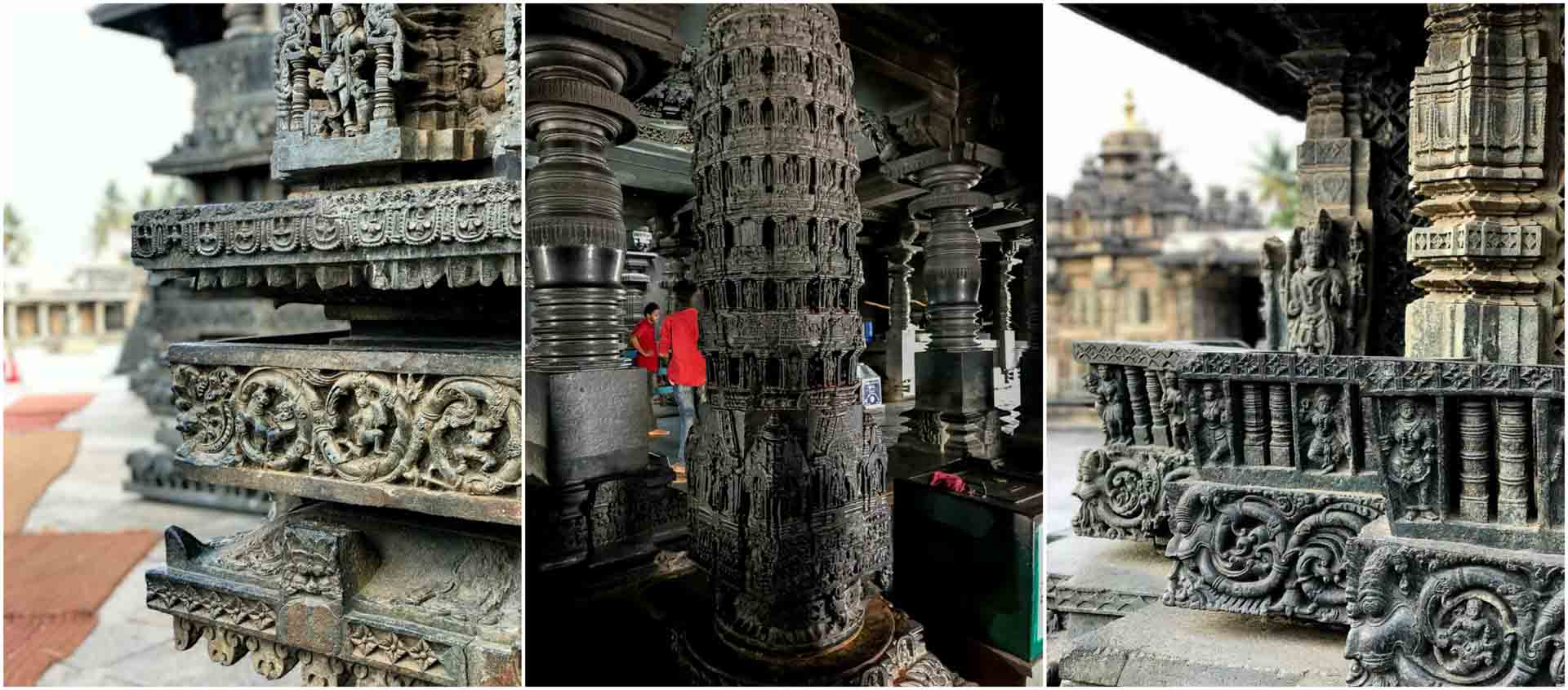
The pillars and the carvings are so beautiful that makes you freeze in time.
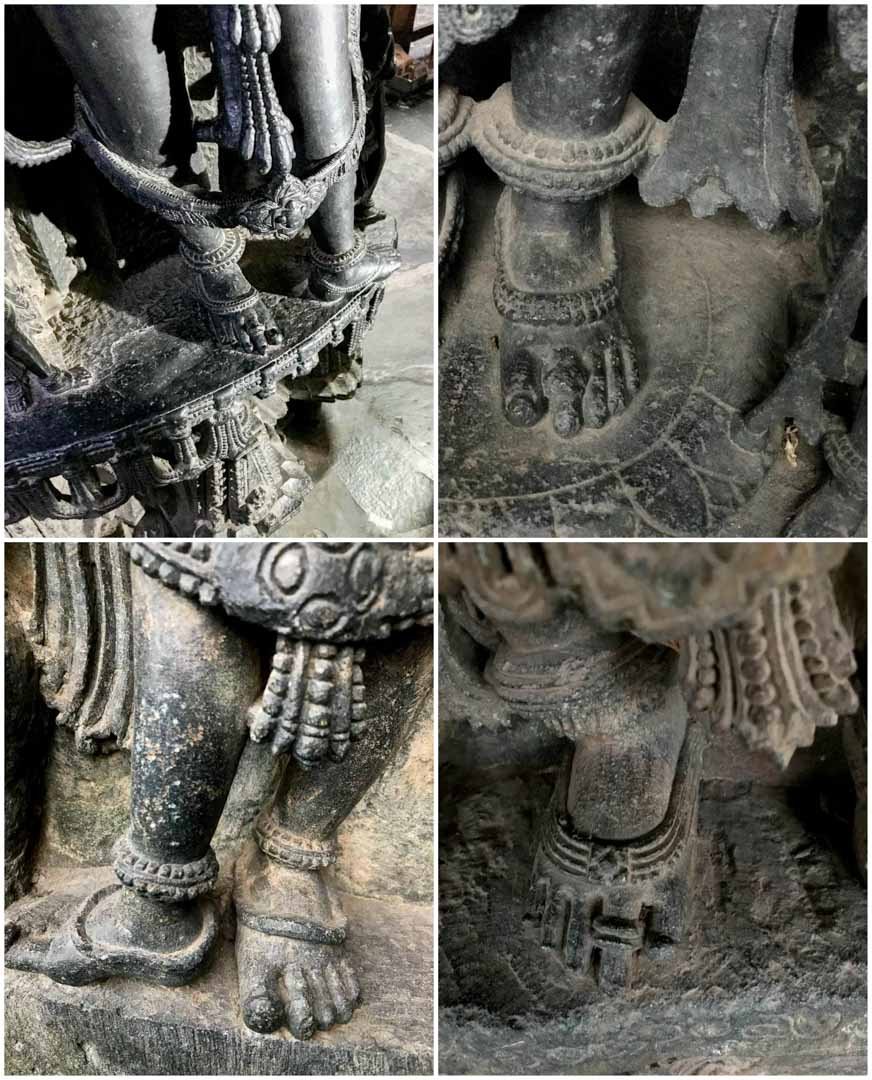
There is one trivia in the temple carvings. The second toe in the statues is longer than the first toe for almost all the statues I saw here. Its believed that people with longer second toe are very beautiful and creative. Queen Shanatala Devi statues and the dancing ladies that you will find in the temple will all have similar kind of toes. Toe rings can also be seen on both male and female statues.
Halebid / Halebeedu Hoysaleswara temple Temple timings: 10:00 AM to 5:00 PM (Friday timings vary slightly due to poojas) (2 – 3 hours needed for seeing the temple) After a long blissful evening, we stayed in Belur for the night. Next day, after breakfast at the hotel, we headed to Halebid / Halebeedu which takes about 30 minutes to reach from Belur. Halebeedu was the old capital of the Hoysalas. The temple is in ruins as it was attacked and destroyed by the muslim invaders in 14th century. Most of the outer walls has been ransacked and some of the idols stolen.
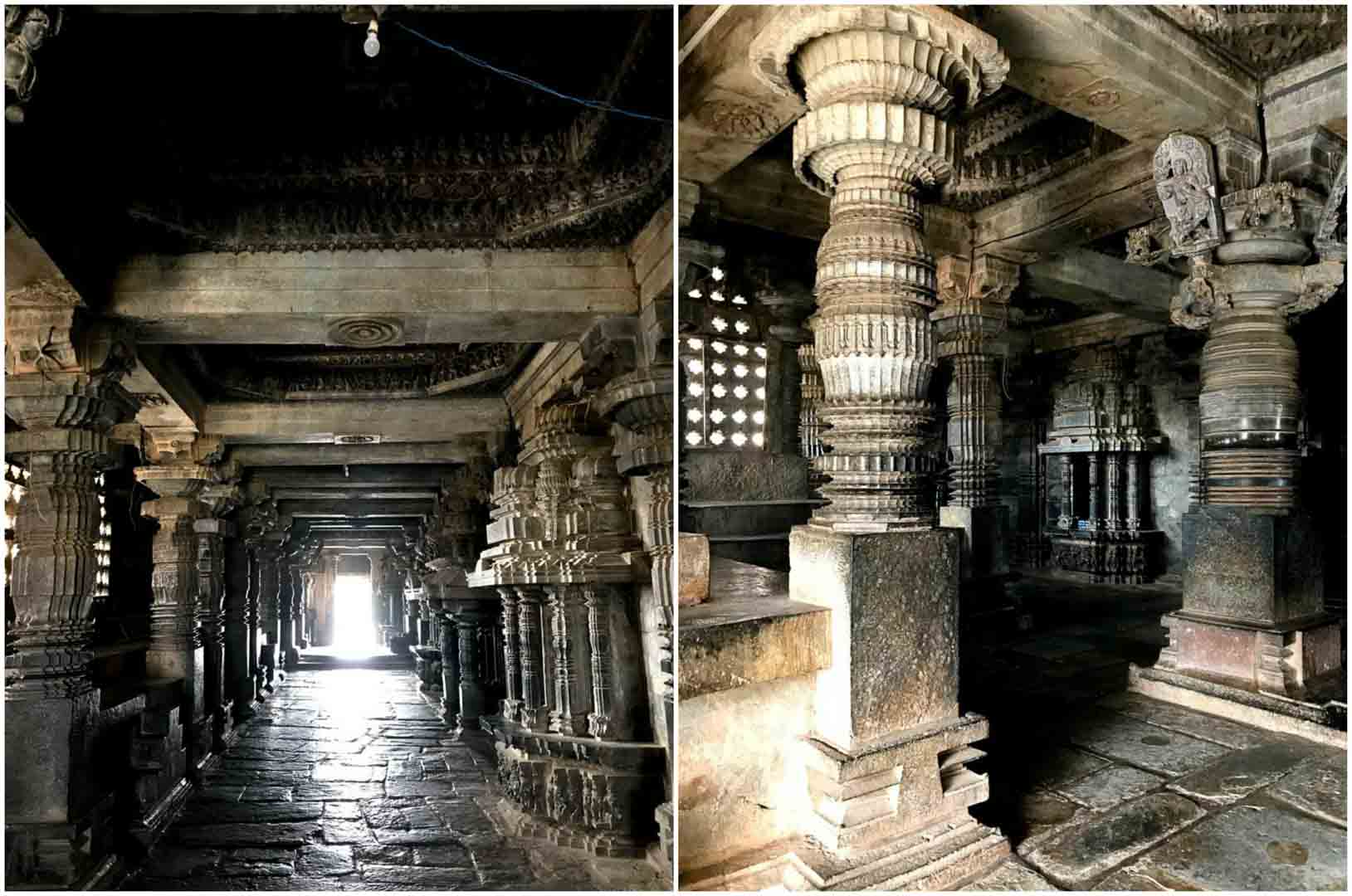
The lathe carved pillars inside the temple in Halebeedu is a sight to watch.
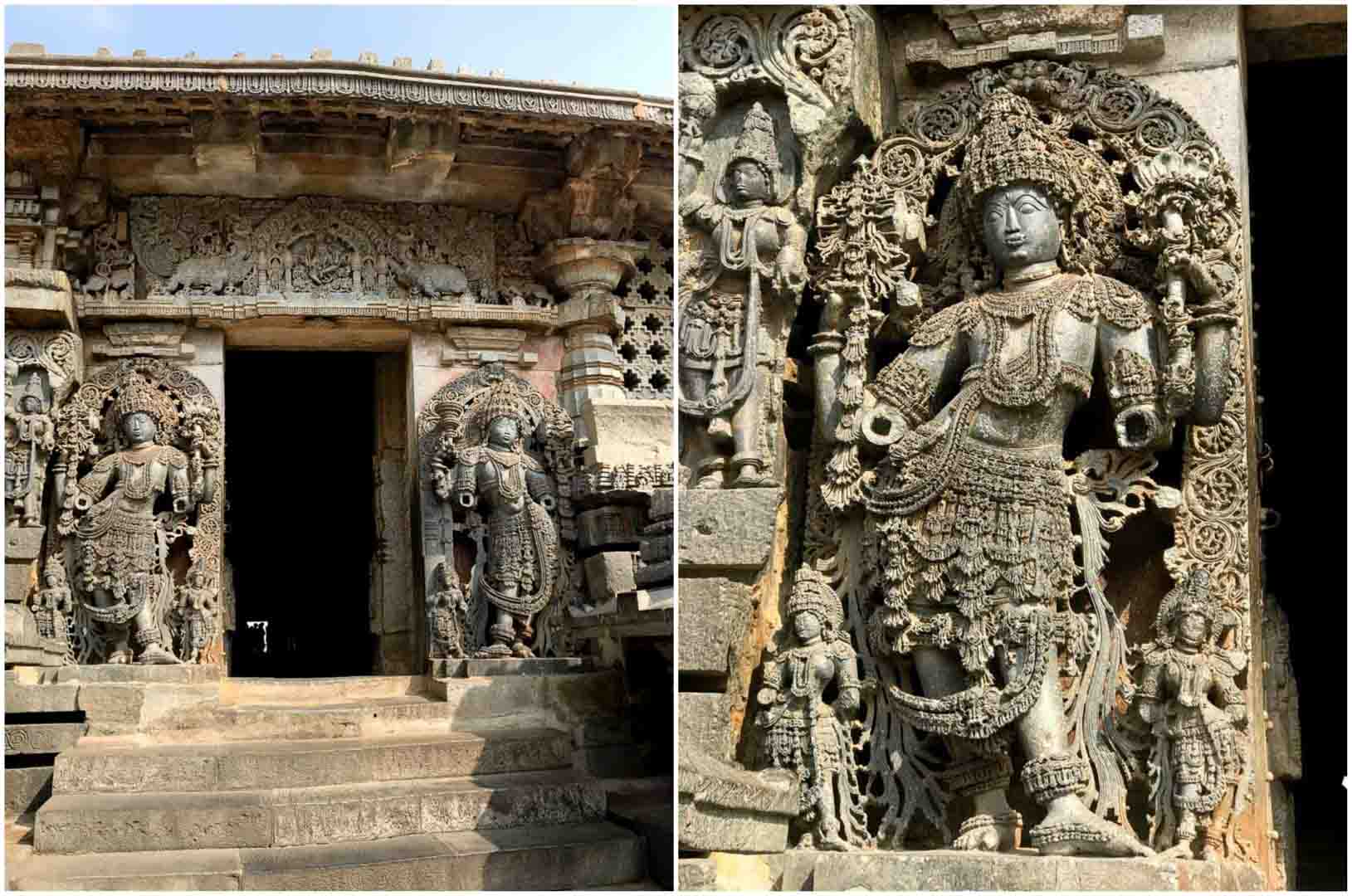
The dwarapalas at the entry are so intricately carved and life size. The jewelry and the carvings on the entry way is spectacular. The carvings are so so intricately done on stone. Let that sink in. These are monolith statues and there can be no mistakes……Let that sink in too!!! The workmanship is nothing but godly…
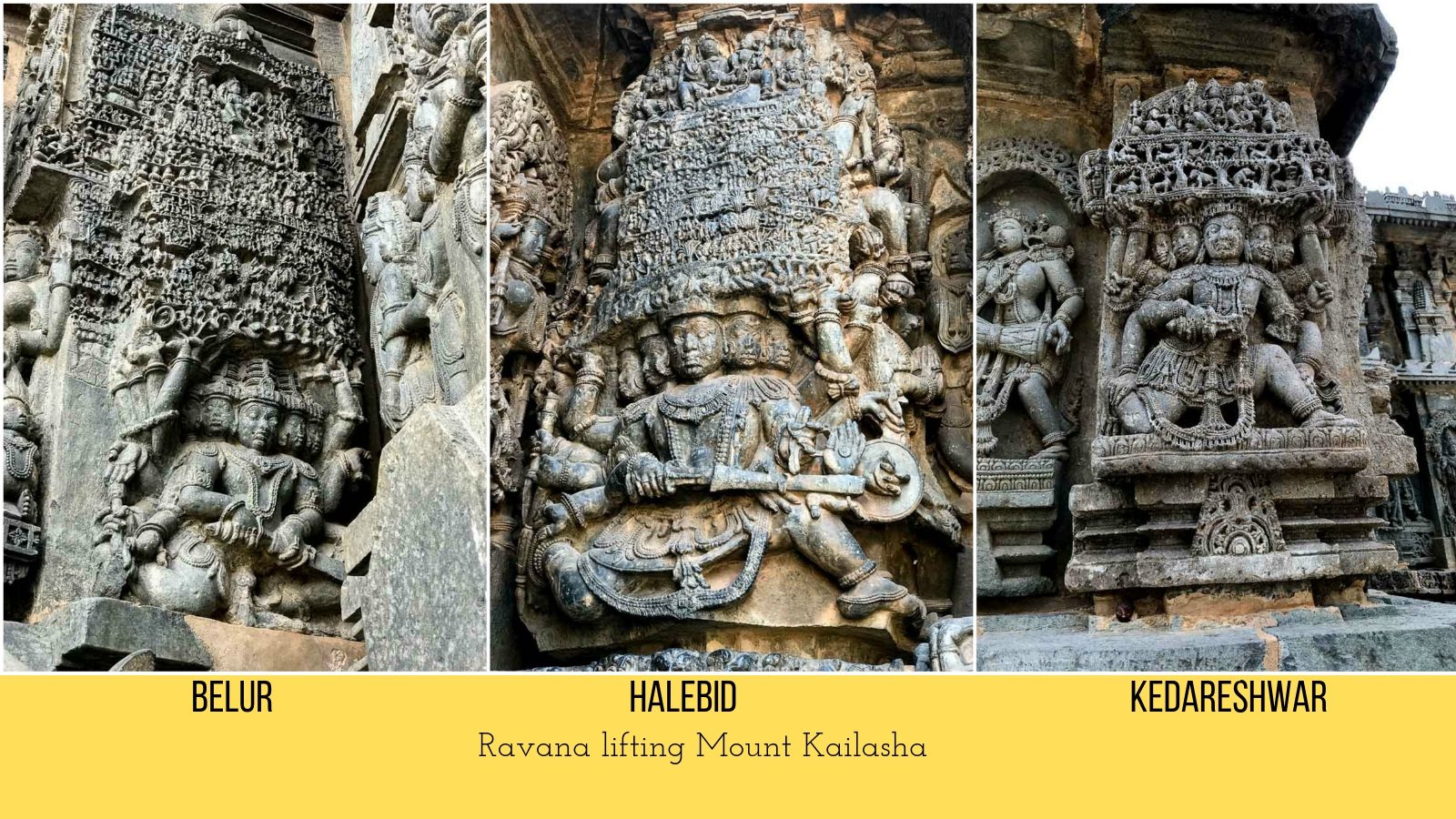
The outer walls of these temples are filled with stories from Hindu Mythology. Some of the stories found in Belur is repeated in Halebeedu Hoysaleshwara temple as well as Halebeedu Kedarashwara Temple. There are a few differences and nuances that are so beautiful and intricate. Here is a carving of Ravana lifting the Kailash mountain that can be found in all the three temples.
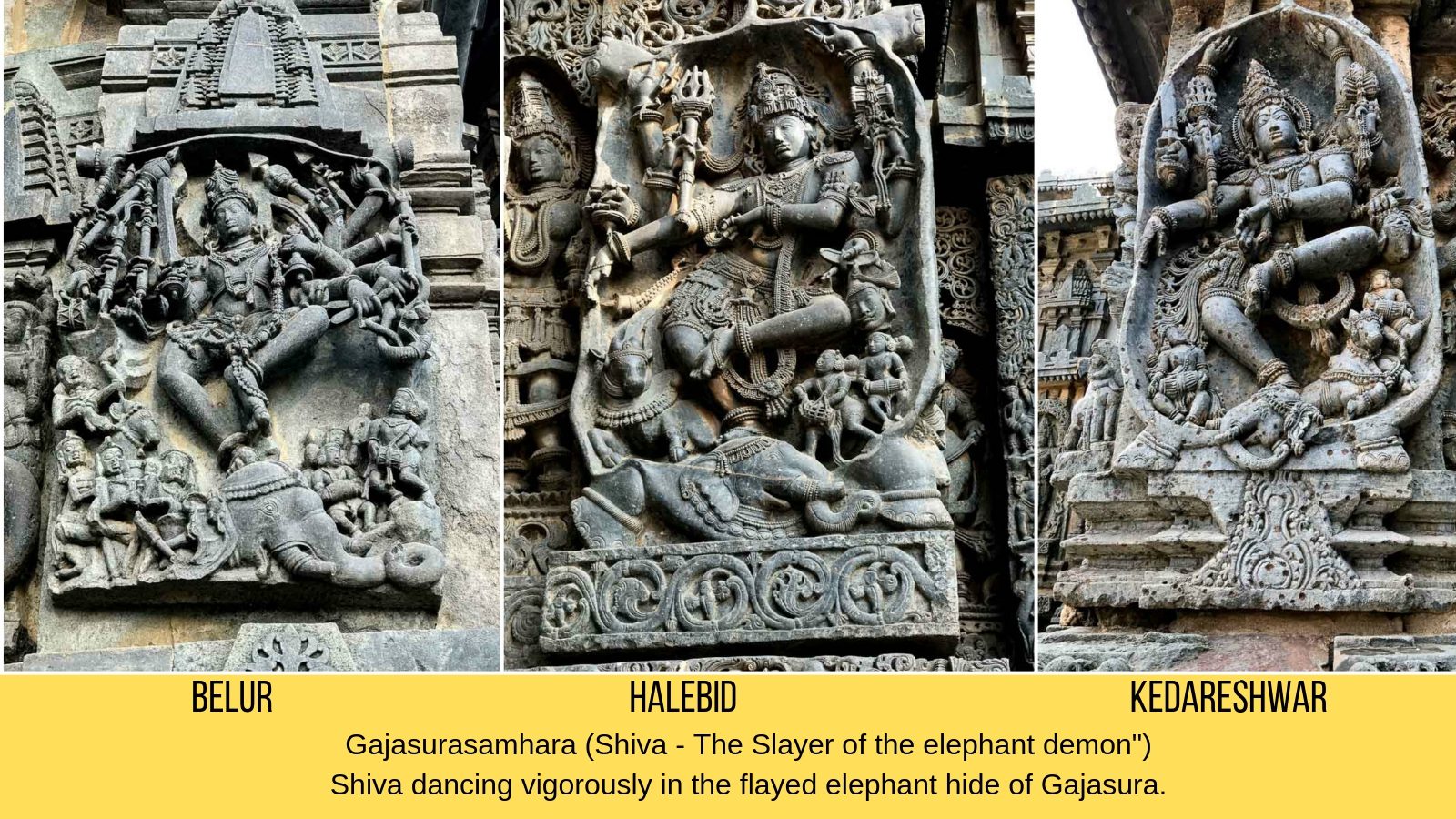
Here is the carving of Gajasurasamhara. Shiva as the Destroyer of the elephant demon – Gajasura.
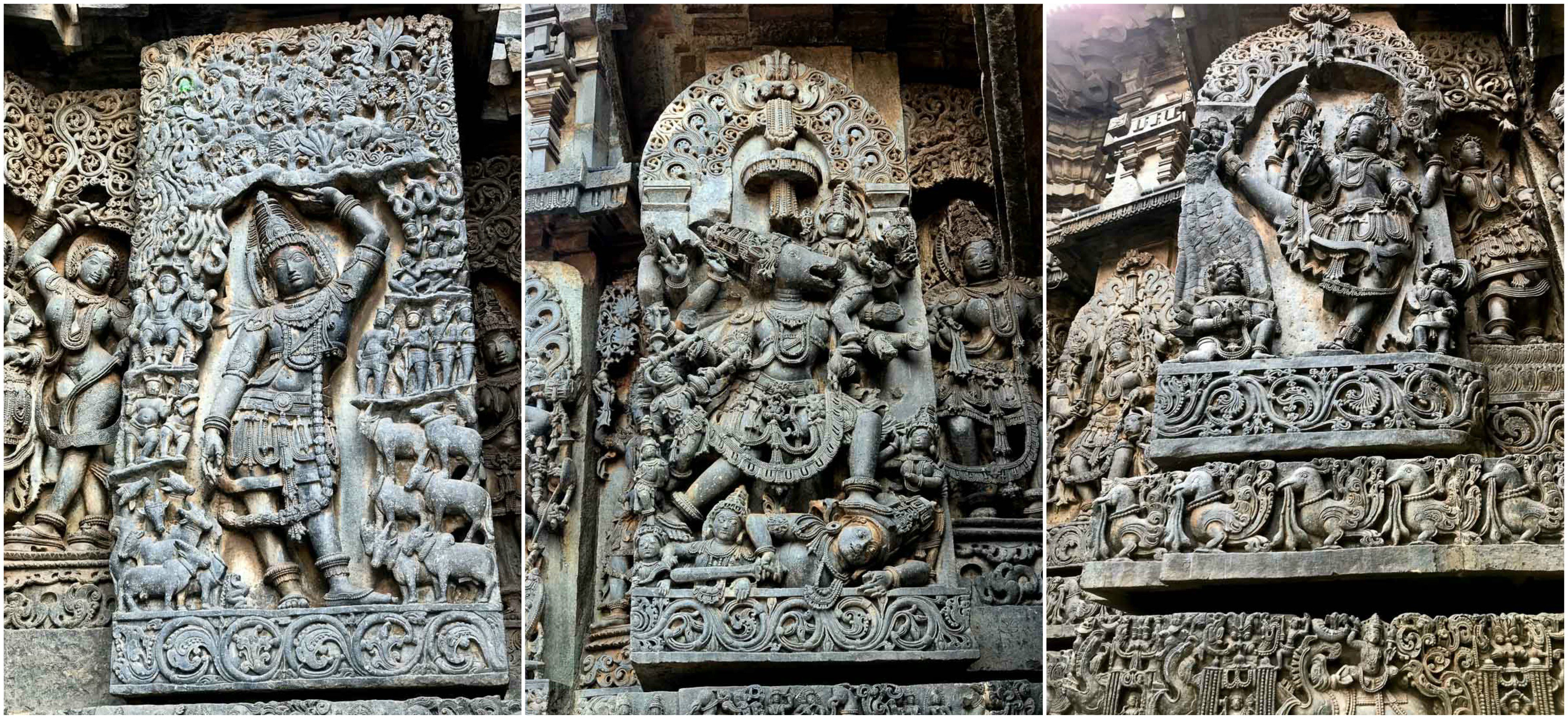
Krishna lifting the Govardhana Mountain, Varaha Avatar and Vamana Avatar.
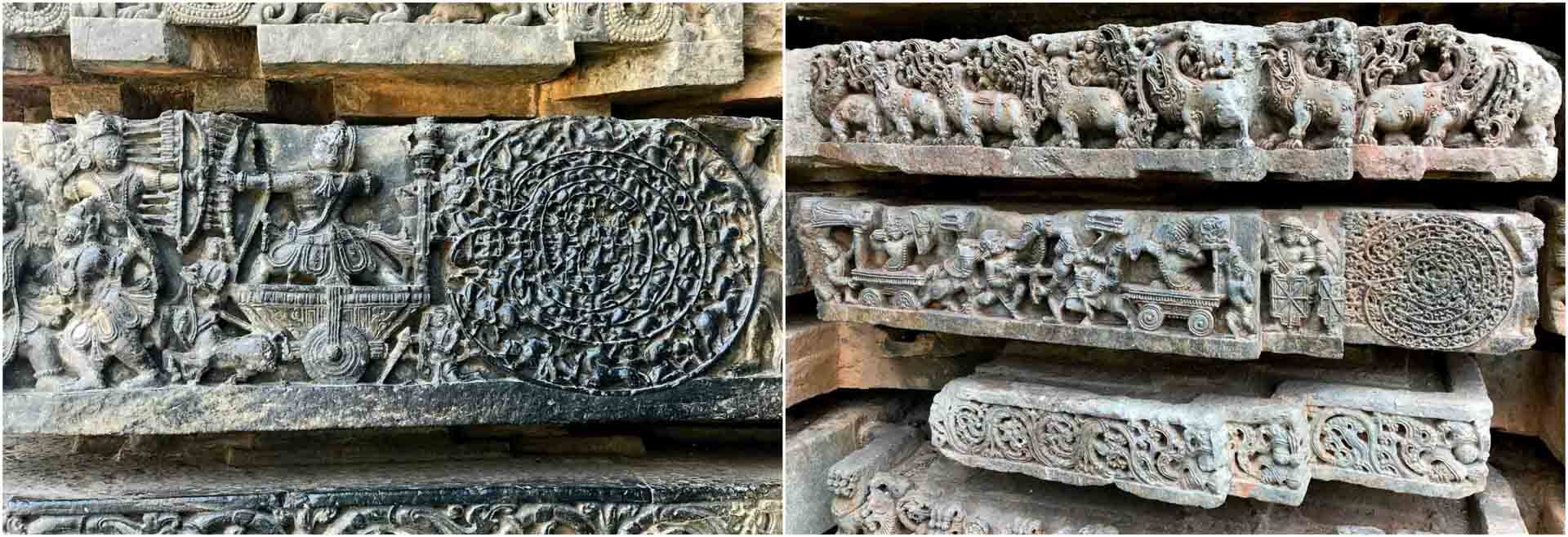
Chakravyuha – “War strategy” as depicted in Halebeedu and Kedareshwara temples.
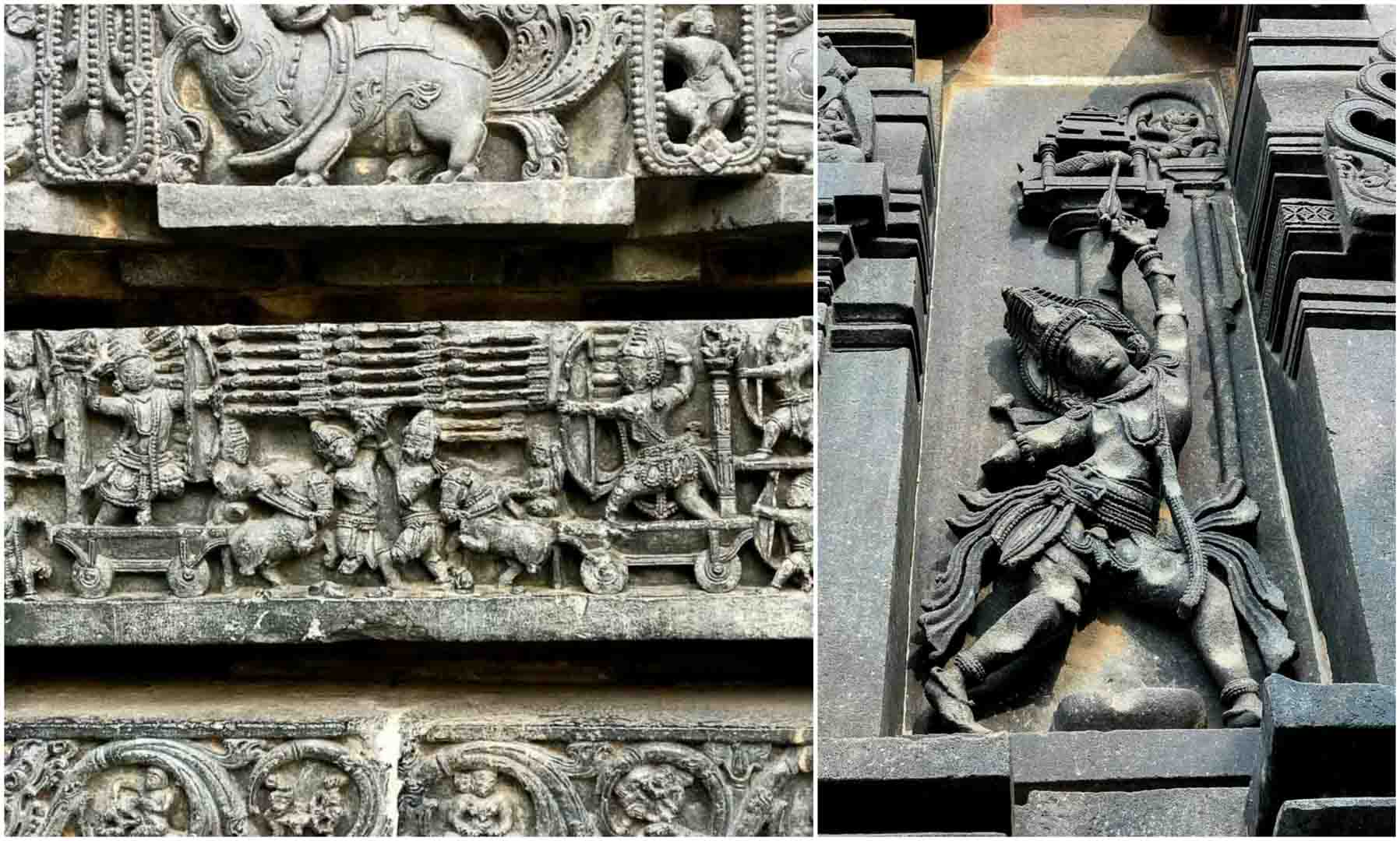
Here is a scene from Mahabharatha where Arjuna is seen fighting against Karna. The arrows are getting multiplied ( We all must have seen it on television. It was fascinating to know that this existed 1000 years ago). On the right is the statue of Arjuna aiming a moving fish blindfolded. The statue has been vandalised now by knocking stones on the statue. The original structure was believed to produce musical sounds.
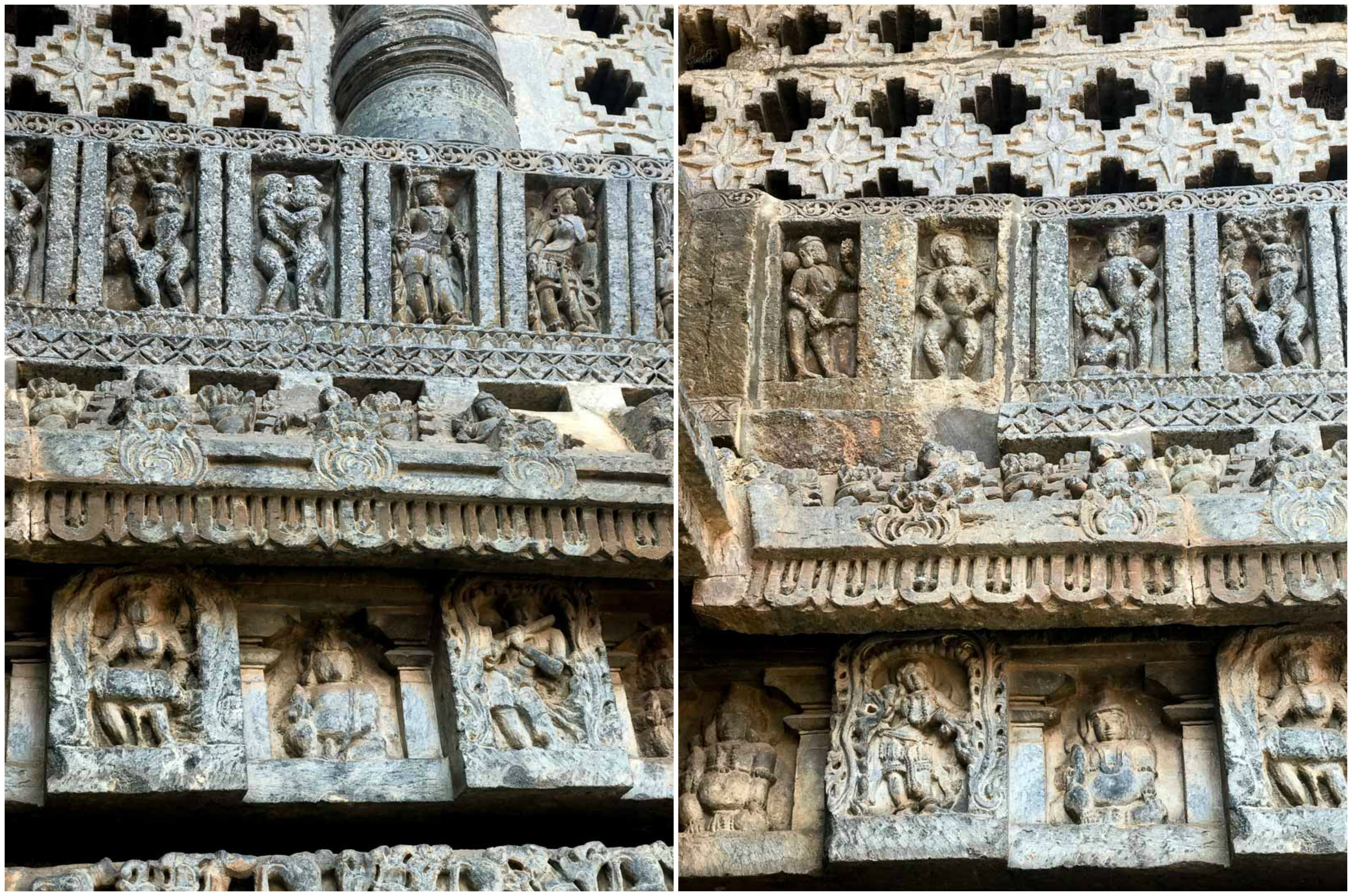
Some erotic sculptures were also carved on the temple walls.
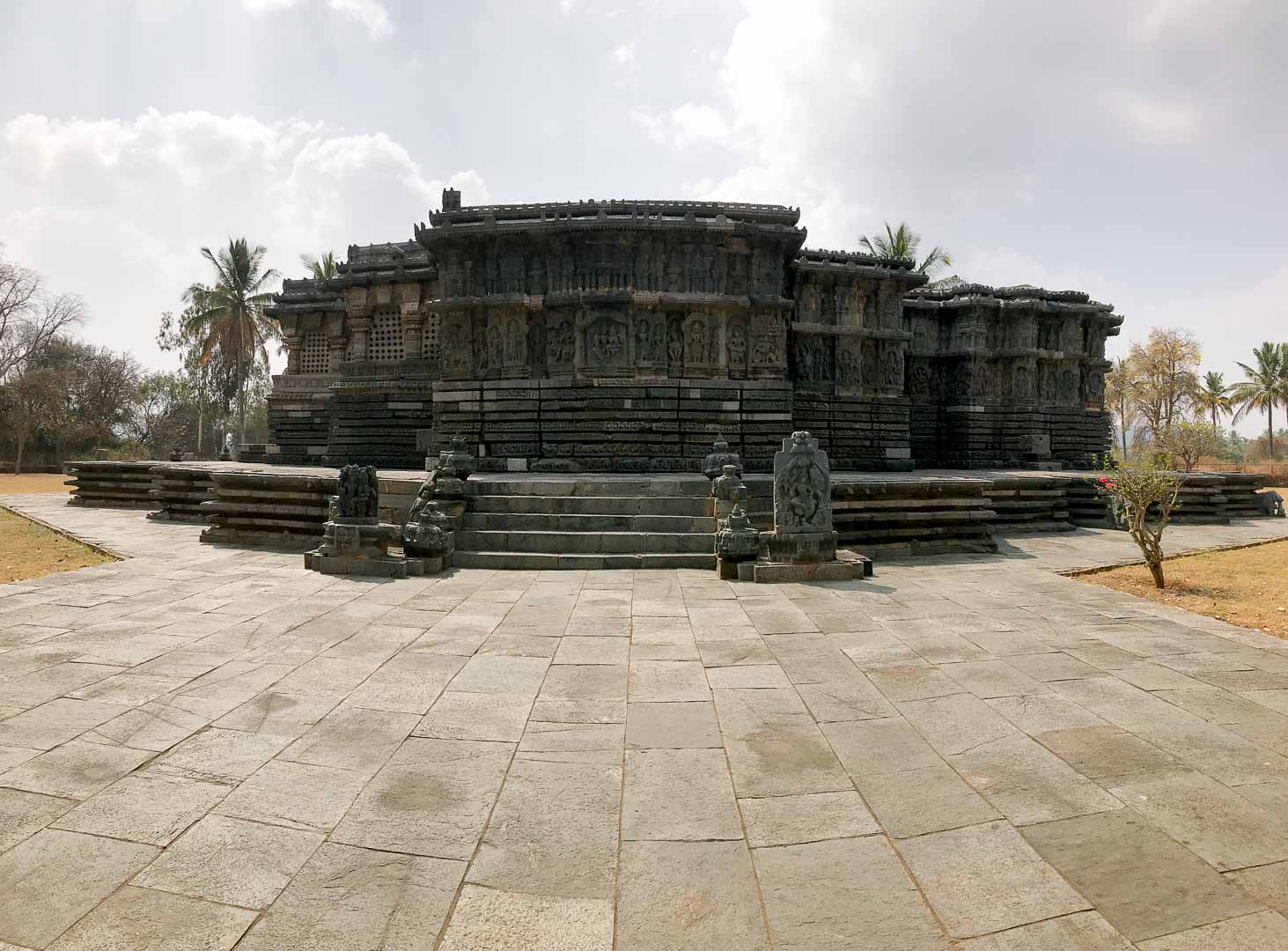
Halebeedu Kedareshwara Temple Timings: 8:00am to 5:00pm (The sanctum (inside of the temple) was closed at around 11:00 am when we went there) (30 minutes needed for seeing the temple) After Halebeedu we headed to Kedareshwara Temple which lies adjacent to the main temple at around a kilometre away. Its a small temple and it will take about 20-30 minutes to cover the temple.
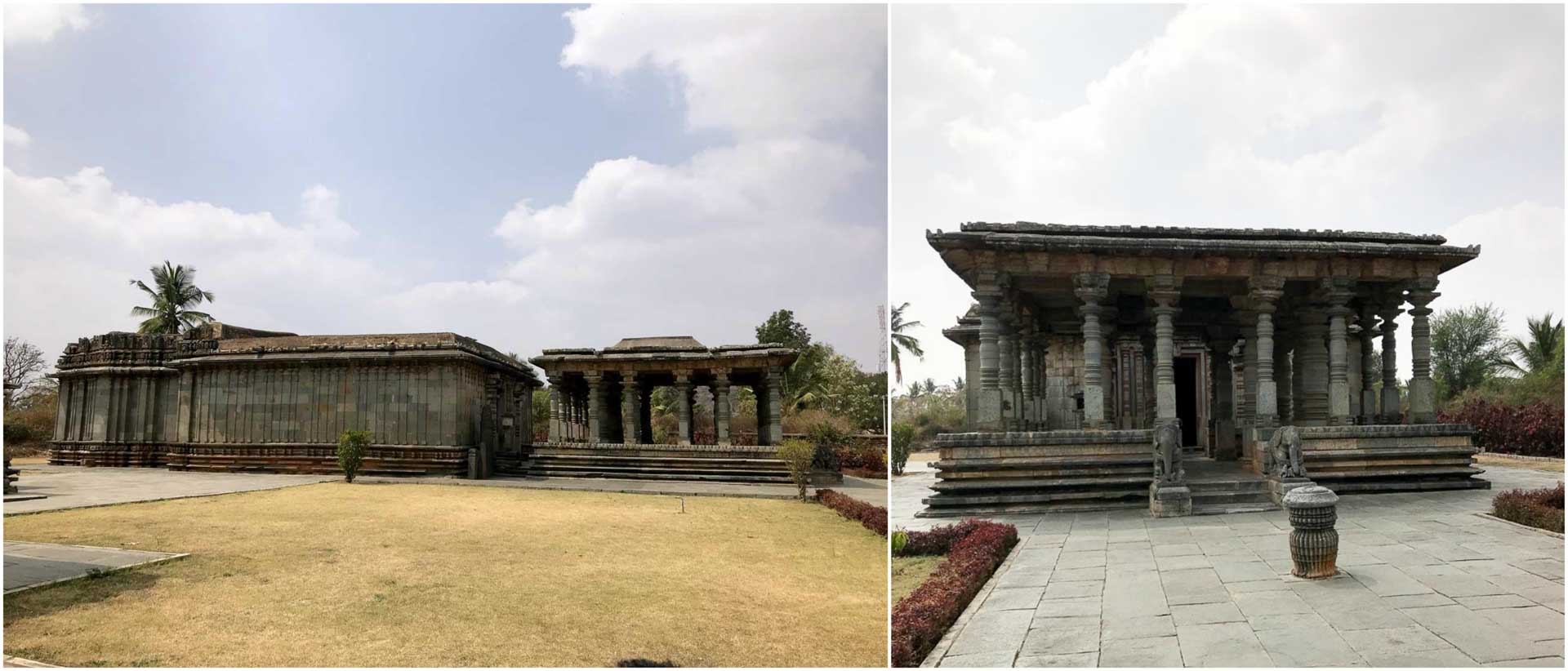
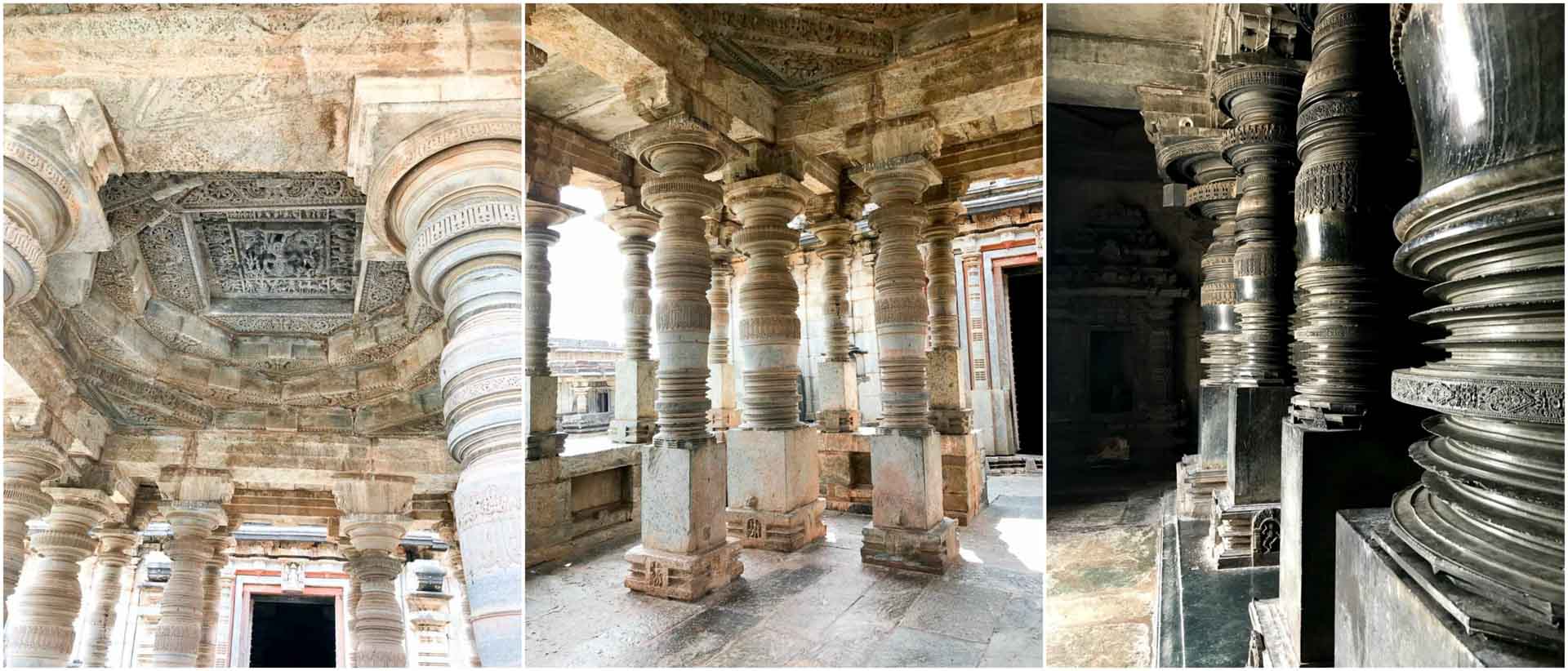
Halebeedu Jain Temple Complex Timings: 8:00am to 5:00pm. (30 minutes needed for seeing the temple) Nearby to the Kedareshwara temple is the Jain Temple – Parsvnath Basadi. The temple is in its ruins and its one of the oldest standing structures of the Hoysalas.
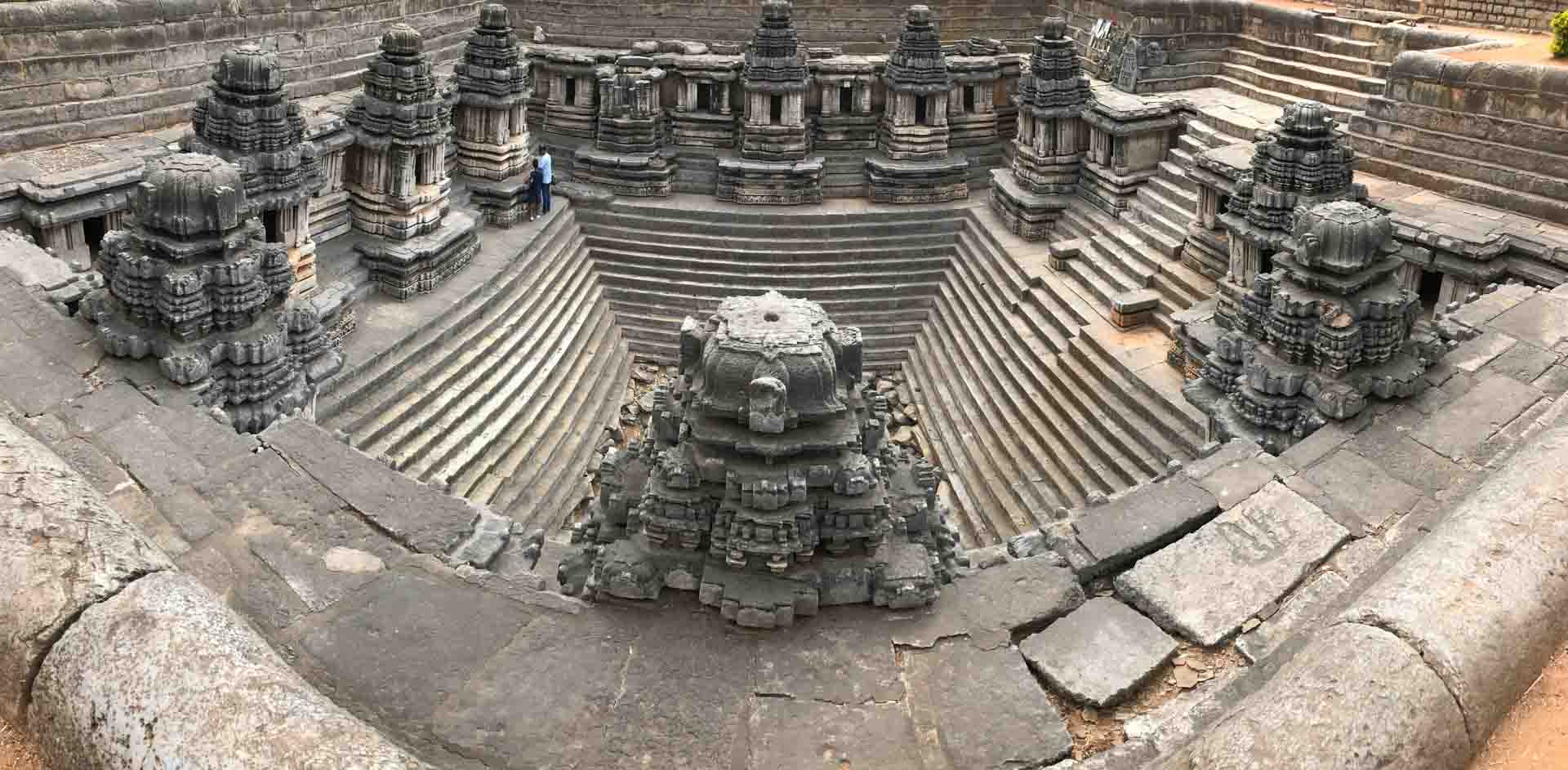
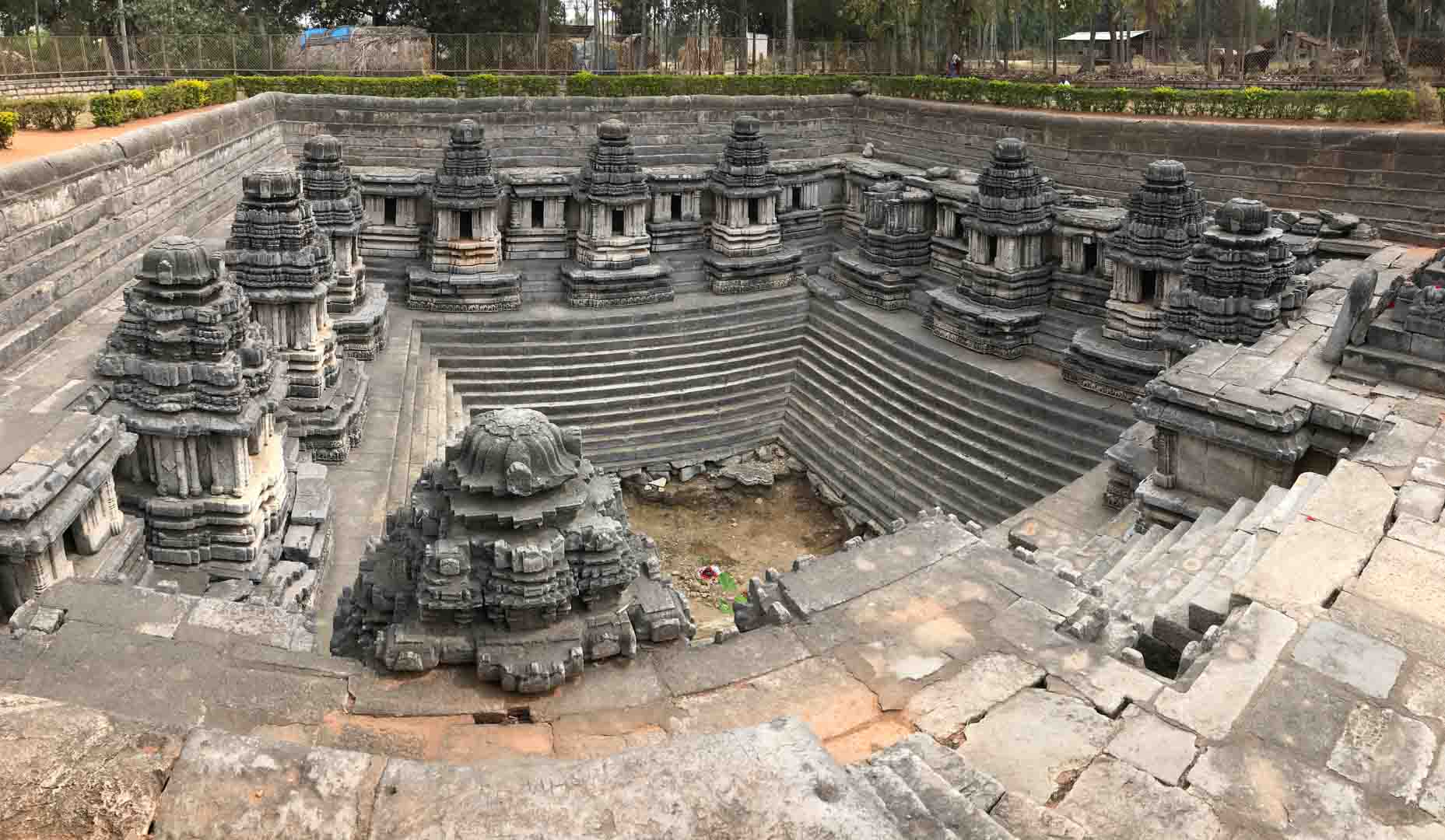
Halebeedu Kalyani Temple Tank – Hulikere (Follow google maps) Timings: 8:00am to 5:00pm (20-30 minutes needed for seeing the place) Around 2-3 kms from the main temple is the temple pond called the Kalyani temple tank – Hulikere. The creativity and passion of the Hoysalas is just beyond belief. My son loved this place so much that he decided to go down the stairs. It was fun. This place is maintained by the archaeological survey of India.
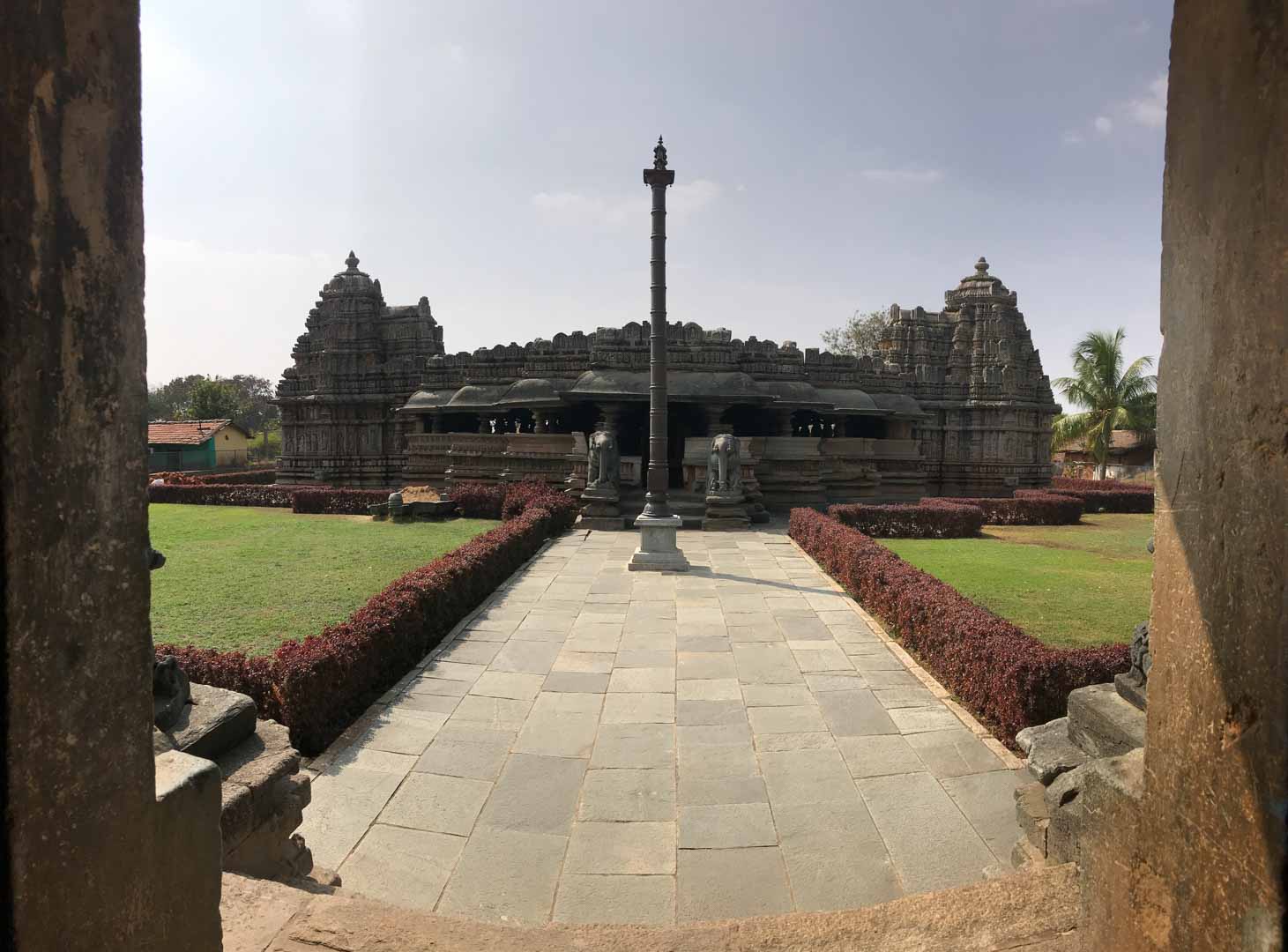
Belavadi Veeranarayanaswamy Temple Temple timings: 8.30am to 2 pm, 4pm-7 pm . (30-45 minutes needed for seeing the temple) We stayed for lunch in Mayura Shantala restaurant in Halebeedu. The menu is very limited but there are not much options in this small town. After lunch we headed to Belavadi Veeranarayanasamy temple. It takes roughly about 20-25 minutes (12 kms) from Halebeedu to get here. The temple has a beautiful gopuram / tower on both sides which is very unique.
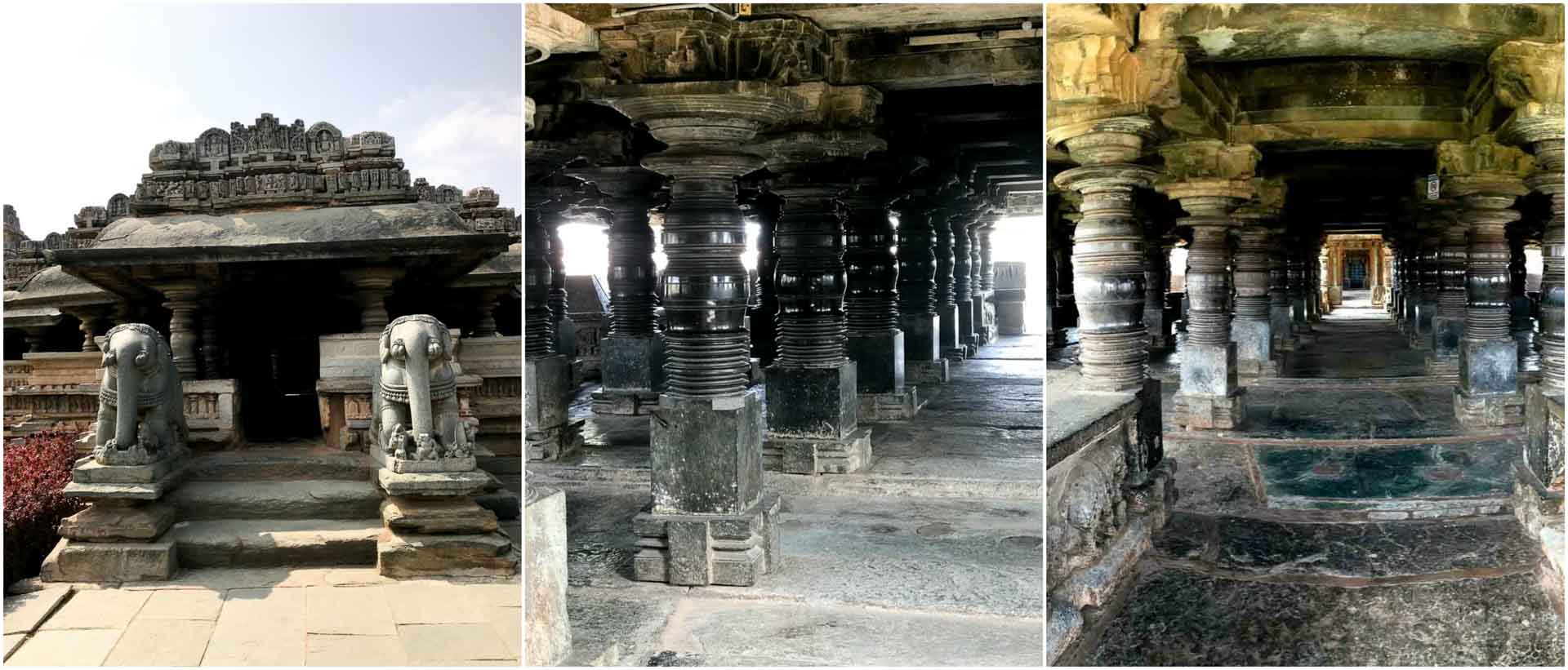
The polished lathe pillar mantapa is a sight to watch.
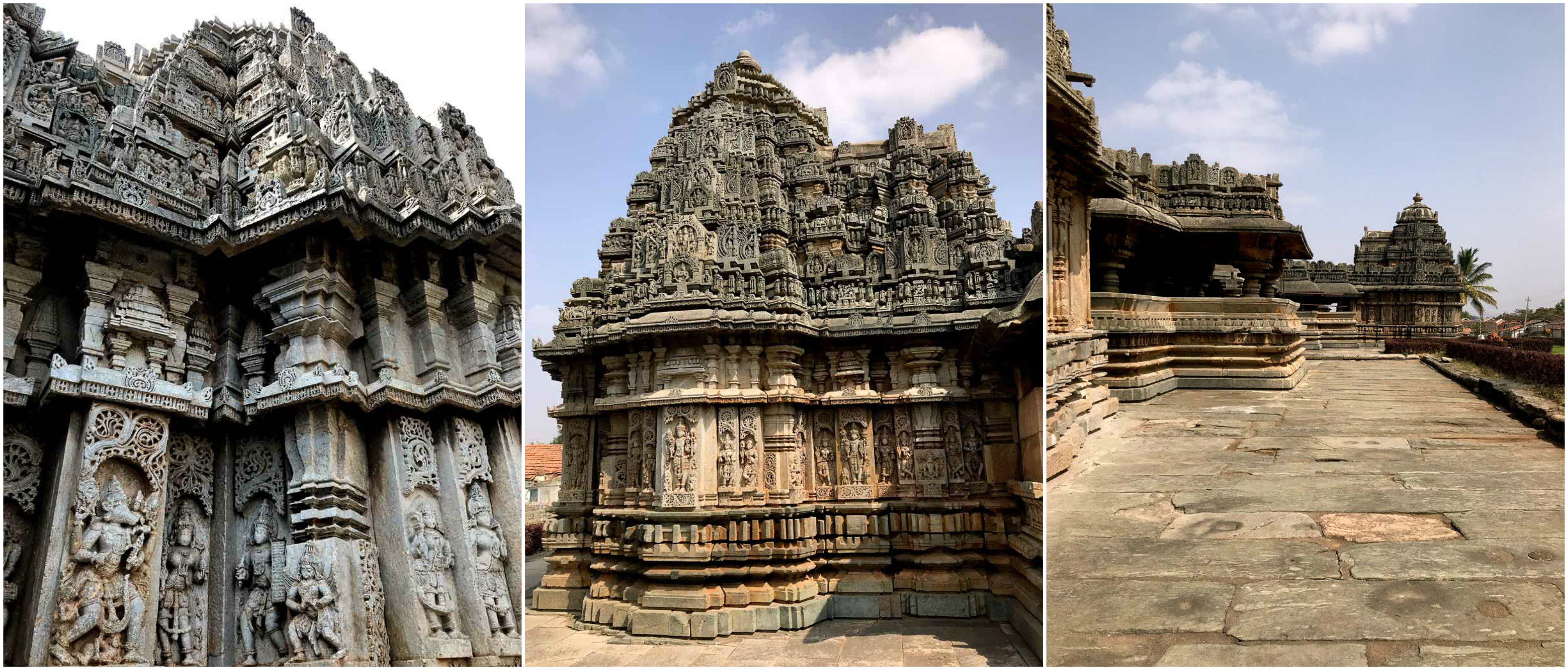
The temple tower has intricate carvings made out of soapstone. It will take you back in time.
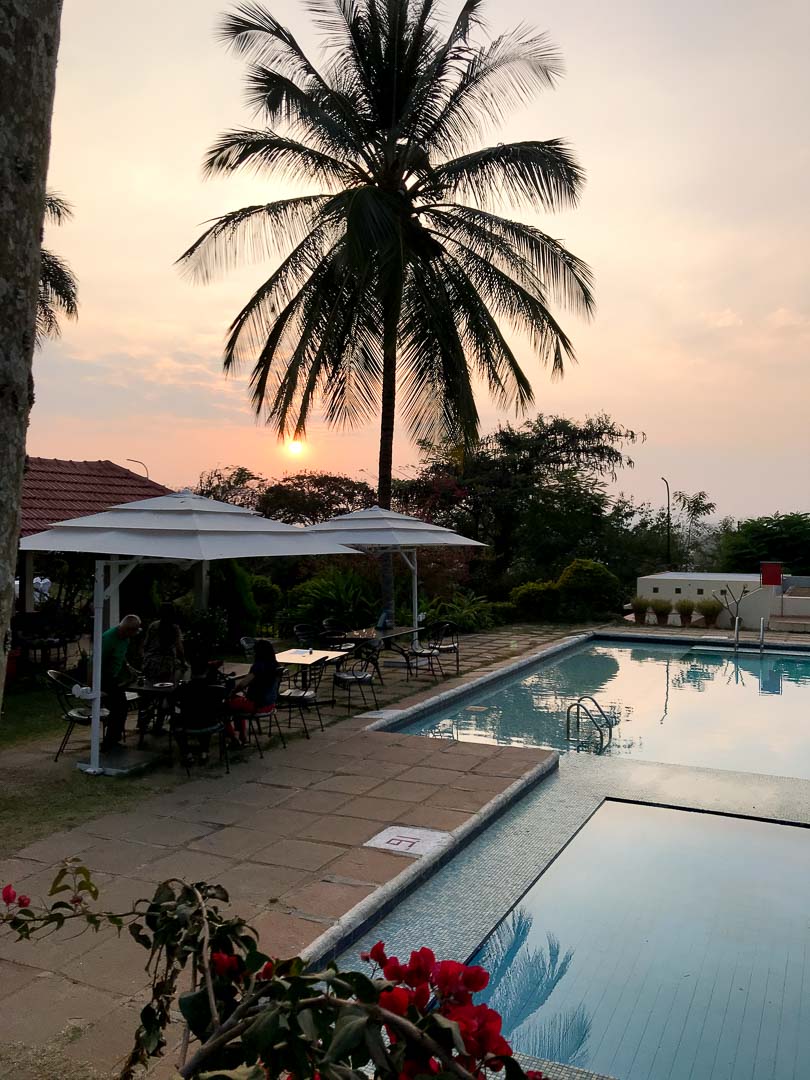
After the two day temple extravaganza, you can return to Bangalore. If you have a day or two to spare, you can relax at Sakleshpur or Chikmagalur thats just under an hours drive. We took a two day break and stayed at the Gateway Hotel , Chikmagaluru. Gateway hotel also serves some of the classic malnad dishes and their South Indian breakfast buffet and coffee is really good.
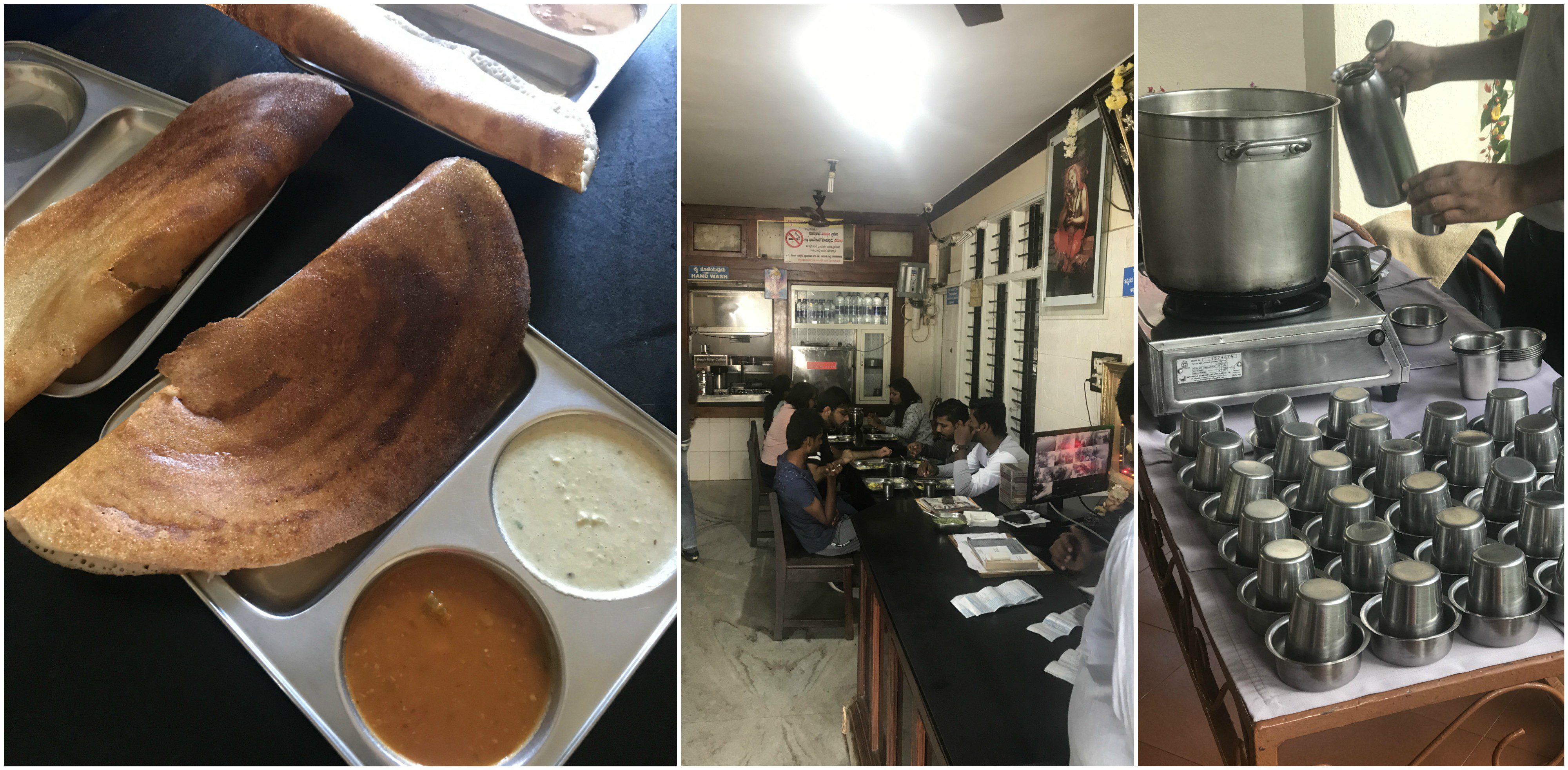
If you happen to go to Chikmagalur, breakfast at the legendary town canteen is a must. They serve the best Karnataka style Masala Dosas.
Here is our itinerary. Day 1 – Bangalore – Shravanabelagola – Doddagadduvalli Lakshmi Temple – Belur Chanakeshava Temple Day 2 – Belur – Halebeedu Hoysaleshwar Temple – Kedareshwar temple – Jain temple Basadi – Temple Tank – Belavadi Veeranarayanaswamy Temple – Chikmagalur (All the temples are very nearby) Day 3 – Chikmagalur (We went to Mullyangiri Peak. We settled and rested for the day at the hotel afterwards) Day 4 – Chikmagalur – Bangalore
Hope you enjoyed my travel diary. Until next time, Kannamma.
