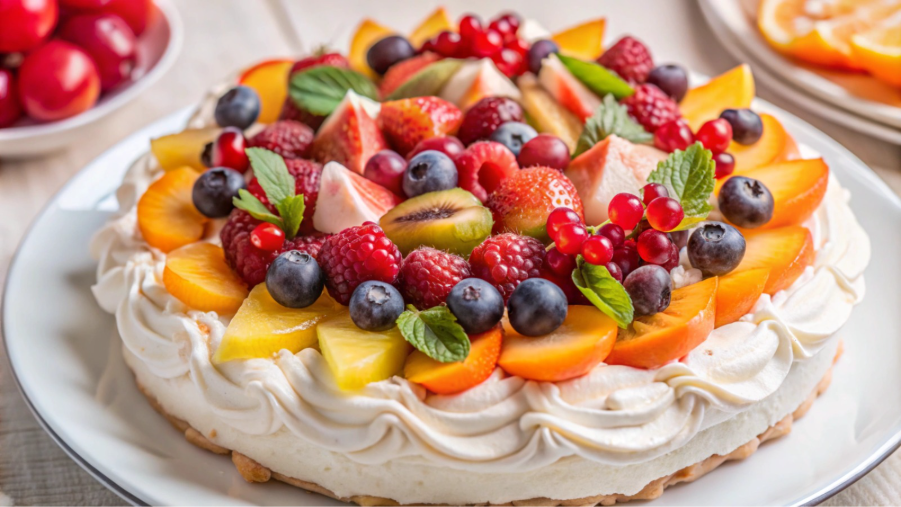
There is something very comforting about a soft and colourful fruit cake that you can make in your own kitchen. It looks beautiful, it tastes light, and it is perfect for any small celebration at home. Many people think making this cake is difficult, but the truth is that it is much easier than it looks. With a few basic ingredients and some fresh fruits, you can create a lovely dessert that everyone will enjoy.
Understanding Fruit Cakes
If you have ever wanted to try making fruit cakes at home, this simple guide will help you. The idea is to create a soft sponge and top it with a creamy layer and fresh fruits. This Indian style version is very light and fresh. It is perfect for people who enjoy simple flavours rather than heavy frosting or rich chocolate.
Ingredients Needed
The best part about this recipe is that you do not need anything special. Most things are already available in a regular kitchen.
Here is what you need:
- One cup of all-purpose flour
- One cup of sugar
- Two eggs
- Half a cup of oil or melted butter
- Half a cup of milk
- One teaspoon of baking powder
- One teaspoon of vanilla essence
- Fresh fruits like mango, banana, grapes, apple, berries or kiwi
- One cup of fresh cream or whipped cream
- Two tablespoons of powdered sugar
Choose fruits that you enjoy. You can also mix different fruits for colour and sweetness.
Making the Basic Sponge
Start by preparing your cake tin. Grease it lightly and dust it with flour. Keep it aside. Preheat your oven so that it is ready when the batter is done. Take a bowl and break the eggs into it. Beat them well till they become slightly fluffy. Add sugar and beat again till the mixture looks smooth. Add the oil and vanilla essence and mix everything.
In another bowl, add flour and baking powder. Mix it gently. Now add the dry mixture to the wet mixture. Add milk slowly so the batter becomes smooth. It should not be too thick or too watery. Pour this batter into the cake tin and place it in the oven. Bake until the cake rises and turns slightly golden. You can check with a toothpick. If it comes out clean, the cake is ready. Let it cool completely.
Preparing the Cream
While the cake cools, get your cream ready. Take the fresh cream or whipped cream in a bowl. Add the powdered sugar and beat it till it becomes soft and fluffy. Do not overbeat. Keep it in the fridge so it stays firm.
Cutting and Layering
Once the sponge has cooled down, gently remove it from the tin. Place it on a flat surface or plate. You can slice the cake into two layers if you want a more decorative look. Spread a thin layer of cream on the lower half. Add a few small pieces of fruit. Cover it with the top layer. Now spread cream on the entire cake. Do this slowly so the cream does not mix with crumbs.
Adding Fresh Fruits
Now comes the fun part. Cut the fresh fruits into slices or small pieces. Arrange them on the cake in any pattern you like. You can place them in circles, rows or even random patterns. Choose colourful fruits for a bright look. This step makes the cake look fresh and festive.
Keeping it Simple and Indian
Many people prefer Indian style cakes because they are light and not too sweet. This recipe follows that idea. The sponge is simple, the cream is soft, and the fruits add natural sweetness. It is a nice choice for birthdays, family evenings or even as a tea-time treat. You can also customise the flavours. If you like mango, use more mango pieces. If you prefer berries, add more berries. This recipe gives you the freedom to adjust it as you like.
Tips to Make your Cake Better
Here are some small tips that make a big difference:
- Always cool the sponge fully before adding cream.
- Use chilled cream for easy spreading.
- Cut fruits just before decorating so they stay fresh.
- Avoid fruits that turn brown quickly unless you use them immediately.
- Keep the cake in the fridge for a few hours for the best texture.
Why are Fresh Fruit Cakes becoming Popular?
People today prefer lighter desserts. They want something that looks good but does not feel too heavy. Fresh fruit cakes fit perfectly into this trend. They are colourful, fresh and enjoyable in any season. They also feel homemade and comforting.
Many home bakers and beginners enjoy making this cake because it looks impressive without any complicated skills. With the rise of simple baking videos and easy recipes online, more people are trying their hands at baking. This Indian style fruit cake is perfect for anyone who wants to start.
Serving and Storing
If you are serving the cake on the same day, keep it in the fridge until you are ready. If you plan to store it, keep it in an airtight box. It stays fresh for a day or two. The fruits may release some juice after a day, so it is best eaten fresh.
Final Thoughts
A fresh fruit cake is a simple and joyful dessert that brings colour to your table. It is easy to make and tastes lovely. With a soft sponge, gentle cream and sweet fruits, it is perfect for any moment. Whether you are celebrating something or just want a homemade treat, this recipe will help you create a beautiful cake with minimum effort.

Learning to cook is often less about “talent” and more about repetition, feedback, and good decision-making under time pressure. That is exactly where AI can be useful: not as a replacement for skill, but as a structured coach that helps you plan, practice, and improve with fewer wasted ingredients and fewer “I have no idea what went wrong” moments.
This guide explains (1) practical ways to use AI to build cooking skills and (2) how to create a dedicated culinary partner character using the https://joi.com/generate/character , step by step, so you have a consistent teaching style, clear goals, and a predictable workflow every time you enter the kitchen.
Part 1: How AI Helps You Learn Cooking (In a Practical, Skill-Building Way)
AI is most helpful when it supports the same learning loop used in professional training:
- Choose a narrow skill
- Practice with clear constraints
- Get feedback
- Repeat with small upgrades
Below are the highest-value ways to apply AI to that loop.
1) Build a Personalized Learning Plan
Instead of trying random recipes, use AI to create a progression (like a curriculum). For example:
- Week 1: knife basics, sautéing, boiling grains
- Week 2: pan sauces, roasting vegetables, seasoning strategy
- Week 3: proteins and doneness, timing multiple components
- Week 4: plating, texture contrast, “clean-out-the-fridge” cooking
Ask for a plan that matches your reality: time limits, budget, equipment, dietary needs, and how many people you cook for. The best plans focus on repeatable techniques , not just “cool dishes.”
2) Translate Recipes Into Clear Procedures
Many recipes assume knowledge you do not yet have (“cook until done,” “season to taste,” “medium heat,” etc.). AI can rewrite a recipe into:
- a checklist
- precise steps with “what to look for”
- common failure points and fixes
- timing cues (what you should do while something cooks)
This is especially effective for beginners because it reduces uncertainty. Less uncertainty means more consistent results, which means faster learning.
3) Create Smart Substitutions Without Guesswork
Cooking skill includes knowing what changes are safe and what changes break a dish. AI can propose substitutions based on function:
- Acid (lemon, vinegar, yogurt)
- Fat (butter, olive oil, coconut milk)
- Thickener (flour, cornstarch, reduction)
- Aromatics (garlic, onion, ginger, herbs)
You can also ask for “substitutions that keep the dish beginner-friendly” to avoid complex techniques.
4) Improve Technique Through “Diagnostics”
If something turns out wrong, a useful AI prompt is not “why did it fail?” but:
- What exactly happened (too salty, too dry, not browned, bland, watery)?
- What pan did you use, how much heat, how long, and what ingredients?
AI can narrow the likely causes and give you next steps (“use a wider pan,” “dry the surface,” “preheat longer,” “salt earlier,” “reduce longer,” etc.). This turns mistakes into targeted practice.
5) Add Food Safety Structure
AI can help you build safe habits: clean workflow, cross-contamination avoidance, storage rules, and doneness checks. For example, it can give you a “safe chicken workflow” or a “leftover cooling checklist.” When in doubt, verify critical safety details with authoritative sources, but using AI to structure your routine is still valuable.
Part 2: Creating a Culinary Partner Character in Joi (Step-by-Step)
A general AI chat can help, but a purpose-built culinary character is better for skill-building because it stays consistent: same teaching method, same assumptions about your kitchen, and the same standards for feedback.
Below is a practical process for setting up a culinary partner character using the Joi Character Generator .
Step 1: Define the Character’s Job (One Sentence)
Be specific. Examples:
- “A patient culinary instructor who teaches fundamentals through short practice sessions.”
- “A meal-prep strategist who helps me cook healthy dinners in 30 minutes.”
- “A technique coach who improves my seasoning, timing, and consistency.”
This sentence becomes your anchor. If you make the character “do everything,” it will do nothing well.
Step 2: Choose a Teaching Style and Rules
Good instructors follow rules. Decide what you want:
- Tone: formal, calm, encouraging, direct
- Method: explain-then-practice, or guided questions, or strict checklists
- Response format: numbered steps, time estimates, “look-for cues,” and quick troubleshooting
- Boundaries: no vague instructions; always define heat levels, pan size, and doneness cues
Example rule set (highly recommended):
- “Always ask what equipment I have before giving specialized steps.”
- “Always provide a timing plan.”
- “Always give one ‘common mistake’ warning per step.”
Step 3: Set the Skill Level and Constraints
This prevents unrealistic advice. Add details like:
- your cooking level (beginner/intermediate)
- available tools (oven? air fryer? thermometer?)
- budget limits
- dietary preferences
- time per session (15, 30, 60 minutes)
A character that knows your constraints will produce far better guidance.
Step 4: Write the Character Profile (Use Practical, Observable Traits)
In the generator, you will typically add a description. Focus on behaviors:
- “Explains why a step matters in one sentence.”
- “Uses short paragraphs and numbered instructions.”
- “Treats mistakes as data and suggests one correction at a time.”
- “Prioritizes safety and basic technique.”
Avoid vague traits like “smart” or “fun.” Make it operational.
Step 5: Add Core Knowledge Areas
List the domains your character should be strong in:
- basic techniques: sauté, roast, boil, simmer, sear
- seasoning logic: salt/acid/fat/heat balance
- timing and multitasking
- substitutions by function
- beginner-friendly meal planning
- food safety routines
This helps the character stay focused and “on-mission.”
Step 6: Create a “Session Template” (So Every Chat Is Structured)
Give your culinary partner a default session flow, such as:
- Goal check: “What are we cooking and what skill are we practicing?”
- Inventory: “What ingredients and equipment do you have?”
- Plan: “Here is the timeline and station setup.”
- Cook mode: short steps + cues
- Debrief: what went well, what to adjust next time
When you always follow the same template, your progress accelerates.
Step 7: Add Sample Dialogue (This Is a Major Quality Booster)
Provide 2–3 short examples that show the exact style you want. For instance:
- User: “I want to learn sautéing.” Character: “Confirm your pan type and stove. We’ll practice heat control using onions in 10 minutes. Step 1…”
- User: “My sauce is watery.” Character: “Two likely causes: too much liquid or insufficient reduction. Tell me your pan width and cooking time. Meanwhile, simmer uncovered…”
Step 8: Test and Iterate in Three Short Runs
After creating the character, run these three tests:
- Beginner dinner test: “Create a 25-minute dinner using chicken and vegetables.”
- Technique test: “Teach me searing without burning.”
- Troubleshooting test: “My vegetables are soggy—diagnose.”
If the character gives vague advice, update the rules: require cues, require a timeline, require a “common mistakes” note.
How to Use Your Culinary Partner Character Day-to-Day
A simple routine works best:
- Before cooking (3 minutes): choose one skill + one dish
- During cooking: follow numbered steps and report what you see (color, smell, texture)
- After cooking (2 minutes): request a short debrief and one improvement target
Over time, you will notice something important: you stop needing full recipes and start cooking by principles —which is the real definition of learning to cook.
AI becomes genuinely useful in the kitchen when it is consistent, structured, and tied to practice. By creating a dedicated culinary partner character in Joi with clear rules and a stable teaching method, you turn “random cooking attempts” into a repeatable training system—one that builds competence week by week.
If you want, I can also generate a ready-to-paste character profile (name, description, rules, knowledge areas, and sample dialogue) in a formal style, so you can copy it directly into the Joi Character Generator.
