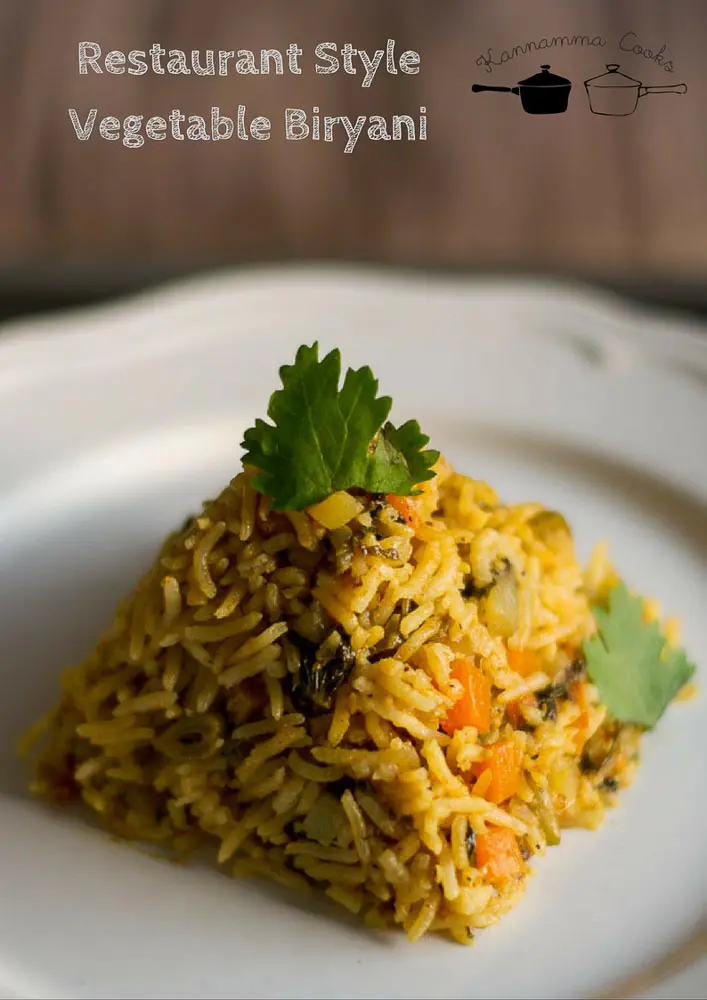
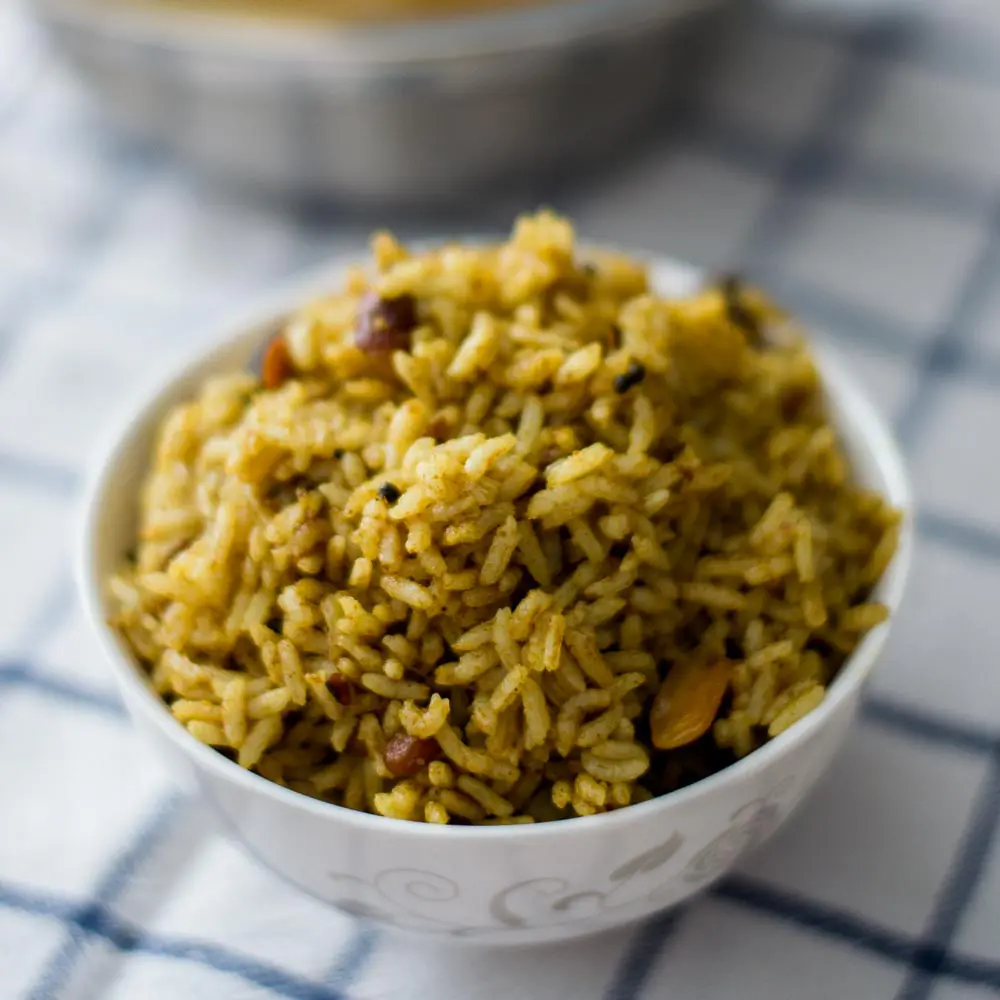
Vegetable biryani restaurant style. South Indian hotel vegetable biryani recipe.
My sister told me that I had to try this recipe for restaurant style vegetable biryani. She sent me this hand written recipe from her friend. She had tasted the biryani at her friends place and told me that it was so nice and I had to try it immediately. So did I and I should say that we enjoyed the biryani a lot.
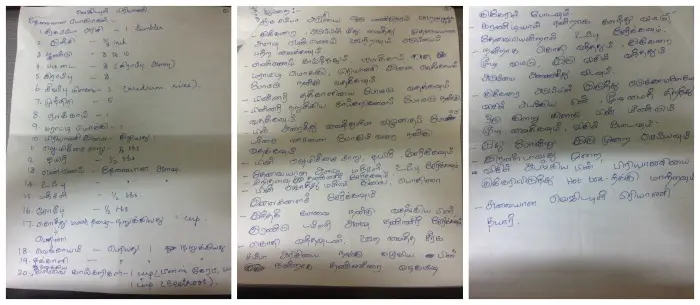
Here is the recipe. The original recipe uses seeraga samba rice. I do not get this rice here in Hong Kong. So I have used basmati rice today.
Before starting to cook, soak the rice in water.

First lets make a paste. Grind the ingredients listed under “masala paste” with half a cup of water to a smooth paste. Set aside. The ingredients are listed at the bottom.
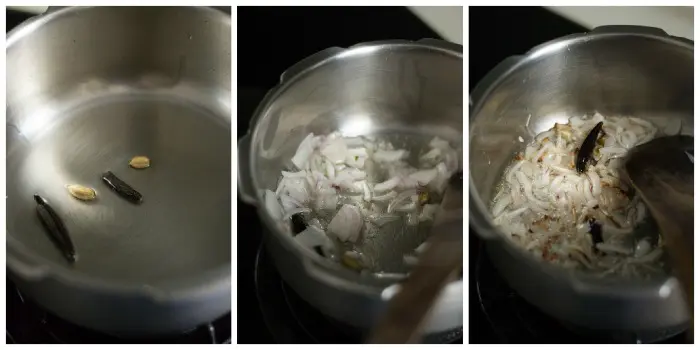
Heat oil in a pan. Be generous with the oil. I have used 3 tablespoon of oil today. Add in the maratti moggu and cardamom. Add in the bay leaf and sliced onions and fry till the onions are starting to brown.
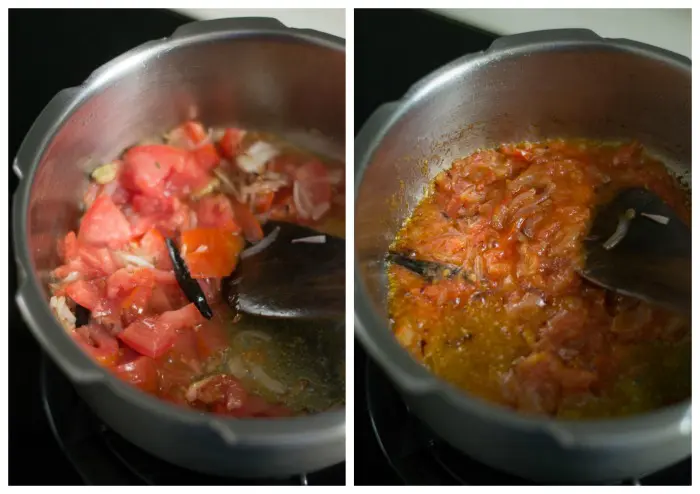
Add in the tomatoes and saute til the tomatoes are well cooked and juiced down.
Add in the vegetables. Make sure you dice the veggies small. The vegetable rice ratio is 2:1. I have used 2 cups of veggies for 1 cup of rice. You can use the vegetable of your choice. I have used potatoes, carrots and beans today. The original recipe calls for beetroot too! Saute the veggies for a minute. Add in the ground masala paste and saute the mixture for five minutes on a medium flame.

Add in the lime juice, yogurt and turmeric.
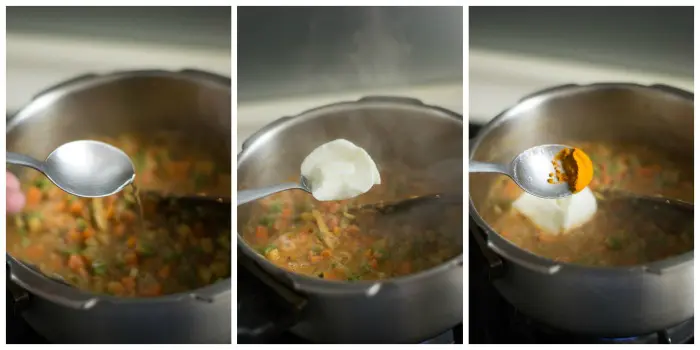
Add in the salt. Saute the mixture well for a couple of minutes.

Add in half a cup each of chopped mint leaves and coriander leaves. Saute for a minute. Add in the water. I have used 1.5 cups of water for the 1 cup of rice used. Let it come to a boil.

Add in the drained basmati rice to the pressure cooker. Mix well once. Cover the pressure pan with a lid and leave it exactly for 2 whistles on medium flame. Switch off the flame and let the pressure from the cooker release naturally.
Note: If using the oven, let the mixture come to a boil after adding rice. Once the mixture comes to a boil, move to a preheated 400 degree Fahrenheit oven and bake for 20 – 25 minutes. After 20 – 25 minutes, remove from the oven and allow it to rest for 10 minutes before serving. Note: Its important that the mixture needs to come to a boil before transferring it to the oven.

Serve with Egg curry.
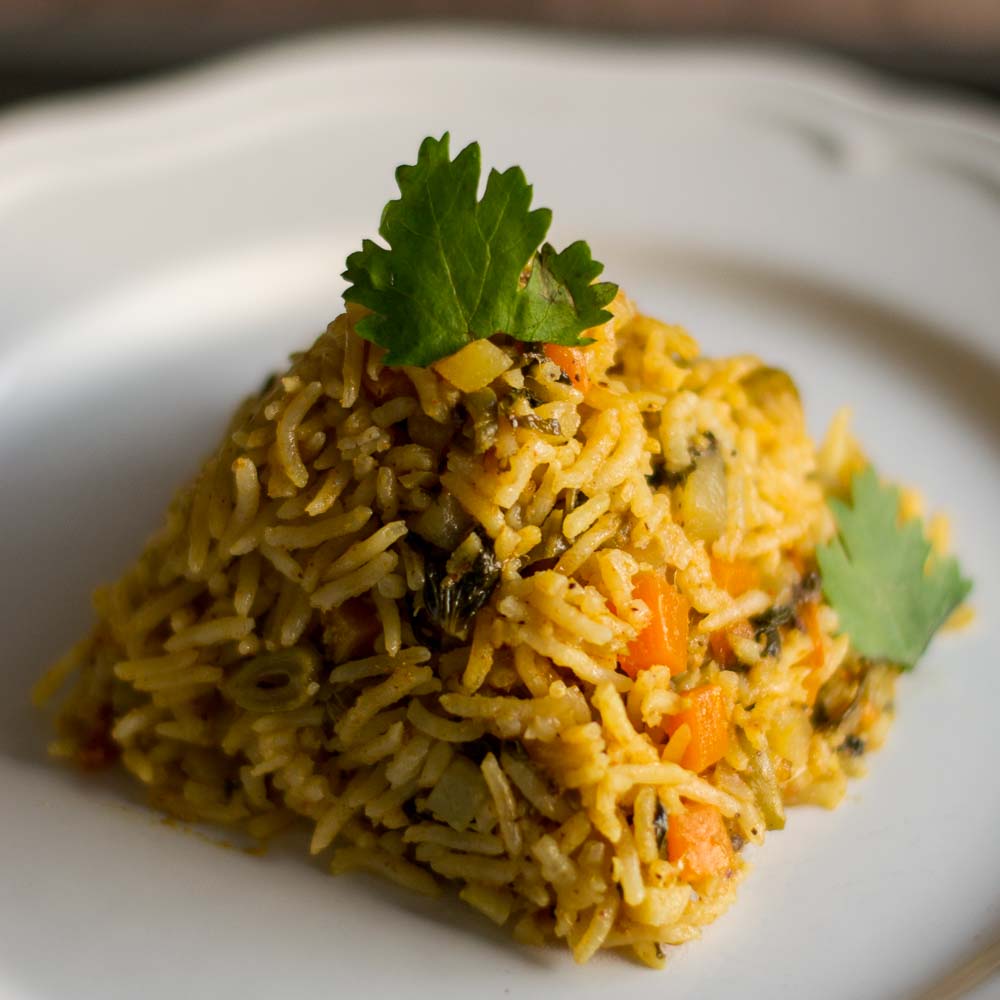
Masala Paste
- 3/4 inch ginger
- 5 cloves garlic
- 1/2 inch cinnamon
- 3 cloves
- 3 dried red chillies
- 5 cashews
- 1/2 tablespoon fennel seeds (sombu)
Other Ingredients
- 3 tablespoon sunflower oil
- 2 Maratti Moggu (kapok buds)
- 2 cardamom
- 1 bay leaf
- 1 onion, sliced
- 1 tomato, chopped
- 2 cups diced veggies
- 1 tablespoon lime juice
- 1 heaped tablespoon yogurt
- 1/2 teaspoon turmeric
- 1 teaspoon salt
- 1/2 cup chopped mint leaves
- 1/2 cup coriander leaves
- 1.5 cup water
- 1 cup seeraga samba rice or basmati rice
- Before starting to cook, soak the basmati rice in water.
- First lets make a paste. Grind the ingredients listed under “masala paste” with half a cup of water to a smooth paste. Set aside.
- Heat oil in a pan. I have used 3 tablespoon of oil today. Add in the maratti moggu and cardamom. Add in the bay leaf and sliced onions and fry till the onions are starting to brown.
- Add in the tomatoes and saute til the tomatoes are well cooked and juiced down.
- Add in the vegetables. Saute the veggies for a minute. Add in the ground masala paste and saute the mixture for five minutes on a medium flame.
- Add in the lime juice, yogurt and turmeric.
- Add in the salt. Saute the mixture well for a couple of minutes.
- Add in half a cup each of chopped mint leaves and coriander leaves. Saute for a minute. Add in the water. Let it come to a boil. Add in the drained basmati rice to the pressure cooker. Mix well once. Cover the pressure pan with a lid and leave it exactly for 2 whistles on medium flame. Switch off the flame and let the pressure from the cooker release naturally.
- Serve hot.
- Author: Kannamma - Suguna Vinodh
- Prep Time: 20 mins
- Cook Time: 30 mins
- Category: Main Dish
- Cuisine: Tamilnadu
Masala Paste
- 3/4 inch ginger
- 5 cloves garlic
- 1/2 inch cinnamon
- 3 cloves
- 3 dried red chillies
- 5 cashews
- 1/2 tablespoon fennel seeds (sombu)
Other Ingredients
- 3 tablespoon sunflower oil
- 2 Maratti Moggu (kapok buds)
- 2 cardamom
- 1 bay leaf
- 1 onion, sliced
- 1 tomato, chopped
- 2 cups diced veggies
- 1 tablespoon lime juice
- 1 heaped tablespoon yogurt
- 1/2 teaspoon turmeric
- 1 teaspoon salt
- 1/2 cup chopped mint leaves
- 1/2 cup coriander leaves
- 1.5 cup water
- 1 cup seeraga samba rice or basmati rice
- Before starting to cook, soak the basmati rice in water.
- First lets make a paste. Grind the ingredients listed under “masala paste” with half a cup of water to a smooth paste. Set aside.
- Heat oil in a pan. I have used 3 tablespoon of oil today. Add in the maratti moggu and cardamom. Add in the bay leaf and sliced onions and fry till the onions are starting to brown.
- Add in the tomatoes and saute til the tomatoes are well cooked and juiced down.
- Add in the vegetables. Saute the veggies for a minute. Add in the ground masala paste and saute the mixture for five minutes on a medium flame.
- Add in the lime juice, yogurt and turmeric.
- Add in the salt. Saute the mixture well for a couple of minutes.
- Add in half a cup each of chopped mint leaves and coriander leaves. Saute for a minute. Add in the water. Let it come to a boil. Add in the drained basmati rice to the pressure cooker. Mix well once. Cover the pressure pan with a lid and leave it exactly for 2 whistles on medium flame. Switch off the flame and let the pressure from the cooker release naturally.
- Serve hot.
- Author: Kannamma - Suguna Vinodh
- Prep Time: 20 mins
- Cook Time: 30 mins
- Category: Main Dish
- Cuisine: Tamilnadu
Find it online : https://www.kannammacooks.com/restaurant-style-vegetable-biryani/

Iyengar Puliyodharai Recipe also called as Kovil / Temple Puliyodharai, Puli sadam. Tamarind rice using home made Puliyodharai paste – Puliyodharai mix. South Indian Tamil Style recipe. Its also called as puliyogare in Kannada.
I still remember my tryst with Iyengar Puliyodharai. My first job after graduation was at a lending institution. One day I was having lunch with my manager in the pantry. The branch manager, Krishnan entered the pantry ( a 3 table tiny pantry) and since the other tables were not yet cleaned, my manager, Amrita offered a seat in our table. He had brought his mothers Puliyodharai for lunch. He offered us a taste of the Puliyodharai. It was absolutely divine. He told us that his mother makes the best tamarind rice in the whole world and I had to agree. He told, “You know whats the secret of a good Puliyodharai? Its all in the making of pulikaachal (tamarind paste)”. If done the proper way, Puliyodharai can be so delicious. Here is how to do Iyengar style Puliyodharai / kovil Puliyodharai.
Here is the video of how to make Puliyodharai, Iyengar Puliyodharai Recipe, Temple Puliyodharai
First, we will make a spice powder.
We will be dry roasting the ingredients one by one separately. # Dry roast coriander seeds on medium flame till the seeds slightly changes in colour and one or two seeds splutter. Remove to a plate and set aside to cool. # Dry roast white sesame seeds on medium flame till the seeds slightly changes in colour and becomes light brown. Remove to a plate and set aside to cool. # Dry roast methi seeds (fenugreek – vendhayam), black pepper and dry red chillies on medium flame till the the methi seeds turn golden and one or two seeds splutter. Remove to a plate and set aside to cool.

The spices are roasted and ready!

Once the spices are cool, grind it in a mixie to a powder. Set aside.

Tamarind Pulp
Soak a big lemon size tamarind in two cups of water for 30 minutes. Squeeze the tamarind to extract the pulp. Strain the pulp and discard the seeds and the fibre. Set aside.

Pulikaachal – Tamarind Paste – Tamarind mix with powder
Heat sesame oil (gingely oil – nalla ennai) in a pan until hot. Gingely Oil is the traditional oil used for the preparation of puliyodharai. Do not use any other oil. The flavour of gingely oil is very important for puliyodharai. Add in the mustard seeds. Let the mustard seeds splutter. Add dry red chillies and chana dal. Roast till the chana dal is golden. Add in the tamarind extract / pulp.

Add in the hing (perungayam – asafoetida), turmeric powder and curry leaves. Let it simmer on a low flame.

In the mean time, dry roast the peanuts until the skin turns slightly black here and there and the peanuts are nicely roasted. Remove from heat and set aside to cool. Remove the skin and add it to the tamarind mixture simmering on the pan.

Add in the salt and jaggery. Jaggery balances the sourness of the tamarind. Jaggery is very important for puliyodharai.

Cover the pan with a lid and simmer the tamarind mixture on a low flame for 20 minutes. Saute once in a while to avoid the mixture from burning at the bottom. After 20 minutes, the mixture would have reduced and thickened and the gingely oil would have separated and can be visibly seen on the sides of the pan. The tamarind mixture is ready.

Switch off the flame and add in the ground spice powder. Tamarind paste mix – pulikaachal is ready.
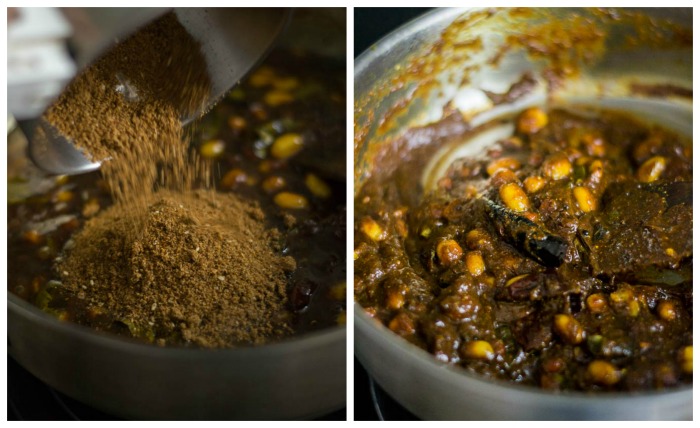
Let the mixture completely cool down. Bottle it in glass jar and store it and use it as required. The pulikaachal paste can be stored in the refrigerator for up to a month.

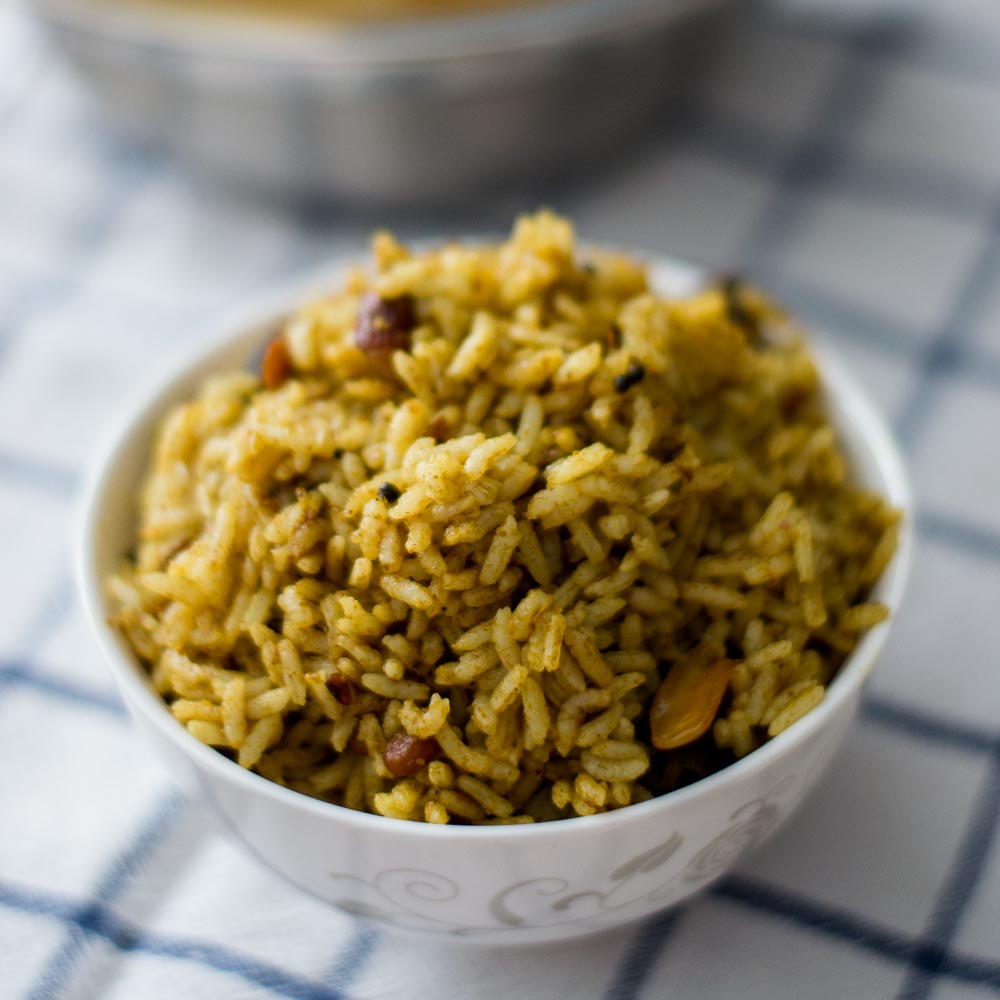
Mixing and Assembly! We will be using cooked rice and will be mixing it with pulikaachal. I have a tip for cooking rice that stays fluffy and does not become mushy. The secret for fluffy rice is to soak the rice in water for at least half an hour. I usually use Indian raw rice (sona masuri) variety. I add 2 cups of water for every cup of soaked and drained rice. I cook my rice in a rice cooker. You can do the same in the pressure cooker too. Cook for 2 whistles and allow the pressure to settle naturally. Cook 1 cup (250 ml) of rice with 2 cups of water and cook it to firm texture. Allow it to cool completely. Once the rice is cool, Mix half of prepared tamarind paste – pulikaachal and 1/4 teaspoon of salt and a tablespoon of sesame oil. Mix well to combine. Adjust seasoning if necesary. The best way to combine the rice and the pulikaachal is to use your hands. As the pulikaachal is thick, a spatula does not do a good job.

Do not consume the tamarind rice immediately. The flavour develops after an hour. Enjoy with papad or appalam.
This pulikaachal will be enough for 2 cups of dry raw rice (uncooked).
Spice Powder
- 3 teaspoon coriander seeds
- 3/4 teaspoon fenugreek seeds (vendayam)
- 4 dry red chillies (add more for spicy)
- 3 teaspoon white sesame seeds
- 1.5 teaspoon black pepper (use less according to spice levels)
For Tamarind paste / pulikaachal
- 1/3 cup sesame oil (gingely oil / nallennai)
- 1 teaspoon mustard seeds
- 2 teaspoon chana dal
- 4 dry red chillies
- 1 teaspoon hing (asafoetida)
- 1.5 teaspoon turmeric
- 3 sprigs curry leaves
- 1/2 cup peanuts (use less if you want less nuts in puliyodharai)
- 3 teaspoon salt
- 2 tablespoon jaggery
- Big lemon sized tamarind
To Serve
- Rice as required
Spice Powder
- Dry roast all the ingredients listed under spice powder separately till slightly dark and golden. Set aside on a plate to cool. Once the spices are cool, grind it in a mixie to a powder. Set aside.
Tamarind Pulp
- Soak a big lemon size tamarind in two cups of water for 30 minutes. Squeeze the tamarind to extract the pulp. Strain the pulp and discard the seeds and the fibre. Set aside.
Pulikaachal – Tamarind Paste – Tamarind mix with powder
- Heat sesame oil in a pan until hot. Add in the mustard seeds. Let the mustard seeds splutter. Add dry red chillies and chana dal. Roast till the chana dal is golden. Add in the tamarind extract / pulp.
- Add in the hing, turmeric powder and curry leaves. Add in the roasted peanuts. Add in the salt and jaggery.
- Cover the pan with a lid and simmer the tamarind mixture on a low flame for 20 minutes.
- Switch off the flame and add in the ground spice powder. Allow it to cool completely. Bottle and use.
Mixing and Assembly!
- Cook 1 cup (250 ml) of rice with 2 cups of water and cook it to firm texture. Allow it to cool completely. Once the rice is cool, Mix half of prepared tamarind paste – pulikaachal and 1/4 teaspoon of salt. Add little oil. Mix well to combine.
- Serve with appalam.
- Author: Kannamma - Suguna Vinodh
- Prep Time: 10 mins
- Cook Time: 30 mins
- Category: Main Dish
- Cuisine: Tamilnadu
