
Iyengar Puliyodharai Recipe also called as Kovil / Temple Puliyodharai, Puli sadam. Tamarind rice using home made Puliyodharai paste – Puliyodharai mix. South Indian Tamil Style recipe. Its also called as puliyogare in Kannada.
I still remember my tryst with Iyengar Puliyodharai. My first job after graduation was at a lending institution. One day I was having lunch with my manager in the pantry. The branch manager, Krishnan entered the pantry ( a 3 table tiny pantry) and since the other tables were not yet cleaned, my manager, Amrita offered a seat in our table. He had brought his mothers Puliyodharai for lunch. He offered us a taste of the Puliyodharai. It was absolutely divine. He told us that his mother makes the best tamarind rice in the whole world and I had to agree. He told, “You know whats the secret of a good Puliyodharai? Its all in the making of pulikaachal (tamarind paste)”. If done the proper way, Puliyodharai can be so delicious. Here is how to do Iyengar style Puliyodharai / kovil Puliyodharai.
Here is the video of how to make Puliyodharai, Iyengar Puliyodharai Recipe, Temple Puliyodharai
First, we will make a spice powder.
We will be dry roasting the ingredients one by one separately. # Dry roast coriander seeds on medium flame till the seeds slightly changes in colour and one or two seeds splutter. Remove to a plate and set aside to cool. # Dry roast white sesame seeds on medium flame till the seeds slightly changes in colour and becomes light brown. Remove to a plate and set aside to cool. # Dry roast methi seeds (fenugreek – vendhayam), black pepper and dry red chillies on medium flame till the the methi seeds turn golden and one or two seeds splutter. Remove to a plate and set aside to cool.

The spices are roasted and ready!

Once the spices are cool, grind it in a mixie to a powder. Set aside.

Tamarind Pulp
Soak a big lemon size tamarind in two cups of water for 30 minutes. Squeeze the tamarind to extract the pulp. Strain the pulp and discard the seeds and the fibre. Set aside.

Pulikaachal – Tamarind Paste – Tamarind mix with powder
Heat sesame oil (gingely oil – nalla ennai) in a pan until hot. Gingely Oil is the traditional oil used for the preparation of puliyodharai. Do not use any other oil. The flavour of gingely oil is very important for puliyodharai. Add in the mustard seeds. Let the mustard seeds splutter. Add dry red chillies and chana dal. Roast till the chana dal is golden. Add in the tamarind extract / pulp.

Add in the hing (perungayam – asafoetida), turmeric powder and curry leaves. Let it simmer on a low flame.

In the mean time, dry roast the peanuts until the skin turns slightly black here and there and the peanuts are nicely roasted. Remove from heat and set aside to cool. Remove the skin and add it to the tamarind mixture simmering on the pan.

Add in the salt and jaggery. Jaggery balances the sourness of the tamarind. Jaggery is very important for puliyodharai.

Cover the pan with a lid and simmer the tamarind mixture on a low flame for 20 minutes. Saute once in a while to avoid the mixture from burning at the bottom. After 20 minutes, the mixture would have reduced and thickened and the gingely oil would have separated and can be visibly seen on the sides of the pan. The tamarind mixture is ready.

Switch off the flame and add in the ground spice powder. Tamarind paste mix – pulikaachal is ready.
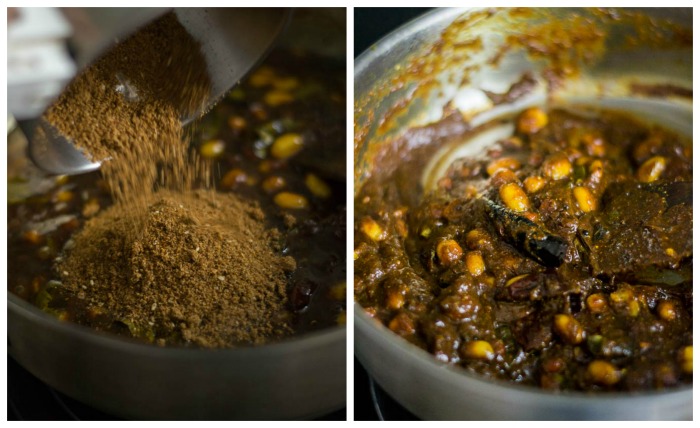
Let the mixture completely cool down. Bottle it in glass jar and store it and use it as required. The pulikaachal paste can be stored in the refrigerator for up to a month.

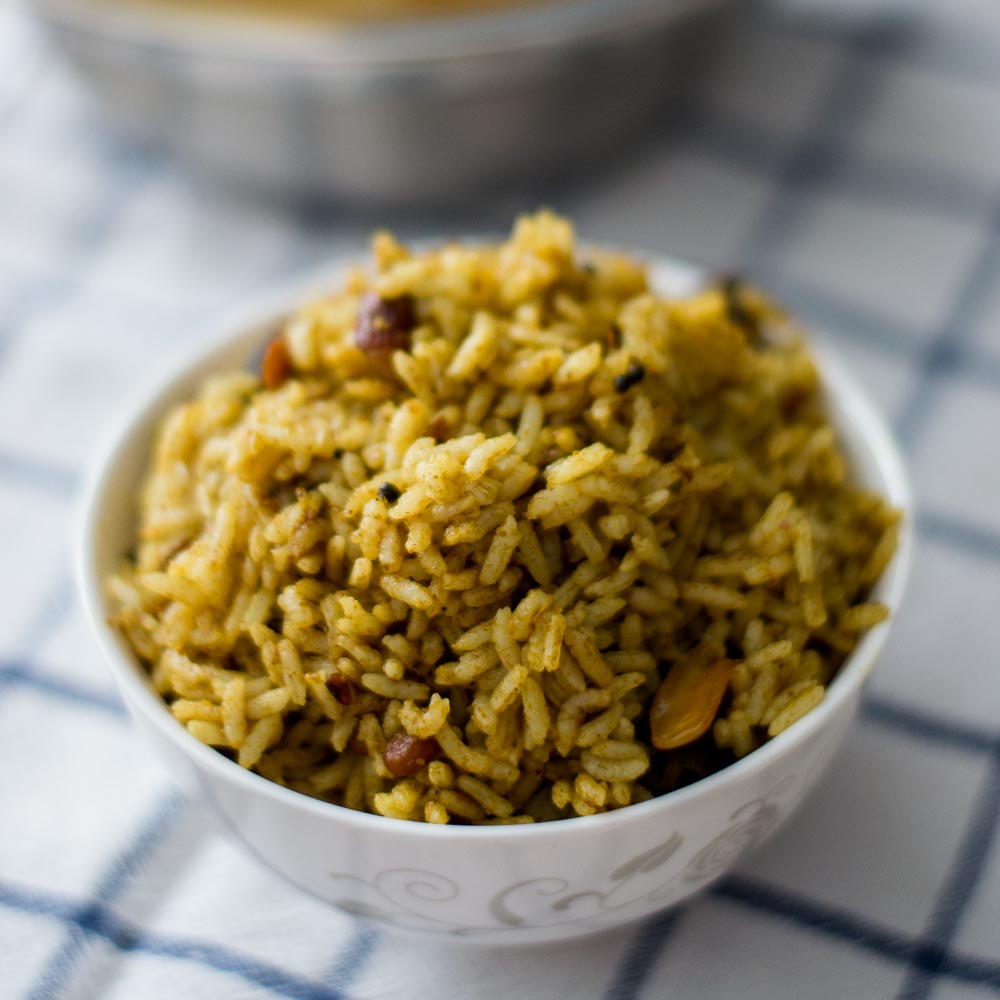
Mixing and Assembly! We will be using cooked rice and will be mixing it with pulikaachal. I have a tip for cooking rice that stays fluffy and does not become mushy. The secret for fluffy rice is to soak the rice in water for at least half an hour. I usually use Indian raw rice (sona masuri) variety. I add 2 cups of water for every cup of soaked and drained rice. I cook my rice in a rice cooker. You can do the same in the pressure cooker too. Cook for 2 whistles and allow the pressure to settle naturally. Cook 1 cup (250 ml) of rice with 2 cups of water and cook it to firm texture. Allow it to cool completely. Once the rice is cool, Mix half of prepared tamarind paste – pulikaachal and 1/4 teaspoon of salt and a tablespoon of sesame oil. Mix well to combine. Adjust seasoning if necesary. The best way to combine the rice and the pulikaachal is to use your hands. As the pulikaachal is thick, a spatula does not do a good job.

Do not consume the tamarind rice immediately. The flavour develops after an hour. Enjoy with papad or appalam.
This pulikaachal will be enough for 2 cups of dry raw rice (uncooked).
Spice Powder
- 3 teaspoon coriander seeds
- 3/4 teaspoon fenugreek seeds (vendayam)
- 4 dry red chillies (add more for spicy)
- 3 teaspoon white sesame seeds
- 1.5 teaspoon black pepper (use less according to spice levels)
For Tamarind paste / pulikaachal
- 1/3 cup sesame oil (gingely oil / nallennai)
- 1 teaspoon mustard seeds
- 2 teaspoon chana dal
- 4 dry red chillies
- 1 teaspoon hing (asafoetida)
- 1.5 teaspoon turmeric
- 3 sprigs curry leaves
- 1/2 cup peanuts (use less if you want less nuts in puliyodharai)
- 3 teaspoon salt
- 2 tablespoon jaggery
- Big lemon sized tamarind
To Serve
- Rice as required
Spice Powder
- Dry roast all the ingredients listed under spice powder separately till slightly dark and golden. Set aside on a plate to cool. Once the spices are cool, grind it in a mixie to a powder. Set aside.
Tamarind Pulp
- Soak a big lemon size tamarind in two cups of water for 30 minutes. Squeeze the tamarind to extract the pulp. Strain the pulp and discard the seeds and the fibre. Set aside.
Pulikaachal – Tamarind Paste – Tamarind mix with powder
- Heat sesame oil in a pan until hot. Add in the mustard seeds. Let the mustard seeds splutter. Add dry red chillies and chana dal. Roast till the chana dal is golden. Add in the tamarind extract / pulp.
- Add in the hing, turmeric powder and curry leaves. Add in the roasted peanuts. Add in the salt and jaggery.
- Cover the pan with a lid and simmer the tamarind mixture on a low flame for 20 minutes.
- Switch off the flame and add in the ground spice powder. Allow it to cool completely. Bottle and use.
Mixing and Assembly!
- Cook 1 cup (250 ml) of rice with 2 cups of water and cook it to firm texture. Allow it to cool completely. Once the rice is cool, Mix half of prepared tamarind paste – pulikaachal and 1/4 teaspoon of salt. Add little oil. Mix well to combine.
- Serve with appalam.
- Author: Kannamma - Suguna Vinodh
- Prep Time: 10 mins
- Cook Time: 30 mins
- Category: Main Dish
- Cuisine: Tamilnadu
Spice Powder
- 3 teaspoon coriander seeds
- 3/4 teaspoon fenugreek seeds (vendayam)
- 4 dry red chillies (add more for spicy)
- 3 teaspoon white sesame seeds
- 1.5 teaspoon black pepper (use less according to spice levels)
For Tamarind paste / pulikaachal
- 1/3 cup sesame oil (gingely oil / nallennai)
- 1 teaspoon mustard seeds
- 2 teaspoon chana dal
- 4 dry red chillies
- 1 teaspoon hing (asafoetida)
- 1.5 teaspoon turmeric
- 3 sprigs curry leaves
- 1/2 cup peanuts (use less if you want less nuts in puliyodharai)
- 3 teaspoon salt
- 2 tablespoon jaggery
- Big lemon sized tamarind
To Serve
- Rice as required
Spice Powder
- Dry roast all the ingredients listed under spice powder separately till slightly dark and golden. Set aside on a plate to cool. Once the spices are cool, grind it in a mixie to a powder. Set aside.
Tamarind Pulp
- Soak a big lemon size tamarind in two cups of water for 30 minutes. Squeeze the tamarind to extract the pulp. Strain the pulp and discard the seeds and the fibre. Set aside.
Pulikaachal – Tamarind Paste – Tamarind mix with powder
- Heat sesame oil in a pan until hot. Add in the mustard seeds. Let the mustard seeds splutter. Add dry red chillies and chana dal. Roast till the chana dal is golden. Add in the tamarind extract / pulp.
- Add in the hing, turmeric powder and curry leaves. Add in the roasted peanuts. Add in the salt and jaggery.
- Cover the pan with a lid and simmer the tamarind mixture on a low flame for 20 minutes.
- Switch off the flame and add in the ground spice powder. Allow it to cool completely. Bottle and use.
Mixing and Assembly!
- Cook 1 cup (250 ml) of rice with 2 cups of water and cook it to firm texture. Allow it to cool completely. Once the rice is cool, Mix half of prepared tamarind paste – pulikaachal and 1/4 teaspoon of salt. Add little oil. Mix well to combine.
- Serve with appalam.
- Author: Kannamma - Suguna Vinodh
- Prep Time: 10 mins
- Cook Time: 30 mins
- Category: Main Dish
- Cuisine: Tamilnadu
Find it online : https://www.kannammacooks.com/puliyodharai-iyengar-puliyodharai-kovil-puliyodharai/

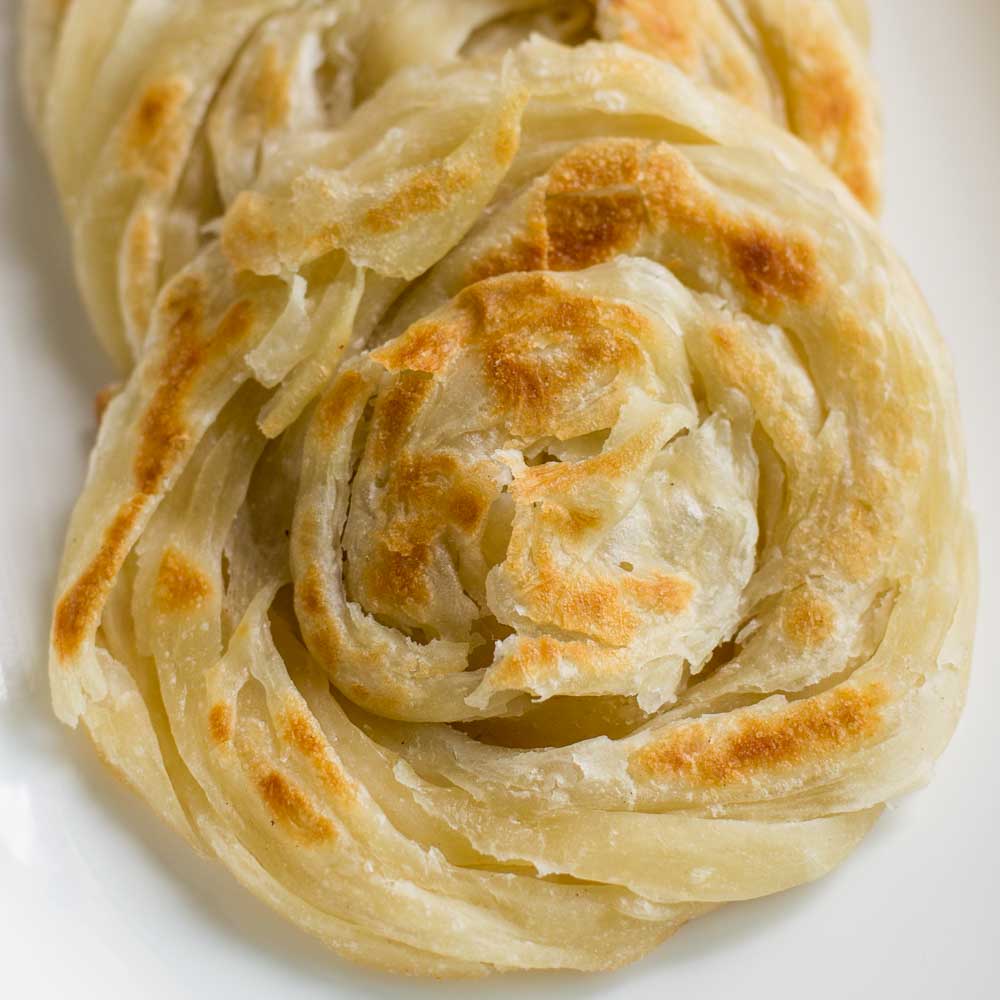
Parotta, Kerala Parotta Recipe, Make Easy Parotta at Home. Step by step recipe with detailed video. A very easy recipe for home made parottas from scratch. Malabar Parotta is a very famous bread in Kerala and Tamilnadu. Its even popular in Srilanka.

Parotta was always a restaurant affair for us when we were young. The first time I ate home made parotta was at my uncle’s friends house. He later became close to my dad. We called him “allied” uncle. His name was Govindaraj. He ran a business unit making textile machinery called Allied Engineering in Coimbatore. So in the family, he was referred to as “Allied” uncle. The food at allied uncles place was extra-ordinary. There would be at-least 15-20 dishes, a complete non-veg fare, all made at home by his wife with the help of the cook. I learnt to make parotta here. Allied uncle and his wife passed away a decade back. But every time we have parotta at home, I remember their huge kitchen and the big embroidered wall paintings hanging everywhere in the house (auntie did embroidery art like no body else). Here is the only picture of him that I have. Here is how to do easy kerala parotta at home. Here is a very easy way to do parotta at home. Its totally stress free and fool proof. Do try it at home. Parotta making used to be an all day affair. It need not be that way if done properly. Here is the easy method of making parotta at home.
Here is the video recipe for how to make kerala parotta at home

Mix in the maida (all purpose flour), salt, sugar, oil and water to form a soft dough. TIP: For a very soft parotta, add in quarter teaspoon of baking powder along. Adding baking powder will make for softest parottas.
Knead the dough for five minutes by hand. Cover the dough with a cloth. Rest the dough for 2 hours.

After the rest, form dough balls and rest the dough balls for five more minutes. The gluten in the dough needs to relax each time we handle the dough. Else the dough will not spread at all. It will be stiff. That is the reason we rest the dough briefly at every stage from now on. Take the dough ball and flatten it and roll it into a small disk. Sprinkle some oil if need be. DO NOT sprinkle lot of oil when rolling as it will become slippery and difficult to roll. Very lightly apply oil.

Transfer the rolled disks to a plate and apply oil on top of each rolled disk. Keep stacking the rolled disk, one on top of the other and keep applying oil on top of each disk. This is a very important step. Be liberal with the oil. Rest the disks on the plate for 20 minutes. The rolled disks are marinating in the oil and this will help in loosening the dough and it will be a breeze to spread later.

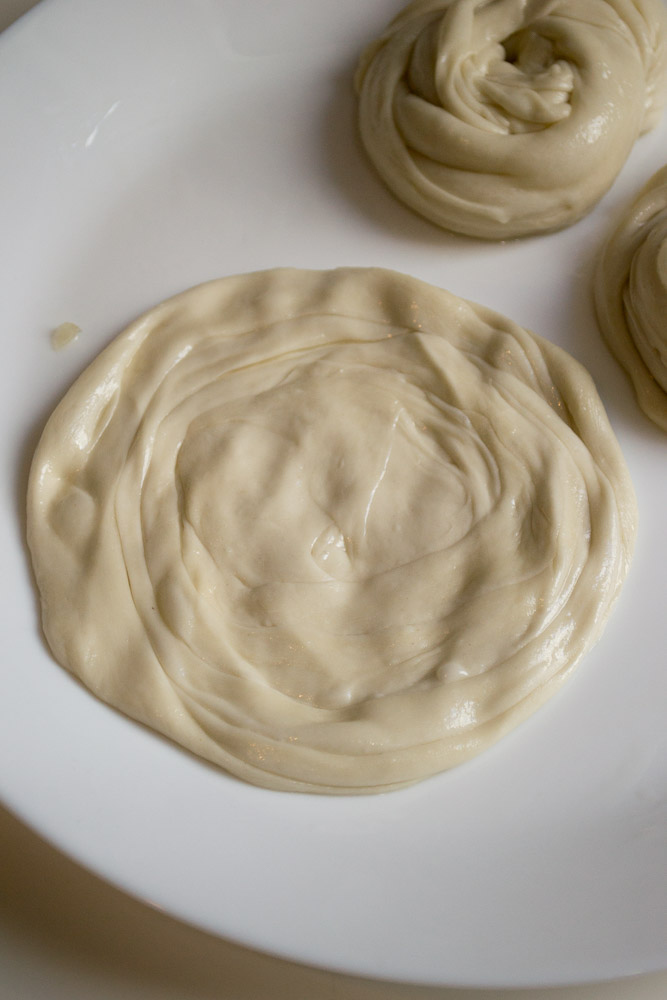
Take a dough disk and place it on a flat surface. Gently pull the sides of the disks to form a large circle. It should effortlessly spread. NOTE: If you want a really flaky parotta, spread little oil on the spread dough.

Gently gather the dough in one corner and make a spiral. Repeat with all the dough disks. Rest the spirals for five minutes.

Gently pat the spiraled dough with hand and spread the dough for 2-3 inches.
Heat a dosa tawa and place the parottas on the tawa. Cook a minute on each side. Then apply a teaspoon of oil for each parotta and cook for a couple of more minutes on low flame.

The dough needs to cook on a low flame so the inner part of the parotta also gets cooked evenly. When the parotta is golden, remove from heat.

Fluff up the parotta by gently tapping the sides of the parotta (like clapping hands with parotta in the middle).

Serve with chicken curry or mutton kuzhambu.
- 1 Cup ( 250 ml) Maida (All Purpose Flour)
- 1/2 teaspoon salt
- 1/2 teaspoon sugar
- 1.5 teaspoon sunflower oil (for making dough)
- 1/3 cup water (plus a few teaspoons more)
- 1/4 cup sunflower oil / vegetable oil for rolling parotta / cooking parotta
- 1/4 teaspoon baking powder (optional)
- Mix in the maida (all purpose flour), salt, sugar, oil and water to form a soft dough.
- Knead the dough for five minutes by hand. Cover the dough with a cloth. Rest the dough for 2 hours.
- After the rest, form dough balls and rest the dough balls for five more minutes.
- Take the dough ball and flatten it and roll it into a small disk. Sprinkle some oil if need be.
- Transfer the rolled disks to a plate and apply oil on top of each rolled disk. Keep stacking the rolled disk, one on top of the other and keep applying oil on top of each disk.
- Rest the dough disks on the plate for 20 minutes.
- Take a disk and place it on a flat surface. Gently pull the sides of the disks to form a large circle. It should effortlessly spread.
- Gently gather the dough in one corner and make a spiral. Repeat with all the dough disks. Rest the spirals for five minutes.
- Gently pat the spiraled dough with hand and spread the dough for 2-3 inches.
- Heat a dosa tawa and place the parottas on the tawa. Cook a minute on each side. Then apply a teaspoon of oil for each parotta and cook for a couple of more minutes on low flame.
- The dough needs to cook on a low flame so the inner part of the parotta also gets cooked evenly. When the parotta is golden, remove from heat.
- Fluff up the parotta by gently tapping the sides of the parotta (like clapping hands with parotta in the middle).
- Serve with chicken curry or mutton kuzhambu.
Notes
TIP: For a very soft parotta, add in quarter teaspoon of baking powder along. Adding baking powder will make for softest parottas.
- Author: Kannamma - Suguna Vinodh
- Prep Time: 3 hours
- Cook Time: 20 mins
- Category: Bread
- Cuisine: Kerala
Must Try when you are in Rajasthan – The best Rajasthani food when you visit Rajasthan.
