
Puli Vadai is a southern kongunad specialty. Its very popular in the Pollachi – Udumalpet belt. People of southern kongunad are called as the Dhatchanam people / Dakshin people meaning people of the south. My father in law always says that its a dhatchanam specialty and Coimbatore guys can never make it as good as them. I need to agree with him. I did not know about this vadai till the time I got married. Its a must for all festivals and special occasions at my husbands place. This tamarind vadai fluffs up like poori when fried and the vadai batter is nothing like you have seen. Its very unique and very delicious tangy fluffy goodness. My mother in law Gokilama makes amazing puli vadai / pulusu vadai. This is her way of making it. She learnt it from her mother in law. Here is how to do it.

NOTE: This is not a beginners recipe
This vadai is made with a rice batter. Par boiled rice / puzhungal arisi is what is used for making this vadai. The ingredients are soaked and ground to a very thick batter and then shaped and fried.

Soak the rice and the toor dal in water for a couple of hours. Drain and set aside.
Take a mixie jar and add in all the ingredients to the jar. The soaked rice and dal, tamarind, salt, dried red chillies and fresh shredded coconut.

Do not add water at the beginning while grinding. Pulse the mixie several times until the mixture is kind of pasty. Add couple of tablespoons of water at a time and grind the batter to a paste. Add water only when absolutely necessary. Let the paste be very slightly coarse. The batter should be thick. So use caution and add very little water while grinding. The batter will slightly firm up after an hour of resting.

Now, what to do if the batter goes wet?
So sometimes, the batter may go wet and here is a remedy. Take the ground batter and spread it on a plate. Place a dry towel on the batter and gently press to remove the excess water. If the batter is still wet, then add in a couple of tablespoon of rice flour and mix well.

Once the batter is ground, rest it for an hour. I keep the ground batter in the refrigerator to firm up. You can store the batter at this stage for up to 2 days in the refrigerator.
Now its frying time. Heat oil until hot.
Take a plastic paper and keep it on a flat surface. Slightly oil the paper and your hands. Take a small piece of the batter and make a ball. Place the ball on the paper and spread the ball with finger tips to form a circle. Keep the circle thick. Thin vadas will not fluff up. Also make sure there are no holes while forming the vadas.

Gently remove the spread batter from the plastic sheet and place it in oil. Do not disturb for 10-15 seconds. The vadas will start to fluff up. Gently turn the vadas. Fry for 20-30 seconds on each side. The batter will fluff up in oil like pooris. When the vadai is deep golden brown, remove and drain on paper towels. Do not crowd the pan while making vadas.

Serve hot.

- measurements used – 1 cup = 240 ml
- 1 cup par boiled rice (puzhungal arisi)
- 1/4 cup toor dal
- 1 small lime size tamarind
- 1 teaspoon salt
- 6 dried red chillies
- 1/4 cup fresh shredded coconut
- 500 ml vegetable oil for deep frying
Grinding
- Soak the rice and the toor dal in water for a couple of hours. Drain and set aside.
- Take a mixie jar and add in all the ingredients to the jar.
- Do not add water at the beginning while grinding. Pulse the mixie several times until the mixture is coarse. Add couple of tablespoons of water at a time and grind the batter to a paste. Let the paste be very slightly coarse. Do not grind to a fine paste. The batter should be thick. So use caution and add very little water while grinding.
- Once the batter is ground, rest it for an hour in the refrigerator.
For frying
- Heat oil until hot.
- Take a plastic paper and keep it on a flat surface. Slightly oil the surface. Take a small piece of the batter and make a ball. Place the ball on the paper and spread the ball with finger tips to form a circle.
- Gently remove the spread dough and place it in oil. Fry for a minute on each side. The batter will fluff up in oil like pooris. When the vadai is deep golden brown, remove and drain on paper towels.
- Serve hot.
- Author: Kannamma - Suguna Vinodh
- Prep Time: 2 hours
- Cook Time: 20 mins
- Category: Appetizer
- Cuisine: Kongunad

- measurements used – 1 cup = 240 ml
- 1 cup par boiled rice (puzhungal arisi)
- 1/4 cup toor dal
- 1 small lime size tamarind
- 1 teaspoon salt
- 6 dried red chillies
- 1/4 cup fresh shredded coconut
- 500 ml vegetable oil for deep frying
Grinding
- Soak the rice and the toor dal in water for a couple of hours. Drain and set aside.
- Take a mixie jar and add in all the ingredients to the jar.
- Do not add water at the beginning while grinding. Pulse the mixie several times until the mixture is coarse. Add couple of tablespoons of water at a time and grind the batter to a paste. Let the paste be very slightly coarse. Do not grind to a fine paste. The batter should be thick. So use caution and add very little water while grinding.
- Once the batter is ground, rest it for an hour in the refrigerator.
For frying
- Heat oil until hot.
- Take a plastic paper and keep it on a flat surface. Slightly oil the surface. Take a small piece of the batter and make a ball. Place the ball on the paper and spread the ball with finger tips to form a circle.
- Gently remove the spread dough and place it in oil. Fry for a minute on each side. The batter will fluff up in oil like pooris. When the vadai is deep golden brown, remove and drain on paper towels.
- Serve hot.
- Author: Kannamma - Suguna Vinodh
- Prep Time: 2 hours
- Cook Time: 20 mins
- Category: Appetizer
- Cuisine: Kongunad
Find it online : https://www.kannammacooks.com/puli-vadai-tamarind-vadai/
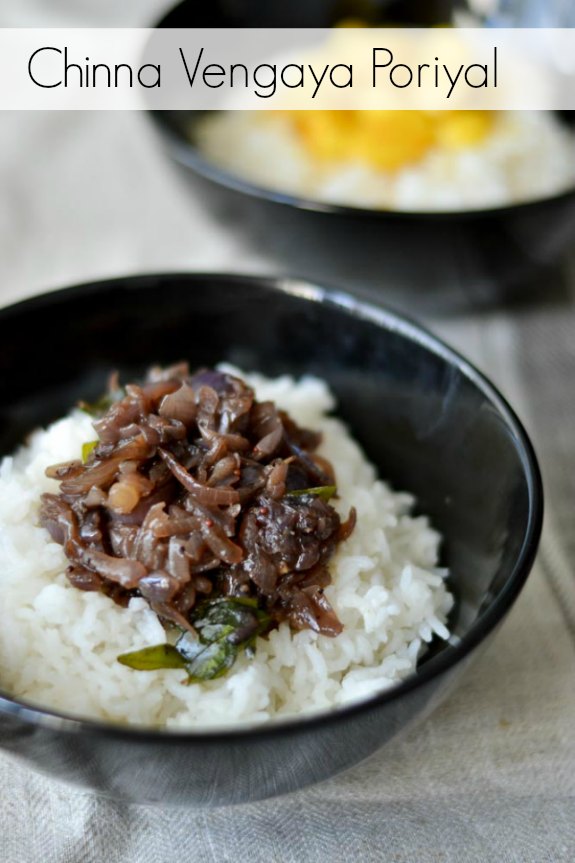
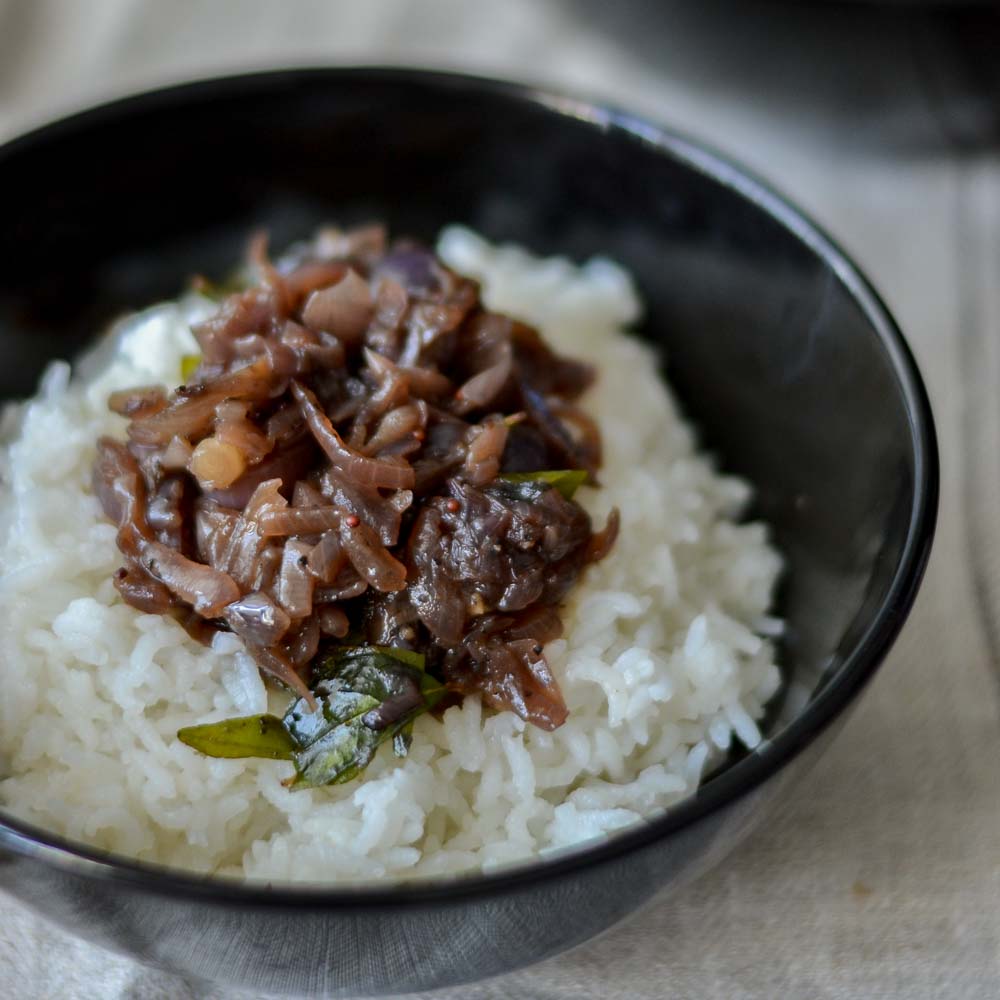
Haemorrhoid, also known as piles, affects a lot of people at some point in their lives. My mom used to make this Chinna Vengayam Poriyal, Sambar Vengayam Poriyal once a week. It was definitely there for lunch on one of the days. My dad had a job that involved lot of travel and his eating habits were a little chaos. He suffered from haemorrhoid / piles for some time and she used to make this for lunch everyday for him during that time. Shallots – Chinna Vengayam are believed in ayurveda to be beneficial for lowering inflammation, muscle aches, swelling and water-retention. This recipe is very simple to make and it tastes very delicious too. Shallots are an excellent home remedy for piles. Also drinking lots of liquids and water can be beneficial during this time. Here is how to do chinna vengayam poriyal / sambar onion stir fry.
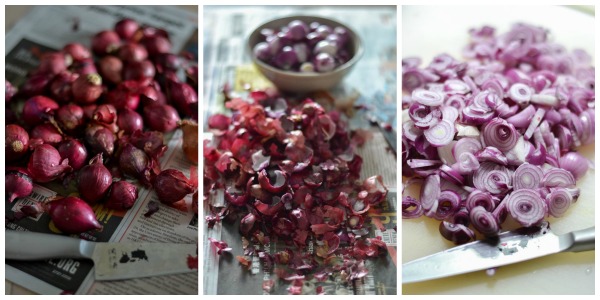
Peel and chop the chinna vengayam / sambar onion. Set aside.
Heat sesame / gingely oil in a pan and add in the mustard and curry leaves. Let the mustard seeds splutter. Add in the chopped shallots and saute for a minute. Add in the salt and crushed black pepper.

Add in half a cup of water and cover the pan with a lid. Cook on medium flame for about 10 minutes until the onions are soft and cooked and the mixture is almost dry.
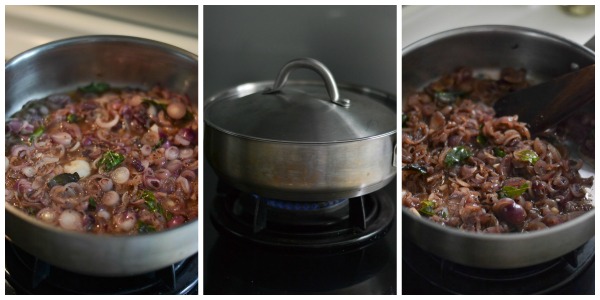
Add in two teaspoon of ghee and saute for a minute more. Switch off the flame.

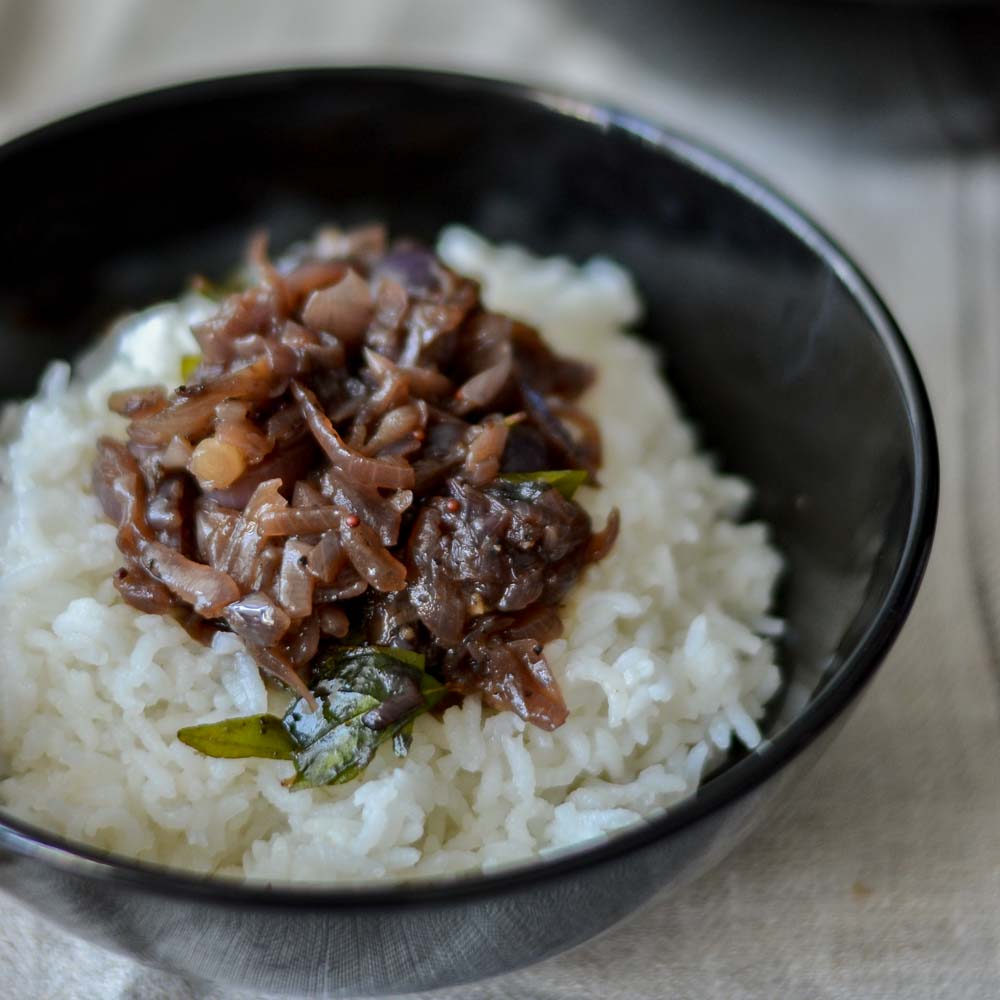
Serve the chinna vengayam poriyal / sambar onion poriyal with rice. Having this daily for lunch can reduce inflammation and is an excellent home remedy for people suffering from piles.
- 1 teaspoon sesame / gingely oil
- 1/4 teaspoon mustard seeds
- 2 sprigs curry leaves
- 250 grams small onion / sambar onions / shallots
- 1/4 teaspoon crushed black pepper
- 1/4 teaspoon salt
- 2 teaspoon ghee
- Peel and chop the chinna vengayam / sambar onion. Set aside.
- Heat sesame / gingely oil in a pan and add in the mustard and curry leaves. Let the mustard seeds splutter. Add in the chopped shallots and saute for a minute. Add in the salt and crushed black pepper.
- Add in half a cup of water and cover the pan with a lid. Cook on medium flame for about 10 minutes until the onions are soft and cooked and the mixture is almost dry.
- Add in two teaspoon of ghee and saute for a minute more. Switch off the flame.
- Serve the chinna vengayam poriyal / sambar onion poriyal with rice.
- Author: Kannamma - Suguna Vinodh
- Prep Time: 20 mins
- Cook Time: 15 mins
- Category: Stir-Fry
- Cuisine: Tamilnadu

