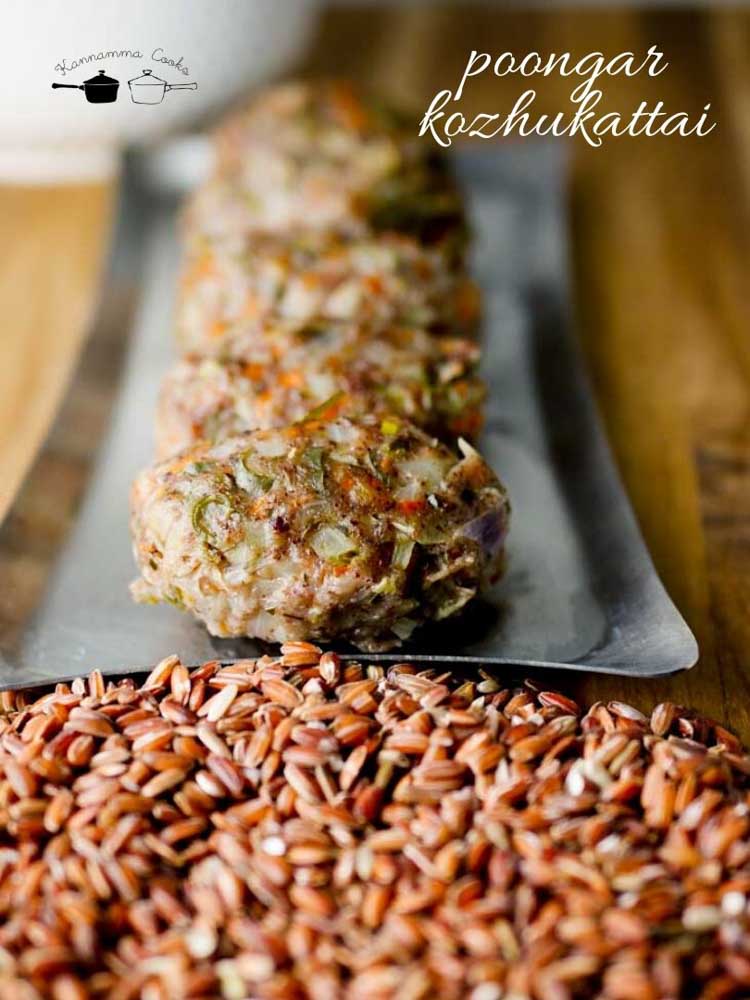
Recipe for making poongar unpolished rice kara kozhukattai. A different variety of kara kozhukattai made with red rice.
I have already shared the kara kozhukattai recipe that is very famous in the kogunad region that uses par boiled rice.
Poongar Red Rice is an indigenous Tamilnadu rice thats not polished and very hearty to taste. Its high in nutrition and fiber as its not polished and has its germ and bran intact. The rice is red in colour due to the presence of anthocyanin. Anthocyanin is a water soluble pigment and is present in dark coloured fruits and vegetables like Acai, blue berry, raspberry, grapes, red cabbage, black rice, cranberry etc… Anthocyanins have been shown to have antioxidant properties. Poongar rice is recommended to be the best rice for pregnant and lactating moms in Tamilnadu.
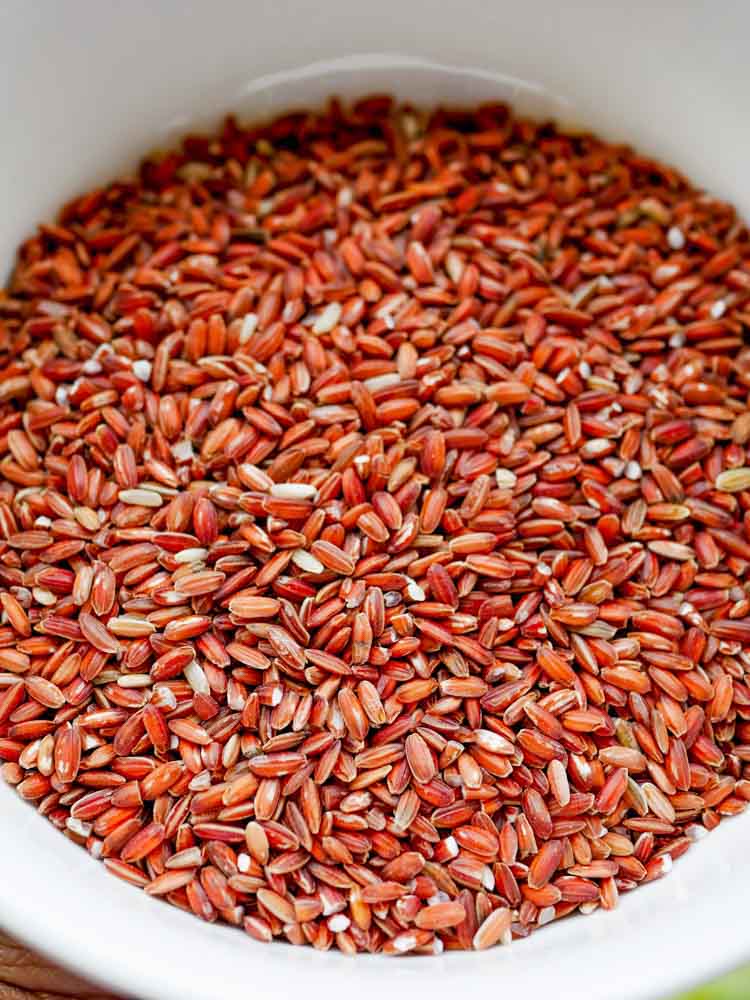
I made the kozhukattai using poongar rice today. Any red rice / brown rice will work for this recipe. With a little bit of planning, this recipe can be put together in under 30-40 minutes. The finely cut veggies and aromatics are mixed with the ground rice batter and cooked to a dough. The dough is then shaped, formed into dumplings and are steamed. These steamed little pockets are truly delicious. Do try it at home. I have made the same recipe with brown rice and found that the brown rice version is a little firm when compared to the red rice. Red rice has more fiber when compared to brown rice. The red rice kozhukattai is very slightly gummy. If you are trying for the first time, try with brown rice. The recipe can be found here. https://www.kannammacooks.com/vegetable-kozhukattai-veg-kaara-kozhukattai-recipe/
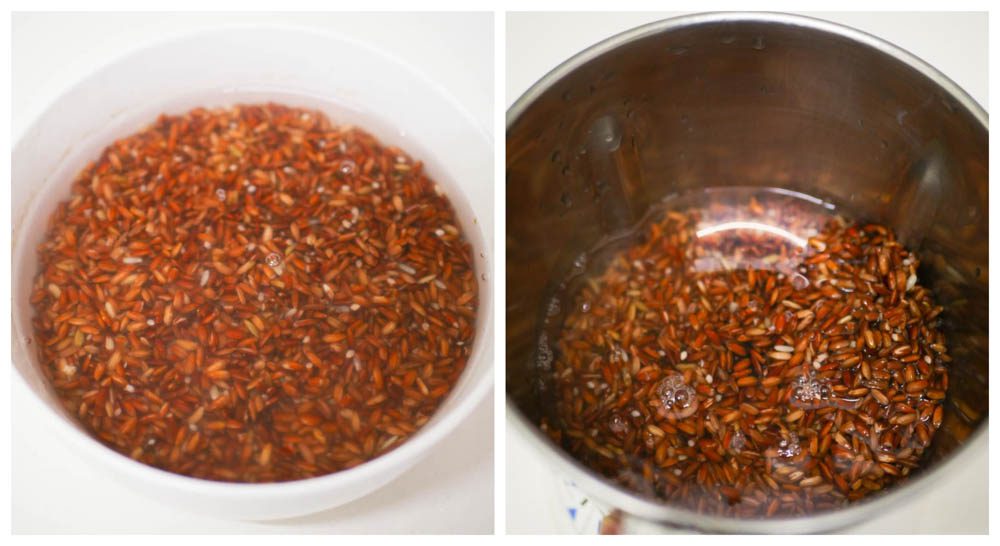
Soak the rice for 5-6 hours. If you are planning for breakfast, then soak the red rice over nite. It works well. Drain the water from the soaked rice. Note: One can use regular white rice instead of brown rice and the kozhukattai comes well too!
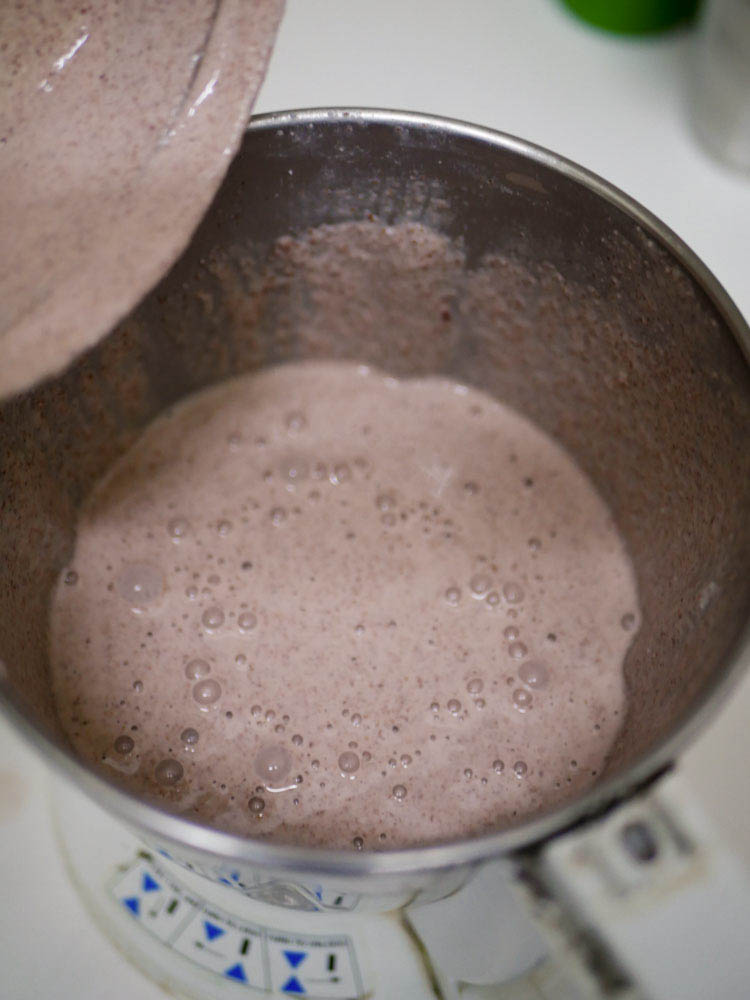
Now, grind the rice with some water. The quantity of water used while grinding will determine the final texture of the kozhukattai. For every cup of red rice used, add exactly one cup of water while grinding. Too little water will give a really hard Kozhukattai and adding a lot of water will make the Kozhukattai gummy. So use the correct measurement of water while grinding. Grind to a really smooth fine paste. Set aside.
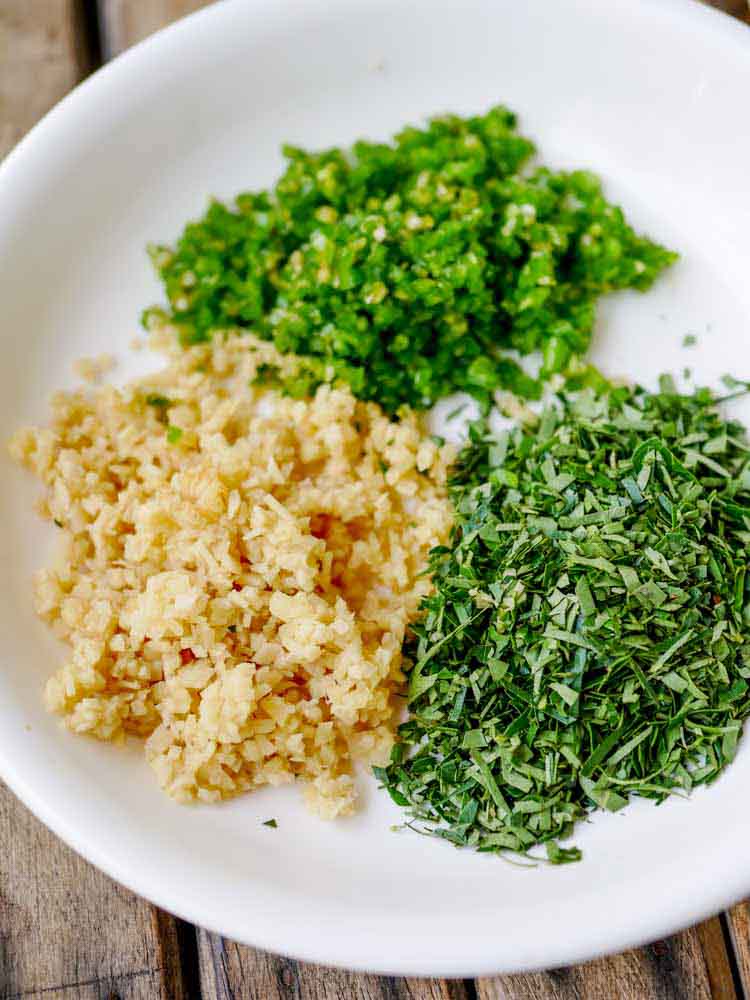
Finely chop the curry leaves, ginger and green chillies.
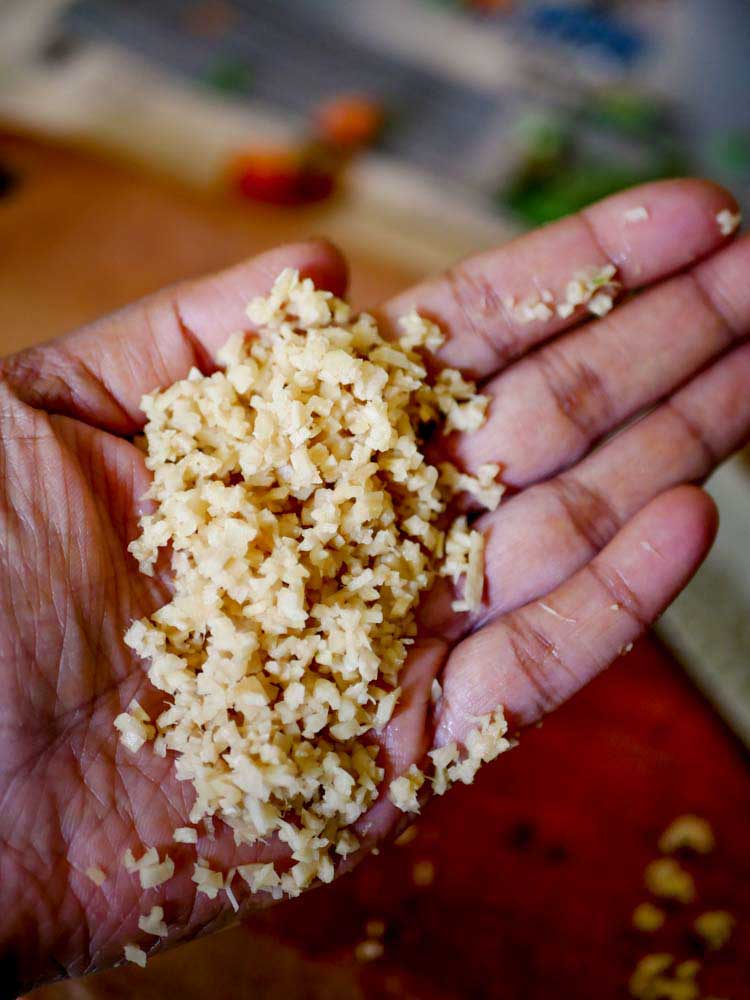
If you cannot mince fine, its okay to crush the green chillies and the ginger to a coarse paste in a mortar and pestle.
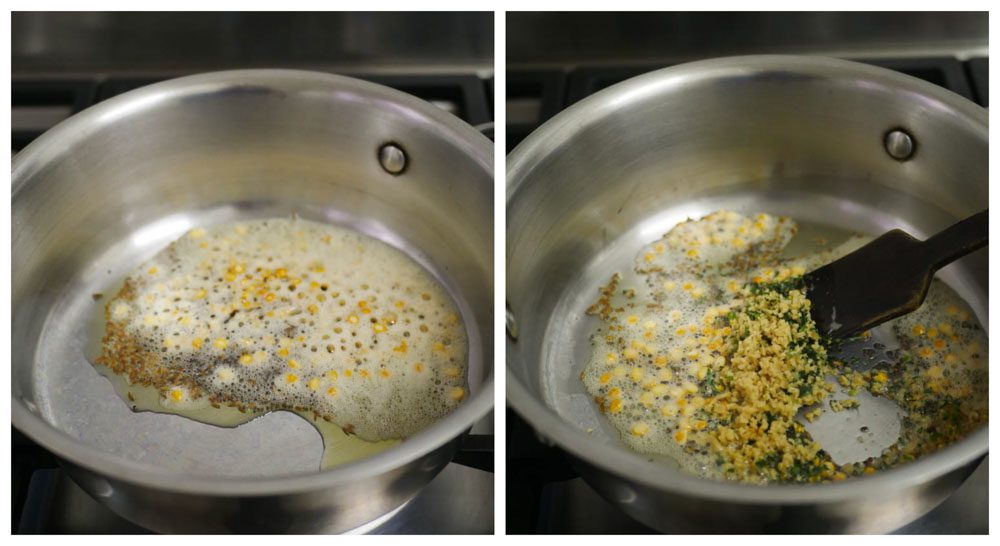
Heat sesame oil (gingely oil) in a pan and add in the mustard seeds, cumin seeds, finely chopped ginger, finely chopped curry leaves and the chana dal. Chopping the curry leaves makes it easier while serving and eating. Wait for the dal to brown.
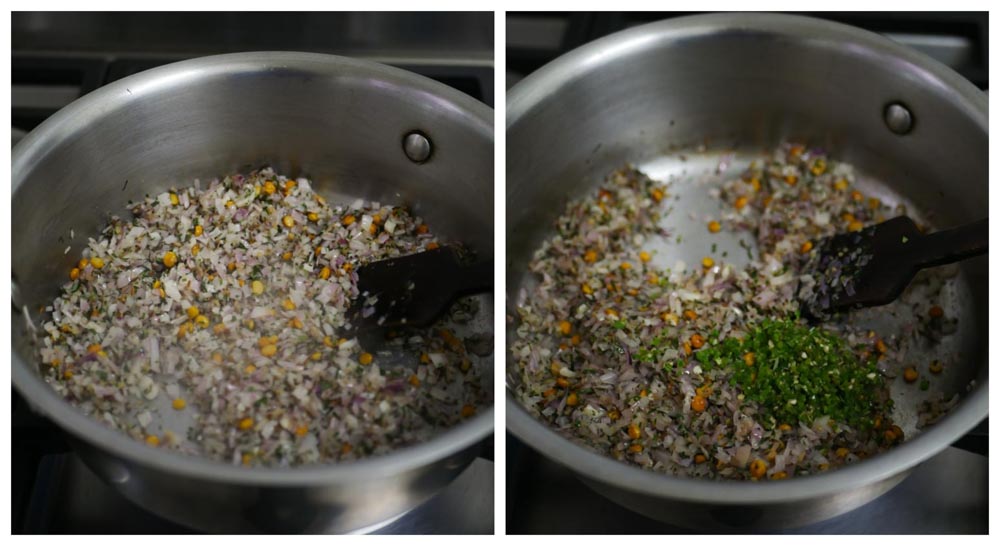
Add in the finely chopped onions and green chillies. Make sure all these ingredients are finely chopped, so its easy to prepare and shape the Kozhukattai later. You do not want a big chilli or a curry leaf when you bite the dumpling. So take time and chop the ingredients as fine as possible.
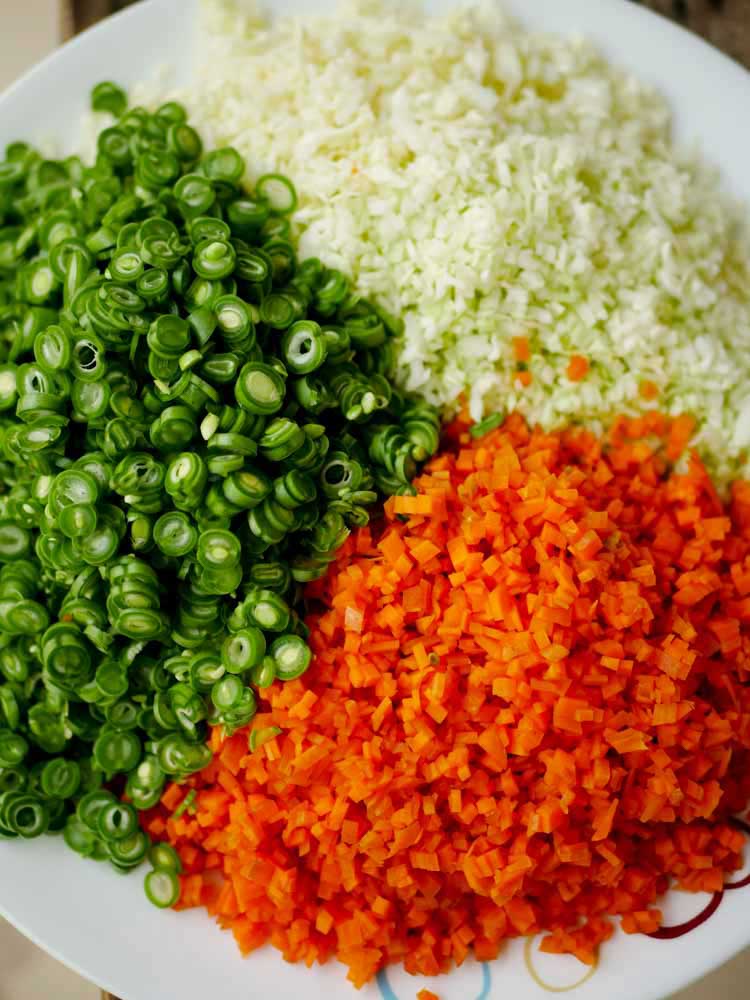
Get the vegetables ready.
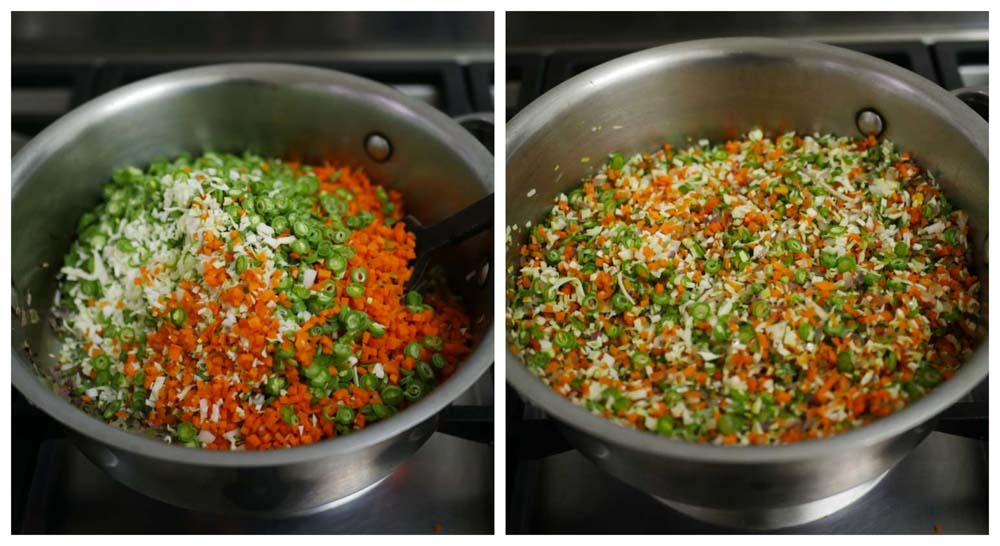
Once the onions are cooked and starting to brown, add in the finely shredded veggies. I have used carrots, cabbage and beans today. I have finely chopped them. You can shred in a vegetable shredded and it works fine too. Also add in the salt at this stage. Saute for 3-4 minutes.
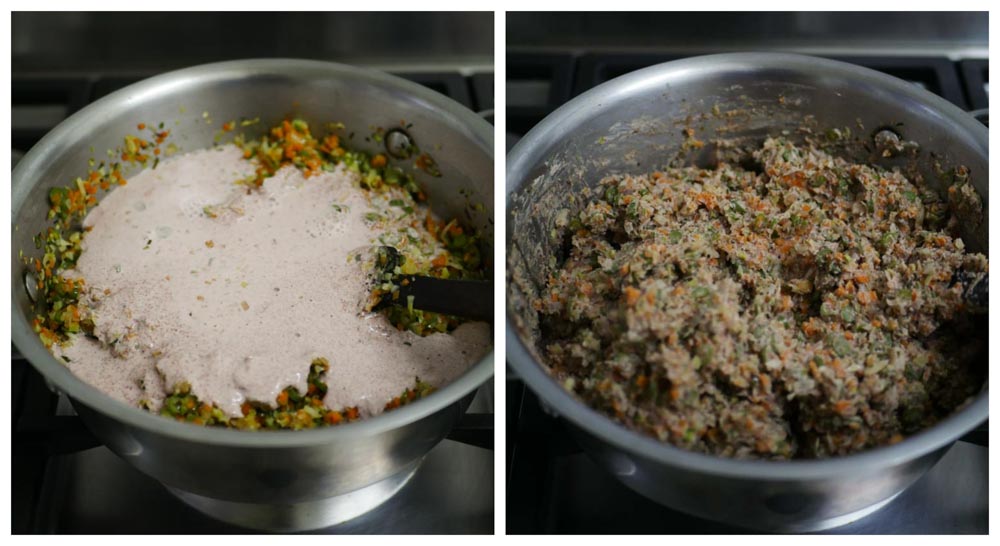
No need to cook the vegetables completely as we are going to be steaming again. So, once the veggies are half done, add in the ground rice.
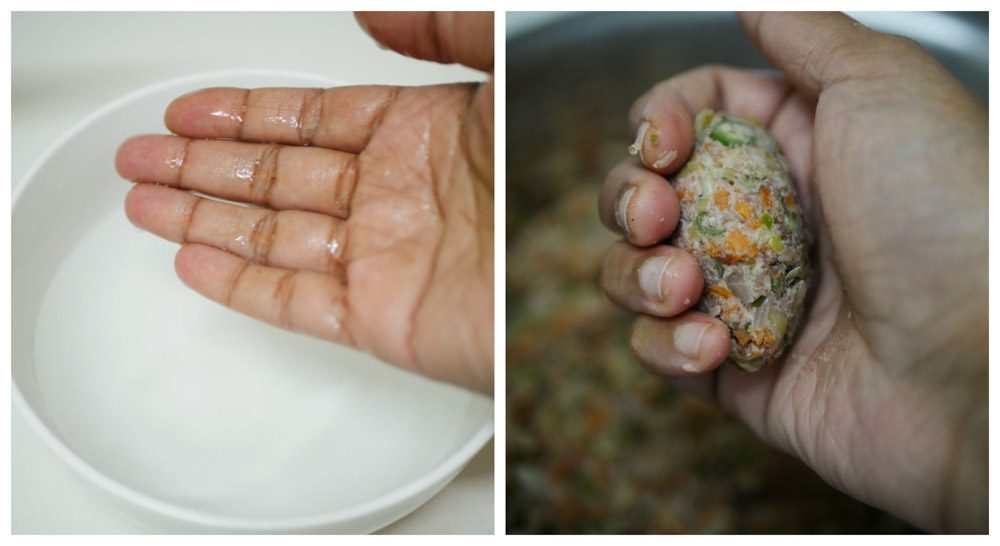
The rice mixture will immediately thicken up into a mass of dough in a couple of minutes. Once the dough is thick, remove from heat and set aside to cool. Now we will shape the dumplings. Dip your hands in water everytime you form dumplings so that the dumplings do not stick. Also the cool water will help in handling the hot dough.
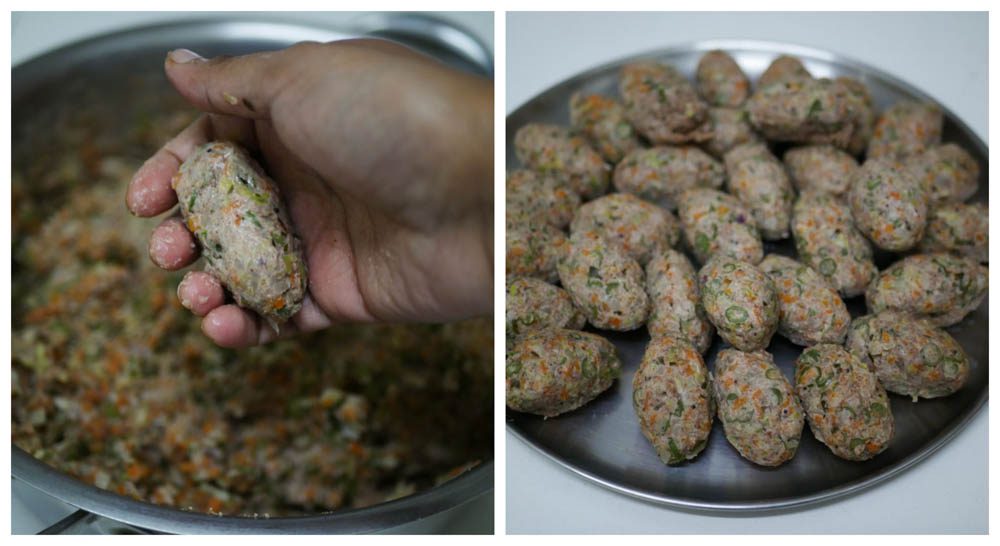
When the dough is still warm, dip your hands in cold water and take a small lemon size ball of dough. Press the dough a little to form oblong shaped dumplings. Repeat with the remaining dough. Dip your hands in cold water before shaping every dumpling.
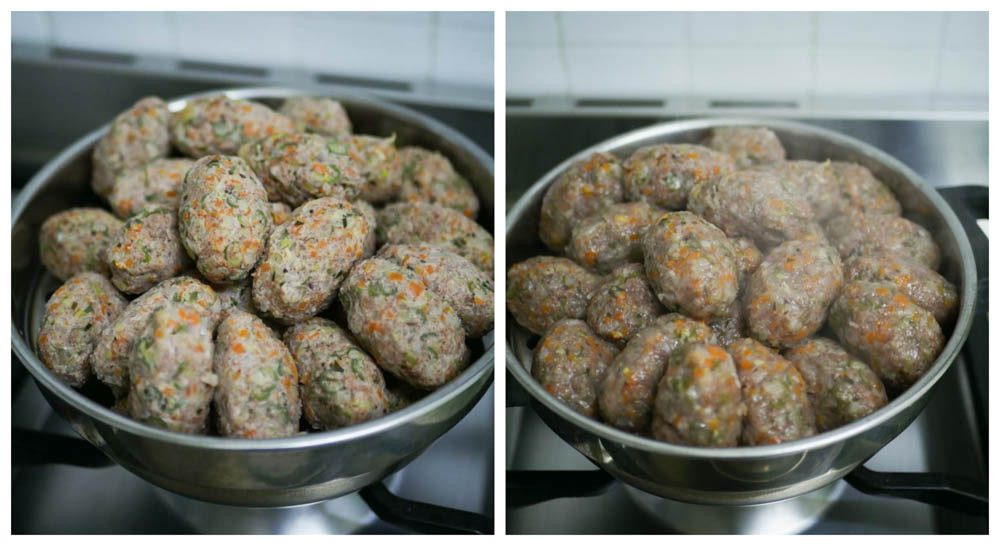
Place the dumplings on an OILED idli plate or any flat plate and steam it for 15 minutes on a medium flame. The dumplings would become slightly glossy after steaming. Remove from heat.
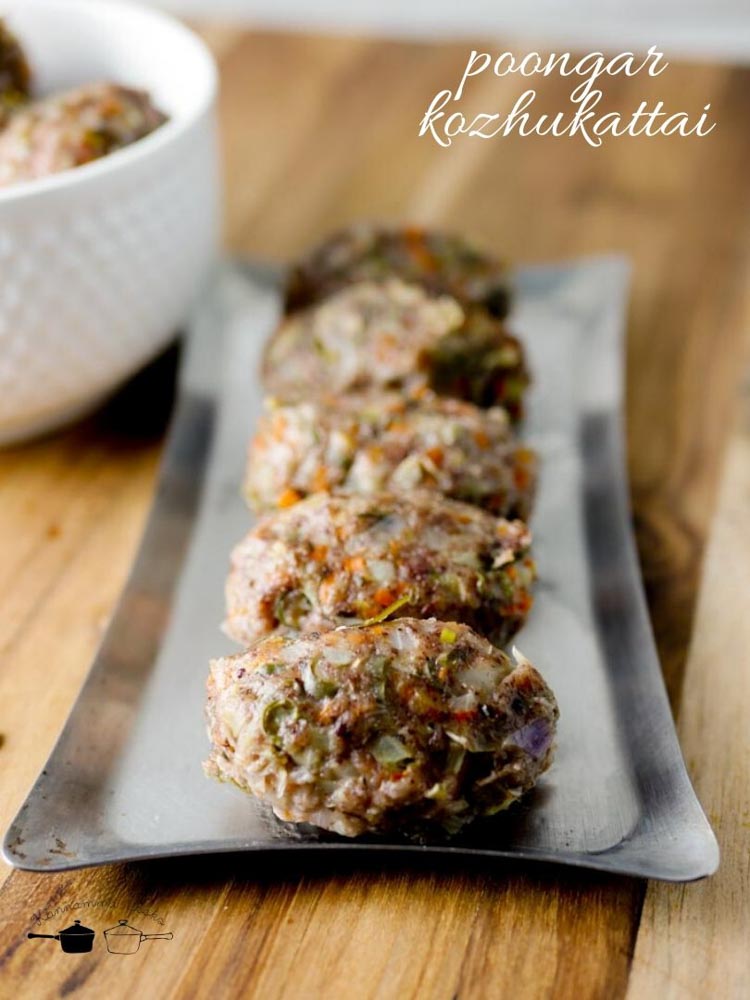
Let the dumplings cool for 10 minutes. Hot dumplings easily break when removed from the pan. Also do not over crowd the idli plates and make sure to oil the idli plates well so it easily comes off after steaming. spoon the dumplings and serve on a platter. Serve hot with coconut chutney , red chutney or kara chutney .
For grinding
- 1 cup red rice
- 1 cup water
For tempering
- 2 teaspoon gingely oil
- ¼ teaspoon mustard seeds
- ¼ teaspoon cumin seeds
- 1 tablespoon chana dal
- 2 onions, finely chopped
- 1.5 inch piece ginger, finely chopped
- 3 sprig curry leaves, finely chopped
- 3 - 4 green chillies, finely chopped
- 3 cups finely shredded vegetables (carrot, cabbage and beans)
- 1 teaspoon salt
- Soak the rice for 5-6 hours. If you are planning for breakfast, then soak the red rice over nite. It works well. Drain the water from the soaked rice.
- Now, grind the rice with some water. The quantity of water used while grinding will determine the final texture of the kozhukattai. For every cup of red rice used, add exactly one cup of water while grinding. Too little water will give a really hard Kozhukattai and adding a lot of water will make the Kozhukattai gummy. So use the correct measurement of water while grinding. Grind to a really smooth fine paste. Set aside.
- Finely chop the curry leaves, ginger and green chillies.
- Heat sesame oil (gingely oil) in a pan and add in the mustard seeds, cumin seeds, finely chopped ginger, finely chopped curry leaves and the chana dal. Chopping the curry leaves makes it easier while serving and eating. Wait for the dal to brown. Add in the finely chopped onions and green chillies.
- Once the onions are cooked and starting to brown, add in the finely shredded veggies. I have used carrots, cabbage and beans today. I have finely chopped them. You can shred in a vegetable shredded and it works fine too. Also add in the salt at this stage. Saute for 3-4 minutes.
- No need to cook the vegetables completely as we are going to be steaming again. So, once the veggies are half done, add in the ground rice.
- The rice mixture will immediately thicken up into a mass of dough in a couple of minutes. Once the dough is thick, remove from heat and set aside to cool. Now we will shape the dumplings. Dip your hands in water everytime you form dumplings so that the dumplings do not stick. Also the cool water will help in handling the hot dough.
- When the dough is still warm, dip your hands in cold water and take a small lemon size ball of dough. Press the dough a little to form oblong shaped dumplings. Repeat with the remaining dough. Dip your hands in cold water before shaping every dumpling.
- Place the dumplings on an OILED idli plate or any flat plate and steam it for 15 minutes on a medium flame. The dumplings would become slightly glossy after steaming. Remove from heat.
- Let the dumplings cool for 10 minutes. Hot dumplings easily break when removed from the pan. Also do not over crowd the idli plates and make sure to oil the idli plates well so it easily comes off after steaming. spoon the dumplings and serve on a platter. Serve hot with coconut chutney, red chutney or kara chutney.
- Author: Kannamma - Suguna Vinodh
- Prep Time: 8 hours
- Cook Time: 20 mins
- Category: Main
- Cuisine: Tamilnadu
For grinding
- 1 cup red rice
- 1 cup water
For tempering
- 2 teaspoon gingely oil
- ¼ teaspoon mustard seeds
- ¼ teaspoon cumin seeds
- 1 tablespoon chana dal
- 2 onions, finely chopped
- 1.5 inch piece ginger, finely chopped
- 3 sprig curry leaves, finely chopped
- 3 - 4 green chillies, finely chopped
- 3 cups finely shredded vegetables (carrot, cabbage and beans)
- 1 teaspoon salt
- Soak the rice for 5-6 hours. If you are planning for breakfast, then soak the red rice over nite. It works well. Drain the water from the soaked rice.
- Now, grind the rice with some water. The quantity of water used while grinding will determine the final texture of the kozhukattai. For every cup of red rice used, add exactly one cup of water while grinding. Too little water will give a really hard Kozhukattai and adding a lot of water will make the Kozhukattai gummy. So use the correct measurement of water while grinding. Grind to a really smooth fine paste. Set aside.
- Finely chop the curry leaves, ginger and green chillies.
- Heat sesame oil (gingely oil) in a pan and add in the mustard seeds, cumin seeds, finely chopped ginger, finely chopped curry leaves and the chana dal. Chopping the curry leaves makes it easier while serving and eating. Wait for the dal to brown. Add in the finely chopped onions and green chillies.
- Once the onions are cooked and starting to brown, add in the finely shredded veggies. I have used carrots, cabbage and beans today. I have finely chopped them. You can shred in a vegetable shredded and it works fine too. Also add in the salt at this stage. Saute for 3-4 minutes.
- No need to cook the vegetables completely as we are going to be steaming again. So, once the veggies are half done, add in the ground rice.
- The rice mixture will immediately thicken up into a mass of dough in a couple of minutes. Once the dough is thick, remove from heat and set aside to cool. Now we will shape the dumplings. Dip your hands in water everytime you form dumplings so that the dumplings do not stick. Also the cool water will help in handling the hot dough.
- When the dough is still warm, dip your hands in cold water and take a small lemon size ball of dough. Press the dough a little to form oblong shaped dumplings. Repeat with the remaining dough. Dip your hands in cold water before shaping every dumpling.
- Place the dumplings on an OILED idli plate or any flat plate and steam it for 15 minutes on a medium flame. The dumplings would become slightly glossy after steaming. Remove from heat.
- Let the dumplings cool for 10 minutes. Hot dumplings easily break when removed from the pan. Also do not over crowd the idli plates and make sure to oil the idli plates well so it easily comes off after steaming. spoon the dumplings and serve on a platter. Serve hot with coconut chutney, red chutney or kara chutney.
- Author: Kannamma - Suguna Vinodh
- Prep Time: 8 hours
- Cook Time: 20 mins
- Category: Main
- Cuisine: Tamilnadu
Find it online : https://www.kannammacooks.com/poongar-vegetable-kozhukattai/
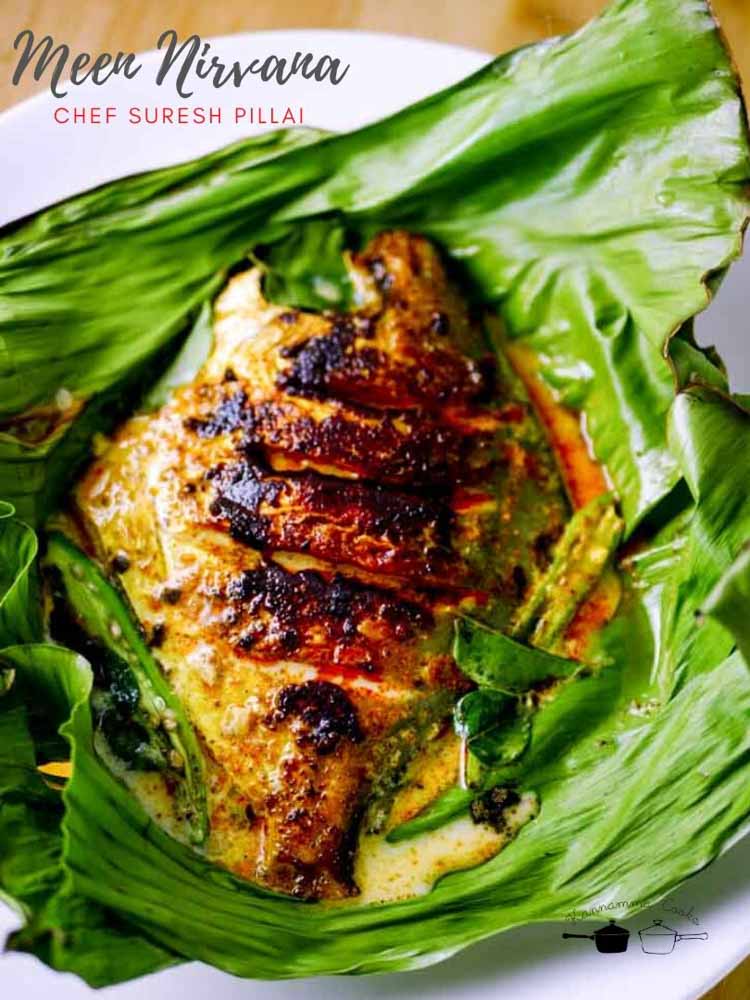
Chef Suresh Pillai’s legendary fish nirvana recipe. Fish fried in spices and then poached in a banana leaf wrapped ginger coconut milk sauce. Recipe with step by step pictures.
I am a great fan of Chef Suresh Pillai’s traditional Kerala style cooking. I have been wanting to try his fish nirvana recipe for a long time and it finally happened today. The spice marinated fish is first shallow fried and then poached in a coconut milk – ginger sauce. The fish is poached in a banana leaf so the flavour of the leaves and the aroma penetrates into the sauce. Coconut milk and ginger has a very unique flavour that we South Indians love so much. The sauce itself is very moreish. The traditional appa pan is used to poach the fish and that allows the banana leaf to take the curved shape. This dish is a refined version of meen pollichadhu. This is a very simple recipe and even beginners will be able to pull it off.
Here is my adaptation of Meen Nirvana.
I have used Pomfret for making this dish today. Pearl spot (Karimeen), Seer fish (Vanjaram steaks), Mackerel etc… works well for this recipe. The recipe has two steps. 1. Shallow frying the fish 2. Poaching the fish in sauce.
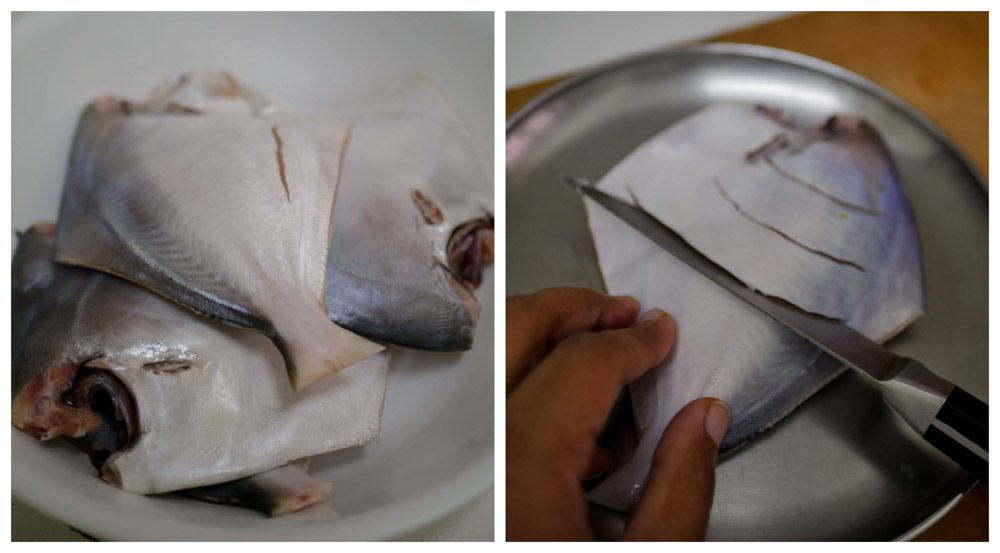
Shallow frying the fish Wash, clean and prep the fish. Make small gashes on the fish with a sharp knife so the masalas can penetrate and season the fish throughout. Be gentle and do not cut too deep. These cuts / crevices will hold the masalas later. So take time and make even cuts as possible. This is a very important step.
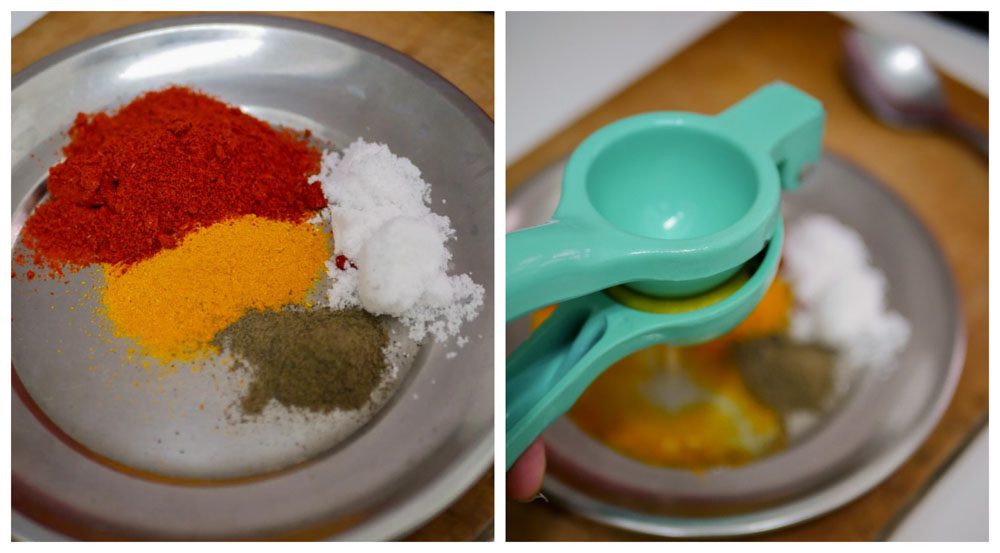
Take a plate and add in the turmeric, red chilli powder, black pepper powder and salt. Add in juice of a small lemon.
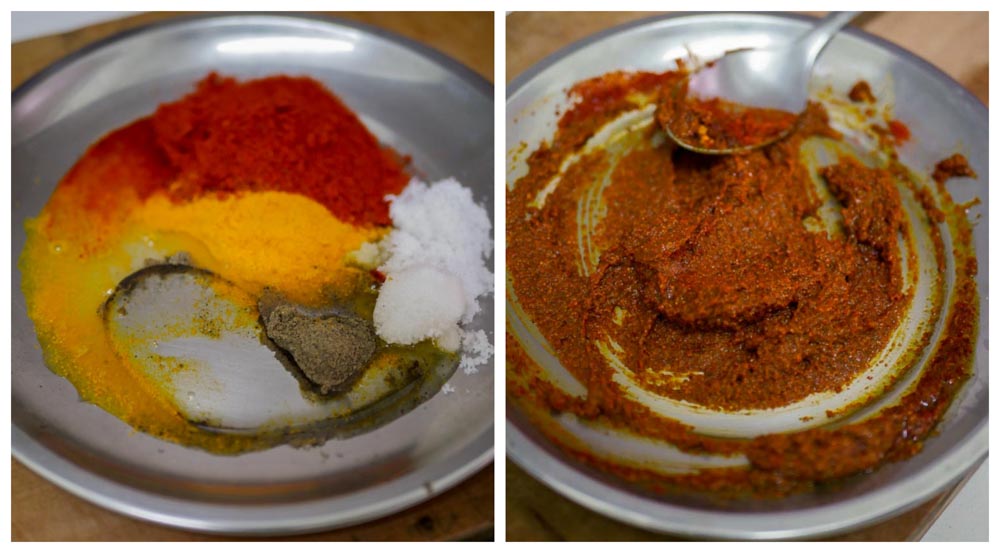
Add in a tablespoon of coconut oil and mix well to make a thick paste.
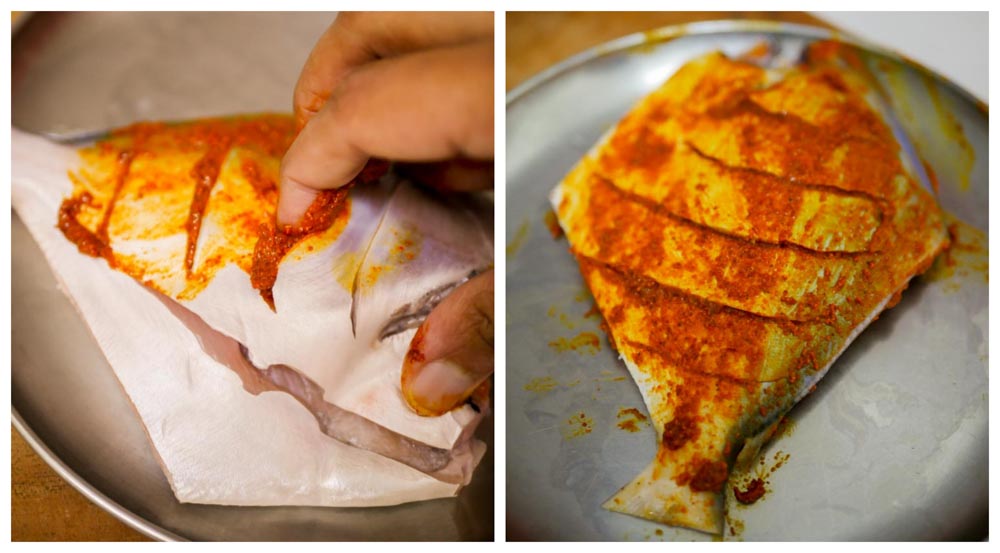
Apply the marinade on the fish. Make sure that the masalas are evenly coated. Apply masala in the gashes so the fish gets evenly seasoned. Marinate the fish in the refrigerator for 20-30 minutes.
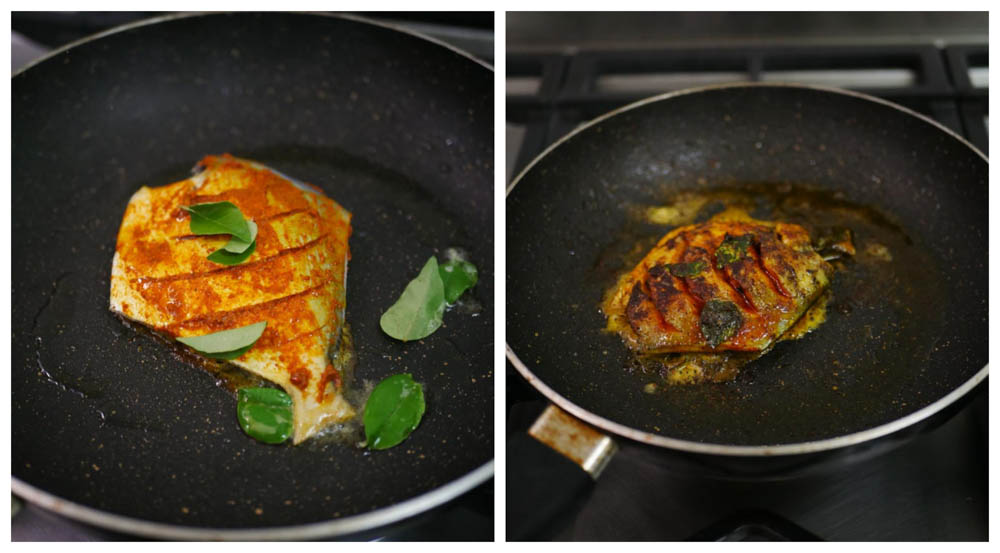
Heat oil in a pan until hot. Gently place the fish in oil. Add in some curry leaves on top of the fish. Do not disturb or move the fish for the first two-three minutes. Let it cook. That’s the trick so the masalas will stick properly and wont separate. Cook the fish for 3 minutes on each side. Note: Since we are cooking a whole fish, let the flame be medium low and not very hot as the masalas might burn before the fish can cook, if the flame is too hot. So go low on the flame and do not keep moving the fish.
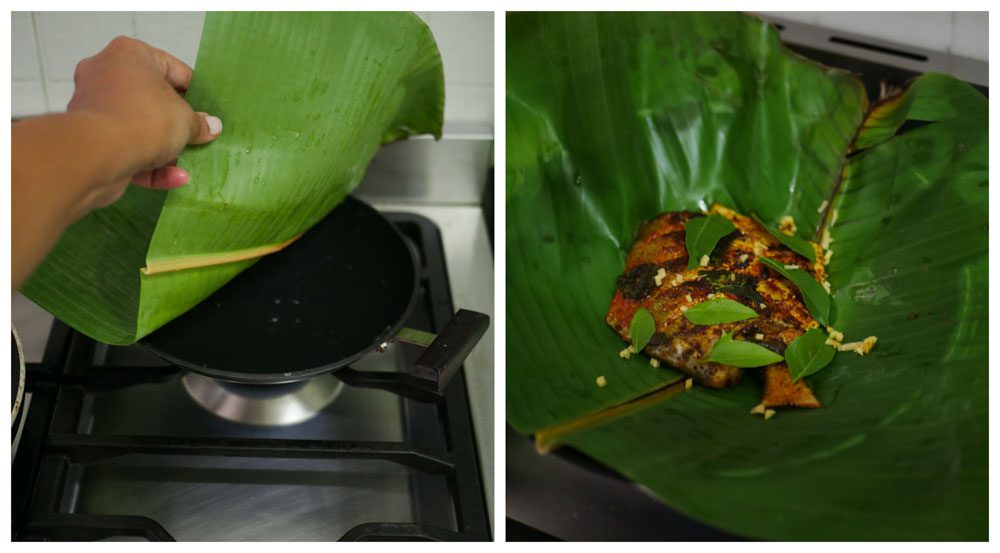
In the mean time, Heat an appa pan / appa chatty or any kadai and place a big banana leaf on the pan. Add in the fried fish. Add in few sprigs of curry leaves and ginger.
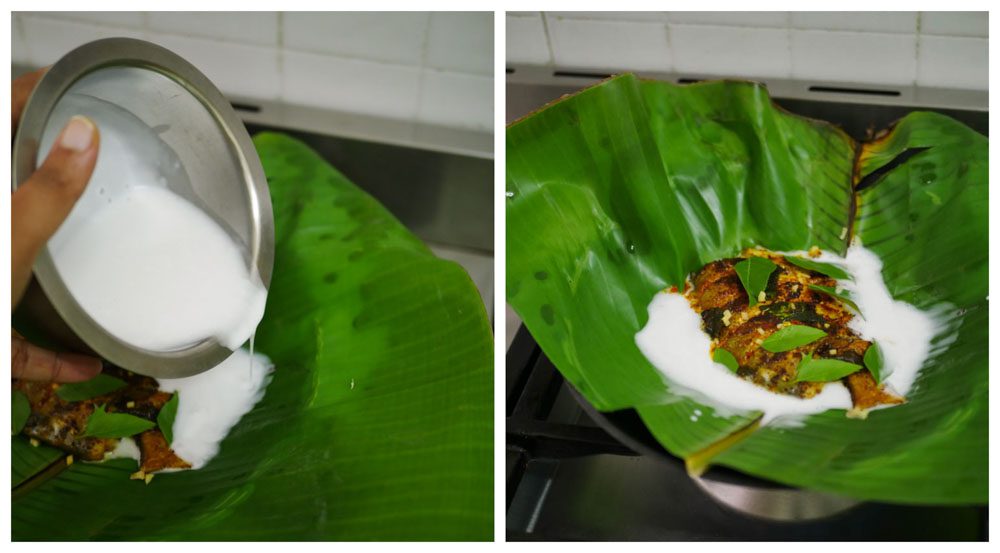
Add in the coconut milk on the sides on the pan. Pour it only on the sides. First pressed coconut milk is needed for this recipe. I have used canned coconut milk today and it just works best. If you are in a hurry or a beginner, use readymade / canned coconut milk.
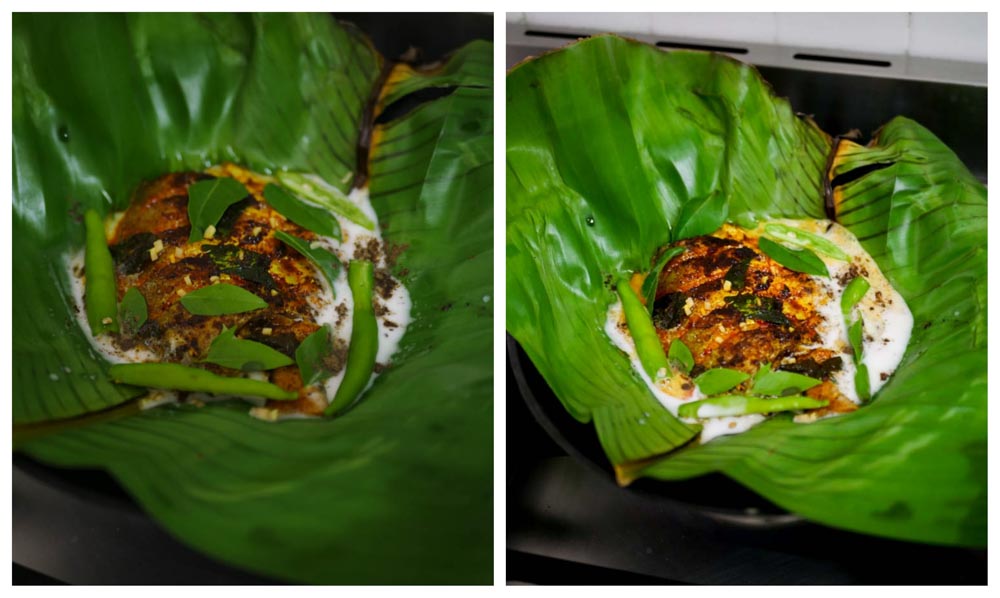
To the sides of the pan where the coconut milk is simmering, sprinkle black pepper powder, some ginger and slit green chillies. Add a pinch of salt to the sides. Let the fish poach in the sauce for 3-4 minutes on a low-medium flame.
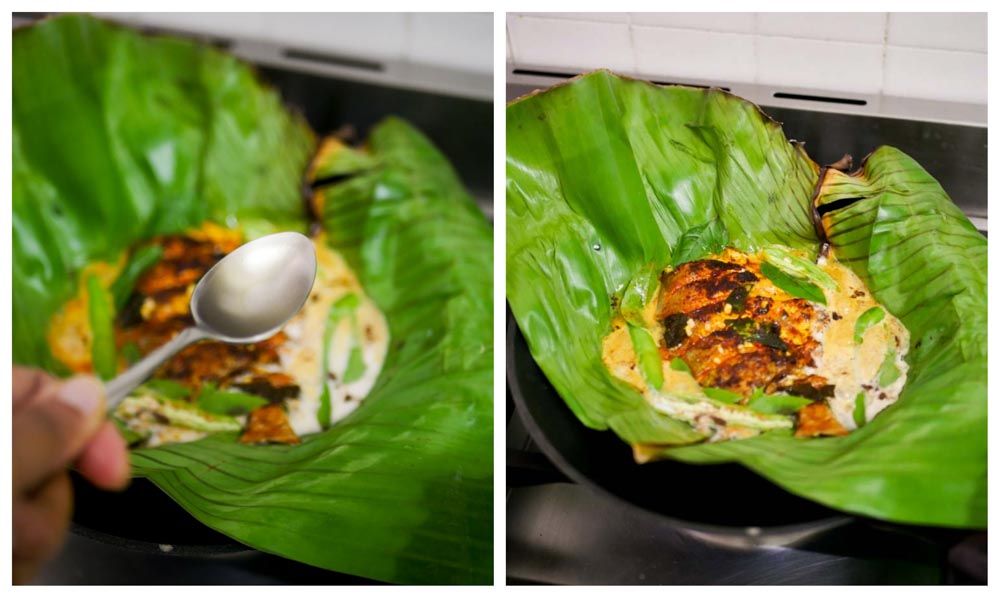
Finally, add a teaspoon of coconut oil for aroma. The fish is ready to serve. Repeat the same procedure with the other fish steaks. This recipe produces four portions.
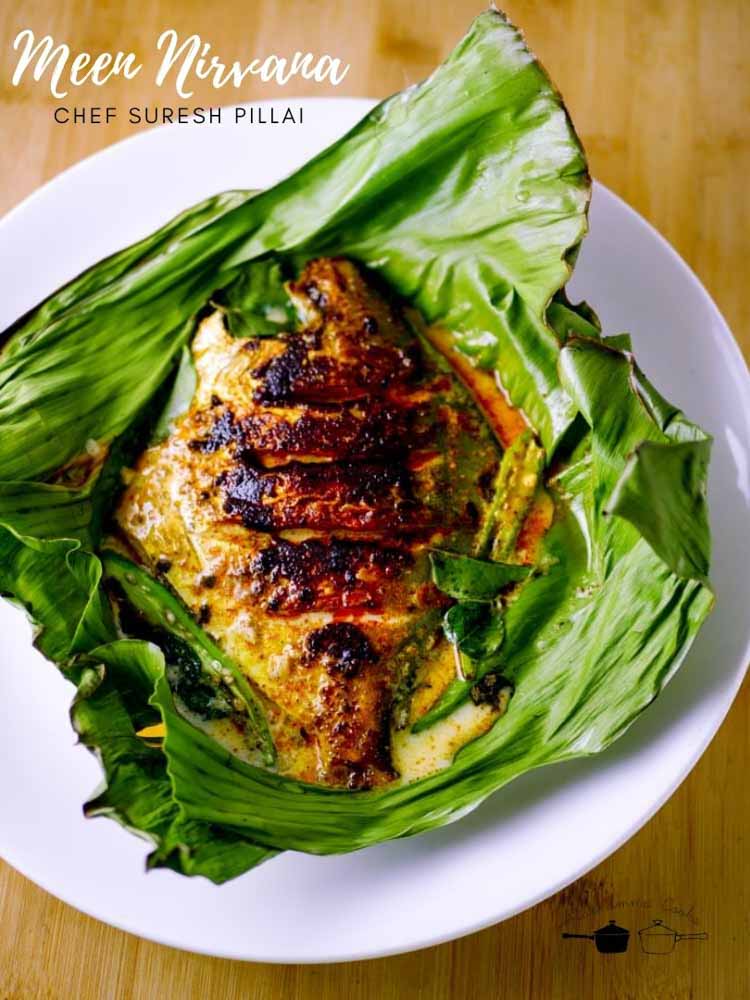
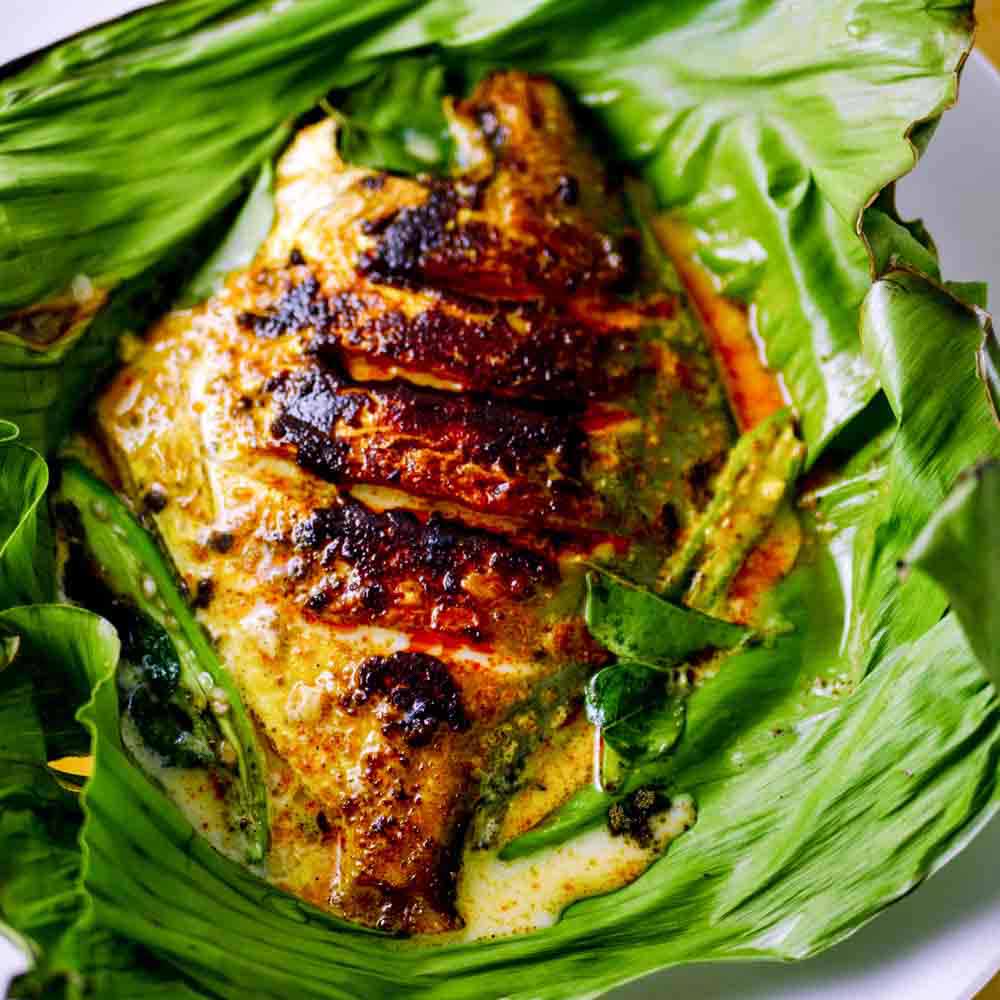
Amazing Fish Nirvana is ready. Serve with Appam , idiyappam , Parotta or matta rice .
For Shaloow frying the fish
- 4 Pomfret fish or any firm fish
- 1.5 tablespoon red chilli powder
- 1 teaspoon turmeric powder
- 1/2 teaspoon black pepper powder
- 1 teaspoon salt
- Juice of a small lemon or lime
- 1 tablespoon coconut oil
- 3 tablespoon vegetable oil to shallow fry the fish
- 2 sprigs curry leaves
For the sauce
- 2 banana leaves, cut in half ( 4 pieces)
- 3 - 4 sprigs curry leaves
- 1.5 inch piece ginger, minced
- 1.5 cup thick coconut milk (use 1/3 cup milk for one fish)
- 2 teaspoon black pepper powder
- 8 green chillies, slit
- 1/2 teaspoon salt
- 4 teaspoon coconut oil
- Wash, clean and prep the fish. Make small gashes on the fish with a sharp knife so the masalas can penetrate and season the fish throughout.
- Take a plate and add in the turmeric, red chilli powder, black pepper powder and salt. Add in juice of a small lemon.
- Add in a tablespoon of coconut oil and mix well to make a thick paste.
- Apply the marinade on the fish. Make sure that the masalas are evenly coated. Apply masala in the gashes so the fish gets evenly seasoned. Marinate the fish in the refrigerator for 20-30 minutes.
- Heat oil in a pan until hot. Gently place the fish in oil. Add in some curry leaves on top of the fish. Do not disturb or move the fish for the first two-three minutes. Let it cook. That’s the trick so the masalas will stick properly and wont separate. Cook the fish for 3 minutes on each side.
- In the mean time, Heat an appa pan / appa chatty or any kadai and place a big banana leaf on the pan. Add in the fried fish. Add in few sprigs of curry leaves and ginger.
- Add in the coconut milk on the sides on the pan. Pour it only on the sides. First pressed coconut milk is needed for this recipe. I have used canned coconut milk today and it just works best. If you are in a hurry or a beginner, use readymade / canned coconut milk.
- To the sides of the pan where the coconut milk is simmering, sprinkle black pepper powder, some ginger and slit green chillies. Add a pinch of salt to the sides. Let the fish poach in the sauce for 3-4 minutes on a low-medium flame.
- Finally, add a teaspoon of coconut oil for aroma.
- Amazing Fish Nirvana is ready. Serve with Appam, idiyappam, Parotta or matta rice.
- Author: Kannamma - Suguna Vinodh
- Prep Time: 20 mins
- Cook Time: 20 mins
- Category: Main
- Cuisine: Kerala
