
Before we jump into the recipe, there are a few things that grandmothers would tell you when making rasam. Especially if its a tamarind based rasam.
Rasam should never be brought to a roaring boil # Salt should be added only in the end # Always cook rasam at a low temperature
BUT WHY?
Traditionally rasam in Tamilnadu was made in eeya chatti. Eeyam or Velleeyam that’s used for cooking is nothing but a vessel coated with Tin. Tin is supposed to have health properties. But there was one problem. Tin has a very low melting point. Tin melts at a low temperature of about 200 – 230 °C. So the liquid cannot be heated up in a tin vessel for long. If heated for too long, the metal itself would start to melt.
Also reactive ingredients like tamarind, lemon and salt were never boiled for a long time in the vessel. That’s the reason lemon and salt were added during the end of cooking process. Tamarind water was never boiled for too long for the same reason. Rasam made in eeya chatti tastes different. But today, steel vessels have taken over every kitchen. So people have forgotten the reason as to why things were done in a certain way. But if one follows the same principles even today, you will end up with a lip smacking rasam that will cozy up your tummy and warm up your heart. You will end up with a rasam that tastes as close to your grandma.
Here is the video of the recipe.
Lets make traditional style poondu rasam today. Not in eeya chatti but in an everyday steel vessel. I adapted this recipe from a Coimbatore cookbook called “simply homemade” by Jayanthi Manohar. The book has recipes from the kongunad region. We will need to make “Jillakara Mirel” powder for this rasam. Its nothing but cumin and pepper powder. Grind the cumin and pepper in a mortar and pestle. Set aside. Also roughly crush the garlic cloves along with its peel. Set aside. Soak tamarind in 1 cup of water for 20 minutes. Squeeze the tamarind to make tamarind pulp. Discard the seeds and the pith. Add 2 cups of water to the tamarind pulp. Set aside. We will have 3 cups of liquid now.

Heat sesame oil in a pan and add in the mustard seeds, fenugreek seeds and compound asafoetida / katti perungayam. Katti perungayam tastes so much better than the usual asafoetida powder. If you dont have compound, then you can add powder. Let the seeds splutter. Add in the crushed garlic and fry for a minute to roast the garlic. Add in the “Jillakara Mirel” / cumin-pepper powder and fry for 20 seconds. Frying the cumin and pepper brings out the essential oils in them and the final rasam tastes more flavorful.

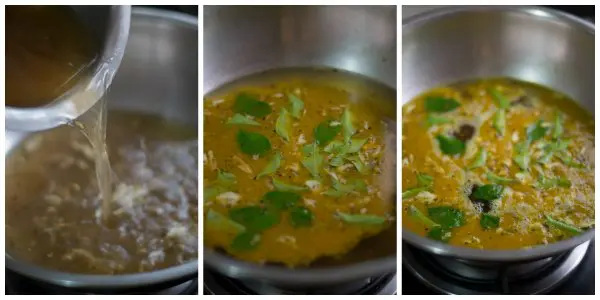
Now add in the tamarind pulp and reduce the flame to low. Add in the curry leaves and turmeric. The flavor of curry leaves that is tempered in oil vs boiled in liquid is totally different. Add in the curry leaves after adding the tamarind liquid. Let it come to a mere simmer. The rasam will slowly foam up and slightly start to boil. That is it. Switch off the flame.
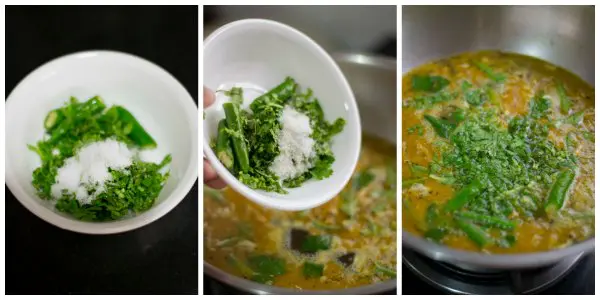
Green chillies are added in almost every rasam at the last in the kongunad region. It doesn’t make the rasam spicy but the chilli aroma gets steeped into the rasam and makes it so aromatic. Add in the coriander leaves and the salt.
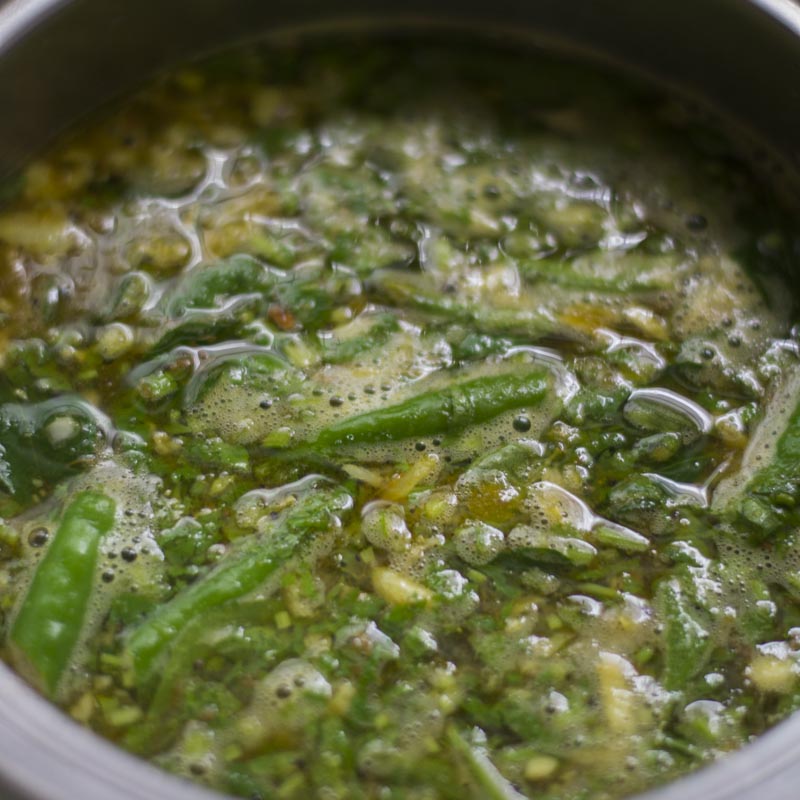
Now comes the important part. Immediately after adding these 3 ingredients, cover the rasam with a lid and allow the flavors to steep for 15 minutes.

Serve the rasam with rice for lunch.
- 1 teaspoon sesame oil (gingely / nallennai)
- 1/4 teaspoon mustard seeds
- 1/8 teaspoon fenugreek seeds
- a big pinch asafoetida
- 1 teaspoon cumin seeds
- 1 teaspoon black pepper corns
- 12 cloves garlic
- 1/2 a lime size tamarind
- 2 sprigs curry leaves
- 1/2 teaspoon turmeric
- 1 teaspoon salt
- 2 green chillies, chopped
- 2 sprigs coriander leaves, chopped
- 3 cups water ( 750 ml)
- Grind the cumin and pepper in a mortar and pestle. Also roughly crush the garlic cloves along with its peel. Soak tamarind in 1 cup of water for 20 minutes. Squeeze the tamarind to make tamarind pulp. Discard the seeds and the pith. Add 2 cups of water to the tamarind pulp. Set aside. We have 3 cups of liquid now.
- Heat sesame oil in a pan and add in the mustard seeds, fenugreek seeds and compound asafoetida. Let the seeds splutter.
- Add in the crushed garlic and fry for a minute to roast the garlic. Add in the cumin-pepper powder and fry for 20 seconds.
- Now add in the tamarind pulp and reduce the flame to low. Add in the curry leaves and turmeric. The rasam will slowly foam up and slightly start to boil. Switch off the flame.
- Add in the chopped green chillies, coriander leaves and the salt.
- Cover the rasam with a lid and allow the flavours to steep for 15 minutes.
- Author: Kannamma - Suguna Vinodh
- Prep Time: 10 mins
- Cook Time: 10 mins
- Category: Rasam
- Cuisine: Tamilnadu

- 1 teaspoon sesame oil (gingely / nallennai)
- 1/4 teaspoon mustard seeds
- 1/8 teaspoon fenugreek seeds
- a big pinch asafoetida
- 1 teaspoon cumin seeds
- 1 teaspoon black pepper corns
- 12 cloves garlic
- 1/2 a lime size tamarind
- 2 sprigs curry leaves
- 1/2 teaspoon turmeric
- 1 teaspoon salt
- 2 green chillies, chopped
- 2 sprigs coriander leaves, chopped
- 3 cups water ( 750 ml)
- Grind the cumin and pepper in a mortar and pestle. Also roughly crush the garlic cloves along with its peel. Soak tamarind in 1 cup of water for 20 minutes. Squeeze the tamarind to make tamarind pulp. Discard the seeds and the pith. Add 2 cups of water to the tamarind pulp. Set aside. We have 3 cups of liquid now.
- Heat sesame oil in a pan and add in the mustard seeds, fenugreek seeds and compound asafoetida. Let the seeds splutter.
- Add in the crushed garlic and fry for a minute to roast the garlic. Add in the cumin-pepper powder and fry for 20 seconds.
- Now add in the tamarind pulp and reduce the flame to low. Add in the curry leaves and turmeric. The rasam will slowly foam up and slightly start to boil. Switch off the flame.
- Add in the chopped green chillies, coriander leaves and the salt.
- Cover the rasam with a lid and allow the flavours to steep for 15 minutes.
- Author: Kannamma - Suguna Vinodh
- Prep Time: 10 mins
- Cook Time: 10 mins
- Category: Rasam
- Cuisine: Tamilnadu
Find it online : https://www.kannammacooks.com/poondu-rasam-garlic-rasam-recipe/

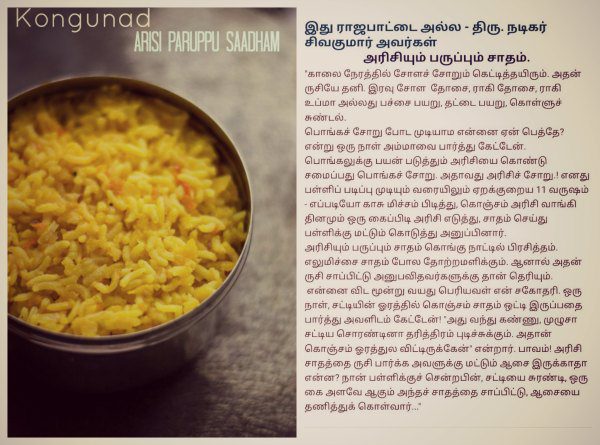
If there is one recipe that is so proudly kongunad, then it has to be arisiyum paruppum saadham. Actor Sivakumar is from Coimbatore and in his autobiography idhu raaja paatai alla, he writes his love for arisiyum paruppum saadham.
I am a great fan of his writing more than his acting I should say. Arisi Paruppu Saadham has to be one of the most comforting food for the people of Coimbatore.
இது ராஜபாட்டை அல்ல – திரு. நடிகர் சிவகுமார் அவர்கள் அரிசியும் பருப்பும் சாதம். “காலை நேரத்தில் சோளச் சோறும் கெட்டித்தயிரும். அதன் ருசியே தனி. இரவு சோள தோசை, ராகி தோசை, ராகி உப்மா அல்லது பச்சை பயறு, தட்டை பயறு, கொள்ளுச் சுண்டல். பொங்கச் சோறு போட முடியாம என்னை ஏன் பெத்தே? என்று ஒரு நாள் அம்மாவை பார்த்து கேட்டேன். பொங்கலுக்கு பயன் படுத்தும் அரிசியை கொண்டு சமைப்பது பொங்கச் சோறு. அதாவது அரிசிச் சோறு.! எனது பள்ளிப் படிப்பு முடியும் வரையிலும் ஏறக்குறைய 11 வருஷம் – எப்படியோ காசு மிச்சம் பிடித்து, கொஞ்சம் அரிசி வாங்கி தினமும் ஒரு கைப்பிடி அரிசி எடுத்து, சாதம் செய்து பள்ளிக்கு மட்டும் கொடுத்து அனுப்பினார். அரிசியும் பருப்பும் சாதம் கொங்கு நாட்டில் பிரசித்தம். எலுமிச்சை சாதம் போல தோற்றமளிக்கும். ஆனால் அதன் ருசி சாப்பிட்டு அனுபவிதவர்களுக்கு தான் தெரியும். என்னை விட மூன்று வயது பெரியவள் என் சகோதரி. ஒரு நாள், சட்டியின் ஓரத்தில் கொஞ்சம் சாதம் ஒட்டி இருப்பதை பார்த்து அவளிடம் கேட்டேன்! “அது வந்து கண்ணு, முழுசா சட்டிய சொரண்டினா தரித்திரம் புடிச்சுக்கும். அதான் கொஞ்சம் ஓரத்துல விட்டிருக்கேன்” என்றார். பாவம்! அரிசி சாதத்தை ருசி பார்க்க அவளுக்கு மட்டும் ஆசை இருக்காதா என்ன? நான் பள்ளிக்குச் சென்றபின், சட்டியை சுரண்டி, ஒரு கை அளவே ஆகும் அந்தச் சாதத்தை சாப்பிட்டு, ஆசையை தணித்துக் கொள்வார்…”

Here is a step by step video of how to make arisi paruppu sadam
Here is the recipe for Arisi paruppu saadham. This is a very simple recipe and requires very few ingredients. Parboiled rice like ponni rice is usually used for making this rice. If you do not have parboiled rice, then any good raw rice variety like sona masuri works well for this recipe. Wash the rice well in running water for 2-3 times. Soak the rice and the toor dal in water. We need to soak the rice for at-least 20-30 minutes. Set aside. Chop the onion and tomatoes fine. Set aside.

Heat oil in a pan until hot. Sesame oil (nallennai) is preferred for this recipe. Add in the mustard seeds, cumin seeds, curry leaves and dried red chillies. Let the mustard seeds splutter. Add in the onions and the garlic and fry till the onions are soft and slowly starting to brown. About 5 minutes on medium flame.

Add in the finely chopped tomatoes, turmeric powder, sambar powder and salt. Store bought sambar powder works fine for this recipe. Fry well till the tomatoes are juiced down and mashed together. About 5 minutes on medium flame.

In the mean time, bring a bowl of water to a boil. We are using one cup of rice and quarter cup of dal today. For this quantity, we will be using 2 cups of water. Add in the hot water to the pan. Strain the rice and dal and add it to the pan. Check for seasoning. Adjust for salt if need be at this stage. Let the mixture come to a boil. Mix well once and cover the pan.
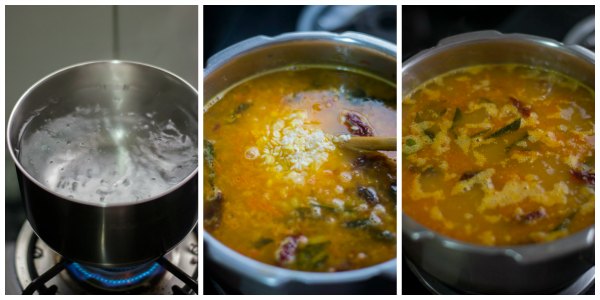
Cook the rice in a pressure pan for 3 whistles on medium flame. Remove from heat. Wait for the pressure from the cooker to release naturally. Do not omit this step!
Arisiyum paruppum saadham is ready to be served! This dish is always ALWAYS served with hot ghee. Just add a teaspoon and mix and enjoy your meal!
Main Ingredients
- 1 cup Rice, preferably parboiled rice like ponni
- 1/4 cup toor dal
- 2 cups water
Other Ingredients
- 3 tablespoon Indian sesame / gingely oil
- 1/4 teaspoon cumin seeds
- 1/4 teaspoon mustard seeds
- 2 sprigs curry leaves
- 2 dried red chillies
- 2 onions. finely chopped
- 6 cloves garlic
- 2 tomatoes, finely chopped
- 1 teaspoon salt
- 1/2 teaspoon turmeric powder
- 1 teaspoon sambar powder
- 1 tablespoon hot Ghee for serving
- Wash and soak the rice and the toor dal in water.
- Heat oil in a pan until hot. Add in the mustard seeds, cumin seeds, curry leaves and dried red chillies. Let the mustard seeds splutter. Add in the onions and the garlic and fry till the onions are soft and slowly starting to brown.
- Add in the finely chopped tomatoes, turmeric powder, sambar powder and salt. Fry well till the tomatoes are juiced down and mashed together.
- Add in the hot water to the pan. Strain the rice and dal and add it to the pan. Check for seasoning.
- Cook the rice in a pressure pan for 3 whistles on medium flame. Remove from heat.
- Serve hot!
- Author: Kannamma - Suguna Vinodh
- Prep Time: 10 mins
- Cook Time: 30 mins
- Category: Main COurse
- Cuisine: Tamilnadu

