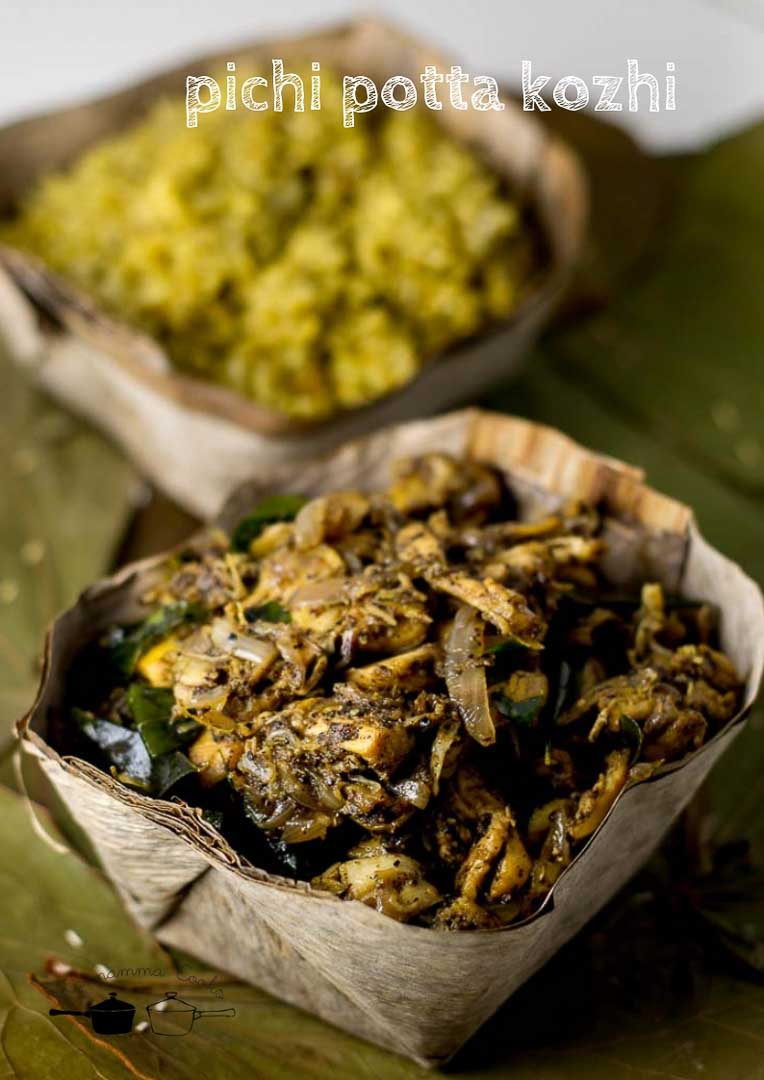
Pichu potta Kozhi Recipe – பிச்சுப்போட்ட கோழி. Shredded chicken tossed in pepper, curry leaves and ghee. Perfect side dish for rice.
This is an extremely simple recipe. Unlike other South Indian non-veg dishes there aren’t many ingredients in this recipe. The success of this recipe depends on the size of the shredded chicken, roasting the chicken well in the pan, good quality fine ground pepper powder and ghee.
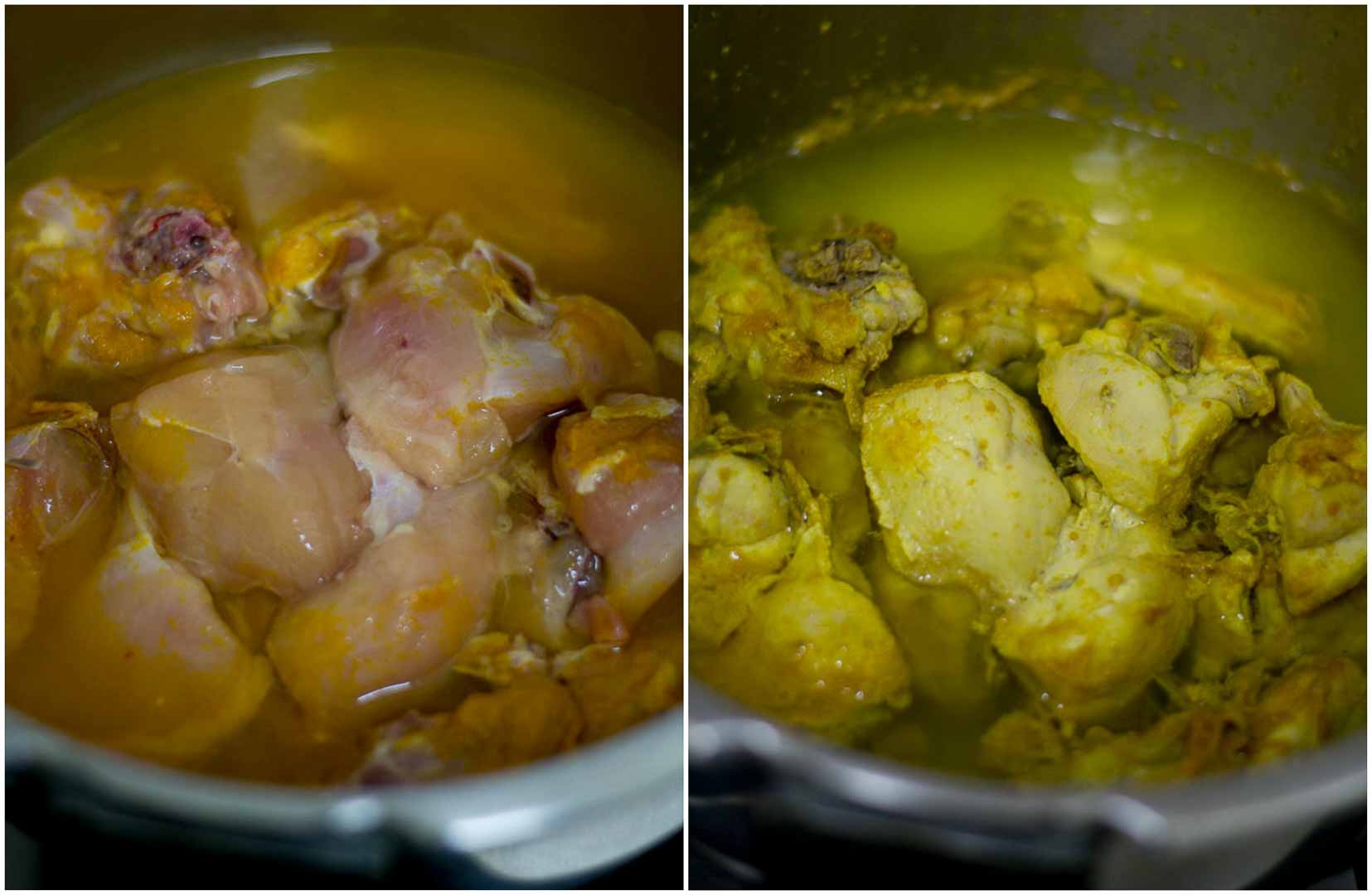
Here is how to do Pichu potta Kozhi Recipe – பிச்சுப்போட்ட கோழி Add the chicken pieces in a pressure cooker. Add in a teaspoon of salt and turmeric. Also add in two cups of water. Pressure cook the chicken for three whistles (around 6-7 minutes). Remove from heat and wait for the pressure from the cooker to release naturally. Set aside. Note: The chicken stock can be used to make soup .
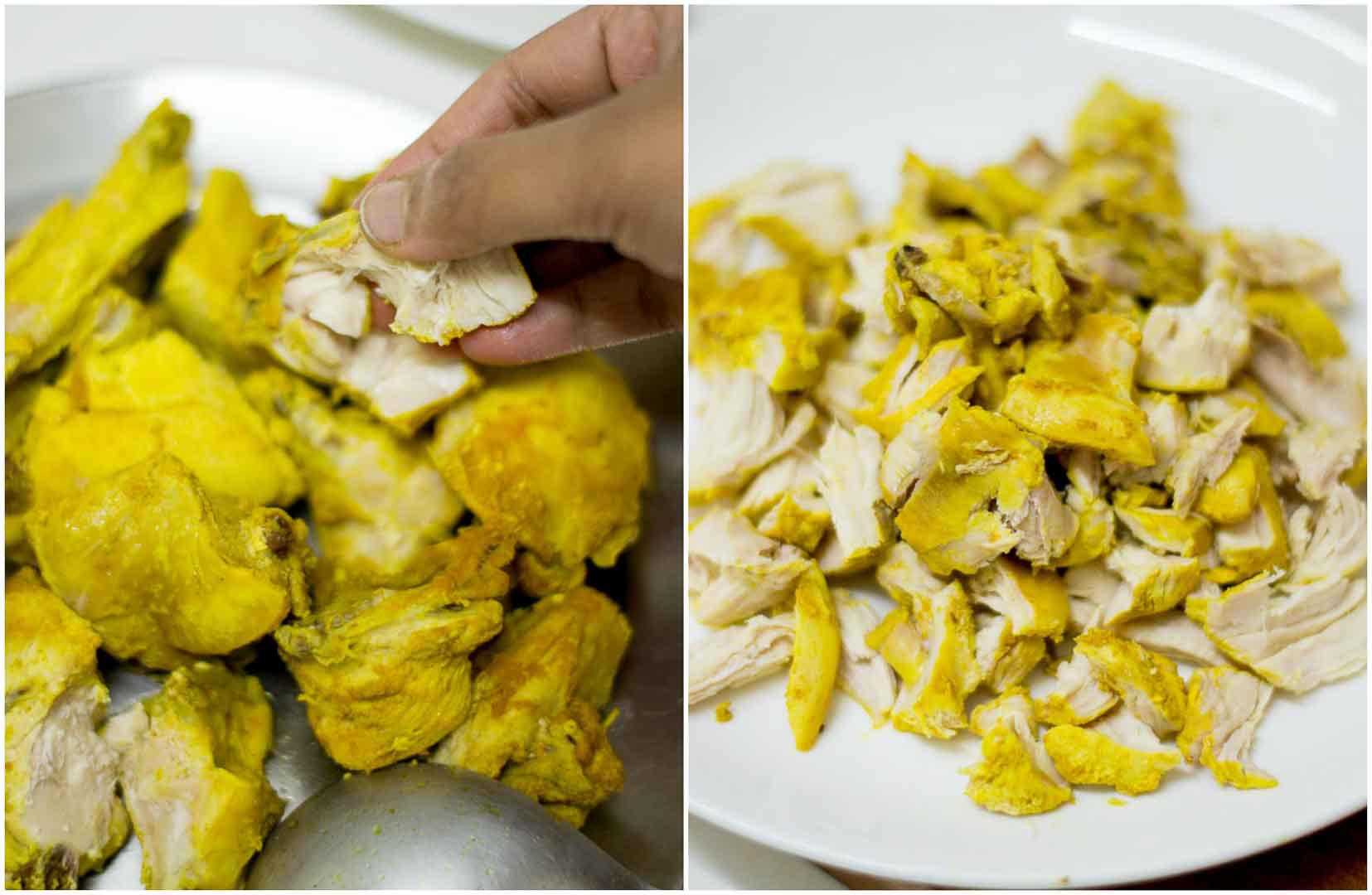
Shred the chicken into thin strips. Its important that the chicken is shredded into thin strips so the masalas coat evenly.
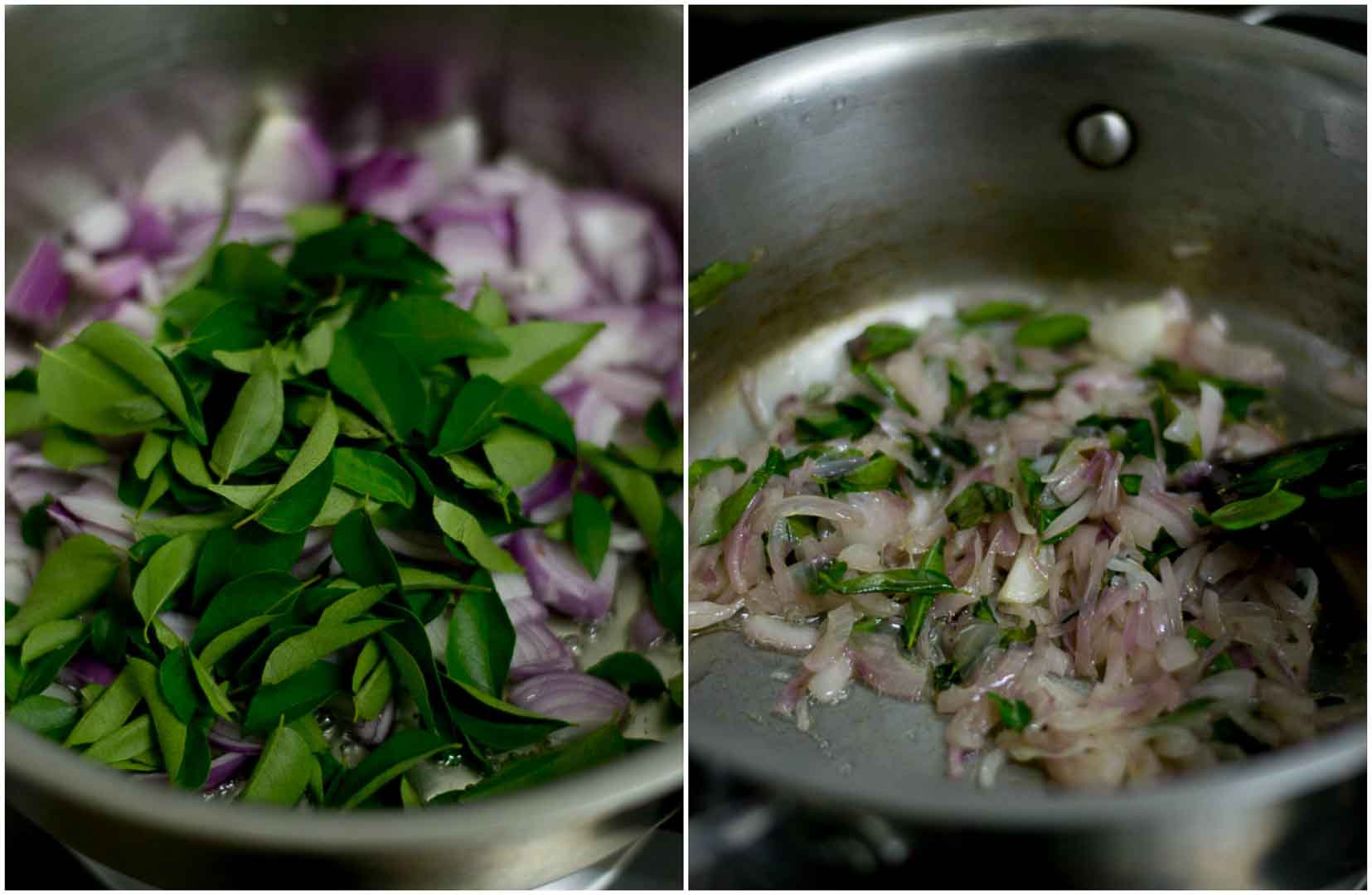
Heat oil in a pan, preferably peanut oil. Add in the sliced onions and lots of curry leaves. Add in a teaspoon of salt and saute on a medium flame until the onions are soft.
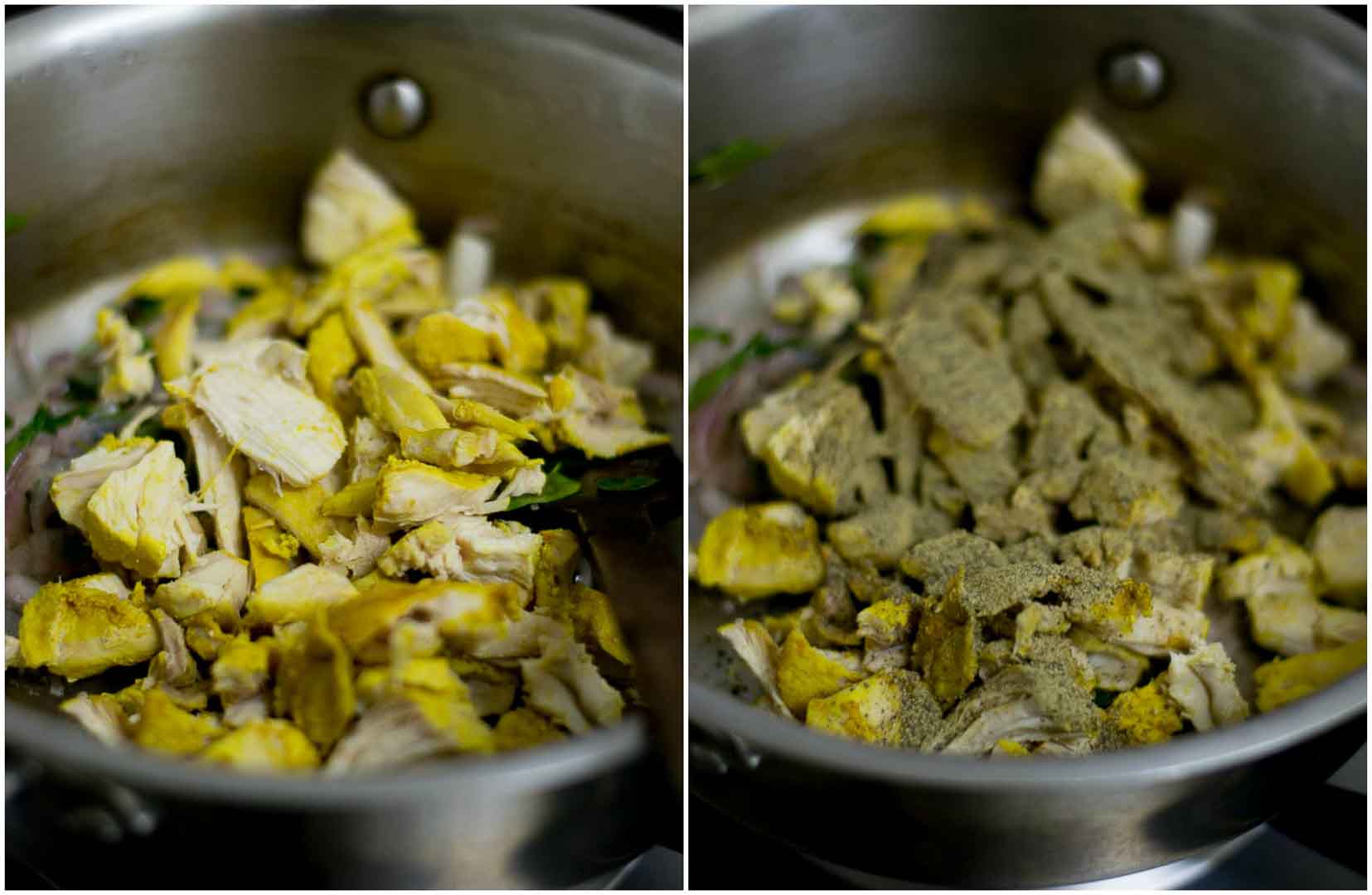
Add in the shredded chicken. Add in half of the black pepper powder. I like to use store bought fine ground black pepper for this recipe.
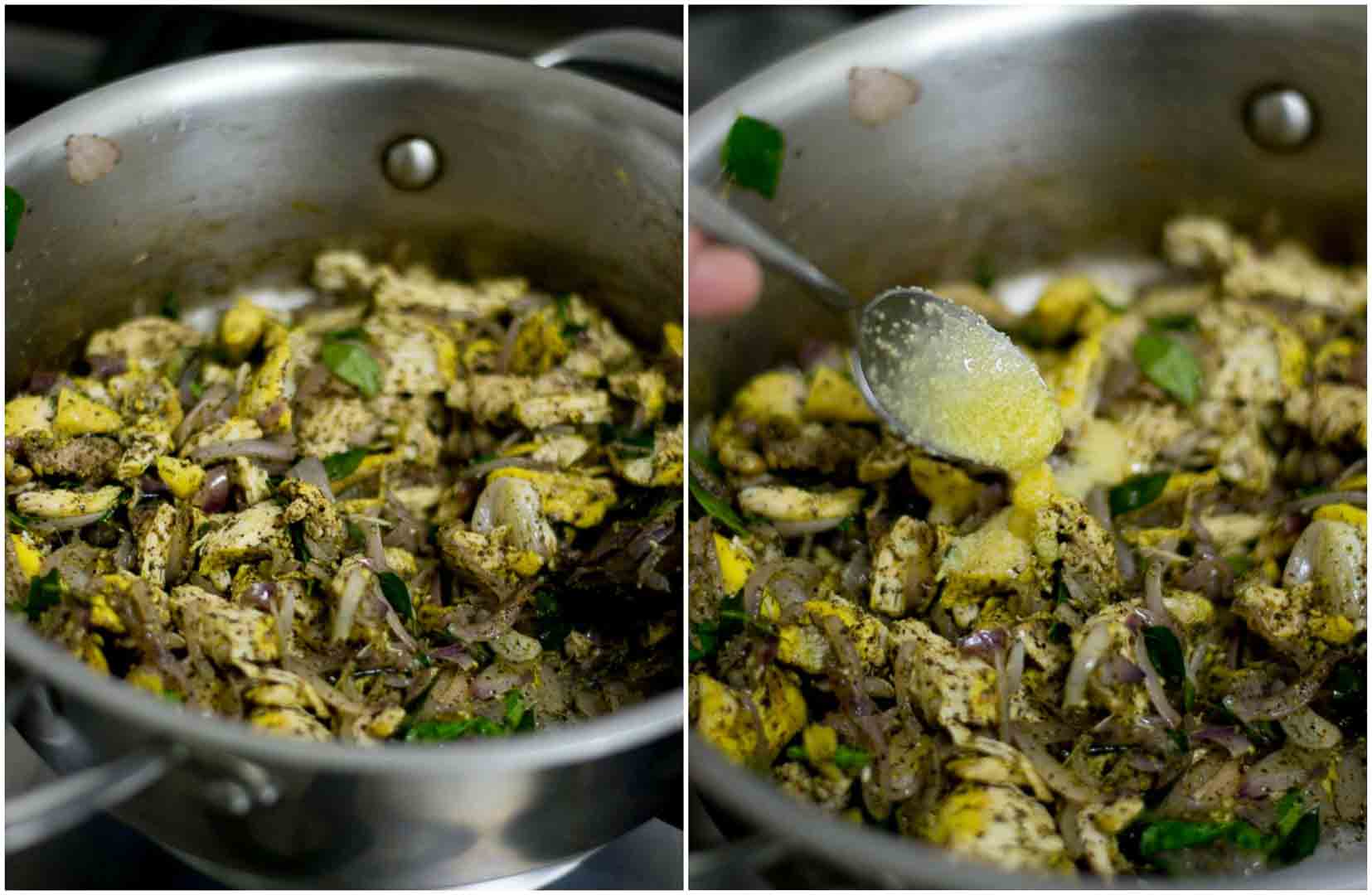
Add in a teaspoon of ghee and saute for two to three minutes.
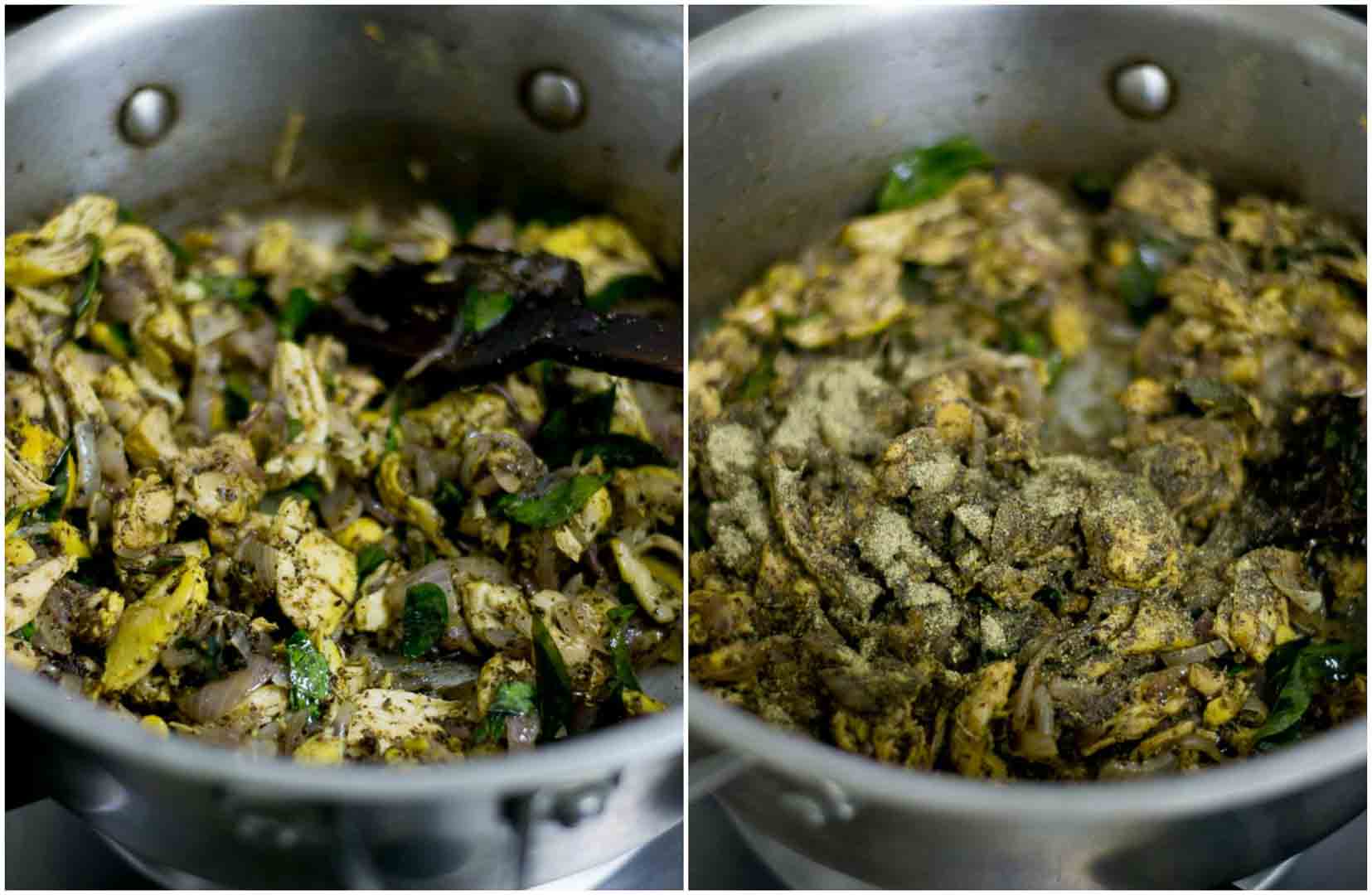
Add in the rest of the pepper powder.
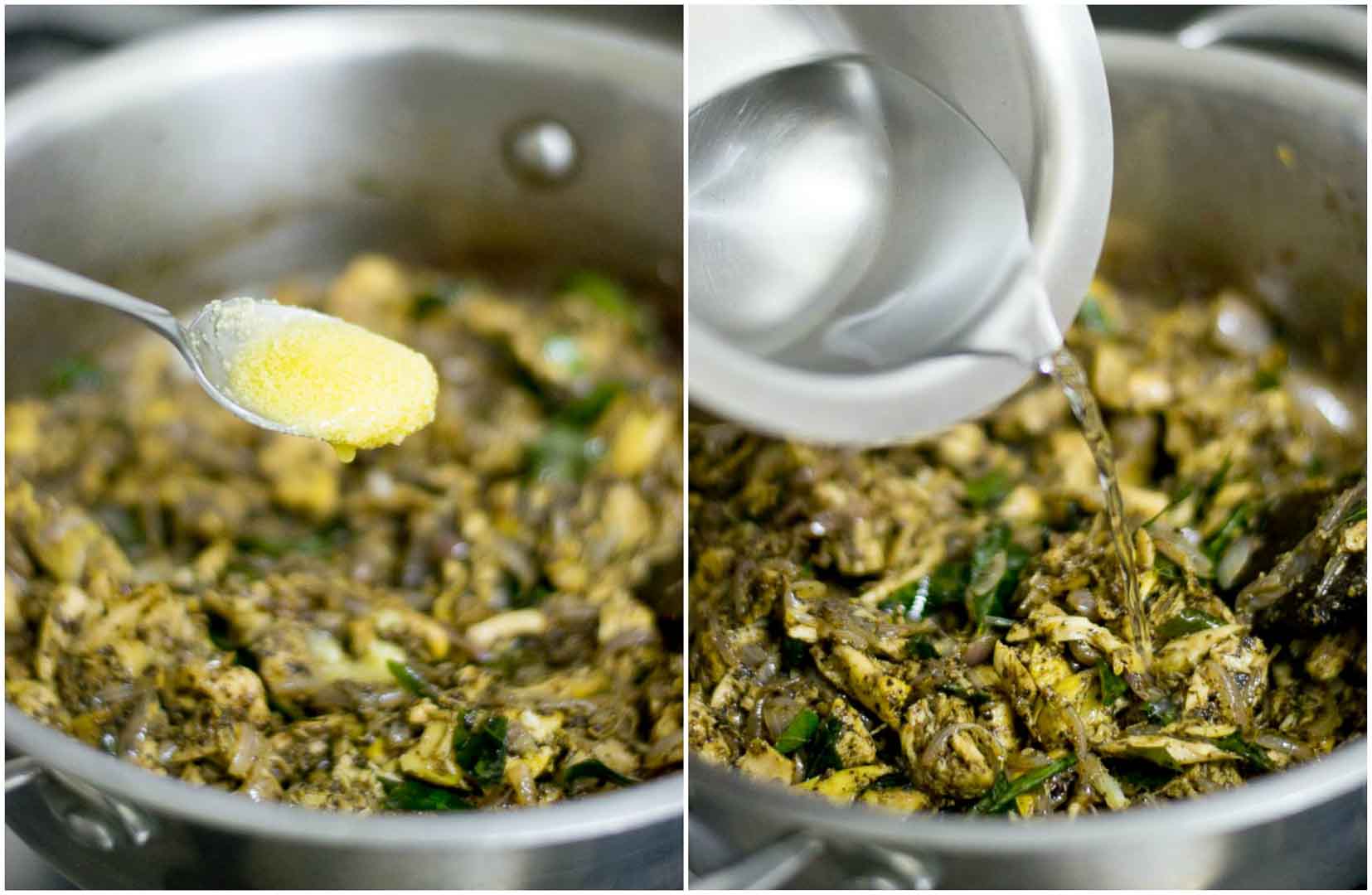
Add in a teaspoon of ghee and toss well to coat. Add in around quarter cup of water. The water will help the pepper powder adhere to the chicken well. Do not add a lot of water. Be cautious as this is a dry dish.
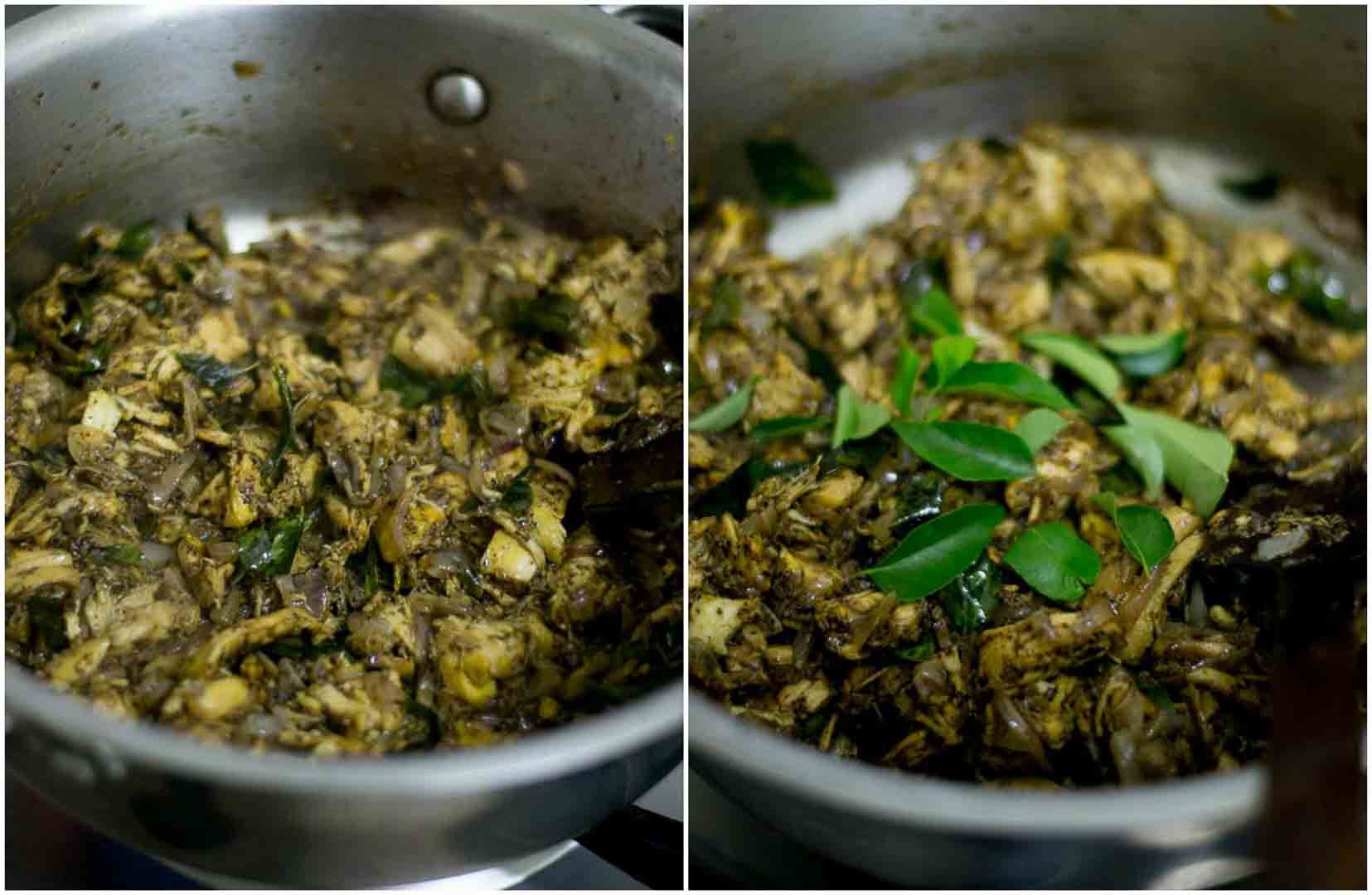
Keep sauteing for ten to fifteen minutes on a medium flame. Let the chicken get well roasted. A wide pan works well for this recipe. Once all the water has been evaporated and the chicken is coated well with the masala, remove the pan from heat. Finally sprinkle some curry leaves.
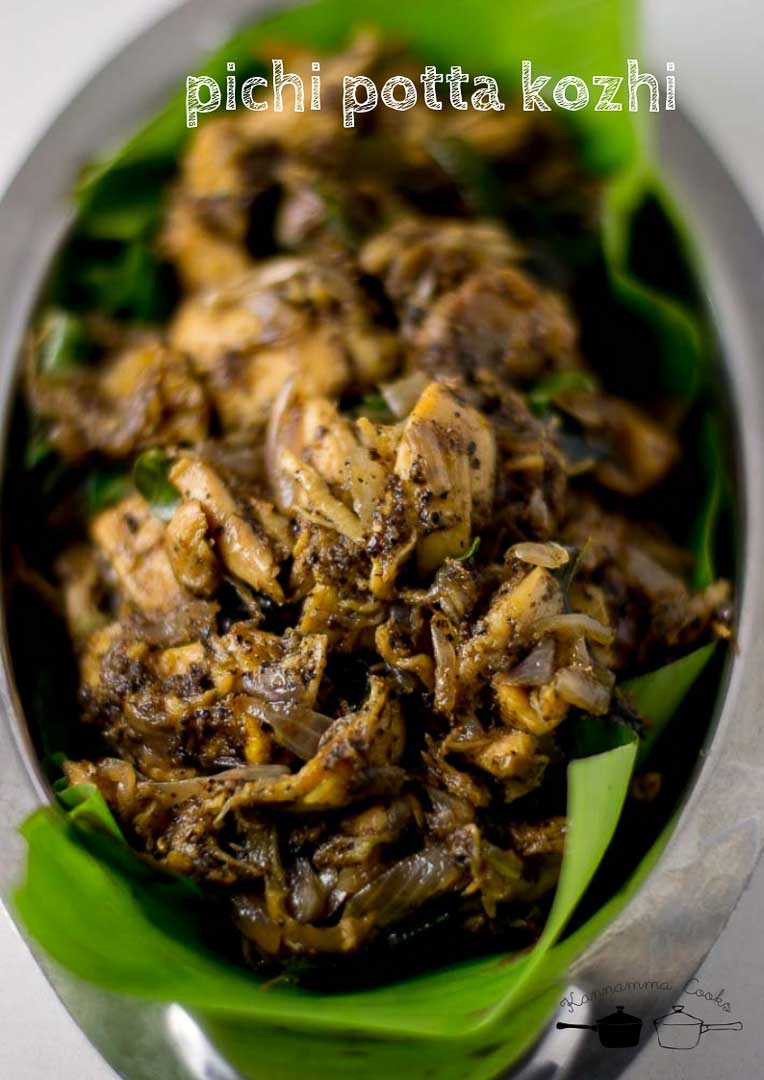
Pichu potta kozhi is done.
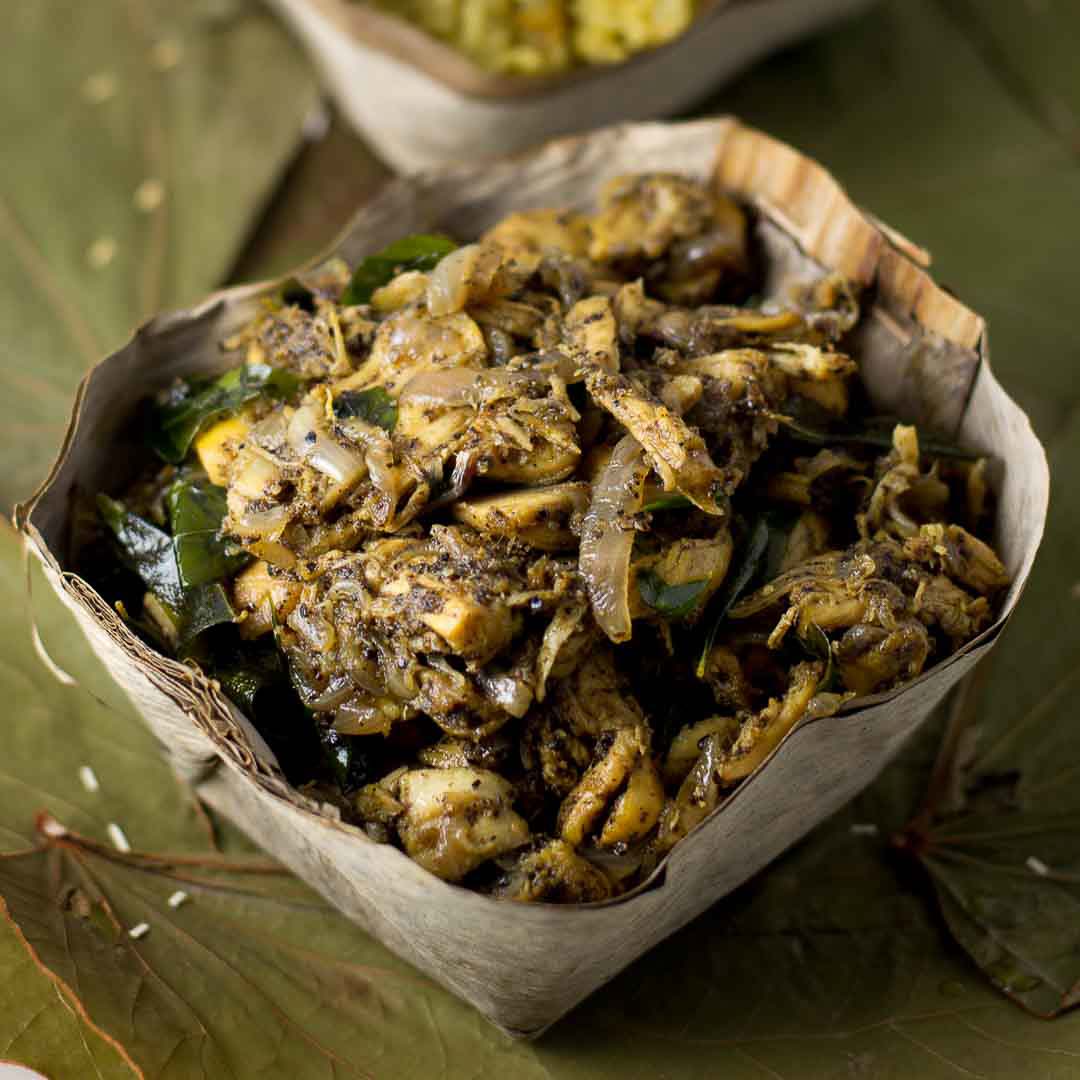
For cooking the chicken
- 500 grams chicken on the bone
- 1 teaspoon salt
- 1 teaspoon turmeric powder
Other Ingredients
- 2 tablespoon peanut oil
- 2 cups sliced onions
- 3 sprigs curry leaves + 1 sprig curry leaves
- 3 teaspoon black pepper powder
- 2 teaspoon ghee
- 1 teaspoon salt
- Add the chicken pieces in a pressure cooker. Add in a teaspoon of salt and turmeric. Also add in two cups of water. Pressure cook the chicken for three whistles (around 6-7 minutes). Remove from heat and wait for the pressure from the cooker to release naturally. Set aside.
- Shred the chicken into thin strips. Its important that the chicken is shredded into thin strips so the masalas coat evenly.
- Heat oil in a pan, preferably peanut oil. Add in the sliced onions and lots of curry leaves. Add in a teaspoon of salt and saute on a medium flame until the onions are soft.
- Add in the shredded chicken. Add in half of the black pepper powder. I like to use store bought fine ground black pepper for this recipe.
- Add in a teaspoon of ghee and saute for two to three minutes.
- Add in the rest of the pepper powder.
- Add in a teaspoon of ghee and toss well to coat. Add in around quarter cup of water. The water will help the pepper powder adhere to the chicken well. Do not add a lot of water. Be cautious as this is a dry dish.
- Keep sauteing for ten to fifteen minutes on a medium flame. Let the chicken get well roasted. Once all the water has been evaporated and the chicken is coated well with the masala, remove the pan from heat. Finally sprinkle some curry leaves.
- Pichu potta kozhi is done.
- Author: Kannamma - Suguna Vinodh
- Prep Time: 10 mins
- Cook Time: 25 mins
- Category: Side Dish
- Cuisine: Tamilnadu
For cooking the chicken
- 500 grams chicken on the bone
- 1 teaspoon salt
- 1 teaspoon turmeric powder
Other Ingredients
- 2 tablespoon peanut oil
- 2 cups sliced onions
- 3 sprigs curry leaves + 1 sprig curry leaves
- 3 teaspoon black pepper powder
- 2 teaspoon ghee
- 1 teaspoon salt
- Add the chicken pieces in a pressure cooker. Add in a teaspoon of salt and turmeric. Also add in two cups of water. Pressure cook the chicken for three whistles (around 6-7 minutes). Remove from heat and wait for the pressure from the cooker to release naturally. Set aside.
- Shred the chicken into thin strips. Its important that the chicken is shredded into thin strips so the masalas coat evenly.
- Heat oil in a pan, preferably peanut oil. Add in the sliced onions and lots of curry leaves. Add in a teaspoon of salt and saute on a medium flame until the onions are soft.
- Add in the shredded chicken. Add in half of the black pepper powder. I like to use store bought fine ground black pepper for this recipe.
- Add in a teaspoon of ghee and saute for two to three minutes.
- Add in the rest of the pepper powder.
- Add in a teaspoon of ghee and toss well to coat. Add in around quarter cup of water. The water will help the pepper powder adhere to the chicken well. Do not add a lot of water. Be cautious as this is a dry dish.
- Keep sauteing for ten to fifteen minutes on a medium flame. Let the chicken get well roasted. Once all the water has been evaporated and the chicken is coated well with the masala, remove the pan from heat. Finally sprinkle some curry leaves.
- Pichu potta kozhi is done.
- Author: Kannamma - Suguna Vinodh
- Prep Time: 10 mins
- Cook Time: 25 mins
- Category: Side Dish
- Cuisine: Tamilnadu
Find it online : https://www.kannammacooks.com/pichu-potta-kozhi-recipe/

Image: https://www.pexels.com
Finding Culinary Inspiration In The Woods
Eating food that comes from natural sources is a good way to maintain your health. The Indian cuisine is positioned perfectly to take advantage of this, with many of the spices, oils and grains used in Indian cooking coming from natural sources.
This type of diet is so effective that one study, conducted by the Public Health Foundation of India, found that vegetarian Indians are healthier overall (though it’s important to note that meat can be natural, too). If you’re looking to take your natural food knowledge to the next level, or simply reconnect with this way of eating, there are few better ways to gain inspiration than via a food-focused trip to the forest.
Setting the scene
For the perfect trip, a good setting is important. Picking your location will be part of this. There is a diverse and plentiful amount of woodland in India, and depending on where you live, your experience will be completely different. This is because the forests range from tropical wet rainforest to tropical dry deciduous. For example, Kodagu, near Bengaluru, will offer a typical forest experience and is excellent for simple living, whether via camping or in a log cabin. Opting for this sort of outdoors experience will enhance your eating that extra bit; according to a study published in the Journal of Ethic Foods, eating outdoors is good for your mental and physical health. Bring along ambient lighting and family games for the trip to enhance it that little bit more.
Living from the land
The purpose of your trip is to find inspiration for food, and living from the land is a great way to achieve that. Safety is most important, and so ensure that you’re well prepared through guidebooks or apps on what could be harmful in your environment. Aside from that, get involved. One Indian, who states they have gone completely ‘off the grid’, has spoken about the variety of food obtained this way, and the nutritional benefit of it. Take the mahua tree. According to Vikalp Sangam, the leaves can create a hearty and delicious alternative to porridge, and its fruit consumed as a vegetable side-dish.
Bringing it back to the plate
No trip can last forever, but you’d be missing out if you didn’t bring the inspiration home with you. Indian cuisine already uses many natural ingredients and as such provides the perfect foundation on which to experiment with your cooking. First off, consider the creatures of the outdoors – could they be brought into your cooking? Insects and exotic small creatures might seem strange, but are often nutritionally desirable. Alternatively, a root vegetable or gourd that is perhaps less used in day-to-day cooking but widely found out in nature could enhance your meal.
Ultimately, bringing in all-natural ingredients to your home cuisine will be a boon to your health. Follow the traditions of Indian cooking. Find inspiration out in wooded areas is a great start, especially in India, where so much variety can be found.
