
Recipe for Medu Vadai Waffles. Traditional style of Medu Vadai made with a twist in the waffle maker making it very healthy.
Buy Online Heavy Duty Wet Grinder Waffle Maker
Here is the video of how to make Medu Vadai Waffles

Here is the recipe to make Medu Vadai Waffles Wash and soak the urad dal and the rice in water for 3-4 hours. You can also soak it overnight if planning to make it for breakfast. Drain the water after soaking. Set aside.
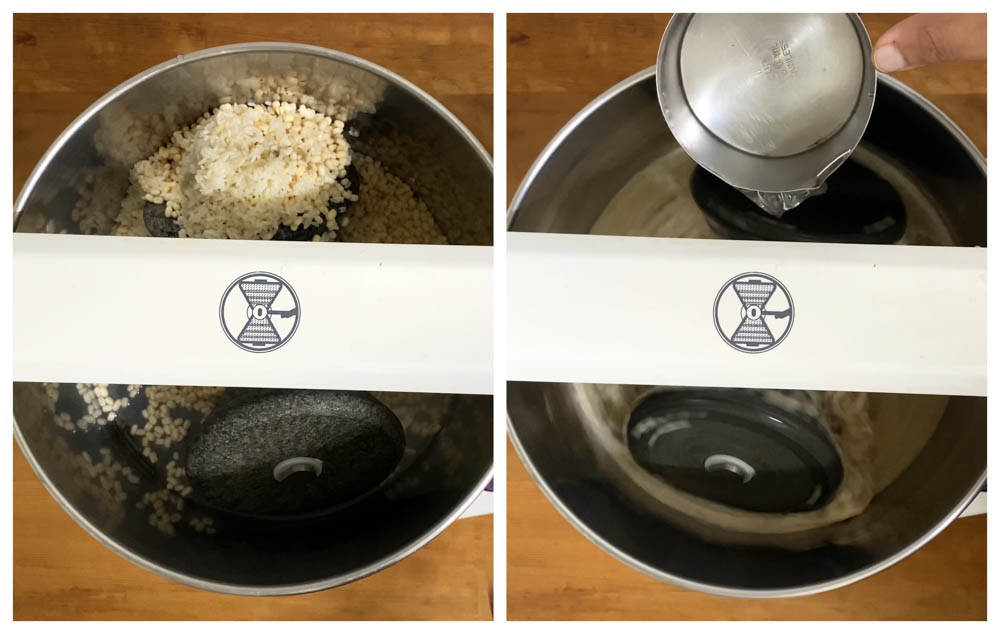
Add in the soaked and drained lentils and rice to the wet grinder. I prefer using a wet grinder for making this recipe as the urad dal becomes foamy and fluffy when ground in the wet grinder. This cannot be achieved in the mixie. This fluffy batter gives excellent waffles. You can grind the batter in the mixie but the texture of the vadai will be a compromise. If you are ok with that, you can go ahead and grind it in a mixie. I have done it both ways. While the mixie method gives decent results, the grinder gives excellent results.
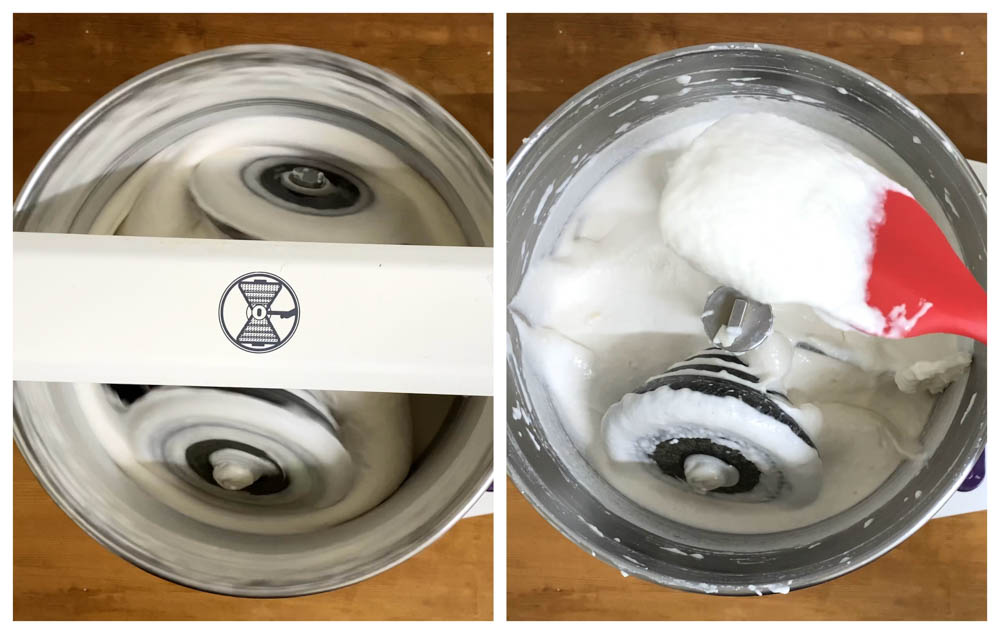
Grind for a good 20 minutes adding water in intervals of five minutes. Use a total of one cup of water for grinding.
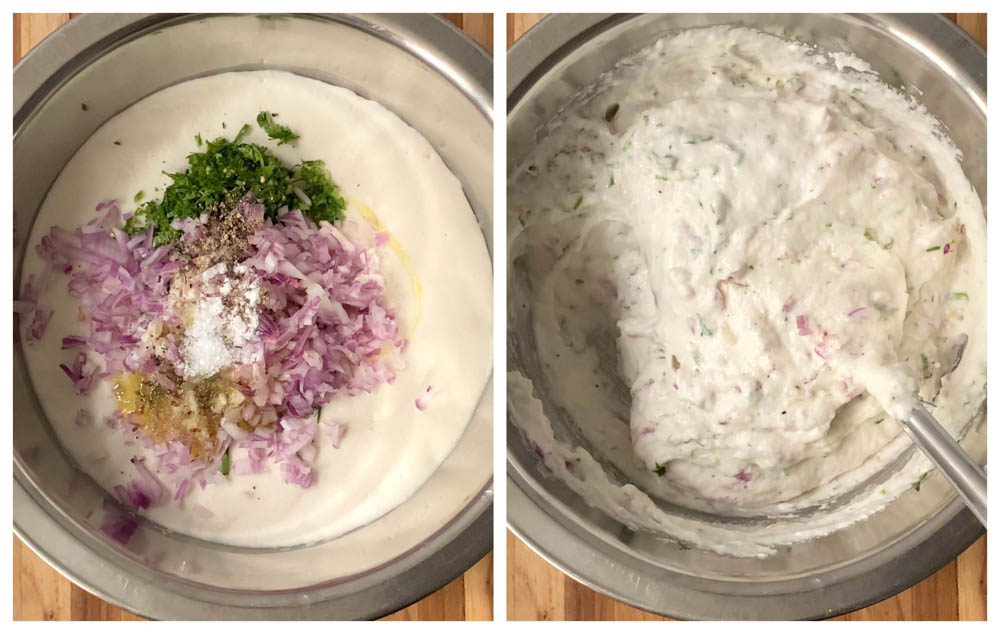
The batter will become a smooth paste. Remove the batter from the wet grinder and transfer it to a big bowl. Add in all the other ingredients to the batter. Mix well to combine.

Preheat the waffle maker for a couple of minutes. Scoop the vadai batter and add it to the waffle maker. Cook for 15 minutes. My waffle maker takes 15 minutes to cook. Each waffle maker might be slightly different. Check the instructions and adjust the timings accordingly.
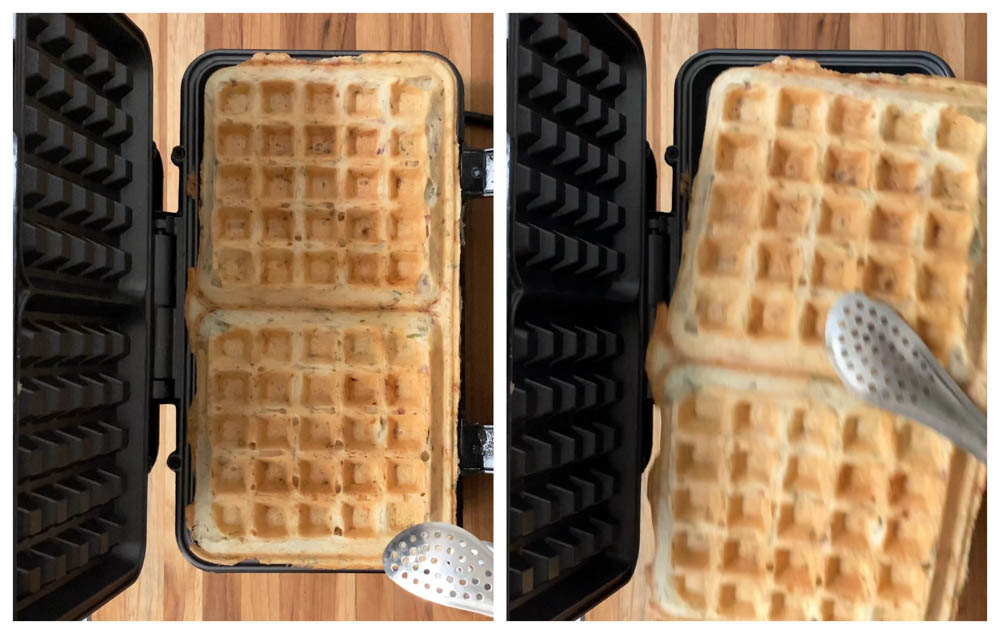
Crispy waffles with soft interior is ready.
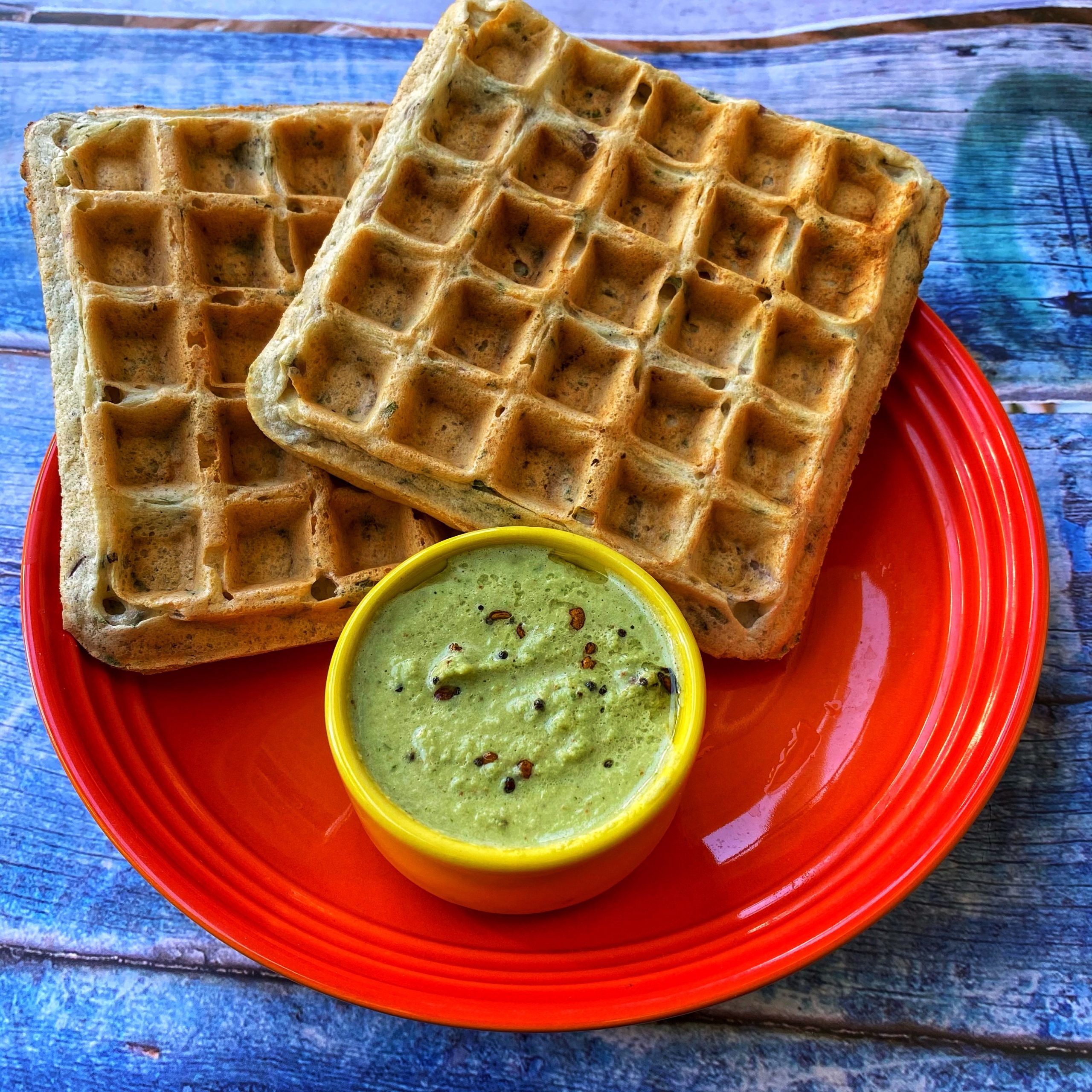
Serve with coconut chutney or sambar.
Grinding the Medu Vadai batter
200 ml whole white urad dal 1/4 cup raw rice 1 cup water
Other Ingredients
1 teaspoon minced ginger 1 tablespoon green chillies, finely chopped 3 sprigs coriander leaves, finely chopped 1 sprig curry leaves, finely chopped 1/2 cup onions, finely chopped 1 teaspoon cracked black pepper 1/8 teaspoon asafoetida powder 1/4 teaspoon Eno fruit salt (or) baking soda 3/4 teaspoon salt 1 tablespoon oil
Wash and soak the urad dal and the rice in water for 3-4 hours. You can also soak it overnight if planning to make it for breakfast. Drain the water after soaking. Set aside.
Add in the soaked and drained lentils and rice to the wet grinder. I prefer using a wet grinder for making this recipe as the urad dal becomes foamy and fluffy when ground in the wet grinder. This cannot be achieved in the mixie. This fluffy batter gives excellent waffles. You can grind the batter in the mixie but the texture of the vadai will be a compromise. If you are ok with that, you can go ahead and grind it in a mixie. I have done it both ways. While the mixie method gives decent results, the grinder gives excellent results.
Grind for a good 20 minutes adding water in intervals of five minutes. Use a total of one cup of water for grinding.
The batter will become a smooth paste. Remove the batter from the wet grinder and transfer it to a big bowl. Add in all the other ingredients to the batter. Mix well to combine.
Preheat the waffle maker for a couple of minutes. Scoop the vadai batter and add it to the waffle maker. Cook for 15 minutes. My waffle maker takes 15 minutes to cook. Each waffle maker might be slightly different. Check the instructions and adjust the timings accordingly. Crispy waffles with soft interior is ready.
Serve with coconut chutney or sambar.
- Author: Suguna Vinodh
- Prep Time: 3h
- Cook Time: 30m
Grinding the Medu Vadai batter
200 ml whole white urad dal 1/4 cup raw rice 1 cup water
Other Ingredients
1 teaspoon minced ginger 1 tablespoon green chillies, finely chopped 3 sprigs coriander leaves, finely chopped 1 sprig curry leaves, finely chopped 1/2 cup onions, finely chopped 1 teaspoon cracked black pepper 1/8 teaspoon asafoetida powder 1/4 teaspoon Eno fruit salt (or) baking soda 3/4 teaspoon salt 1 tablespoon oil
Wash and soak the urad dal and the rice in water for 3-4 hours. You can also soak it overnight if planning to make it for breakfast. Drain the water after soaking. Set aside.
Add in the soaked and drained lentils and rice to the wet grinder. I prefer using a wet grinder for making this recipe as the urad dal becomes foamy and fluffy when ground in the wet grinder. This cannot be achieved in the mixie. This fluffy batter gives excellent waffles. You can grind the batter in the mixie but the texture of the vadai will be a compromise. If you are ok with that, you can go ahead and grind it in a mixie. I have done it both ways. While the mixie method gives decent results, the grinder gives excellent results.
Grind for a good 20 minutes adding water in intervals of five minutes. Use a total of one cup of water for grinding.
The batter will become a smooth paste. Remove the batter from the wet grinder and transfer it to a big bowl. Add in all the other ingredients to the batter. Mix well to combine.
Preheat the waffle maker for a couple of minutes. Scoop the vadai batter and add it to the waffle maker. Cook for 15 minutes. My waffle maker takes 15 minutes to cook. Each waffle maker might be slightly different. Check the instructions and adjust the timings accordingly. Crispy waffles with soft interior is ready.
Serve with coconut chutney or sambar.
- Author: Suguna Vinodh
- Prep Time: 3h
- Cook Time: 30m
Find it online : https://www.kannammacooks.com/medu-vadai-waffles/
Article contributed by Gambling Times
There is big money made by business houses that speculate their money on trading and speculating on food grains. Major crops like maize , wheat and rice form a chunk of their trading businesses. These business houses buy a large amount of the produce when they are selling in the market at a lower price. They store these produce and later sell it when the demand is more and the supply is less thereby making a big margin. Sometimes these practices leads to a rise in the market price of these produce. The prices go up in the market due to an artificial shortage situation. These traders and market houses hoard these products to make huge margins at a later date. When the demand is high, the prices are jacked up. As vast amounts of these produce are purchased when the food is plentiful, they get it at a very low price.
Leads to expensive food Having this system means that the food is always going to be more expensive for those who are poor than what it needs to be. A better way of gambling and speculation for entertainment would be to visit an online casino. If you are looking for a fun way to spend your time visit GamblingTimes and onlinecasino-India website , here you also have a chance to win something on a lucky day.
For a good cause? Back to food speculating – The investors that do this say they do a good thing. They claim that they even out the supply and store the food at high costs so that it can be used later when it is needed. Well, that is true but there is a problem. The price that they charge is not just covering the expenses for the storage but they also make a huge profit / margin on it.
Hedge funds and big banks This is not just limited to rich business people and privately owned businesses. In fact most of those who speculate in food business is hedge funds companies, pension funds companies and some of the biggest banks in the world. This means that all of us that have savings might be a part of this without being aware of it. If this is important to you, you can contact your bank and ask if the funds that you have invested in are a part of this.
Soothes out fluctuations At the same time this means that the prices are higher than they need to be. This also means that the steady supply leads to even prices. Even if there is a drought, there will always be a huge amount of food in stock. As long as there are a number of sellers, the competition will help keep the supply go on.
Difficult question There is no clear way of subjecting it to right or wrong in this. If these companies didn’t speculate in foods, there would only be a “from farmer to consumer” market. That would mean that when a drought or other catastrophe would strike there would be a major shortage and people would starve. The UN for example through their World food program hands out food and water to millions of people with their programs. The WFP buys tonnes of food each year for these activities. It procures and distributes food to poor and developing nations struck by poverty. All these purchases are made via donations from countries, governments and big corporate houses.
