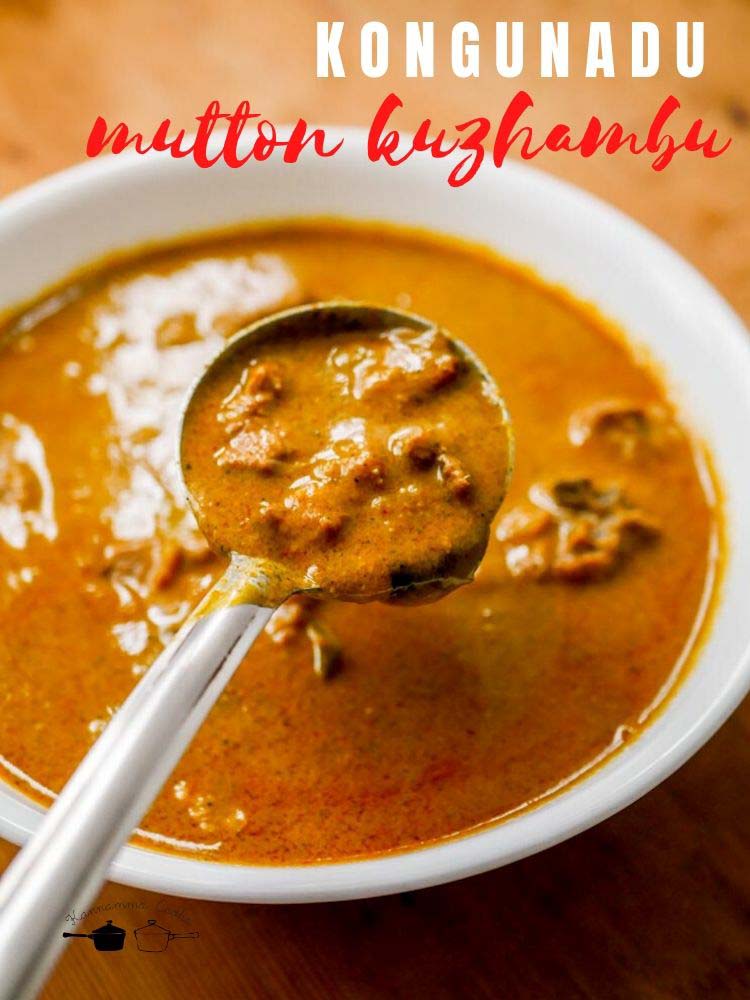
Recipe for kongunadu style mutton kuzhambu (Sunday kari kuzhambu) made from scratch using homemade masala paste. Recipe with step by step pictures.
This is my aunt’s Sunday mutton kuzhambu (mutton curry). This is one recipe that is a classic at our place. My aunt, a vegetarian all her life made it for Sunday lunch as long as I can remember. My uncle loved non veg fare and this kuzhambu was a regular for lunch every Sunday. When I was young, my aunt had a maid called Lakshmi. She would religiously grind the masala for the kuzhambu in the stone mortar (அம்மிக்கல்) until the masala reaches a consistency that makes my aunt happy (a very tough one at that). Then the curry would be made and it would boil for hours in a big black cast iron kadai. The curry would be so thick and so dark in colour from the lavish use of black pepper. The fat from the mutton would form a film on the top of the curry and would be glistening. The kuzhambu was always made super spicy. During lunch, all kids would eat the rice and curry with copious amounts of ghee to settle the super spicy heat from the black pepper. I don’t make it that spicy these days. My son loves this kuzhambu so much that it is becoming a Sunday ritual at my place too! My aunt is now 83 and does not cook these days but I will always associate my Sundays with her food.

Click on the video below for the recipe of how to do Kongunadu Mutton Kuzhambu AKA Sunday Mutton Kuzhambu.
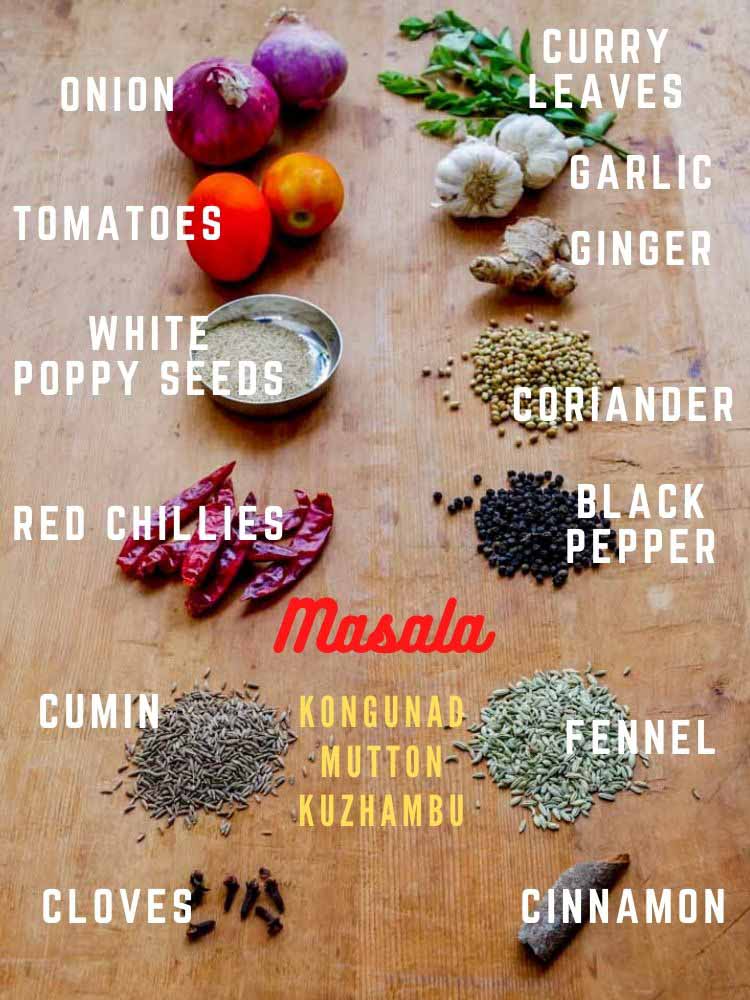
Here is how to do Sunday mutton kuzhambu. The main thing about this dish is the masala paste. Here is what you will need to make the masala paste. Note: The recipe uses copious amounts of cloves. Cloves and mutton are best friends. The flavour of slow cooked mutton and cloves makes the curry magical. Use 5-6 cloves in the recipe. Do not add more than that. For a very spicy curry, amp up the black pepper. Adjust the spice levels according to what your family prefers.
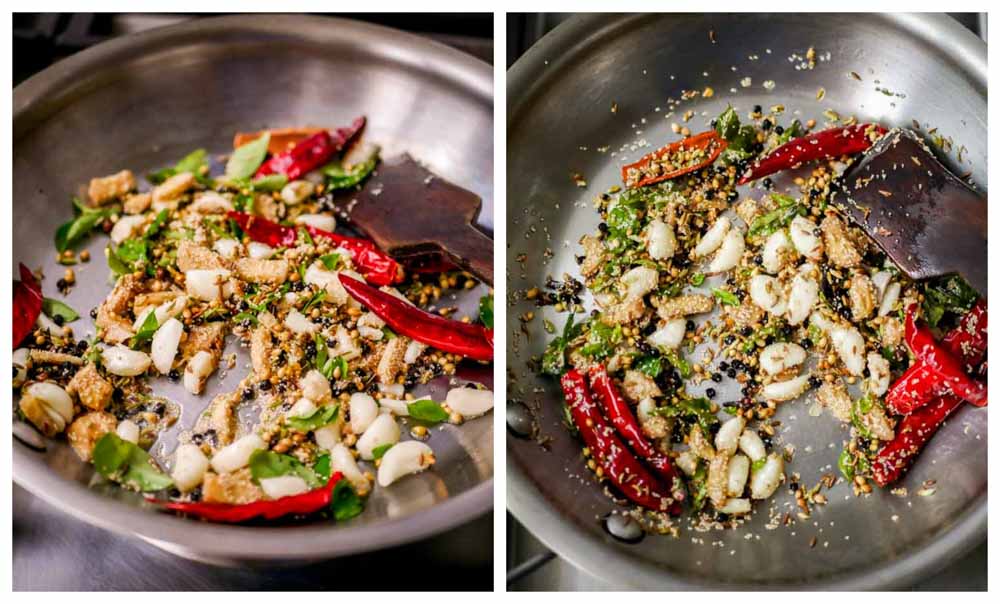
Take a pan and add in a teaspoon of Indian sesame oil (gingely oil). When the oil is hot, add in all the ingredients listed under masala paste except the onion and tomatoes. Saute everything on a low flame so the spices do not burn. Saute for a good 4-5 minutes until all the spices are well roasted and fragrant. Set aside on a plate to cool. Note: This recipe uses white poppy seeds. If poppy seeds are not available in a country where you live, just omit it. The flavour will slightly differ but there is no proper substitute for poppy seeds.
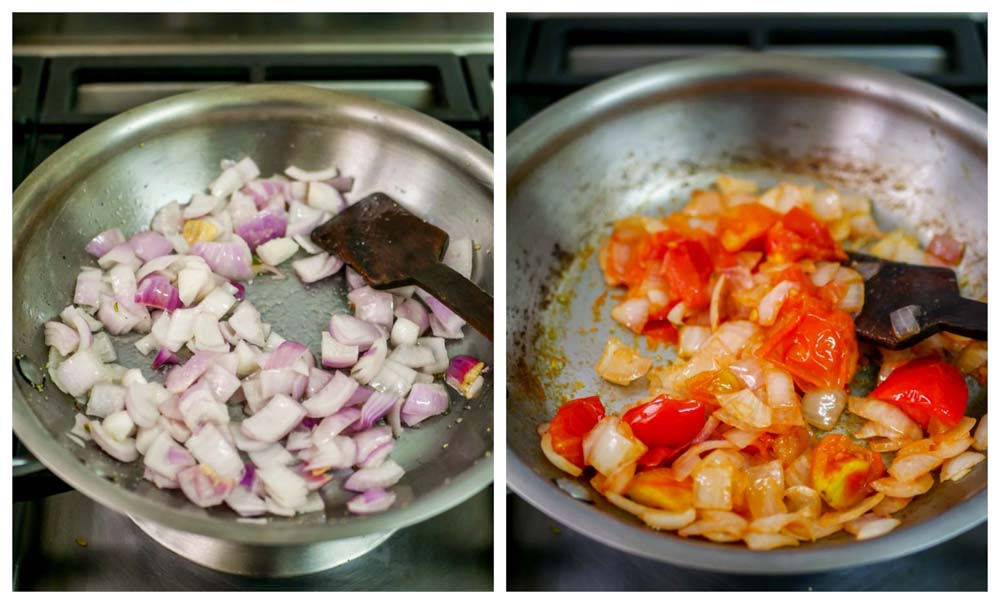
In the same pan add in the remaining oil and add in the chopped onions. Saute the onions until soft. Add in the chopped tomatoes. Saute till the tomatoes are cooked down. Remove from heat and set aside on a plate to cool.
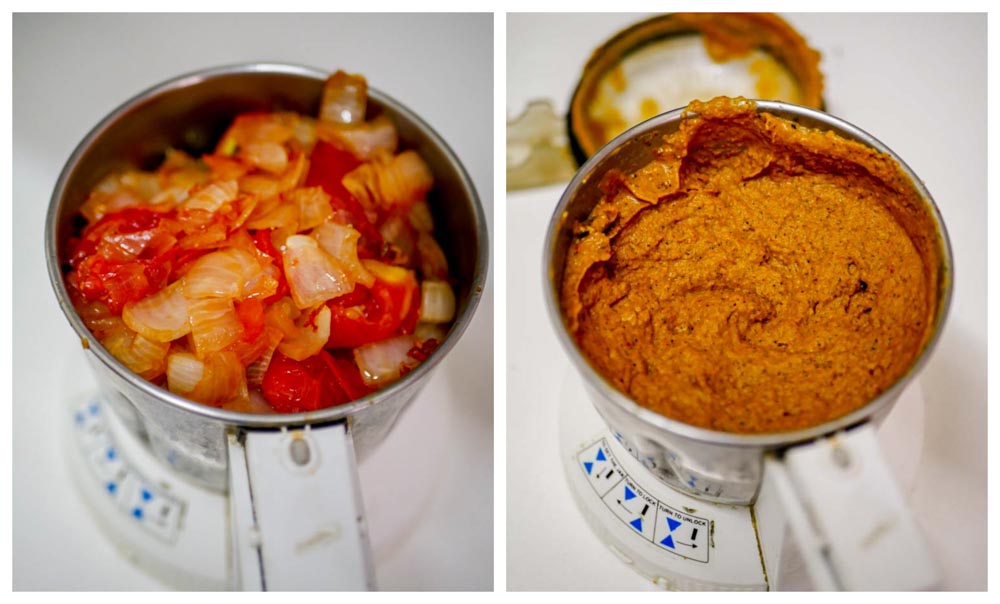
Grind everything in a mixie to a smooth fine paste. Add little water (1/2 a cup of water) while grinding. Set aside.
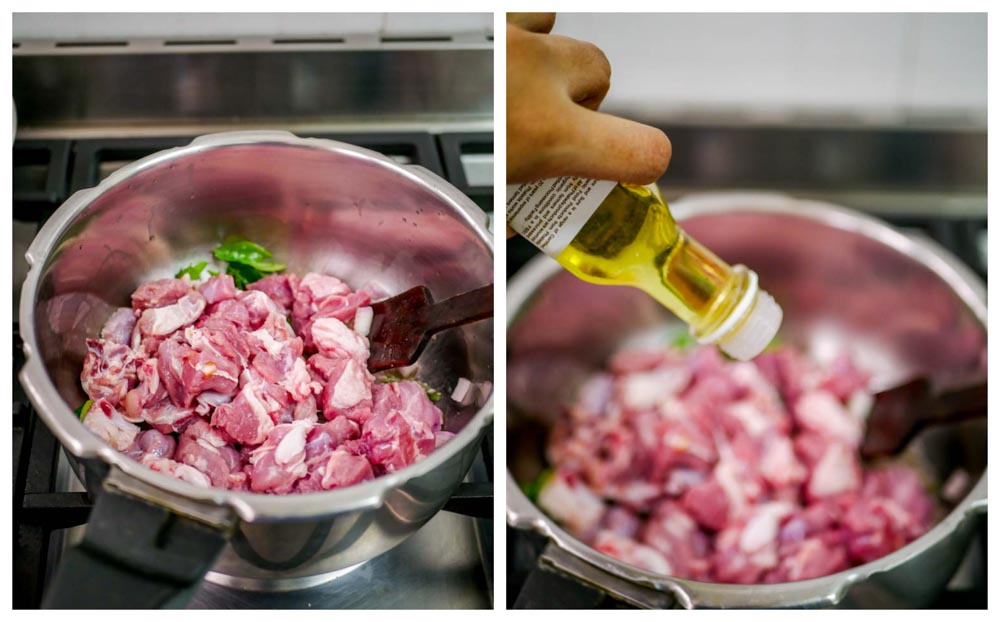
Main Kuzhambu We will make the mutton kuzhambu in a pressure cooker. Heat Indian sesame oil in a pressure pan / cooker and add in the curry leaves and chopped small onions (shallots). Use a lavish 3-4 sprigs of curry leaves. Add in the washed, cleaned and drained mutton pieces. Do not trim the fat in the mutton. Fat adds a lot of flavour to the curry. Add a teaspoon of castor oil to the mutton. Mix well and cook for 5 minutes until all the juices that come from the mutton has evaporated and its completely dry. A Note on Castor Oil My aunt uses a teaspoon of Castor Oil while making this curry and she believes that the mutton cooks to tender with the addition of castor oil. Also Castor oil will help in digestion after a heavy non-veg meal. It has cooling properties too. So go ahead and get a little castor oil. Don’t add too much though. If you don’t have castor oil, just omit.
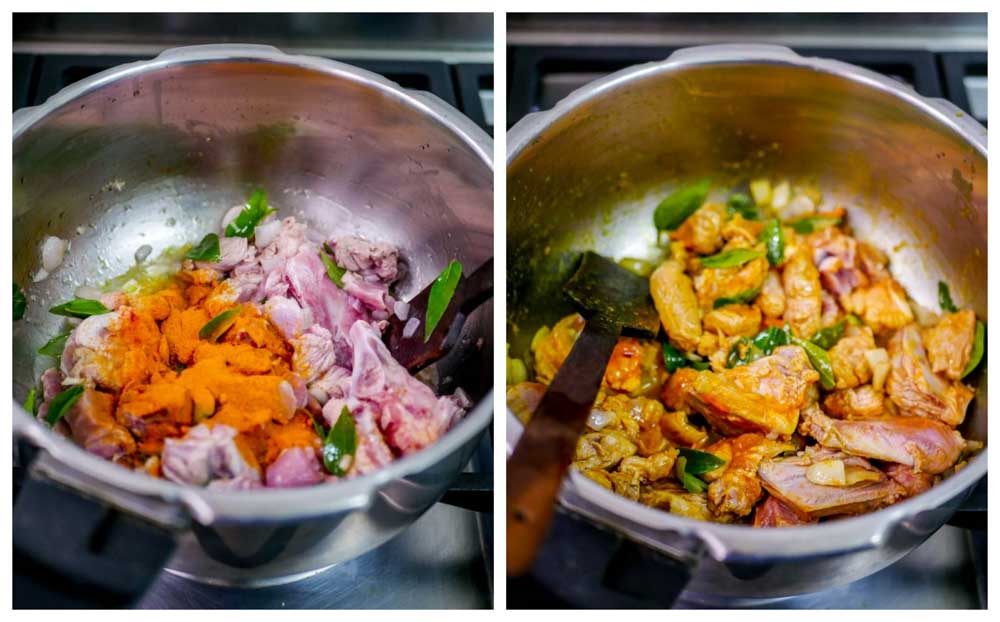
Add in a teaspoon of turmeric powder and mix well to coat.
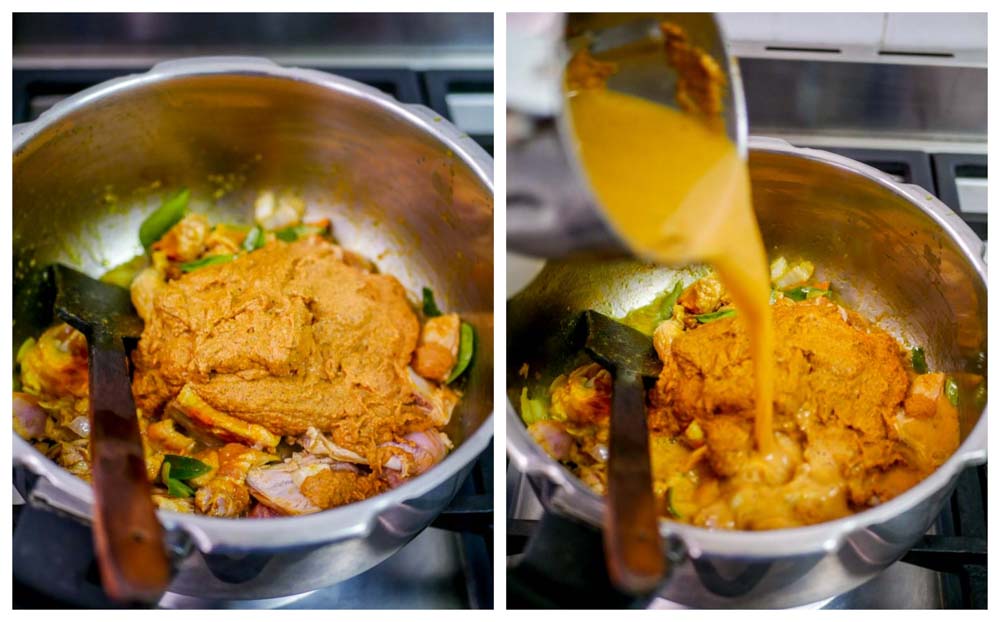
Add in the masala paste. Wash the mixie with a cup of water and add it back to the pan.
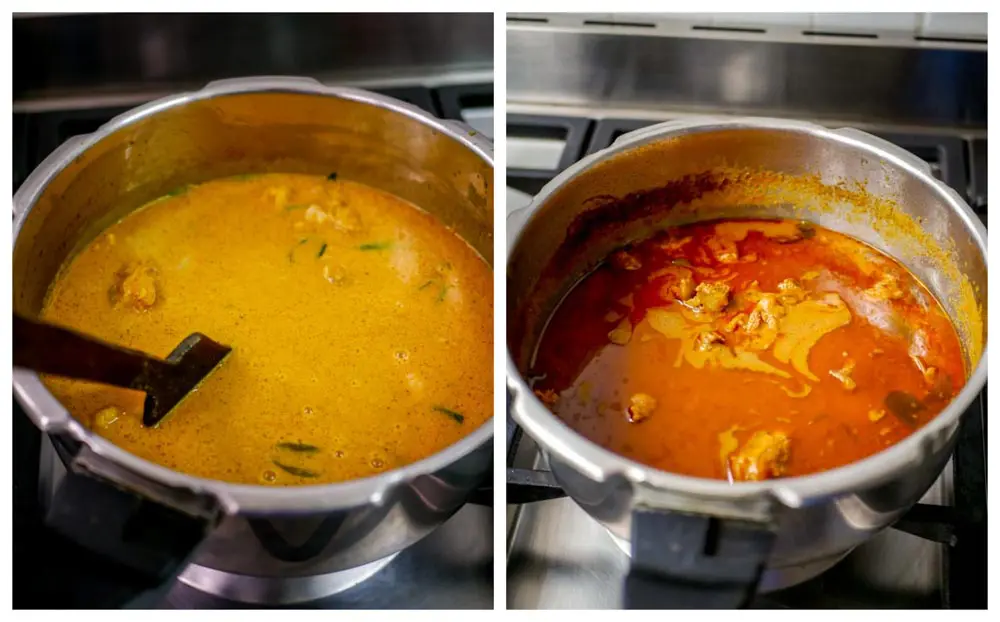
Add 1.5 cups of water for the mutton to cook. Cover the pan and keep the flame of the stove in medium. Let it cook and whistle away for 30 minutes. Dont watch for the number of whistles. Just set a timer for 30 minutes and you are all set. After 30 minutes, remove the cooker from heat and allow the pressure from the cooker to settle naturally. The fat would just float on top of the curry. What a sight to watch after opening the cooker 🙂

Keep the pan on a low simmer again and add in the salt and a cup of thick coconut milk. The coconut milk makes the curry very rich. Canned coconut milk works just fine. Let it simmer for a couple of minutes. Remove from heat. My aunt always added salt at the end of the curry as she says that the mutton cooks soft without the salt. I agree. I do not question some things in the kitchen when the recipes are passed on for generations. I do the same like what my aunt did. Some people say to salt the mutton in the beginning so the salt nicely seasons the mutton. Its totally up to you. Do whatever you like.
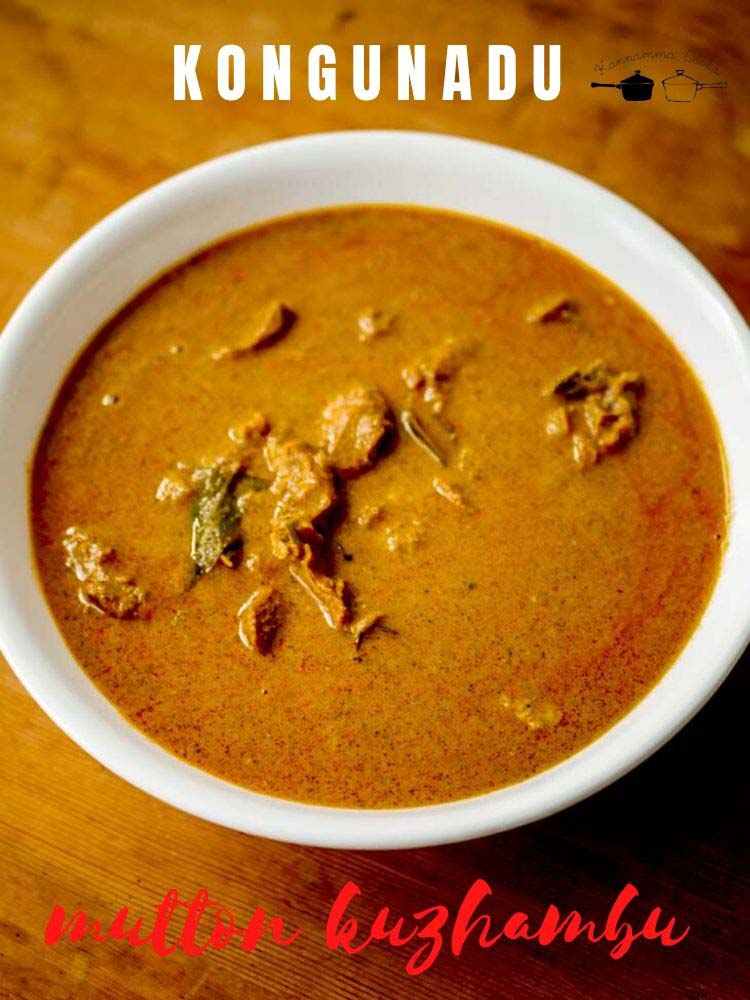
Sunday special mutton kuzhambu is ready. You can serve it with rice for lunch or with idli and dosa for breakfast. Idli batter in mixie Set Dosa Recipe Whole Wheat Parotta Maida Parotta
For the masala paste
- 1 tablespoon Indian sesame oil (gingely oil)
- 2 Indian red Onions, roughly chopped (about a cup)
- 2 Tomatoes, roughly chopped
- 1 tablespoon white poppy seeds
- 5 dried red chillies
- 1 teaspoon cumin seeds
- 6 cloves
- 1/2 inch piece cinnamon (Indian Cassia)
- 1.5 teaspoon fennel seeds
- 2 teaspoon black peppercorn
- 2 teaspoon coriander seeds
- 1 inch ginger, peeled and roughly chopped
- 10 - 12 cloves garlic
- 2 sprigs curry leaves
For the curry
1 tablespoon Indian sesame oil (gingely oil)
3 - 4 sprigs curry leaves
10 Indian shallots (small onions), chopped
500 grams mutton (bone-in)
1 teaspoon castor oil (optional)
1 teaspoon turmeric powder
1.5 teaspoon salt
1 cup coconut milk
Take a pan and add in a teaspoon of Indian sesame oil (gingely oil). When the oil is hot, add in all the ingredients listed under masala paste except the onion and tomatoes. Saute everything on a low flame so the spices do not burn. Saute for a good 4-5 minutes until all the spices are well roasted and fragrant. Set aside on a plate to cool. In the same pan add in the remaining oil and add in the chopped onions. Saute the onions until soft. Add in the chopped tomatoes. Saute till the tomatoes are cooked down. Remove from heat and set aside on a plate to cool. Grind everything in a mixie to a smooth fine paste. Add little water (1/2 a cup of water) while grinding. Set aside.
Heat Indian sesame oil in a pressure pan / cooker and add in the curry leaves and chopped small onions (shallots). Use a lavish 3-4 sprigs of curry leaves. Add in the washed, cleaned and drained mutton pieces. Do not trim the fat in the mutton. Fat adds a lot of flavour to the curry. Add a teaspoon of castor oil to the mutton. Mix well and cook for 5 minutes until all the juices that come from the mutton has evaporated and its completely dry. Add in a teaspoon of turmeric powder and mix well to coat. Add in the masala paste. Wash the mixie with a cup of water and add it back to the pan.
Add 1.5 cups of water for the mutton to cook. Cover the pan and keep the flame of the stove in medium. Let it cook and whistle away for 30 minutes. Dont watch for the number of whistles. Just set a timer for 30 minutes and you are all set. After 30 minutes, remove the cooker from heat and allow the pressure from the cooker to settle naturally.
Keep the pan on a low simmer again and add in the salt and a cup of thick coconut milk. The coconut milk makes the curry very rich. Canned coconut milk works just fine. Let it simmer for a couple of minutes. Remove from heat.
Author: Suguna Vinodh
Prep Time: 15m
Cook Time: 45m
For the masala paste
- 1 tablespoon Indian sesame oil (gingely oil)
- 2 Indian red Onions, roughly chopped (about a cup)
- 2 Tomatoes, roughly chopped
- 1 tablespoon white poppy seeds
- 5 dried red chillies
- 1 teaspoon cumin seeds
- 6 cloves
- 1/2 inch piece cinnamon (Indian Cassia)
- 1.5 teaspoon fennel seeds
- 2 teaspoon black peppercorn
- 2 teaspoon coriander seeds
- 1 inch ginger, peeled and roughly chopped
- 10 - 12 cloves garlic
- 2 sprigs curry leaves
For the curry
1 tablespoon Indian sesame oil (gingely oil)
3 - 4 sprigs curry leaves
10 Indian shallots (small onions), chopped
500 grams mutton (bone-in)
1 teaspoon castor oil (optional)
1 teaspoon turmeric powder
1.5 teaspoon salt
1 cup coconut milk
Take a pan and add in a teaspoon of Indian sesame oil (gingely oil). When the oil is hot, add in all the ingredients listed under masala paste except the onion and tomatoes. Saute everything on a low flame so the spices do not burn. Saute for a good 4-5 minutes until all the spices are well roasted and fragrant. Set aside on a plate to cool. In the same pan add in the remaining oil and add in the chopped onions. Saute the onions until soft. Add in the chopped tomatoes. Saute till the tomatoes are cooked down. Remove from heat and set aside on a plate to cool. Grind everything in a mixie to a smooth fine paste. Add little water (1/2 a cup of water) while grinding. Set aside.
Heat Indian sesame oil in a pressure pan / cooker and add in the curry leaves and chopped small onions (shallots). Use a lavish 3-4 sprigs of curry leaves. Add in the washed, cleaned and drained mutton pieces. Do not trim the fat in the mutton. Fat adds a lot of flavour to the curry. Add a teaspoon of castor oil to the mutton. Mix well and cook for 5 minutes until all the juices that come from the mutton has evaporated and its completely dry. Add in a teaspoon of turmeric powder and mix well to coat. Add in the masala paste. Wash the mixie with a cup of water and add it back to the pan.
Add 1.5 cups of water for the mutton to cook. Cover the pan and keep the flame of the stove in medium. Let it cook and whistle away for 30 minutes. Dont watch for the number of whistles. Just set a timer for 30 minutes and you are all set. After 30 minutes, remove the cooker from heat and allow the pressure from the cooker to settle naturally.
Keep the pan on a low simmer again and add in the salt and a cup of thick coconut milk. The coconut milk makes the curry very rich. Canned coconut milk works just fine. Let it simmer for a couple of minutes. Remove from heat.
Author: Suguna Vinodh
Prep Time: 15m
Cook Time: 45m
Find it online : https://www.kannammacooks.com/kongunadu-mutton-kuzhambu-recipe/
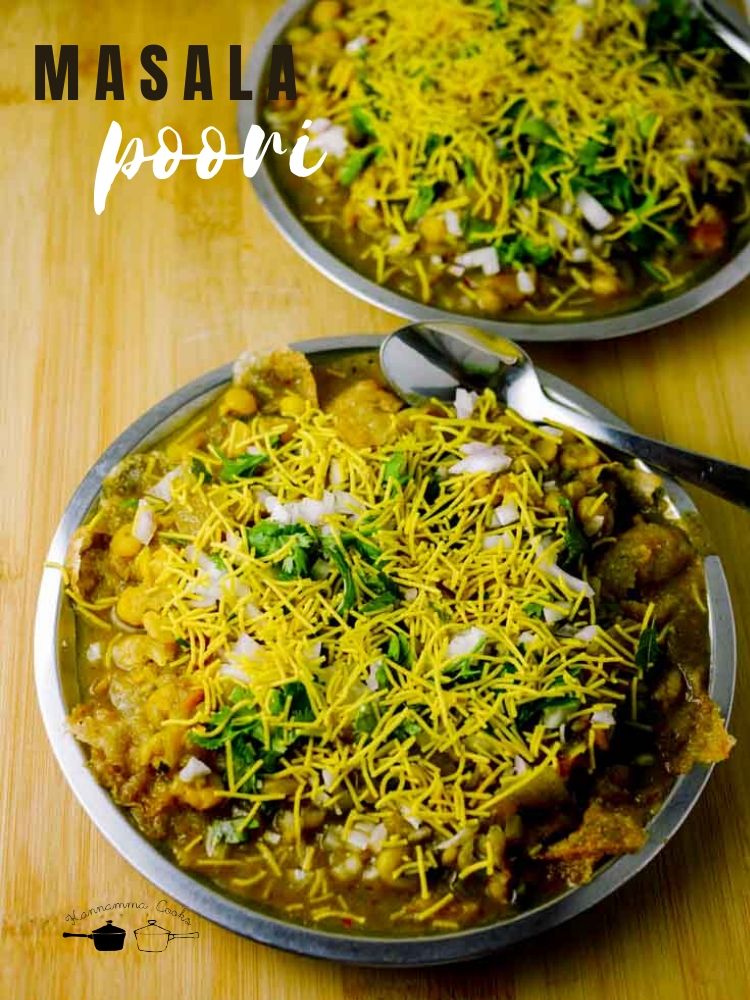
Recipe for Masala Poori Chaat made with easy ingredients at home from scratch. Made with homemade masala powder. A hearty chaat made with dried peas Bangalore style. Recipe for Masala Puri Chaat with step by step pictures and video.
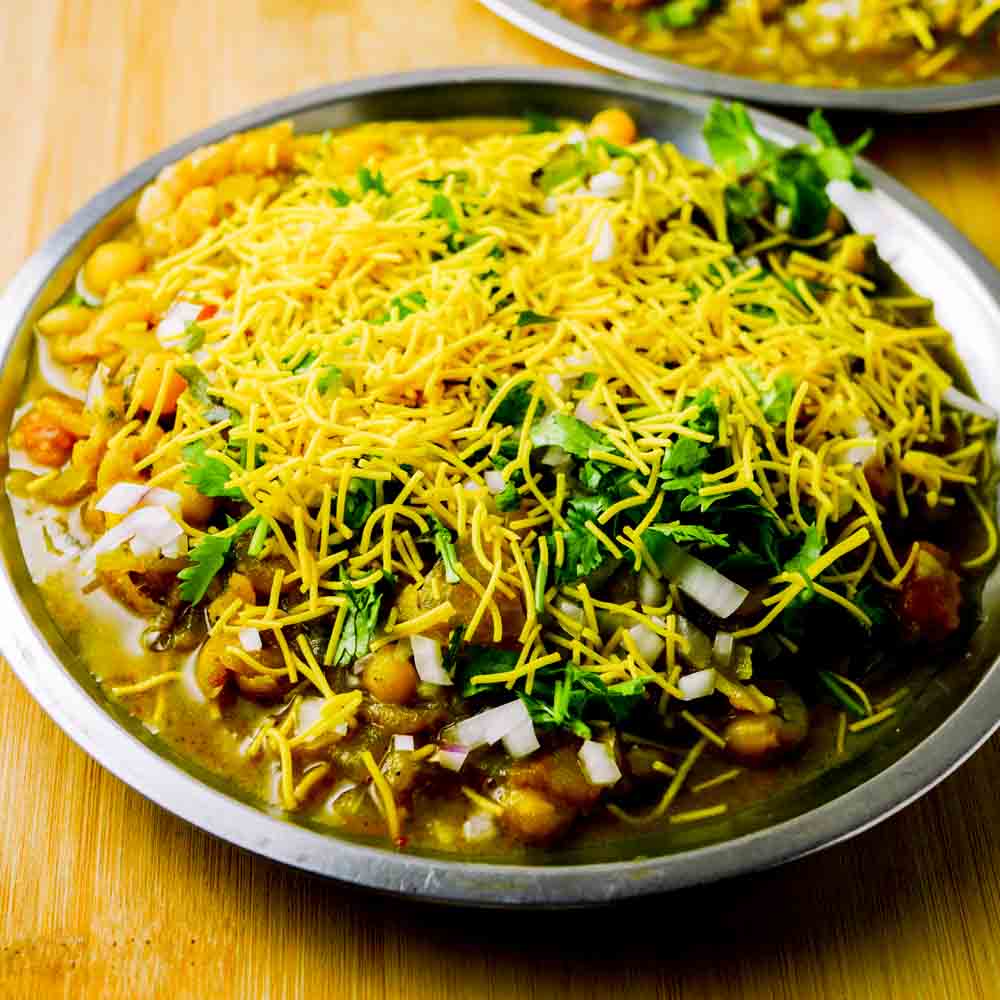
Masala poori / Masala puri chaat is one of my sons favorite chaat and its among the several monthly food fixes that he craves. He loves the masala poori served at his school canteen. Every week, after his football practice at school, we would get our masala poori fix. I have made this recipe umpteen number of times since the 2020 lock-down and this is the fine tuned version that I am very happy with. This hearty chaat made with dried white peas will sure make your evenings a little more comforting. This is a very Bangalore / Kannadiga style of making masala poori / masala puri chaat. I have made the masala poori using dried white peas. Some versions use dried green peas too. The Tamil version uses dried green peas and very similar too. Here is the video of how to do masala poori / masala puri at home from scratch using home made spice masala powder.
Here is the video of how to make Masala Poori Recipe | Masala Puri Chaat | Street Side Masala Puri
Boiling the peas for Masala Puri / Masala Poori
- 1 cup dried white peas
- 1/2 teaspoon turmeric powder
- 2 potatoes, peeled and roughly chopped
Dry masala powder for Masala Puri / Masala Poori
- 1/2 teaspoon cumin seeds
- 1/2 teaspoon fennel seeds
- 1/2 teaspoon black peppercorn
- 1 teaspoon coriander seeds
- 3 cloves
- 3 dried red chillies
Other Ingredients for Masala Puri / Masala Poori
- 2 tablespoon peanut oil
- 2 sprigs curry leaves, finely chopped
- 1 cup chopped onions
- 1 teaspoon salt
- 2 tomatoes, chopped
- 1 teaspoon curry masala powder (or) garam masala
- 1/2 teaspoon turmeric powder
- marble sized tamarind
- 3 green chillies
- 3 sprigs coriander
- 15 mint leaves
Plating
Pani Poori (about 30 puris)
1/2 cup finely chopped onions
3 sprigs coriander leaves, finely chopped
2 sprigs mint leaves, finely chopped
1/4 cup sev (or) bhujia
Wash and soak the dried white peas for at-least 8-10 hours. Soaking overnite works really well. In a pressure cooker, add in the peas and two cups of water. Add in the turmeric and roughly chopped potatoes. Cook for 15 minutes. Ignore the number of whistles. After 15 minutes, remove the cooker from heat and set aside for the pressure to release naturally. Open the cooker and roughly mash the peas and the potatoes. Set aside.
Dry roast all the ingredients listed under “dry masala powder” in a pan on a low flame until fragrant and golden. Once the spices are roasted, remove from heat and set aside to cool. Grind to a powder in a mixie. Set aside.
Heat oil in a pan and add in the curry leaves. Add in the onions and the salt and saute till the onions are nice and soft. Once the onions are soft, add in the tomatoes. Cook for a couple of minutes till the tomatoes are soft.
Add in the curry masala powder. If you cannot find curry powder, use garam masala. Add in the turmeric powder and the ground dry masala powder. Saute for a few seconds. Do not saute for long as the spices can burn.
Soak the tamarind in a cup of hot water for 15 minutes. Squeeze the tamarind to extract the pulp. Discard the pith. Add the tamarind pulp to the pan. Simmer for 10 minutes so the tamarind and the spices can cook. Let the mixture become thick.
Add in the boiled potato and peas mixture. Check for seasoning. Add more salt at this stage if necessary. Add little water if the gravy looks too thick.
In a small mixie jar, grind the green chillies, coriander leaves and mint leaves with little water to a paste. Add the paste to the pan. Mix well to combine. Cover the pan with a lid and simmer for ten minutes on a medium flame. The gravy for the masala poori is done.
Arrange the puris on a plate and roughly crush them. Pour about 3 ladle fulls of the gravy and top it with onions, coriander leaves, mint leaves and sev.
Serve Masala Puri / Masala Poori hot.
Notes
Dried green peas can be substituted for dried white peas and it works perfectly well in the recipe.
While serving, you can sprinkle the masala poori / puri with some chat masala and serve it along with a lime wedge (optional).
- Author: Suguna Vinodh
