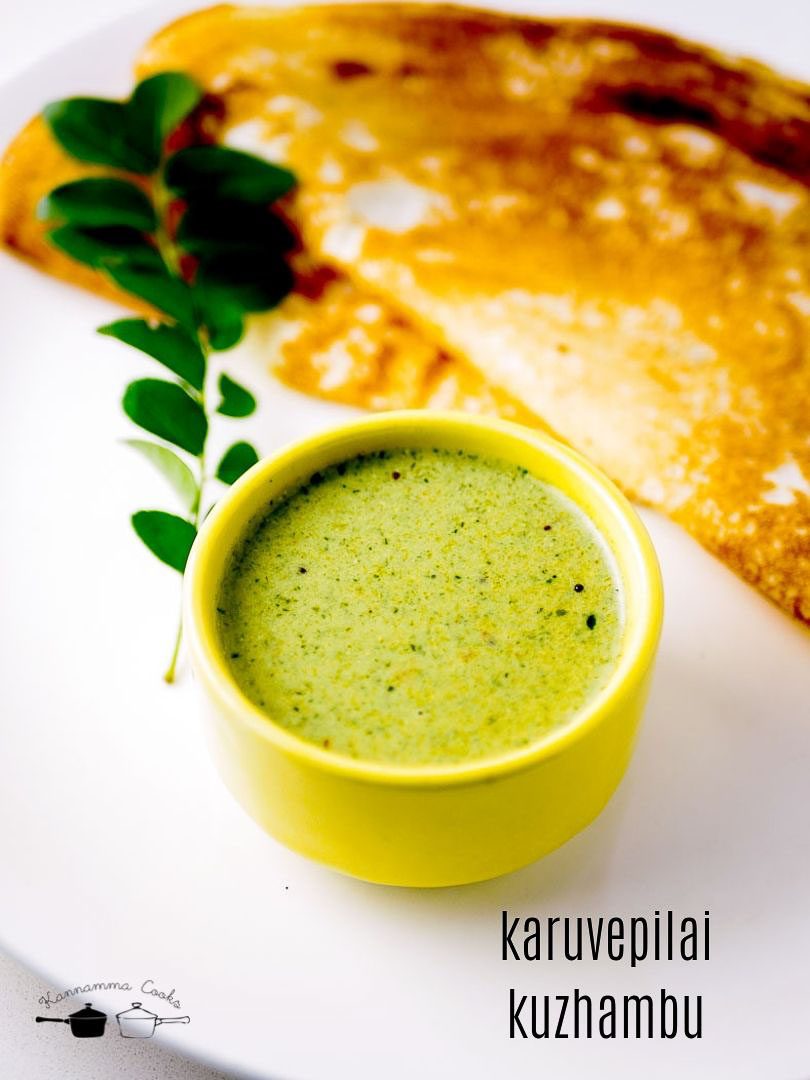
Recipe for Karuvepilai Kuzhambu, Curry Leaves Kuzhambu. Perfect accompaniment for Idli and Dosa. Recipe with step by step pictures.
கறி வேம்பு – Kari Vembu is how curry leaf was called in olden days in Tamil. Vembu is used to refer Neem. Kari + Vembu – Kari means used in cooking and Vembu because of how the leaves look similar to neem. In later days it became கறிவேப்பிலை – kari veppilai – kari meaning “used to cook” and veppilai meaning “neem leaf”. Then it also became கருவேப்பிலை – Karu veppilai – karu meaning dark colour of the leaf. கறி வேம்பு = கறிவேப்பிலை = கருவேப்பிலை. Everything is correct in its own way. Neem has been in use for centuries and in தொல்காப்பியம் tholkaapiyam – sangam literature, each kingdom had preferred flower for garland and Neem was represented by Pandiyas. ‘போந்தை வேம்பே ஆர் என வரூஉம் மா பெருந் தானையர் மலைந்த பூ’ சேரன்- போந்தை – பனை – Cheras – palmyra பாண்டியன் – வேம்பு – வேப்பம்பூ – Pandiyas – Neem சோழன் – ஆர் – ஆத்திப்பூ – Cholas – maloo creeper
Curry leaf is considered to be a medicinal herb across South Asia. The leaves are a rich source of Calcium, Iron, Phosporus and Beta Carotene (Vitamin A) and trace minerals. This curry leaf curry / kuzhambu is a very rustic curry that is a perfect accompaniment to idli and dosa. A word of caution : Curry leaves are naturally slightly bitter and is an acquired taste. The curry is very slightly bitter. So if you do not like the robust flavour of curry leaves, do it with half the quantity of the leaves.
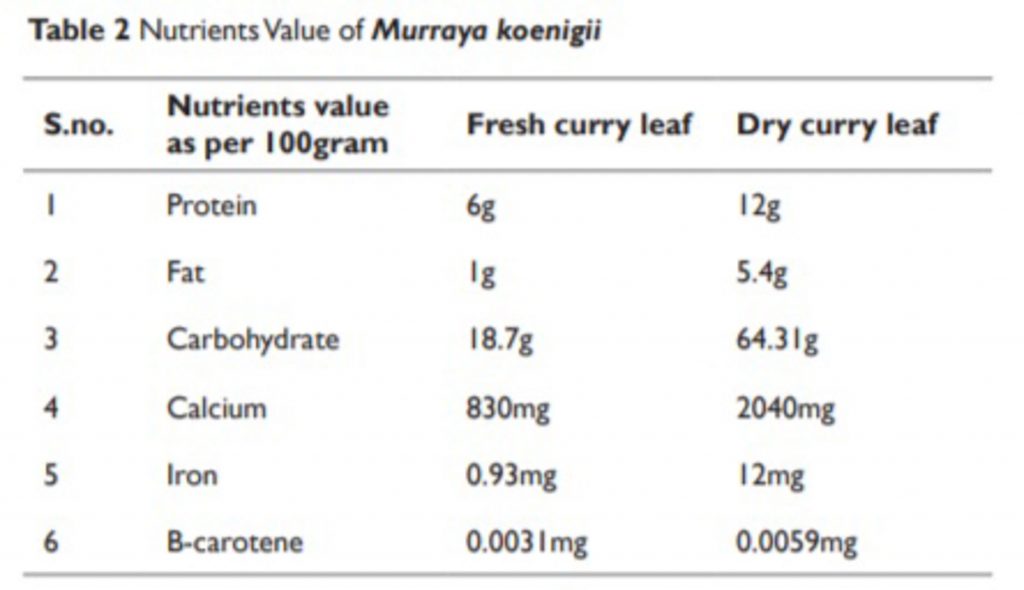
Credit :http://medcraveonline.com/
Here is how to do Karuvepilai Kuzhambu, Curry Leaves Curry. This recipe is from the repertoire of my friend Aruna.

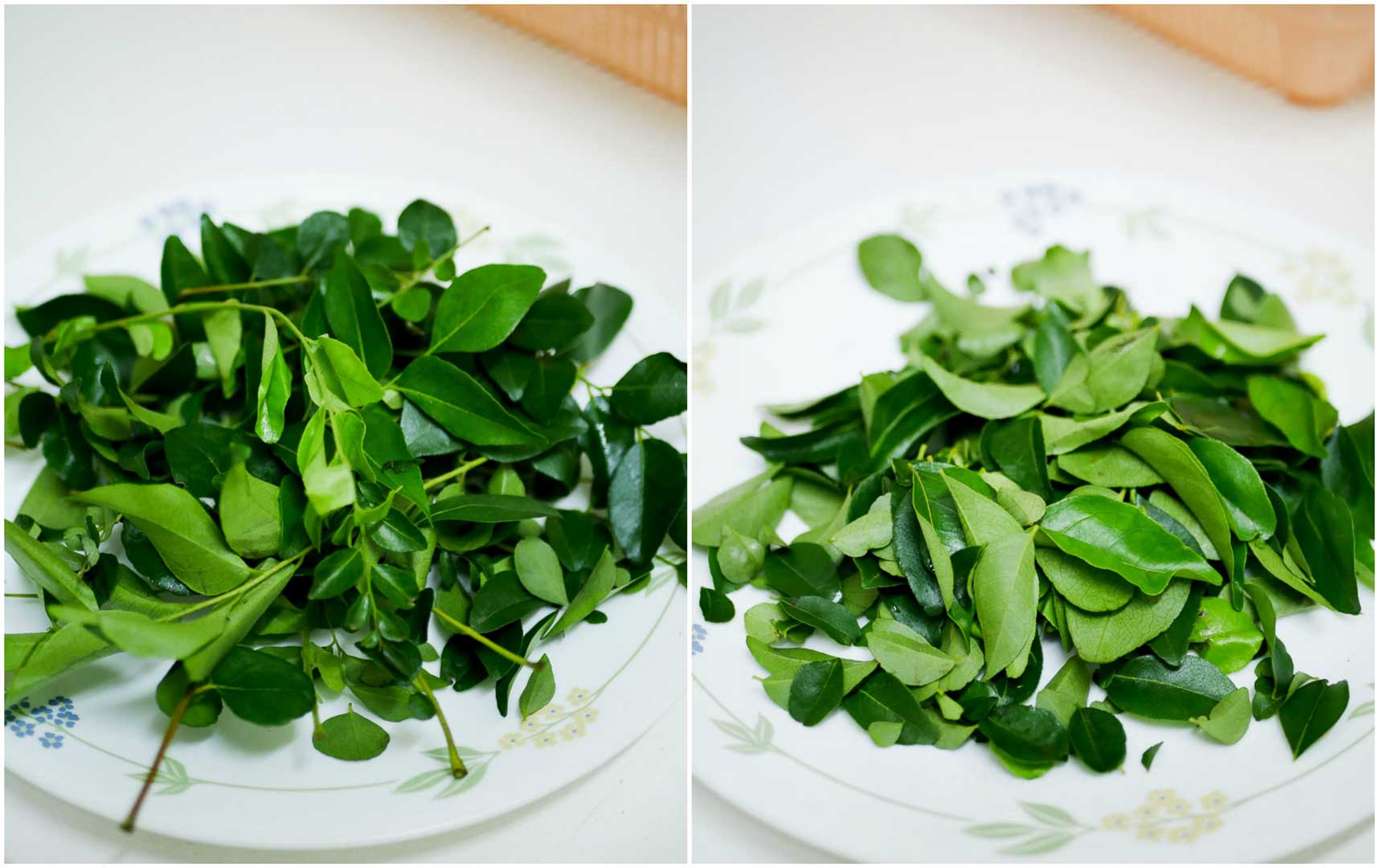
This curry is traditionally made with Indian shallots (Indian small onions) but regular red onions works well in the recipe. We will need about a cup of chopped red onions and a cup of cleaned and loosely packed curry leaves.
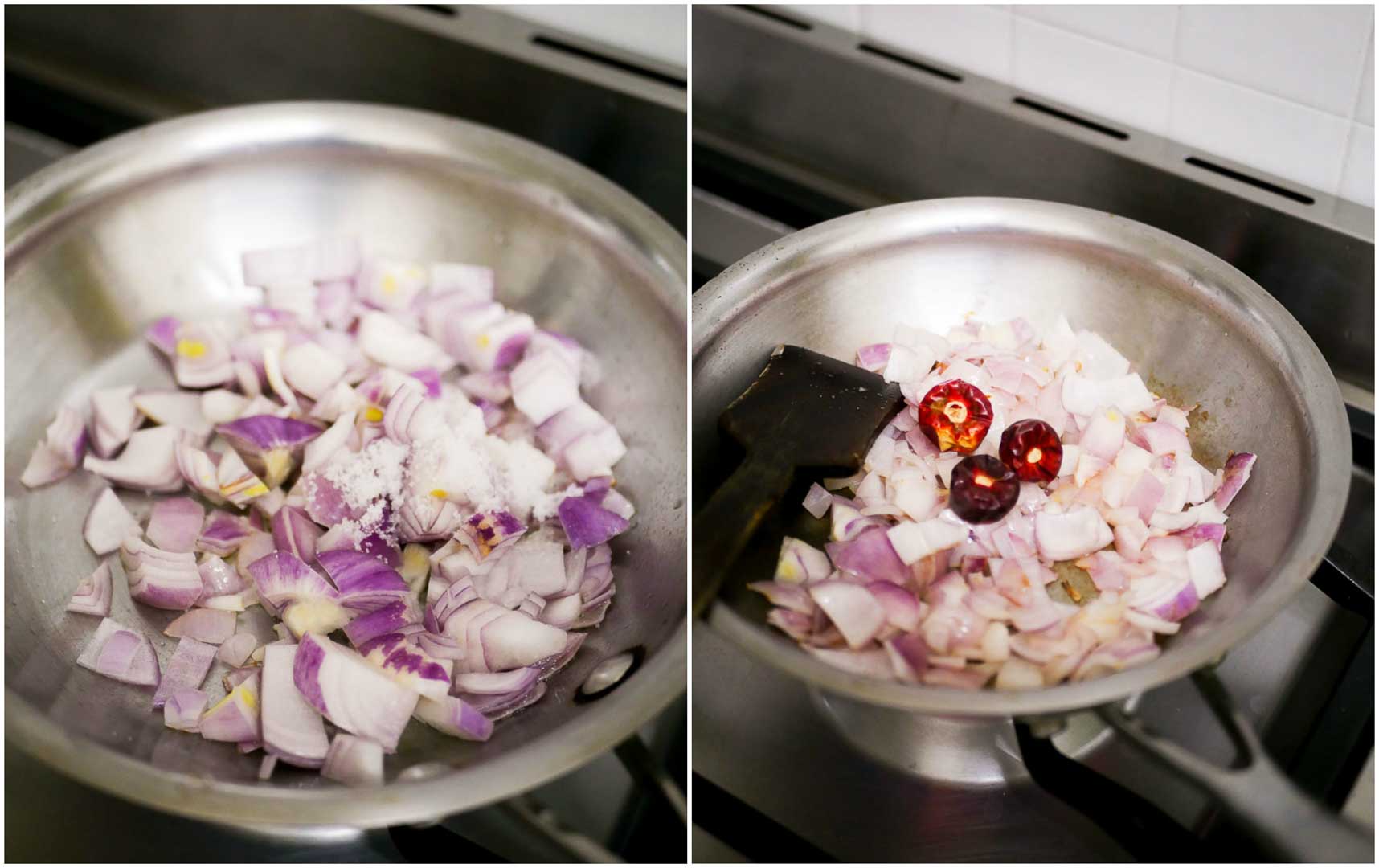
Heat oil in a pan and add in the onions, salt and dried red chillies. Saute for a few minutes till soft.
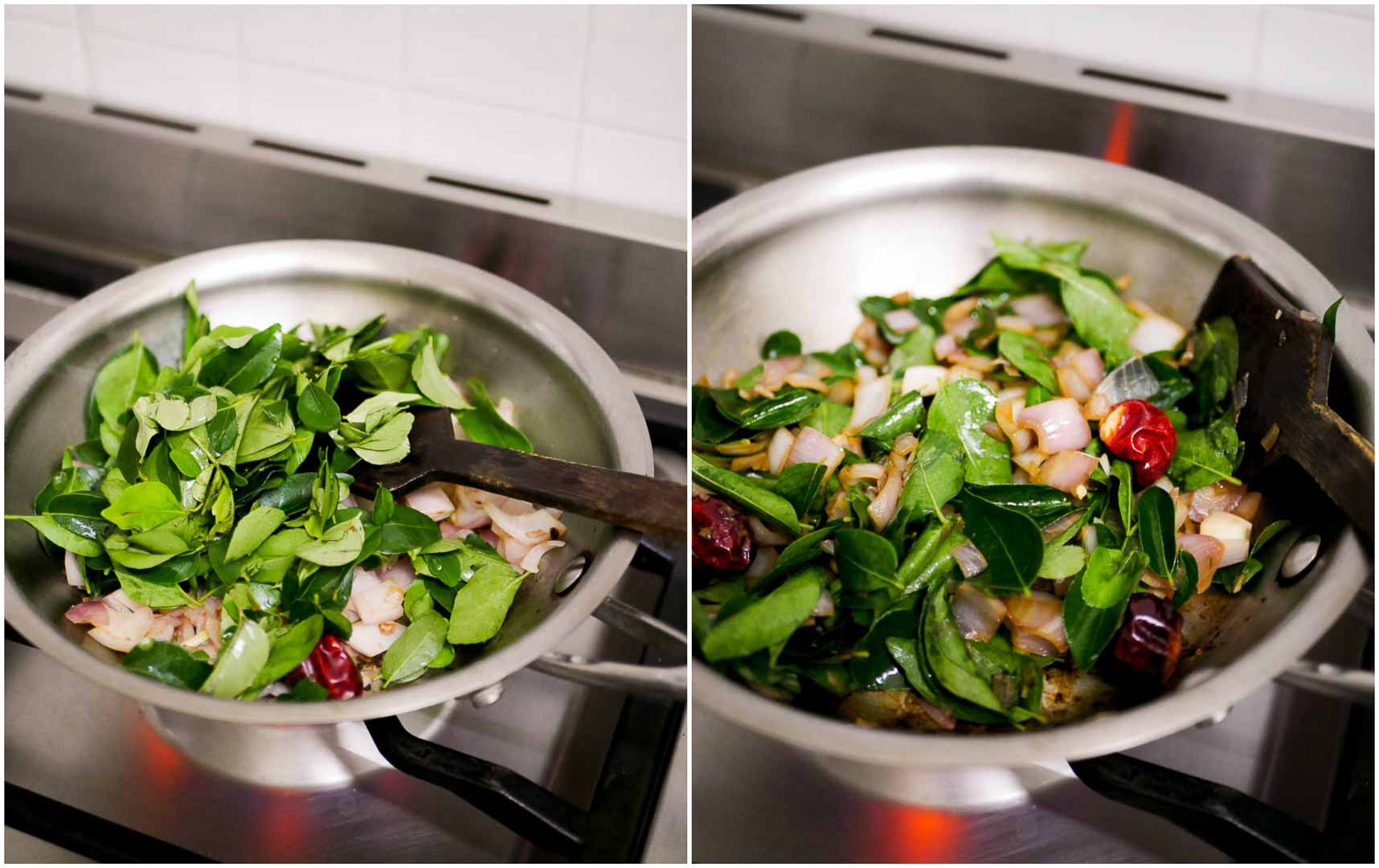
Add in the curry leaves. Saute for a couple of minutes.
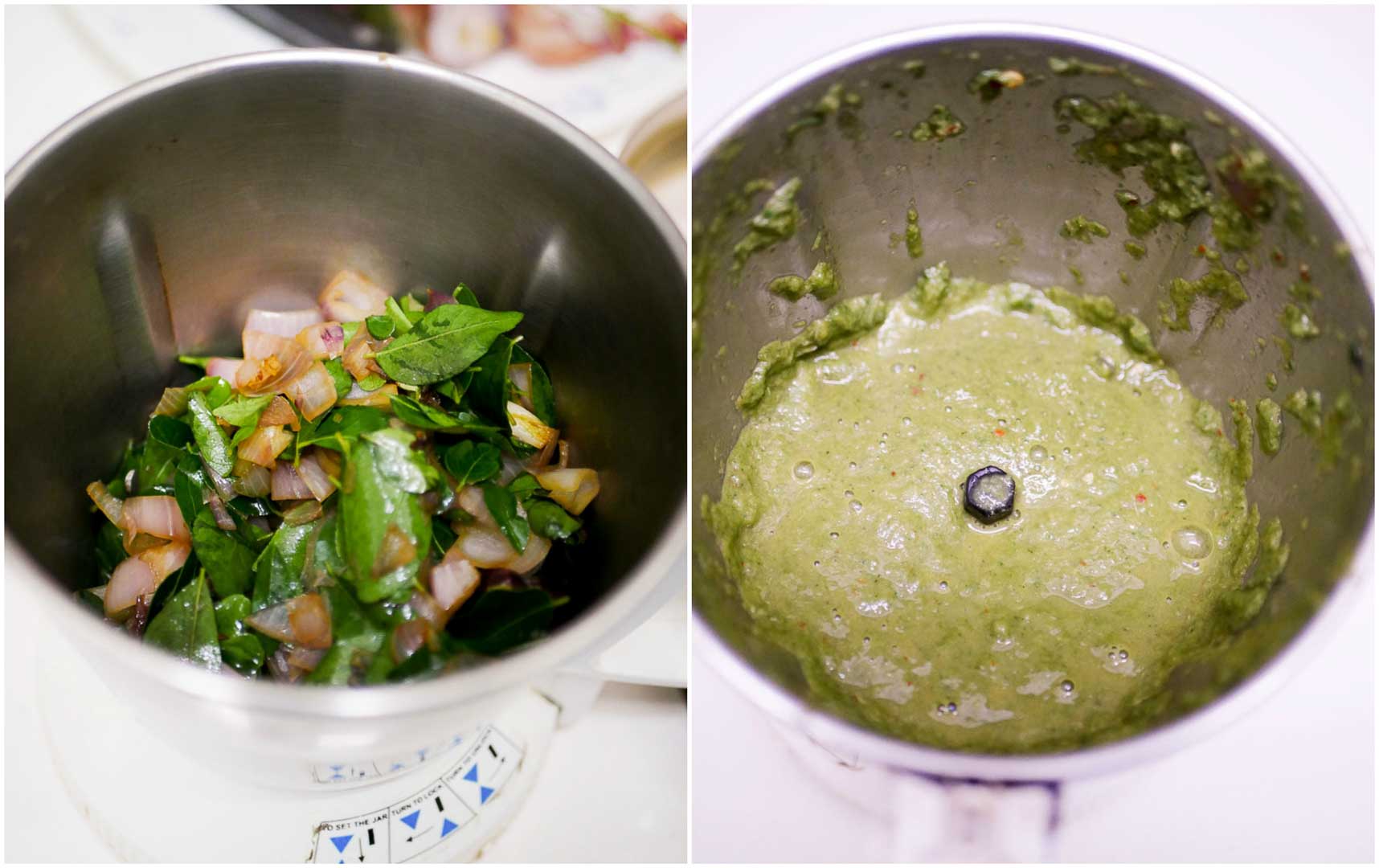
Remove the pan from heat and allow it to cool. Grind the mixture with a cup of water to a smooth paste. Set aside.
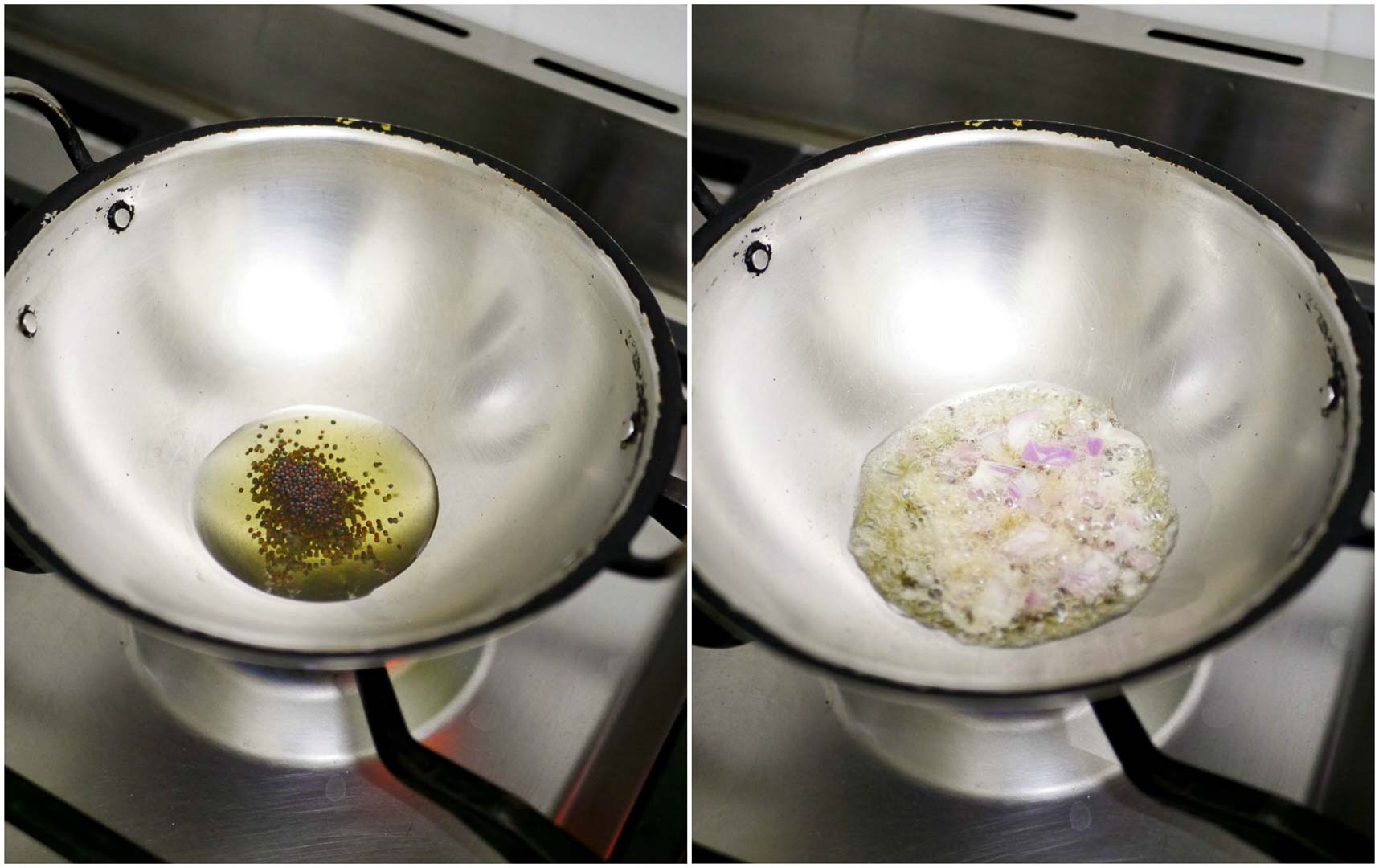
Heat oil in a pan and add in the mustard seeds and chopped Indian shallots (small onions). Saute for a couple of minutes.
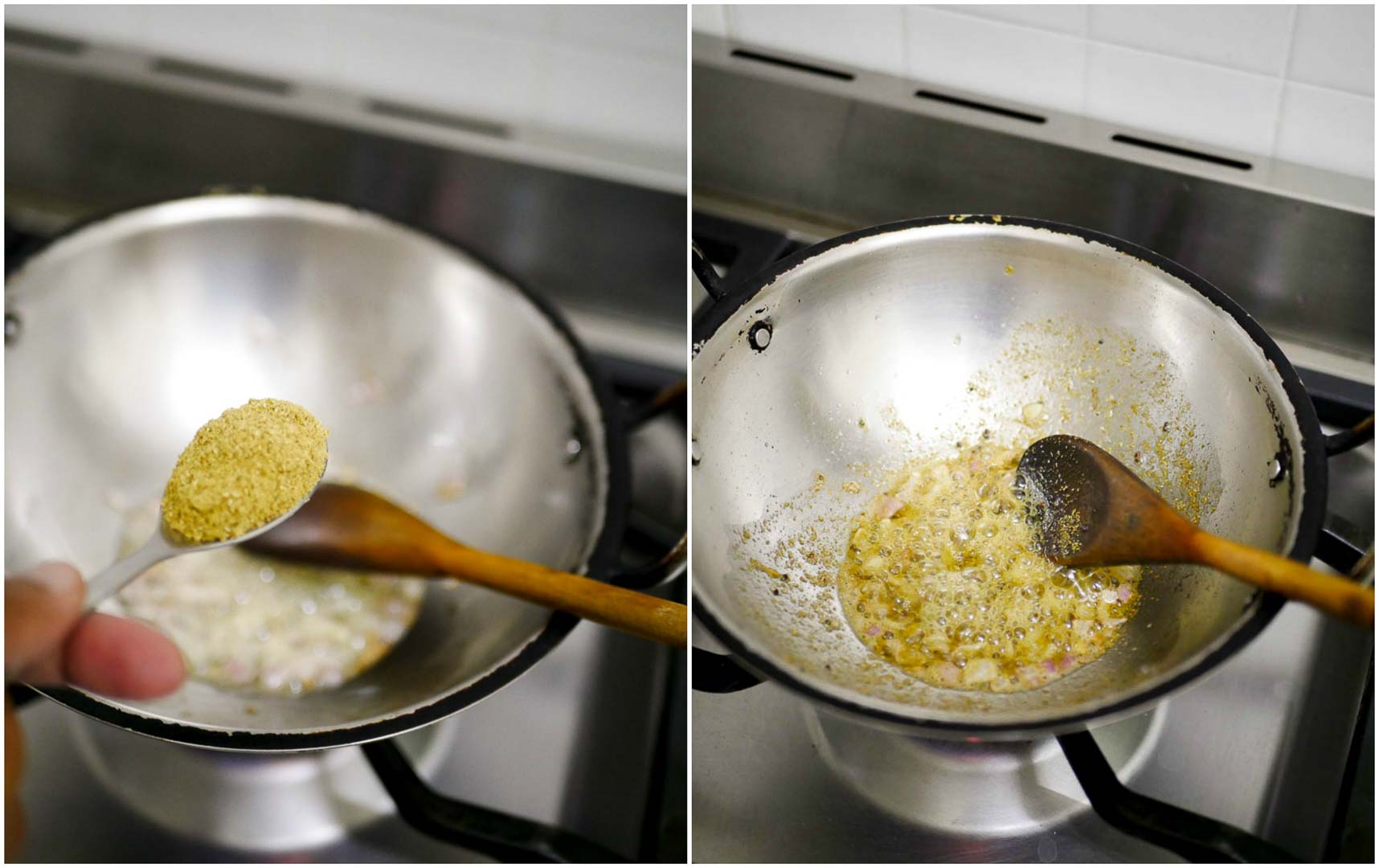
Add in a teaspoon of coriander powder. Fry for a few seconds.
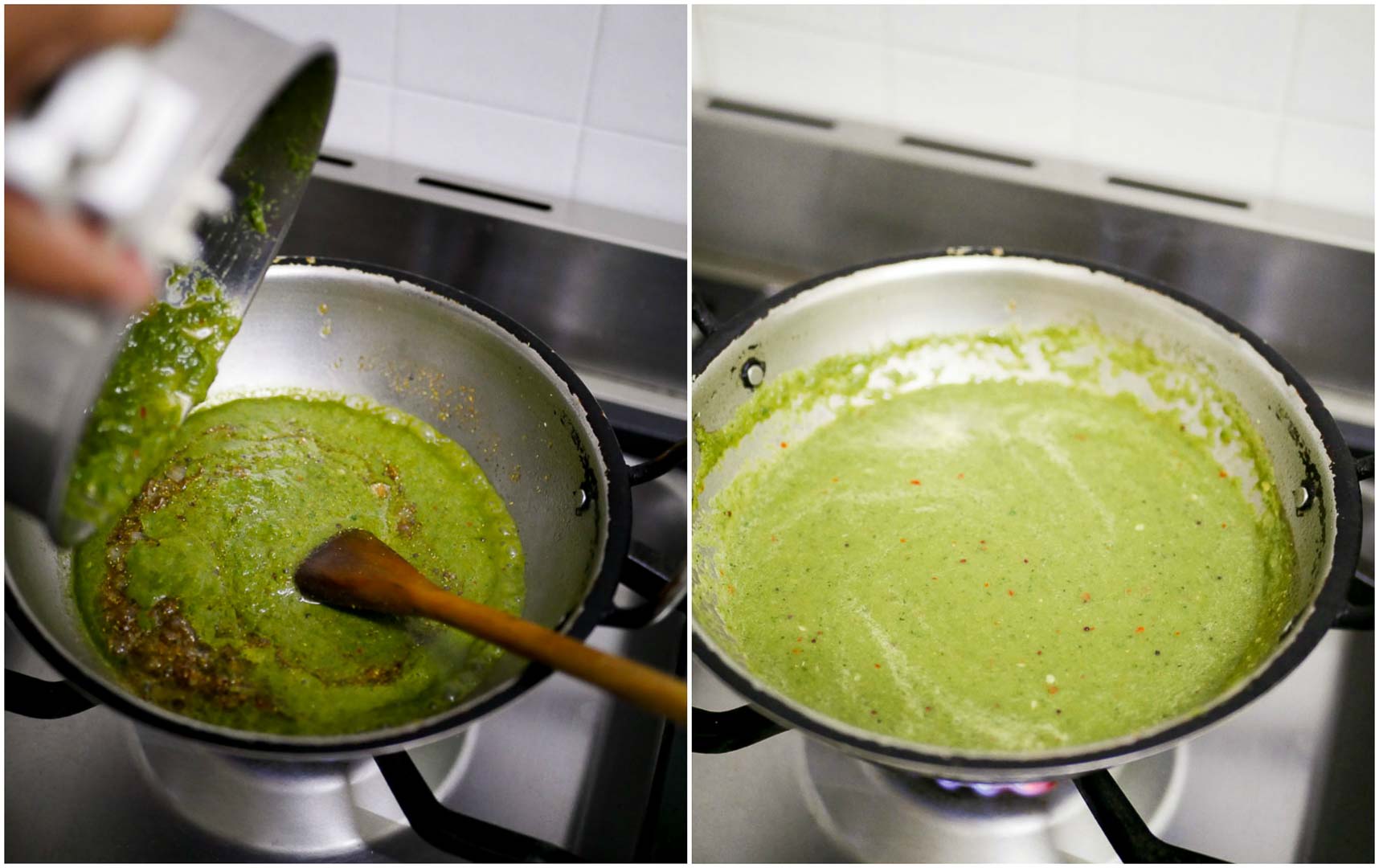
Add in the ground paste. Let the curry simmer for five minutes.
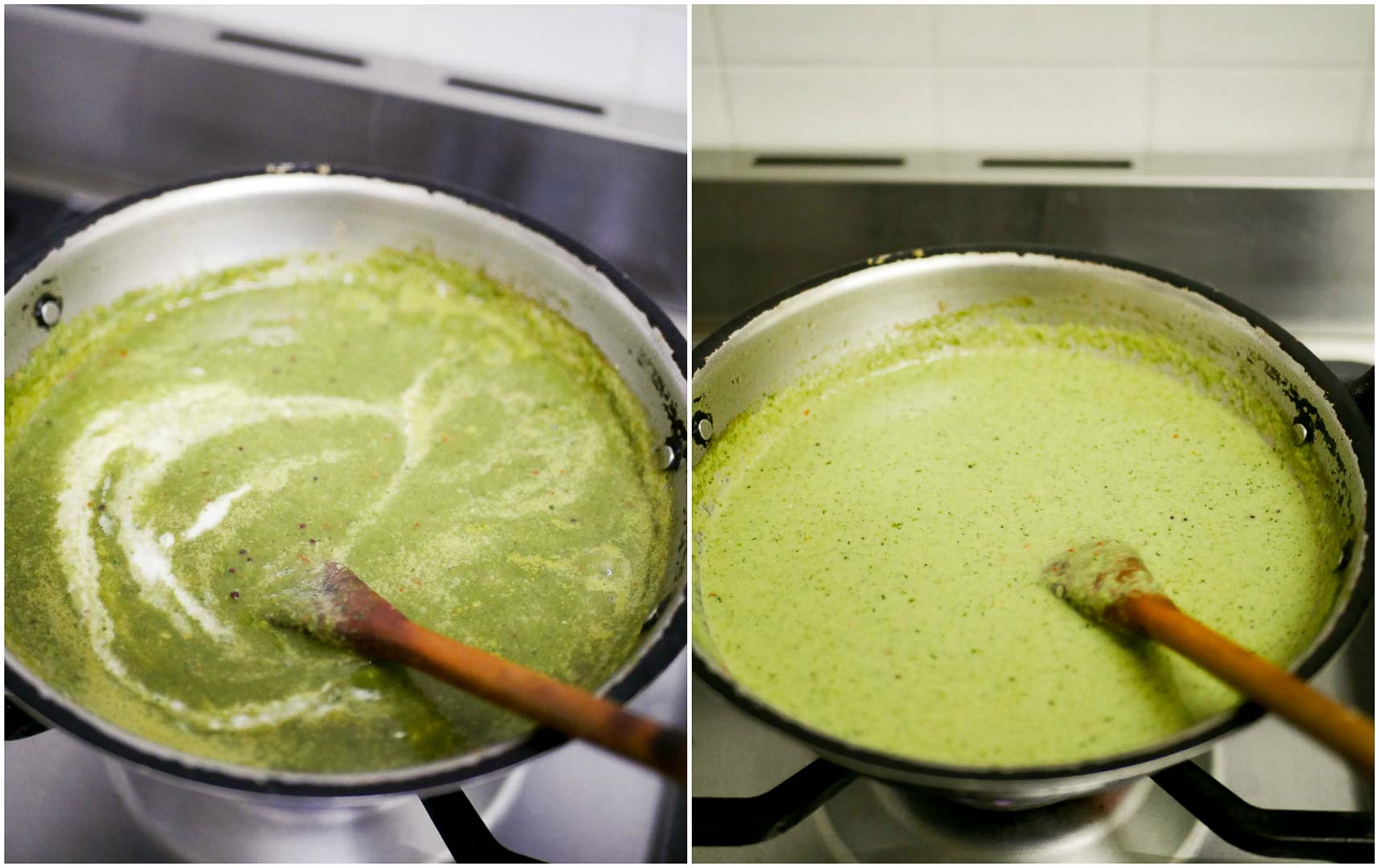
Add in the thick coconut milk (Homemade or canned – both works equally well for this recipe). After adding the coconut milk, simmer for a minute more.
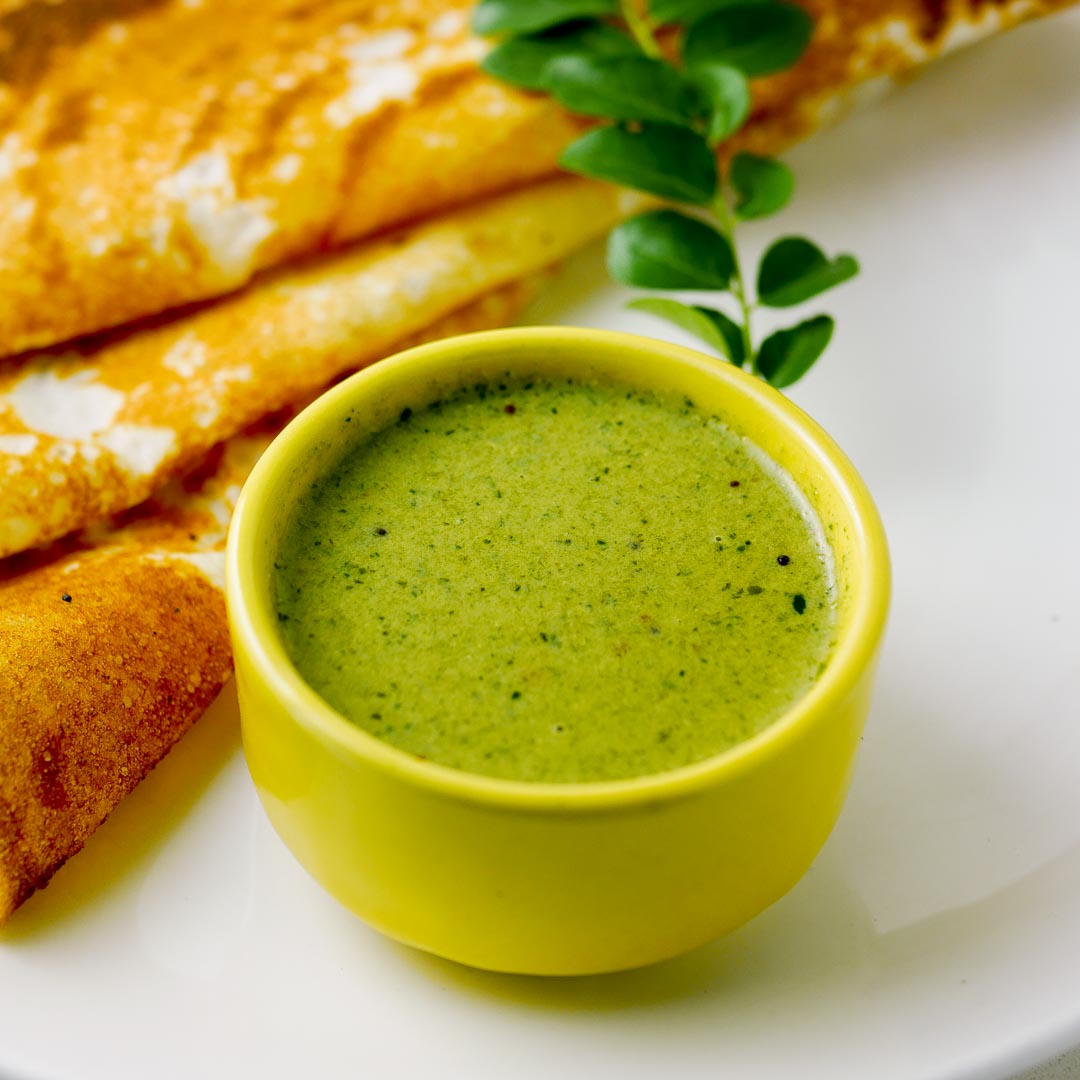
karuveppilai kuzhambu is ready. Serve with idli or dosa .
For the Paste
- 1 tablespoon Indian sesame oil – gingely oil
- 1 cup chopped onions
- 1 cup curry leaves
- 1 teaspoon salt
- 3 - 4 dried red chillies
Other Ingredients
- 1 tablespoon Indian sesame oil – gingely oil
- 1/4 teaspoon mustard seeds
- 4 - 5 Indian shallots (small onions), chopped
- 1 teaspoon coriander powder
- 1 cup thick coconut milk
- Heat oil in a pan and add in the onions, salt and dried red chillies. Saute for a few minutes till soft.
- Add in the curry leaves. Saute for a couple of minutes. Remove the pan from heat and allow it to cool. Grind the mixture with a cup of water to a smooth paste. Set aside.
- Heat oil in a pan and add in the mustard seeds and chopped Indian shallots (small onions). Saute for a couple of minutes.
- Add in a teaspoon of coriander powder. Fry for a few seconds.
- Add in the ground paste. Let the curry simmer for five minutes.
- Add in the thick coconut milk (Homemade or canned – both works equally well for this recipe). After adding the coconut milk, simmer for a minute more.
- karuveppilai kuzhambu is ready. Serve with idli or dosa.
- Author: Kannamma - Suguna Vinodh
- Prep Time: 10 mins
- Cook Time: 20 mins
- Category: side dish
- Cuisine: Tamilnadu
For the Paste
- 1 tablespoon Indian sesame oil – gingely oil
- 1 cup chopped onions
- 1 cup curry leaves
- 1 teaspoon salt
- 3 - 4 dried red chillies
Other Ingredients
- 1 tablespoon Indian sesame oil – gingely oil
- 1/4 teaspoon mustard seeds
- 4 - 5 Indian shallots (small onions), chopped
- 1 teaspoon coriander powder
- 1 cup thick coconut milk
- Heat oil in a pan and add in the onions, salt and dried red chillies. Saute for a few minutes till soft.
- Add in the curry leaves. Saute for a couple of minutes. Remove the pan from heat and allow it to cool. Grind the mixture with a cup of water to a smooth paste. Set aside.
- Heat oil in a pan and add in the mustard seeds and chopped Indian shallots (small onions). Saute for a couple of minutes.
- Add in a teaspoon of coriander powder. Fry for a few seconds.
- Add in the ground paste. Let the curry simmer for five minutes.
- Add in the thick coconut milk (Homemade or canned – both works equally well for this recipe). After adding the coconut milk, simmer for a minute more.
- karuveppilai kuzhambu is ready. Serve with idli or dosa.
- Author: Kannamma - Suguna Vinodh
- Prep Time: 10 mins
- Cook Time: 20 mins
- Category: side dish
- Cuisine: Tamilnadu
Find it online : https://www.kannammacooks.com/karuvepilai-kuzhambu-curry-leaves-curry/
Evolution is imminent, and an essential part of “growing up” is rediscovering our needs and necessities and changing our lifestyles to accommodate the same. There once was a time when meat was an integral part of our diets. Aside from religious requirements, quite a large part of the population across the world regularly ate some form of meat daily. Undoubtedly an essential source of protein, meat was also what kept our ancestors alive.
However, the world has changed tremendously ever since. While our forefathers relied on meat because other forms of foods were not available, the same is not the case right now. Moreover, news about animal cruelty has led people to give up meat altogether, as they move towards a more humane lifestyle that is equally, if not more, beneficial for the body and the mind.
So, what are the advantages of going vegan or at least vegetarian to start with? Why is it that more and more athletes are moving towards a plant-based diet when meat was a vital part of their food intake, until a few years back? Finally, what has led veganism to become more than a trend, and the first step towards a healthy lifestyle?
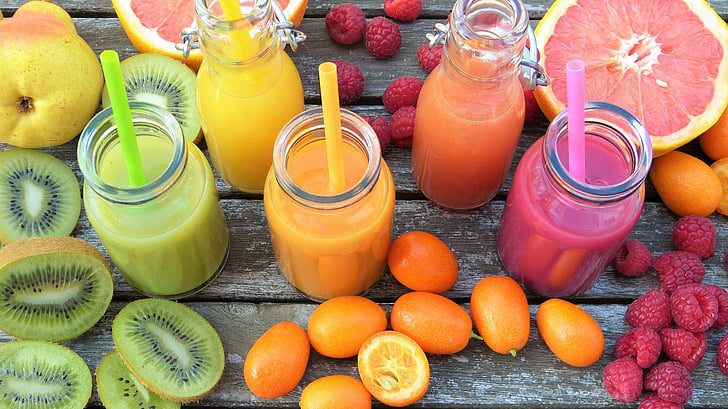
More Nutrients By the simple process of elimination, once you stop eating meat and dairy products, you will be forced to consume other foods such as fruits, vegetables, nuts, and seeds. As a result of this, your daily intake of nutrients, found inside these diverse foods, will increase. Which also raises the question if all vegan foods are alike? The short answer to this is, they are not, especially when you take into account concoctions such as fake meat. Just like with any other food, it is crucial to take into account the nutrient values of whatever you eat and focus on foods that provide you with the maximum amounts of antioxidants, vitamins, and fibre. There are a lot of products that satisfy the needs of a vegan. Here is an honest review on Green Vibrance. Humane Being vegan is an essential part of fighting for animal rights. Besides denouncing the inhuman killing of living beings, veganism goes a step further and disregards any dairy products either. This stops all practices that in any way, lead to contamination of our foods as well as mistreatment for cattle for the benefit of humankind. Moreover, to further support the cause, there has been a noticeable increase in vegan and vegetarian restaurants across the world. It has reached a point that many fast-food restaurants now have options for both vegans and vegetarians, leaving meat-eaters with no excuse not to slowly make changes to their diets.
Body Effects The effects of a clean, plant-based diet on our bodies has long been proven by research. Not only does veganism lead to weight loss, but it also helps lower blood sugar resulting in lesser chances of getting type 2 diabetes. Furthermore, regular intake of fruits and legumes has been directly linked to lessening the chances of getting certain types of cancer. From reducing risk of heart disease to pain control for arthritis patients, the medical benefits of a vegan diet are reasons enough to consciously work towards adopting veganism, or at least a part of it, in our daily lives.
