
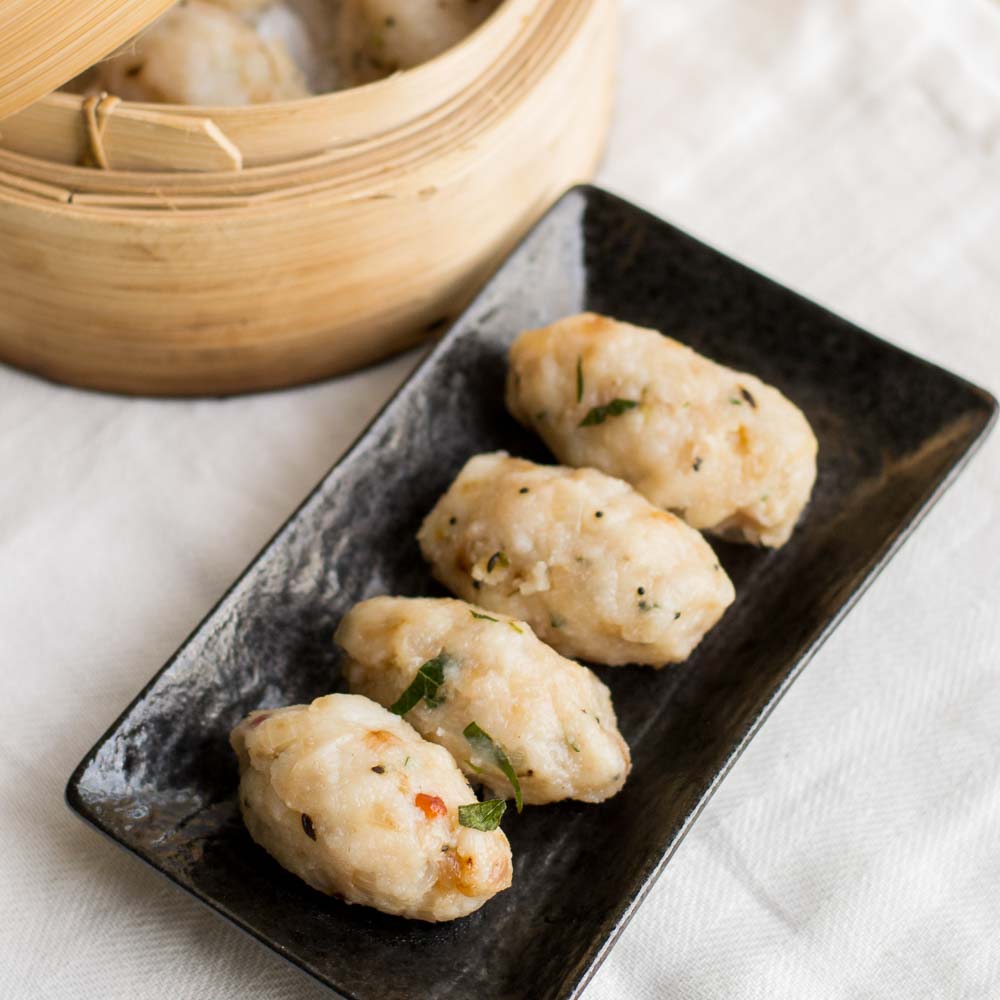
Kara Kozhukattai is made in the Kongunad region using par boiled rice and not the regularly used rice flour. This is a very light and super tasty kozhukattai. This is a childhood favorite for everyone. It is generally made with lots of onions. If making for festival like ganesh chaturthi, onions are omitted. This kozhukattai is mainly had for dinner with some chutney. If there are very young children or aged people at home, the chana dal (kadalai paruppu) used in the recipe is boiled and added instead of adding them during tempering. Boiling the chana dal removes the textural crunch while eating and also makes it a little easier to digest. I have added the chana dal during tempering today. Here is how to do Kara Kozhukattai.
Here is the video of how to make Kara Kozhukattai, Recipe for easy Kara Kozhukattai.
Par boiled rice is used for this recipe. Soak Idli rice (Idli rice is Par Boiled Rice) for 3 hours. If you have puzhungal arisi / parboiled rice used for meals, use that as it adds to the taste. If you are planning for breakfast, then soak the rice over nite. It works well. Drain the water from the soaked rice. Now, grind the rice with some water. The quantity of water used while grinding will determine the final texture of the kozhukattai. For every cup of rice used, add exactly one cup of water while grinding. Too little water will give a really hard Kozhukattai and adding a lot of water will make the Kozhukattai gummy. So use the correct measurement of water while grinding. Grind to a really smooth fine paste. Set aside.

Heat sesame oil (gingely oil) in a pan and add in the mustard seeds, cumin seeds and the chana dal. Wait for the chana dal to brown.

Add in the curry leaves, ginger, onions and green chillies. Make sure all these ingredients are finely chopped, so its easy to prepare and shape the Kozhukattai. You do not want a big chilli or a curry leaf when you bite the dumpling. So take time and chop the ingredients as fine as possible. Add in the salt. Saute for 2-3 minutes until the onions are cooked and slightly starting to brown. Add little coconut at this stage for a rich taste.

Add in the ground rice mixture and stir with a spatula. The rice mixture will immediately thicken up into a mass of dough. Set aside to cool a bit.

Let the dough become warm. When the dough is still warm, dip your hands in cold water and take a small lemon size ball of dough. Press the dough a little to form oblong shaped dumplings. Set aside.

Place the dumplings on an idli plate or any flat plate and steam it for 15 minutes on a medium flame. The dumplings would become slightly glossy after steaming. Remove from heat.

Serve hot with coconut chutney , red chutney or kara chutney .
For grinding
- 1 cup parboiled rice
- 1 cup water
For tempering
- 2 teaspoon Indian sesame oil
- 1/4 teaspoon mustard seeds
- 1/4 teaspoon cumin seeds
- 2 tablespoon chana dal (kadalai paruppu)
- 1/2 cup onions, finely chopped
- 1/2 inch piece ginger, finely chopped
- 1 sprig curry leaves, finely chopped
- 3 green chillies, finely chopped
- 1 teaspoon salt
- 1/4 cup fresh shredded coconut (optional)
- Soak Idli rice (Par Boiled Rice) for 3 hours. Drain the water from the soaked rice. Grind the rice with water. Grind to a really smooth fine paste. Set aside.
- Heat sesame oil (gingely oil) in a pan and add in the mustard seeds, cumin seeds and the chana dal. Wait for the chana dal to brown.
- Add in the curry leaves, ginger, onions and green chillies. Add in the salt. Saute for 2-3 minutes until the onions are cooked and slightly starting to brown.
- Add in the ground rice mixture and stir with a spatula. The rice mixture will immediately thicken up into a mass of dough. Set aside.
- Let the dough become warm. When the dough is still warm, dip your hands in cold water and take a small lemon size ball of dough. Press the dough a little to form oblong shaped dumplings. Set aside.
- Place the dumplings on an idli plate or any flat plate and steam it for 15 minutes on a medium flame.
- Serve hot with coconut chutney, red chutney or kara chutney.
- Author: Kannamma - Suguna Vinodh
- Prep Time: 2 hours
- Cook Time: 20 mins
- Category: Main
- Cuisine: Tamilnadu


For grinding
- 1 cup parboiled rice
- 1 cup water
For tempering
- 2 teaspoon Indian sesame oil
- 1/4 teaspoon mustard seeds
- 1/4 teaspoon cumin seeds
- 2 tablespoon chana dal (kadalai paruppu)
- 1/2 cup onions, finely chopped
- 1/2 inch piece ginger, finely chopped
- 1 sprig curry leaves, finely chopped
- 3 green chillies, finely chopped
- 1 teaspoon salt
- 1/4 cup fresh shredded coconut (optional)
- Soak Idli rice (Par Boiled Rice) for 3 hours. Drain the water from the soaked rice. Grind the rice with water. Grind to a really smooth fine paste. Set aside.
- Heat sesame oil (gingely oil) in a pan and add in the mustard seeds, cumin seeds and the chana dal. Wait for the chana dal to brown.
- Add in the curry leaves, ginger, onions and green chillies. Add in the salt. Saute for 2-3 minutes until the onions are cooked and slightly starting to brown.
- Add in the ground rice mixture and stir with a spatula. The rice mixture will immediately thicken up into a mass of dough. Set aside.
- Let the dough become warm. When the dough is still warm, dip your hands in cold water and take a small lemon size ball of dough. Press the dough a little to form oblong shaped dumplings. Set aside.
- Place the dumplings on an idli plate or any flat plate and steam it for 15 minutes on a medium flame.
- Serve hot with coconut chutney, red chutney or kara chutney.
- Author: Kannamma - Suguna Vinodh
- Prep Time: 2 hours
- Cook Time: 20 mins
- Category: Main
- Cuisine: Tamilnadu
Find it online : https://www.kannammacooks.com/kara-kozhukattai-kara-kozhukattai-recipe/

The Story behind the divine prasadam Akkaravadisal. Panguni Uthiram is a very important day for Hindus. In Srirangam, when the star Uthiram is in ascension, Divya Thampadhigal (the divine couple), Lord Ranganatha and Thayar, come together for a day. This is the only occasion of the year when Lord Ranganatha and Goddess Ranganayaki are seen together and hence this is a very sacred occasion. Belief is that a visit to the Srirangam temple on this day will relieve one of all sins. The darshan on this day is called “Serthi Sevai.” In Tamil, ‘Serthi’ means alongside and ‘Sevai’ is darshan. Akkaravadisal is served as prasadam on panguni uthiram day.
Akkaravadisal is a very special dish prepared for lord Ranganatha. This dish has been mentioned in Naalayira Divya Prabandham in a couple of instances. Andal herself has composed the poem below. Here are the verses.
நாறு நறும் பொழில் மாலிருஞ்சோலை நம்பிக்கு நான் நூறு தடாவில் வெண்ணெய் வாய்நேர்ந்து பராவி வைத்தேன் நூறு தடா நிறைந்த அக்கார அடிசில் சொன்னேன் ஏறு திருவுடையான் இன்று வந்து இவை கொள்ளுங் கொலோ?
To the divine lord who lives in the fragrant garden of Thirumaalirunjolai, I made hundred thousand pots of butter And a hundred brimming pots of akkara adisal Will the most praised lord come today to accept them.
கூடாரை வெல்லும் சீர் கோவிந்தா! உன்தன்னைப் பாடிப்பறை கொண்டு யாம் பெறும் சம்மானம் நாடுபுகழும் பரிசினால் நன்றாக சூடகமே தோள் வளையே தோடேசெவிப் பூவே பாடகமே யென்றனைய பல்கலனும் யாமணிவோம் ஆடையுடுப்போம் அதன் பின்னே பாற்சோறு மூடநெய் பெய்து முழங்கை வழிவாரக் கூடியிருந்து குளிர்ந்தேலோ ரெம்பாவாய்.
Triumphing over enemies, Oh Govindha, We’ll sing your praises, and with the reward we get We’ll dress up with ornaments new clothes and eat rich Akkaravadisal with ghee dripping down our elbows rejoicing in your company.
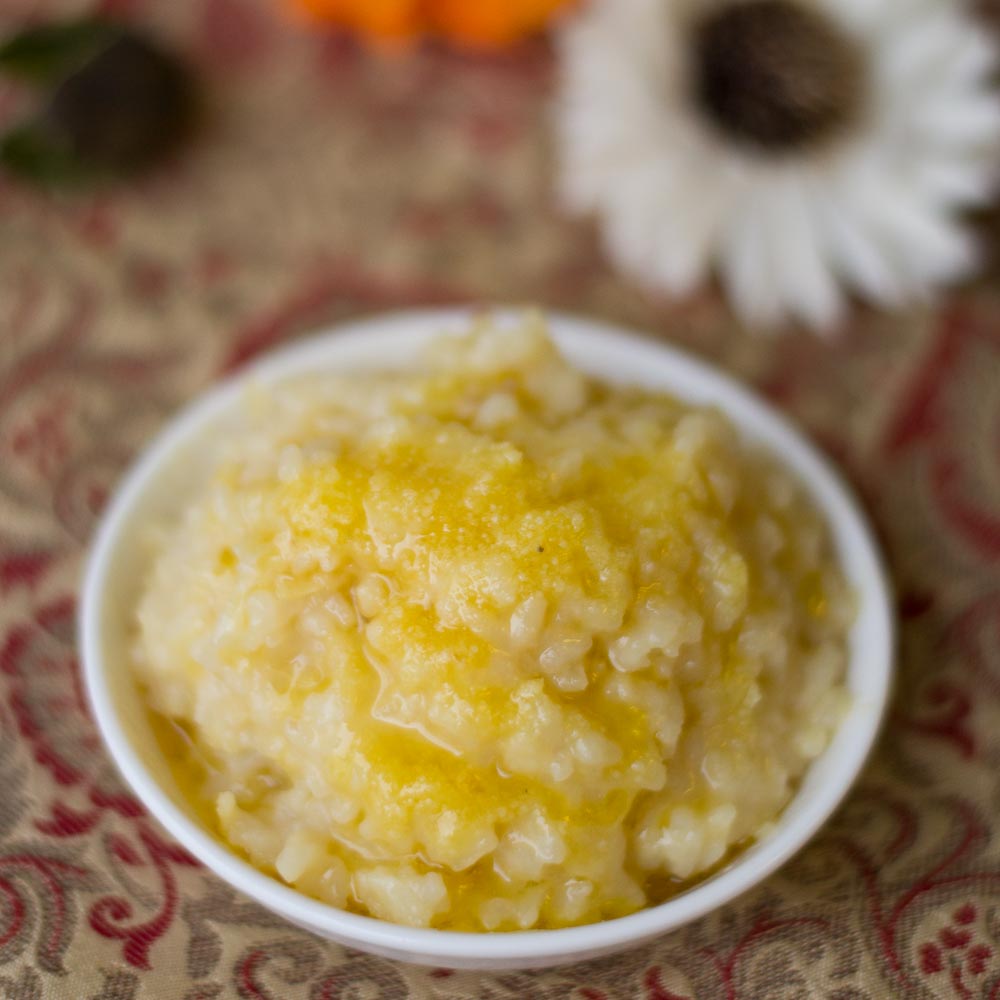
AKKARAVADISAL recipe is similar to sweet pongal / chakkara pongal . But its cooked entirely in milk and generous amounts of ghee.
We will be using raw rice and split yellow lentils – moong dal for this recipe. I have used rice cups for measurement. 1 rice cup equals 160 ml. I have used one cup of rice and 1/4 cup of dal for this recipe.
Wash and soak the rice and dal in water for an hour. Drain the water and set aside. Add in 3.5 cups of milk to the rice dal mixture.

I have used a pressure cooker for cooking the dal-rice mixture. As we are cooking the rice mixture in milk, we will be using pot in pot method to avoid the milk from spewing out of the whistle while cooking. Take a 5 liter pan and add in 200 ml of water. Add the pot with the rice-milk mixture inside the pan. Cover and cook for 10 whistles. It took about 12 minutes. Remove the pan from heat. I allowed the pressure from the cooker to settle on its own for 15 minutes. As we are cooking pot in pot, it needs these many whistles for the rice to be cooked creamy and mushy.

In the mean time, powder the sugar and cardamom in a small mixie and set aside.

Heat the broken pieces of jaggery with water and the sugar mixture until dissolved. Remove from heat.

On opening the cooker, transfer the mixture to the pan and strain the jaggery liquid onto the cooked rice. Mash well with a spatula or a cup. If you want a very creamy Akkaravadisal, mix in a cup of hot milk and let the mixture simmer for a minute.


Add in the ghee. Akkaravadisal is ready.
You can also fry some cashews in ghee and add it to Akkaravadisal. While serving, add a teaspoon of ghee and serve.
- I have used rice cups for measurement for this recipe. 1 rice cup = 160ml
Cooking Rice
- 1 Cup Rice
- 1/4 Cup Split Yellow Moong Dal
- 3.5 Cups Full Fat Milk
Jaggery Syrup
- 1 Cup Jaggery
- 1/3 cup Water
- 2 Tablespoon Sugar
- 4 Cardamom
Other Ingredients
- 1 Cup Milk to be added at the end
- 4 Tablespoon Ghee
- 10 Cashewnuts
- Wash and soak the rice and dal in water for an hour. Drain the water and set aside. Add in 3.5 cups of milk to the rice dal mixture.
- Take a 5 liter pan and add in 200 ml of water. Add the pot with the rice-milk mixture inside the pan. (pot in pot cooking method). Cover and cook for 10 whistles. It took about 12 minutes. Allow the pressure from the cooker to settle on its own.
- In the mean time, powder the sugar and cardamom and set aside.
- Heat the jaggery with water and the sugar mixture until dissolved. Remove from heat.
- On opening the cooker, transfer the mixture to the pan and strain the jaggery liquid onto the cooked rice. Mash well with a spatula or a cup. If you want a very creamy Akkaravadisal, mix in a cup of hot milk and let the mixture simmer for a minute. Add in the ghee. Akkaravadisal is ready.
- You can also fry some cashews in ghee and add it to Akkaravadisal. While serving, add a teaspoon of ghee and serve.
- Author: Kannamma - Suguna Vinodh
- Prep Time: 1 hour
- Cook Time: 20 mins
- Category: Sweet
- Cuisine: Tamilnadu


