
Image: https://www.pexels.com
Finding Culinary Inspiration In The Woods
Eating food that comes from natural sources is a good way to maintain your health. The Indian cuisine is positioned perfectly to take advantage of this, with many of the spices, oils and grains used in Indian cooking coming from natural sources.
This type of diet is so effective that one study, conducted by the Public Health Foundation of India, found that vegetarian Indians are healthier overall (though it’s important to note that meat can be natural, too). If you’re looking to take your natural food knowledge to the next level, or simply reconnect with this way of eating, there are few better ways to gain inspiration than via a food-focused trip to the forest.
Setting the scene
For the perfect trip, a good setting is important. Picking your location will be part of this. There is a diverse and plentiful amount of woodland in India, and depending on where you live, your experience will be completely different. This is because the forests range from tropical wet rainforest to tropical dry deciduous. For example, Kodagu, near Bengaluru, will offer a typical forest experience and is excellent for simple living, whether via camping or in a log cabin. Opting for this sort of outdoors experience will enhance your eating that extra bit; according to a study published in the Journal of Ethic Foods, eating outdoors is good for your mental and physical health. Bring along ambient lighting and family games for the trip to enhance it that little bit more.
Living from the land
The purpose of your trip is to find inspiration for food, and living from the land is a great way to achieve that. Safety is most important, and so ensure that you’re well prepared through guidebooks or apps on what could be harmful in your environment. Aside from that, get involved. One Indian, who states they have gone completely ‘off the grid’, has spoken about the variety of food obtained this way, and the nutritional benefit of it. Take the mahua tree. According to Vikalp Sangam, the leaves can create a hearty and delicious alternative to porridge, and its fruit consumed as a vegetable side-dish.
Bringing it back to the plate
No trip can last forever, but you’d be missing out if you didn’t bring the inspiration home with you. Indian cuisine already uses many natural ingredients and as such provides the perfect foundation on which to experiment with your cooking. First off, consider the creatures of the outdoors – could they be brought into your cooking? Insects and exotic small creatures might seem strange, but are often nutritionally desirable. Alternatively, a root vegetable or gourd that is perhaps less used in day-to-day cooking but widely found out in nature could enhance your meal.
Ultimately, bringing in all-natural ingredients to your home cuisine will be a boon to your health. Follow the traditions of Indian cooking. Find inspiration out in wooded areas is a great start, especially in India, where so much variety can be found.
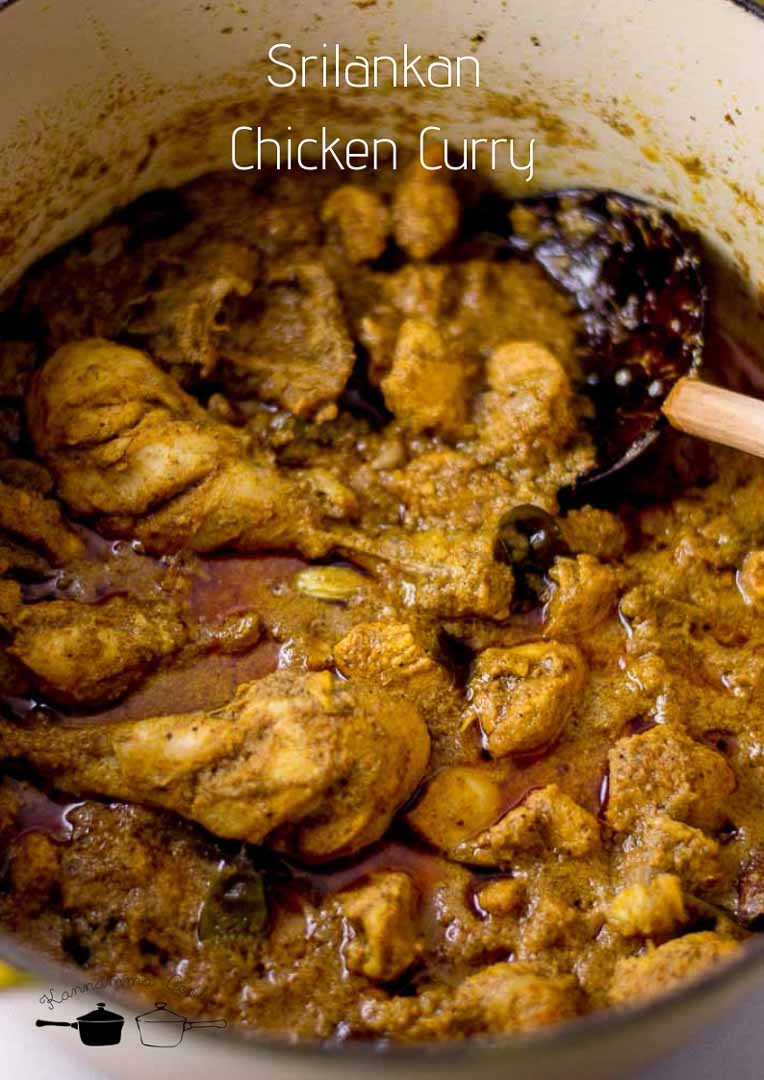
Recipe for traditional Sri Lankan chicken curry. Made with homemade curry masala powder. The curry goes well with rotti, rice and hoppers. Recipe with step by step pictures.
Here is a recipe for traditional Sri Lankan style chicken curry that I learnt from Chef Palitha Dewage during my trip to the beautiful nation in 2017. This dish is very robust, spicy and goes very well with hoppers , string hoppers and even rice .
Sri Lankan style Curry powder is used for this recipe. If you can get hold of it in a place where you live, use it. I made my own curry powder recipe from scratch and here it is!!!
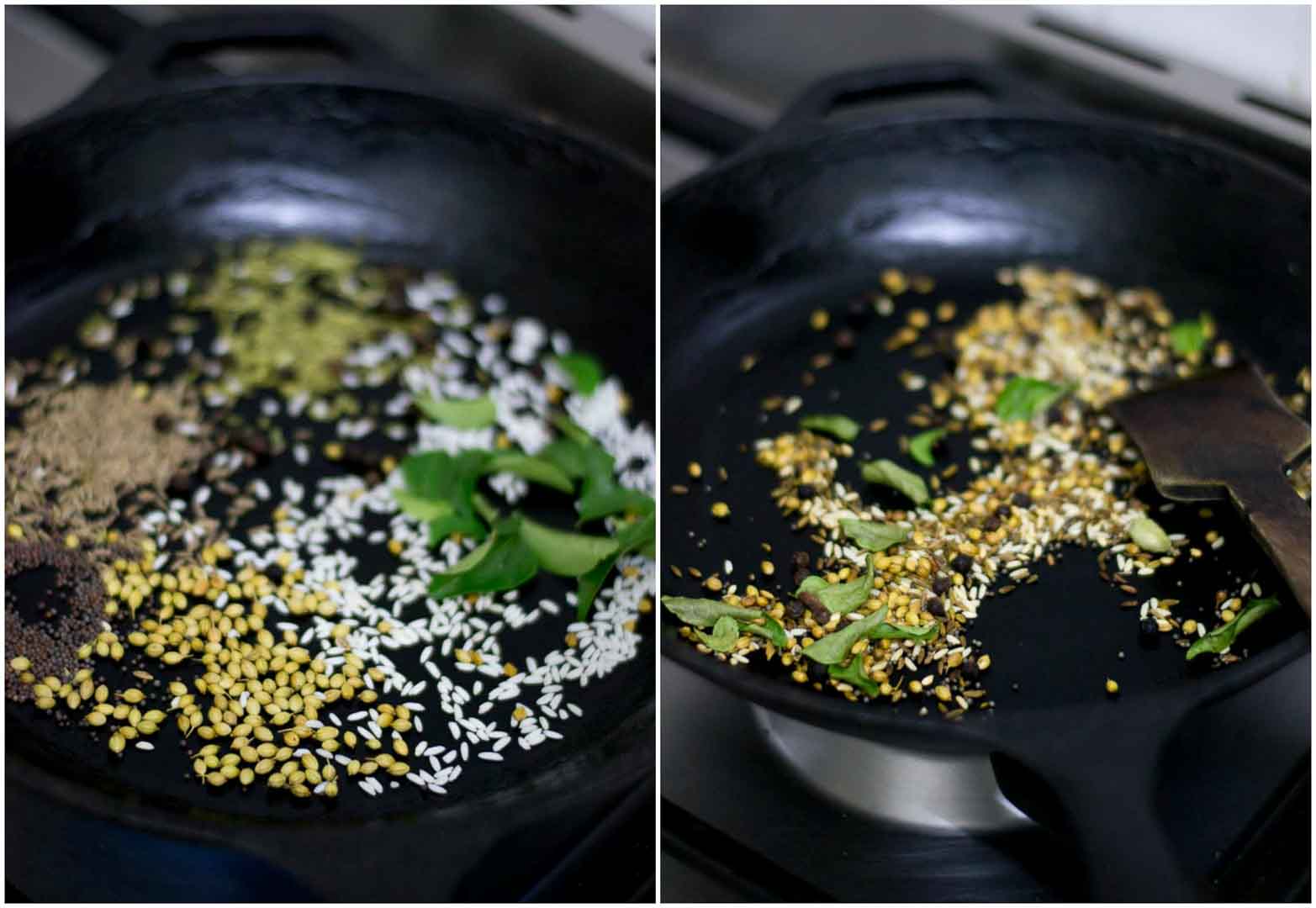
First lets make a homemade curry powder for this recipe. Heat a heavy pan on low flame. Add in all the ingredients listed under curry powder. Just a couple of things. Don’t go over board with fenugreek seeds. Too much will make the curry bitter. Regarding what kind of rice to use, it really does not matter. Just use whatever rice you have on hand. Parboiled, raw rice, basmati, whatever…..It will work!!! Slowly roast all the ingredients till the spices turn fragrant and the mustard seeds slowly starts to pop here and there. The rice would have slightly turned brown.
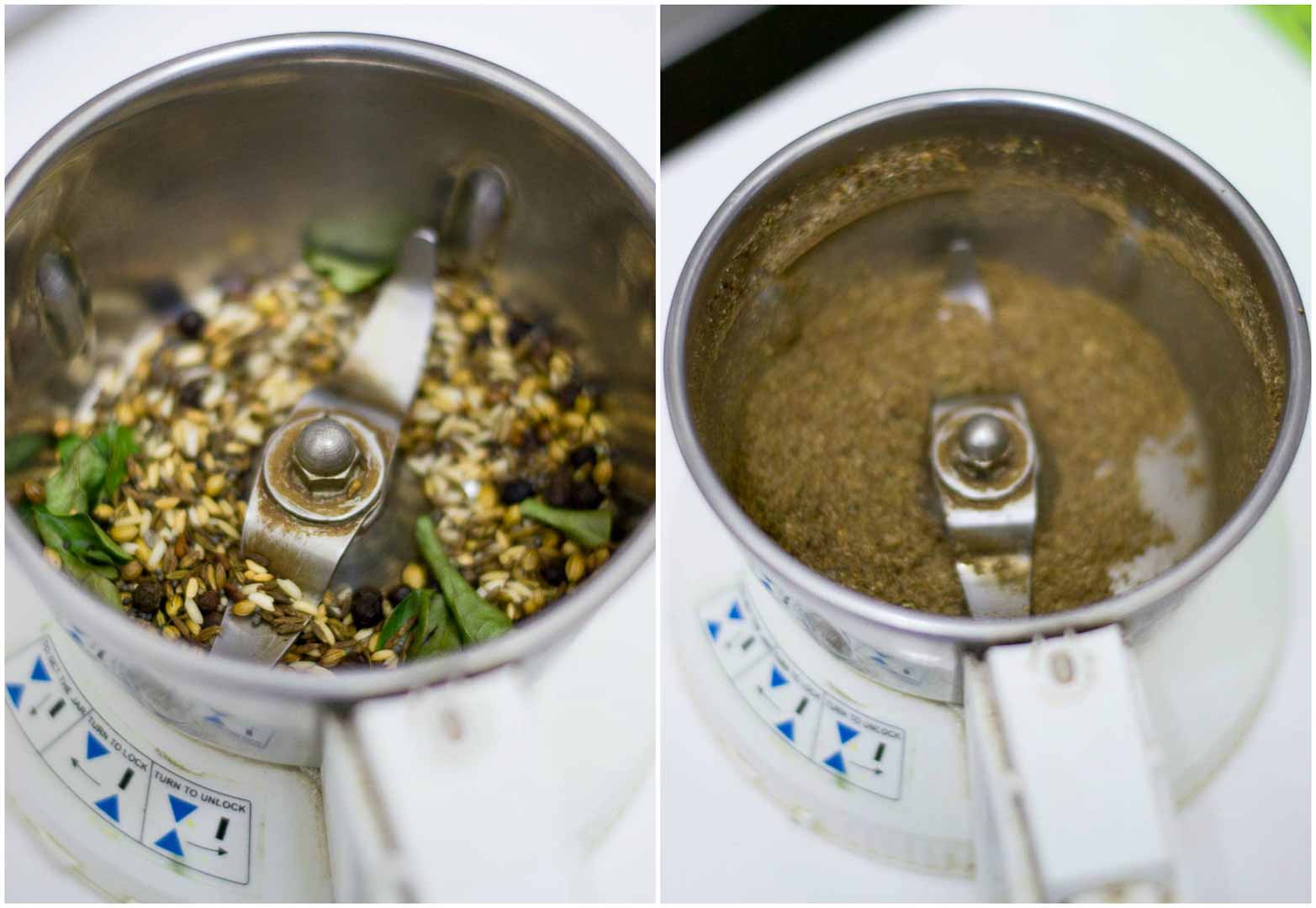
Set aside everything on a plate to cool. Transfer the cooled ingredients to a mixie. Grind to a smooth powder. Set aside.
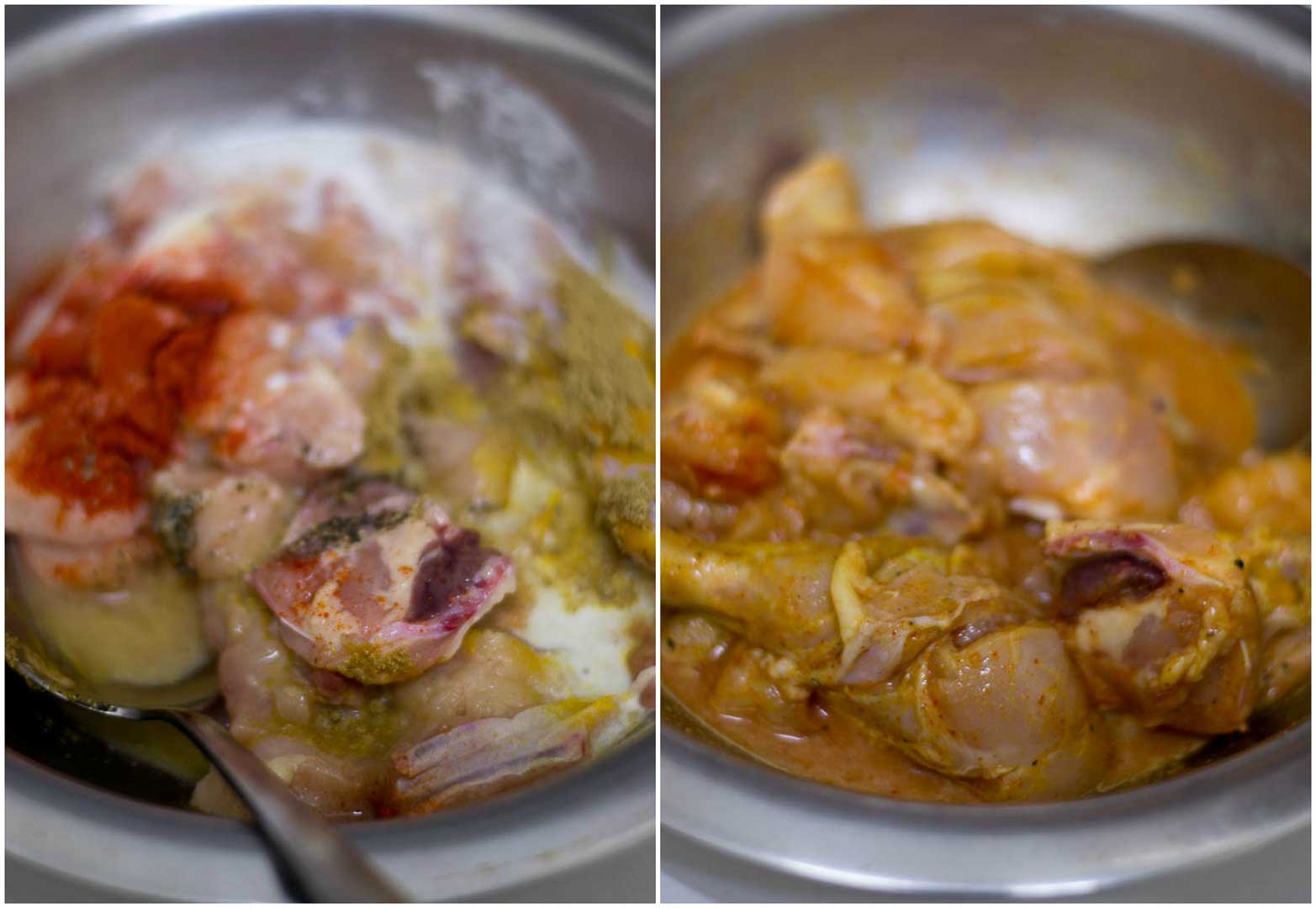
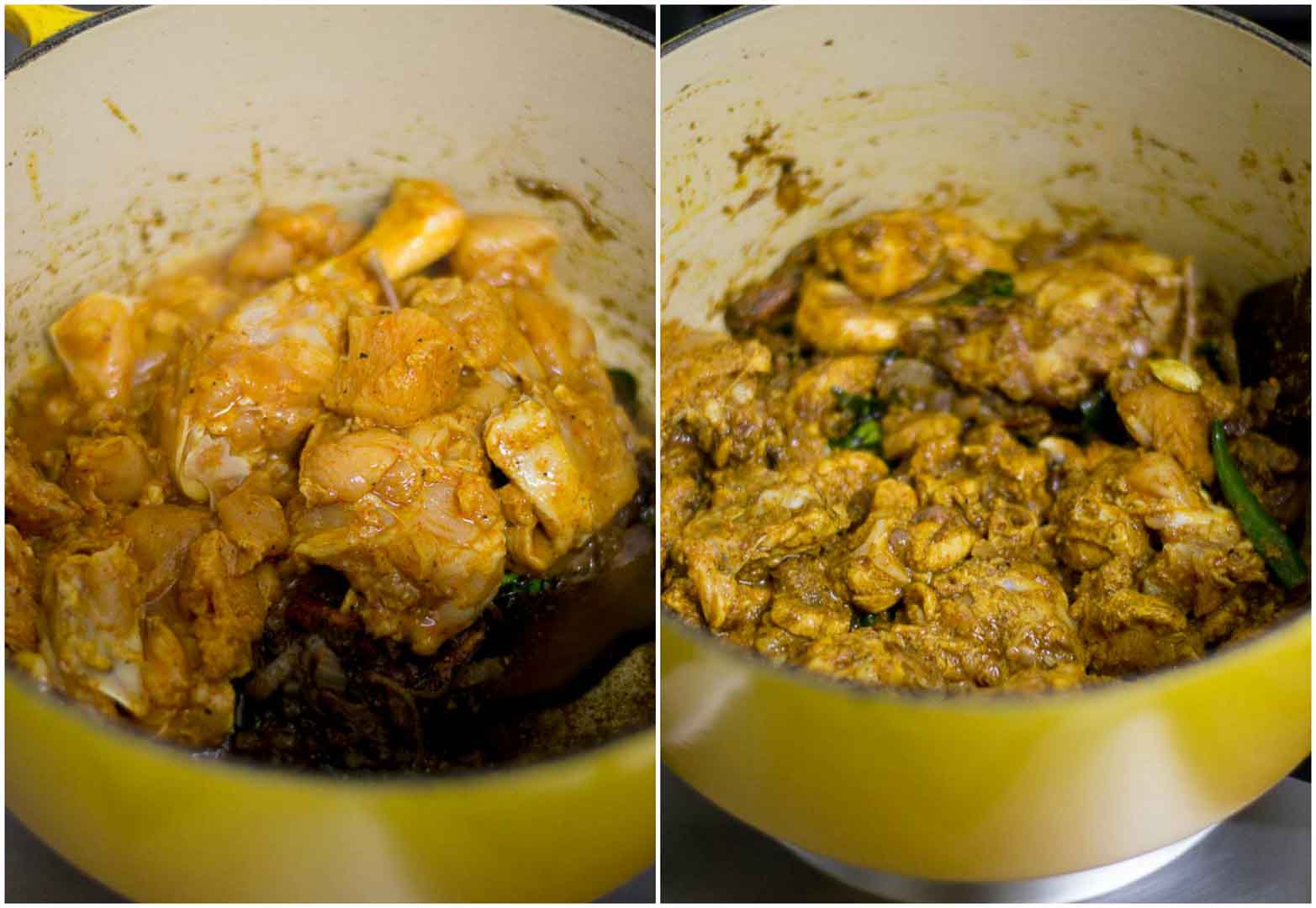
Marinate the chicken with the marination ingredients. Set aside for 30 minutes. Make sure that the pieces are small. If using chicken legs, make some gashes so the masalas can permeate well.
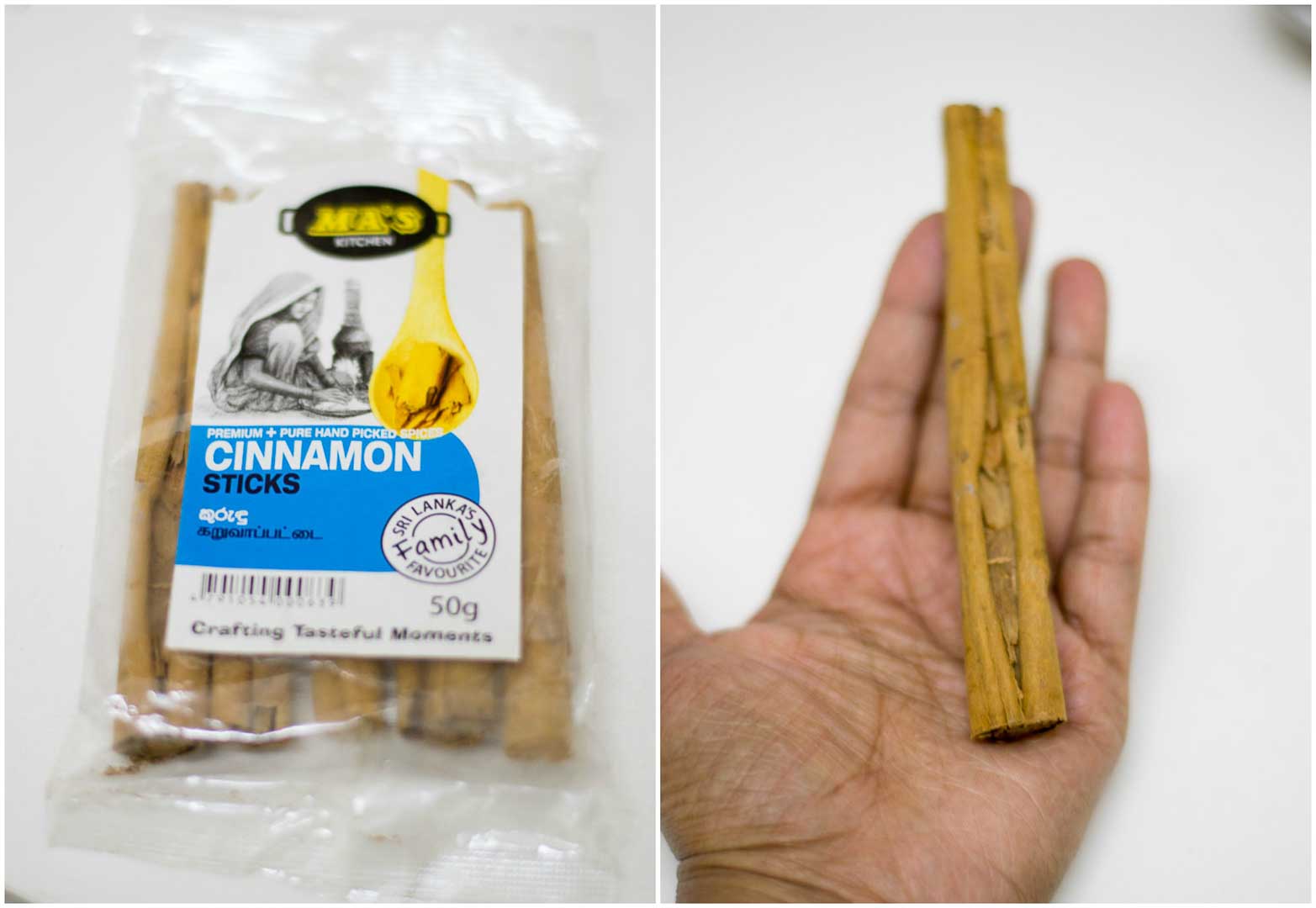
Heat coconut oil in a pan and add in the cinnamon and cardamom. If you can get hold of the Sri Lankan cinnamon, use that. I used my last lot of Sri Lankan cinnamon that is remaining from my last trip. I store all my spices in the freezer so it stays fresh for a long time without turning rancid or losing its potency. Most of the Cinnamon we use here in India is actually cassia. Ceylon Cinnamon quills will resemble a tightly rolled cigar once dried. Cassia tends to be a dark brown-red color with thicker sticks and a rougher texture than Ceylon cinnamon. One of the primary differences between cinnamon and cassia is the coumarin content.
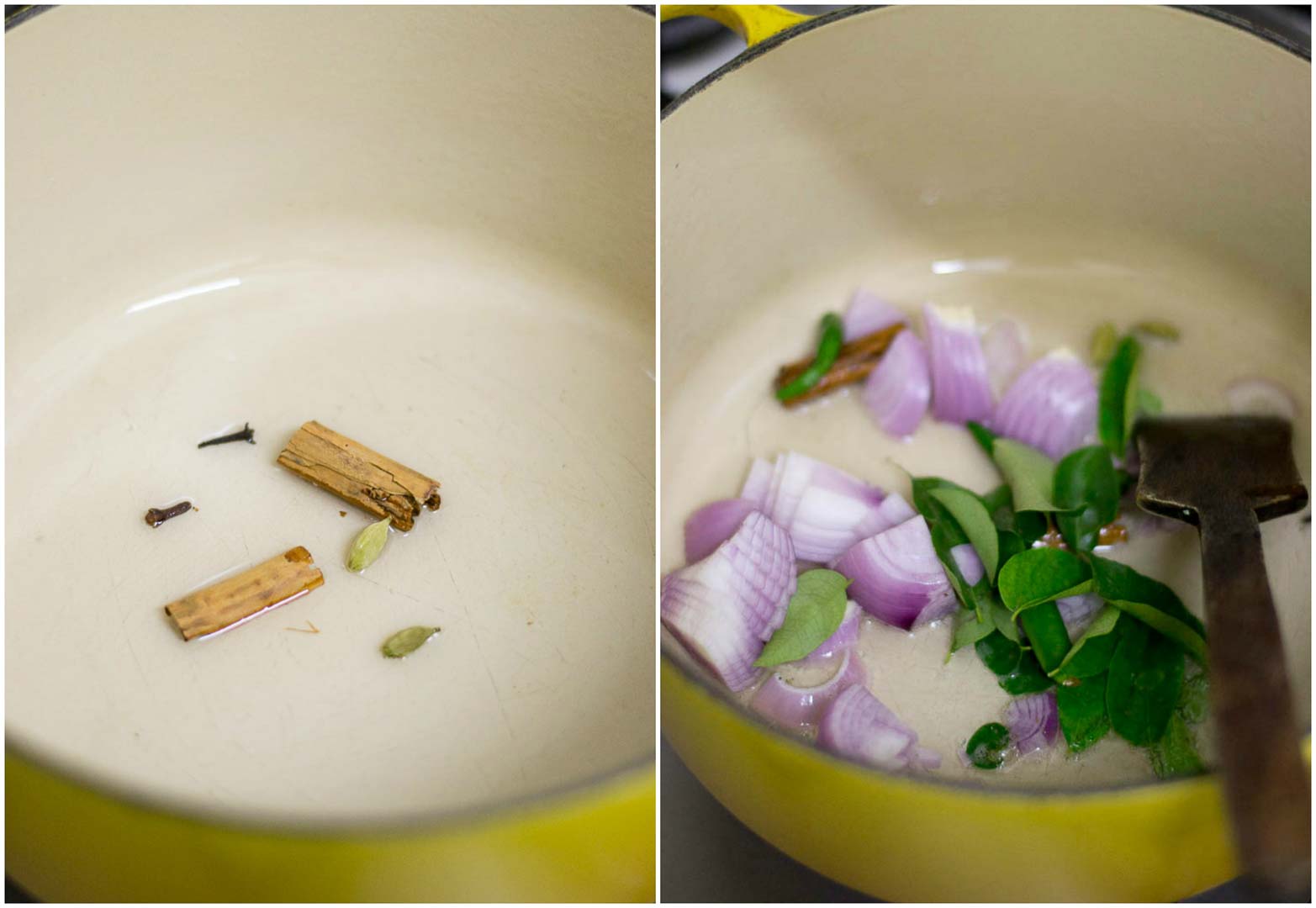
Add in the curry leaves, green chillies and sliced onions. Saute for a few minutes.
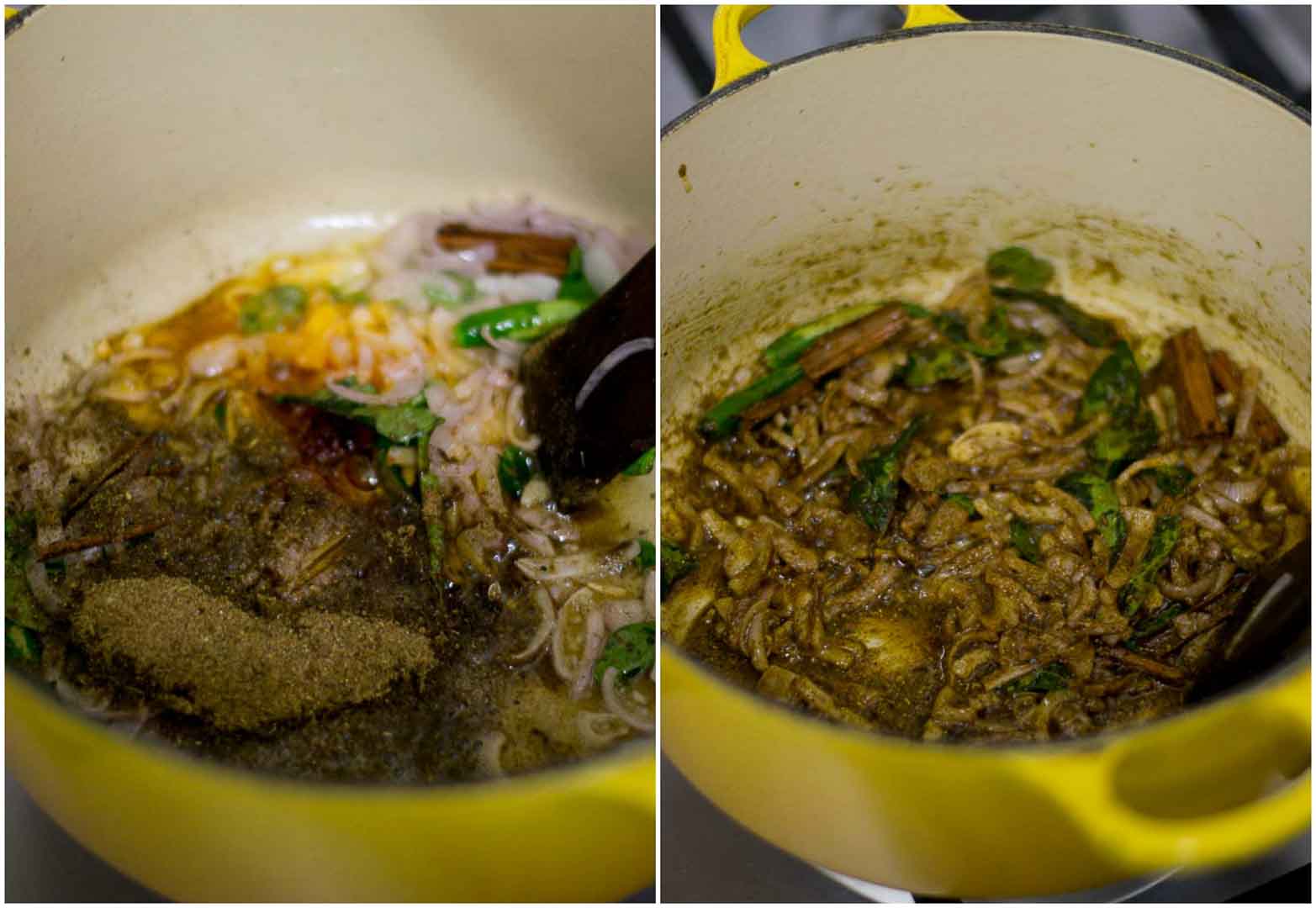
Add in the red chiili powder, black pepper powder, turmeric powder and the ground curry masala powder. Add all of the curry masala powder. Saute for a couple of minutes. Let the masalas get roasted well. The aromas from the pan should now waft the kitchen.
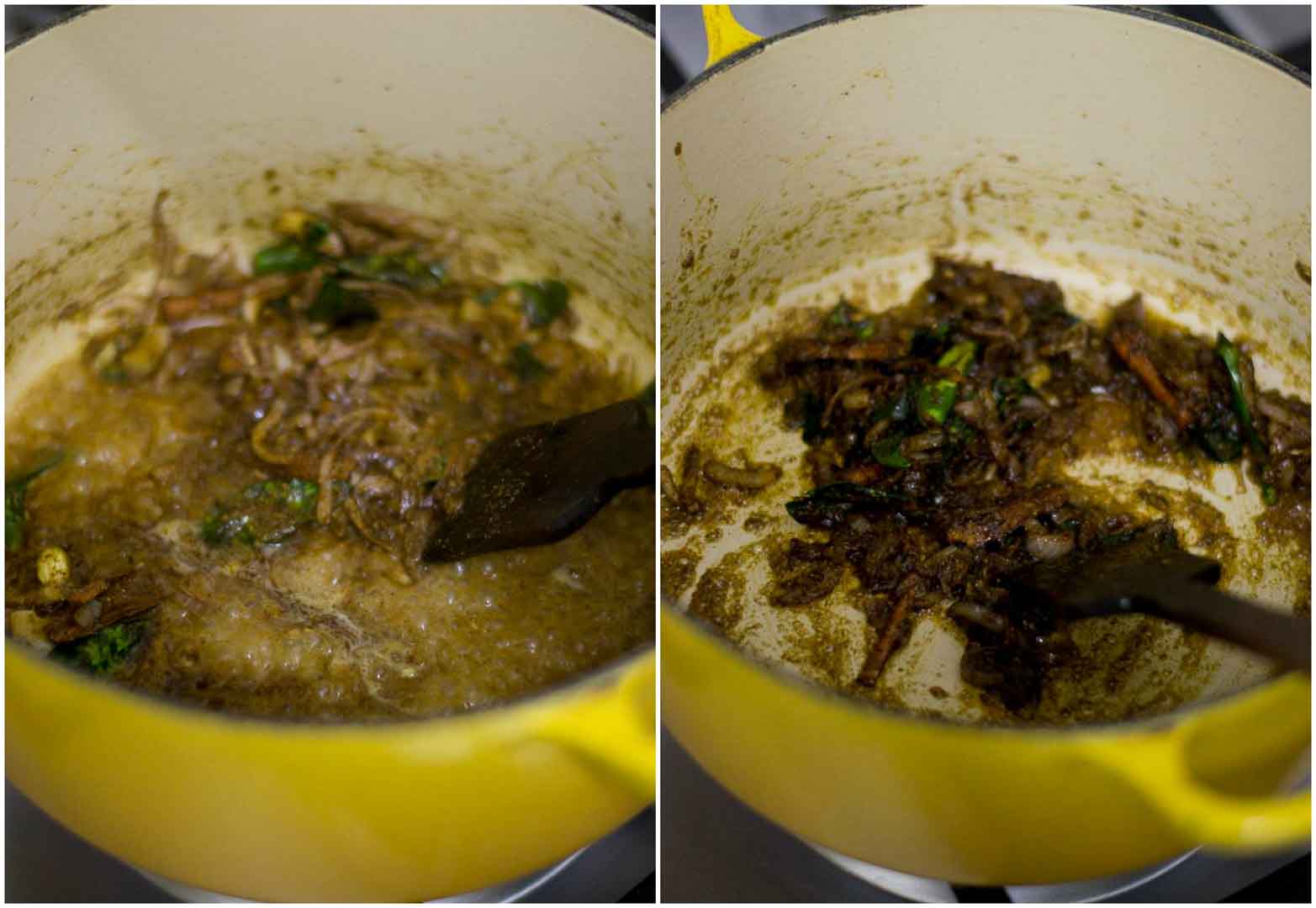
Add in the ginger garlic paste. saute for a minute. A note on ginger garlic paste – I ground a whole pod of garlic along with two inch piece of ginger with little water. I added half of it for the marinade and the other half while making the curry
Add in the coconut milk. Add in a cup of water. Add in the remaining salt.
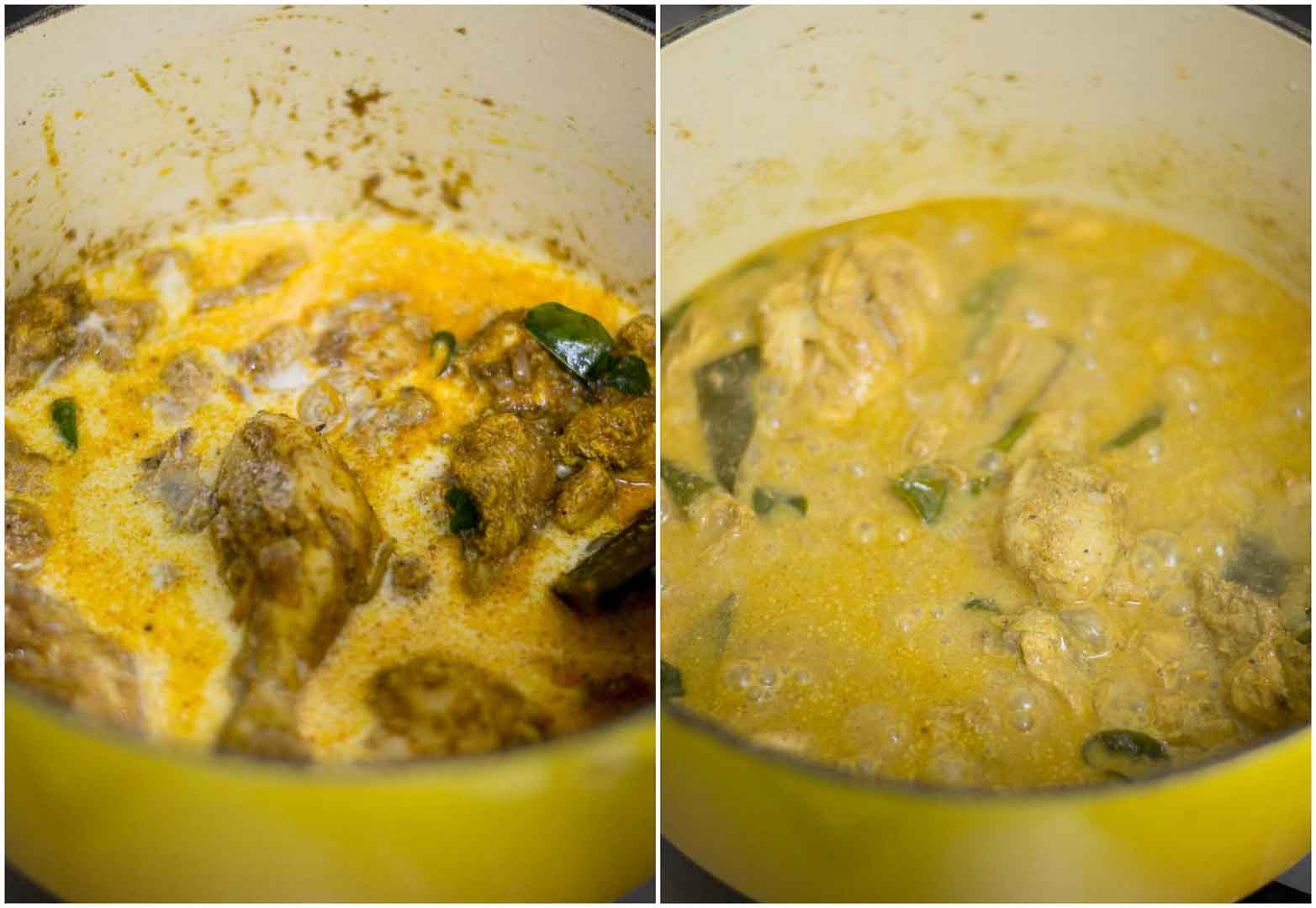
A note on coconut milk I made homemade coconut milk. I ground half of a small coconut with water and made three extracts and added it to the curry. I had about 2 cups of coconut milk (thin+thick milk). If using canned coconut milk, use 1 cup of milk and 1 cup of water. Here is the link to make homemade coconut milk. https://www.kannammacooks.com/homemade-coconut-milk/
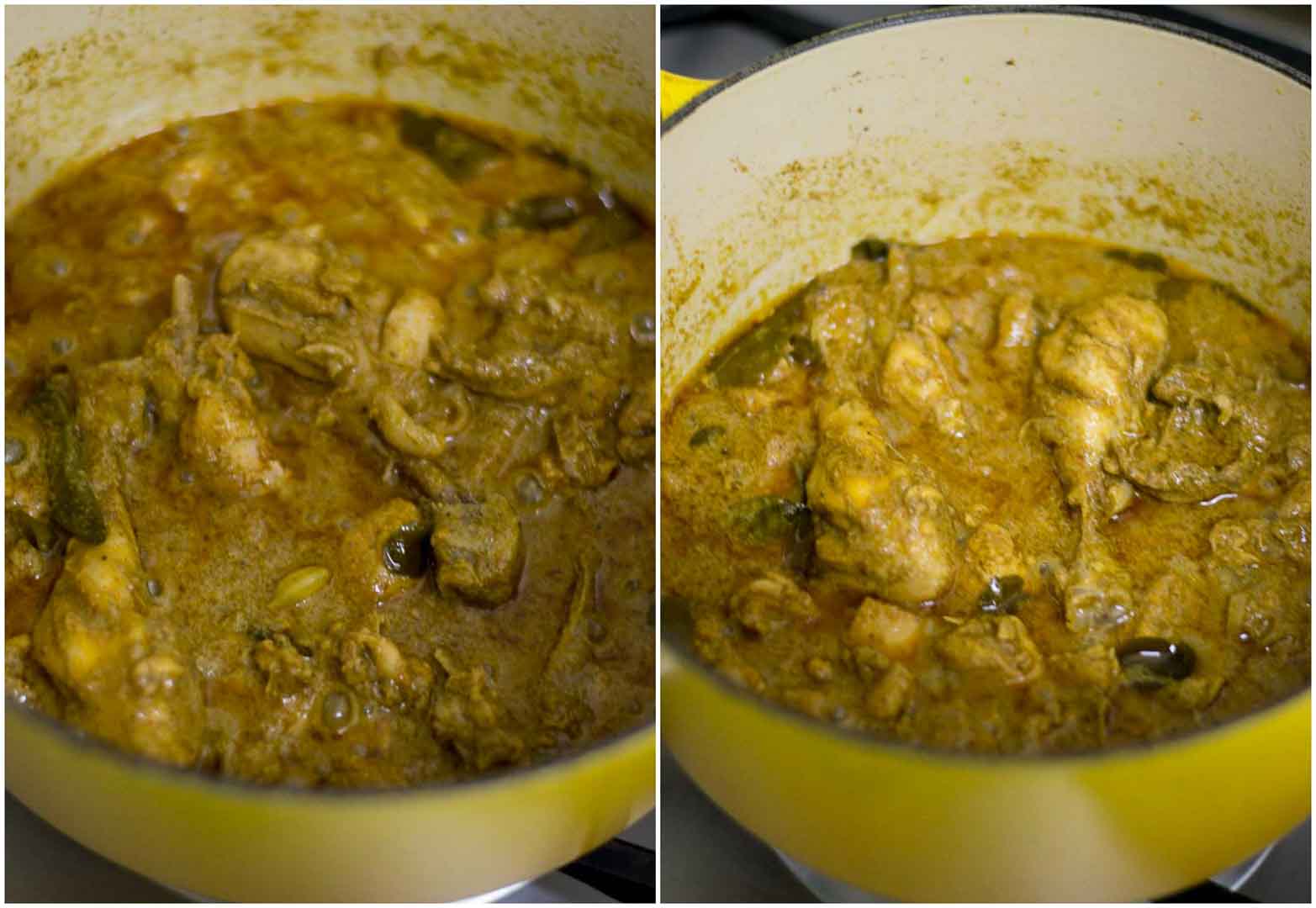
Now close the pan with a lid and lower the flame. Let it simmer for 45 minutes on a low flame. Cooking on a low flame is key to develop the flavors.
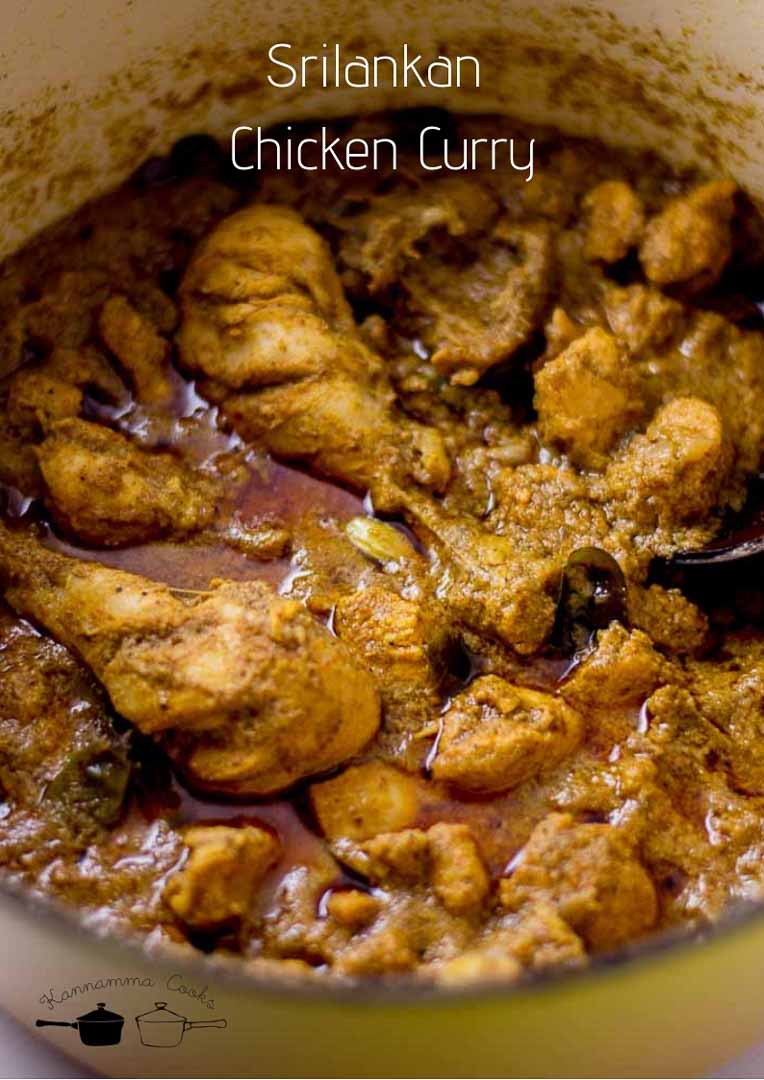
Sri Lankan chicken curry is ready.
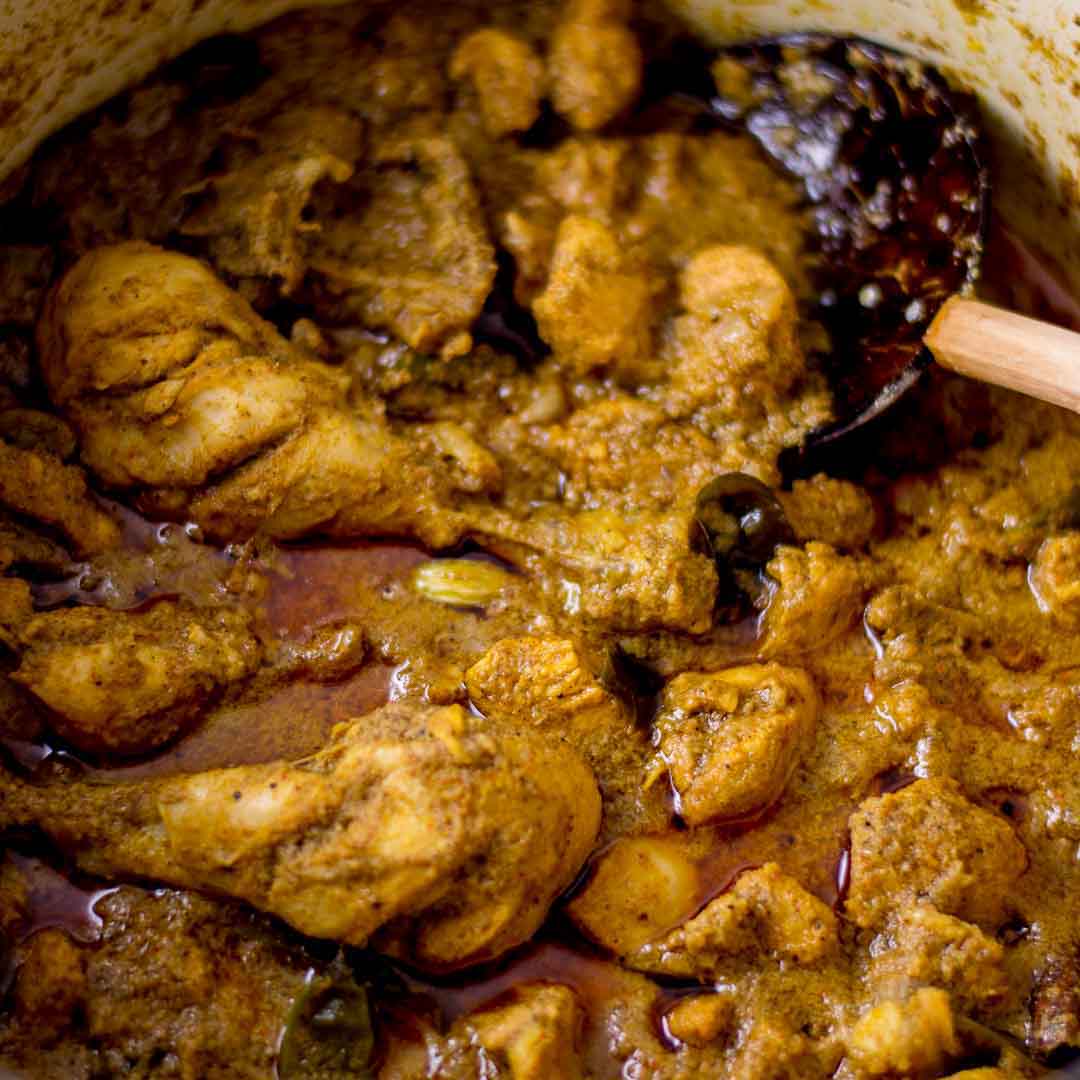
For the curry masala
- 1 teaspoon coriander seeds
- 1 teaspoon cumin seeds
- 1 teaspoon black pepper
- 1 teaspoon rice (any variety will work)
- 1/2 teaspoon mustard seeds
- 1 clove
- 1 cardamom
- 1 teaspoon fennel
- 1/4 teaspoon fenugreek seeds
- 2 sprigs curry leaves
For the marination
- 500 grams chicken on bone
- 1/2 teaspoon turmeric powder
- 1 teaspoon coriander powder
- 1 teaspoon red chilli powder (kashmiri variety)
- 1 teaspoon black pepper powder
- 1 tablespoon vinegar
- 1 teaspoon salt
- 2 teaspoon ginger garlic paste
- 1 tablespoon coconut oil
Other ingredients
- 2 tablespoon coconut oil
- 2 cardamom
- 1 inch cinnamon sticks
- 3 curry leaf sprigs
- 3 green chillies
- 1 onion, chopped (preferably red onions)
- 1 teaspoon red chilli powder
- 1 teaspoon black pepper powder
- 1/2 teaspoon turmeric powder
- 2 teaspoon ginger garlic paste
- 1 stalk lemon grass
- 1 pandan leaf (rambai ilai)
- coconut milk from half of a coconut (see notes)
- 1/2 teaspoon salt
- Heat a heavy pan on a low flame. Add in all the ingredients listed under curry powder. Slowly roast all the ingredients till the spices turn fragrant and the mustard seeds slowly starts to pop here and there. The rice would have slightly turned brown. Set aside everything on a plate to cool. Grind to a smooth powder. Set aside.
- Marinate the chicken with the marination ingredients. Set aside for 30 minutes. Make sure that the pieces are small. If using chicken legs, make some gashes so the masalas can permeate well.
- Heat coconut oil in a pan and add in the cinnamon and cardamom.
- Add in the curry leaves, green chillies and sliced onions. Saute for a few minutes.
- Add in the red chiili powder, black pepper powder, turmeric powder and the ground curry masala powder. Add all of the curry masala powder. Saute for a couple of minutes. Let the masalas get roasted well. The aromas from the pan should now waft the kitchen.
- Add in the ginger garlic paste. saute for a minute.
- Add in the marinated chicken, lemon grass and pandan leaves to the pan. Mix well to combine. Let the chicken cook for five minutes. Keep sauteing.
- Add in the coconut milk. Add in a cup of water. Add in the remaining salt.
- Now close the pan with a lid and lower the flame. Let it simmer for 45 minutes on a low flame. Cooking on a low flame is key to develop the flavors.
- Sri Lankan chicken curry is ready.
Notes
A note on ginger garlic paste. I ground a whole pod of garlic along with two inch piece of ginger with little water. I added half of it for the marinade and the other half while making the curry A note on coconut milk I made homemade coconut milk. I ground half of a small coconut with water and made three extracts and added it to the curry. I had about 2 cups of coconut milk (thin+thick milk). If using canned coconut milk, use 1 cup of milk and 1 cup of water. Here is the link to make homemade coconut milk. https://www.kannammacooks.com/homemade-coconut-milk/
- Author: Kannamma - Suguna Vinodh
- Prep Time: 10 mins
- Cook Time: 1 hour
- Category: Curry
- Cuisine: Sri Lankan
