
My aunt Sarasu Athama told this story behind today’s chola paniyaram recipe. Long long time ago……. Whenever there was sorghum paniyarams for breakfast, my uncle Kandasamy Abba would always complain to my aunt Sarasu athama that his wife Perur athama was making bad sorghum paniyarams. He used to say that even her paniyarams were equally bad. He said that he liked his sisters paniyarams much better and both of them could never make food like her sister. Both my aunts denied the case vehemently (what else did you expect) saying that his sister used a lot of oil and that was the reason her paniyarams tasted better. This drama continued for a long time. Kandasamy Abba’s sisters name is also Sarasu. So my Sarasu athama had gone for breakfast to the other Sarasu athama’s house one day and guess what? She was making Chola Paniyaram for breakfast. Sarasu athama found out the secret of good chola paniyarams from her that day. She now laughs at the whole thing saying how furious they would get if someone compared their food with another. Particulary that too with the food of MIL or SIL. Coming back to the secret. The secret was that the fermented batter was not to be mixed after fermentation. The batter will be well aerated and bubbly once fermented. So taking the aerated batter without mixing much and ladling into the pan was the key to fluffy and airy sorghum paniyarams. Such a simple but great technique. Ever since, all athamas are making super duper paniyarams. Here is a wonderful recipe for my aunt’s sorghum paniyaram. I wont eat something just because its healthy. I need flavour. Here is a list of millet recipes to check out .
English – Sorghum , Hindi – Jowar, Tamil – Cholam, Telugu – Jonna, Kannada – Jola, Malayalam- Cholum
Wash the Cholam/Sorghum in running water 2-3 times to get rid of the dirt and any husk. Now soak it in lots of water for 8-10 hours. Soak the urad dal and fenugreek seeds in water separately. You can also do 50:50 sorghum and rice for a softer paniyaram.

After the soaking, we need to grind them. Drain the water from urad dal and fenugreek seeds. Grind it to a very fine paste. Add up to half a cup of water while grinding. Set aside.

Now lets grind the Cholam/Sorghum. Drain the water from the Sorghum and add it to the mixie/blender. To this, add shallots (small onions), dried red chillies, cumin seeds, Salt and curry leaves. Add about 1 to 1.5 cups of water and grind to a paste. Do not grind it to a smooth paste. The texture should be that of coarse sooji rava / semolina. Once ground, remove the mixture and set aside.

Mix the Sorghum mixture and urad dal mixture well to combine.
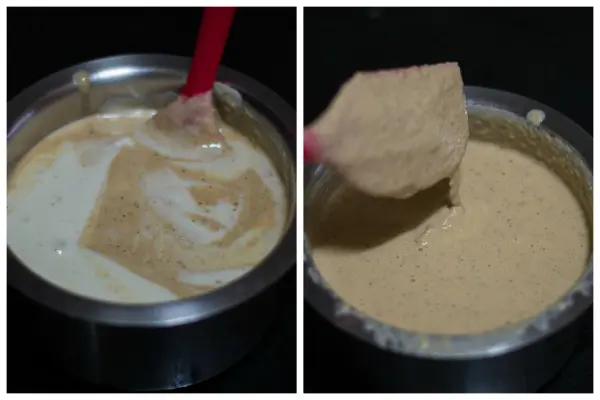
Now cover the batter with a lid and allow it to ferment in a warm place. This sorghum batter usually ferments slowly than idli/dosa batter. Usually in summer, it will take about 8-10 hours to ferment. Its winter here in Bangalore and it took almost 24 hours for my batter to ferment. So do not hurry. Wait for the batter to ferment completely. After fermentation, the batter would have risen a little (it will rise more if you live in a hot place) and will be very bubbly. Do not mix the batter. That’s the key as lots of bubbles would have formed and that aerated batter is what makes the paniyaram fluffy. So keep that spatula away.

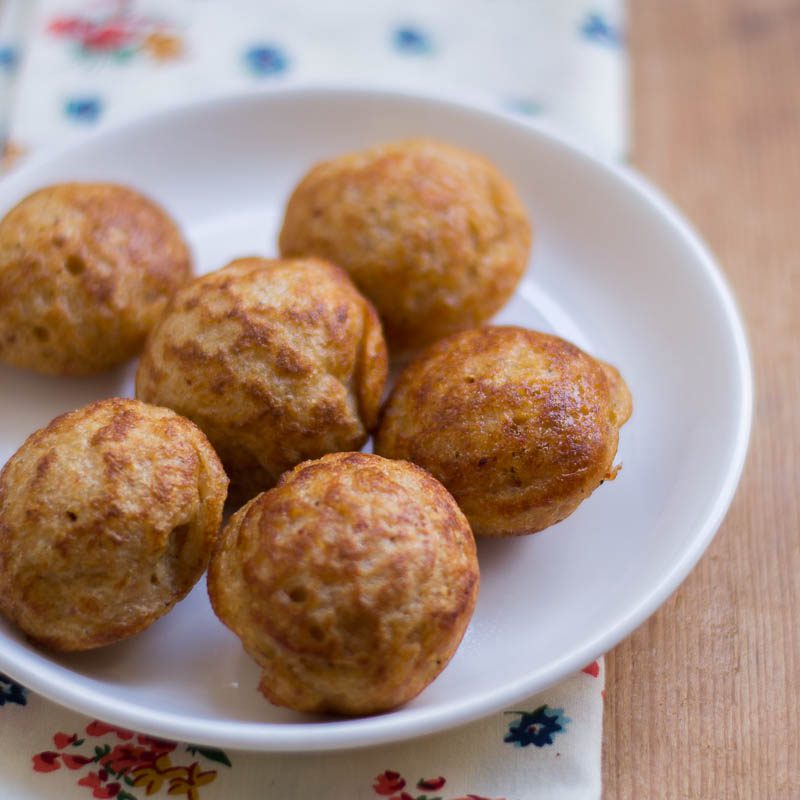
After fermentation, the batter is ready for making paniyaram. If you will not use the batter immediately, store in the refrigerator for up to a day. Its time to make paniyaram. Heat a paniyaram pan until hot. Add in 1/4 teaspoon of oil (be generous with the oil) to each of the mold and set the pan on low flame. Sorghum takes time to cook. High heat will burn the paniyarams. So low heat is also key to get crispy paniyarams. Ladle the paniyaram batter to the pan. Drop the batter gently to fill the mold. Cook for a minute. Then turn and cook on the other side. Turn again if necessary to make sure the paniyaram is evenly cooked on both sides and its nicely golden in colour. The outer skin will crisp up nicely.

The paniyaram is ready if it has become crispy and golden on both sides.
- 1 Cup Cholam / Sorghum
- 1 cup idli rice (optional) – makes crispy paniyarams
- 1/2 Cup Whole Urad Dal
- 1/4 teaspoon fenugreek seeds
- 10 shallots / small onions
- 3 Dry Red Chillies
- 1 teaspoon Salt
- 1 teaspoon Cumin Seeds
- 1 sprig Curry Leaves
- Wash the Cholam/Sorghum in running water 2-3 times. Soak it in lots of water for 8-10 hours. soak the rice along if using. Soak the urad dal and fenugreek seeds in water separately.
- Drain the water from urad dal and fenugreek seeds. Grind it to a very fine paste. Add upto half a cup of water while grinding. Set aside.
- Drain the water from the Sorghum and add it to the mixie/blender. To this, add shallots, dried red chillies, cumin seeds, Salt and curry leaves. Add about 1 to 1.5 cups of water and grind to a paste. Do not grind it to a smooth paste. The texture should be that of sooji rava / semolina. Once ground, remove the mixture and set aside.
- Mix the Sorghum mixture and urad dal mixture and mix well to combine.
- Now cover the mixture with a lid and allow it to ferment in a warm place.
- After fermentation, the batter would have risen a little (it will rise more if you live in a hot place) and will be very bubbly. Do not mix the batter.
- Heat a paniyaram pan until hot. Add in 1/4 teaspoon of oil to each of the mold and set the pan on low flame. Ladle the paniyaram batter to the pan. Cook for a minute. Then turn and cook on the other side.
- The paniyaram is ready if it has become crispy and golden on both sides.
- Author: Kannamma - Suguna Vinodh
- Prep Time: 24 hours
- Cook Time: 20 mins
- Category: Breakfast
- Cuisine: Coimbatore, Tamilnadu, South Indian

- 1 Cup Cholam / Sorghum
- 1 cup idli rice (optional) – makes crispy paniyarams
- 1/2 Cup Whole Urad Dal
- 1/4 teaspoon fenugreek seeds
- 10 shallots / small onions
- 3 Dry Red Chillies
- 1 teaspoon Salt
- 1 teaspoon Cumin Seeds
- 1 sprig Curry Leaves
- Wash the Cholam/Sorghum in running water 2-3 times. Soak it in lots of water for 8-10 hours. soak the rice along if using. Soak the urad dal and fenugreek seeds in water separately.
- Drain the water from urad dal and fenugreek seeds. Grind it to a very fine paste. Add upto half a cup of water while grinding. Set aside.
- Drain the water from the Sorghum and add it to the mixie/blender. To this, add shallots, dried red chillies, cumin seeds, Salt and curry leaves. Add about 1 to 1.5 cups of water and grind to a paste. Do not grind it to a smooth paste. The texture should be that of sooji rava / semolina. Once ground, remove the mixture and set aside.
- Mix the Sorghum mixture and urad dal mixture and mix well to combine.
- Now cover the mixture with a lid and allow it to ferment in a warm place.
- After fermentation, the batter would have risen a little (it will rise more if you live in a hot place) and will be very bubbly. Do not mix the batter.
- Heat a paniyaram pan until hot. Add in 1/4 teaspoon of oil to each of the mold and set the pan on low flame. Ladle the paniyaram batter to the pan. Cook for a minute. Then turn and cook on the other side.
- The paniyaram is ready if it has become crispy and golden on both sides.
- Author: Kannamma - Suguna Vinodh
- Prep Time: 24 hours
- Cook Time: 20 mins
- Category: Breakfast
- Cuisine: Coimbatore, Tamilnadu, South Indian
Find it online : https://www.kannammacooks.com/chola-paniyaram-recipe-sorghum-paniyaram/
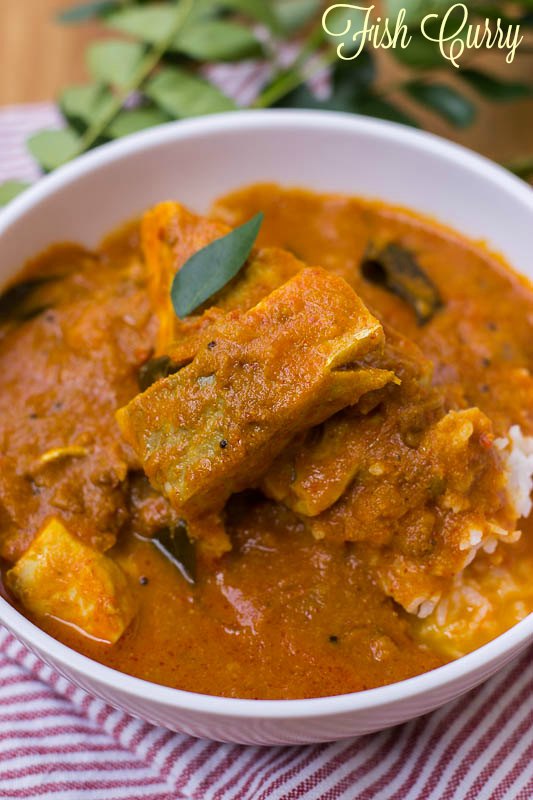
Recipe for Tamilnadu style fish curry / meen kuzhambu recipe. With step by step pictures and video. Tamilnadu Fish Curry Recipe / Tamil Style Meen Kuzhambu
I met Chef Paramraj during my travels. His food was home style comforting South Indian food which I liked a lot. His fish curry blew my mind. Clean flavors, nothing over powering and delicious in every single bite. I went to tell that his food was awesome after dinner and we had a good chat for a long time and he was happy to share the recipe for this curry. This is his home town Dindigul style fish curry. He says they never used ginger or garlic in fish curries in that part of the region.
Its an extremely simple and easy recipe. He uses sesame oil / gingely oil for this curry. He says that gingely oil is the only oil used in Tamilnadu style fish curries. The flavor of gingely oil in south Indian curries cant be beat. I have to agree.

His food is a perfect example of home style rustic cooking that can be mind blowing. I got reminded of what Chef Jacques Pepin told once in an interview. “One of the biggest problems with young chefs is too much addition to the plate. You put cilantro and then tarragon and then olive oil and then walnut oil or whatever. It’s too much. It is important to have food nicely represented and all of that. But there is a certain quality to the food itself. Many young chefs add too much to their plates. I call it Punctuation Cuisine . They put sauce commas and dashes, one after the other. I get lost.”
Click the link below to find the recipes on the site that uses the main ingredient as Fish. Fish Recipes
Here are some of the equipment, utensils and gadgets that will be useful for making this recipe. Click the link to buy them online. Stainless Steel Frying Pan Heavy Duty Mixie Deep burned natural clay pot
Here is the video of how to make Tamilnadu style Fish Curry
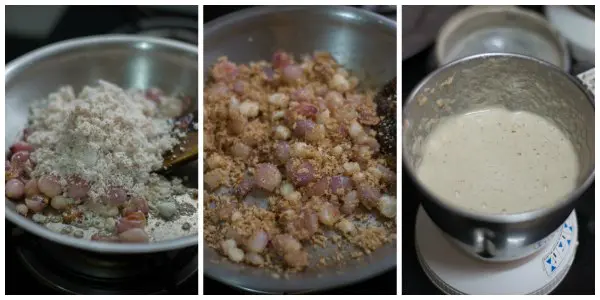
Here is the step by step pictorial of how to make Tamilnadu style Fish Curry Here is what you will need for the fish curry. First we need to make a fried masala paste. We will need gingely oil, Shallots (small onions) and fresh shredded coconut. Heat sesame oil (gingely oil) in a pan and add in the shallots and fry till slightly golden. Note: If the shallots are big, use a little less and chop them and use so it cooks fast and cooks evenly.
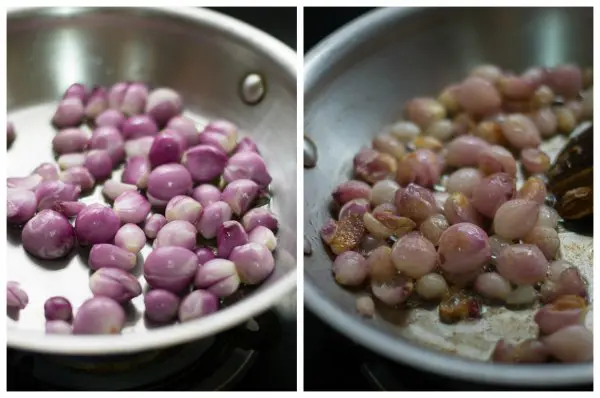
Then add the fresh shredded coconut and fry on low flame until its golden. Its important to fry the coconut along with the shallots on low flame. Getting the coconut nice and roasted imparts a nutty delicious flavor to the curry. Remove the mixture from heat once its golden. Grind to a smooth pasting adding up to a cup of water. Its important to grind the mixture to a very fine paste so the curry will be smooth and velvety. Set aside.
Heat sesame oil (gingely oil) in a pan until hot. Sesame oil is important for this curry. Add in the mustard seeds and fenugreek seeds. Let the mustard seeds splutter. Add in the sliced onions and curry leaves. Saute till the onions are soft.

Add in the masala powders Turmeric, Chilli powder and Coriander Powder and fry for 10 seconds on low flame. Add in more chilli powder if you want a spicy curry. Fry the masalas on low flame so they don’t burn. Burnt masala powders will spoil the taste of the curry. So all eyes on the pan guys.

Grind the tomatoes in a small mixie to a paste. Add it to the pan.

Fry until the mixture is completely dry.
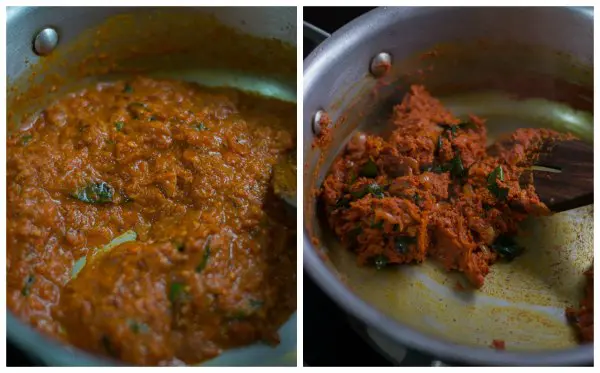
Soak a lime size tamarind in one cup of hot water for 20 minutes. Squeeze the tamarind in the water to extract all the juices. Strain the juice and set aside the tamarind pulp / juice. Discard the tamarind seeds and the pith. Add the tamarind pulp to the pan. Add in the salt. Add in the ground shallot-coconut mixture. Wash the mixie with half cup water and add back to the pan. Add an additional cup of water.

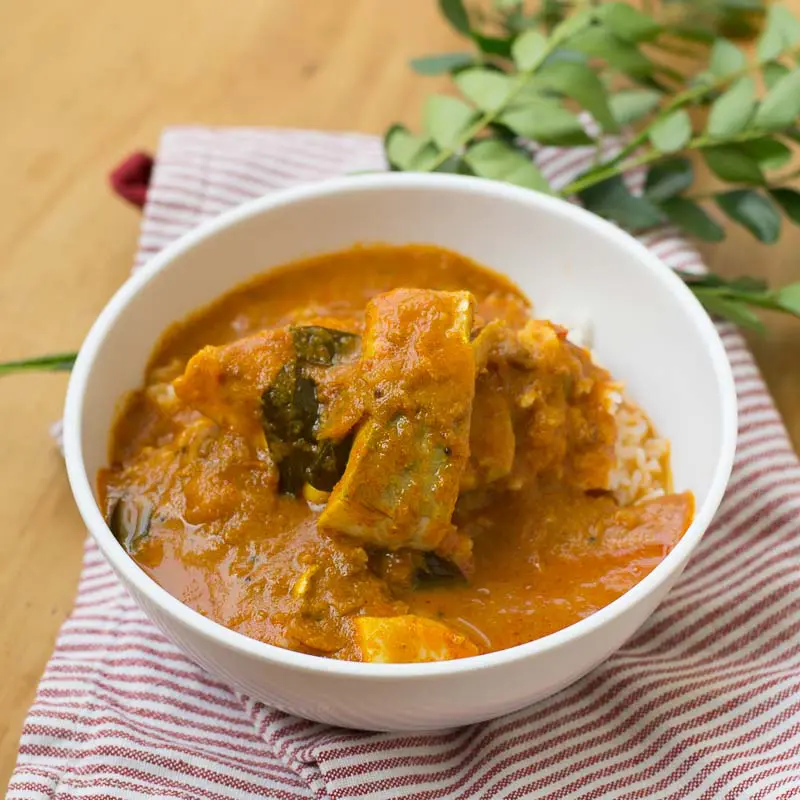
Keep the stove on low flame and cover the pan with a lid. Let it simmer for 20 minutes on low flame. Stir the curry once or twice when simmering. After 20 minutes, add in the fish steaks. I used Indian Salmon today. Cover the pan again and cook for 7-8 minutes on low flame. Remove from heat.

Let the curry rest for at-least one hour. The fish will soak up all the flavors of the curry. Below is a picture of fish curry pond :).

Serve with rice.

For the Paste
- 2 tablespoon sesame oil (gingely oil)
- 20 shallots (Indian small onions) about 150 grams
- 1/2 cup fresh shredded coconut
Other Ingredients
- 2 tablespoon sesame oil (gingely oil)
- 1/4 teaspoon mustard seeds
- 1/4 teaspoon fenugreek seeds
- 2 sprigs curry leaves
- 2 onions, sliced
- 1 teaspoon turmeric
- 2 teaspoon red chilli powder
- 3 teaspoon coriander powder
- 3 tomatoes
- lime size tamarind
- 1 1/2 teaspoon salt
- 500 grams fish steaks (I used Indian Salmon)
- Heat sesame oil (gingely oil) in a pan and add in the shallots and fry till slightly golden.
- Then add the fresh shredded coconut and fry on low flame until its golden. Grind to a smooth pasting adding up to a cup of water. Its important to grind the mixture to a very fine paste so the curry will be smooth and velvety. Set aside.
- Heat sesame oil (gingely oil) in a pan until hot. Add in the mustard seeds and fenugreek seeds. Let the mustard seeds splutter. Add in the sliced onions and curry leaves. Saute till the onions are soft.
- Add in the masala powders Turmeric, Chilli powder and Coriander Powder and fry for 10 seconds on low flame.
- Grind the tomatoes in a small mixie to a paste. Add it to the pan.
- Fry until the mixture is completely dry.
- Soak a lime size tamarind in one cup of hot water for 20 minutes. Squeeze the tamarind in the water to extract all the juices. Add the tamarind pulp to the pan. Add in the salt. Add in the ground shallot-coconut mixture. Wash the mixie with half cup of water and add back to the pan. Add in an additional cup of water.
- Let it simmer covered for 20 minutes on low flame.
- Stir the curry once or twice when simmering. After 20 minutes, add in the fish steaks. Cover the pan again and cook for 7-8 minutes on low flame. Remove from heat.
- Let the curry rest for at least one hour. The fish will soak up all the flavors of the curry.
- Serve with rice.
- Author: Kannamma - Suguna Vinodh
- Prep Time: 15 mins
- Cook Time: 45 mins
- Category: Curry
- Cuisine: Tamilnadu
