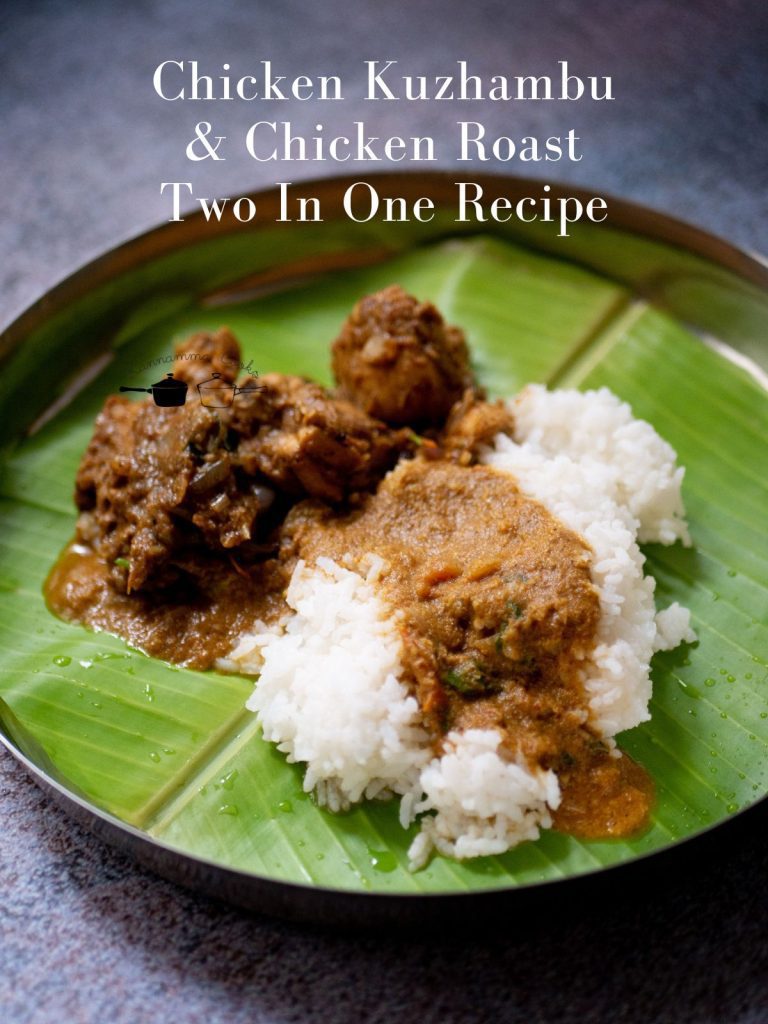
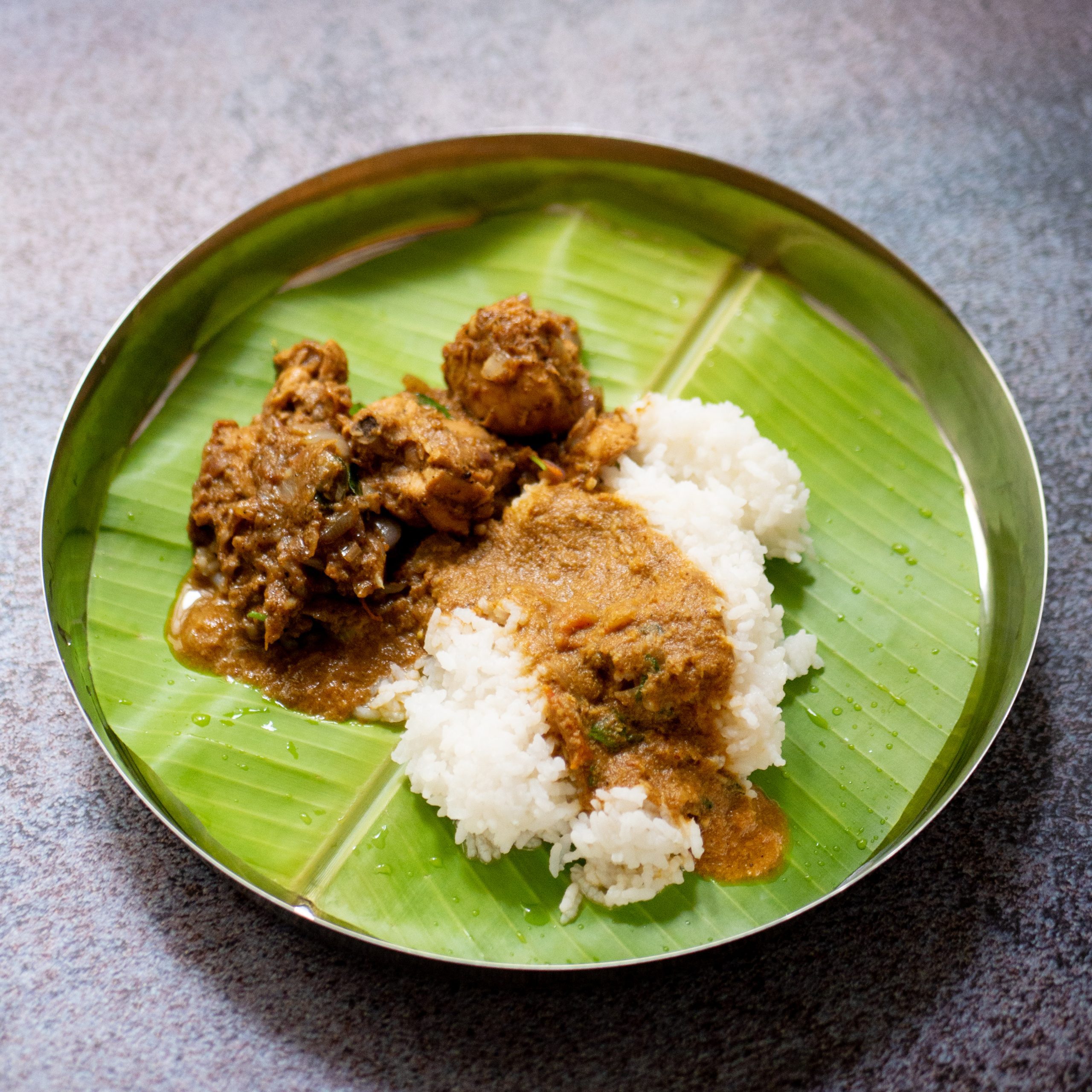
Recipe for Kongu style Chicken Kuzhambu And Chicken Roast – Two In One Recipe. Country side chicken curry and chicken roast made with the curry cooked meat.
This recipe is reminiscent of the “One Stone – Two Mango” concept, “ஒரு கல்லுல ரெண்டு மாங்கா!”. This preparation is popular in the country side of the Kongu region. A robust and flavourful meat curry is made with a lot of shallots and a home made roasted masala paste. Shallots go into the making of the masala paste, the kuzhambu and the roast. Its important that bone-in meat is used for that extra depth of flavor. Bones gives the curry that rich taste. Slow cooking is key to unlocking all the deliciousness this dish has to offer. Once the curry is cooked, the meat is separated from the gravy and transformed into a delicious dry roast. As a result, a single serving of meat yields two distinct dishes. Hope you will like this recipe.
Here are the things you can buy online for making this recipe Le Creuset Dutch Oven 5.5 qt https://amzn.to/3OOp5L3 White Granite Pan with Lid PFOA Free https://amzn.to/3HDhdsD
Here is the video of how to make Chicken Kuzhambu And Chicken Roast – Two In One Recipe
Masala Paste:
2 tablespoons peanut oil (divided) 1/2 -inch piece cinnamon (cassia) 4 cloves 1/2 teaspoon cumin seeds 1/2 teaspoon fennel seeds 2 teaspoons black peppercorns 2 tablespoons coriander seeds 4 dried red chillies 2 teaspoons white poppy seeds 2 sprigs curry leaves 1 -inch piece ginger, roughly chopped 1 pod country garlic 3/4 cup sliced shallots 1/2 cup water
Chicken Kuzhambu:
2 tablespoons peanut oil 1 sprig curry leaves 1/2 cup sliced shallots 2 tomatoes, chopped 1.5 teaspoons salt 1 kilogram chicken, bone-in 1/2 teaspoon turmeric powder 2 cups water 1/2 cup fresh shredded coconut 1/2 cup warm water (for grinding coconut) 2 sprigs coriander leaves, chopped
Chicken Roast:
2 tablespoons peanut oil 1/4 teaspoon fennel seeds 1 sprig curry leaves 3/4 cup sliced shallots 1 teaspoon black pepper powder 1/2 teaspoon salt 2 sprigs coriander leaves, chopped
Masala Paste:
Heat a heavy-bottomed pan and add a small amount of oil along with all the dry spices. Sauté over low heat until the spices are roasted, ensuring to avoid high heat as high heat will lead to burning of spices and result in bitterness. Take caution and roast the spices gently. Once roasted, remove the spices from the pan and set them aside on a plate to cool.
In the same pan, add a little more oil. Add the chopped ginger, garlic, and sliced shallots. Cook until the shallots become soft. Remove from heat and set aside on a plate to cool slightly.
Grind the roasted spices with water to form a fine paste. Then, add the cooked shallot mixture to the ground spices and grind again. Your Kuzhambu masala paste is now ready. Set it aside.
Chicken Kuzhambu:
Take a heavy-bottomed pan and add oil, curry leaves, sliced shallots, and tomatoes. Cook until the tomatoes turn soft and mushy. Adding salt while cooking the tomatoes will expedite the process.
Once the tomatoes are cooked, add the chicken and turmeric powder. Mix well to combine. Add the masala paste and two cups of water. Stir well to ensure all the ingredients are well mixed.
Cover the pan with a lid and simmer over low heat for 30 minutes. This will allow the flavors to infuse and the chicken to cook thoroughly.
In a small mixie jar, grind the coconut with warm water until it forms a smooth paste.
Add the ground coconut paste to the pan and simmer for an additional five minutes. Then, remove the meat from the curry, as it will be used for the Chicken Roast. Finally, add coriander leaves, remove from heat, and your Kuzhambu is ready.
Chicken Roast:
Take a pan and add oil. To the oil, add fennel seeds, curry leaves, and sliced shallots. Sauté until the shallots become soft.
Add the cooked chicken along with a little gravy to the pan. Sprinkle black pepper powder and salt. Mix well to ensure the spices are evenly distributed.
Roast the mixture for 3-4 minutes until it becomes dry. Finish off with a generous sprinkle of coriander leaves.
Serve hot with rice.
- Author: Suguna Vinodh
- Prep Time: 15m
- Cook Time: 45m
Masala Paste:
2 tablespoons peanut oil (divided) 1/2 -inch piece cinnamon (cassia) 4 cloves 1/2 teaspoon cumin seeds 1/2 teaspoon fennel seeds 2 teaspoons black peppercorns 2 tablespoons coriander seeds 4 dried red chillies 2 teaspoons white poppy seeds 2 sprigs curry leaves 1 -inch piece ginger, roughly chopped 1 pod country garlic 3/4 cup sliced shallots 1/2 cup water
Chicken Kuzhambu:
2 tablespoons peanut oil 1 sprig curry leaves 1/2 cup sliced shallots 2 tomatoes, chopped 1.5 teaspoons salt 1 kilogram chicken, bone-in 1/2 teaspoon turmeric powder 2 cups water 1/2 cup fresh shredded coconut 1/2 cup warm water (for grinding coconut) 2 sprigs coriander leaves, chopped
Chicken Roast:
2 tablespoons peanut oil 1/4 teaspoon fennel seeds 1 sprig curry leaves 3/4 cup sliced shallots 1 teaspoon black pepper powder 1/2 teaspoon salt 2 sprigs coriander leaves, chopped
Masala Paste:
Heat a heavy-bottomed pan and add a small amount of oil along with all the dry spices. Sauté over low heat until the spices are roasted, ensuring to avoid high heat as high heat will lead to burning of spices and result in bitterness. Take caution and roast the spices gently. Once roasted, remove the spices from the pan and set them aside on a plate to cool.
In the same pan, add a little more oil. Add the chopped ginger, garlic, and sliced shallots. Cook until the shallots become soft. Remove from heat and set aside on a plate to cool slightly.
Grind the roasted spices with water to form a fine paste. Then, add the cooked shallot mixture to the ground spices and grind again. Your Kuzhambu masala paste is now ready. Set it aside.
Chicken Kuzhambu:
Take a heavy-bottomed pan and add oil, curry leaves, sliced shallots, and tomatoes. Cook until the tomatoes turn soft and mushy. Adding salt while cooking the tomatoes will expedite the process.
Once the tomatoes are cooked, add the chicken and turmeric powder. Mix well to combine. Add the masala paste and two cups of water. Stir well to ensure all the ingredients are well mixed.
Cover the pan with a lid and simmer over low heat for 30 minutes. This will allow the flavors to infuse and the chicken to cook thoroughly.
In a small mixie jar, grind the coconut with warm water until it forms a smooth paste.
Add the ground coconut paste to the pan and simmer for an additional five minutes. Then, remove the meat from the curry, as it will be used for the Chicken Roast. Finally, add coriander leaves, remove from heat, and your Kuzhambu is ready.
Chicken Roast:
Take a pan and add oil. To the oil, add fennel seeds, curry leaves, and sliced shallots. Sauté until the shallots become soft.
Add the cooked chicken along with a little gravy to the pan. Sprinkle black pepper powder and salt. Mix well to ensure the spices are evenly distributed.
Roast the mixture for 3-4 minutes until it becomes dry. Finish off with a generous sprinkle of coriander leaves.
Serve hot with rice.
- Author: Suguna Vinodh
- Prep Time: 15m
- Cook Time: 45m
Find it online : https://www.kannammacooks.com/chicken-kuzhambu-and-roast/
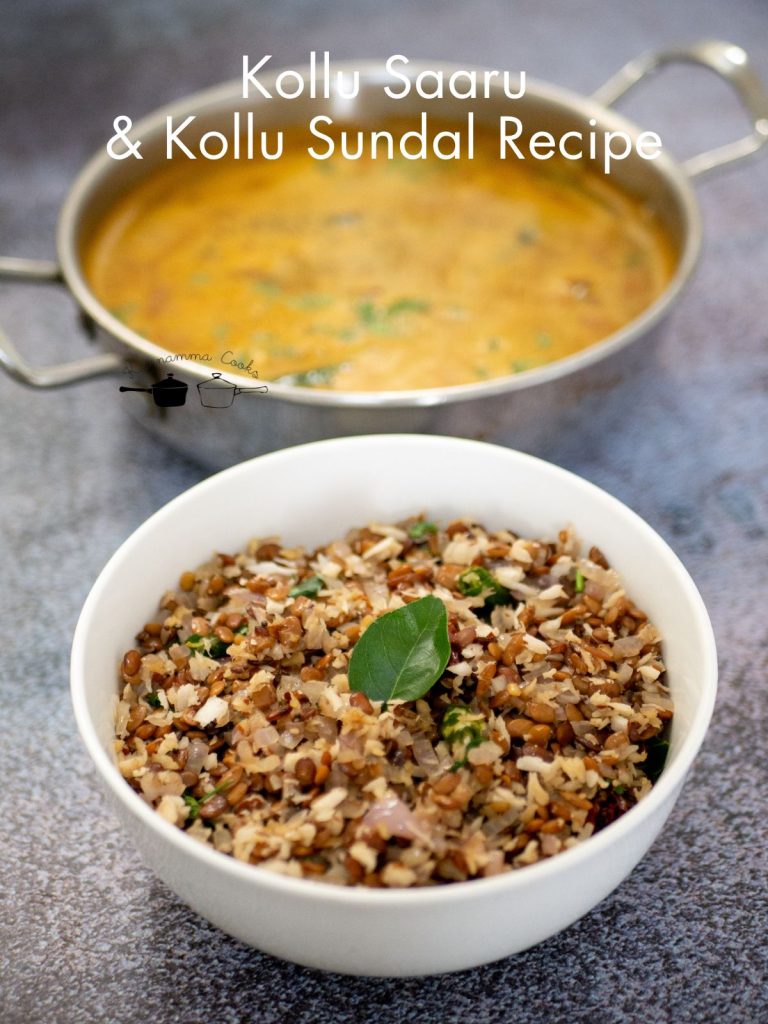
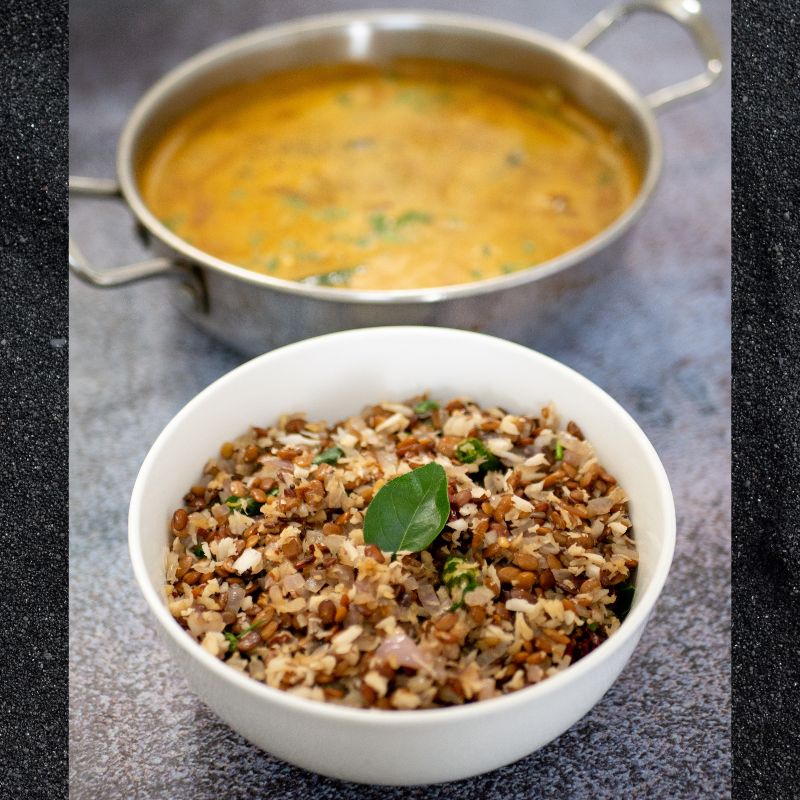
Here is a two-in-one recipe featuring horsegram, also known as kollu. Horsegram holds significant agricultural and cultural importance in the Kongu region. It is renowned for its drought tolerance, making it a crucial crop in the area. Commonly used as a rotational crop, horsegram is generally soaked and cooked in water until it become soft and tender. The resulting broth is highly flavorful and utilized to prepare a rasam / saaru, while the cooked horsegram is transformed into a sundal, a delightful stir-fry dish. To enhance the taste and richness of the kollu saaru, a homemade roasted masala paste, packed with flavors of garlic, black pepper, and spices, is added. The combination results in robust flavors and is typically served with ragi kali or rice. I hope you enjoy this recipe.
Here are the things you can buy online for making this recipe Triply Frying Pan 26 CM with SS Lid https://amzn.to/3NP3tk9 3 Liter Stainless Pressure Cooker https://amzn.to/3rxv6D4 Heavy Duty Indian Mixie https://amzn.to/3GptNKD
Here is the video of how to make Kollu Saaru and Kollu Sundal Recipe
For cooking the horsegram**
1/2 cup horsegram 2 tomatoes 2 cups water 1/2 teaspoon castor oil
For making the sundal
2 teaspoon coconut oil 1/4 teaspoon split white urad dal 1/4 teaspoon cumin seeds 1/4 teaspoon mustard seeds 1 dried red chilli, broken 2 green chillies, chopped 1/2 teaspoon ginger, finely chopped 1 sprig curry leaves 1/2 cup onion, finely chopped 1/2 teaspoon salt 1/4 cup fresh shredded coconut 2 sprigs coriander leaves, chopped cooked lentils from above**
For making kollu saaru masala
2 teaspoon coconut oil 1/4 teaspoon cumin seeds 3 cloves garlic, chopped 1 sprig curry leaves 2 dried red chillies 1 teaspoon black pepper 1/4 inch piece tamarind 2 tablespoon fresh shredded coconut 1/4 teaspoon turmeric powder 1 sprig coriander leaves 2 tablespoon cooked lentils from above** cooked tomatoes from above** 1/2 cup water to grind
For making kollu saaru
1 teaspoon coconut oil 1/4 teaspoon cumin seeds 1/4 teaspoon mustard seeds 1 sprig curry leaves 2 dried red chillies 1.5 cups water 1 teaspoon salt 2 sprigs coriander leaves, chopped Horsegram broth from above**
Cooking Horsegram
When cooking horsegram, it’s important to be aware that sometimes small stones can be found in the beans. To begin, spread the horsegram on a plate and remove any dirt that may be present. Then, wash the horsegram thoroughly and soak it for at least 30 minutes. If you have the time, you can choose to soak it for an hour.
Once the soaking is complete, drain the water from the horsegram and transfer it to a pressure cooker. Add a couple of tomatoes, 2 cups water to cook the horsegram, and a small amount of oil. Castor oil is recommended for achieving a soft and tender consistency, but if you don’t have it, you can omit it or use any vegetable oil of your preference. Cover the pressure cooker and cook for 12 minutes, disregarding the number of whistles. Afterward, remove the cooker from the heat and allow the pressure to settle naturally. Open the cooker and remove the tomatoes, discard the tomato skins, and set them aside. Drain the broth and also set it aside.
Note
The broth, tomatoes, and a small portion of the cooked horsegram will be used for making saaru/rasam, while the remaining cooked horsegram will be used for making sundal.
Sundal
To cook the sundal, heat oil in a pan and add urad dal, cumin seeds, and mustard seeds. Let the mustard seeds crackle. Add dry red chillies, green chillies, chopped ginger, and curry leaves. Stir for a moment, and then add the chopped onions. Sauté for a few minutes until the onions are soft. Next, add the cooked horsegram, salt, and freshly shredded coconut. Mix everything together well and cook for a minute. Finally, sprinkle a generous amount of coriander leaves over the sundal to finish.
Saaru
For the saaru, heat oil in a pan and add cumin seeds and chopped garlic. Add the curry leaves, dry red chillies, black pepper, and a small piece of tamarind. Roast briefly and then add a couple of tablespoons of the cooked horsegram to thicken the saaru. Add the cooked tomatoes (skin removed), a little coconut, turmeric powder, and some coriander leaves. Cook for a minute, then remove from heat and set it aside to cool. Grind this mixture with a little water to create a coarse paste, which will serve as our saaru masala.
Now, let’s temper the rasam. Heat oil in a pan and add cumin seeds, mustard seeds, curry leaves, and dried red chillies. Allow the mustard seeds to crackle. Add the horsegram broth and the ground masala paste. Rinse the mixie with 1.5 cups of water and add it to the pan. Season with salt, and taste and adjust the seasoning if necessary. Bring the saaru to a boil, and finish by sprinkling a generous amount of coriander leaves over it.
To serve, enjoy the sundal and saaru with ragi kali or white rice.
- Author: Suguna Vinodh
- Prep Time: 30m
- Cook Time: 30m
