
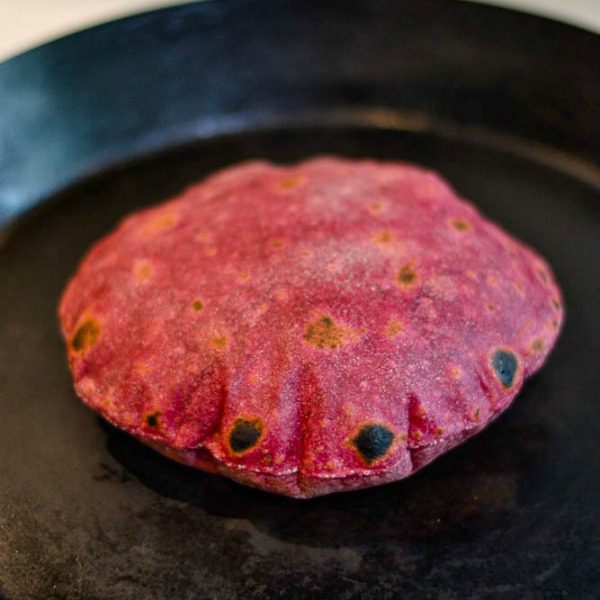
Beetroot Chapati – Here is a veggie variation from the traditional chapati . Beetroot Chapati is very colorful and tasty. Beetroot is ground and added to the flour and allowed to rest for sometime and made into chapatis. Here is how to do it.
Take a medium sized beetroot, peel and chop them roughly. Beetroot is such a hearty and earthy vegetable. Whenever I peel beets, I smell the scent of rain on dry earth – petrichor or மண் வாசனை – manvasanai as we call it in Tamil. It just lightens up my mood. Grind the chopped beetroot with half a cup of water to a fine paste. If there are bits and pieces of beetroot, it will become a mess while rolling the dough later on. So take time and make a fine puree of beets. Set aside.

Take a bowl and add in the whole wheat flour / atta. I used 2 cups of wheat flour today. Add in the salt, cracked pepper and a teaspoon of butter. Butter makes the chapati very soft. Add in the beet puree. Mix well and knead for a couple of minutes to form a cohesive dough. If the dough is very wet, add in a bit more flour and mix well.

Apply a teaspoon of oil on the surface and spread it on the surface. The oil will keep the dough from drying out.

Cover the dough with a lid. Allow the dough to rest for a couple of hours. Longer the better. If resting longer than 2 hours, rest in the refrigerator. The dough works very well if rested over nite. Just take the dough 30 minutes in advance from the refrigerator before moving on. Divide the dough into lime size balls. Set an iron pan on medium high heat. Let it become hot. Take a dough ball, flatten a little and generously dust it with flour.

Roll the dough into a 3-4 inch round on a flat smooth surface using a rolling pin. Dust more flour if the dough is sticking to the rolling pin.

Place the chapati on the hot griddle. Let it cook for 10-15 seconds until bubbles start to form on top. Flip the chapati and cook for 30 seconds more.

Flip one more time and press on top. Chapati should beautifully fluff up.

The last flip can be done on fire to make it into phulkas. If making phulkas, just flip on direct flame and it will fluff up.

I made a video on how to cook chapatis, flipping the chapatis etc… See this video for reference. The same 2 flip principle works for this beet chapati too!
Storing chapatis Line a bowl with cotton towel. Place the cooked chapati on the bowl and cover with a lid. Chapati will stay beautifully soft for a long time. The steam from the hot chapatis provide a moist environment that keeps them really soft without drying out. The lid may sweat with moist steam. Try to wipe them off once in a while when transferring the cooked chapatis from the hot pan to the bowl.

Enjoy! This recipe for beetroot chapati goes well with kurma. I served this recipe with my 10 minute no fry – no saute veg kurma.
- 1 medium sized beetroot
- 1/2 cup water
- 2 cups whole wheat flour / Atta
- 1 teaspoon butter
- 1 teaspoon salt
- 1 teaspoon cracked black pepper
- 1 teaspoon oil
- 1/4 cup whole wheat flour / Atta for dusting
- Take a medium sized beetroot, peel and chop them roughly. Grind the chopped beetroot with half a cup of water to a fine paste.
- Take a bowl and add in the whole wheat flour / atta. Add in the salt, cracked pepper and a teaspoon of butter. Add in the beet puree. Mix well and knead for a couple of minutes to form a cohesive dough.
- Apply a teaspoon of oil on the surface and spread it on the surface.
- Cover the dough with a lid. Allow the dough to rest for a couple of hours or over nite.
- Divide the dough into lime size balls. Set an iron pan on medium high heat. Let it become hot.
- Roll the dough into a 3-4 inch round on a flat smooth surface using a rolling pin.
- Place the chapati on the hot griddle. Let it cook for 10-15 seconds until bubbles start to form on top. Flip the chapati and cook for 30 seconds more.
- Flip one more time and press on top. Chapati should beautifully fluff up.
Notes
Storing chapatis Line a bowl with cotton towel. Place the cooked chapati on the bowl and cover with a lid. Chapati will stay beautifully soft for a long time. The steam from the hot chapatis provide a moist environment that keeps them really soft without drying out. The lid may sweat with moist steam. Try to wipe them off once in a while when transferring the cooked chapatis from the hot pan to the bowl.
- Author: Kannamma - Suguna Vinodh
- Prep Time: 2 hours
- Cook Time: 20 mins
- Category: bread
- Cuisine: indian

- 1 medium sized beetroot
- 1/2 cup water
- 2 cups whole wheat flour / Atta
- 1 teaspoon butter
- 1 teaspoon salt
- 1 teaspoon cracked black pepper
- 1 teaspoon oil
- 1/4 cup whole wheat flour / Atta for dusting
- Take a medium sized beetroot, peel and chop them roughly. Grind the chopped beetroot with half a cup of water to a fine paste.
- Take a bowl and add in the whole wheat flour / atta. Add in the salt, cracked pepper and a teaspoon of butter. Add in the beet puree. Mix well and knead for a couple of minutes to form a cohesive dough.
- Apply a teaspoon of oil on the surface and spread it on the surface.
- Cover the dough with a lid. Allow the dough to rest for a couple of hours or over nite.
- Divide the dough into lime size balls. Set an iron pan on medium high heat. Let it become hot.
- Roll the dough into a 3-4 inch round on a flat smooth surface using a rolling pin.
- Place the chapati on the hot griddle. Let it cook for 10-15 seconds until bubbles start to form on top. Flip the chapati and cook for 30 seconds more.
- Flip one more time and press on top. Chapati should beautifully fluff up.
Notes
Storing chapatis Line a bowl with cotton towel. Place the cooked chapati on the bowl and cover with a lid. Chapati will stay beautifully soft for a long time. The steam from the hot chapatis provide a moist environment that keeps them really soft without drying out. The lid may sweat with moist steam. Try to wipe them off once in a while when transferring the cooked chapatis from the hot pan to the bowl.
- Author: Kannamma - Suguna Vinodh
- Prep Time: 2 hours
- Cook Time: 20 mins
- Category: bread
- Cuisine: indian
Find it online : https://www.kannammacooks.com/beetroot-chapati-beet-roti-recipe/

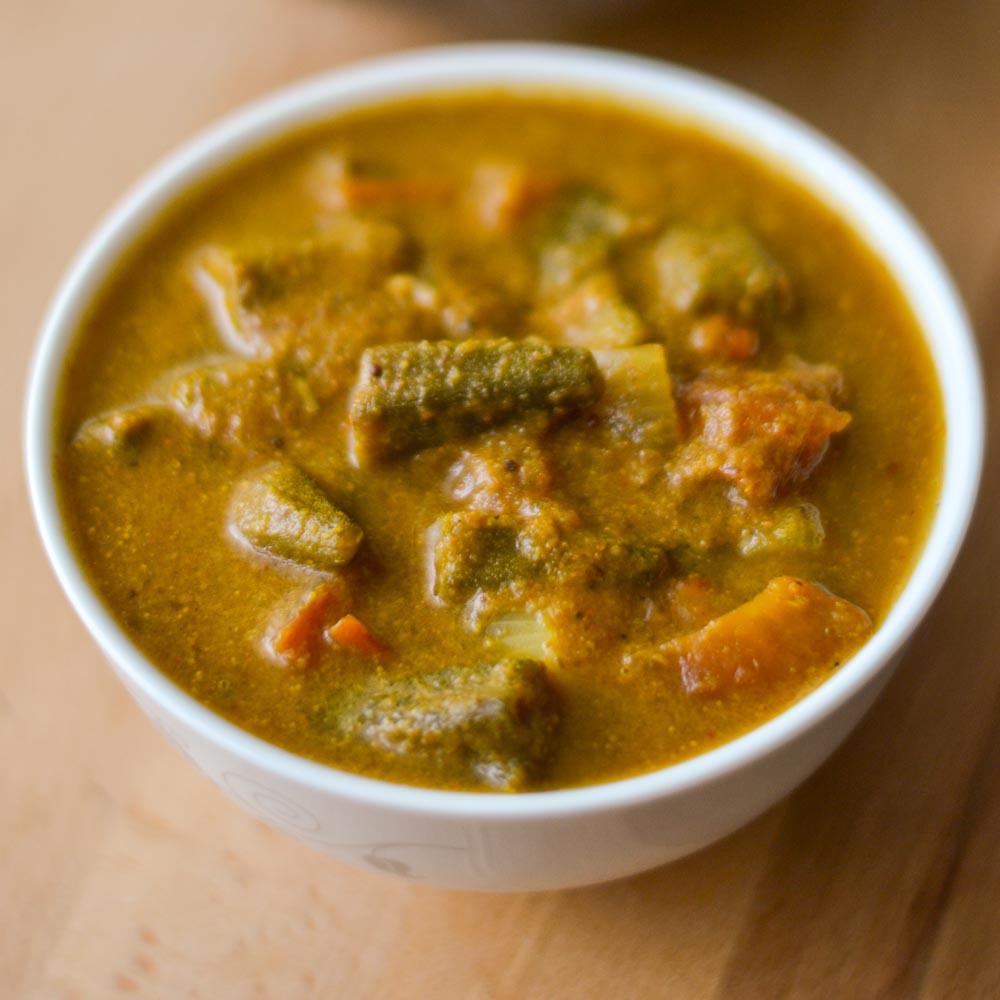
Kara Kuzhambu / kulambu is an everyday curry made for lunch. Its usually served with rice. Kara Kuzhambu is generally made with a choice of veggies like drumstick, brinjal etc… but I heavily fall for kara kuzhambu made with vendakkai – ladies finger. The juicy bite of the ladies finger soaked in tamarind gravy is so delicious. Here is how to do Vendakkai Kara Kuzhambu.
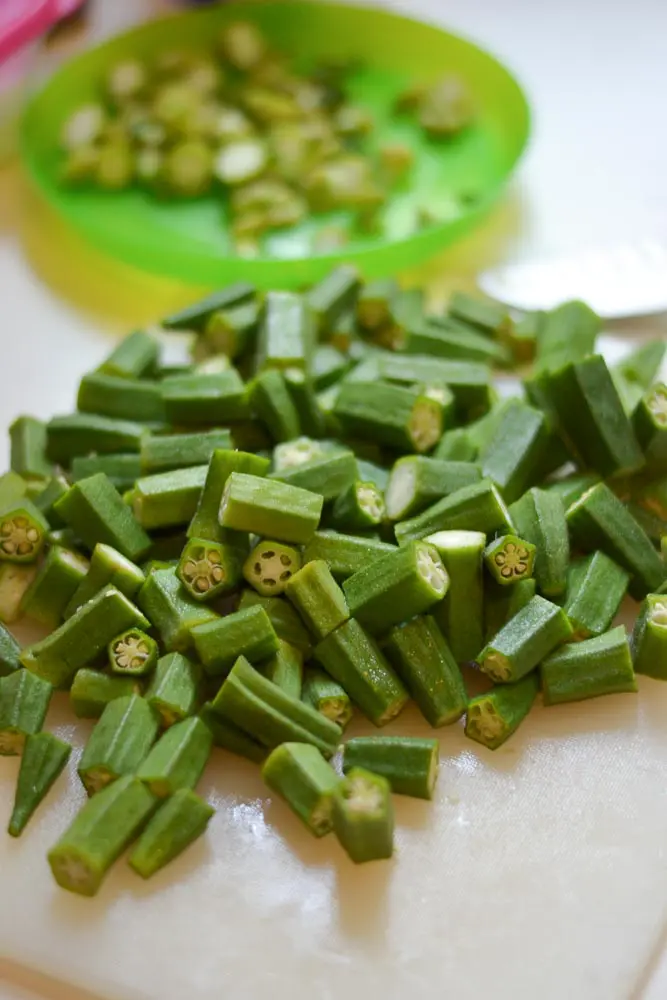
Wash and dry the ladies finger on a towel. Drying them will remove the excess moisture and help in faster browning while cooking. Snap off the ends of the ladies finger. Cut into 1 inch pieces. Set aside.
Add a teaspoon of oil to a pan (preferably non-stick) and add in the ladies finger. Wider the pan – the better, as it will have more surface area and the ladies finger will brown faster and better without being slimy. Saute on a low flame. Add in a little bit of salt to the ladies finger while frying. It will brown evenly. Once the ladies finger is cooked, remove from heat and set aside. Many people ask me why not use an iron pan for frying. How did they do it in olden days etc… You can use whatever pan you want. But you will need to add a little bit more oil and fry continuously if using conventional pans. Its just a matter of choice. End of the day, its your food – your way!

We will now make a masala for the kara kuzhambu.

Dry roast all the ingredients together except coconut. Dry roast on a low flame until the seeds slowly start to brown and the aroma wafts in the kitchen. Remove and set aside to cool. In the same pan, add in the fresh shredded coconut. Fry for a couple of minutes till its completely dry. Note : Do not roast spices on high heat. They will burn and ruin the flavour of the dish. Grind the roasted masala with 1/2 a cup of water to a smooth paste. Set aside.

Heat oil in a pan and add in a teaspoon of sesame oil (gingely oil / nallennai). When the oil is hot, add in the mustard seeds, curry leaves and the dried red chillies. Let the mustard seeds splutter. Add in the onions and fry for a minute. No need to brown the onions. You can use Indian shallots (small onion / chinna vengayam ) for a more robust flavour. Add in the chopped tomatoes (preferably country-naati tomatoes), turmeric powder, little salt and sambar powder. Fry for a minute more. Be cautious while adding salt. Remember that we already salted the ladies finger while frying.

Add in the ground masala and the tamarind paste. I like to use home made tamarind paste. Having tamarind paste is such a time saver. Here is the recipe for making home made tamarind paste.

Add in a cup of hot water and the fried ladies finger. Simmer for 5 minutes. We do not need to cook this for a long time as all the ingredients are already cooked.

Remove from heat and serve hot with rice.
For frying ladies finger
- 500 grams ladies finger
- 1 teaspoon sesame – gingely oil
- 1/2 teaspoon salt
For the masala
- 1/3 cup fresh shredded coconut
- 1 teaspoon cumin seeds
- 1 teaspoon fennel seeds
- 1 teaspoon black pepper
- 2 teaspoon coriander seeds
- 1/4 teaspoon fenugreek seeds (vendayam)
Final Tempering and Gravy
- 1 teaspoon sesame – gingely oil
- 1/4 teaspoon mustard seeds
- 2 sprigs curry leaves
- 3 dried red chillies
- 1 onion, diced
- 2 ripe tomatoes, chopped
- 1/2 teaspoon turmeric powder
- 2 teaspoon sambar powder
- 1/2 teaspoon salt
- 4 tablespoon tamarind paste
- Heat oil in a pan and add in the chopped ladies finger and salt. Cook until evenly browned and its not slimy anymore. Set aside.
- Dry roast all the ingredients listed under “masala” together except coconut. Dry roast on a low flame until the seeds slowly start to brown and the aroma wafts in the kitchen. Remove and set aside to cool. In the same pan, add in the fresh shredded coconut. fry for a couple of minutes till its completely dry. Grind the roasted masala with 1/2 a cup of water to a smooth paste. Set aside.
- Heat oil in a pan and add in a teaspoon of sesame oil. When the oil is hot, add in the mustard seeds, curry leaves and the dried red chillies. Let the mustard seeds splutter. Add in the onions and fry for a minute. Add in the chopped tomatoes (preferably country-naati tomatoes), turmeric powder, salt and sambar powder. Fry for a minute more.
- Add in the ground masala and the tamarind paste.
- Add in a cup of hot water and the fried ladies finger. Simmer for 5 minutes.
- Remove from heat and serve hot with rice.
- Author: Kannamma - Suguna Vinodh
- Prep Time: 20 mins
- Cook Time: 20 mins
- Category: lunch
- Cuisine: Tamilnadu

