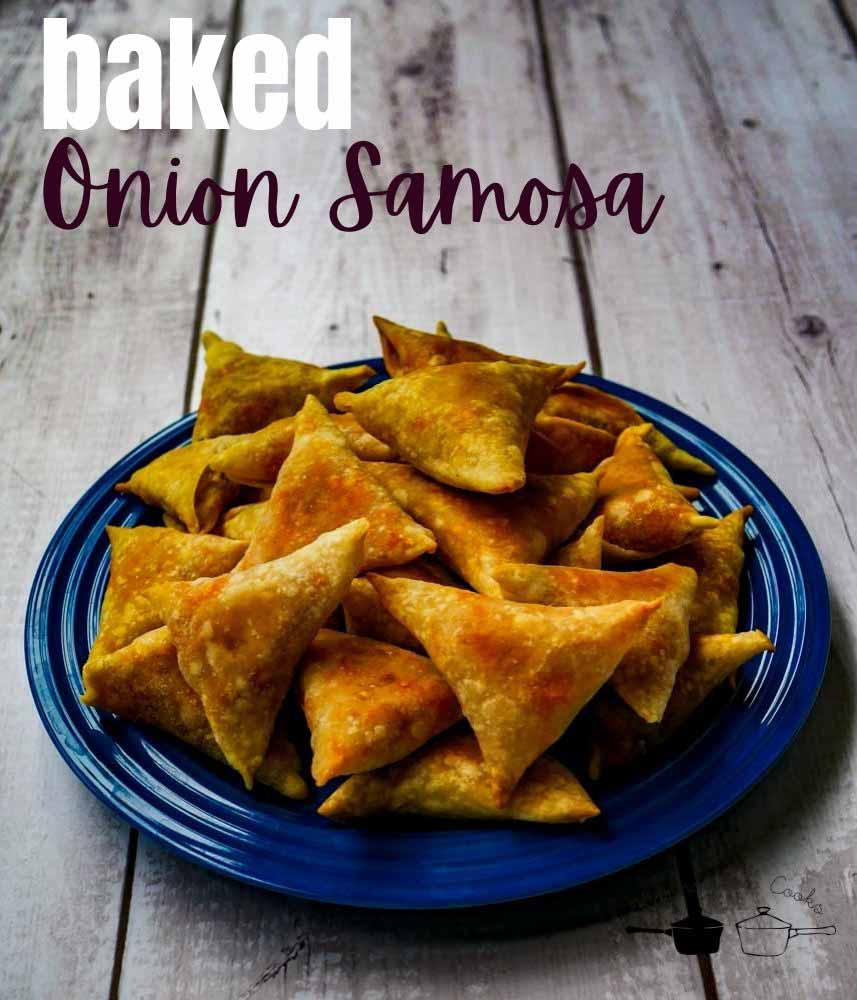
Recipe for South Indian style Baked Onion Samosa / Baked Vengaya samosa -வெங்காய சமோசா / வெங்காய பப்ஸ். Baked version of the traditional samosa made with a filling of sautéed onions. Recipe with step by step pictures and video.
Here are the other recipes from the site you may be interested in Onion based recipes Baking recipes
Here is the video of how to make Baked Onion Samosa Recipe, Baked Vengaya Samsa Recipe
We love the traditional deep fried Onion Samosa at home. Here is my take on making a relatively healthier version by baking these samosas instead of deep frying them. I have used maida (all purpose flour) for making the wrappers. You can make it 50:50 by using maida and whole wheat flour / atta. Onion samosas are a labour of love as the wrapping consumes time. So plan accordingly when you decide to make it.
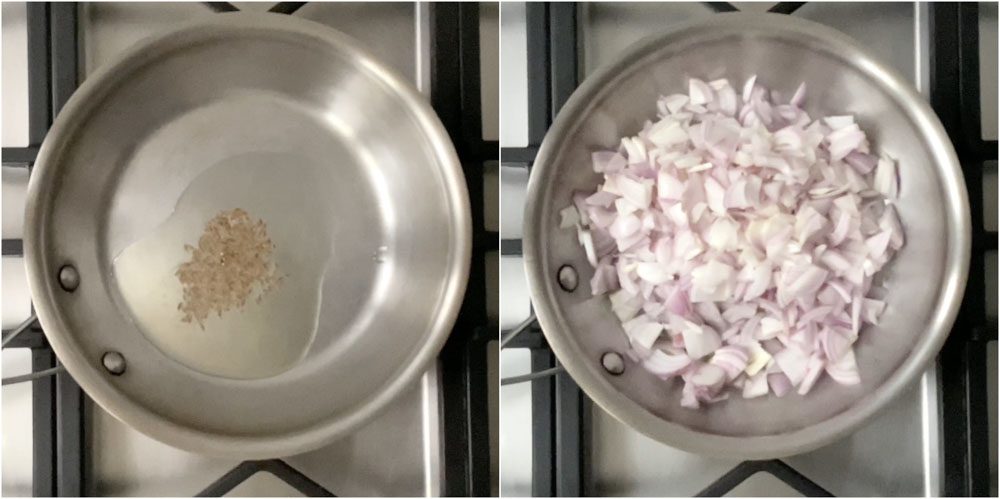
Here is how to make Baked Onion Samosa Recipe, Baked Vengaya Samsa Recipe First, lets make the filling. Slice around 3 cups of onions. Heat oil in a pan and add in the cumin seeds. Add in the sliced onions and the salt. Saute for 2-3 minutes till the onions are soft. No need to brown the onions.
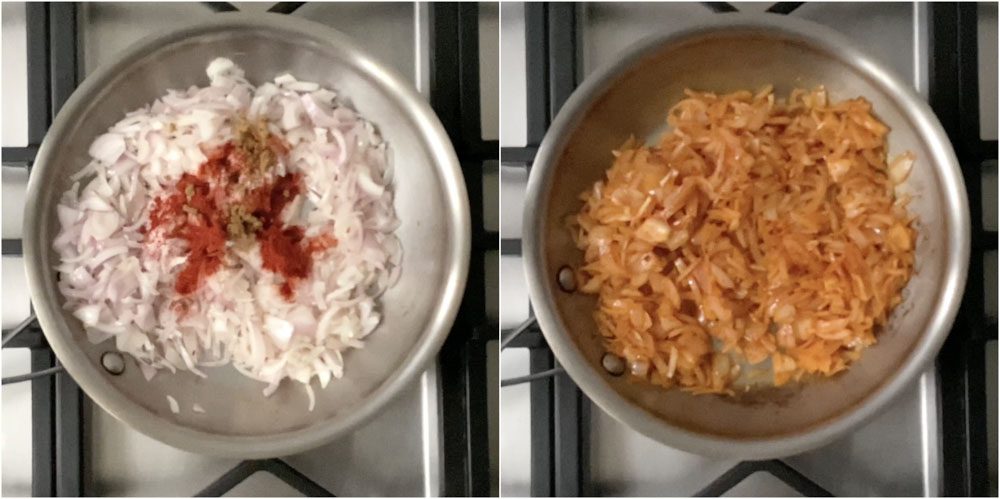
Add in the red chilli powder and garam masala powder. Saute for a few minutes. The onions will be getting cooked again during baking.

Add in the beaten rice (aval in tamil) and mix well. The aval will help absorb all the moisture from the onions so the samosa wrappers dont become soggy. Remove from heat and set aside to cool. The stuffing for baked onion samosa is ready.
The wrappers for making baked onion samosa: We will be using one cup of maida (all purpose flour) for this recipe. A cup of maida will make around 32 mini samosas. As for the portion sizes, 5 samosas per person is ideal ( they are small). Keeping the sizes small is important so the samosas bake and crisp up evenly without becoming soggy.
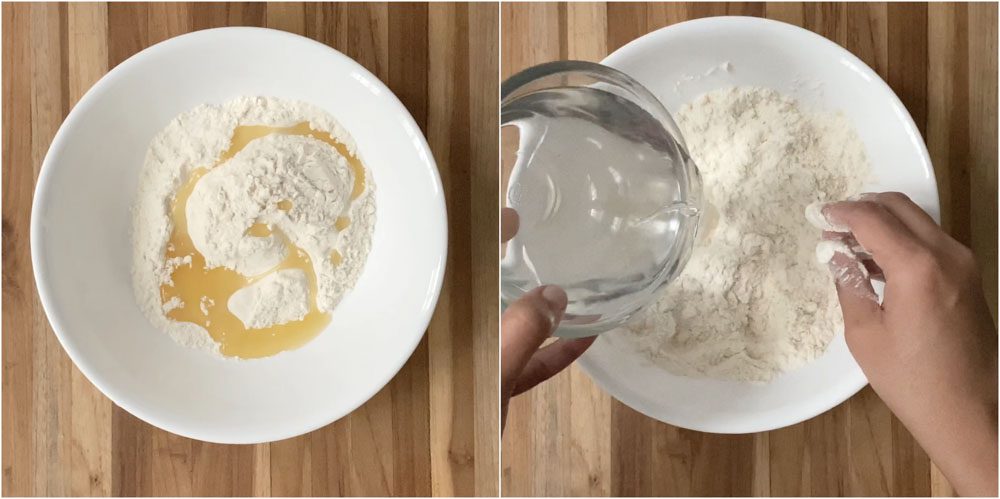
Take a bowl and add in a cup of maida. Add in the oil, salt and the baking soda. The baking soda will help in browning and crisping up of the warappers. Mix well to combine. Add water little by little and mix to form a dough. The consistency of the dough should be stiff and that of a chapati dough.
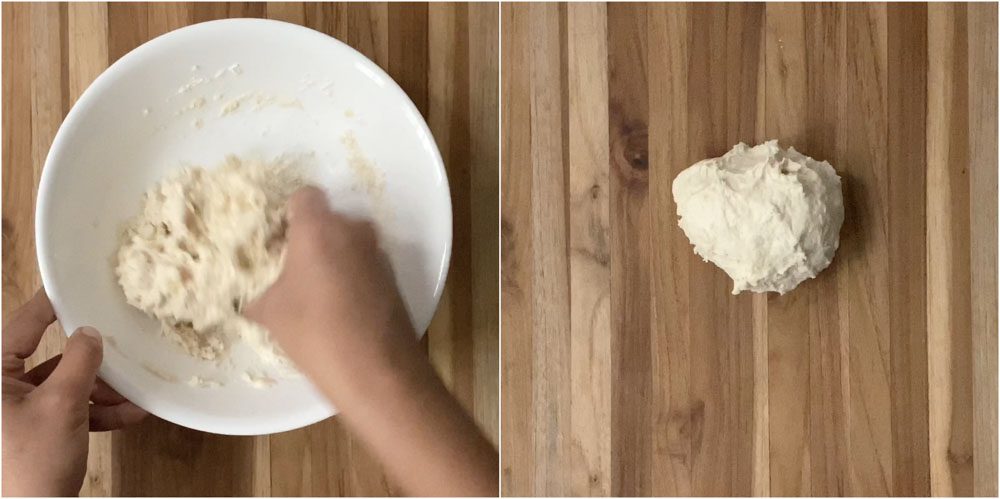
Knead the dough for a good 2-3 minutes so its soft and pliable.
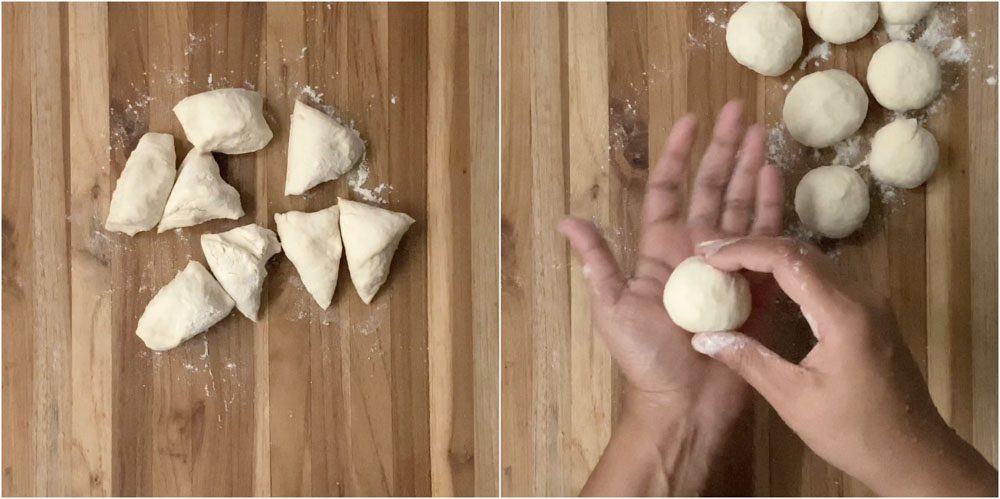
Divide the dough into 8 equal pieces. Shape the pieces into balls and set aside.
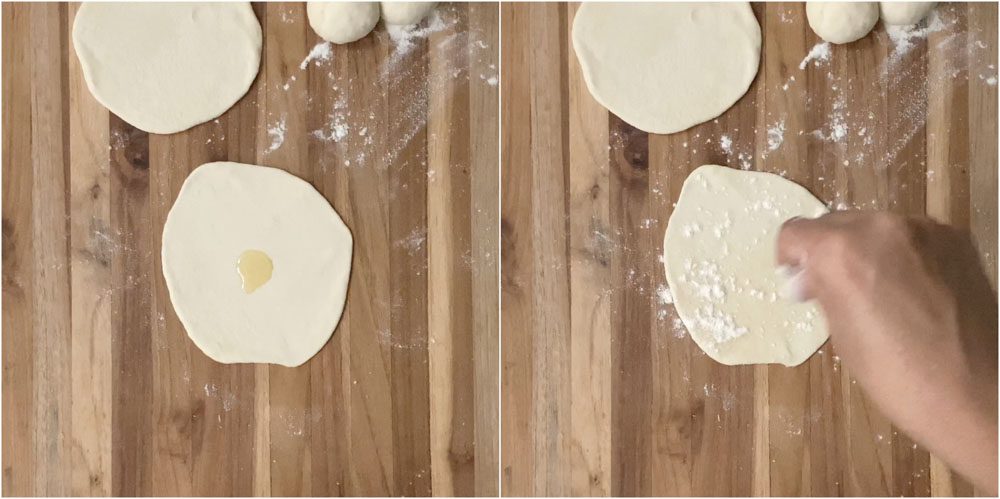
Take a dough ball and generously dust it with flour. Roll the dough into a 3 inch round on a flat smooth surface using a rolling pin. Brush oil on top of the rolled dough. Sprinkle flour on it.
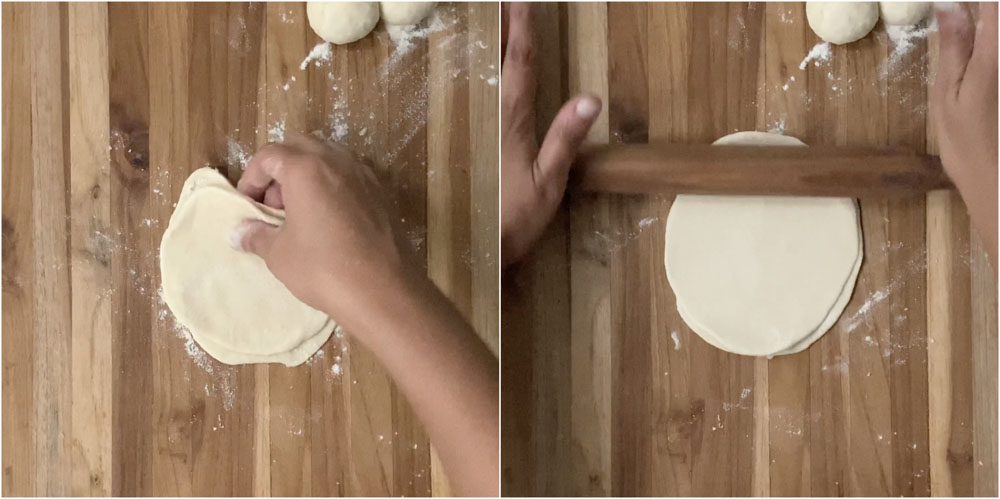
Place another rolled sheet on top of this and roll again. Sprinkle flour while rolling. It will expand. The thinner the sheet, the better. Dont press too hard. Be gentle while rolling. The oil and the sprinkled flour in between the sheets will help to remove the sheets later on.
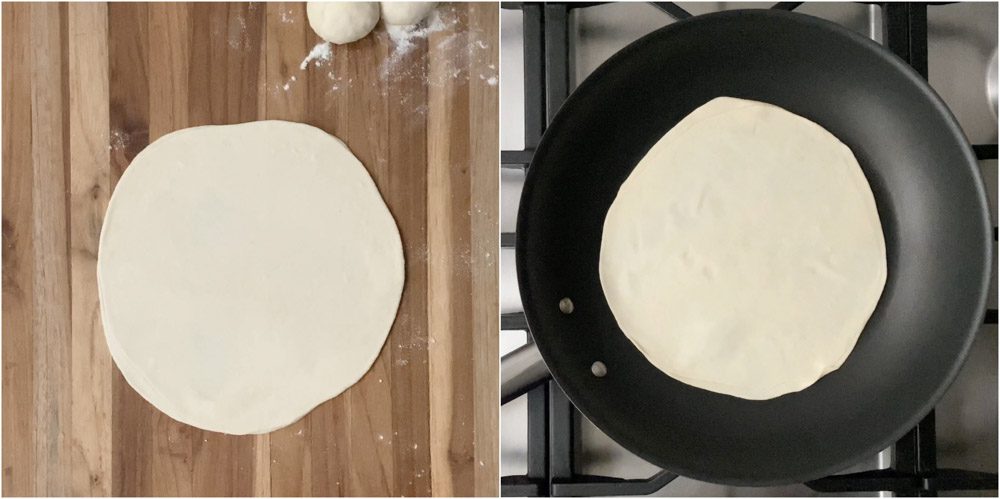
Place the combined sheets on a hot griddle and cook for a few seconds on each side. No need to brown the sheets.
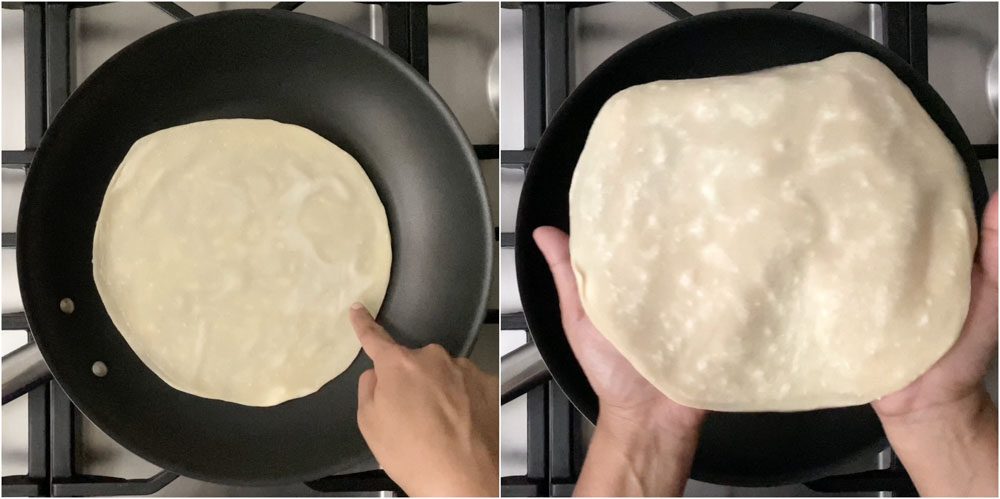
Cooking for a few seconds till the moisture in the dough dries up is all we are looking for. We still need the sheets to be pliable. So do not cook for long.
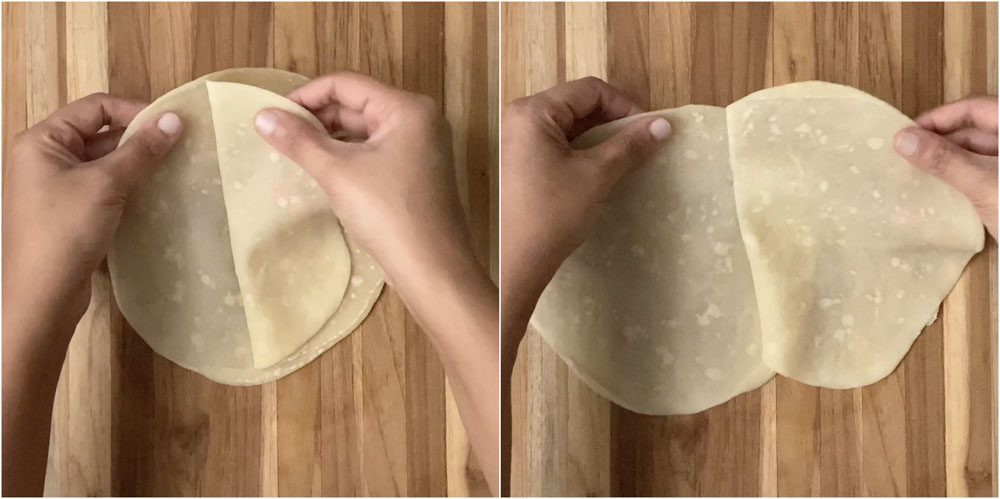
Remove the sheets from the pan and gently separate the sheets. Repeat the same with the remaining sheets. Cook all the sheets. Set aside.
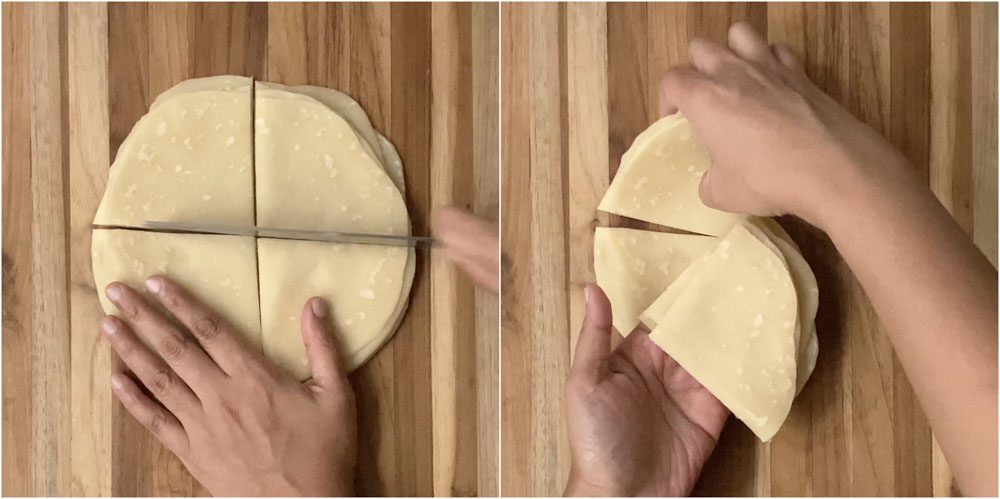
Now using a knife, cut the sheets into four triangles. Cover them with a cloth so it does not dry up a lot. The triangle sheets are ready. Each triangle will make one samosa.
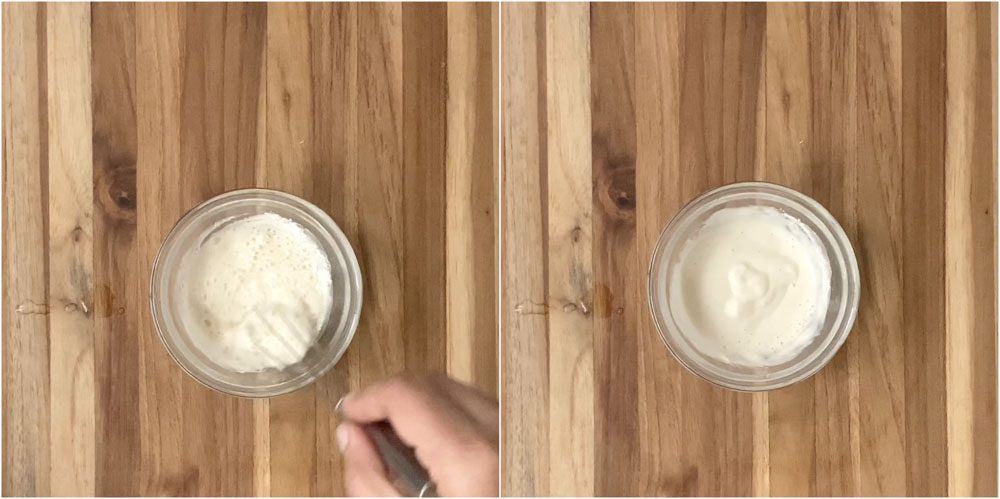
In a small cup dilute three tablespoons of maida with few teaspoons of water. This is our maida gum. Set aside.
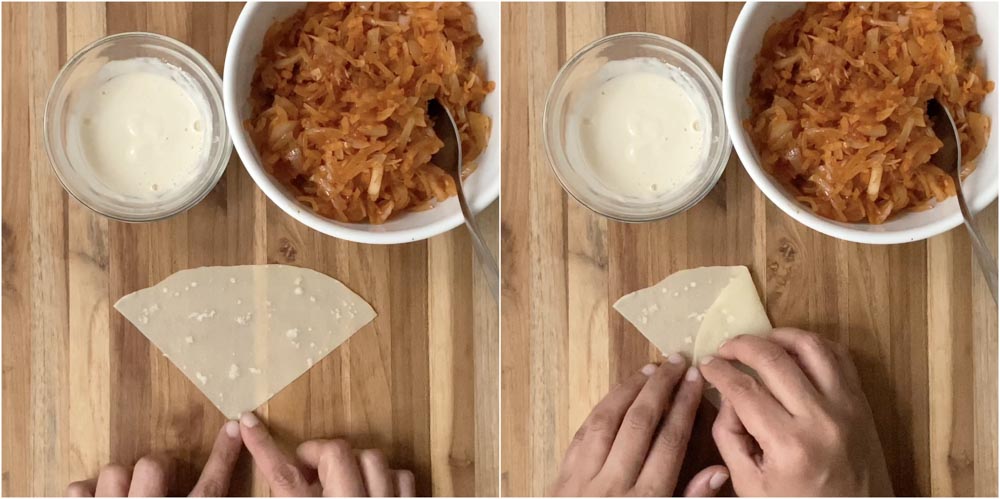
Take a triangle sheet. Fold on one side like below.
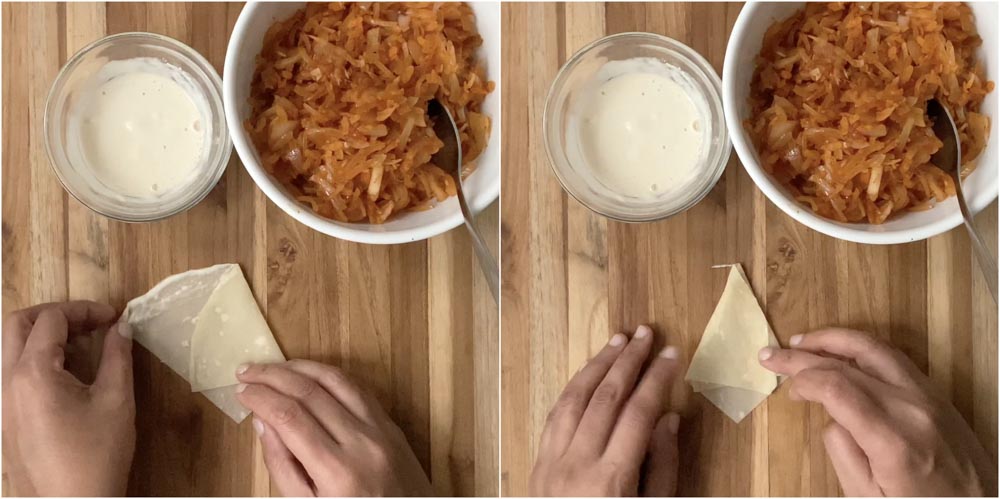
Gather the other side and make a cone. Press well so the maida gum adheres.
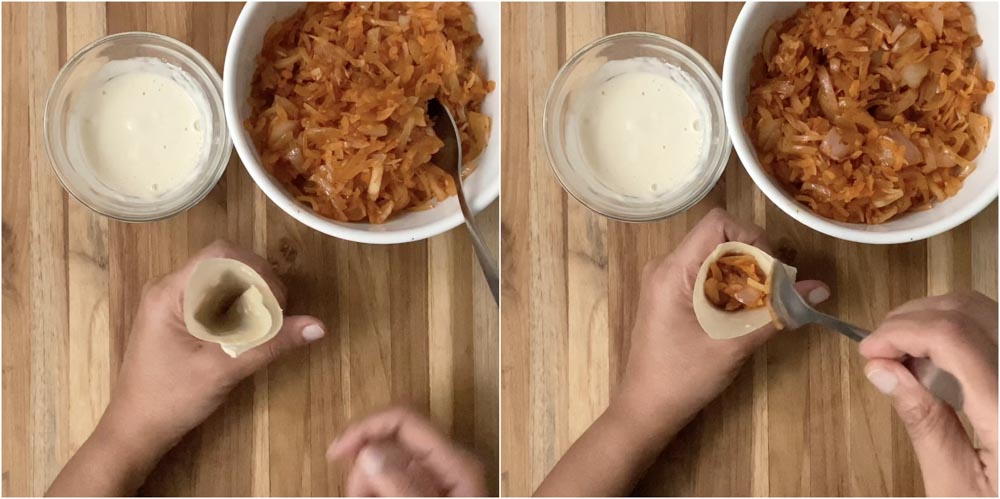
Fill the cone with the onion filling we made before.
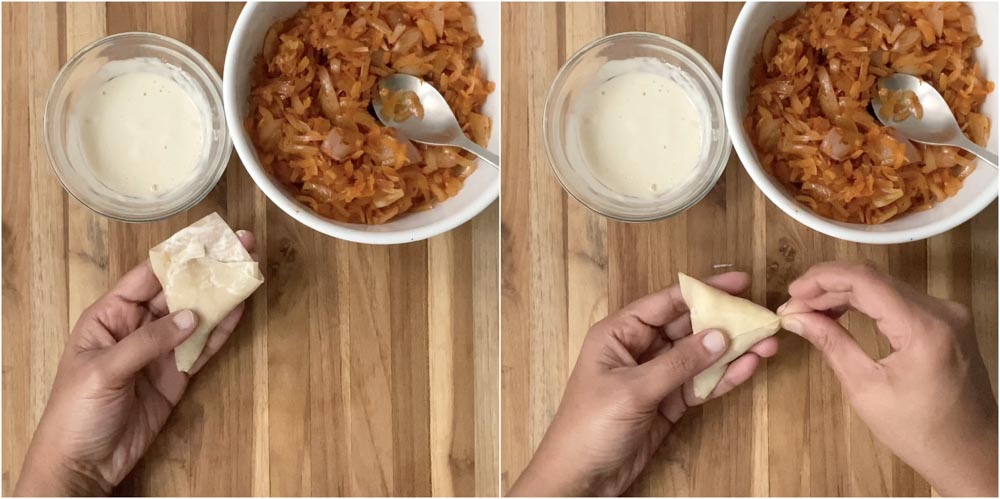
Apply the maida gum on the remaining sheet and fold to make a triangular samosa. Pinch the edges so there is no holes.
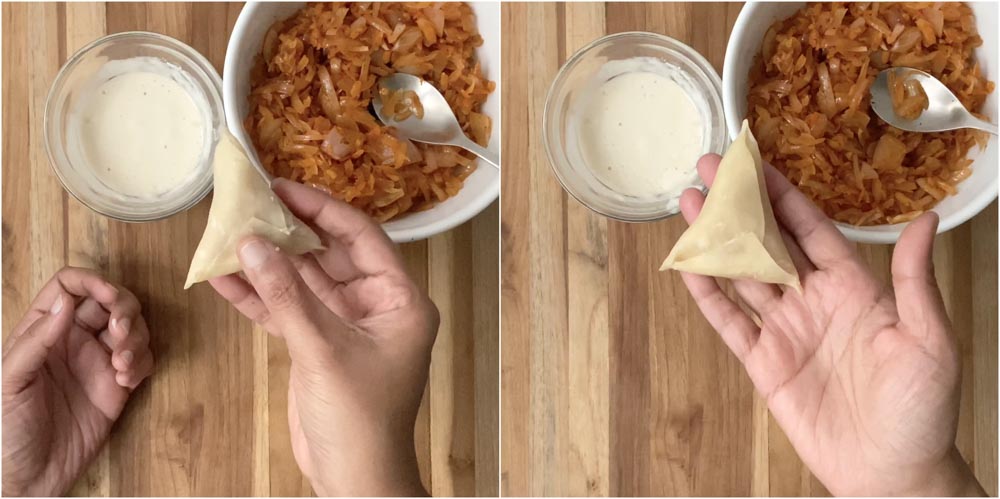
Repeat with the rest of the sheets. Set aside.
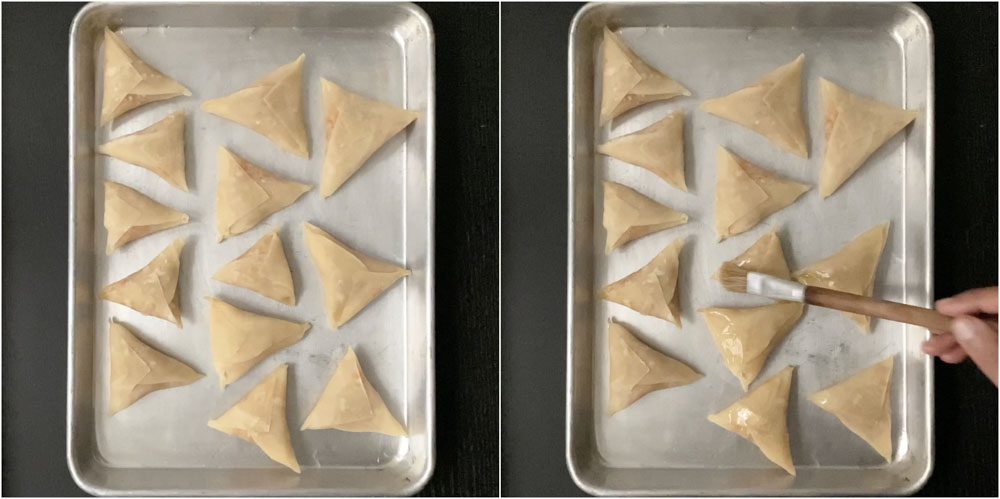
Baking the samosas Preheat the oven for 15 minutes at 200°C / 400°F. Take a greased sheet pan and place the prepared samosas. Brush the samosas with oil. Make sure to brush evenly so the entire samosa is evenly covered. Bake at 200°C / 400°F for 20-25 minutes. Bake in batches if necessary.
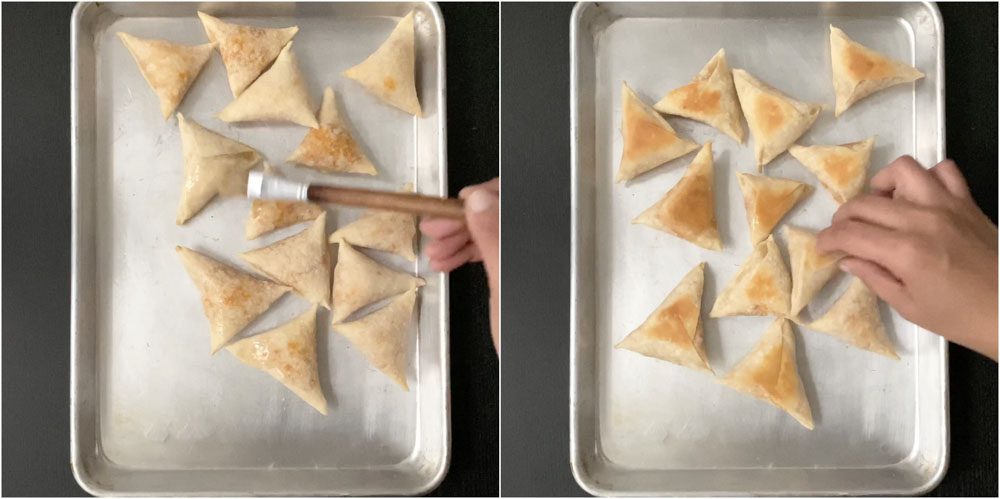
Half way through, after 10 minutes, remove the samosas from the oven and apply oil on the top again. Turn the samosas. The side that is in contact with the pan will brown faster. So turning will ensure that the samosas are baked evenly.
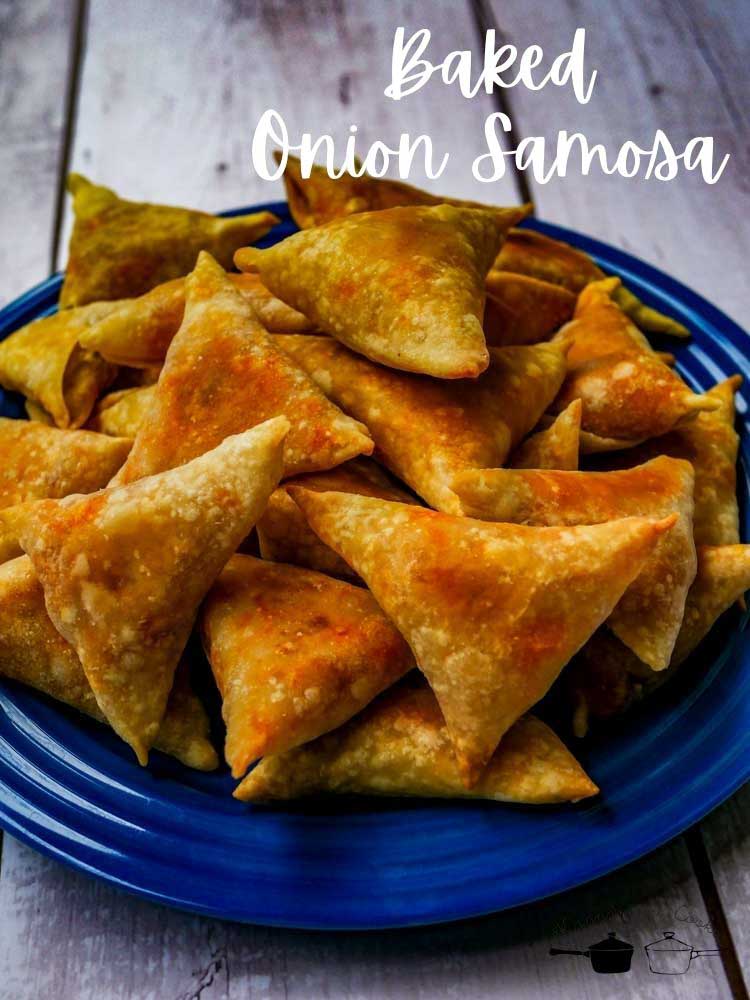
Bake until the samosas are nice and brown.
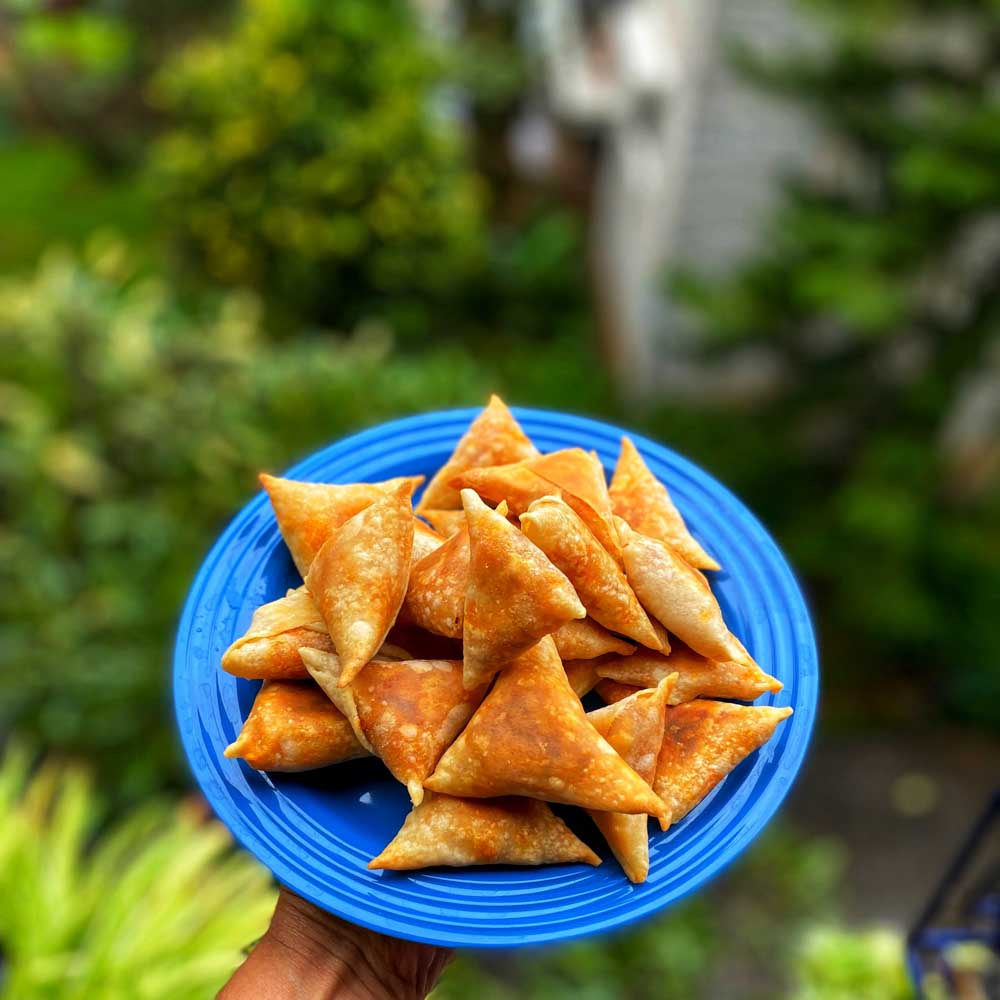
Serve as a appetizer or as an evening snack.
For the baked onion samosa filling
2 teaspoon vegetable oil 1/2 teaspoon cumin seeds 300 grams onions, sliced 1 teaspoon salt 1 teaspoon red chilli powder 1/2 teaspoon garam masala 1/4 cup aval / poha For the samosa sheets
For the samosa wrappers
1 cup maida / all purpose flour 1/4 teaspoon salt 1/4 teaspoon baking soda 2 teaspoon vegetable oil Few teaspoon of vegetable oil for brushing the wrappers
For the maida paste
3 tablespoon maida / all purpose flour few teaspoons of water
Slice around 3 cups of onions. Heat oil in a pan and add in the cumin seeds. Add in the sliced onions and the salt. Saute for 2-3 minutes till the onions are soft. No need to brown the onions. Add in the red chilli powder and garam masala powder. Saute for a few minutes. The onions will be getting cooked again during baking. Add in the beaten rice (aval in tamil) and mix well. The aval will help absorb all the moisture from the onions so the samosa wrappers dont become soggy. Remove from heat and set aside to cool. The stuffing for baked onion samosa is ready.
Take a bowl and add in a cup of maida. Add in the oil, salt and the baking soda. The baking soda will help in browning and crisping up of the warappers. Mix well to combine. Add water little by little and mix to form a dough. The consistency of the dough should be stiff and that of a chapati dough. Knead the dough for a good 2-3 minutes so its soft and pliable. Divide the dough into 8 equal pieces. Shape the pieces into balls and set aside. Take a dough ball and generously dust it with flour. Roll the dough into a 3 inch round on a flat smooth surface using a rolling pin. Brush oil on top of the rolled dough. Sprinkle flour on it. Place another rolled sheet on top of this and roll again. Sprinkle flour while rolling. It will expand. The thinner the sheet, the better. Dont press too hard. Be gentle while rolling. The oil and the sprinkled flour in between the sheets will help to remove the sheets later on. Place the combined sheets on a hot griddle and cook for a few seconds on each side. No need to brown the sheets. Cooking for a few seconds till the moisture in the dough dries up is all we are looking for. We still need the sheets to be pliable. So do not cook for long. Remove the sheets from the pan and gently separate the sheets. Repeat the same with the remaining sheets. Cook all the sheets. Set aside. Now using a knife, cut the sheets into four triangles. Cover them with a cloth so it does not dry up a lot. The triangle sheets are ready. Each triangle will make one samosa. In a small cup dilute three tablespoons of maida with two tablespoons of water. This is our maida gum. Set aside. Take a triangle sheet. Fold on one side. Gather the other side and make a cone. Press well so the maida gum adheres. Fill the cone with the onion filling we made before. Apply the maida gum on the remaining sheet and fold to make a triangular samosa. Pinch the edges so there is no holes. Repeat with the rest of the sheets. Set aside.
Preheat the oven for 15 minutes at 200°C / 400°F. Take a greased sheet pan and place the prepared samosas. Brush the samosas with oil. Make sure to brush evenly so the entire samosa is evenly covered. Bake at 200°C / 400°F for 20-25 minutes. Bake in batches if necessary. Half way through, after 10 minutes, remove the samosas from the oven and apply oil on the top again. Turn the samosas. The side that is in contact with the pan will brown faster. So turning will ensure that the samosas are baked evenly. Bake until the samosas are nice and brown. Serve as a appetizer or as an evening snack.
- Author: Suguna Vinodh
- Prep Time: 30m
- Cook Time: 30m
For the baked onion samosa filling
2 teaspoon vegetable oil 1/2 teaspoon cumin seeds 300 grams onions, sliced 1 teaspoon salt 1 teaspoon red chilli powder 1/2 teaspoon garam masala 1/4 cup aval / poha For the samosa sheets
For the samosa wrappers
1 cup maida / all purpose flour 1/4 teaspoon salt 1/4 teaspoon baking soda 2 teaspoon vegetable oil Few teaspoon of vegetable oil for brushing the wrappers
For the maida paste
3 tablespoon maida / all purpose flour few teaspoons of water
Slice around 3 cups of onions. Heat oil in a pan and add in the cumin seeds. Add in the sliced onions and the salt. Saute for 2-3 minutes till the onions are soft. No need to brown the onions. Add in the red chilli powder and garam masala powder. Saute for a few minutes. The onions will be getting cooked again during baking. Add in the beaten rice (aval in tamil) and mix well. The aval will help absorb all the moisture from the onions so the samosa wrappers dont become soggy. Remove from heat and set aside to cool. The stuffing for baked onion samosa is ready.
Take a bowl and add in a cup of maida. Add in the oil, salt and the baking soda. The baking soda will help in browning and crisping up of the warappers. Mix well to combine. Add water little by little and mix to form a dough. The consistency of the dough should be stiff and that of a chapati dough. Knead the dough for a good 2-3 minutes so its soft and pliable. Divide the dough into 8 equal pieces. Shape the pieces into balls and set aside. Take a dough ball and generously dust it with flour. Roll the dough into a 3 inch round on a flat smooth surface using a rolling pin. Brush oil on top of the rolled dough. Sprinkle flour on it. Place another rolled sheet on top of this and roll again. Sprinkle flour while rolling. It will expand. The thinner the sheet, the better. Dont press too hard. Be gentle while rolling. The oil and the sprinkled flour in between the sheets will help to remove the sheets later on. Place the combined sheets on a hot griddle and cook for a few seconds on each side. No need to brown the sheets. Cooking for a few seconds till the moisture in the dough dries up is all we are looking for. We still need the sheets to be pliable. So do not cook for long. Remove the sheets from the pan and gently separate the sheets. Repeat the same with the remaining sheets. Cook all the sheets. Set aside. Now using a knife, cut the sheets into four triangles. Cover them with a cloth so it does not dry up a lot. The triangle sheets are ready. Each triangle will make one samosa. In a small cup dilute three tablespoons of maida with two tablespoons of water. This is our maida gum. Set aside. Take a triangle sheet. Fold on one side. Gather the other side and make a cone. Press well so the maida gum adheres. Fill the cone with the onion filling we made before. Apply the maida gum on the remaining sheet and fold to make a triangular samosa. Pinch the edges so there is no holes. Repeat with the rest of the sheets. Set aside.
Preheat the oven for 15 minutes at 200°C / 400°F. Take a greased sheet pan and place the prepared samosas. Brush the samosas with oil. Make sure to brush evenly so the entire samosa is evenly covered. Bake at 200°C / 400°F for 20-25 minutes. Bake in batches if necessary. Half way through, after 10 minutes, remove the samosas from the oven and apply oil on the top again. Turn the samosas. The side that is in contact with the pan will brown faster. So turning will ensure that the samosas are baked evenly. Bake until the samosas are nice and brown. Serve as a appetizer or as an evening snack.
- Author: Suguna Vinodh
- Prep Time: 30m
- Cook Time: 30m
Find it online : https://www.kannammacooks.com/baked-onion-samosa/
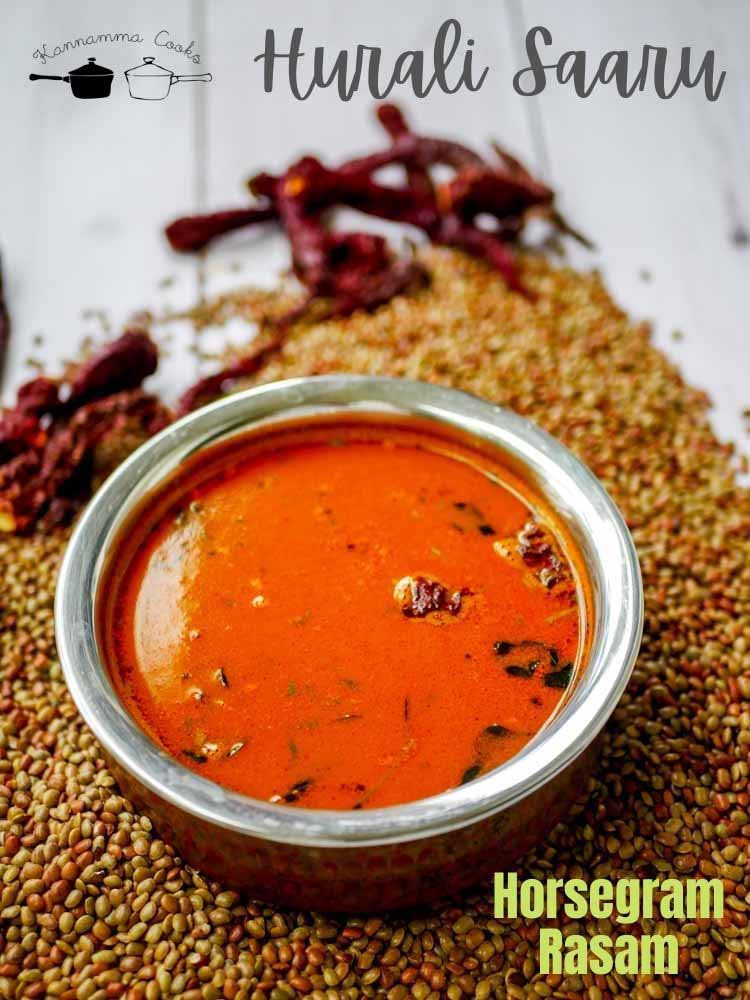
Recipe for Karnataka style Hurali Saaru / Horse gram Rasam. Rasam made with the horse gram stock and spices. A specialty from the Udupi region. Recipe with step by step pictures and video.
Here are other recipes from the site using Horse gram. Horsegram Recipes Rasam Recipes
Here is the video of how to make Karnataka style Hurali Saaru / Horse gram Rasam
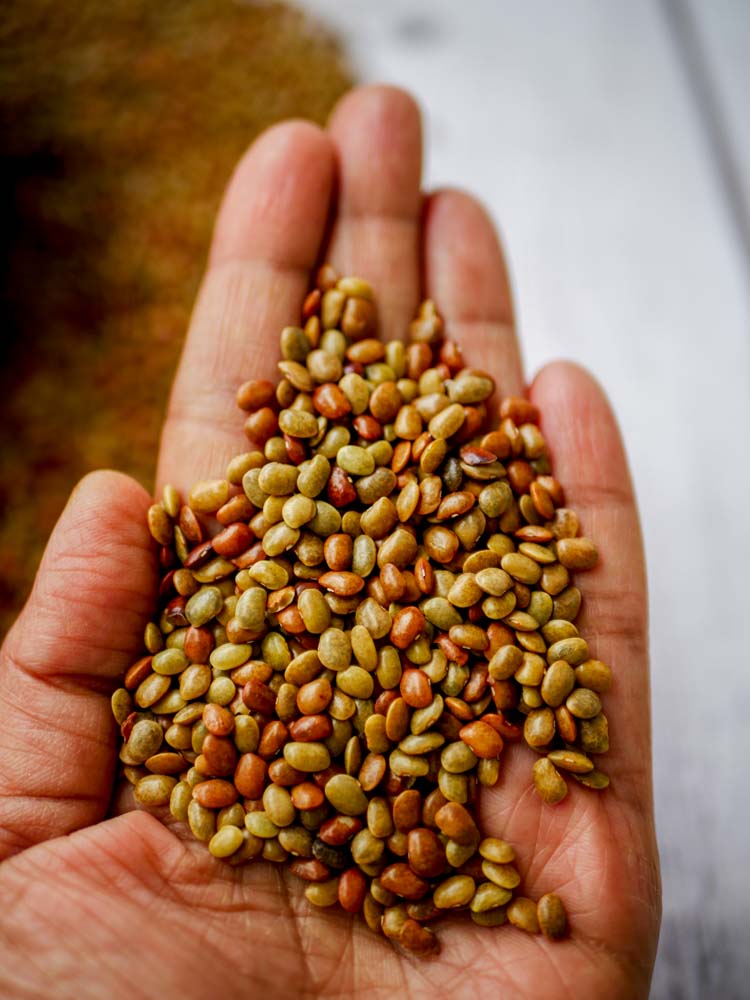
Horse gram is one of our favorite lentils to have at home. Its one of the heartiest and tastiest lentils around. This Karnataka style Hurali Saaru / Horse gram Rasam is perfect for the current Bangalore weather. This can be had along with rice or even as a soup. Its a very comforting soup. The horse gram is boiled and the stock used for boiling is used to make this saaru / rasam. The boiled horse gram can be used to make a dal or mash. Do try it at home.
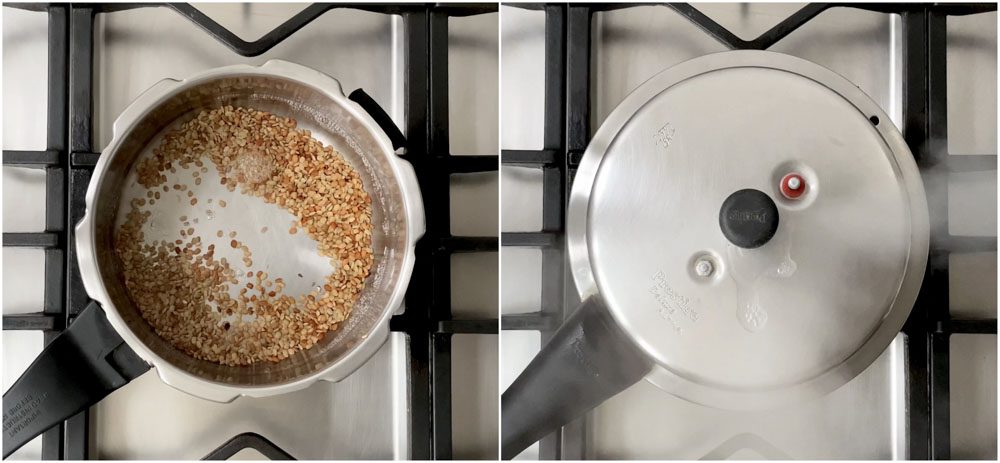
Here is how to make Karnataka style Hurali Saaru / Horse gram Rasam Clean half a cup of horse gram. Usually, there will be small stones. Just take a hand full of horse gram and place it on a plate. Shake the plate and you will be able to see the stones if any. After cleaning wash the lentil 2-3 times. Add the lentils to a pressure cooker. Add 3 cups of water and half a teaspoon of sesame oil. Cook the lentils for 20 minutes on medium flame. Ignore the number of whistles. After 20 minutes, remove the lentils from heat and wait for the pressure to settle. Note: If you have the time, you can also soak the lentils for 2-3 hours. Some even soak it overnight.
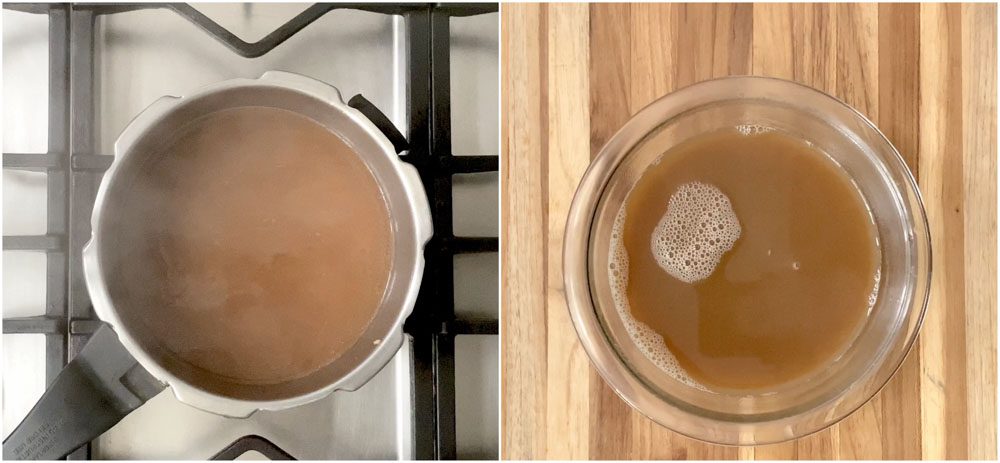
Strain the stock. The stock is what we will be using to make the Karnataka style Hurali Saaru / Horse gram Rasam today. The lentils can be used for making a horse gram mash .
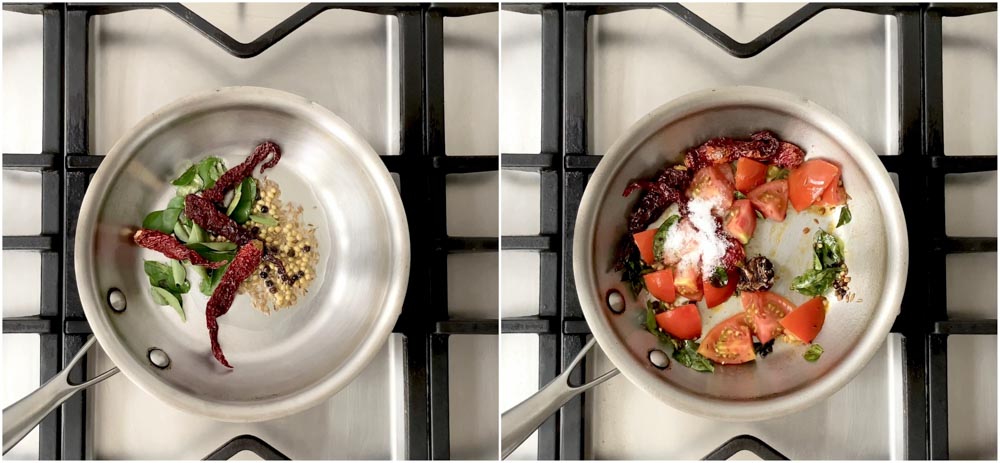
Heat little Indian sesame oil in a pan and add in the fenugreek seeds, cumin seeds, black pepper, coriander seeds, curry leaves, and red chillies. I have used Byadagi chillies for this recipe. The Kashmiri red chillies are interchangeably used too. The Byadagi chillies offer a very nice color and flavour without it being too spicy. Sauté the spices on a low flame for a minute until fragrant. Add in the tomatoes, salt and a small piece of tamarind. Also add in the asafoetida and the turmeric powder. Cook till the tomatoes are mushy.
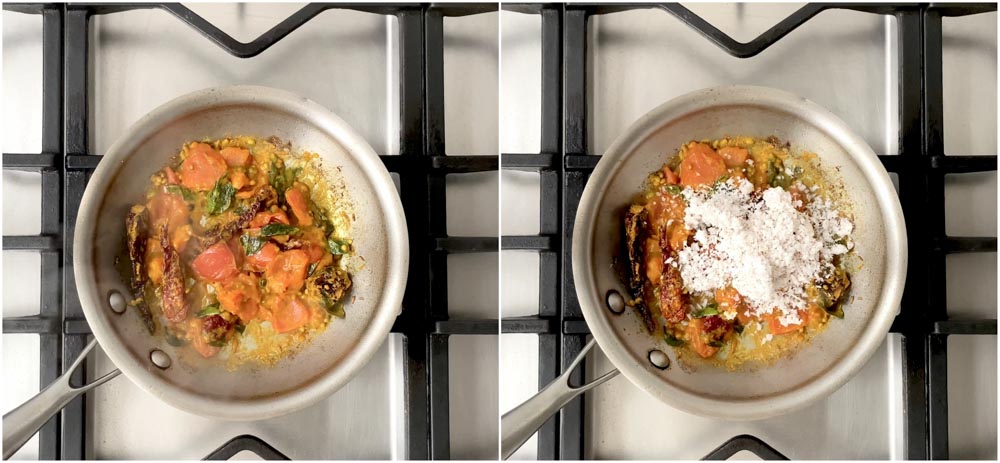
Once the tomatoes are mushy, add in the fresh shredded coconut. Sauté briefly for a few seconds. Remove from heat.
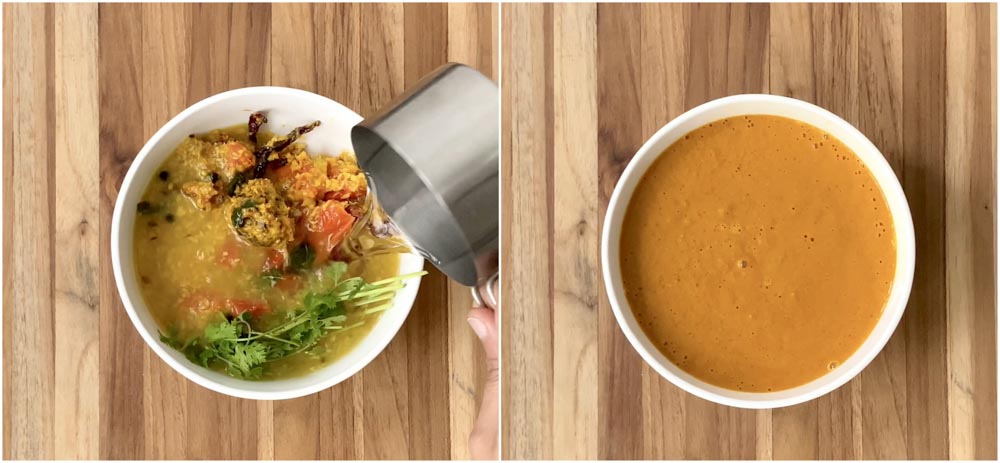
To the mixture, add in a few sprigs of coriander leaves and a cup of water. Grind to a smooth paste. Set aside.
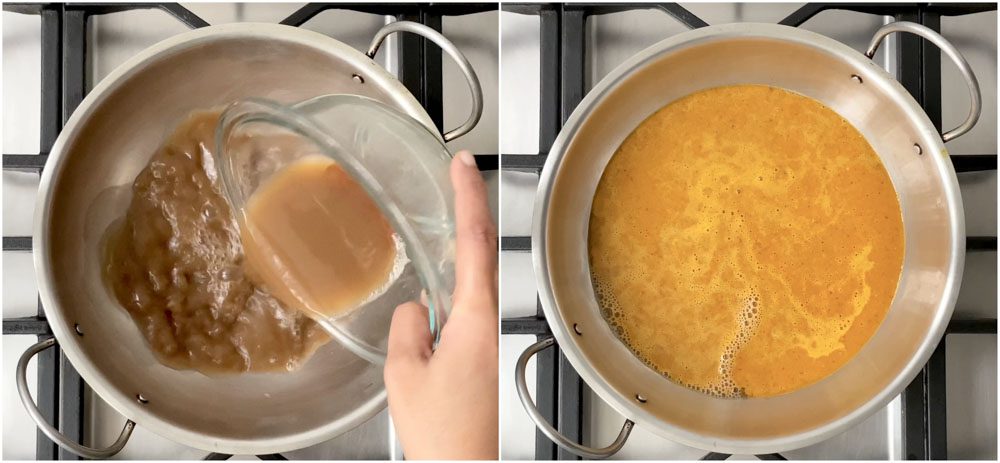
Making the Karnataka style Hurali Saaru / Horse gram Rasam Heat a kadai / pan and add in the horse gram stock and the ground masala paste. Wash the mixie with little water and add it to the pan. Add in the salt and the jaggery. Adjust water quantity if the rasam is too thick. Do not make this rasam too thin. It needs to have some body. So be careful while adding extra water. Let it boil for 10 minutes.
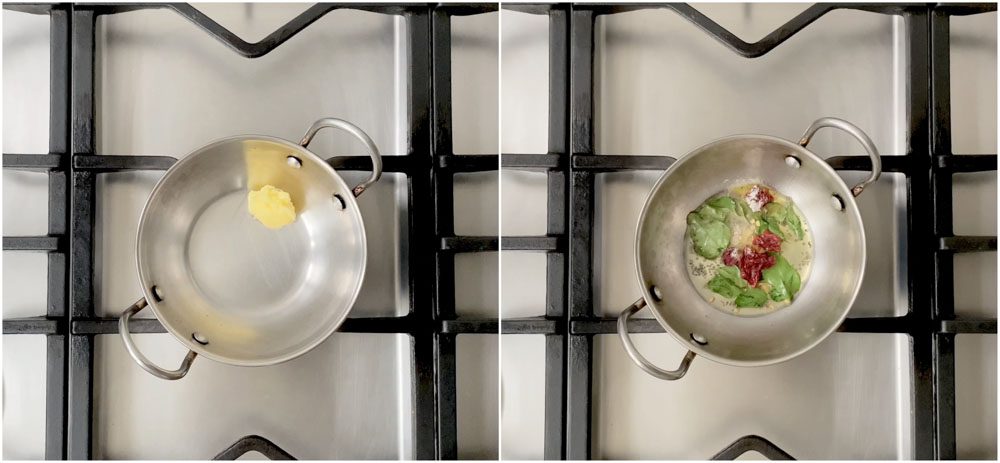
Tempering the Karnataka style Hurali Saaru / Horse gram Rasam Heat ghee in a small kadai / pan. Add in the mustard seeds, curry leaves, dried red chillies and asafoetida. Let the mustard seeds crackle.
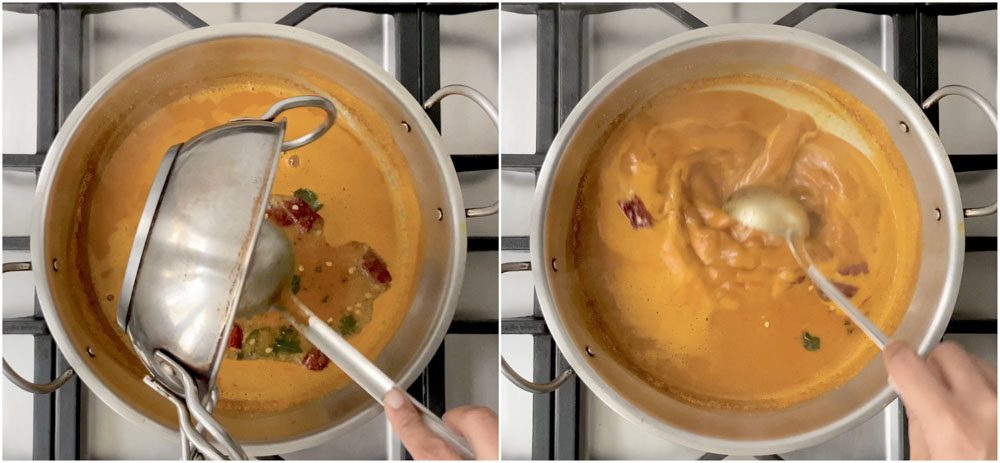
Add in the tempering to the boiling rasam.
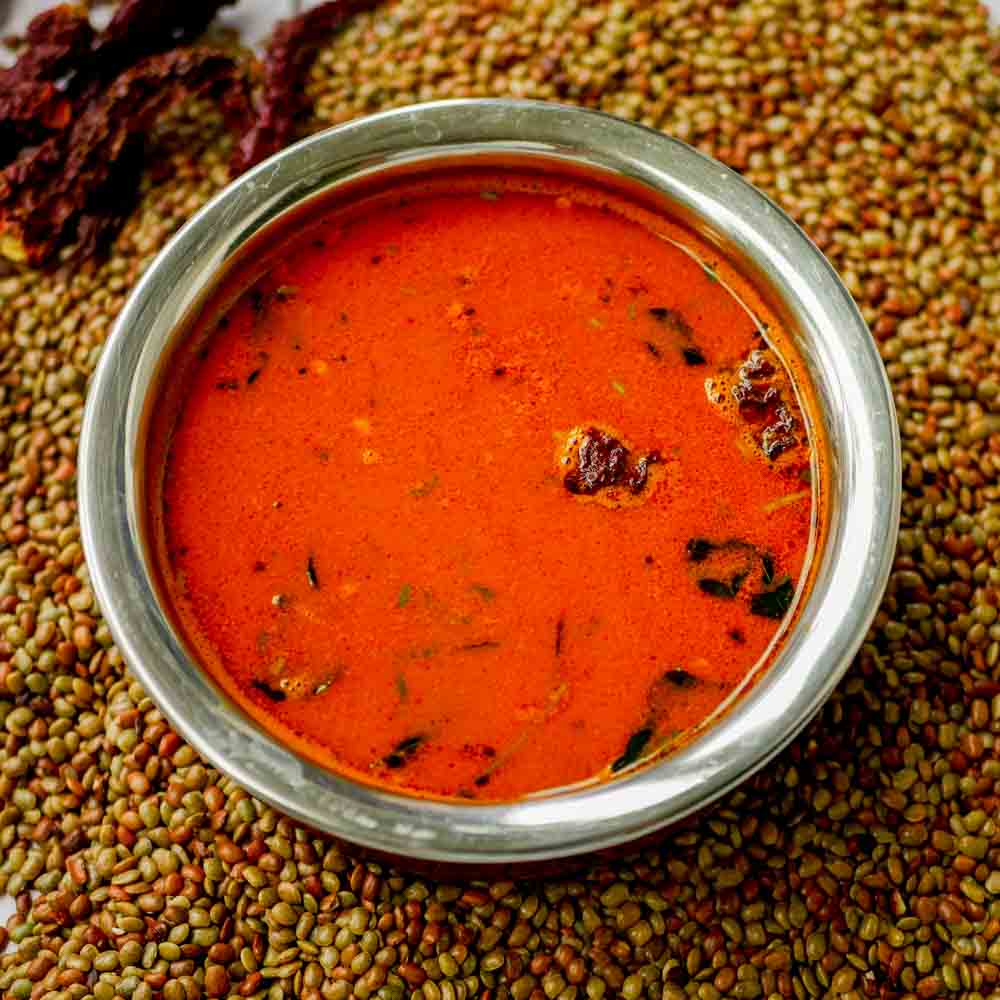
A super fantastic Karnataka style Hurali Saaru / Horse gram Rasam is ready. Have it with rice or as a soup.
Cooking Horsegram for Hurali Saaru
1/2 cup horsegram 3 cups water 1/2 teaspoon Indian sesame oil
Other Ingredients for Hurali Saaru
2 teaspoon Indian sesame oil 1/8 teaspoon fenugreek seeds 1/4 teaspoon cumin seeds 1/4 teaspoon black pepper 1/4 teaspooon coriander seeds 2 sprigs curry leaves 4 byadagi / kashmiri red chillies 2 tomatoes 3/4 teaspoon salt + 1/2 teaspoon salt 1 marble size tamarind 1/4 teaspoon asafoetida 3/4 teaspoon turmeric powder 1/3 cup fresh shredded coconut 3 sprigs coriander leaves + 2 sprigs coriander leaves 1/2 teaspoon jaggery
Tempering for Hurali Saaru
1 teaspoon ghee 1/4 teaspoon mustard seeds 2 sprigs curry leaves 2 dried red chillies 1/4 teaspoon asafoetida
Clean half a cup of horsegram. Usually, there will be small stones. Just take a hand full of horsgram and place it on a plate. Shake it and you will be able to see the stones if any. After cleaning wash the lentil 2-3 times. Add the lentils to a pressure cooker. Add 3 cups of water and half a teaspoon of sesame oil. Cook the lentils for 20 minutes on medium flame. Ignore the number of whistles. After 20 minutes, remove the lentils from heat and wait for the pressure to settle. Strain the stock. The stock is what we will be using to make the Karnataka style Hurali Saaru / Horsegram Rasam today. The lentils can be used for making a horse gram mash.
Heat little Indian sesame oil in a pan and add in the fenugreek seeds, cumin seeds, black pepper, coriander seeds, curry leaves, and red chillies. I have used the Byadagi chillies for this recipe. The kashmiri red chillies are interchangeably used too. The byadagi chillies offer a very nice colour and flavour without it being too spicy. Saute the spices on a low flame for a minute until fragrant. Add in the tomatoes, salt and a small piece of tamarind. Also add in the asafoetida and the turmeric powder. Cook till the tomatoes are mushy. Once the tomatoes are mushy, add in the fresh shredded coconut. Saute briefly for a few seconds. Remove from heat.
To the mixture, add in a few sprigs of coriander leaves and a cup of water. Grind to a smooth paste. Set aside.
Heat a kadai / pan and add in the horsegram stock and the ground masala paste. Wash the mixie with little water and add it to the pan. Add in the salt and the jaggery. Adjust water quantity if the rasam is too thick. Do not make this rasam too thin. It needs to have some body. So be careful while adding extra water. Let it boil for 10 minutes.
Heat ghee in a small kadai / pan. Add in the mustard seeds, curry leaves, dried red chillies and asafoetida. Let the mustard seeds crackle. Add in the tempering to the boiling rasam. A super fantastic Karnataka style Hurali Saaru / Horsegram Rasam is ready. Have it with rice or as a soup.
Notes
The horsegram can be soaked for a couple of hours and used if you have the time.
- Author: Suguna Vinodh
- Prep Time: 20m
- Cook Time: 30m
