
Recipe for Spicy Andhra egg curry made with boiled eggs. Tomato and tamarind based egg curry recipe. Easy and simple egg curry for rice. Recipe with step by step pictures and video.
Here are other egg recipes from the site Egg Recipes
Here is the video of how to make Andhra Egg Curry – Kodi Guddu Pulusu Recipe
Here is how to make Andhra Egg Curry – Kodi Guddu Pulusu Recipe

Frying the Eggs First step in making the Andhra Egg Curry – Kodi Guddu Pulusu is to fry the eggs. Take a fork and poke some holes on the boiled eggs. The holes will allow the masala to penetrate into the eggs. Set aside. To know how to boil perfect eggs, check the link here.
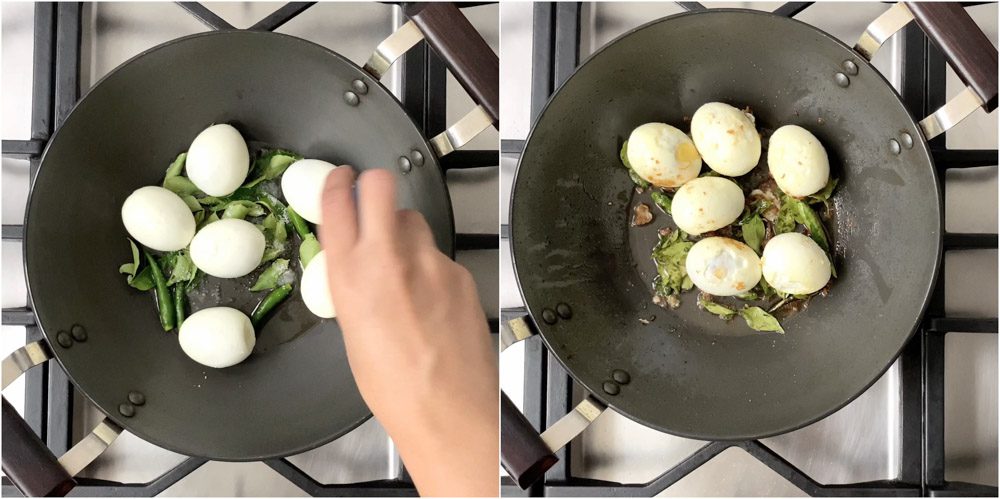
Heat oil in a pan and add in the curry leaves and the green chillies. Add in the eggs and the salt. After adding the eggs, do not move the eggs or disturb the eggs for a minute. The outer layer will tear. Allow the outer layer of the eggs to brown and crisp up. Move the eggs after a minute and let it slightly crisp up on all sides.
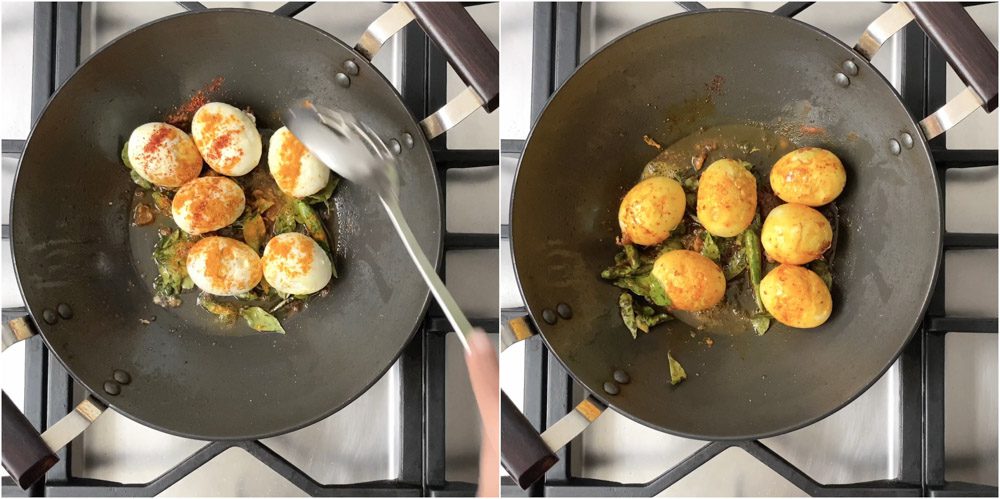
Add in the turmeric powder and red chilli powder. Fry for a minute. Remove the eggs onto a plate and set aside. The crisped up curry leaves and the fried green chillies can be used as a garnish in the end when plating the recipe. The crisped up curry leaves are very tasty.
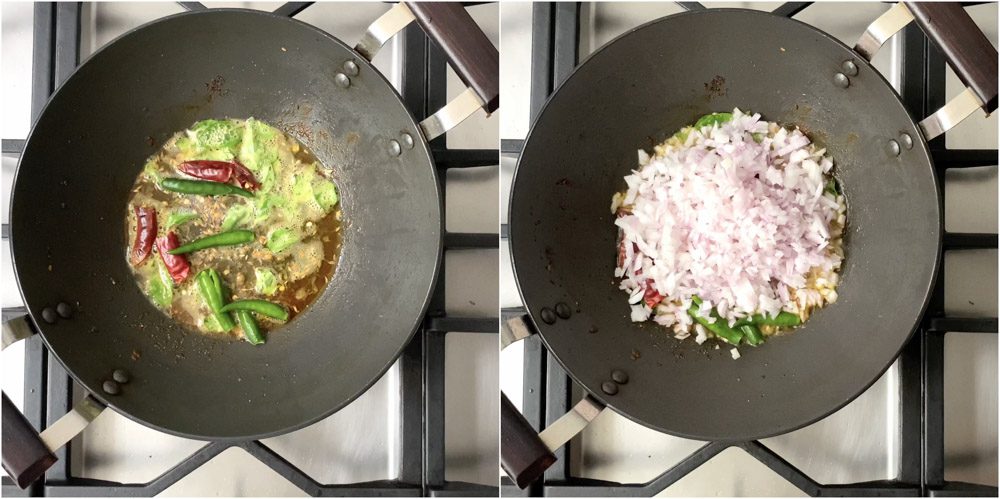
Making the Andhra Egg Curry – Kodi Guddu Pulusu Recipe In the same pan, add in some more oil. Add in the fenugreek seeds. Do not add a lot of fenugreek seeds as the curry will become bitter. Add in the mustard seeds, cumin seeds, curry leaves, red chillies and the green chillies. Add in the finely chopped onions.
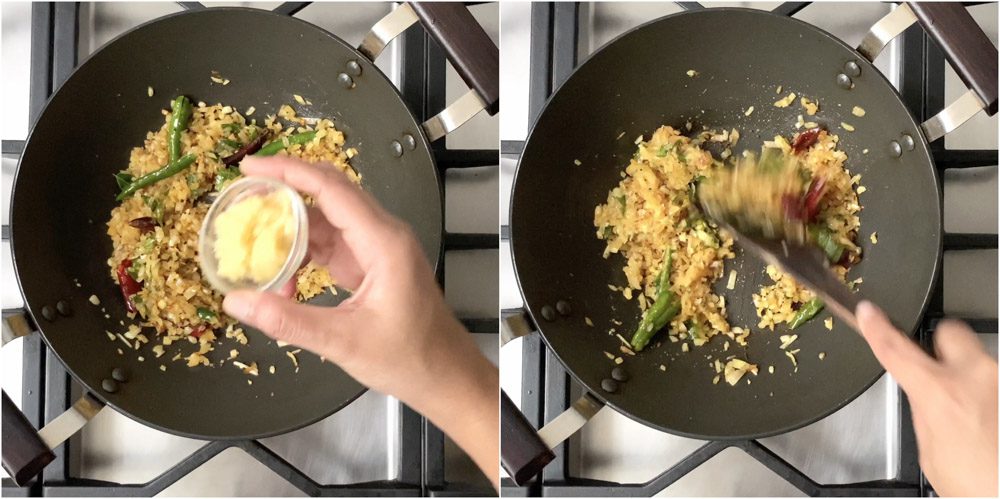
Sauté the onions till the onions are soft. It will take about 5-7 minutes on a medium flame. Add in the ginger garlic paste and sauté for a few minutes.
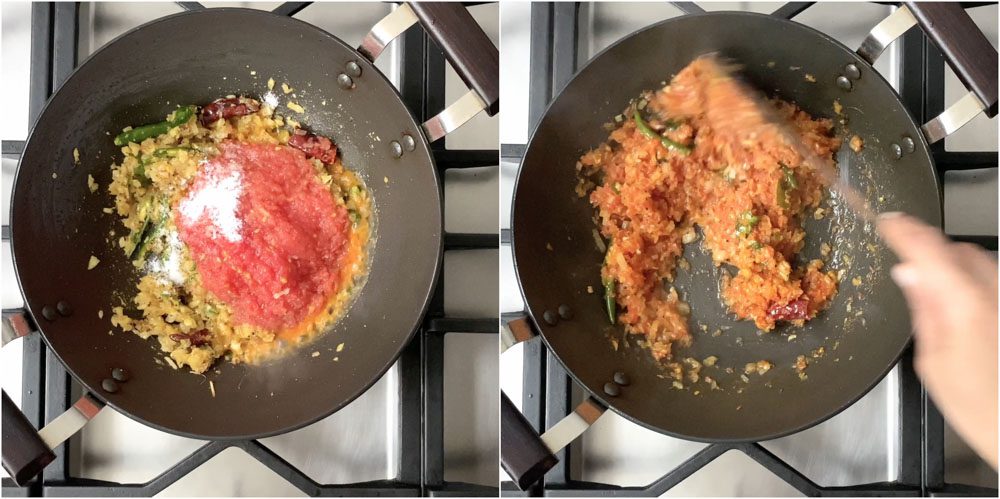
Add in the grated tomatoes and the salt. I use a box grater to grate my tomatoes. If hard pressed for time, just pulse the tomatoes in a mixie for several times to get a coarse puree and use it in the recipe. Mix well to combine.
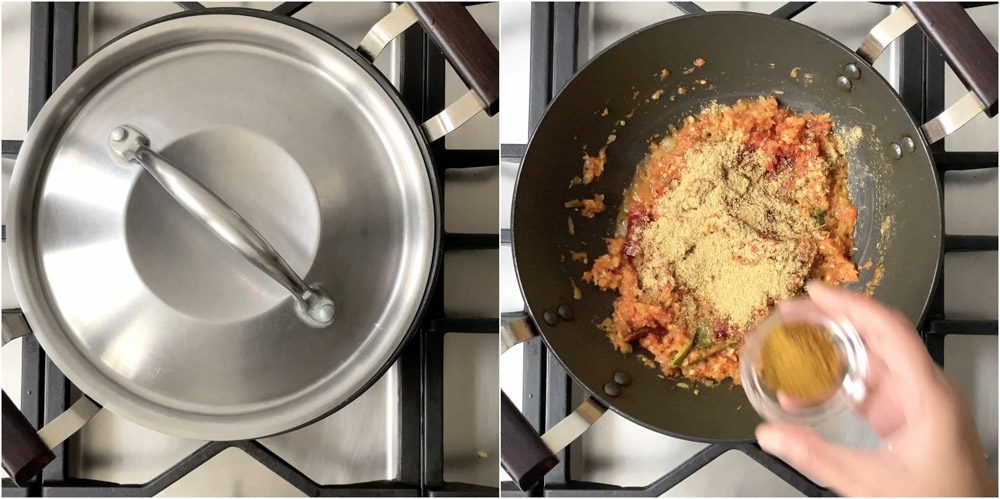
Cover the pan with a lid and let the curry simmer on a low flame for about 10 minutes. Add in the spice powders and saute till the oils separate from the mixture.
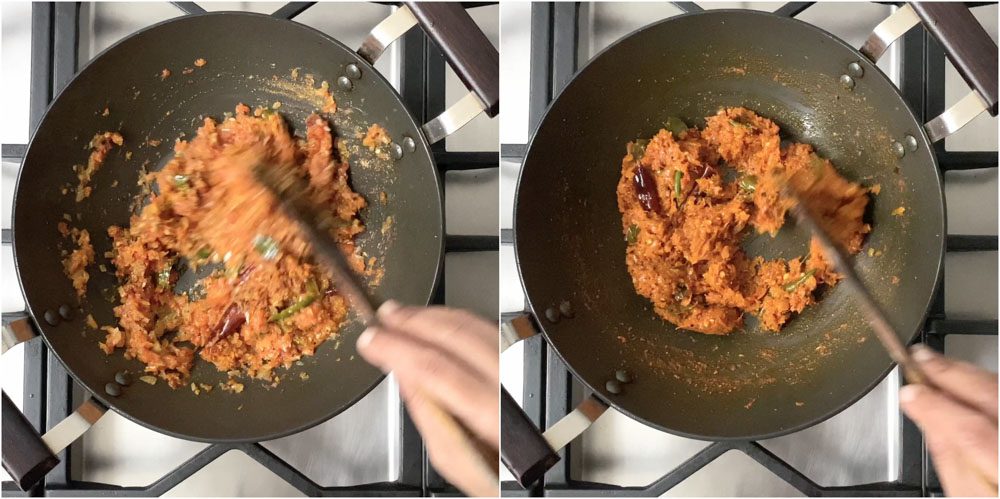
Keep sautéing to avoid scorching at the bottom of the pan.
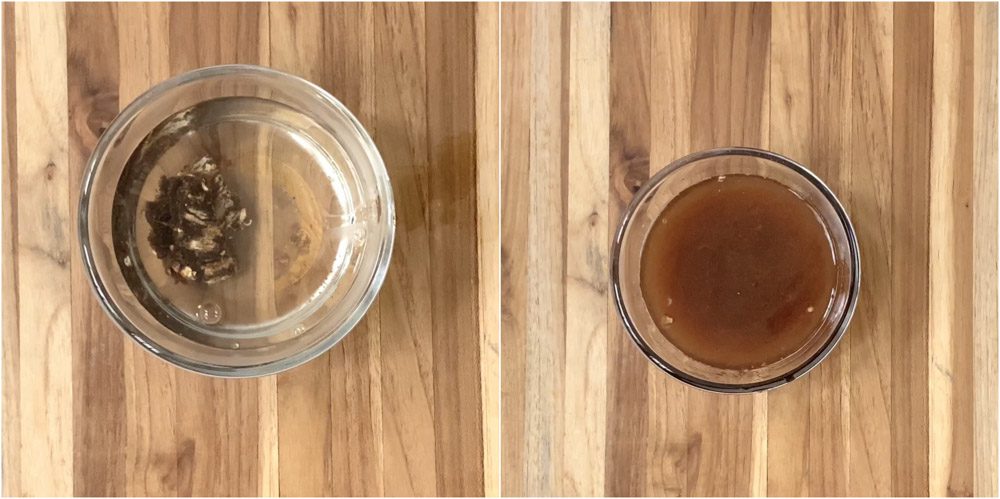
In the mean time, soak tamarind in hot water for 15 minutes. Squeeze the tamarind to extract the pulp. Discard the seeds and the pith.
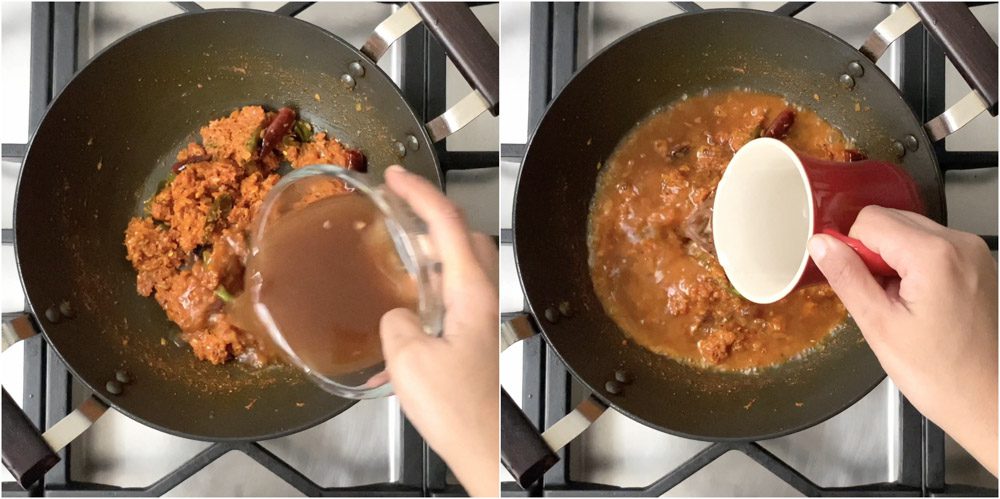
Add in the tamarind pulp and water.
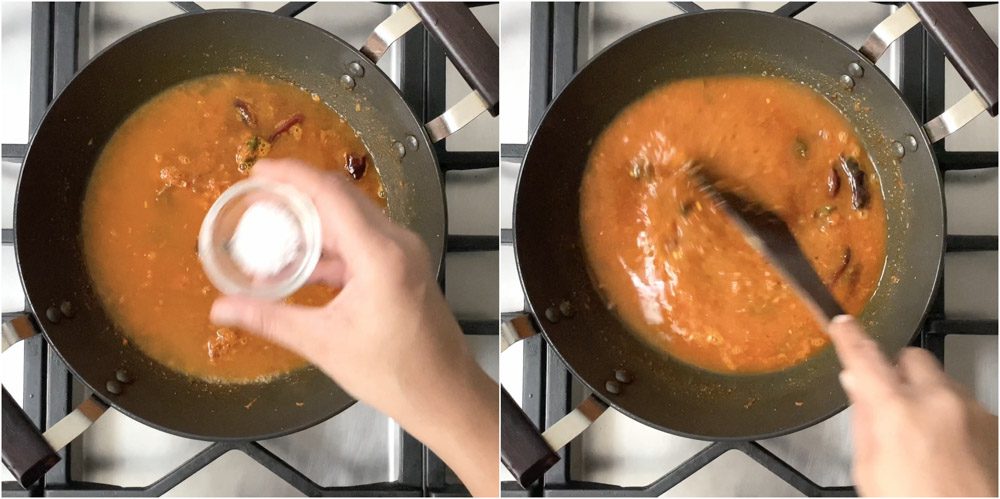
Add in the sugar and mix well to combine. The little bit of sugar will help balance the flavors of the curry.
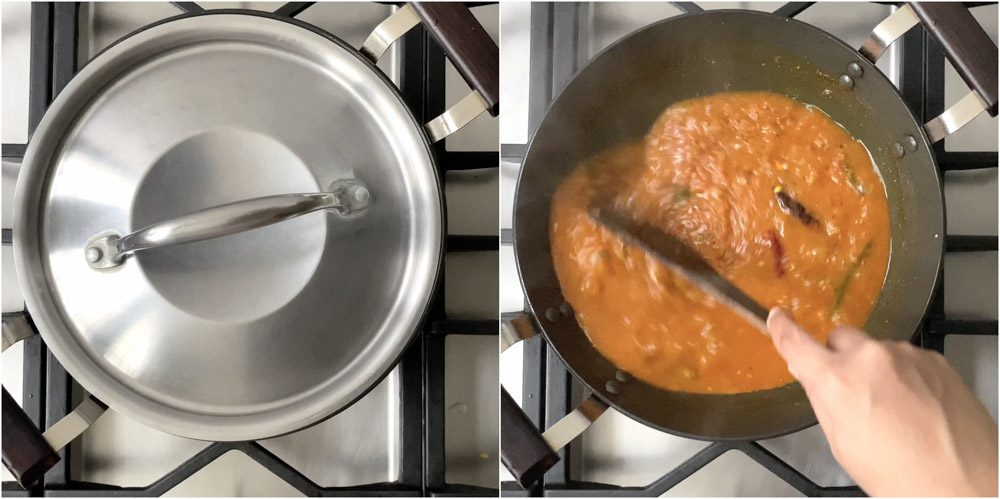
Simmer the curry for a few minutes to cook the tamarind.
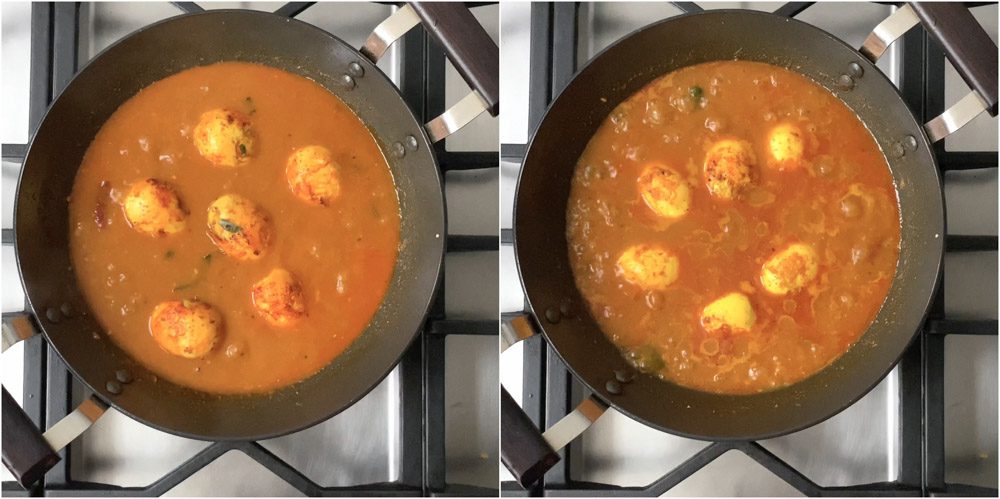
Add in the boiled eggs and cook for couple of minutes more to warm up the eggs. Do not cook for long after adding the eggs.
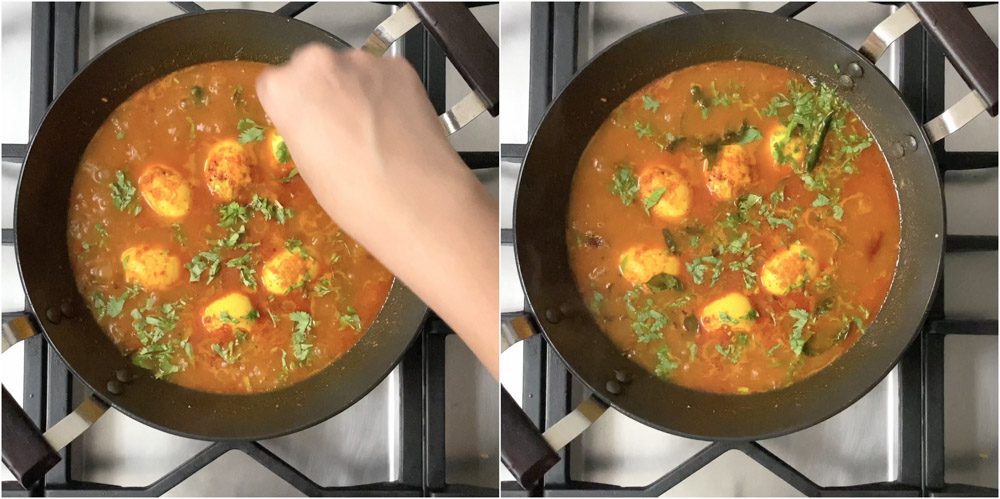
Finally finish the curry with a generous sprinkling of coriander leaves and the crisped up curry leaves and green chillies (that came while frying the eggs).
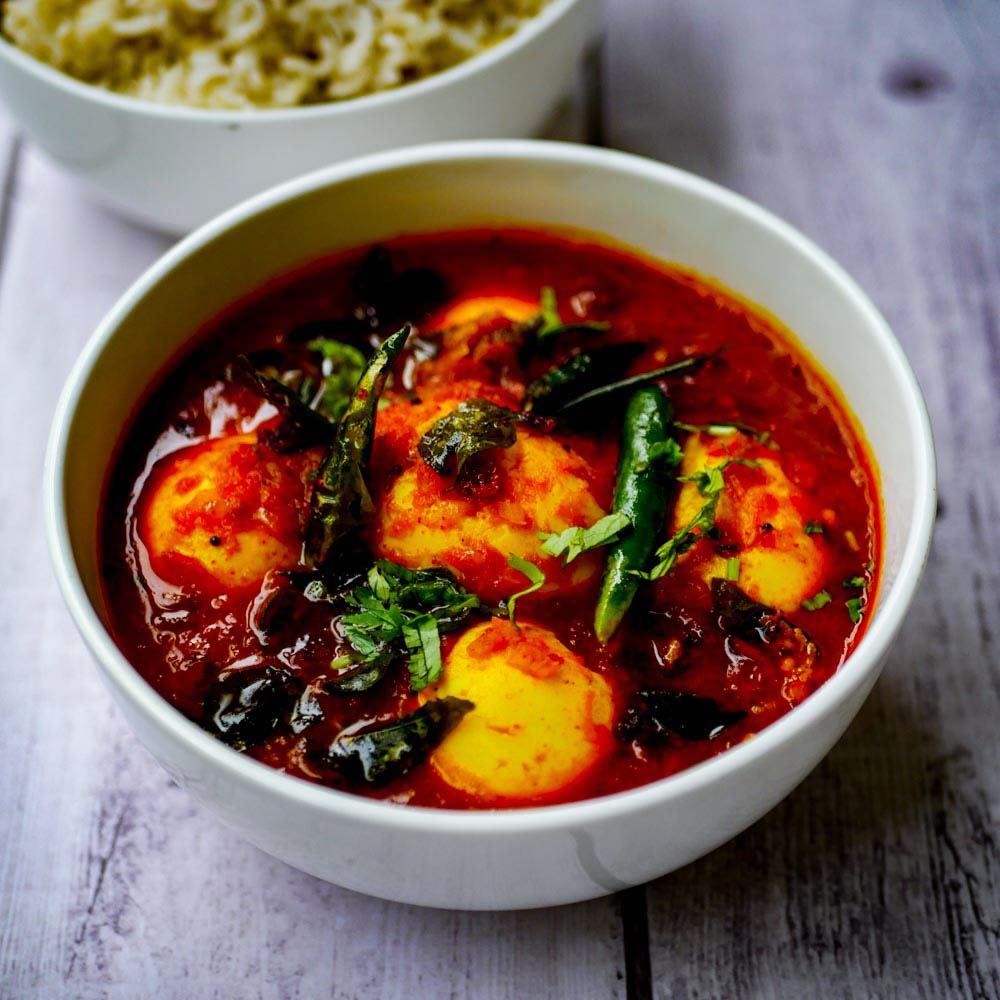
Serve Andhra Egg Curry hot with rice and a little drizzle of ghee on top of the rice.

For frying the eggs for Andhra Egg Curry
1 tablespoon groundnut oil 1 sprig curry leaves 4 green chillies 6 boiled eggs 1/4 teaspoon salt 1/4 teaspoon red chilli powder 1/4 teaspoon turmeric powder
For making the Andhra Egg Curry
2 tablespoon groundnut oil 1/4 teaspoon fenugreek seeds 1/2 teaspoon mustard seeds 1/2 teaspoon cumin seeds 2 sprig curry leaves 2 dried red chillies 4 green chillies, slit 2 cups finely chopped onions 2 teaspoon ginger garlic paste 1.5 cups grated tomatoes 1 teaspoon salt 1/2 teaspoon turmeric powder 1 teaspoon red chilli powder 2 teaspoon coriander powder 1/2 teaspoon garam masala 1 gooseberry size tamarind 2 cups water 1/4 teaspoon sugar 2 tablespoon coriander leaves, chopped
Frying the Eggs for Andhra Egg Curry
First step in making the Andhra Egg Curry – Kodi Guddu Pulusu is to fry the eggs. Take a fork and poke some holes on the boiled eggs. The holes will allow the masala to penetrate into the eggs. Set aside.
Heat oil in a pan and add in the curry leaves and the green chillies. Add in the eggs and the salt. After adding the eggs, do not move the eggs or disturb the eggs for a minute. The outer layer will tear. Allow the outer layer of the eggs to brown and crisp up. Move the eggs after a minute and let it slightly crisp up on all sides. Add in the turmeric powder and red chilli powder. Fry for a minute. Remove the eggs onto a plate and set aside.
Making the Andhra Egg Curry – Kodi Guddu Pulusu Recipe
In the same pan, add in some more oil. Add in the fenugreek seeds. Do not add a lot of fenugreek seeds as the curry will become bitter. Add in the mustard seeds, cumin seeds, curry leaves, red chillies and the green chillies. Add in the finely chopped onions. Sauté the onions till the onions are soft. It will take about 5-7 minutes on a medium flame. Add in the ginger garlic paste and sauté for a few minutes. Add in the grated tomatoes and the salt. Mix well to combine.
Cover the pan with a lid and let the curry simmer on a low flame for about 10 minutes. Add in the spice powders and saute till the oils separate from the mixture. Keep sautéing to avoid scorching at the bottom of the pan.
In the mean time, soak tamarind in hot water for 15 minutes. Squeeze the tamarind to extract the pulp. Discard the seeds and the pith. Add in the tamarind pulp and water. Add in the sugar and mix well to combine. The little bit of sugar will help balance the flavors of the curry. Simmer the curry for a few minutes to cook the tamarind.
Add in the boiled eggs and cook for couple of minutes more to warm up the eggs. Do not cook for long after adding the eggs. Finally finish the curry with a generous sprinkling of coriander leaves and the crisped up curry leaves and green chillies (that came while frying the eggs).
Serve Andhra Egg Curry hot with rice and a little drizzle of ghee on top of the rice.
Notes
I use a box grater to grate my tomatoes. If hard pressed for time, just pulse the tomatoes in a mixie for several times to get a coarse puree and use it in the recipe.
- Author: Suguna Vinodh
- Prep Time: 15m
- Cook Time: 30m
For frying the eggs for Andhra Egg Curry
1 tablespoon groundnut oil 1 sprig curry leaves 4 green chillies 6 boiled eggs 1/4 teaspoon salt 1/4 teaspoon red chilli powder 1/4 teaspoon turmeric powder
For making the Andhra Egg Curry
2 tablespoon groundnut oil 1/4 teaspoon fenugreek seeds 1/2 teaspoon mustard seeds 1/2 teaspoon cumin seeds 2 sprig curry leaves 2 dried red chillies 4 green chillies, slit 2 cups finely chopped onions 2 teaspoon ginger garlic paste 1.5 cups grated tomatoes 1 teaspoon salt 1/2 teaspoon turmeric powder 1 teaspoon red chilli powder 2 teaspoon coriander powder 1/2 teaspoon garam masala 1 gooseberry size tamarind 2 cups water 1/4 teaspoon sugar 2 tablespoon coriander leaves, chopped
Frying the Eggs for Andhra Egg Curry
First step in making the Andhra Egg Curry – Kodi Guddu Pulusu is to fry the eggs. Take a fork and poke some holes on the boiled eggs. The holes will allow the masala to penetrate into the eggs. Set aside.
Heat oil in a pan and add in the curry leaves and the green chillies. Add in the eggs and the salt. After adding the eggs, do not move the eggs or disturb the eggs for a minute. The outer layer will tear. Allow the outer layer of the eggs to brown and crisp up. Move the eggs after a minute and let it slightly crisp up on all sides. Add in the turmeric powder and red chilli powder. Fry for a minute. Remove the eggs onto a plate and set aside.
Making the Andhra Egg Curry – Kodi Guddu Pulusu Recipe
In the same pan, add in some more oil. Add in the fenugreek seeds. Do not add a lot of fenugreek seeds as the curry will become bitter. Add in the mustard seeds, cumin seeds, curry leaves, red chillies and the green chillies. Add in the finely chopped onions. Sauté the onions till the onions are soft. It will take about 5-7 minutes on a medium flame. Add in the ginger garlic paste and sauté for a few minutes. Add in the grated tomatoes and the salt. Mix well to combine.
Cover the pan with a lid and let the curry simmer on a low flame for about 10 minutes. Add in the spice powders and saute till the oils separate from the mixture. Keep sautéing to avoid scorching at the bottom of the pan.
In the mean time, soak tamarind in hot water for 15 minutes. Squeeze the tamarind to extract the pulp. Discard the seeds and the pith. Add in the tamarind pulp and water. Add in the sugar and mix well to combine. The little bit of sugar will help balance the flavors of the curry. Simmer the curry for a few minutes to cook the tamarind.
Add in the boiled eggs and cook for couple of minutes more to warm up the eggs. Do not cook for long after adding the eggs. Finally finish the curry with a generous sprinkling of coriander leaves and the crisped up curry leaves and green chillies (that came while frying the eggs).
Serve Andhra Egg Curry hot with rice and a little drizzle of ghee on top of the rice.
Notes
I use a box grater to grate my tomatoes. If hard pressed for time, just pulse the tomatoes in a mixie for several times to get a coarse puree and use it in the recipe.
- Author: Suguna Vinodh
- Prep Time: 15m
- Cook Time: 30m
Find it online : https://www.kannammacooks.com/andhra-egg-curry-recipe/
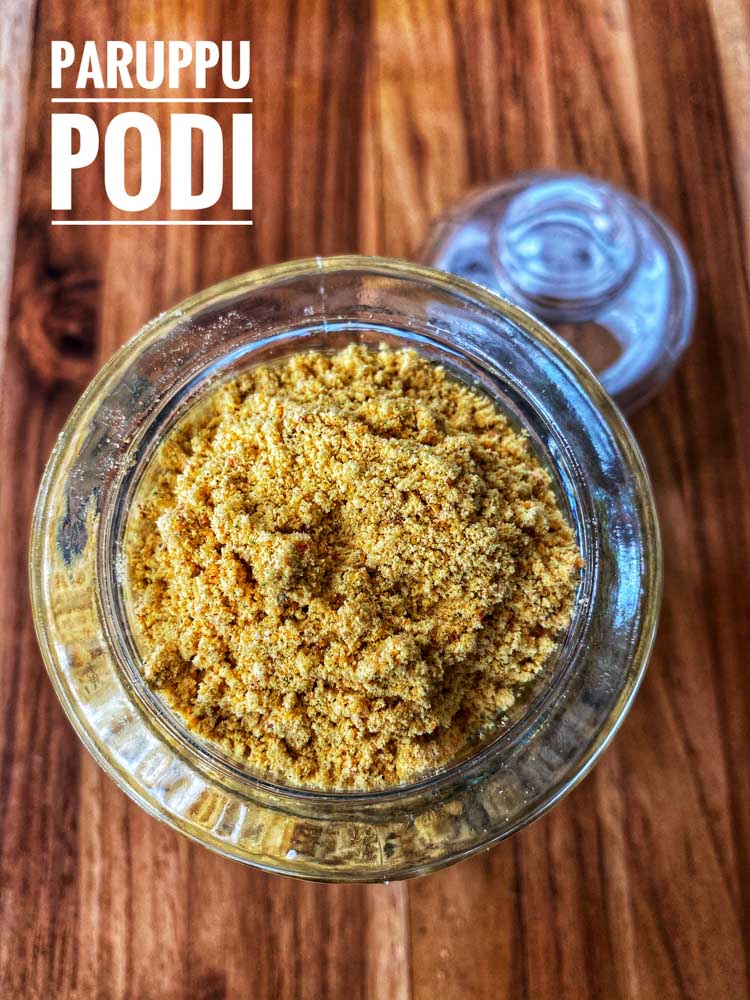
Paruppu podi recipe for rice. Paruppu podi made with the addition of Garlic – Andhra style. Kandi Pappu podi recipe. Recipe with step by step pictures and video.
Andhra style paruppu podi with garlic / Kandi pappu podi served with hot white rice and ghee is a meal in itself. This is a very simple recipe and can be made at home in under 20 minutes. The lentils, garlic and spices are roasted and ground to a powder. We like the podi ground fine at home. If you like a coarse texture, set aside a tablespoon of the lentil mixture before grinding. Grind the rest of the mixture to a fine powder and add back the lentil mixture and pulse a few times so the lentils added retain its coarse texture. Adjust the spice levels according to your taste. I add a few Byadagi / Kashmiri chillies for colour along with the regular Gundu chillies. The garlic is used in this recipe along with the skin. The roasted skin gives a fantastic aroma and flavour. If you want a paruppu podi that is deep yellow in colour, omit the curry leaves. Store the podi in a airtight container and use it within a month.
Here are other chutney podi / idli podi recipes from the site Chutney Powder recipes
Here is the video of how to make Paruppu Podi Recipe with Garlic
Here are the step by step pictures of how to make Paruppu Podi Recipe with Garlic
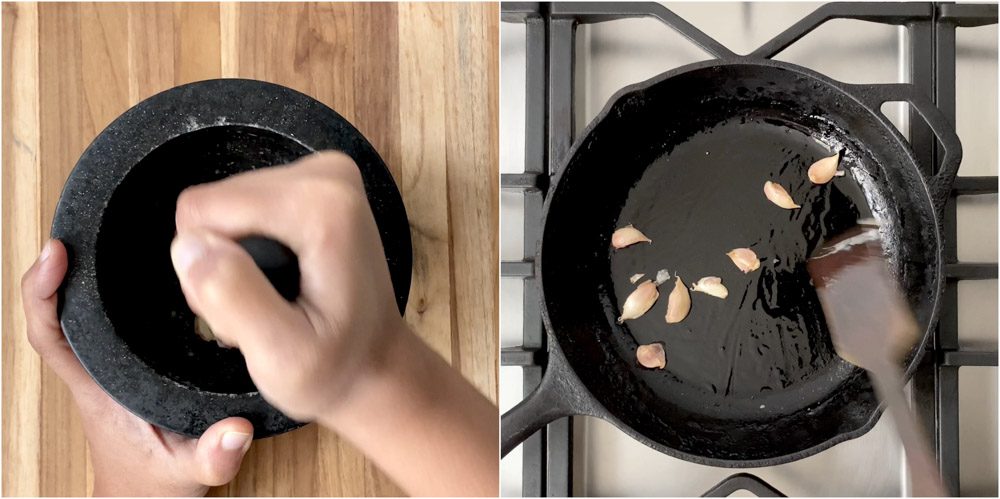
Slightly smash the garlic along with the skin. Add it to a hot skillet along with a little coconut oil. Roast for a minute. Set aside to cool. The skin adds a lot of aroma and flavour to the powder.

Add in the toor dal to the pan. Add in the cumin seeds and black pepper. Dry roast on a low flame. Low flame is key as you do not want to burn the lentils. Roasting on a low flame brings out a lot of flavour from the lentils.

After a couple of minutes add in the red chillies and the curry leaves. If you want a bright yellow colour powder, omit the curry leaves. Dry roast all the ingredients on a low flame until the lentils are golden in colour.

Add in the fried gram / pottu kadalai and dry roast for a few seconds.

Switch off the flame and add back the roasted garlic, asafoetida and salt. Mix well to combine.

Immediately, transfer the roasted mixture to a plate / bowl. Let it cool completely. Do not leave the mixture in the pan as it will still continue to cook the lentils and the lentils may burn.
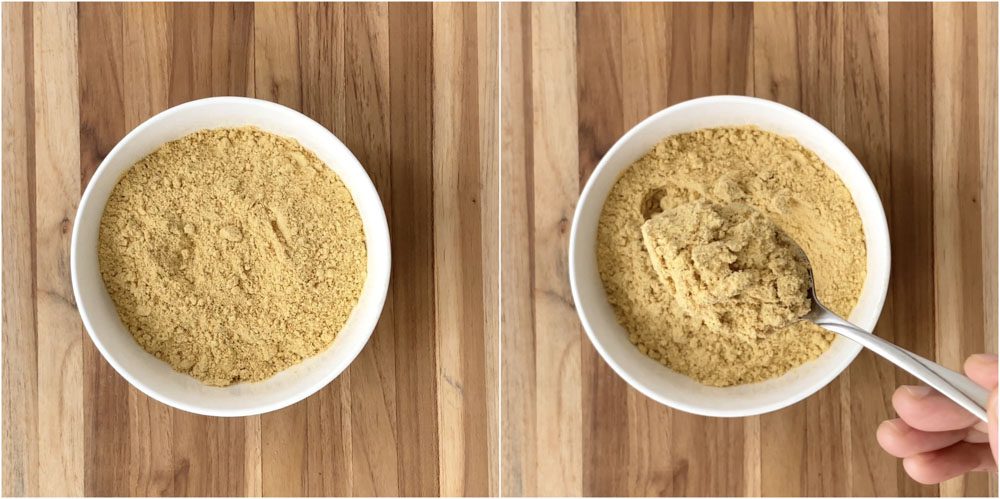
Grind the mixture to a fine powder. We like the podi ground fine at home. If you like a coarse texture, set aside a tablespoon of the lentil mixture before grinding. Grind the rest of the mixture to a fine powder and add back the lentil mixture and pulse a few times so the lentils added retain its coarse texture.
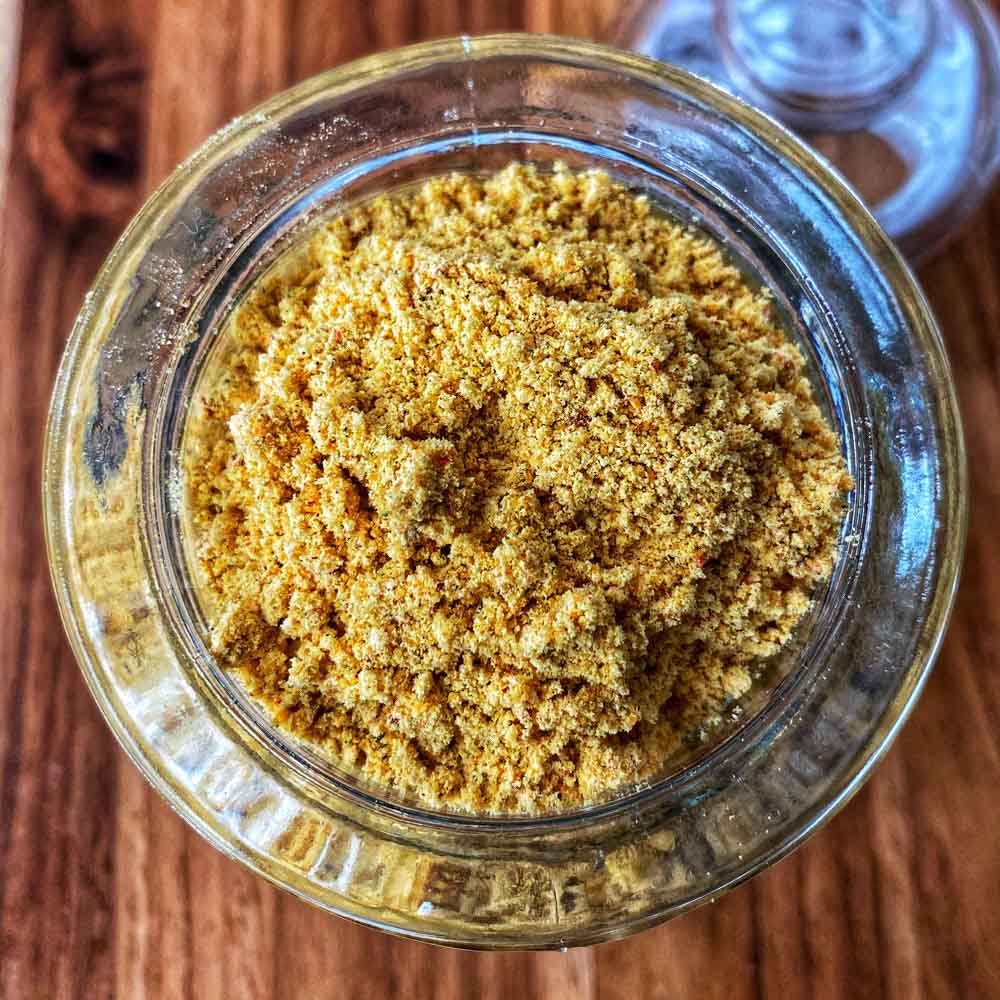
Store the podi in a airtight container and use it within a month. Serve the podi mixed with rice and hot ghee.
6 cloves of garlic 1/2 teaspoon coconut oil 3/4 cup toor dal 1/4 teaspoon cumin seeds 1/2 teaspoon black pepper 6 dried red chillies 2 Byadagi / Kashmiri red chillies 2 sprigs curry leaves 1/2 cup fried gram (pottu kadalai) 1/4 teaspoon asafoetida 1 teaspoon salt
Slightly smash the garlic along with the skin. Add it to a hot skillet along with a little coconut oil. Roast for a minute. Set aside to cool. The skin adds a lot of aroma and flavour to the powder.
Add in the toor dal to the pan. Add in the cumin seeds and black pepper. Dry roast on a low flame. Low flame is key as you do not want to burn the lentils. Roasting on a low flame brings out a lot of flavour from the lentils. After a couple of minutes add in the red chillies and the curry leaves. If you want a bright yellow colour powder, omit the curry leaves. Dry roast all the ingredients on a low flame until the lentils are golden in colour. Add in the fried gram / pottu kadalai and dry roast for a few seconds.
Switch off the flame and add back the roasted garlic, asafoetida and salt. Mix well to combine. Immediately, transfer the roasted mixture to a plate / bowl. Let it cool completely. Do not leave the mixture in the pan as it will still continue to cook the lentils and the lentils may burn.
Grind the mixture to a fine powder. We like the podi ground fine at home. If you like a coarse texture, set aside a tablespoon of the lentil mixture before grinding. Grind the rest of the mixture to a fine powder and add back the lentil mixture and pulse a few times so the lentils added retain its coarse texture.
Store the podi in a airtight container and use it within a month. Serve the podi mixed with rice and hot ghee.
- Author: Suguna Vinodh
- Prep Time: 10m
- Cook Time: 10m
