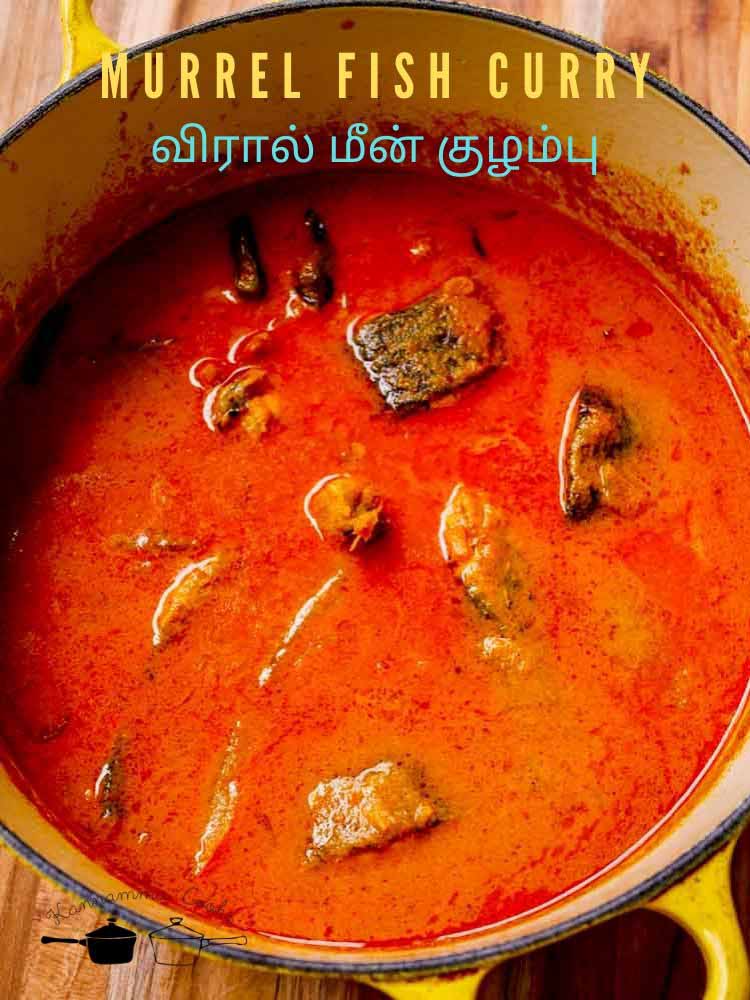
Recipe for Viral meen Kuzhambu – விரால் மீன் குழம்பு – Murrel Fish Curry. Recipe with step by step pictures.
விரால் மீன் குழம்பு – Murrel Fish Curry Murrel fish curry has to be one of the favorite fish curries in Tamilnadu. This fresh water fish is the most sought after and is sold as quickly as it comes to the market. It is also the favorite fish of Dr. Kalignar Karunanidhi.
Viral Meen – Snakehead / Murrel Fish. This fresh water fish has been mentioned in history in Tamil sangam literature. பதினெண் கீழ்க் கணக்கு பாடல்: பழமொழி நானூறு கவிஞர்: முன்றுரை அரையனார்
சிறியபொருள் கொடுத்துச் செய்த வினையால், பெரியபொருள் கருதுவாரே விரி பூ விராஅம் புனல் ஊர, வேண்டு அயிரை இட்டு, வராஅஅல் வாங்குபவர்.
விரிந்த பூக்குள் வலவாக விரவிக் கிடக்கும் புனல் வளம் மிக்க ஊரின் வேந்தனே! சிறிய அளவில் முதலீடு செய்து செயல்படும் திறத்தால் பெரும் பொருளை ஈட்டத் திட்டமிடுபவர். சிறிய அயிரை மீனைத் தூண்டிலில் இட்டுப் பெரிய வரால் மீனைப் பிடிப்பவர் போன்றவர்.
In short, it means the person who sacrifices Ayirai Meen – bait (tiny fresh water spiny loaches) to catch the big viraal (Murrel) fishes. The small investment / sacrifices we do today will make it big in the long run / The small charity we do today will come back to us and do us good in a really big way later on. Give more to get more 🙂
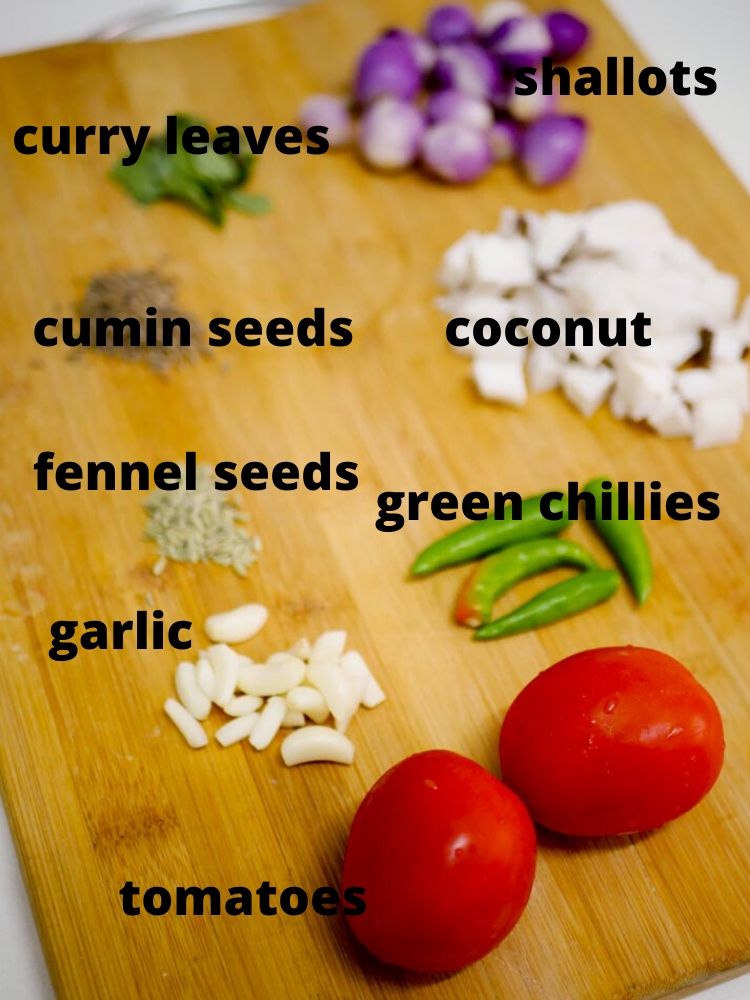
Here is how to do Viral meen Kuzhambu – விரால் மீன் குழம்பு – Murrel Fish Curry First we will make a masala paste for the fish curry. This is what you will need.
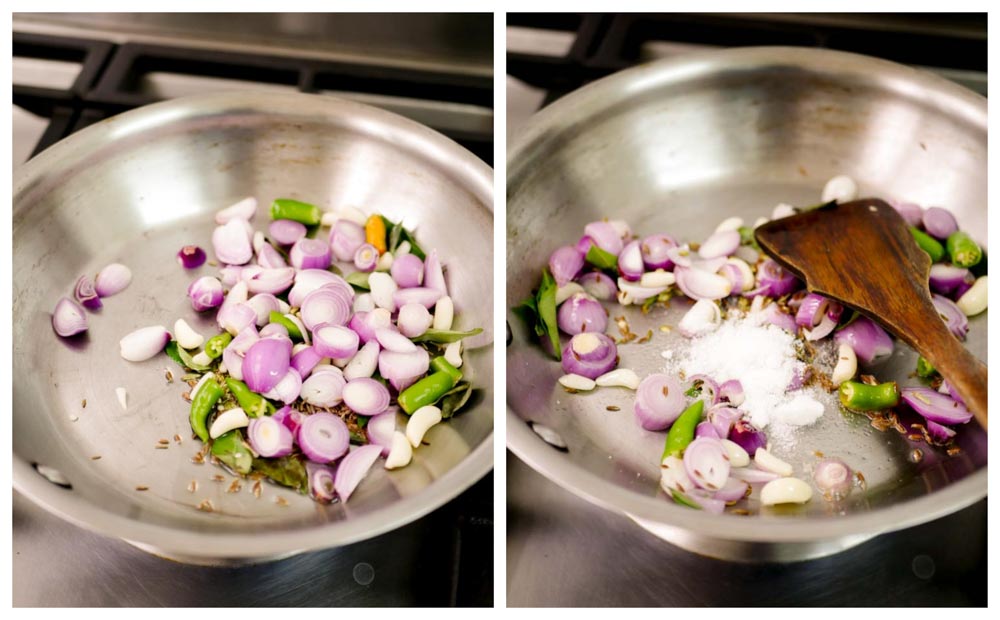
Indian Sesame oil (gingely oil) is what is used for making tamil style fish curries. The rich aroma of the oil perfectly pairs with the spicy curry. Heat oil in a pan and add in the cumin seeds, fennel seeds, curry leaves, garlic, chopped green chillies and chopped small onions (Indian shallots). Add in the salt so the onions cook fast.
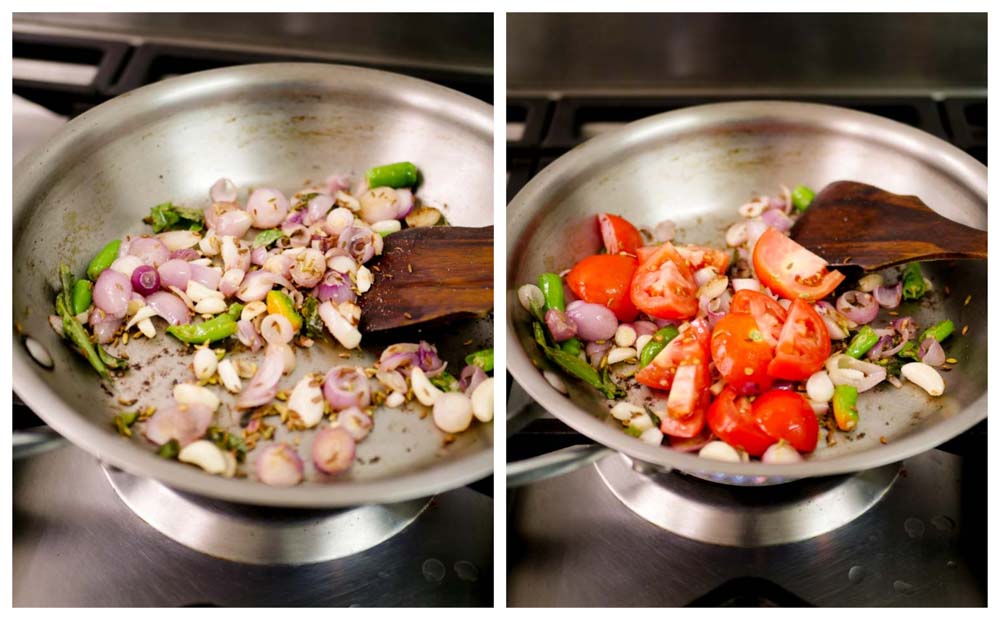
Saute the mixture for 2-3 minutes till the onions are soft. Add in the tomatoes and cook for a couple of minutes.
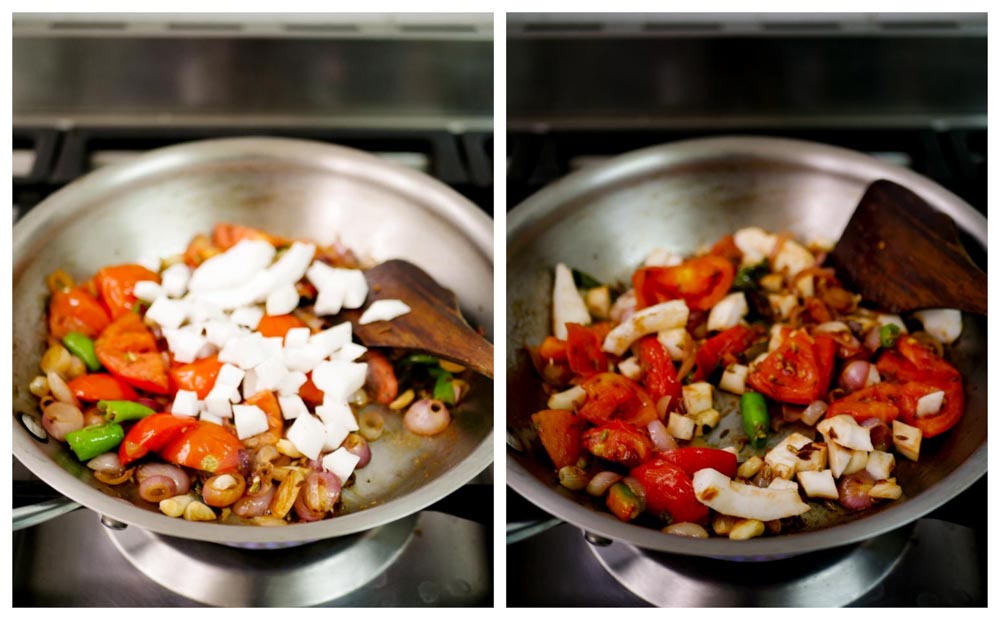
Add in the fresh shredded coconut and switch off the flame. Let the mixture cool.
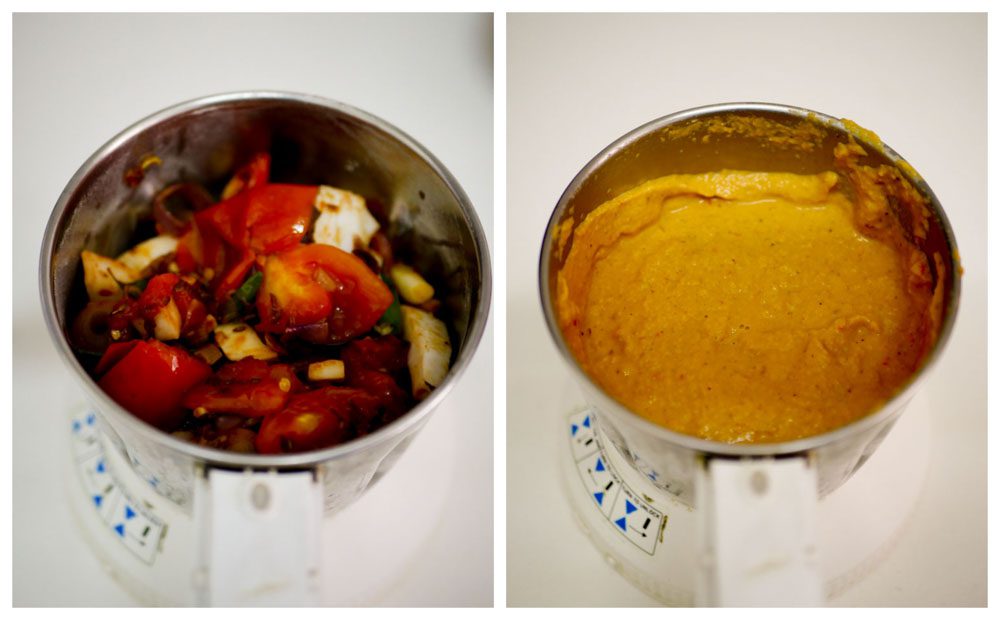
Once its cool, grind in a mixie to a smooth paste. Add half a cup of water while grinding. Set aside.
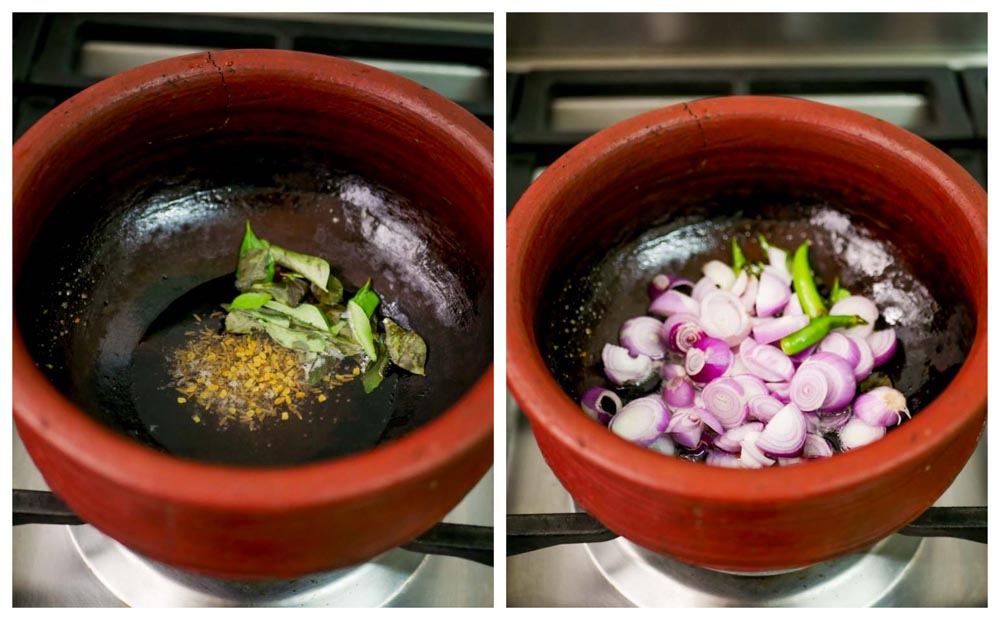
Usually, fish curries taste great when made in a clay pot. Most of the households in Tamilnadu have a meen chatti (clay fish pot exclusively for making fish curries). If you do not have a clay pot, a heavy pan will suffice. Heat oil in a pan and add in the curry leaves, cumin seeds and fenugreek seeds. Do not add a lot of fenugreek seeds. The curry will become very bitter. Add in the chopped shallots and green chillies. Saute for 3-4 minutes till its soft.
Once the onions are soft, add in the tamarind extract, turmeric powder, black pepper powder, rock salt and kuzhambu milagai thool. “Kuzhambu milagai thool” is a curry powder used in Tamil households and can be sourced from a south Indian grocery store. If you dont have “kuzhambu milagai thool”, use store bought curry powder. Let the curry simmer for five minutes.

Note: For tamarind extract, soak the tamarind in a cup of water for 20 minutes. Squeeze the tamarind to extract the juice. Discard the pith and the seeds.
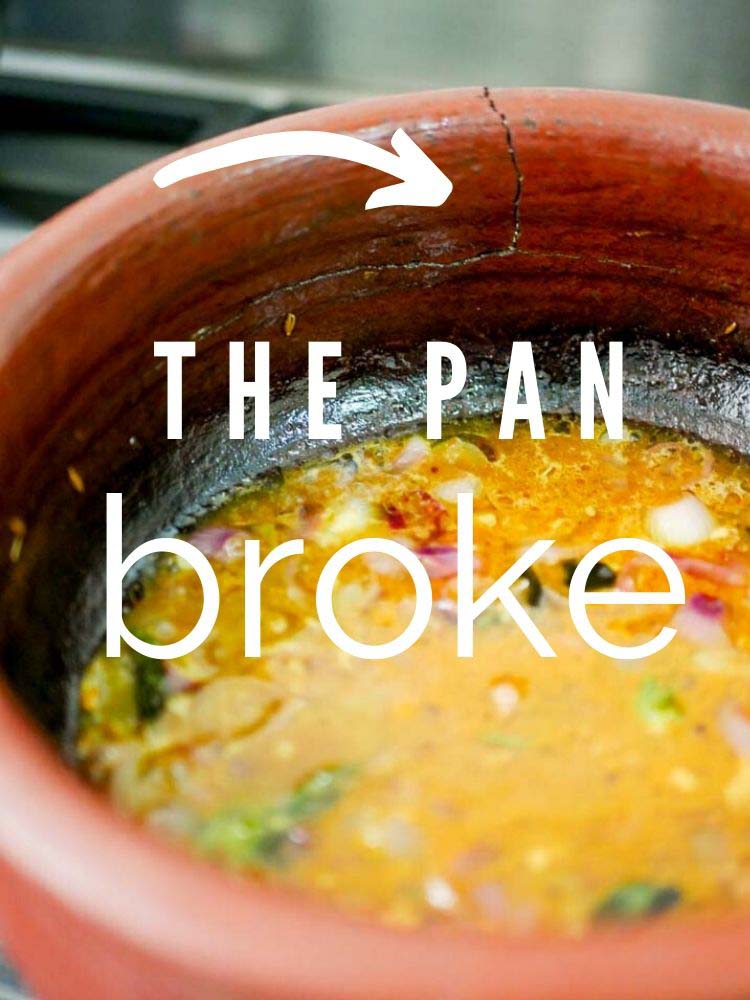
Keeping it real. When my curry was simmering, my old old clay pot cracked big. There was small crack all this time and today it gave off. So I shifted my curry to a different pan. I am so sad that I need to part with my favorite meen chatti.
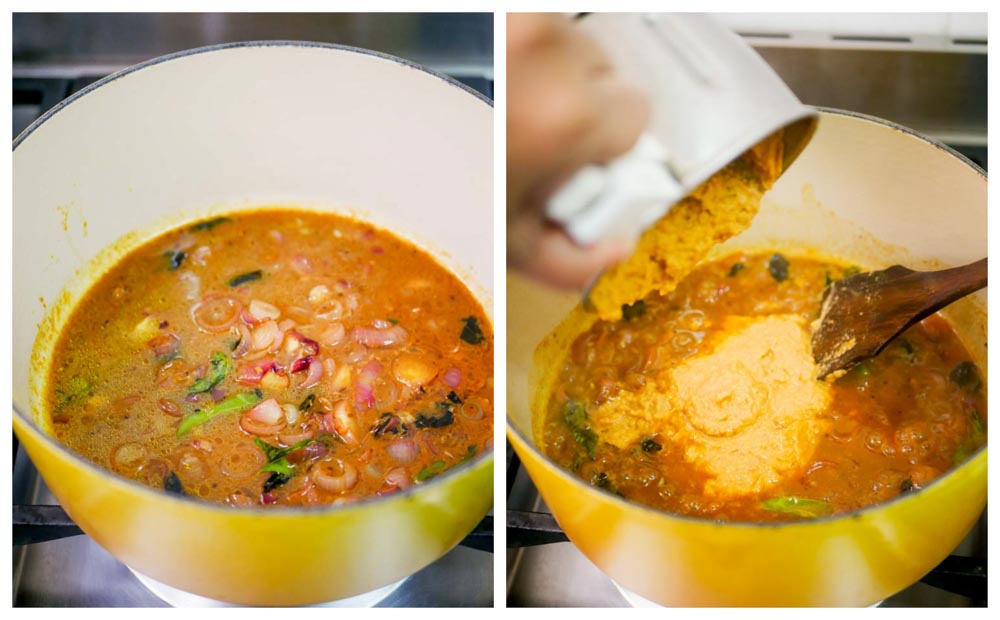
Add in the ground masala paste to the pan.
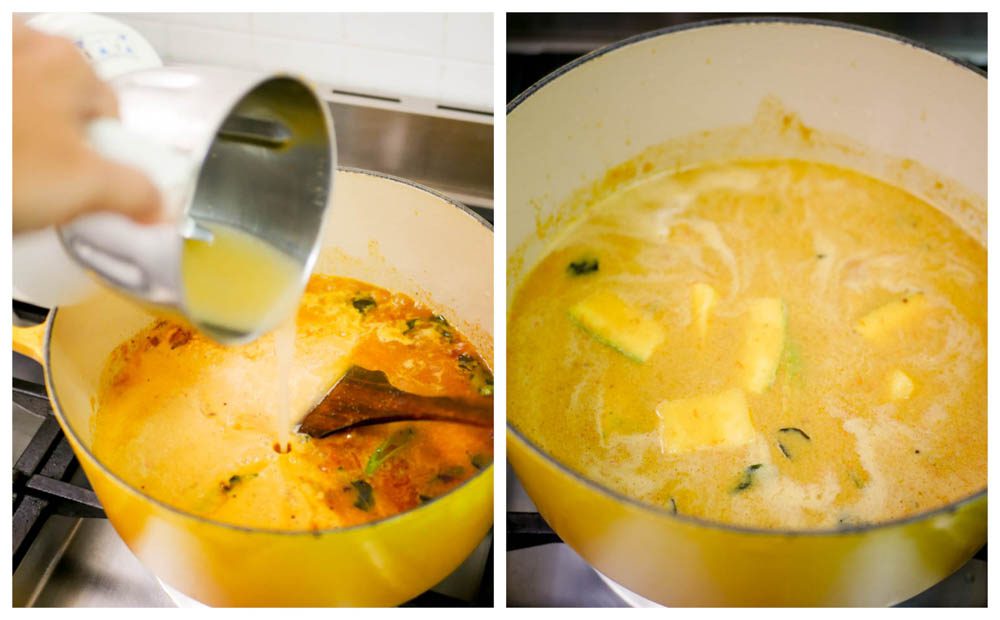
Wash the mixie with a cup of water and add to the pan. Add another cup of water and the raw mango pieces. The raw mango and the tamarind gives a nice sourness to the curry. Note: If you do not have raw mango, add in a little more of the tamarind extract. A little will do. Do not add too much.
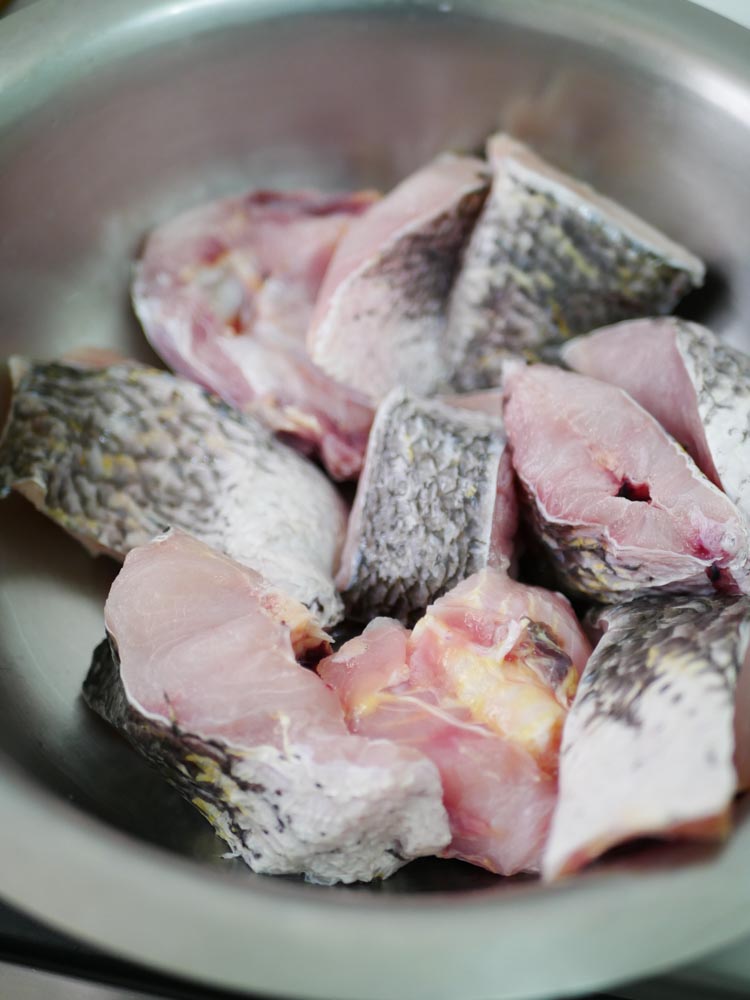
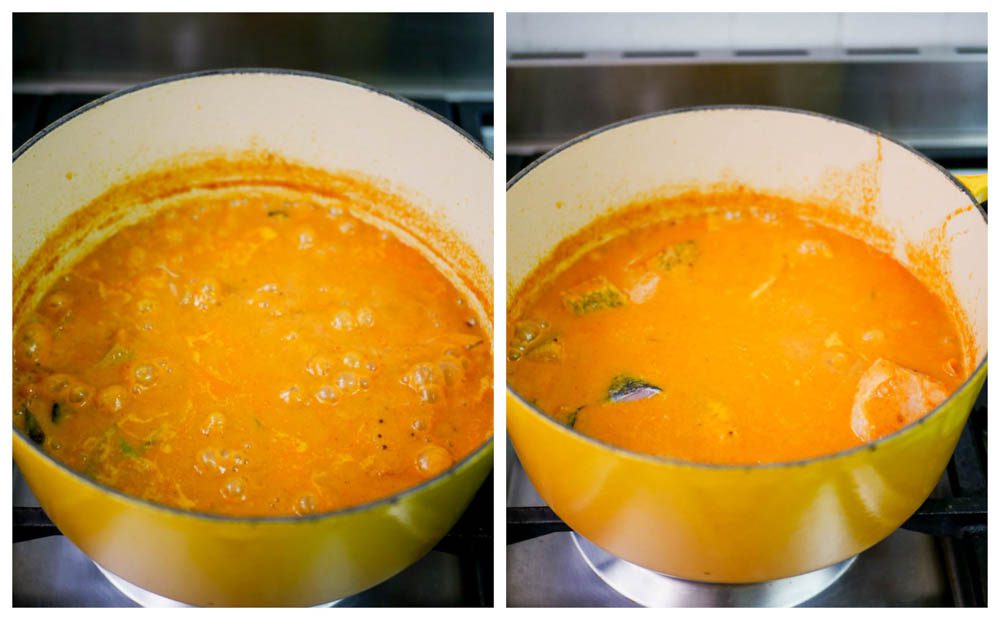
In the mean time, clean and wash the fish. Let the curry simmer on a medium flame for 12-14 minutes. Stir once in a while to avoid scorching at the bottom. After the curry has simmered, add in the fish pieces.
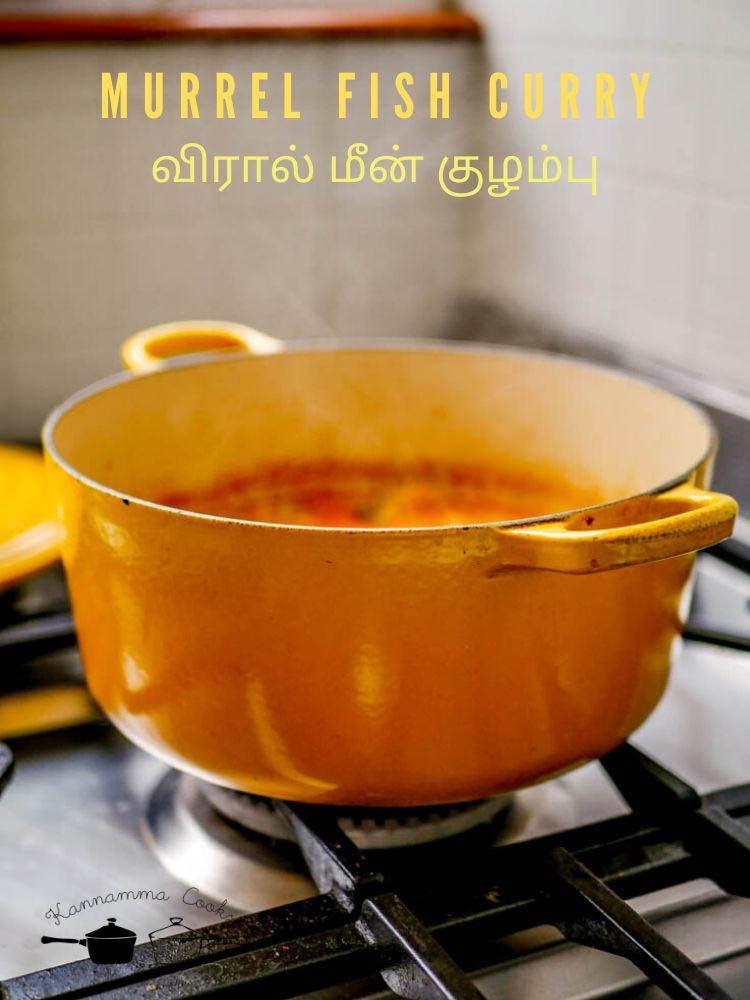
After adding the fish pieces, do not stir or disturb while cooking as the pieces will break. Let the curry simmer for 6-7 minutes so the fish cooks. Do not cover. Let it simmer in an open pan.
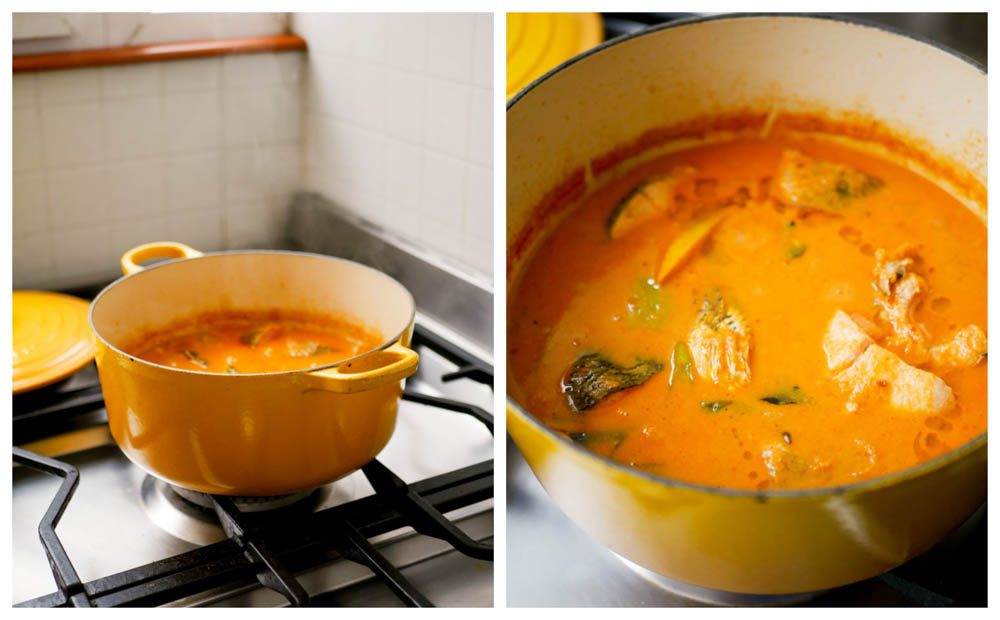
Switch off the flame and add in a tablespoon of sesame oil and cover the pan. Let it rest for atleast half an hour before you serve.
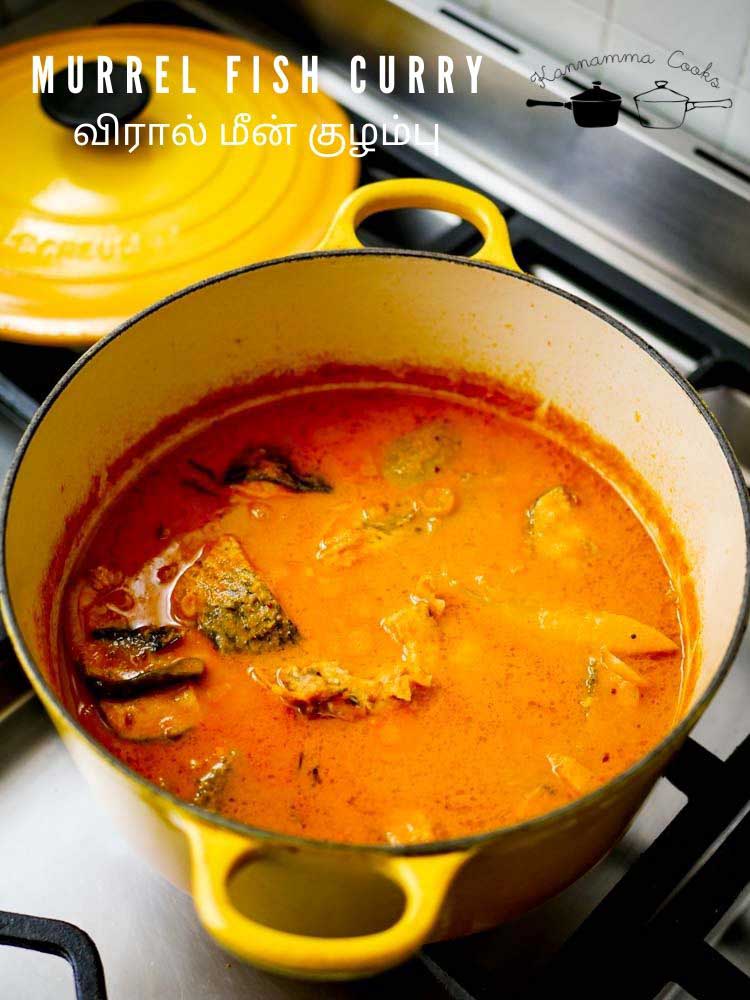
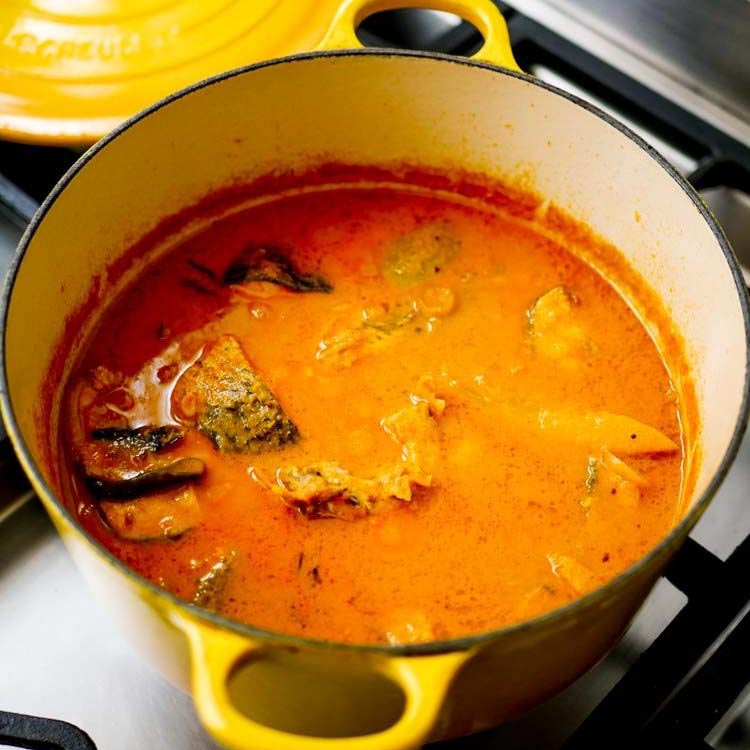
Fantastic Viral meen Kuzhambu – விரால் மீன் குழம்பு – Murrel Fish Curry is ready. You can serve it for breakfast with idli or for lunch with hot hot parboiled ponni rice.
For the masala paste 2 teaspoon Indian sesame oil 1 teaspoon cumin seeds 1 teaspoon fennel seeds 1 sprig curry leaves 5 cloves garlic 4 green chillies, chopped 10 Indian shallots (small onions) 2 tomatoes 1/3 cup fresh shredded coconut 1/2 teaspoon salt
For the fish curry
2 tablespoon + 1 tablespoon Indian sesame oil
2 sprig curry leaves
1/4 teaspoon fenugreek seeds 1/4 teaspoon cumin seeds 1/4 teaspoon fennel seeds 10 Indian shallots (small onions) 2 green chillies 1 small lime size tamarind 1/2 teaspoon turmeric powder 1/4 teaspoon black pepper powder 1 tablespoon Kuzhambu milagai thool / curry powder (use more for a really spicy curry) 1 teaspoon rock salt 1/2 of a raw mango, chopped
500 gms viral meen – murrel fish steaks with bones
Heat oil in a pan and add in the cumin seeds, fennel seeds, curry leaves, garlic, chopped green chillies and chopped small onions (Indian shallots). Add in the salt so the onions cook fast. Saute the mixture for 2-3 minutes till the onions are soft. Add in the tomatoes and cook for a couple of minutes. Add in the fresh shredded coconut and switch off the flame. Let the mixture cool.
Once its cool, grind in a mixie to a smooth paste. Add half a cup of water while grinding. Set aside.
Heat oil in a pan and add in the curry leaves, cumin seeds and fenugreek seeds. Do not add a lot of fenugreek seeds. The curry will become very bitter. Add in the chopped shallots, garlic and green chillies. Saute for 3-4 minutes till its soft.
Soak tamarind in a cup of water for 20 minutes. Extract pulp. Discard the pith and seeds
Once the onions are soft, add in the tamarind extract, turmeric powder, black pepper powder, rock salt and kuzhambu milagai thool. Let the curry simmer for five minutes. Add in the ground masala paste to the pan. Wash the mixie with a cup of water and add to the pan. Add another cup of water and the raw mango pieces. The raw mango and the tamarind gives a nice sourness to the curry.
Let the curry simmer on a medium flame for 12-14 minutes. Stir once in a while to avoid scorching at the bottom. After the curry has simmered, add in the fish pieces.
After adding the fish pieces, do not stir or disturb while cooking as the pieces will break. Let the curry simmer for 6-7 minutes so the fish cooks. Do not cover. Let it simmer in an open pan.
Switch off the flame and add in a tablespoon of sesame oil and cover the pan. Let it rest for atleast half an hour before you serve.
- Author: Suguna Vinodh
- Prep Time: 15m
- Cook Time: 30m
For the masala paste 2 teaspoon Indian sesame oil 1 teaspoon cumin seeds 1 teaspoon fennel seeds 1 sprig curry leaves 5 cloves garlic 4 green chillies, chopped 10 Indian shallots (small onions) 2 tomatoes 1/3 cup fresh shredded coconut 1/2 teaspoon salt
For the fish curry
2 tablespoon + 1 tablespoon Indian sesame oil
2 sprig curry leaves
1/4 teaspoon fenugreek seeds 1/4 teaspoon cumin seeds 1/4 teaspoon fennel seeds 10 Indian shallots (small onions) 2 green chillies 1 small lime size tamarind 1/2 teaspoon turmeric powder 1/4 teaspoon black pepper powder 1 tablespoon Kuzhambu milagai thool / curry powder (use more for a really spicy curry) 1 teaspoon rock salt 1/2 of a raw mango, chopped
500 gms viral meen – murrel fish steaks with bones
Heat oil in a pan and add in the cumin seeds, fennel seeds, curry leaves, garlic, chopped green chillies and chopped small onions (Indian shallots). Add in the salt so the onions cook fast. Saute the mixture for 2-3 minutes till the onions are soft. Add in the tomatoes and cook for a couple of minutes. Add in the fresh shredded coconut and switch off the flame. Let the mixture cool.
Once its cool, grind in a mixie to a smooth paste. Add half a cup of water while grinding. Set aside.
Heat oil in a pan and add in the curry leaves, cumin seeds and fenugreek seeds. Do not add a lot of fenugreek seeds. The curry will become very bitter. Add in the chopped shallots, garlic and green chillies. Saute for 3-4 minutes till its soft.
Soak tamarind in a cup of water for 20 minutes. Extract pulp. Discard the pith and seeds
Once the onions are soft, add in the tamarind extract, turmeric powder, black pepper powder, rock salt and kuzhambu milagai thool. Let the curry simmer for five minutes. Add in the ground masala paste to the pan. Wash the mixie with a cup of water and add to the pan. Add another cup of water and the raw mango pieces. The raw mango and the tamarind gives a nice sourness to the curry.
Let the curry simmer on a medium flame for 12-14 minutes. Stir once in a while to avoid scorching at the bottom. After the curry has simmered, add in the fish pieces.
After adding the fish pieces, do not stir or disturb while cooking as the pieces will break. Let the curry simmer for 6-7 minutes so the fish cooks. Do not cover. Let it simmer in an open pan.
Switch off the flame and add in a tablespoon of sesame oil and cover the pan. Let it rest for atleast half an hour before you serve.
- Author: Suguna Vinodh
- Prep Time: 15m
- Cook Time: 30m
Find it online : https://www.kannammacooks.com/viral-meen-kuzhambu/
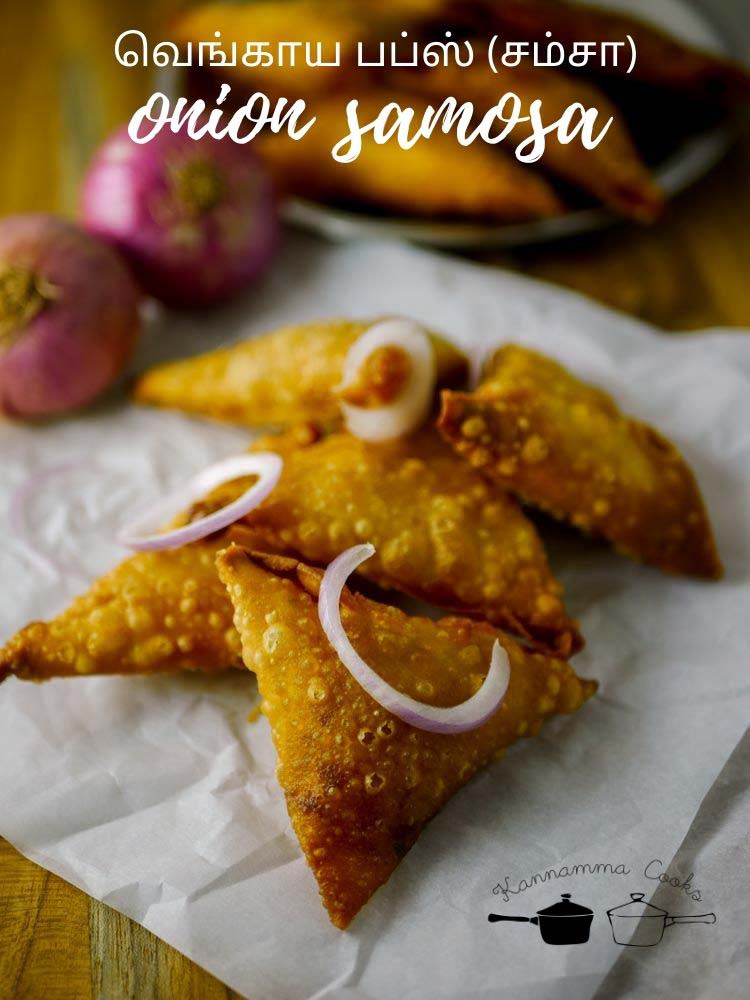
Recipe for South Indian style Onion Samosa / Vengaya samosa -வெங்காய சமோசா / வெங்காய பப்ஸ்.
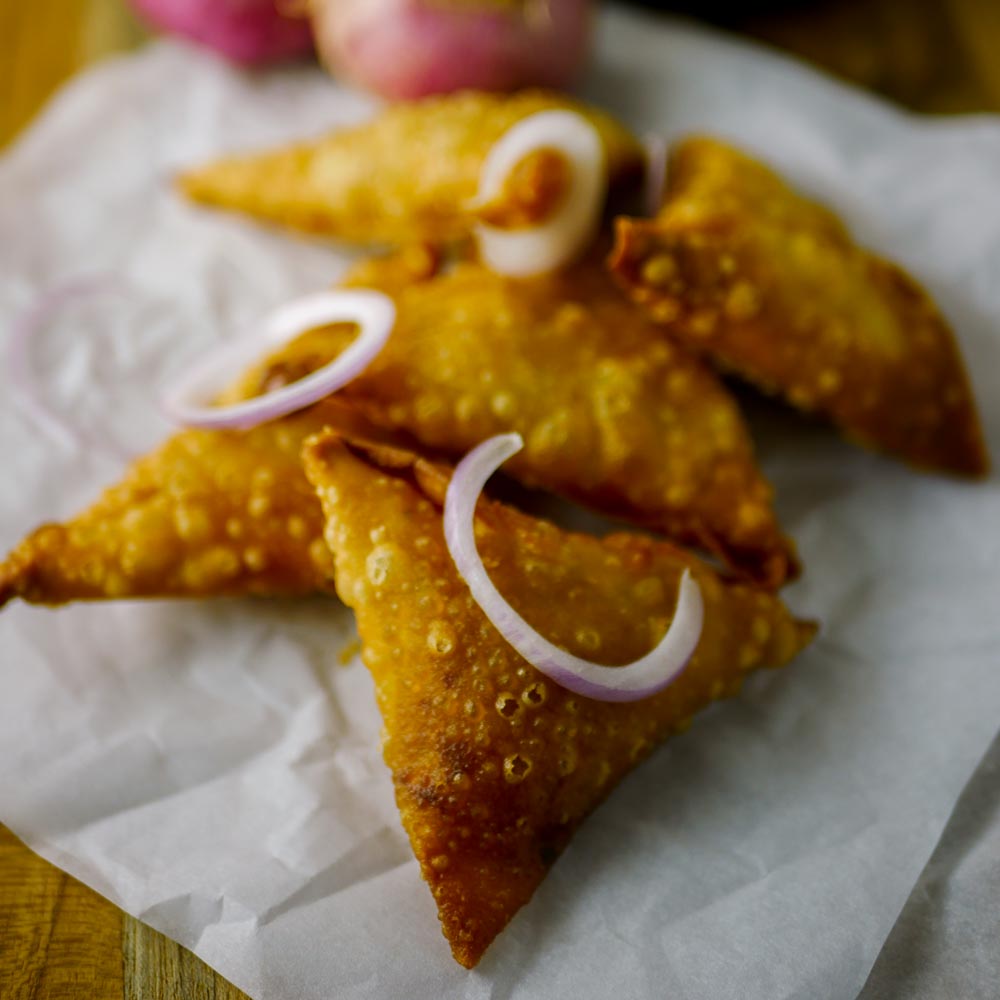
We the people of Coimbatore call these beauties as “Onion Pupsu” while the rest of Tamilnadu calls this a “samsa”. Onion Samsa / pupsu was a nostalgic snack sold in cinema theatres till the 90’s until the popcorn took over. These are bite sized divine mouthfulls. Handsdown one of my favorite.

Here is how to do Onion Samosa. First, lets make the filling. Slice around 3-4 Indian purple onions. Around 250-300 grams. No need to slice very thin. A rough slice will do.
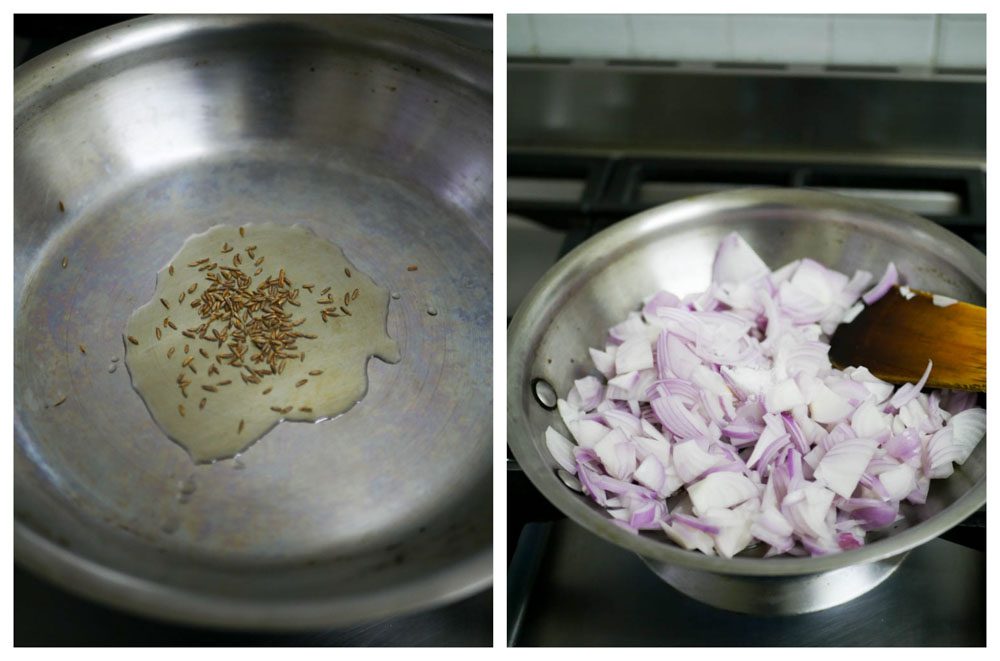
Heat oil in a pan and add in the cumin seeds. Add in the sliced onions and the salt. Saute for 2-3 minutes till the onions are soft. No need to brown the onions.
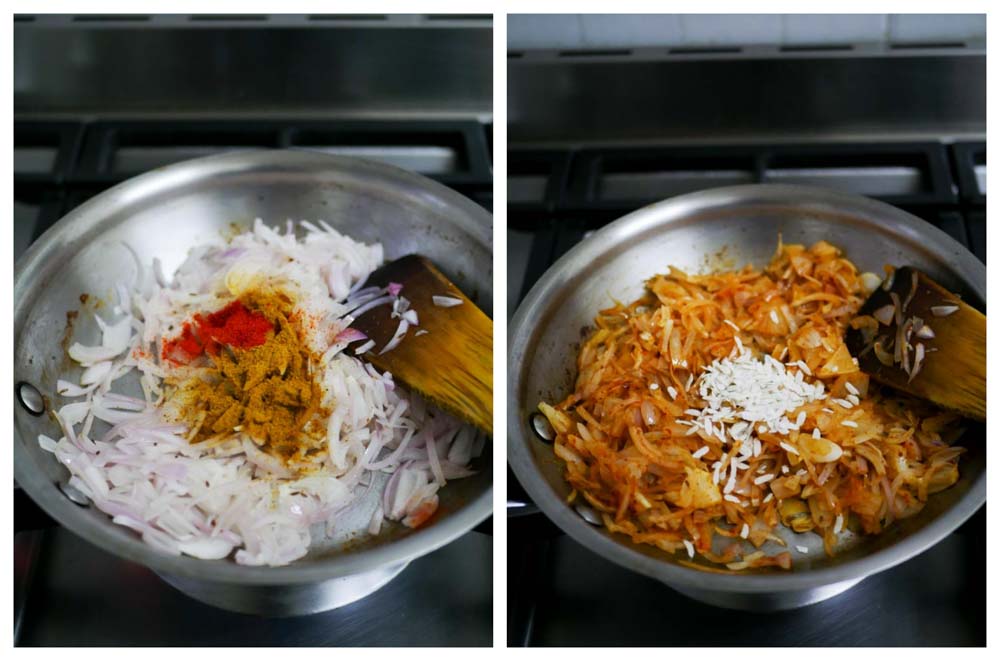
Add in the red chilli powder and the garam masala. If you want a really spicy samosa, you can add few chopped green chillies. Saute for a minute more. Add in the aval / poha. Aval will help in absorbing the excess moisture from the onions. Remove from heat and set aside to cool.
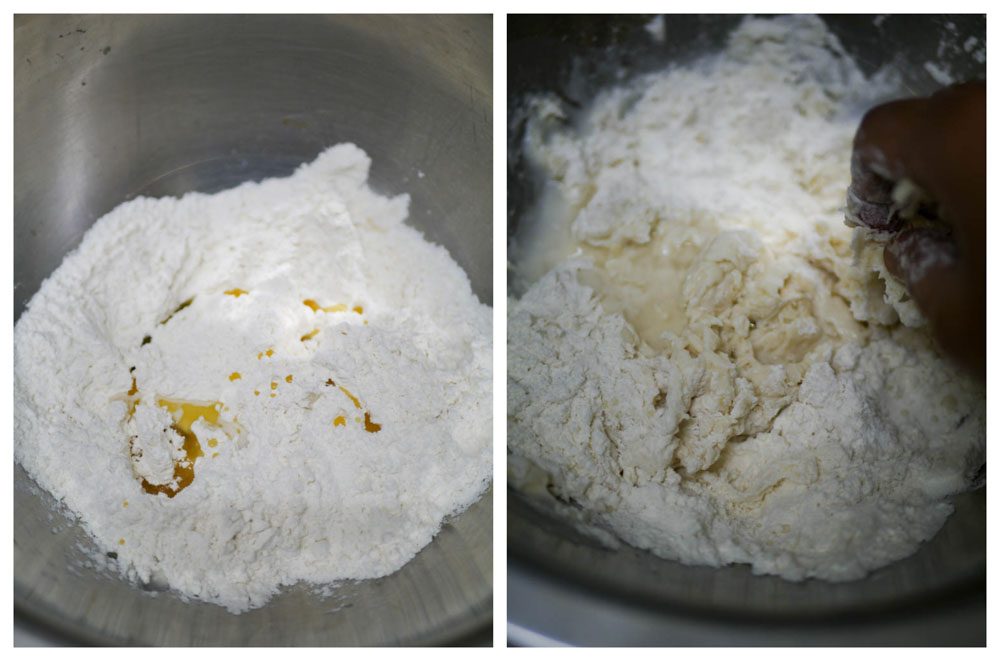
Now lets make the samosa wrappers. Combine a cup of Maida, salt and the teaspoon of oil. Add water little by little and mix to form a dough. The consistency of the dough should be stiff and that of a chapati dough. Note: You can make this 50:50 maida and atta (whole wheat flour) and it works well too. A cup of flour will make 24 samosas.
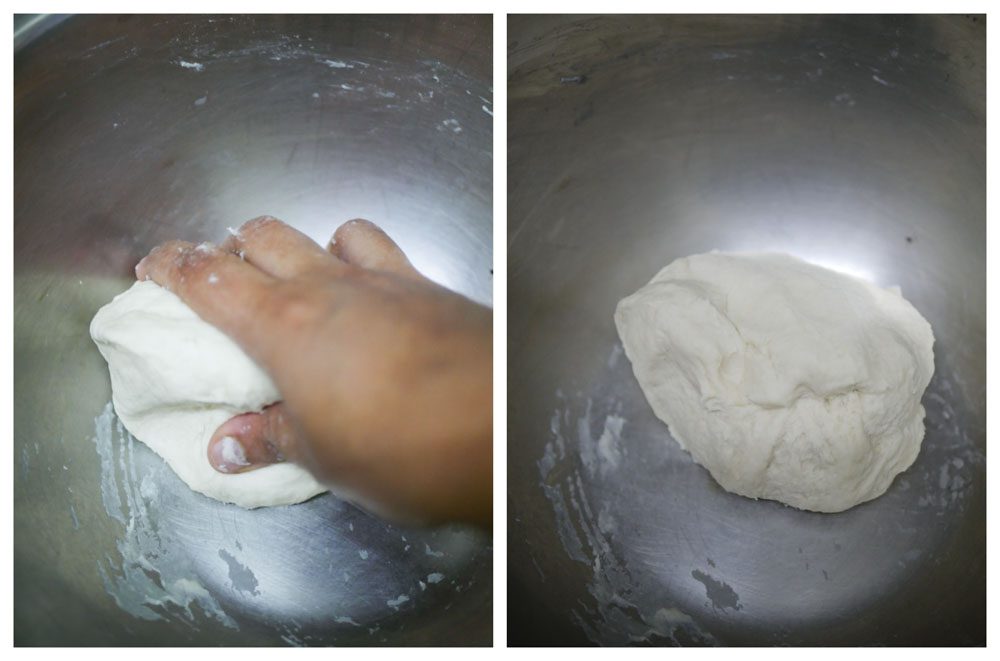
Knead the dough for 2-3 minutes. Rest the dough ball for 10 minutes. Make 6 balls out of the dough. Set aside.
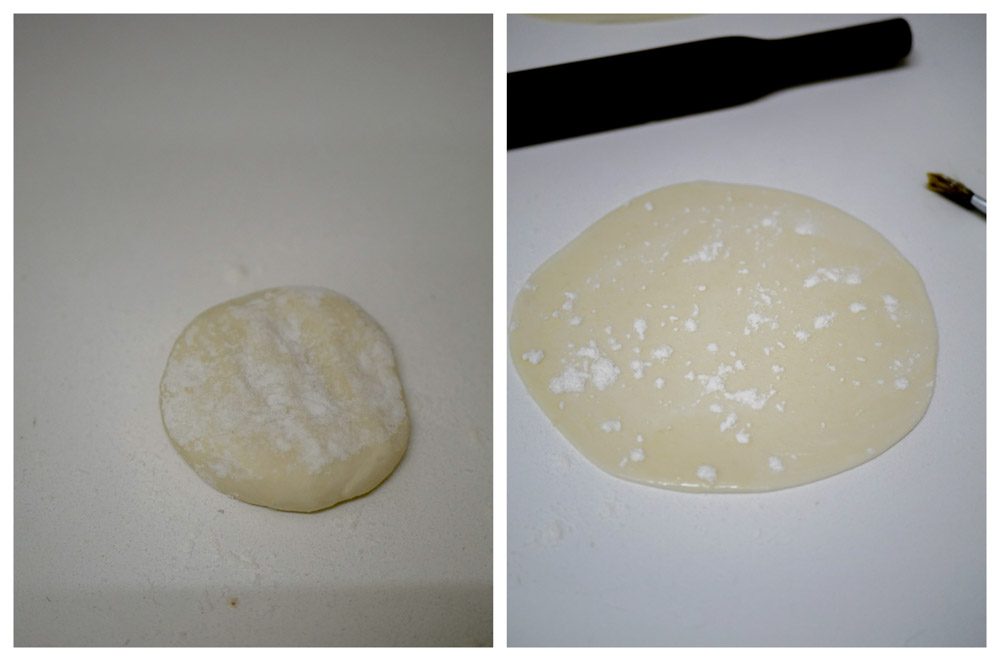
Take a dough ball and generously dust it with flour. Roll the dough into a 4 inch round on a flat smooth surface using a rolling pin. Brush oil on top of the rolled dough. Sprinkle flour on it.
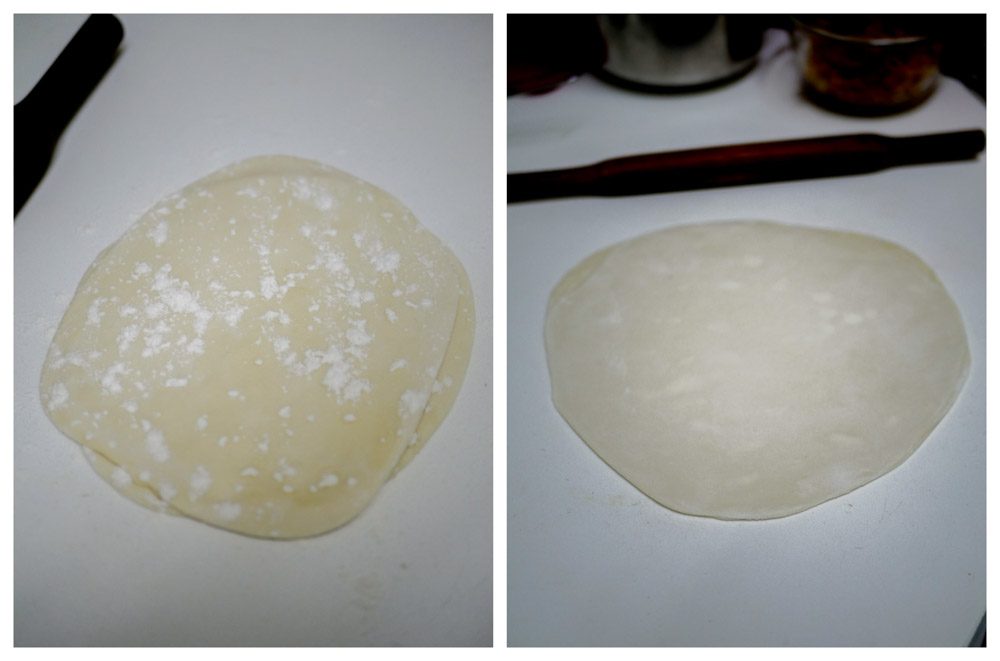
Place another rolled sheet on top of this and roll again. Sprinkle flour while rolling. It will expand. The thinner the sheet, the better. Dont press too hard. Be gentle while rolling. The oil and the sprinkled flour in between the sheets will help to remove the sheets later on.
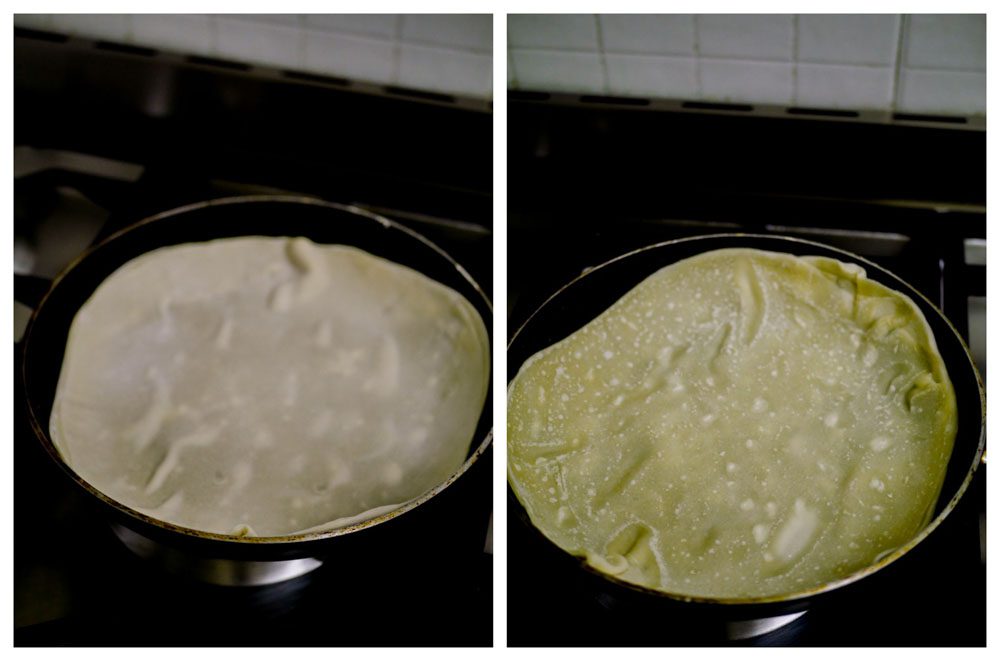
Place the combined sheets on a hot griddle and cook for a few seconds on each side. No need to brown the sheets. Cooking for a few seconds till the moisture in the dough dries up is all we are looking for. We still need the sheets to be pliable. So do not cook for long.
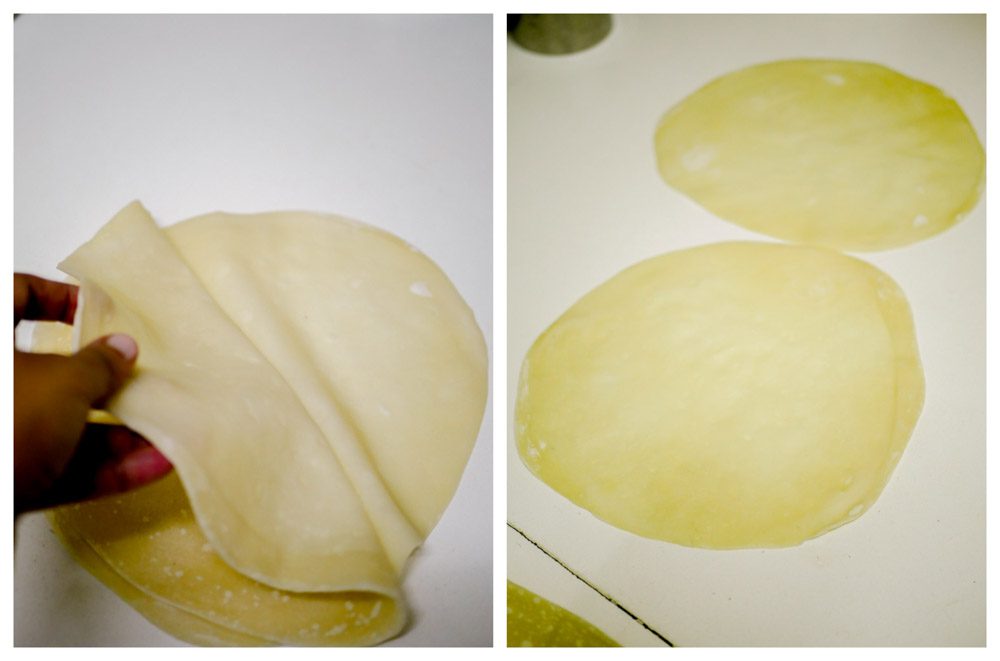
Remove the sheets from the pan and gently separate the sheets. Repeat the same with the remaining sheets. Cook all the sheets. Set aside.
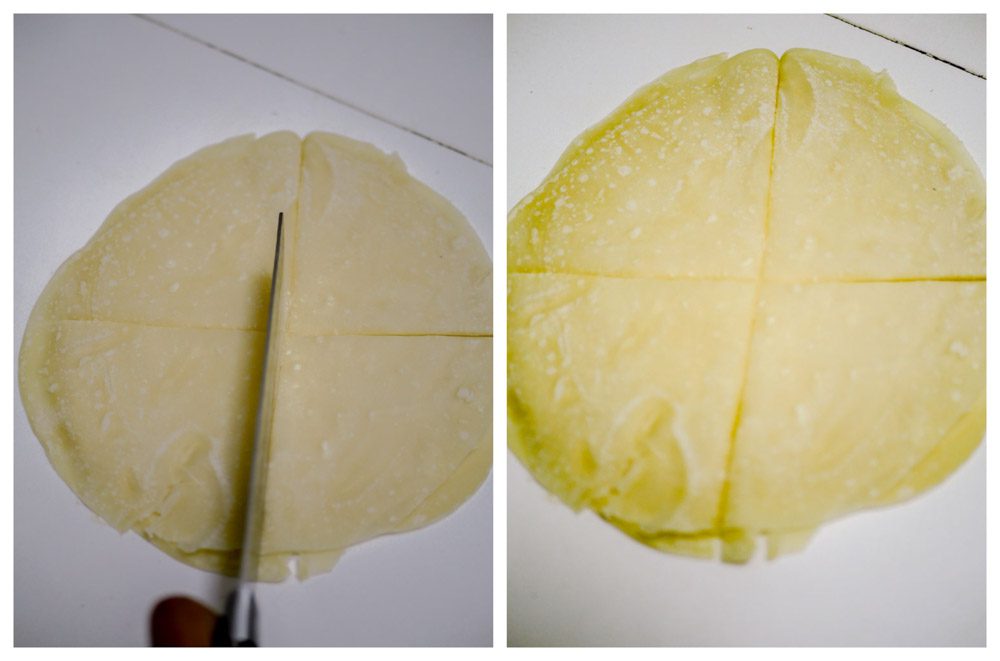
Now using a knife, cut the sheets into four triangles. Cover them with a cloth so it does not dry up a lot.
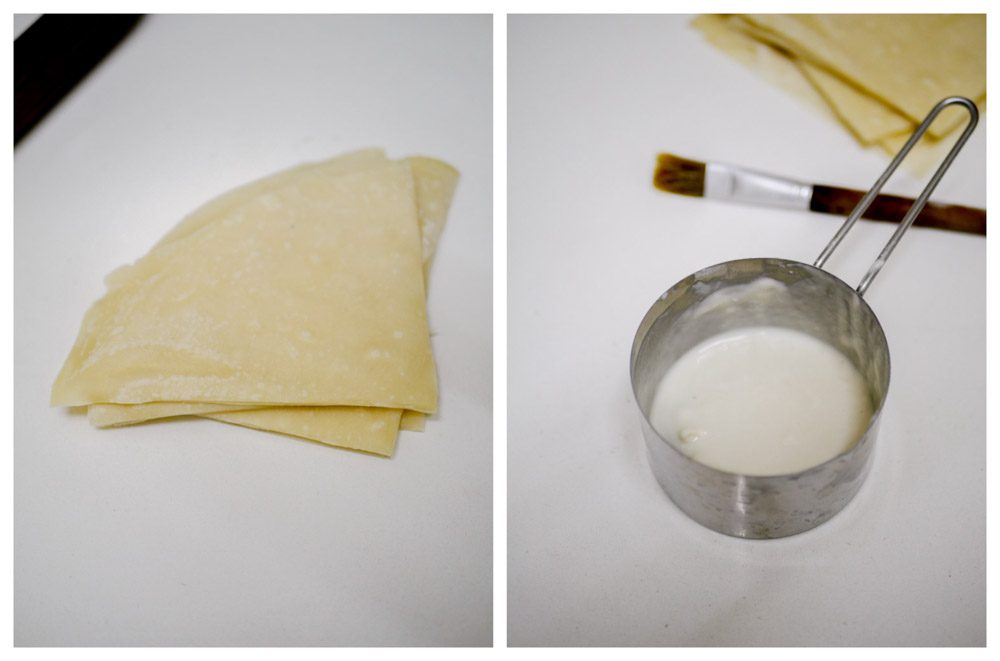
The triangle sheets are ready. Each triangle will make one samosa. In a small cup dilute two tablespoons of maida with two tablespoons of water. This is our maida gum. Set aside.
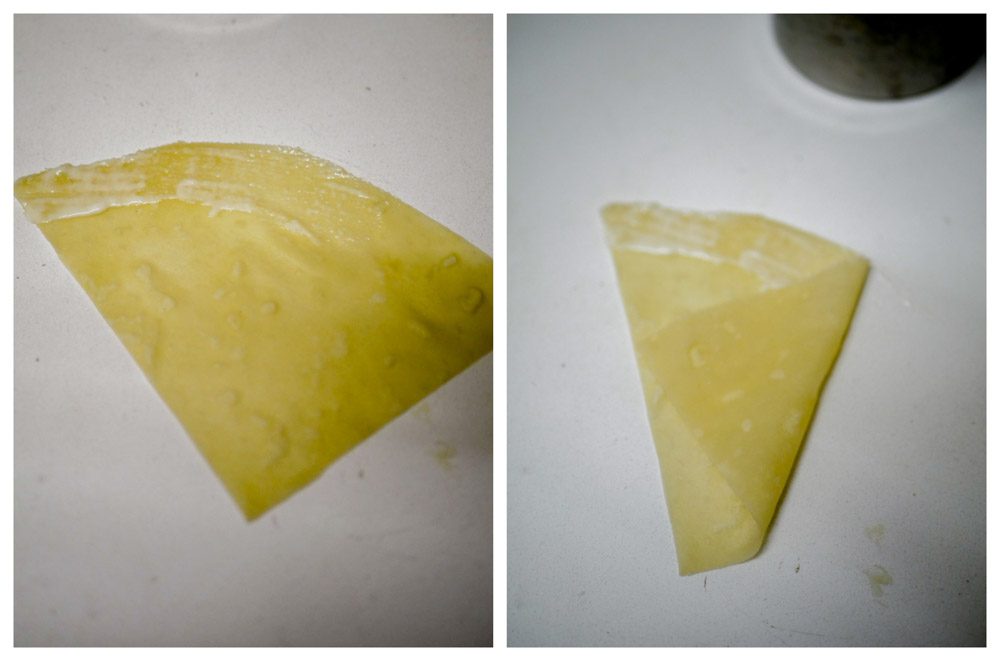
Take a triangle sheet. Apply Maida gum on the edges (half side) like the picture shown below. Fold on one side like below.
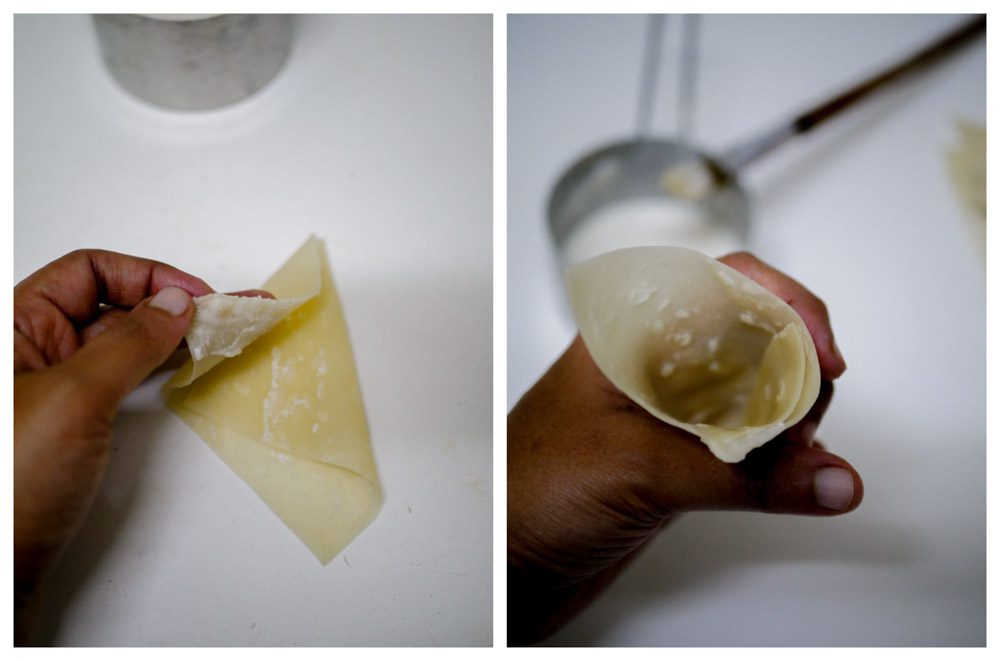
Gather the other side and make a cone. Press well so the maida gum adheres.
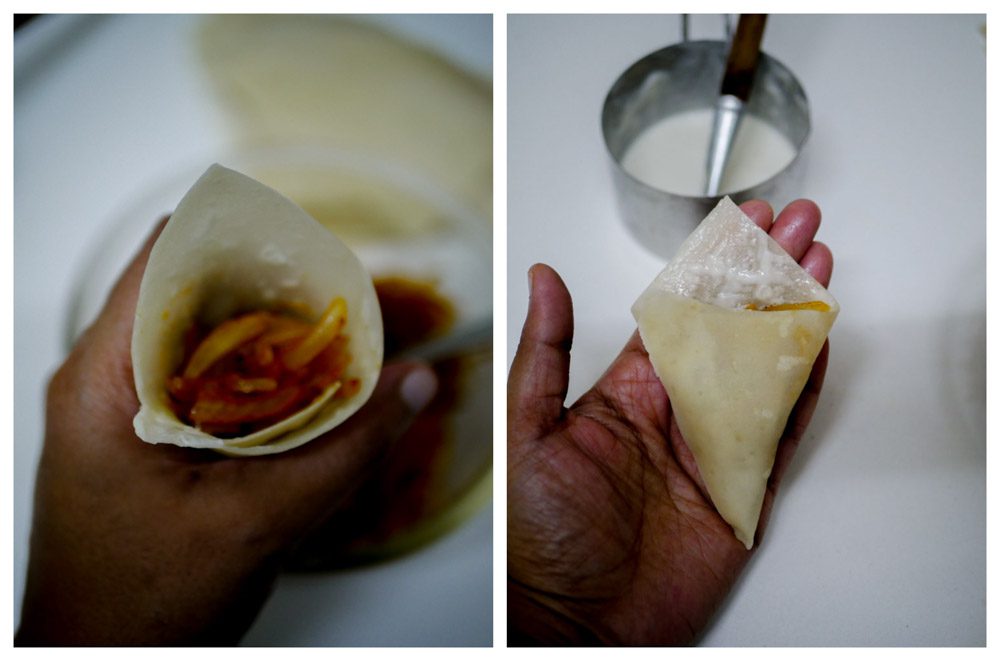
Fill the cone with the onion filling we made before. Apply the maida gum on the remaining sheet and fold to make a triangular samosa. Pinch the edges so there is no holes.
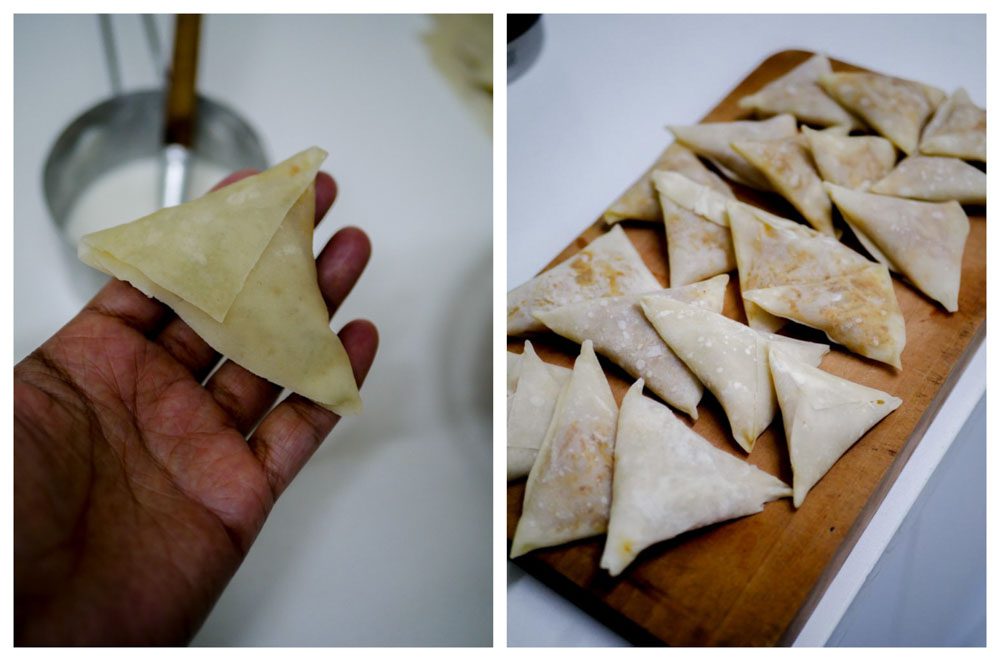
Repeat with the rest of the sheets. Set aside.
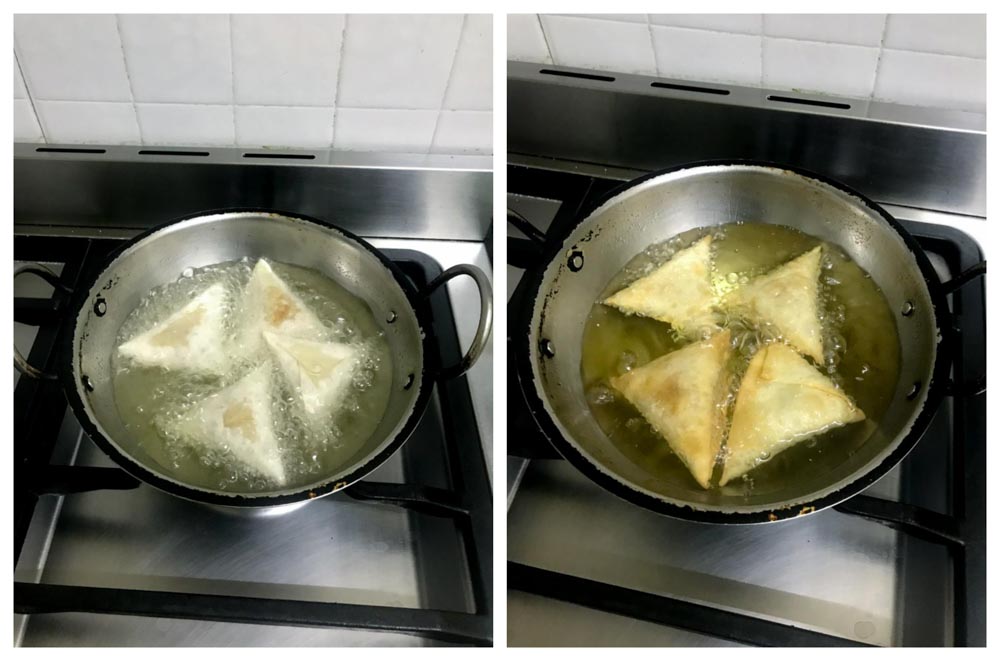
Double Frying the samosas. Heat oil in a pan until hot. Add in the samosas and fry for a minute till half cooked. Remove and set aside. Let it cool off a bit. Fry all the samosas till half done. We will fry all the samosas till half done and then fry again. Double frying gives these samosas the crunchiest texture.

Now fry the samosas again till golden. Double frying gives the crunchiest samosas. That “krrk” sound when you bite into the samosa is all forms of divinity. Note: In case of a party, cook the samosas till half done and fry them again to golden when guests arrive so you can serve hot samosas in no time.
Serve hot. It stays crisp for a long time.
For the filling 1 teaspoon vegetable oil 1/2 teaspoon cumin seeds 300 grams onions, sliced 1 teaspoon salt 1 teaspoon red chilli powder 1/2 teaspoon garam masala 1/4 cup aval / poha For the samosa sheets 1 cup maida / all purpose flour 1/2 teaspoon salt 1 teaspoon vegetable oil Other Ingredients 2 tablespoon maida (for maida gum) Vegetable oil to deep fry
The filling : Slice around 3-4 Indian purple onions. Around 250-300 grams. No need to slice very thin. A rough slice will do. Heat oil in a pan and add in the cumin seeds. Add in the sliced onions and the salt. Saute for 2-3 minutes till the onions are soft. No need to brown the onions.
Add in the red chilli powder and the garam masala. If you want a really spicy samosa, you can add few chopped green chillies. Saute for a minute more. Add in the aval / poha. Aval will help in absorbing the excess moisture from the onions. Remove from heat and set aside to cool.
Samosa Wrappers Combine a cup of Maida, salt and the teaspoon of oil. Add water little by little and mix to form a dough. The consistency of the dough should be stiff and that of a chapati dough. Knead the dough for 2-3 minutes. Rest the dough ball for 10 minutes. Make 6 balls out of the dough. Set aside. Take a dough ball and generously dust it with flour. Roll the dough into a 4 inch round on a flat smooth surface using a rolling pin. Brush oil on top of the rolled dough. Sprinkle flour on it. Place another rolled sheet on top of this and roll again. It will expand. The thinner the sheet, the better. Dont press too hard. Be gentle while rolling. The oil and the sprinkled flour in between the sheets will help to remove the sheets later on. Place the combined sheets on a hot griddle and cook for a few seconds on each side. No need to brown the sheets. Cooking for a few seconds till the moisture in the dough dries up is all we are looking for. We still need the sheets to be pliable. So do not cook for long. Remove the sheets from the pan and gently separate the sheets. Repeat the same with the remaining sheets. Cook all the sheets. Set aside.
Now using a knife, cut the sheets into four triangles. Cover them with a cloth so it does not dry up a lot. The triangle sheets are ready. Each triangle will make one samosa. In a small cup dilute two tablespoons of maida with two tablespoons of water. This is our maida gum. Set aside. Take a triangle sheet. Apply Maida gum on the edges like the picture shown below. Fold on one side like below. Gather the other side and make a cone. Press well so the maida gum adheres. Fill the cone with the onion filling we made before. Apply the maida gum on the remaining sheet and fold to make a triangular samosa. Pinch the edges so there is no holes. Repeat with the rest of the sheets. Set aside.
Double Frying the samosas. Heat oil in a pan until hot. Add in the samosas and fry for a minute till half cooked. Remove and set aside. Let it cool off a bit. Fry all the samosas till half done. We will fry all the samosas till half done and then fry again. Double frying gives these samosas the crunchiest texture. Now fry the samosas again till golden. Double frying gives the crunchiest samosas. That “krrk” sound when you bite into the samosa is all forms of divinity.
- Author: Suguna Vinodh
- Prep Time: 30m
- Cook Time: 15m
- Diet: Vegan
